From Surf Wiki (app.surf) — the open knowledge base
Unpaved road
Type of road
Type of road
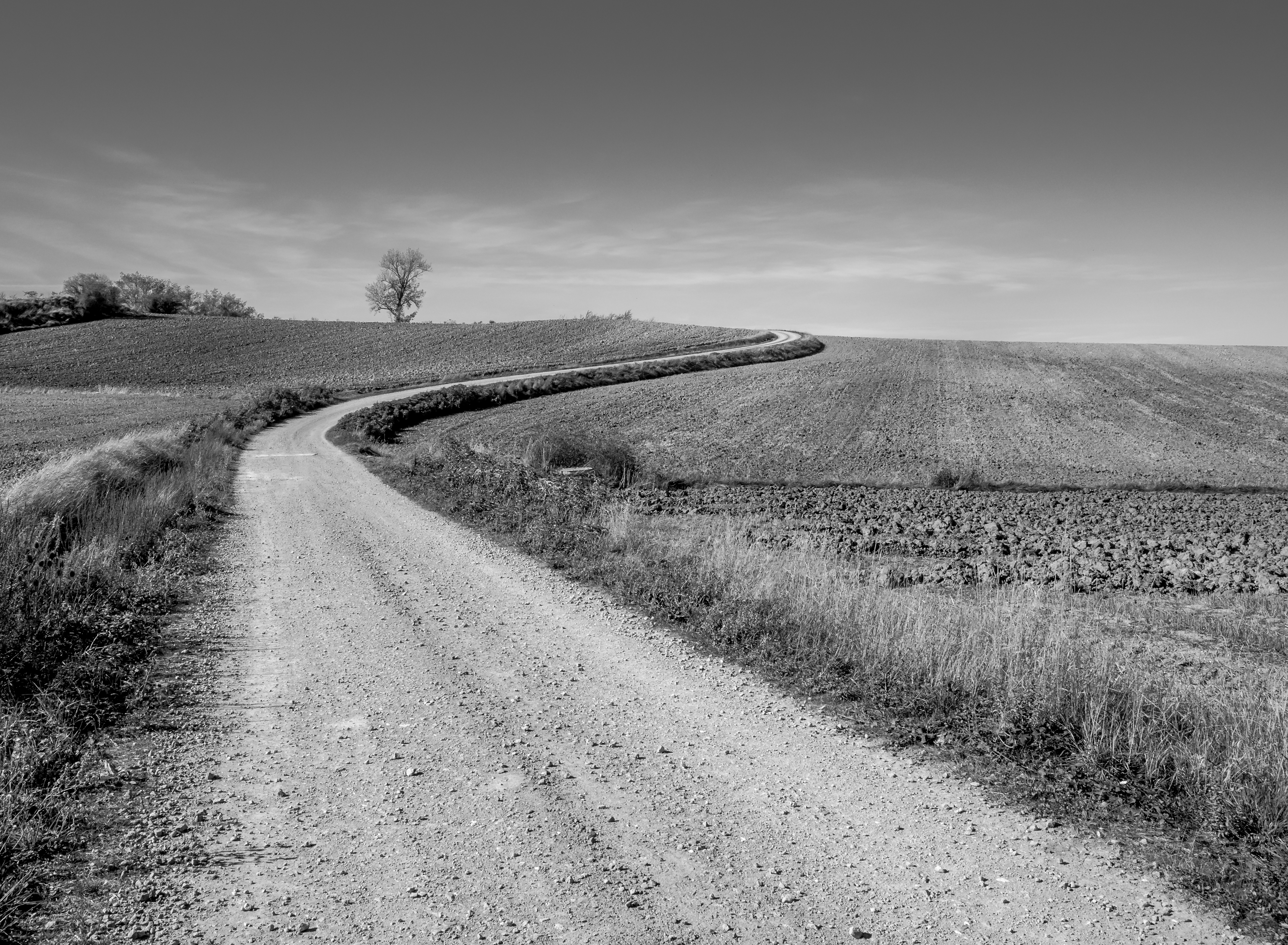
An unpaved road is a type of road whose surface has not been sealed with a pavement treatment, such as concrete or bitumen. An unpaved road can be a dirt road, whose surface is the native material of the land surface (known as subgrade material), or it could be a gravel road, where the subgrade material has been covered by gravel but not sealed. There are approximately 13 e6km of unpaved road in the world, making up 57% of the total road length.
Types
Forest or logging road
Main article: forest track
A forest road is a type of rudimentary access road, built by private companies, or government entities such as the United States Forest Service to access remote undeveloped areas. These roads are built mainly for the purposes of forest management, timber harvest, and livestock grazing, although in some cases they are also used for backcountry recreation access.
Typically, a high-clearance four-wheel drive vehicle is required to travel effectively on a forest road, especially where large potholes and/or waterbars are present. Switchbacks are employed to make the road passable through steep terrain.
These roads rapidly fall into disrepair and quickly become impassable. Remnants of old roads can exist for decades. They are eventually erased by washout, erosion, and ecological succession.
For logging roads, the choice of road design standards is a tradeoff between construction costs and haul costs (which the road is designed to reduce). A road that serves only a few stands will be used by relatively few trucks over its lifetime and so it makes sense to save construction costs with a narrow, winding, unpaved road that adds to the time (and haul costs) of the few trips. A main haul road serving a large area, however, will be used by many trucks each day, and each trip will be shorter (saving time and money) if the road is straighter and wider, with a smoother surface.
Logging trucks are generally given right of way. In areas that the practice is regulated, on non-highway roads with heavy logging traffic may be "radio-controlled", meaning that a CB radio on board any vehicle on the road is advised for safety reasons.
Resource road
According to the British Columbia Ministry of Forests, resource roads are typically "one- or two-lane gravel roads built for industrial purposes to access natural resources in remote areas". They may be used by industrial vehicles or the general public, and as a link to rural communities. Driving on resource roads can be hazardous for many reasons, including limited visibility, unusual road geometry, and the presence of wildlife. Disused resource roads can pose a danger to both drivers and passersby, due to the danger of landslides forming on unstable, poorly-drained ground.
Primitive road
A primitive road is a minor road system, used for travel or transportation that is generally not maintained or paved. Primitive roads primarily occur in rural farmlands, deserts, or forests rather than in developed areas.
There is no universal definition of primitive road. According to Washington (state) law, an unpaved road is a primitive road if:
- It is not part of the county's primary road system
- It has an average annual daily traffic of one hundred or fewer vehicles. Road maintenance on primitive roads is optional for the county in Washington.
Driving hazards
While most gravel roads are all-weather roads and can be used by ordinary cars, dirt roads may only be passable by trucks or four-wheel drive vehicles, especially in wet weather, or on rocky or very sandy sections. It is as easy to become bogged in sand as it is in mud; a high clearance under the vehicle may be required for rocky sections.
Driving on unpaved roads presents hazards often not present on paved or sealed roads:
- Dust can be thrown up from a passing vehicle reducing visibility.
- Washboard corrugations cause loss of control due to lack of tire contact. These are most often found near intersections as stopping or braking causes them to form.
- Skidding on mud after rain
- Vehicle fishtailing as a result of ruts in the surface. Often found on frequently traveled roads.
- In higher rainfall areas, the increased camber required to drain water, and open drainage ditches at the sides of the road, often cause vehicles with a high centre of gravity, such as trucks and off-road vehicles, to overturn if they do not keep close to the crown of the road.
- Many unpaved roads are only one lane wide or slightly larger, thus requiring special attention when driving at higher speeds.
Length by country
The CIA Worldbook provides an estimate of the total length of unpaved roads per country for most, but not all countries in the world. The top 10 countries with the largest amount of roads is shown in the table, below:
| Rank | Country | Length of unpaved roads (km) |
|---|---|---|
| 1 | United States | 2,281,895 |
| 2 | Brazil | 1,754,000 |
| 3 | Australia | 727,645 |
| 4 | Canada | 626,700 |
| 5 | China | 622,000 |
| 6 | Mexico | 529,358 |
| 7 | South Africa | 591,876 |
| 8 | Sweden | 433,034 |
| 8 | Russia | 355,666 |
| 10 | Finland | 350,000 |
References
References
- (2020). "Finite Element Analysis of Geogrid-Stabilized Unpaved Roads". Sustainability.
- Faiz, Asif. (September 2012). "The Promise of Rural Roads". Transportation Research Board of the National Academies.
- (2016). "Linkages between unpaved forest roads and streambed sediment: why context matters in directing road restoration". Restor Ecol.
- (2021-04-15). "Resource roads".
- (2022-10-27). "Fatal landslide blamed on old logging road raises fears about hidden risks near Canada's highways". CBC News.
- (1982). "ROS Users Guide". Forest Service.
- "Primitive Roads". County of Chelan.
- (1975). "Hearings, Reports and Prints of the Senate Committee on Agriculture and Forestry". US Government Printing Office.
- (2026-01-31). "Gravel Roads". Jackson County, Oregon.
- Bowers, Norm. "Gravel Road Washboards". Saline County, Kansas.
- "Off-road driving safety". University of California Agriculture and Natural Resources.
- (2023). "Roadways". CIA World Factbook.
This article was imported from Wikipedia and is available under the Creative Commons Attribution-ShareAlike 4.0 License. Content has been adapted to SurfDoc format. Original contributors can be found on the article history page.
Ask Mako anything about Unpaved road — get instant answers, deeper analysis, and related topics.
Research with MakoFree with your Surf account
Create a free account to save articles, ask Mako questions, and organize your research.
Sign up freeThis content may have been generated or modified by AI. CloudSurf Software LLC is not responsible for the accuracy, completeness, or reliability of AI-generated content. Always verify important information from primary sources.
Report