From Surf Wiki (app.surf) — the open knowledge base
University of the Western Cape
Public university in Bellville, Cape Town, South Africa
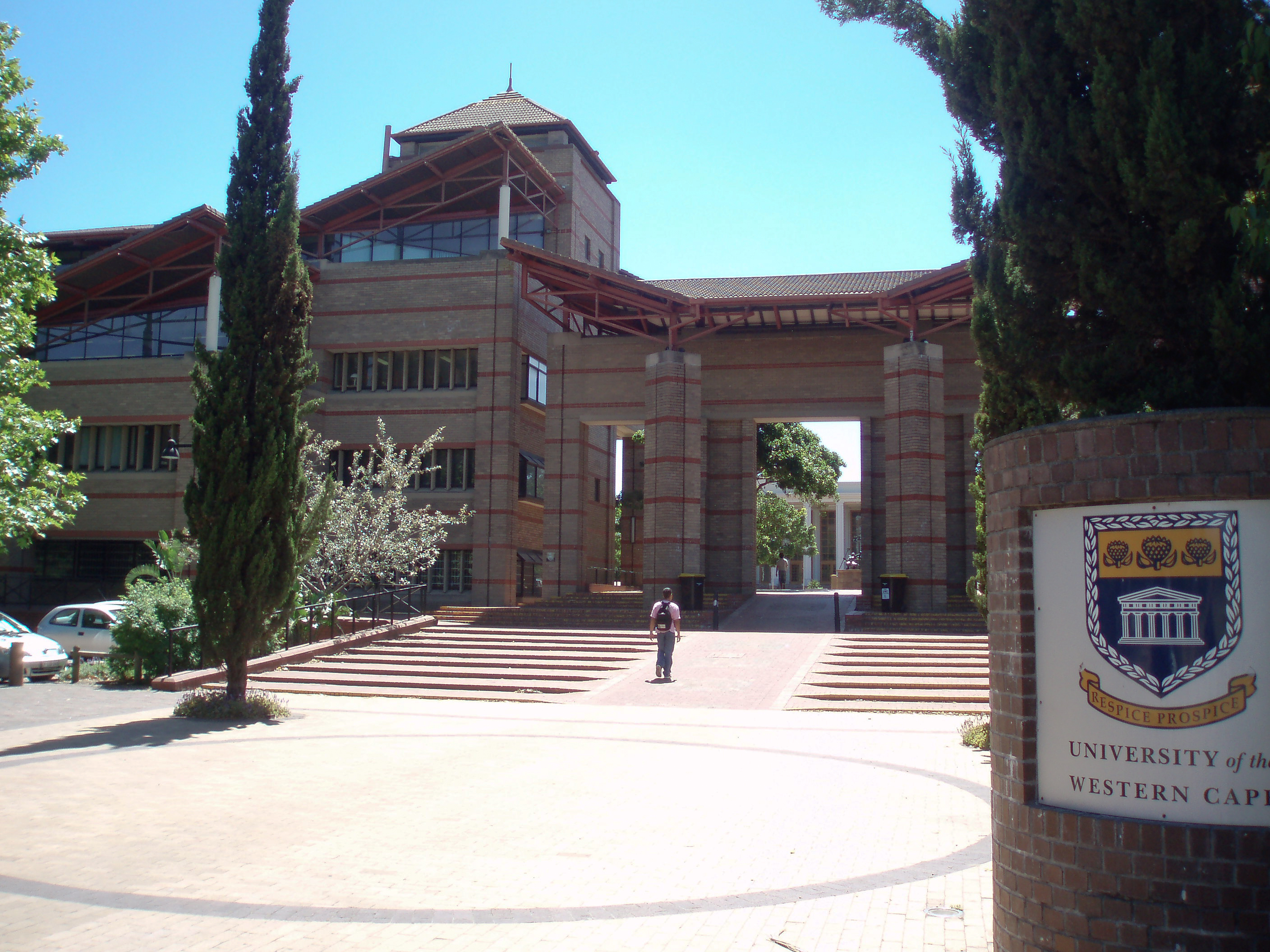
Public university in Bellville, Cape Town, South Africa
| Field | Value |
|---|---|
| name | University of the Western Cape |
| image | UWC Logo.svg |
| image_size | 150px |
| motto | |
| mottoeng | "Look Ahead" |
| established | |
| type | Public university |
| chancellor | Thabo Makgoba |
| vice_chancellor | Robert Balfour |
| rector | Robert Balfour |
| students | 23,000+ (2023) |
| undergrad | 15,840 |
| postgrad | 6,160 |
| city | Robert Sobukwe Road, Bellville, Western Cape |
| country | South Africa |
| campus | Urban setting |
| other_names | Bush, uDubs |
| mascot | Bushie |
| academic_affiliations | ACU, CHEC, HESA, IAU |
| website |


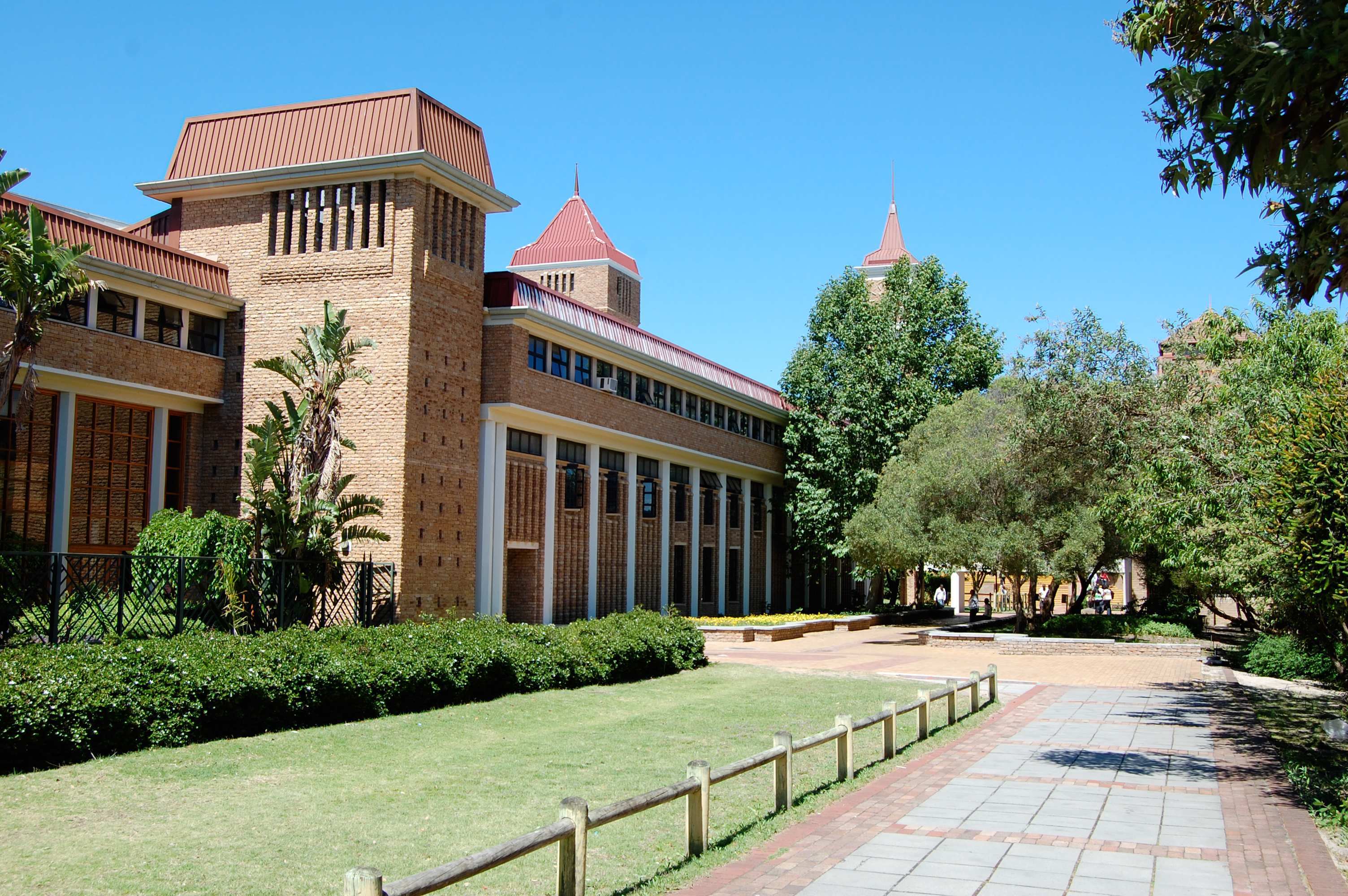
The University of the Western Cape (UWC; ) is a public research university in Bellville, in Cape Town, South Africa. The university was established in 1959 by the South African apartheid government as a university for Coloured people only. Other universities in Cape Town are the University of Cape Town (originally for English-speaking whites), Cape Peninsula University of Technology, and Stellenbosch University (originally for Afrikaans-speaking whites). The establishing of UWC was a direct effect of the Apartheid-era Extension of University Education Act, 1959. This law accomplished the segregation of higher education in South Africa. Coloured students were only allowed at a few non-white universities. In this period, other "ethnical" universities, such as the University of Zululand and the University of the North, were founded as well. Since well before the end of apartheid in South Africa in 1994, it has been an integrated and multiracial institution.
History
Early days
UWC started as a "bush college", a university college without autonomy under the auspices of the University of South Africa. The university offered a limited training for lower-to-middle-level positions in schools and the civil service. In the first years of its existence, a great deal of the teaching staff was white. Many of the lecturers came from Stellenbosch University. The language in most lectures was Afrikaans. The first rector was N. J. Sieberhagen (from 1960 until 1973). The university started as a small institution: in the first year, 166 students were enrolled and the teaching staff numbered 17. In 1970, the institution gained university status and was able to award its own degrees and diplomas.
Chancellors
Desmond Tutu - 1987 to 2012
Thabo Makgoba - 2012 to present
Vice Chancellor's and Rectors
N.J Sieberhagen - 1960 to 1973
**Wynand Mouton ** - 1974
Richard Ernest van der Ross - 1975 to 1986
** Jakes Gerwel ** - 1987 to 1994
** Cecil Abrahams ** - 1995 to 2000
** Brian O Connell ** - 2001 to 2014
** Tyrone Pretorius ** - 2015 to 2024
** Robert Balfour ** - 2025 to present
Resistance against apartheid
During the first 15 years, the board and staff were primarily whites, supporting the National Party and apartheid. One of the few exceptions was Adam Small, head of the philosophy department. Small resigned in 1973 as a consequence of his involvement in the Black Consciousness Movement. Apart from lecturers like Small, there were many students who were active in the struggle against apartheid, and who were loyal to the Black Consciousness Movement. Protests from students against the conservative university board and lack of participation in the university led to the appointment of the first coloured rector, Richard E. van der Ross in 1975. The years thereafter gave way to a more liberal atmosphere, in which the university gradually distanced itself from apartheid. In 1982, the university rejected the apartheid ideology formally in its mission statement; during the next year, the university gained the same autonomy as white universities through the University of the Western Cape Act.
In the late 1980s and early 1990s, numerous UWC students were involved in the creation of Bush Radio, an anti-apartheid media project which distributed political and cultural radio programming via cassette tape due to the lack of a license to broadcast on a conventional radio platform. By 1993, the station went to air as a pirate radio station, and eventually became South Africa's first licensed community radio station.
Rector Jakes Gerwel made UWC an "intellectual home of the left", with attention to social and political issues. The university attracted increasing numbers of students from disadvantaged communities. Apart from coloured people, more and more black students enrolled. Gerwel was succeeded in 1995 by Cecil Abrahams, who was succeeded by Brian O'Connell in 2001. UWC retained the status of an autonomous university during the education restructuring of 2002.
UWC is the only African institution that is a member of the OpenCourseWare Consortium (OCWC), and was voted onto the OCWC board in 2007.
Today
UWC is a research-rich environment. The academic staff is highly qualified, with 50% holding doctorates. Most departments have graduate programmes, some with the largest intake in the country. There are many institutes and centres with a strong research emphasis, and there are significant projects and programmes which draw on expertise across departments and faculties. There are also joint endeavours between the University of the Western Cape, the University of Cape Town, and Stellenbosch University. 20% of all students at UWC are postgraduates.
Like other South African universities, UWC has been affected by sporadic student protests since 2015. The reasons for the protests change with each new period of protest. They began with the Fees Must Fall movement where the main goal was to get university fees to be state-funded and then grew to include issues surrounding student safety and accommodation. These protests often lead to the shutdown of academic activities at the university. Most recently academic activities were suspended from 5 February 2020 to 7 February 2020 due to a delay in financial clearance which left many students unable to register for the new year.
| Race | Percentage |
|---|---|
| African | 47% |
| Coloured | 44% |
| White | 5% |
| Indian | 3% |
| Other | 2% |
International links
Research at UWC has an international dimension. UWC's major network of international partners ensures a flow of students and eminent scholars from other countries to enrich the environment. Some major projects are undertaken jointly with partners abroad. Many UWC scholars speak at international conferences and publish in internationally respected journals and books. And there is a strong and growing relationship with institutions in other countries in Africa, Europe and North America, leading to research partnerships, joint capacity building, and a flow of postgraduate students to UWC. In addition, UWC Honours and Master's graduates have won a number of major international scholarships. They have done well in doctoral programmes abroad.
Ranking
In 2014, Webometrics ranked the university the sixth best in South Africa, seventh best in Africa and 885th in the world. Webometrics ranked both the university's Faculty of Law and Dentistry the best in Africa.
| **UWC Times Higher Education Ranking 2016 to 2024** | Year | World Rank |
|---|---|---|
| 2024 | 601–800 | |
| 2023 | 601–800 | |
| 2022 | 601–800 | |
| 2021 | 601–800 | |
| 2020 | 601–800 | |
| 2019 | 601–800 | |
| 2018 | 601–800 | |
| 2017 | 601-800 | |
| 2016 | 501-600 |
Children's Rights Project
The Children's Rights Project is a South African organisation. Located in the Community Law Centre, University of the Western Cape, its goal is the recognition and protection of children's rights within the framework of the United Nations Convention on the Rights of the Child, the African Charter on the Rights and Welfare of the Child and the Constitution of the Republic of South Africa.
DSI-NRF Centre of Excellence in Food Security (CoE-FS)
Since 2014, UWC has hosted the DSI-NRF Centre of Excellence in Food Security (CoE-FS), and is the first historically disadvantaged institution to host a DSI-NRF Centre of Excellence. The CoE-FS is co-hosted with the University of Pretoria. The CoE-FS undertakes "innovative research and critical enquiry to enable South Africa to tackle the challenges of food security and nutrition". Several UWC-based researchers contribute to the CoE-FS's work, including Professor Julian May (CoE-FS) director and Professor Rina Swart (CoE-FS Nutrition lead).
Notable alumni and staff
- Kamanda Bataringaya, (MD, MBA, MPH, Diploma in Health Management). Ugandan physician, diplomat and politician. Member of Parliament and Minister of State for Primary Education in Uganda (2009–2016). Obtained the degree of Master of Public Health from UWC in 2009.
- José Luís Guterres, East Timorese politician and diplomat
- Danny Jordaan, chief executive officer of the 2010 FIFA World Cup South Africa
- Sibongile Ndashe, lawyer and human rights activist
- Maurus Nekaro, Namibian politician, former Governor of Kavango Region (2010–2013)
- Colette Solomon, South African policy researcher, women's rights activist and the director of the non-governmental organisation Women on Farms Project
- John Walters (born 1956), Namibian ombudsman 2004–2021
- Zoe Wicomb, author, both attended and taught at UWC.
- Patty Karuaihe-Martin, Business executive, Managing Director of NamibRe
- Anthony Holiday, journalist, anti-apartheid activist, and academic, taught philosophy at UWC from the end of apartheid until 2005.
References
References
- "UWC at a Glance".
- "History".
- Staff Reporter. "Prof Adam Small dies aged 79".
- "Richard Ernest van der Ross".
- webportal@uwc.ac.za. "History".
- "The road to community radio". ''Rhodes Journalism Review'', September 2004.
- (24 February 2020). "Student protests continue at UWC {{!}} IOL News}} {{webarchive".
- "Police intervene in UWC campus protest". News24.
- [http://www.uwc.ac.za/Research/Pages/default.aspx# "Research Development"] {{webarchive. link. (10 July 2015, University of the Western Cape.)
- "Top Africa". Ranking Web of World Universities.
- (2024-10-20). "World University Rankings 2024 (South Africa)".
- (2023-10-20). "World University Rankings 2023 (South Africa)".
- (2022-10-20). "World University Rankings 2022 (South Africa)".
- (2021-10-20). "World University Rankings 2021 (South Africa)".
- (2020-10-20). "World University Rankings 2020 (South Africa)".
- (2019-10-20). "World University Rankings 2019 (South Africa)".
- (2018-10-20). "World University Rankings 2018 (South Africa)".
- (2017-10-20). "World University Rankings 2017 (South Africa)".
- (2016-10-20). "World University Rankings 2016 (South Africa)".
- (2015-10-20). "World University Rankings 2015 (South Africa)".
- (2014-10-20). "World University Rankings 2014 (South Africa)".
- (2013-10-20). "World University Rankings 2013 (South Africa)".
- (2012-10-20). "World University Rankings 2012 (South Africa)".
- (2011-10-20). "World University Rankings 2011 (South Africa)".
- (2011). "Profile of Kamanda Cos Bataringaya, Member of Parliament for Bwamba County, Bundibugyo District". [[Parliament of Uganda]].
- (5 March 2013). "Former dissident, post-1989 politician Battěk dies". [[Namibian Sun]].
- Rademeyer, Ronelle. (8 October 2021). "Vurige kampvegter vir geregtigheid". [[Republikein]].
This article was imported from Wikipedia and is available under the Creative Commons Attribution-ShareAlike 4.0 License. Content has been adapted to SurfDoc format. Original contributors can be found on the article history page.
Ask Mako anything about University of the Western Cape — get instant answers, deeper analysis, and related topics.
Research with MakoFree with your Surf account
Create a free account to save articles, ask Mako questions, and organize your research.
Sign up freeThis content may have been generated or modified by AI. CloudSurf Software LLC is not responsible for the accuracy, completeness, or reliability of AI-generated content. Always verify important information from primary sources.
Report