From Surf Wiki (app.surf) — the open knowledge base
University College London
Public research university in London, England
Public research university in London, England
| Field | Value | |
|---|---|---|
| name | UCL | |
| image_name | University College London logo.svg | |
| image_size | 250px | |
| image_upright | .9 | |
| former_names | London University (1826–1836) | |
| University College, London (1836–1907) | ||
| University of London, University College (1907–1976) | ||
| University College London (1977–2005; remains legal name) | ||
| motto | ||
| mottoeng | Let all come who by merit deserve the most reward | |
| established | ||
| (University status 2023) | ||
| type | Public research university | |
| endowment | £175.0 million (2025) | |
| budget | £2.163 billion (2024/25) | |
| visitor | Sir Geoffrey Vos | |
| (as Master of the Rolls *ex officio*) | ||
| chancellor | Anne, Princess Royal | |
| (as Chancellor of the University of London) | ||
| head_label | President and Provost | |
| head | Michael Spence | |
| chair | Victor L. L. Chu | |
| academic_staff | () | |
| administrative_staff | () | |
| students | () | |
| undergrad | () | |
| postgrad | () | |
| other_students | 895 (studying wholly overseas; 2021/22) | |
| coordinates | ||
| campus | Urban | |
| city | London, England | |
| academic_affiliations | {{flatlist | |
| colours | Purple and blue celeste | |
| website |
University College, London (1836–1907) University of London, University College (1907–1976) University College London (1977–2005; remains legal name) (University status 2023) (as Master of the Rolls ex officio) (as Chancellor of the University of London)
- ACU
- EUA
- LERU
- Russell Group
- SES
- University of London
- Universities UK
University College London, which operates as UCL, is a public research university in London, England. It is a member institution of the federal University of London, and is the second-largest university in the United Kingdom by total enrolment and the largest by postgraduate enrolment.
Established in 1826 as London University (although without university status or degree-awarding powers) by founders who were inspired by the radical ideas of Jeremy Bentham, UCL was the first university institution to be established in London, and the first in England to be entirely secular and to admit students regardless of their religion. It was also, in 1878, the second college in the United Kingdom to admit women alongside men, two years after University College, Bristol had done so. Intended by its founders to be England's third university, politics forced it to accept the status of a college in 1836, when it received a royal charter and became one of the two founding colleges of the University of London, although it achieved de facto recognition as a university in the 1990s and formal university status in 2023. It has grown through mergers, including with the Institute of Ophthalmology (in 1995), the Institute of Neurology (in 1997), the Royal Free Hospital Medical School (in 1998), the Eastman Dental Institute (in 1999), the School of Slavonic and East European Studies (in 1999), the School of Pharmacy (in 2012) and the Institute of Education (in 2014).
UCL has its main campus in the Bloomsbury area of central London, with a number of institutes and teaching hospitals elsewhere in central London, and has a second campus, UCL East, at Queen Elizabeth Olympic Park in Stratford, East London. UCL is organised into 11 constituent faculties, within which there are over 100 departments, institutes and research centres. UCL operates several museums and collections in a wide range of fields, including the Petrie Museum of Egyptian Archaeology and the Grant Museum of Zoology and Comparative Anatomy, and administers the annual Orwell Prize in political writing. In 2024/25, UCL had a total income of £2.16 billion, of which £556.6 million was from research grants and contracts. The university generates around £10 billion annually for the UK economy, primarily through the spread of its research and knowledge (£4 billion) and the impact of its own spending (£3 billion).
UCL is a member of numerous academic organisations, including the Russell Group and the League of European Research Universities, and is part of UCL Partners, the world's largest academic health science centre. It is considered part of the "golden triangle" of research-intensive universities in southeast England. UCL has publishing and commercial activities including UCL Press, UCL Business and UCL Consultants.
UCL has many notable alumni, including the founder of the Republic of Mauritius, the first prime minister of Japan and one of the co-discoverers of the structure of DNA. UCL academics discovered five of the naturally occurring noble gases, discovered hormones, invented the vacuum tube, and made several foundational advances in modern statistics. As of 2025, 33 Nobel Prize laureates and three Fields medallists have been affiliated with UCL as alumni or academic staff.
History
Main article: History of University College London
1826 to 1836 – London University
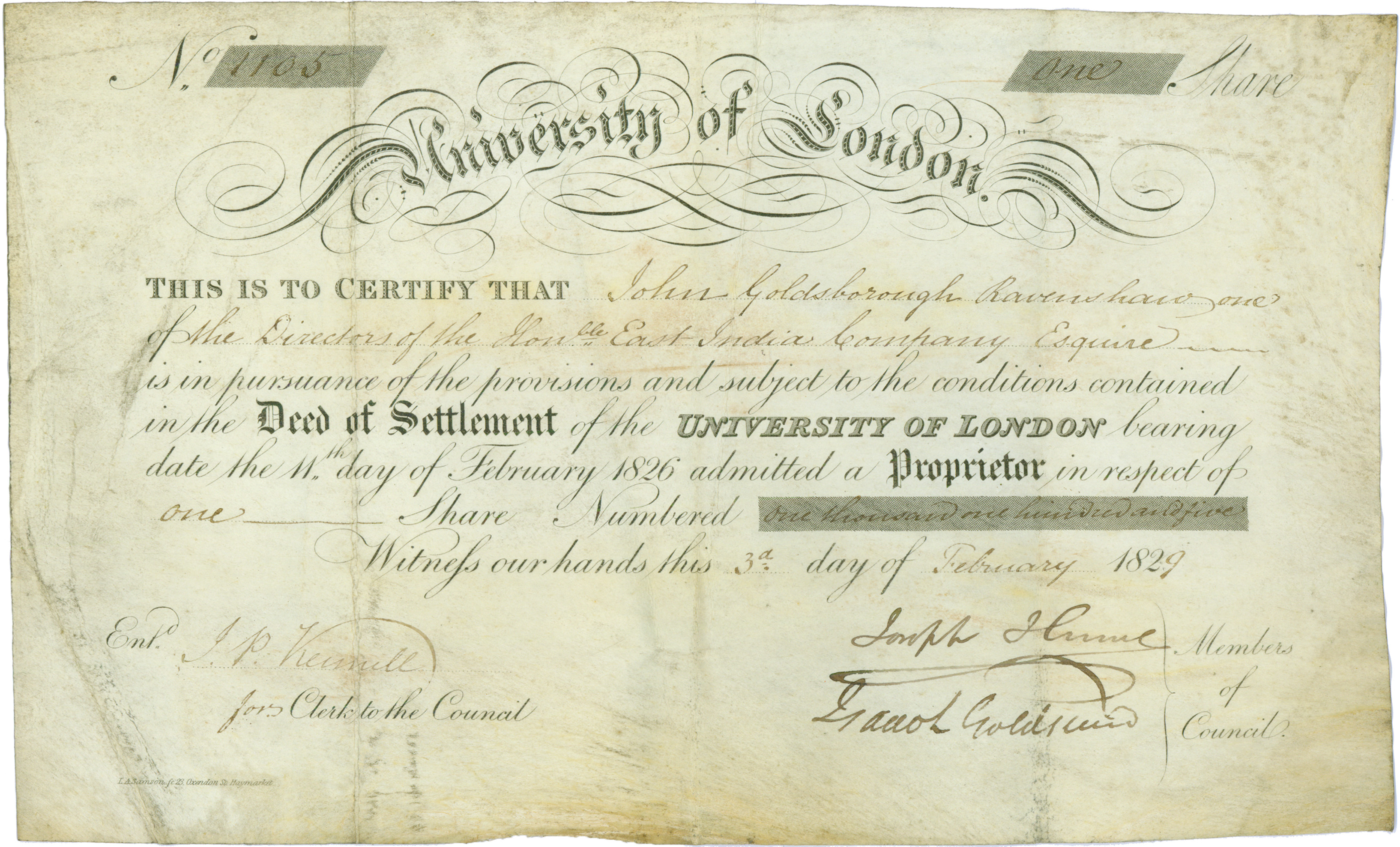
UCL was founded on 11 February 1826 as an alternative to the Anglican universities of Oxford and Cambridge. It took the form of a joint stock company, with shares sold for £100 () to proprietors, under the name of London University, although without legal recognition as a university or the associated right to award degrees. London University's first warden was Leonard Horner, who was the first scientist to head a British university.
Despite the commonly held belief that the philosopher Jeremy Bentham was the founder of UCL, his direct involvement was limited to the purchase of share No. 633, at a cost of £100 paid in nine instalments between December 1826 and January 1830. In 1828, he did nominate a friend to sit on the council, and in 1827, attempted to have his disciple John Bowring appointed as the first professor of English or History, but on both occasions his candidates were unsuccessful. However, Bentham is commonly regarded as the "spiritual father" of UCL, as his ideas on education and society were influential with the institution's founders, particularly James Mill (1773–1836) and Henry Brougham (1778–1868).
In 1828, the chair of political economy at London University was created, with John Ramsay McCulloch as the first incumbent. In 1829, the university appointed the first professor of English in England, although the course concentrated on linguistics and the modern teaching of English – studying English literature – was introduced by King's College London in 1831. In 1830, London University founded the London University School, which would later become University College School. In 1833, the university appointed Alexander Maconochie, secretary to the Royal Geographical Society, as the first professor of geography in Britain. Classes in medicine began at the opening of the college in 1828, and in 1834 University College Hospital (originally North London Hospital) opened as a teaching hospital for these classes, which were organised into a faculty of medicine in 1836.
1836 to 1900 – University College, London
After almost a decade of attempting to win recognition as a university and the right to award degrees, including an Address to the Crown from the House of Commons, the proprietors of London University accepted the government's proposal to establish the University of London as an independent examining body, accepting the status of a college for their institution. As a result, the proprietors of London University were incorporated by royal charter under the name University College, London on 28 November 1836. On the same day, the University of London was created by royal charter as a degree-awarding examining board for students from affiliated schools and colleges, with University College and King's College, London being named in the charter as the first two affiliates. The first students from UCL and King's matriculated as undergraduates in 1838 and the first degrees were awarded to students of the two colleges in 1839.
There had been an intention to establish a course in engineering at the college's opening but no professor was appointed until 1840 or 1841, after engineering courses had started at Durham University (1837) and King's College London (1838). The Slade School of Fine Art was founded as part of University College in 1871, following a bequest from Felix Slade.
In 1878, the University of London gained a supplemental charter making it the first British university to be allowed to award degrees to women. The same year, UCL admitted women to the faculties of Arts and Law and of Science, although women remained barred from the faculties of Engineering and of Medicine (with the exception of courses on public health and hygiene). UCL's admission of women in 1878 came almost three decades after Bedford College became the first institution to offer university-level education for women in Britain, and the establishment of the University of London's General Examination for Women in 1868.
The Ladies' Educational Association held classes for women from 1868, taught by professors from UCL but independently of the college. From 1871 to 1872 these were held inside the college building, although still independently of the college. From 1872, some professors, particularly Edward Poynter of the Slade, started to admit women to their classes. The full opening on the faculties of arts, science and law in 1878 came two years after the admission of women alongside men at the University of Bristol from its foundation (as University College Bristol) in 1876. The first woman to officially enrol in architecture at UCL was Gertrude Leverkus in 1915, although Ethel and Bessie Charles had been allowed to audit classes in the 1890s. Women were finally admitted to medical studies during the First World War in 1917, although limitations were placed on their numbers after the war ended.
A new royal charter granted to the University of London in 1858 effectively removed the affiliation of colleges to the university. Dissatisfaction from the colleges and the desire for a "teaching university" in London led to royal commissions that reported in 1888 and 1892 and the reconstitution of the university under the University of London Act 1898.
1900 to 1976 – University of London, University College{{anchor|University College London (Transfer) Act 1905}}
| use_new_UK-LEG = | UK-LEG_title = Following the University of London's reconstitution in 1909, transforming it from an examining board to a federal university with constituent "schools", UCL, became a school of the University of London. While most of the colleges that became schools of the university retained their autonomy, UCL chose to be merged into the university in 1907 under the University College London (Transfer) Act 1905 (5 Edw. 7. c. xci) and surrendered its legal independence in return for gaining a greater say in the running of the university. Its formal name became University of London, University College, although for most informal and external purposes the name "University College, London" (or the initialism UCL) was still used. it remains listed as "University of London: University College" on US Federal Student Aid applications.
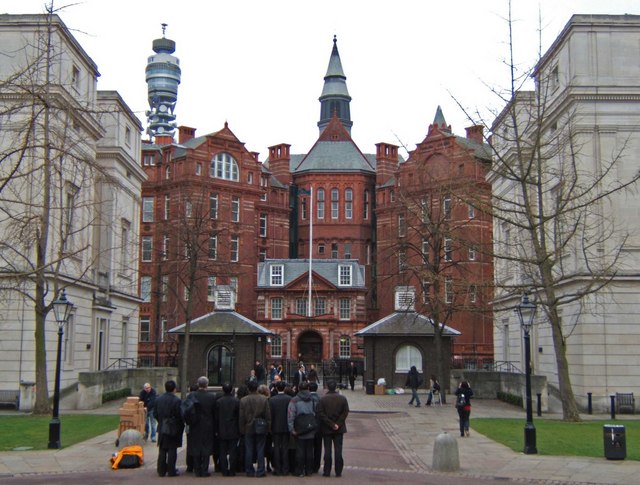
1900 also saw the decision to appoint a salaried head of the college. The first incumbent was Carey Foster, who served as Principal (as the post was originally titled) from 1900 to 1904. He was succeeded by Gregory Foster (no relation), and in 1906 the title was changed to Provost to avoid confusion with the principal of the University of London. Gregory Foster remained in post until 1929. In 1906, the Cruciform Building was opened as the new home for University College Hospital. UCL opened the first department and chair of chemical engineering in the UK, funded by the Ramsay Memorial Fund, in 1923.
In 1904, Francis Galton donated £1,000 to the University of London for a eugenics laboratory; this transferred to UCL in 1907 with Karl Pearson as its director. UCL apologised for its "fundamental role in the development, propagation and legitimisation of eugenics" in 2021.
In 1911, UCL received an anonymous donation of £30,000 () for a building for its school of architecture. In 1919 the donor consented to being named as Herbert Bartlett and the school was renamed in his honour.
UCL sustained considerable bomb damage during the Second World War, including the complete destruction of the Great Hall, the Carey Foster Physics Laboratory and the Ramsay Laboratory. Fires gutted the library and destroyed much of the main building, including the dome; it was not until 1954 that the main building was fully restored. The departments were dispersed across the country to Aberystwyth, Bangor, Gwynedd, Cambridge, Oxford, Rothamsted near Harpenden, Hertfordshire and Sheffield, with the administration at Stanstead Bury near Ware, Hertfordshire. The first UCL student newspaper, Pi, was founded in 1946. The Institute of Jewish Studies relocated from Manchester to UCL in 1959. The Mullard Space Science Laboratory was established in 1967.
In 1973, Peter Kirstein's research group at UCL became one of only two international nodes on the ARPANET, later becoming part of SATNET. UCL's implementation of internetworking between the ARPANET and early British academic networks was the first international heterogeneous resource sharing network. UCL played a significant role in the very earliest experimental Internet work and adopted TCP/IP in 1982, ahead of the ARPANET.See also the Final Report of the Stanford University TCP project, , written by Cerf in 1980. This was originally, in TCP version 2 in 1977 (IEN5), to be entitled "Final Report of the Internetwork TCP Project" and to be written by Cerf [Stanford], Stephen Edge [UCL], Andrew Hinchley [UCL], Richard Karp [Stanford], Peter T. Kirstein [UCL], and Paal Spilling [NDRE]. This title was carried over into version 3 (IEN21) and into the list of references in version 4 (IEN55) while the present title was adopted in the preface.
The college's senior common room, the Housman Room, remained men-only until 1969. After two unsuccessful attempts, a motion was passed that ended segregation by sex at UCL. This was achieved by Brian Woledge (Fielden Professor of French at UCL from 1939 to 1971) and David Colquhoun, at that time a young lecturer in pharmacology.
1976 to 2005 – University College London{{anchor|University College London Act 1979}}
In 1976, a new charter restored UCL's legal independence, although still without the power to award its own degrees. Under this charter the college became formally known as University College London. This name abandoned the comma used in its earlier name of University College, London.
In 1993, a reorganisation of the University of London meant that UCL and other colleges gained direct access to government funding and the right to confer University of London degrees themselves. This led to UCL being regarded as a de facto university in its own right.
Mergers were a major feature of this period of UCL's history. In 1986, the college merged with the Institute of Archaeology. In 1988, UCL merged with the Institute of Laryngology & Otology, the Institute of Orthopaedics, the Institute of Urology & Nephrology and Middlesex Hospital Medical School.
Mergers continued in the 1990s, with the Institute of Child Health joining in 1995, the School of Podiatry in 1996 and the Institute of Neurology in 1997. In 1998, UCL merged with the Royal Free Hospital Medical School to create the Royal Free and University College Medical School (renamed the UCL Medical School in October 2008). In 1999, UCL merged with the School of Slavonic and East European Studies and the Eastman Dental Institute.
Proposals for a merger between UCL and Imperial College London were announced in 2002. The proposal provoked strong opposition from UCL teaching staff and students and the AUT union, which criticised "the indecent haste and lack of consultation", leading to its abandonment by UCL provost Sir Derek Roberts.
From 2005
UCL was granted its own taught and research degree awarding powers in 2005, and all UCL students registered from 2007/08 qualified with UCL degrees. The same year, UCL adopted a new corporate branding under which the name University College London was replaced by the initialism UCL in all external communications.
UCL established the UCL School of Energy & Resources (later UCL Australia) in Adelaide, Australia, in 2008 as the first campus of a British university in the country. The school was based in the historic Torrens Building in Victoria Square. In 2011, the mining company BHP Billiton agreed to donate AU$10 million to UCL to fund the establishment of two energy institutes – the Energy Policy Institute, based in Adelaide, and the Institute for Sustainable Resources, based in London. UCL Australia closed in December 2017, with students and academic staff transferring to the University of South Australia. Since 2018, UCL and the University of South Australia have offered joint master's degrees in data science and in energy systems with study in Adelaide and London.
In 2011, UCL announced plans for a £500 million investment in its main Bloomsbury campus over 10 years, as well as the establishment of a new campus, UCL East, next to the Olympic Park in Stratford in the East End of London. In 2018, UCL opened UCL at Here East, at the Queen Elizabeth Olympic Park, offering courses jointly between the Bartlett Faculty of the Built Environment and the Faculty of Engineering Sciences. The first undergraduate students, on a new Engineering and Architectural Design MEng, started in September 2018. One Pool Street, the first building on the UCL East campus, opened in November 2022. UCL East was officially opened, along with the Marshgate building that completed phase 1 of the development, in September 2023 by Olympic gold medalist and UCL alumna Christine Ohuruogu.
UCL continued to grow through mergers with smaller colleges in the University of London. On 1 January 2012 the School of Pharmacy, University of London merged with UCL, becoming the UCL School of Pharmacy within the Faculty of Life Sciences. UCL and the Institute of Education formed a strategic alliance in October 2012, followed by a full merger in December 2014.
UCL paid tens of thousands of pounds to settle ten sexual harassment claims against staff in the 2017/18 academic year, a rise from four cases the year before. Following pressure from victims, and after physicist Emma Chapman won the legal right to speak freely about her abuse at the university, UCL announced in 2018 that it would abandon non-disclosure settlements in settlements. In 2020, UCL became the first Russell Group university to ban romantic and sexual relationships between lecturers and their students.
It was discovered in 2018 that an annual eugenics conference, the London Conference on Intelligence, had been held at UCL, as an external paid event, between 2014 and 2017. An enquiry found that the organiser, an honorary lecturer, did not correctly follow the room booking procedure, including claiming that no controversial topics would be discussed, leaving the university unaware of the nature of the conference. Following the revelation, UCL announced in 2018 that it would launch an enquiry into the university's historical links with eugenics. This reported in 2020, but covered only historical eugenics and did not address the 2014–17 conferences, leading to a majority of the authors refusing to sign the final report. The Galton Lecture Theatre, Pearson Lecture Theatre and Pearson Building were all renamed in 2020, and in 2021 UCL apologised for its part in promoting eugenics during the first half of the 20th century. UCL was criticised (along with Oxford, Imperial and other London universities) in 2021 for accepting money from the Alexander Mosley Charitable Trust, established to hold the fortune left to Max Mosley by his father, British fascist leader Oswald Mosley. UCL received £500,000 to establish a forensic evidence interpretation laboratory.
Following the passing of the University of London Act 2018, which allowed member institutions to become universities in their own right while remaining part of the University of London, UCL applied for university status in 2019. The application was approved by the Office for Students in 2022 and a supplemental charter was sealed on 17 April 2023, granting UCL university status.
Campus and locations
Bloomsbury
UCL is primarily based in the Bloomsbury area of the London Borough of Camden, in Central London. The main campus is located around Gower Street, with many other departments close by in Bloomsbury. Many health institutes are located close to associated hospitals, including the UCL Queen Square Institute of Neurology and the National Hospital for Neurology and Neurosurgery in Queen Square, the UCL Great Ormond Street Institute of Child Health and Great Ormond Street Hospital for Children,
Historic UCL buildings in Bloomsbury include the grade I listed UCL Main Building, including the original Wilkins building designed by William Wilkins, and, directly opposite on Gower Street, the early 20th century grade II listed Cruciform Building, the last major building designed by Alfred Waterhouse. Nearby are the grade II listed Kathleen Lonsdale Building, UCL's first purpose-built chemistry laboratory, and the grade II listed Rockefeller Building. Elsewhere in Bloomsbury is the 1970s grade II* Institute of Education building by Denys Lasdun and Partners. Much of the estate falls within the Bloomsbury Conservation Area, designated in 1968. Important contemporary buildings include the School of Slavonic and East European Studies building (RIBA Award winner 2006) and the Sainsbury Wellcome Centre for Neural Circuits and Behaviour building (LEAF Award for best façade design and engineering and overall winner 2016).
In August 2024, UCL won a court case to regain control of part of its campus which had been occupied by pro-Gaza protesters since May.
|File:Wilkins Building 2, UCL, London - Diliff (cropped).jpg |Wilkins Building and Main Quad |File:Rockefeller Building, UCL.jpg |The Rockefeller Building on University Street, one of UCL's largest premises |File:Kathleen Lonsdale Building, UCL.jpg |The Kathleen Lonsdale Building on Gower Place, home of UCL's department of earth sciences |File:SWC Building Image.jpg |The Sainsbury Wellcome Centre for Neural Circuits and Behaviour building
UCL East
UCL has a second campus, UCL East, at the Queen Elizabeth Olympic Park in Stratford, East London. The first building, with three floors of teaching and research space as well as accommodation for 500 students in two towers, opened in 2022, and the second, with eight floors of teaching and research space, opened in 2023. A further four buildings are planned for construction in the 2030s. UCL also operates a campus within Here East, the former Olympic park media centre.
Other sites

Elsewhere in Central London are the UCL Institute of Ophthalmology adjacent to Moorfields Eye Hospital in Clerkenwell, the Royal Free Hospital and the Whittington Hospital campuses of the UCL Medical School, and a number of other associated teaching hospitals. The UCL School of Management is on levels 38 and 50 (penthouse) of One Canada Square in the financial district of Canary Wharf. The UCL Observatory is in Mill Hill and the Mullard Space Science Laboratory is based in Holmbury St Mary, Surrey. The UCL Athletics Ground is in Shenley, Hertfordshire.
Student housing
Main article: Halls of residence at University College London
UCL owns 26 halls of residence with around 7,000 student beds. The university guarantees accommodation to single full-time first-year undergraduate students who have not previously lived in London while studying at a university, and who make a firm acceptance of a place and apply for accommodation by 10 June each year, and to single overseas first-year postgraduates at UCL who have not previously lived in London while studying at a university, and who make a firm acceptance of a place and apply for accommodation by 30 June each year. Accommodation is also guaranteed for students who are under 18 at the start of the academic year and for students who are care-leavers. There is only limited accommodation available in university halls for returning students and others who do not meet the criteria for a guaranteed place. UCL students are also eligible, as students of a member institution of the University of London, to apply for places in the University of London intercollegiate halls of residence.
In 2013, UCL's newly built New Hall student accommodation building on Caledonian Road, designed by Stephen George and Partners, was awarded the Carbuncle Cup and named the country's worst new building by Building Design magazine, with the comment "this is a building that the jury struggled to see as remotely fit for human occupation". Islington Council had originally turned down planning permission for the building, but this had been overturned on appeal. As it is classified as a hotel or guest house, it was exempt from many of the standards that cover residential buildings, such as having daylight in the rooms.
The UCL East development includes 532 student rooms in One Pool Street, which opened in 2022. Further accommodation will be available in the Marshgate building, expected to open in 2023, and at the second Pool Street site.
Environmental initiatives
UCL's new Student Centre, which opened in 2019, was designed to be environmentally friendly and was one of only 320 buildings worldwide (at the time) to be certified outstanding by BREEAM. This certification requires innovation throughout the design, engineering and construction process, and places the Student Centre among the top 1% of non-domestic buildings in the UK for sustainability. The UCL Student Centre was a finalist at the Green Gown Awards in 2019.
Also in 2019, UCL launched a Strategy for Sustainable UCL 2019–24, including three initiatives to promote sustainability. The Positive Climate initiative saw UCL pledge to have a 40% reduction in energy usage, all energy to come from renewables, and all UCL buildings to be carbon neutral by 2024, along with achieving net zero carbon emissions for UCL by 2030.
A second initiative, The Loop, promotes circular economy. UCL set a target of reducing waste per person by 20% between 2019 and 2024, while aiming for an 85% recycling rate and the elimination of single-use plastics on campus. The third initiative, Wild Bloomsbury, promotes biodiversity. UCL set a target of creating 10000 m2 of biodiverse green space on campus by 2024.
UCL was ranked joint fifth globally for sustainability in the QS World University Rankings: Sustainability 2025. In the national People and Planet University League for 2023/24, it was ranked 12th (1st class).
Organisation and administration
Governance
The two main bodies in UCL's governance structure are the council and the academic board, both of which are established by the royal charter and with powers defined by the statutes. There is also a University Management Committee, which is the executive committee responsible for the day-to-day operations of the institution. This comprises the President and Provost, the vice-presidents, the vice-provosts, the pro-provost of UCL East, the deans of the faculties, the chief financial officer, chief information officer, and chief people officer, the chief of staff, the general consul, the executive director of media and marketing, and the director of media relations.
The senior leadership team at UCL includes the visitor, a position in English charity law that oversees the operation of the institution. That there shall be a visitor of the college is specified by the royal charter, as is that the position is to be held by the Master of the Rolls, the second most senior judge in England and Wales.
UCL's council comprises 20 members, of whom 11 are members external to UCL; seven are UCL academic staff, including the provost, three UCL professors and three non-professorial staff; and two are UCL students. The chair is appointed by council for a term not normally exceeding five years. The chair is ex officio chair of the honorary degrees and fellowships committee, nominations committee and remuneration and strategy committee. the chair of the council is international businessman and UCL alumnus Victor Chu.
The academic board plays a role similar to the senate in other institutions. It is the senior academic body responsible for advising council on academic matters and also elects academic members to council. It is, however, a much larger body than the senates at many other universities, including all professors as well as elected representatives of other academic and non-academic staff.
UCL's principal academic and administrative officer is the President and Provost, who is also UCL's designated accountable officer for reporting to the Office for Students on behalf of UCL. The provost is appointed by Council after consultation with the academic board, and is ex officio a member of council and chair of the academic board. Michael Spence has been president and provost since January 2021, when he succeeded Michael Arthur.
Vice-provosts are appointed by council on the recommendation of the provost or the academic board, to assist and advise the provost as required. The vice-provosts are members of the provost's senior management team. There are four vice-provosts (for education and student experience; health; research, innovation and global engagement; and faculties). There are also four vice-presidents, who are also members of the senior management team but whose role and manner of appointment is not specified in the statutes, for strategy, external engagement, advancement and operations.
The deans of UCL's faculties are appointed by the council and are members of the provost's senior management team. The deans' principal duties include advising the provost and vice-provosts on academic strategy, staffing matters and resources for academic departments within their faculty; overseeing curricula and programme management at faculty level; liaising with faculty tutors on undergraduate admissions and student academic matters; overseeing examination matters at faculty level; and co-ordinating faculty views on matters relating to education and information support.
Faculties and departments


UCL's research and teaching is organised into eleven faculties, each of which contains a number of schools, departments and institutes. The establishment of faculties and academic departments is formally the responsibility of UCL's council, with advice from the academic board.
| Faculty | Staff | Students | Undergraduates | Postgraduates | Taught | Research | Arts and Humanities | Bartlett (Built Environment) | Brain Sciences | Engineering Sciences | IOE (Education and Society) | Laws | Life Sciences | Mathematical and Physical Sciences | Medical Sciences | Population Health Sciences | Social and Historical Sciences |
|---|---|---|---|---|---|---|---|---|---|---|---|---|---|---|---|---|---|
| 620 | 2,684 | 943 | 226 | ||||||||||||||
| 1,272 | 925 | 2,836 | 411 | ||||||||||||||
| 1,725 | 929 | 1,961 | 1,034 | ||||||||||||||
| 667 | 4,373 | 2,791 | 1,122 | ||||||||||||||
| 1,318 | 1,515 | 3,988 | 684 | ||||||||||||||
| 175 | 844 | 450 | 49 | ||||||||||||||
| 964 | 2,632 | 1,084 | 592 | ||||||||||||||
| 1,135 | 3,927 | 929 | 680 | ||||||||||||||
| 1,321 | 2,356 | 1,287 | 430 | ||||||||||||||
| 1,578 | 247 | 1,365 | 447 | ||||||||||||||
| 1,101 | 4,130 | 2,054 | 488 |
There are also academic units outside the faculty structure, namely:
- Sainsbury Wellcome Centre for Neural Circuits and Behaviour
The School of Slavonic and East European Studies remained autonomous until 2023. It was integrated into UCL Arts and Humanities faculty at the time with 193 staff; 559 undergraduate students; 57 taught postgraduate students; 29 research postgraduate students (2022/23).
There are additional staff employed outside the faculty structure in the university administration.
Finances
In the financial year ended 31 July 2024, UCL had a total income (excluding share of joint ventures) of £2.03 billion (2022/23 – £1.93 billion) and a total expenditure of £1.47 billion (2022/23 – £1.71 billion). Key sources of income included £538.8 million from research grants and contracts (2022/23 – £526.7 million), £971.2 million from tuition fees and education contracts (2022/23 – £929.3 million), £228.1 million from funding body grants (2022/23 – £236.7 million) and £34.1 million from donations and endowments (2022/23 – £31.5 million). At year end UCL had endowments of £174.8 million (31 July 2023 – £156.8 million) and total net assets of £2.19 billion (31 July 2023 – £1.61 million).
A report by London Economics in 2022 found that UCL generates around £10 billion annually for the UK economy. The largest contributor to this is through the spread of its research and knowledge, which is worth £4 billion, with another £3 billion being added by the impact of UCL's own spending. Other contributions come from encouraging graduates to create jobs and investment, and from nurturing company spin-offs and start-ups. The report found that in 2018–19, UCL had supported 234 graduate start-ups and 83 spinout companies, with a total turnover of £110 million and employing almost 3,000 people. The report also found that UCL's spending supported 19,000 jobs across the UK, with over 7,000 of these being outside London.
Terms
The UCL academic year is divided into three terms. For most departments, First Term runs from late September to mid-December, Second Term from mid-January to late March, and Third Term from late April to mid-June, with reading weeks in early November and mid-February. Certain courses at the medical school, the faculty of education and society, and the school of pharmacy operate on different terms.
Logo and colours

While many universities use their logo for most communications and branding and a coat of arms only for specific ceremonial and official use, UCL exclusively uses a logo and has no coat of arms. The present logo was adopted as part of a rebranding exercise in August 2005.
A pseudo-heraldic "UCL crest" – a purple shield depicting a raised bent arm dressed in armour between two gold laurel branches holding a green upturned open wreath, with the college motto on a blue celeste ribbon beneath the laurel branches – can be found on the internet. A version of this badge (not on a shield) appears to have been used by UCL Union from shortly after its foundation in 1893. However, the badge has never been the subject of an official grant of arms, and departs from several of the rules and conventions of heraldry. It is not an official logo, although modified forms are used by some by sports teams and societies. The official Team UCL logo, used (with variants) by many sports teams, uses a shield divided into the colours of purple (lower) and blue celeste (upper), but none of the other elements (laurels, wreaths, armoured arm, motto) are present; the only graphic is a depiction of the UCL portico. Students' Union UCL requests teams not to modify this logo, but this is widely ignored.
UCL's motto, "Cuncti adsint meritaeque expectent praemia palmae" is a quotation from Virgil's Aeneid, and translates into English as "Let all come who by merit deserve the most reward".
UCL's traditional sporting and academic colours are purple and blue celeste. UCL uses a palette of 25 colours (including the two traditional colours) in its visual identity; the logo can be used in many different combinations of these colours.
Memberships, affiliations and partnerships
UCL is a member institution of the federal University of London and was one of the two colleges affiliated from the university's founding in 1836 (the other being King's College London). UCL was a founding member of the Russell Group, an association of 24 British research universities established in 1994, and is regarded as forming part of the 'golden triangle', an unofficial term for the research-intensive universities located in the southern English cities of Cambridge, London and Oxford
UCL has been a member of the League of European Research Universities since January 2006. UCL is also a member of the Association of Commonwealth Universities, the European University Association, the global U7+ Alliance and the US Universities Research Association, and has a major collaboration with Yale University, the Yale UCL Collaborative. It also has partnerships with universities in Australia,the University of Sydney Canada,the University of Toronto China,Peking University, Zhejiang University, Shanghai Jiao Tong University and the University of Hong Kong India,All India Institutes of Medical Sciences, the Indian Institute of Science, the Indian Institute of Technology, Delhi and the Indian Institute of Technology, Madras Japan,Osaka University Singaporethe National University of Singapore and Thailand.HRH Princess Chulabhorn College of Medical Science
UCL formed the Science and Engineering South engineering and physical sciences research alliance with the universities of Cambridge, Oxford, Southampton and Imperial College London in May 2013. It was also one of the founding members of the Alan Turing Institute, the UK's national institute for data sciences and artificial intelligence, in 2015, with the universities of Cambridge, Edinburgh, Oxford and Warwick.
UCL is a partner in UCLPartners, an academic health science centre, along with multiple NHS trusts, integrated care systems, research and innovation partners, and other universities. UCL is a partner with the National Institute for Health Research, the University College London Hospitals NHS Foundation Trust and UCLPartners in the UCLH Biomedical Research Centre. UCL is also a university partner of the Francis Crick Institute, a major biomedical research centre in London.
UCL offers dual degrees and joint degrees with other universities and institutions, including the University of Cologne, Columbia University, the University of Hong Kong, Imperial College London (ended in 2023) and New York University.
UCL is the sponsor of the UCL Academy, a secondary school in the London Borough of Camden. The school opened in September 2012 and was the first in the UK to have a university as sole sponsor. UCL also has a strategic partnership with Newham Collegiate Sixth Form Centre.
Academic profile
Research
In 2023/24, UCL had an income from research grants and contracts of £538.8 million, making up 26.6% of all revenue. The largest sources of research income were research council grants (£175.9 million) and British charities (£154.2 million). A further £164 million of recurrent research funding was allocated to UCL by Research England, making up 8% of income.
UCL submitted 3,432 staff (3,177 FTEs) across 32 units of assessment (areas of research) to the 2021 Research Excellence Framework (REF) assessment. 58% of submitted research was rated 4* ('world leading'), the sixth highest in the REF, and a further 34% as 3* ('internationally excellent'). Overall, UCL was ranked second for both research power and market share by both Times Higher Education and Research Professional News, and sixth on research quality (GPA) by Times Higher Education. UCL submitted more units of assessment to the 2021 REF than any other university. However, UCL's market share (based on the funding formula) declined from 6.23% following the 2014 REF to 5.34%, despite the overall improvement, reflecting increases in research quality across the sector.
Research centres
UCL operates a large number of disciplinary-specific research centres in partnership with other research institutions and private enterprises. Notable examples include:
- The London Centre for Nanotechnology (LCN), a multidisciplinary research centre in physical and biomedical nanotechnology based at UCL's campus in Bloomsbury. It is a partnership between UCL, Imperial College London and King's College London. The LCN was established as a joint venture between UCL and Imperial College London in 2003; King's College London joined the LCN in 2018.
- The Centre for the Study of the Legacies of British Slave-ownership, which was established at UCL with the support of the Hutchins Center for African and African American Research at Harvard University. It incorporates two earlier projects: the Legacies of British Slave-ownership project (2009–2012) and the Structure and significance of British Caribbean slave-ownership 1763–1833 project (2013–2015).
- The Sainsbury Wellcome Centre for Neural Circuits and Behaviour (SWC), a neuroscience research centre established at UCL with funding from the Gatsby Charitable Foundation and Wellcome Trust and opened in 2016.
Publishing and commercialisation
In 2020/21, UCL had an income of £7.3 million from intellectual property and £25.2 million from the sale of shares in spin-off companies. As of 2020/21, UCL had the second largest patent portfolio of any UK university (after Oxford) with 2,391 patents. It granted the third largest number of intellectual property licences (after Oxford and the University of East Anglia), with 2,235.
UCL Business is a technology transfer company which is wholly owned by UCL. It has three main activities: licensing technologies, creating spin-out companies, and project management. UCL Business supports spin-out companies in areas including discovery disclosure, commercialisation, business plan development, contractual advice, incubation support, recruitment of management teams and identification of investors. In the area of licensing technoloiges, the company provides commercial, legal and administrative advice to help companies broker licensing agreements. UCL Business also provides UCL departments and institutes with project management services for single or multi-party collaborative industry projects. The company transferred £11 million of royalty income to UCL in 2023/24 (2022/23: £3.1 million).
Launched in 2015, UCL Press is a new university press wholly owned by UCL. It was the first fully open access university press in the UK, and publishes monographs, textbooks and other academic books in a wide range of academic areas which are available to download for free, in addition to a number of journals. As of December 2024, UCL Press had had more than 13 million downloads of its open access books and journal articles in 242 countries and territories worldwide. More than 10 million of these were for its open access books. UCL Consultants is an academic consultancy services company which is wholly owned by UCL, which provides four main service offerings: Academic Consultancy, Bespoke Short Courses, Testing & Analysis and Expert Witness.
Libraries
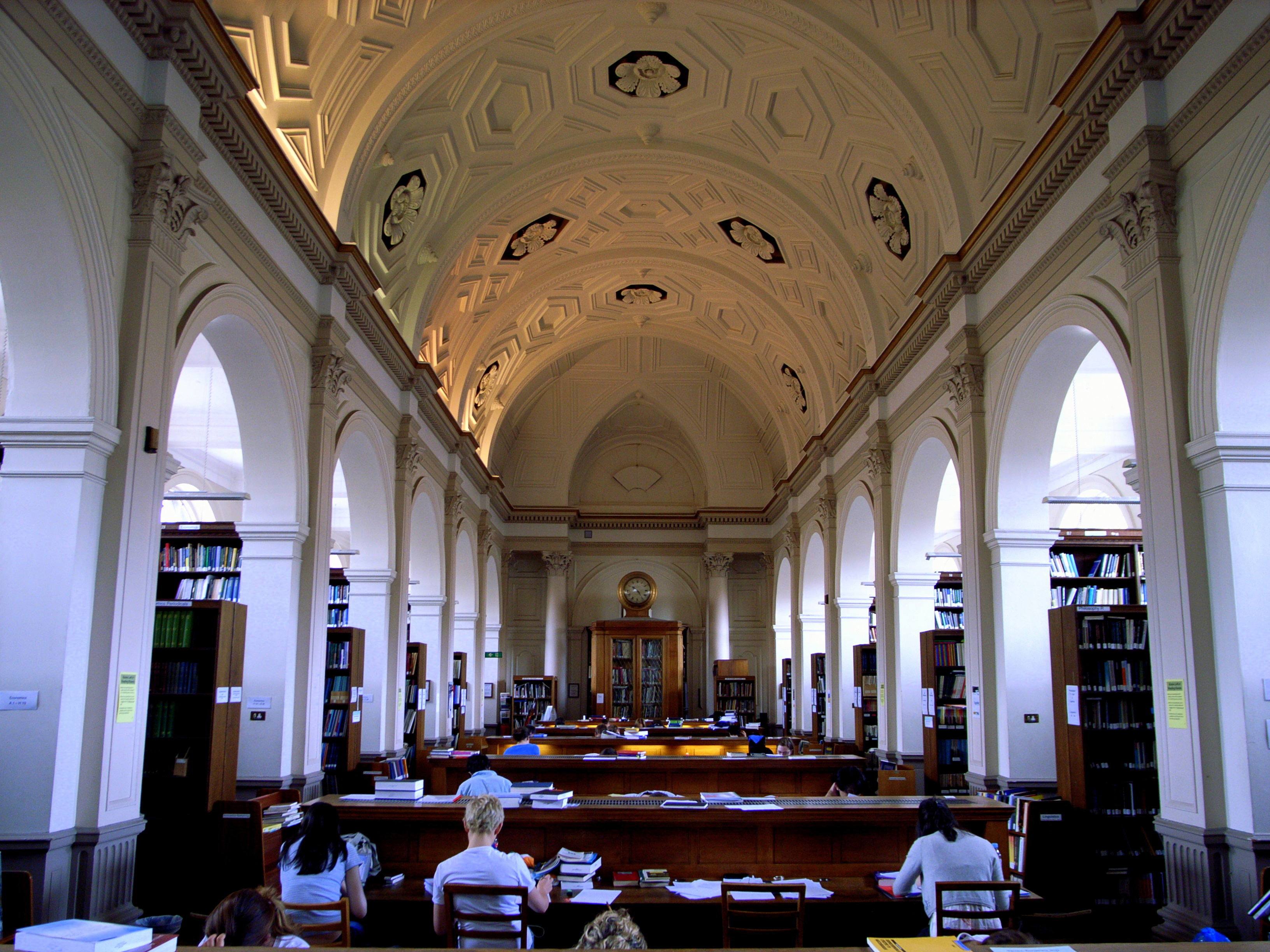
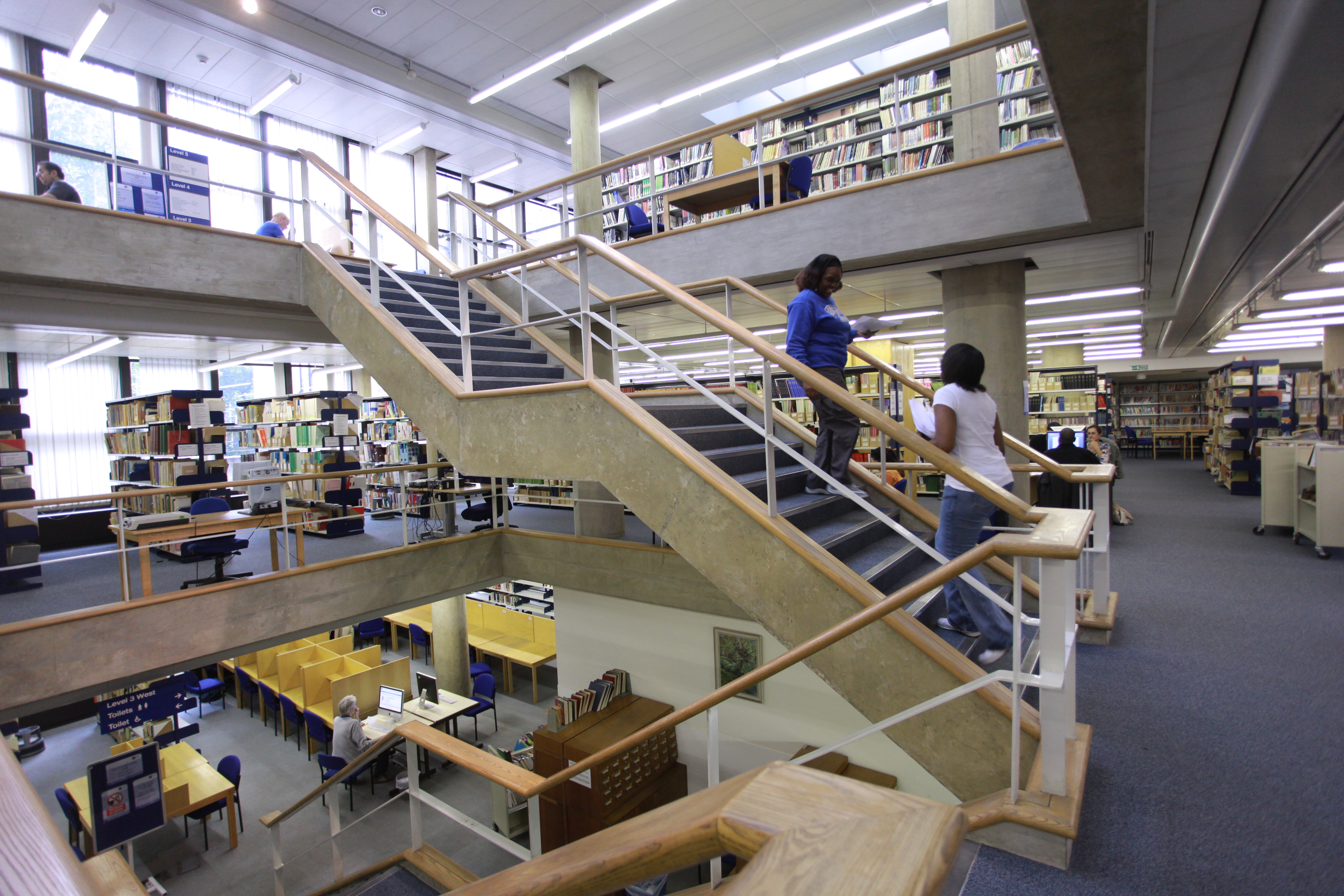
The UCL library system comprises 18 libraries located across the Bloomsbury and UCL East campuses. The libraries contain a total of over 2 million books. The largest library is the UCL Main Library, which is located in the UCL Main Building and contains collections relating to the arts and humanities, economics, history, law and public policy. It holds the combined collections of the former Boldero and Clinical Sciences libraries which developed within the Middlesex Hospital, University College Hospital and Royal Free & University College Medical Schools up until their merger in 2005.
Other libraries include the UCL Bartlett Library (architecture and town planning), the UCL Eastman Dental Institute Library (oral health sciences), the UCL Institute of Archaeology Library (archaeology and egyptology), the UCL Institute of Education's Newsam Library (education and related areas of social science), the UCL Institute of Neurology Rockefeller Medical Library (neurosurgery and neuroscience), the Joint Moorfields Eye Hospital & the UCL Institute of Ophthalmology Library (biomedicine, medicine, nursing, ophthalmology and visual science), the UCL Language & Speech Science Library (audiology, communication disorders, linguistics & phonetics, special education, speech & language therapy and voice) and the UCL School of Slavonic and East European Studies Library (the economics, geography, history, languages, literature and politics of Eastern Europe).
UCL staff and students have full access to the main libraries of the University of London – the Senate House Library and the libraries of the institutes of the School of Advanced Study – which are located close to the main UCL campus in Bloomsbury. These libraries contain over 3.7 million books and focus on the arts, humanities and social sciences.
UCL's open access institutional repository, UCL Discovery, and UCL Press, UCL's open access academic press are managed by UCL Library Services.
Special collections
UCL's Special Collections contains UCL's collection of historical or culturally significant works. It holds over 150,000 rare books, including 179 incunabula, as well as over 600 collections of archives and manuscripts. The incunabula include a 1477 edition of Dante's Divine Comedy, and a 1493 edition of the Nuremberg Chronicle donated by Jeremy Bentham.
UCL's most significant works are housed in three strong rooms. The special collection includes first editions of Isaac Newton's Principia, Charles Darwin's On the Origin of Species and James Joyce's Ulysses.
Museums

UCL is responsible for several museums and collections in a wide range of fields across the arts and sciences, including:
- Petrie Museum of Egyptian Archaeology: Founded in 1892 by a donation from Amelia Edwards of several hundred Egyptian items, the museum now contains around 80,000 items and covers the history of the Nile valley from prehistoric times through to the Islamic period. It is named after William Flinders Petrie, the first Edwards Professor at UCL, who excavated dozens of sites in his career and sold his collection to the college in 1913. The Petrie Museum is a designated collection under the Arts Council England Designation Scheme for "pre-eminent collections held in museums, libraries and archives across England".
- UCL Art Museum: the art collection originated as a teaching and research collection for the Slade, and contains works by women artists dating back to the 1890s. A series of plaster casts of full-size details of sculptures by John Flaxman is located inside the library under the dome of the UCL Main Building. It was announced in 2024 that this would be closed to allow the area to become a flexible event space, with the objects placed in storage until a new gallery could be provided elsewhere.
- Grant Museum of Zoology and Comparative Anatomy: Established in 1827 by Robert Edmund Grant, UCL's first professor of comparative anatomy and zoology, for teaching purposes. Grant bequeathed his collection of 10,000 specimens to UCL upon his death. With other additions, the museum now contains around 68,000 specimens, including dodo bones and a rare quagga skeleton.
Reputation and rankings
| Times/Sunday_Times = 9
; National UCL is ranked as one of the top fifteen universities in all three of the main UK university league tables. These place more emphasis on teaching and student experience than global rankings, using criteria such as teaching quality and learning resources, entry standards, employment prospects, research quality and drop-out rates. It went through a dip in rankings in the mid 2010s, particularly in The Guardian University Guide, but returned to that publication's top ten in the 2022 rankings, when its ninth position was its best result since 2014.
In the 2023 Complete University Guide subject tables, UCL was ranked in the top ten in 34 subjects out of 42 offered (81%). It was ranked top for American studies, linguistics, speech and language therapy, and architecture.
In the 2023 Guardian University Guide subject tables, UCL is ranked top in construction, surveying and planning. It was ranked in the top ten for 21 of 31 subjects offered (68%).
UCL is ranked top in the 2023 Times/Sunday Times Good University Guide for American studies, building, information systems and management, liberal arts, and town and country planning. It is ranked in the top ten for 31 of 44 subjects offered (70%). The 2023 Good University Guide also ranked UCL 98th in their social inclusion ranking (covering England and Wales). UCL was named University of the Year in the Times/Sunday Times Good University Guide for 2024.
Analysis by the Department for Education in 2018, found that UCL had an impact on earnings of graduates five years after graduation of +15.5% for women (7th highest impact) and +16.2% for men (10th highest impact) compared to average graduates with similar background characteristics (prior attainment, socio-economic status, etc.) and subject choice.
; Global UCL has been consistently ranked in the top 25 of the three major global rankings published over 2013 to 2022, including being in the top ten of the QS World University Rankings over the whole of that period.
In the 2025 Academic Ranking of World Universities, UCL was ranked 14th in the world, having been placed between 15th and 21st in the rankings from 2013 to 2024.
In the 2023 QS World University Rankings (published 2022), UCL was ranked 8th in the world. It has ranked between 4th and 10th in the 2014 to 2024 league tables.
In the Times Higher Education World University Rankings 2023 (published 2022), UCL was ranked 22nd in the world, having ranked between 14th and 22nd in the 2014 to 2023 tables. In the Times Higher Education World Reputation Rankings 2022, UCL was ranked 25th, while in the Times Higher Education Impact Rankings 2022 it was ranked 101–200.
In the 2024–2025 USNWR's Best Global Universities, UCL was ranked joint 7th in the world.
Admissions
| **Average Entry Tariff** (2022) | 173 |
|---|

Admission to UCL is highly selective with an average entry tariff for 2020–21 of 189 UCAS points (approximately equivalent to AAAB at A-level), the 9th highest in the country. According to a Freedom of Information request response, UCL's offer rate for 2021 admission was 36.1% at undergraduate level and 23.5% at postgraduate level across all applicants.The UCAS offer statistics given in the table above cover only UK domiciled applicants
International students have made up the majority of main-scheme applicants to UCL since 2015 and the majority of acceptances since 2017. The ratio of main-scheme applicants to acceptances in 2022 was 10.3 for UK applicants and 9.9 for international applicants. Within the UK, UCL is a local recruiter, with 47.4% of 2022 UK admissions coming from the London region and a further 28.1% from the adjacent East of England and South East regions.
Of UCL's young UK domiciled undergraduates, 32.7% were privately educated in 2019–20, the eighth highest proportion amongst mainstream British universities.
Undergraduate law applicants are required to take the National Admissions Test for Law and undergraduate medical applicants are required to take the BioMedical Admissions Test. Applicants for European Social and Political Studies are required to take the Thinking Skills Assessment (TSA) should they be selected for an assessment day. Medicine, pharmacy and English also interview undergraduate applicants prior to making an offer of admission.
Widening access
| url=https://www.hesa.ac.uk/data-and-analysis/students/table-1 | title=HE student enrolments by HE provider, permanent address, level of study, mode of study, entrant marker, sex and academic year | publisher=HESA | access-date=3 April 2025}} and Ethnicity | Total | Undergraduate Widening Participation Indicators |
|---|---|---|---|---|---|
| British White | {{bartable | 24 | % | 2 | background:red}} |
| British Ethnic Minorities | {{bartable | 24 | % | 2 | background:green}} |
| International EU | {{bartable | 7 | % | 2 | background:blue}} |
| International Non-EU | {{bartable | 46 | % | 2 | background:gray}} |
| Female | {{bartable | 58 | % | 2 | background:purple}} |
| Independent School | {{bartable | 30 | % | 2 | background:orange}} |
| Low Participation Areas | {{bartable | 5 | % | 2 | background:black}} |
UCL runs a contextual offer scheme called Access UCL, whereby eligible applicants can receive conditional offers for courses at UCL that have lower requirements than the standard conditional offers for those courses. Eligibility for Access UCL can be through an applicant living in a deprived areas or an area with low participation in higher education, through having spent time in care, though being a young adult carer, or through being estranged from their family. Applicants must have attended a state school, unless they have spent time in care. Mature applicants are assessed on the same criteria, and are additionally not eligible if they have completed or are on the final year of an undergraduate degree. While the scheme enables applicants from disadvantaged backgrounds to receive contextual offers, it does not guarantee that an offer will be made. Contextual offers vary by course. For example, a contextual offer for the law LLB reduces the requirement from AAA to BBB at A level, but for the physics MSci from AAA to AAB.
UCL also runs week-long UCL Summer Schools for high-achieving students from disadvantaged backgrounds in partnership with the Sutton Trust. These give participants the opportunity to explore London, to develop skills in their chosen subject, to improve their university applications through personal statement workshops and talks by admissions tutors, and to take part in social activities.
In 2023, UCL launched an integrated engineering foundation year programme based at UCL East for disadvantaged students who do not meet the standard entry requirements for the Faculty of Engineering's undergraduate degrees. Candidates must have attended UK state schools for A levels or equivalent (unless they have experienced forced displacement) and have experienced specific socioeconomic or personal circumstances such as time in care, estrangement, forced displacement, or receipt of free school meals. The programme's academic entry requirements are based on UCAS Tariff points rather than letter grades.
The university runs intensive one-year foundation courses, called Undergraduate Preparatory Certificates, in either sciences or humanities, for international students who do not meet the university's requirements for admission.
For UK domiciled young full-time undergraduate entrants in 2020/21, 67.6% came from state schools, significantly below the location-adjusted benchmark of 74.5%, and 4.3% came from low participation neighbourhoods, not significantly different from the location-adjusted benchmark of 4.0%. For UK-domiciled undergraduate entrants in 2022/23, UCAS data shows no significant difference in offer rate with ethnicity or gender. Applicants from the 20% of neighbourhoods with the lowest rates of participation in higher education receive offers at a rate 4.9% higher than would be expected based on their subject choice and predicted grades alone, a statistically significant difference, accounting for 6.3% of all offers. The offer rate for applicants from the 20% of neighbourhoods with the lowest rates of participation in higher education is not significantly different from that expected, with applicants from those neighbourhoods accounting for 48.9% of all offers.
Student life
Students' union
Main article: Students' Union UCL

Founded in 1893, Students' Union UCL, formerly the UCL Union, is one of the oldest students' unions in England, although postdating the Liverpool Guild of Students which formed a student representative council in 1892. Students' Union UCL operates both as the representative voice for UCL students, and as a provider of a wide range of services. It is democratically controlled through General Meetings and referendums, and is run by elected student officers. The union also supports a range of services, including numerous clubs and societies, sports facilities, an advice service, and a number of bars, cafes and shops.
there are over 250 clubs and societies under the umbrella of the UCL Union. These include: UCL Snowsports (one of the largest sports society at UCL, responsible for organising the annual UCL ski trip), Pi Media (responsible for Pi Magazine and Pi Newspaper, UCL's official student publications), the Debating Society (established 1829), and the UCL Union Film Society, with past members including Christopher Nolan.
Faith
From its foundation the college has been deliberately secular; the initial justification for this was that it would enable students of different Christian traditions (specifically Roman Catholics, Anglicans and Nonconformists) to study alongside each other without conflict. In order to cater to people of all faiths, UCL opened a prayer room (with attached ablution facilities) and a silent meditation room in the student centre in February 2019, and there is a quiet contemplation room behind 16–26 Gordon Square. There is also a Christian chaplain (who also serves as interfaith advisor) and there are student societies for most major religions.
Sport
The union runs over 70 sports clubs, including the UCL Cricket Club (Men's and Women's), UCL Boat Club (Men's and Women's clubs), UCL Running, Athletics and Cross Country Club, Polo, and UCL Rugby Club (Men's and Women's), as well as RUMS sports clubs for medical students (from Royal Free, University College and Middlesex, the three medical schools that merged into UCL).
UCL clubs compete in inter-university fixtures in the British Universities and Colleges Sport (BUCS) competition in a range of sports, including athletics, basketball, cricket, fencing, football, hockey, netball, rugby union and tennis. In the 2021/22 season, UCL finished in 16th position in the final BUCS rankings.
UCL sports facilities include a fitness centre at the main UCL campus in Bloomsbury and a 90 acre athletics ground in Shenley, Hertfordshire, part of which is used as the Watford Football Club Training Ground. It also exercises effective control over Somers Town Community Sports Centre, with the power to appoint five of the nine trustees. as well as an activity/dance studio and an all-weather outdoor multi-use games area.
Mascot

The UCL mascot was Phineas MacLino, or Phineas, a wooden tobacconist's sign of a kilted Jacobite Highlander stolen from outside a shop in Tottenham Court Road during the celebrations of the relief of Ladysmith, part of the Second Boer War, in March 1900. In 1922, Phineas was stolen by students from King's, marking the start of 'mascotry', leading to an hour-long battle and the eventual return of Phineas. In 1993, the students' union's centenary year, Phineas was placed in the third floor bar of 25 Gordon Street and the bar named after him. In 2019, the students' union voted to remove the mascot from the bar due to its links to imperialism and British colonialism.
Rivalry with King's College London
Main article: King's College London–UCL rivalry
UCL has a long-running, mostly friendly rivalry with King's College London, but there were frequent clashes in the interwar period which have historically been known as "rags". UCL students have been referred to by students from King's as the "Godless Scum of Gower Street", in reference to a comment made at the founding of King's, which was based on Christian principles. UCL students in turn referred to King's as "Strand Polytechnic".
In 1922 Phineas, the UCL mascot was kidnapped by King's students, leading to a pitched battle in the King's College quad as UCL students recovered their mascot. Shortly after this, King's adopted their own mascot – initially a large papier-mâché beer bottle, soon replaced by Reggie the Lion. During the 1927 rag, Reggie was captured by UCL students and his body filled with rotten apples. During the same year, an attempt by King's students to capture Phineas led to the "Battle of Gower Street", caught on camera by British Pathé. On another occasion, Reggie was castrated by UCL students.
King's students stole the embalmed head of Jeremy Bentham in October 1975, only returning it after UCL paid a ransom to charity. The head is now kept in the UCL vaults.
Student campaigns
In 1956, UCL students organised a silent march progressing against the Soviet oppression of the Hungarian Revolution of 1956. Around 1,300 students from across institutions in London matches from the Royal Albert Hall to the Soviet Embassy. There were active Campaign for Nuclear Disarmament and anti-apartheid students groups at UCL in the 1960s and a pioneering GaySoc group that helped drive the National Union of Students gay rights campaign in the 1970s. 1977 saw a student occupation of administrative offices and the Slade School in protest against government cuts to higher education.
In 2010, protests by students and staff led UCL to promise to pay a living wage to all UCL staff. As part of the protests against the UK government's plans to increase student fees, around 200 students occupied the Jeremy Bentham Room and part of the Slade School of Fine Art for over two weeks during November and December 2010. The university successfully obtained a court order to evict the students but stated that it did not intend to enforce the order if possible.
The late 2010s saw student campaigns around the cost of university-run accommodation. In 2016, over 1000 students took part in a rent strike in protest against high rents and poor conditions. Organisers said they had won over £1 million in rent cuts, freezes and grants from UCL in the settlement that ended the strike. Another rent strike in 2017 lead to UCL pledging around £1.4 million in bursaries and rent freezes, mostly in the form of accommodation bursaries for less well-off students totalling £600,000 per year for the 2017/18 and 2018/19 academic years. Another rent strike was held at two halls of residence in the third term of the 2017/18 academic year due to complaints over conditions at those halls.
In 2018, Aliza Ayaz, then a first year student founded the university’s first environment student campaign by setting up the Climate Action Society. The student society led pressure on the university to divest from fossil fuels and make the announcement publicly.
In 2024, students protesting against the Gaza war set up an encampment in the campus, emulating the 2024 pro-Palestinian protests that took place across universities in the United States. The UCL encampment followed similar movements by students in other UK universities, such as the University of Leeds and the University of Bristol. On 15 November 2024, students protested the visit of Czech Foreign Minister Jan Lipavský, criticising the Czech government's support for Israel.
Student body
| Domicile and ethnicityHESA only collects ethnicity information for UK domiciled students. | Gender | Age | |||
|---|---|---|---|---|---|
| British – white | {{bartable | 25.6 | % | 2 | background:gold}} |
| British – Asian | {{bartable | 12.8 | % | 2 | background:firebrick}} |
| British – Black | {{bartable | 3.1 | % | 2 | background:goldenrod}} |
| British – mixed heritage | {{bartable | 3.7 | % | 2 | background:red}} |
| British – other/unknown | {{bartable | 3.2 | % | 2 | background:darkgoldenrod}} |
| International – European Union | {{bartable | 9.4 | % | 2 | background:green}} |
| International – China | {{bartable | 23.0 | % | 2 | background:dodgerblue}} |
| International – rest of Asia | {{bartable | 10.7 | % | 2 | background:turquoise}} |
| International – rest of the world | {{bartable | 8.4 | % | 2 | background:cyan}} |
| Female | {{bartable | 60.8 | % | 2 | background:red}} |
| Male | {{bartable | 39.1 | % | 2 | background:blue}} |
| Other | {{bartable | 0.1 | % | 2 | background:purple}} |
| 30 and over | {{bartable | 12.1 | % | 2 | background:gray}} |
| 25–29 | {{bartable | 13.8 | % | 2 | background:gray}} |
| 21–24 | {{bartable | 34.8 | % | 2 | background:gray}} |
| 20 and under | {{bartable | 39.3 | % | 2 | background:gray}} |
In the 2021/22 academic year, UCL had a total of 46,830 students, of whom 23,800 were undergraduates (11,000 UK, 12,800 international), 16,910 were taught postgraduates (8,160 UK, 8,745 international) and 6,120 were research postgraduates (3,520 UK, 2,600 international). In that year, UCL had the second-largest total number of students of any university in the United Kingdom (after the Open University) and the largest number of postgraduate students; however, in terms of UK undergraduates it was 68th by size.
In 2021/22, 87% of UCL's students were full-time and 13% part-time, Additionally, UCL had 895 students studying wholly overseas in 2021/22 (10 undergraduate, 785 taught postgraduate and 80 research postgraduate) that are not included in the count of the student population.
For UK domiciled students, UCL's student body in 2021/22 was 52.9% white, 26.4% Asian, 7.6% mixed, 6.4% black and 4.6% other, compared to an average across London institutions of 47.8% white, 22.2% Asian, 6.7% mixed, 15.5% black and 4.9% other. Over the whole student body, 12.5% had a known disability, compared to 15.8% across all institutions.
Diversity
UCL holds an institutional silver Athena SWAN award. It gained its first institutional award (bronze) in 2006 and was promoted to silver in 2015. 21 departments across UCL hold bronze awards, 17 hold silver awards and three hold gold awards. UCL also holds an institutional bronze Race Equality Charter award, which it first gained in 2015.
UCL was formerly a member of Stonewall Diversity Champions scheme, promoting LGBT+ equality. It left in February 2020 as a cost-cutting measure and then controversially decided in late 2021 not to rejoin, against the advice of its equality diversity and inclusion committee, following a vote of the academic board that expressed fears that membership of the scheme could inhibit academic freedom. The decision not to rejoin was strongly opposed by staff and student LGBT+ groups at UCL and by the students' union.
Notable people
Main article: List of people associated with University College London
UCL alumni include Francis Crick (co-discoverer of the structure of DNA), Lord Herschell (Lord Chancellor of Great Britain), William Stanley Jevons (an early pioneer of modern economics), Charles K. Kao ("Godfather of broadband") and Joseph Lister (pioneer in the use of antiseptics in surgery). Notable former staff include Hugh Gaitskell (leader of the Labour Party 1955–63), Otto Hahn (pioneer of nuclear chemistry, discoverer of nuclear fusion and Nobel laureate), Peter Higgs (proposer of the Higgs mechanism, which predicted the existence of the Higgs boson, and Nobel laureate), Sir William Ramsay (discoverer of all of the naturally occurring noble gases) and Klaus Roth (mathematician and Field's Medal winner).
Nobel Prizes have been awarded to 33 UCL academics (including visiting academics) and alumni (16 in Physiology or Medicine, eight in Chemistry, six in Physics, two in Economic Sciences and one in Literature) as well as three Fields Medals in Mathematics.
File:Francis Crick crop.jpg| Francis Crick File:Picture of jevons.jpg| William Stanley Jevons File:Lister Joseph.jpg| Joseph Lister File:Otto Hahn (Nobel).jpg| Otto Hahn File:Nobel Prize 24 2013.jpg| Peter Higgs File:Charles K. Kao cropped 2.jpg| Charles K. Kao
In the 19th century, UCL operated as a college, with many students taking individual lecture courses rather than studying for degrees. These included well-known alumni such as Mahatma Gandhi, who took English classes with Henry Morley in 1888–89, and John Stuart Mill, who attended lectures on jurisprudence by John Austin. In the 20th century, Jomo Kenyatta (considered the "Founding Father" of Kenya), took courses on English and phonetics at UCL while working as a linguistic informant in the phonetics department.
Notes
References
References
- "UCL Officers". University College London.
- (August 2022). "UCL Council". University College London.
- {{HESA staff citation
- {{HESA citation
- "Working with our brand: Visual identity". UCL.
- (2005). "Making an Impact: the UCL style guide". UCL.
- Sutherland, John. (29 July 2005). "What's in a name?". [[The Guardian]].
- "Working with our brand". UCL.
- (2004). "The World of UCL 1828–2004". UCL.
- "Students defend freedom of expression at University College London". The Secular Society.
- Georgia Oman. (28 January 2020). "Suffrage, Arson, and the University of Bristol". Doing History in Public.
- "Annual Report and Financial Statements for the year ended 31 July 2025". University College London.
- Richard Adams. (27 June 2022). "University College London generates £10bn a year for UK, says report". [[The Guardian]].
- (17 October 2011). "UCL Partners to become 'biggest AHSC in the world'". [[Health Service Journal]].
- Smaglik, Paul. (6 July 2005). "Golden opportunities". Nature.
- UCL. (9 October 2024). "UCL alumnus and AI innovator awarded Nobel Prize in Chemistry".
- (21 May 2018). "History". UCL Department of Mathematics.
- Harte, North, and Brewis 2018, pp. 16–20
- (2018). "The World of UCL". UCL Press.
- (1890). "Americanized Encyclopedia Britannica, Revised and Amended: A Dictionary of Arts, Sciences and Literature; to which is Added Biographies of Livings Subjects".
- (27 February 2017). "The youth of our middling rich: how egalitarian were UCL's founders? – UCL Lunch Hour Lecture". UCL Lunch Hour Lectures.
- (2005). "John Phillips and the Business of Victorian Science". Ashgate Publishing.
- Harte, Negley. (1998). "The Old Radical: representations of Jeremy Bentham". University College London.
- "Bentham and UCL". University College London.
- (1911). "A Cyclopedia of Education: Volume Two". [[Macmillan Publishers]].
- (2002). "Beginning Theory: An Introduction to Literary and Cultural Theory". [[Manchester University Press]].
- (2018). "World of UCL". UCL Press.
- Steel, Robert W.. (8 October 1987). "British Geography 1918–1945". Cambridge University Press.
- R. Gerard Ward. (December 1960). "Captain Alexander Maconochie, R. N., K. H., 1787-1860". The Geographical Journal.
- Wilson, Stanley Gordon. (1923). "The University of London and its Colleges: "constituting, the most wonderful aggregation of institutions to be found anywhere in the world"". University Tutorial Press.
- (1912). "University of London, the Historical Record: (1836–1912)". [[University of London]].
- Huber, Victor Aimé. (1843). "The English Universities: From the German". William Pickering.
- (1969). "The University of London: The University". Victoria County History.
- Anna Guagnini. (15 July 1993). "Worlds apart: academic instruction and professional qualifications in the training of mechanical engineers in England, 1850–1915". Cambridge University Press.
- Matthew Andrews. (June 2018). "Universities in the Age of Reform, 1800–1870: Durham, London and King's College". Springer International.
- (2004). "The Oxford Dictionary of Art". Oxford University Press.
- (1986). "The University of London, 1836–1986: An Illustrated History". [[Continuum International Publishing Group]].
- Sidgwick, Eleanor Mildred. (15 August 1897). "The Place of University Education in the Life of Women. An address delivered at the Women's Institute on November 23rd, 1897". Transactions of the Women's Institute.
- Philip Carter. (28 January 2018). "The first women at university: remembering 'the London Nine'". Times Higher Education.
- "Oh Pioneers! Remembering the London Nine".
- (2018). "World of UCL". UCL Press.
- "History of the University". University of Bristol.
- (17 February 2014). "Gertrude Leverkus at the Bartlett". The Bartlett History Project.
- (3 March 2014). "Ethel & Bessie Charles". The Bartlett History Project.
- Zweiniger-Bargielowska, Ina. (30 July 2014). "Women in Twentieth-Century Britain: Social, Cultural and Political Change". Routledge.
- (18 November 2019). "US Student Financial Aid at UCL".
- Harte and North 2004, pp. 160–61.
- "Foster, Sir Gregory: Papers". UCL.
- "Former Provosts". University College London.
- (1976). "University College Hospital and its Medical School: A History". Heinemann.
- (19 July 2018). "'' History. UCL Chemical Engineering has a long and distinguished history as a world-leading research department – the first of its kind in the UK. Find out more about some key figures and dates in our history''".
- (February 2020). "Inquiry into the History of Eugenics at UCL Report".
- (7 January 2021). "University College London apologises for role in promoting eugenics".
- (2019). "The life of Henry Bartlett". UCL The Bartlett.
- (2018). "The World of UCL". UCL Press.
- "What is Pi Media".
- (24 April 2019). "About".
- (2009). "History of British Space Science". Cambridge University Press.
- (19 November 2003). "30 years of the international internet". [[BBC News]].
- UCL. (19 December 2023). "European ARPANET 50th Anniversary".
- Kirstein, P.T.. (1999). "Early experiences with the Arpanet and Internet in the United Kingdom". IEEE Annals of the History of Computing.
- M. Ziewitz & I. Brown. (2013). "Research Handbook on Governance of the Internet". [[Edward Elgar Publishing]].
- (1993). "How the Internet Came to Be". Boston: Addison-Wesley.
- [http://mercury.lcs.mit.edu/~jnc/plaque.html "Stanford University 'Birth of the Internet' Plaque"], web page, J. Noel Chiappa, Laboratory for Computer Science, MIT
- (2018). "The World of UCL". UCL Press.
- "Landmarks". University College London.
- "Royal Charter granted 17 November 1976".
- (10 December 2005). "College vote brings break-up of university a step nearer". The Guardian.
- Grant, Malcolm. (March 2005). "The future of the University of London: a discussion paper from the Provost of UCL".
- MacLeod, Donald. (22 October 2002). "The merger and the man". The Guardian.
- Healthcare, Kable. (25 March 2011). "University College London Hospitals NHS Foundation Trust – NHS hospital trust profile". The Guardian.
- (6 September 1996). "UCL steps up to world class". Times Higher Education.
- (5 March 1999). "Slavonic school to stay put after UCL merger". Times Higher Education.
- (30 July 1999). "Language school keeps name in UCL merger". Times Higher Education.
- Richard Alleyne. (15 October 2002). "Imperial and UCL discuss merger to be world player". [[The Daily Telegraph]].
- Donald Macleod. (18 November 2002). "UCL merger halted to stop "damaging" rows". The Guardian.
- (18 November 2002). "Merger of colleges scuppered". The Guardian.
- Curtis, Polly. (27 September 2005). "College granted degree-awarding powers". The Guardian.
- (26 March 2008). "UCL unveils new academic dress". UCL.
- Baty, Phil. (22 July 2005). "Staff fury at '£600K' rebrand". Times Higher Education Supplement.
- (29 May 2008). "UCL School of Energy & Resources, Australia, to be established'". University College London.
- Hodges, Lucy. (29 May 2008). "Brave new territory: University College London to open a branch in Australia".
- Edwards, Verity. (11 June 2011). "BHP signs $10m deal to set up energy research facilities". [[The Australian]].
- (17 January 2018). "Move of UCL Engineering in Australia to UniSA Mawson Lakes campus". UCL.
- (10 May 2017). "UCL and the University of South Australia sign partnership agreement by UCL Engineering". UCL.
- (24 November 2011). "UCL has sights set on new East End home". Times Higher Education.
- (28 February 2018). "High-tech campus at Here East marks new chapter for The Bartlett and Engineering Sciences at UCL". UCL.
- (21 August 2017). "Programmes and short courses". UCL.
- "Engineering and Architectural Design MEng". UCL Undergraduate Prospectus.
- (6 December 2022). "UCL East campus will make 'extraordinary contribution' to London and the world". UCL.
- (18 September 2023). "UCL officially opens new east London campus".
- (13 May 2011). "School of Pharmacy to merge with UCL". Times Higher Education.
- [http://www.ucl.ac.uk/news/news-articles/1112/111223-school-of-pharmacy-merged School of Pharmacy merges with UCL]. University College London (1 January 2012). Retrieved 17 July 2013.
- (2 October 2012). "Bloomsbury institutions enter 'strategic partnership'". Times Higher Education.
- (5 February 2014). "UCL set to merge with Institute of Education". Times Higher Education.
- (13 February 2014). "Institute of Education will bring 'healthy dowry' to UCL marriage". Times Higher Education.
- (25 November 2014). "UCL and IoE confirm merger date". Times Higher Education.
- (4 December 2014). "UCL and IoE merger: a marriage of like minds?". Times Higher Education.
- "[https://www.standard.co.uk/news/uk/university-college-london-tried-to-gag-me-over-twoyear-harassment-fight-scientist-claims-a3877756.html University College London tried to gag me over two-year 'harassment' fight, scientist claims]", ''Evening Standard'', 3 July 2018; "[https://www.bbc.com/news/education-47936662 UK universities face 'gagging order' criticism]", BBC, 17 April 2019.
- "[https://www.thetimes.com/uk/law/article/sex-harassment-victims-force-university-college-london-to-end-gagging-orders-h9v9v279f Sex harassment victims force University College London to end gagging orders]", ''The Times'', 28 July 2018.
- "[https://www.theguardian.com/education/2020/feb/20/ucl-to-ban-intimate-relationships-between-staff-and-students-univesities UCL to ban intimate relationships between staff and their students]", ''The Guardian'', 20 February 2020.
- (11 January 2018). "UCL to investigate eugenics conference secretly held on campus".
- (January 2018). "UCL INVESTIGATION INTO LONDON CONFERENCE ON INTELLIGENCE".
- Anna Fazackerley. (6 December 2023). "UCL launches inquiry into historical links with eugenics". The Guardian.
- (February 2020). "Inquiry into the History of Eugenics at UCL Report".
- Andrew Anthony. (2 August 2020). "UCL has a racist legacy, but can it move on?". [[The Observer]].
- (7 January 2021). "UCL makes formal public apology for its history and legacy of eugenics".
- Mark Brown. (7 November 2021). "Universities have lost moral compass over Mosley donations, says Oxford don". The Guardian.
- Camilla Turner. (6 November 2021). "Imperial and UCL caught up in Mosley row". Sunday Telegraph.
- Camilla Turner. (13 November 2021). "UCL condemned for taking money 'from man who would have brought death camps to Britain'". Sunday Telegraph.
- (11 March 2019). "UCL statement on University of London Act 2018".
- (19 June 2023). "Council minutes".
- "Campus location maps, University College London". University College London.
- Jeremy Laurance. (20 March 2008). "Britain's best hospitals: A patients' guide". The Independent.
- (19 April 2018). "Our facilities". UCL.
- "University College (University of London) and attached railings to north and south wings". Historic England.
- (8 January 2018). "Cruciform tiles". UCL.
- "University College Hospital general block only and attached railings". Historic England.
- {{National Heritage List for England. (14 May 1974)
- {{National Heritage List for England. (21 November 1990)
- "Institute of Education, Clore Institute of Advanced Legal Studies and accommodation for University College". Historic England.
- (23 December 2019). "Bloomsbury Conservation Area".
- (23 June 2006). "UCL SSEES wins architectural award".
- John Hill. (18 October 2016). "LEAF Awards 2016 Winners". World-Architects.
- Grew, Tony. (6 August 2024). "UCL wins court order on Gaza protest camps". BBC.
- Annie McNamee. (22 September 2023). "First look: UCL's dazzling, futuristic new campus in east London". TimeOut.
- (May 2018). "UCL East Environmental Statement Non-Technical Summary". London Legacy Development Corporation.
- (August 2017). "Why study at IoO?". UCL.
- "UCL School of Management expands and acquires level 50 at Canary Wharf". UCL.
- (23 October 2018). "UCL Observatory (UCLO)". UCL.
- (7 August 2018). "Mullard Space Science Laboratory". UCL.
- "Facilities". Students' Union UCL.
- (31 October 2018). "Accommodation". UCL.
- (21 November 2018). "Applying for UCL Accommodation". UCL.
- (5 February 2019). "Alternative accommodation providers". UCL.
- "s". University of London.
- (29 August 2013). "Carbuncle Cup: UCL student block crowned worst building". BBC News.
- Oliver Wainwright. (29 August 2013). "'Prison-like' student housing wins Carbuncle Cup for worst building". The Guardian.
- "Welcome to One Pool Street".
- (18 November 2018). "Campus facilities and build".
- Joe Kenelm. (21 October 2019). "UCL pledges net zero carbon emissions by 2030". [[UCL Pi Media]].
- Eric Rosenkranz. (16 March 2022). "The 6 BREEAM Certification Levels – How To Be Outstanding".
- "Green Gown Awards 2019 – UCL – Finalist". Sustainability Exchange.
- "Green Gown Awards 2020 – University College London – Winner". Sustainability Exchange.
- Farah Sheikh. (25 March 2021). "UCL wins the Green Gown Award for Climate Action". [[The Tab]].
- (10 December 2025). "QS World University Rankings: Sustainability 2025". QS Quacquarelli Symonds.
- "How sustainable is your university?".
- "Charter and Statutes". UCL.
- (26 September 2021). "University Management Committee: membership".
- (11 January 2018). "Leadership Team".
- "Governance overview". University College London.
- (May 2020). "UCL Academic Board Commission of Inquiry Report".
- (18 January 2021). "Office for Students (OfS)". UCL.
- "Charter and Statutes". UCL.
- (28 January 2022). "About the President & Provost". UCL.
- (11 January 2021). "UCL welcomes new President & Provost Dr Michael Spence". UCL.
- (11 January 2018). "Leadership team".
- (19 September 2019). "UCL faculties".
- (5 January 2021). "Academic Units".
- (17 November 2022). "UCL Annual Review 2022/23". UCL.
- UCL. (26 July 2023). "SSEES to integrate with UCL Arts & Humanities".
- "Annual Report and Financial Statements for the year ended 31 July 2024". University College London.
- (18 February 2021). "Term dates and closures 2022–23". University College London.
- "Logos}}{{cite web".
- "UCL Online".
- (2004). "The World of UCL 1828–2004". UCL Press.
- "UCL Cricket Club".
- "Students'Union logos".
- "List of UCL sports clubs with logos".
- Virgil. (1888). "The Aeneid".
- (18 July 2018). "Geology at UCL: a brief history".
- "A brief history". University of London.
- (9 November 2006). "Queen's gets key to Russell club door". Times Higher Education.
- (6 July 2005). "Golden opportunities". Nature.
- (4 August 1995). "Oxbridge windfall".
- Kershaw, Alison. (4 October 2012). "UK universities slip in rankings". The Independent.
- "UCL joins League of European Research Universities". University College London.
- "Our members".
- "Our members".
- "Member directory".
- "Partners".
- "Member universities".
- (8 May 2019). "Yale UCL Collaborative".
- (7 July 2021). "UCL in East Asia".
- (20 November 2021). "UCL in South Asia".
- (8 July 2021). "UCL in South East Asia and Australasia".
- (8 July 2021). "UCL in North America".
- (9 May 2013). "Research heavyweights deny 'ganging up'". Times Higher Education.
- "Business Secretary Cable announces partners in the Alan Turing Institute".
- "Our partners".
- "Our partners". UCLH Biomedical Research Centre.
- "University partners". Francis Crick Institute.
- (14 September 2017). "LLB Dual Degree English and German Law with Universität zu Köln". University College London.
- (14 September 2017). "Joint LLB/Juris Doctor (JD) with Columbia University, New York". University College London.
- (14 September 2017). "LLB Bachelor of Laws (UCL) and LLB Bachelor of Laws (HKU)". University College London.
- "Postgraduate Taught MSc Transport". Imperial College London.
- "EMPA for Global Policy leaders". New York University.
- (19 March 2013). "Academia and the academy: what makes a university open a school?". The Guardian.
- (10 November 2014). "UCL announces partnership with Newham Collegiate Sixth Form Centre". University College London.
- (6 April 2022). "REF 2021".
- Daniel Cressey. (12 May 2022). "REF 2021: The top 10". Research Professional News.
- Jack Grove. (12 May 2012). "REF 2021: Quality ratings hit new high in expanded assessment". Times Higher Education.
- Richard Adams. (11 May 2022). "Oxford and UCL tipped to win lion's share of grants in UK research audit". The Guardian.
- (12 June 2003). "Nanotech under the microscope".
- (27 January 2003). "London's little idea".
- "King's College London joins powerhouse of nanotechnology research".
- "Home". University College London.
- "Sainsbury Wellcome Centre for Neural Circuits and Behaviour".
- (13 October 2022). "Directed funding".
- (7 June 2022). "Intellectual property, start-ups and spin-offs".
- "What we do". UCL Business.
- (2017). "The Surge in New University Presses and Academic- Led Publishing: An Overview of a Changing Publishing Ecology in the UK". [[Ligue des Bibliothèques Européennes de Recherche.
- "UCL press". UCL Press.
- (27 May 2015). "UCL launches UK's first fully Open Access university press". UCL.
- "Statistics".
- (31 August 2018). "What we do". UCL Consultants.
- (31 August 2018). "Our Services". UCL Consultants.
- (8 August 2018). "UCL Libraries".
- "Review of HEFCE funding for research libraries". Higher Education Funding Council for England.
- (8 August 2018). "UCL Cruciform Hub".
- (2006). "Reading medicine: A history of the libraries of The Middlesex and University College Hospitals Medical Schools". UCL Library Services.
- "Libraries". University of London Research Library Services.
- "Libraries with special UCL arrangements". University College London.
- (8 August 2018). "About UCL Library Services".
- (13 September 2019). "Our collections".
- (23 August 2018). "Incunabula".
- (10 February 2005). "UCL Library Services – Special Collections Library". University College London.
- "UCL Museums & Collections {{pipe}} Home". University College London.
- "About the Petrie Museum".
- "Designated Collections".
- "About UCL Art Museum".
- Dalya Alberge. (27 October 2024). "University College London staff voice concern over 'dismantling' of Art Museum". The Observer.
- "About the Grant Museum of Zoology".
- Thomas, Zoe. (11 October 2009). "UK universities top the league table in Europe". The Sunday Times.
- Richard Adams. (11 September 2021). "'Always hungry to do better': how UCL rose up the rankings". The Guardian.
- "UCL (University College London)". The Complete University Guide.
- (7 June 2018). "Undergraduate degrees: relative labour market returns (Table 7: HEI – conditional impact on earnings five years after graduation)". Department for Education.
- "ShanghaiRanking's Academic Ranking of World Universities".
- "2013 Academic Ranking of World Universities". ShanghaiRanking Consultancy}} {{cite web.
- "UCL".
- (12 October 2022). "UCL". Times Higher Education.
- "2024-2025 Best Global Universities Rankings".
- (2023). "UCAS undergraduate sector-level end of cycle data resources 2022". UCAS.
- (2023). "2022 entry UCAS undergraduate reports by sex, area background, and ethnic group". UCAS.
- "University League Tables entry standards 2026". The Complete University Guide.
- "Top UK University League Table and Rankings". Complete University Guide.
- (22 April 2021). "Application Statistics for the 2021 entry – a Freedom of Information request to University College London".
- "University College London Access and participation plan 2020–21 to 2024–25".
- "Widening participation: UK Performance Indicators 2019/20". Higher Education Statistics Authority.
- (10 March 2022). "How we assess your application".
- "HE student enrolments by HE provider, permanent address, level of study, mode of study, entrant marker, sex and academic year". [[Higher Education Statistics Agency.
- (3 April 2025). "Who's studying in HE?: Personal characteristics". [[Higher Education Statistics Agency.
- (24 September 2024). "Good University Guide: Social Inclusion Ranking". [[The Times]].
- (23 March 2022). "Access UCL Scheme".
- "Law LLB".
- "Physics MSci".
- "UCL".
- (30 April 2025). "Engineering Foundation Year".
- (11 July 2018). "Undergraduate Preparatory Certificates – UCL's International Foundation Year".
- (22 February 2022). "Widening participation: UK Performance Indicators 2020/21".
- "History of the Guild". Liverpool Guild of Students.
- (13 April 2010). "UCL Union". University College London Union.
- (17 February 2021). "A vibrant social life". UCL.
- "UCL Snowsports Club". UCL Union.
- "University College London student publications – Home". Pi Media.
- "University College, London: Guild of Graduates Minute Book". UCL Library Services.
- (12 September 2017). "Christopher Nolan Returns To UCL To Receive Honorary Degree And Visit The Film & TV Society – UCL Film & TV Society".
- (1832). "London University Calendar". UCL.
- (6 July 2017). "Religion and faith". UCL.
- (8 November 2013). "University College London welcomes new chaplain and Inter Faith Adviser". [[Diocese of London]].
- (22 June 2020). "Sports for all, whatever your ability". UCL.
- "Rugby Club (RUMS Men's)".
- "BUCS Points". British Universities and Colleges Sport.
- (2006). "Student Book 2007". Crimson Publishing.
- "Watford FC Training Ground".
- Sport England. (September 2017). "Strategic Assessment of Need: Sports Halls Provision in London 2017 – 2041".
- "Somers Town Community Sports Centre, London – Camden".
- "Outdoor MUGA Pitches".
- "Activity/Dance Studio".
- "King's Collections : Online Exhibitions: The College mascots: Phineas and Reggie".
- (18 October 2019). "Mascotry is Born: Reggie the Lion". King's College London.
- "Who is Phineas? – UCLU".
- Olivia Rose. (13 December 2019). "UCL officially removes statue of Phineas due to links to 'racially prejudiced' colonial policies". The Tab.
- Charlie Parker. (13 December 2019). "University College London discharges 'imperialist' soldier mascot Phineas Maclino". [[The Times]].
- "Mayhem in the Metropolis: King's College versus University College in Student Rags". King's College London.
- Freddie McNicholas. (30 October 2013). "UCL Vs KCL". [[The Tab]].
- Sophie Parker. (4 March 2020). "All the reasons UCL's better than Strand Poly". [[The Tab]].
- (4 December 2022). "London students' battle". Evening Standard.
- "The great rag of 1922". King's College London Archives.
- (13 April 2014). "Battle Of Gower Street (1927)".
- "Mayhem in the Metropolis: King's College versus University College in Student Rags". King's College London.
- (17 May 2018). "Auto-Icon". University College London.
- (28 September 2010). "UCL agrees to pay 'living wage'". BBC News.
- (24 November 2010). "Students stage day of protests over tuition fee rises". BBC News.
- (8 December 2010). "University College London granted eviction order". BBC News.
- Anonymous blogger. (19 October 2016). "Why I refuse to pay my university rent". The Guardian.
- Alfie Packham. (6 July 2017). "Students win £1.5m pledge from UCL after five-month rent strike". The Guardian.
- Joana Ramiro. (8 May 2018). "Students strike on rent pay after mice and flooding complaints". [[Left Foot Forward]].
- (5 February 2021). "UCL master's student appointed as UN Youth Ambassador".
- (19 October 2019). "Pakistani student Aliza Ayaz leads student engagement at UCL".
- (16 October 2019). "UCL divests from fossil fuels as it launches bold new sustainability strategy".
- "UCL students attempt to replicate US protest encampments against Gaza war".
- (3 May 2024). "Pro-Palestinian protests spread across British universities". The Telegraph.
- (16 November 2024). "Pro-Palestine protesters bring Czech foreign minister's UCL speech to abrupt end". The Telegraph.
- "Where do HE students study?". [[Higher Education Statistics Agency.
- (23 September 2022). "Student Migration to the UK". University of Oxford.
- "Transnational education by HE provider". HESA.
- (31 January 2023). "Who's studying in HE?: Personal characteristics". [[Higher Education Statistics Agency.
- (25 July 2018). "Athena SWAN at UCL".
- (25 February 2023). "Race Equality Charter".
- Richard Adams. (21 December 2021). "UCL becomes first university to formally cut ties with Stonewall". [[The Guardian]].
- Maggie Baska. (23 December 2021). "UCL slammed for ignoring LGBT+ staff and students in cutting Stonewall ties over 'academic freedom'". [[Pink News]].
- (30 July 2004). "Obituary: Francis Crick, OM". The Telegraph.
- Robert Henry Mair. (1886). "Debrett's House of Commons and the Judicial Bench". Dean & Son.
- (2018). "The World of UCL". UCL Press.
- John Midwinter. (2021). "Sir Charles Kuen Kao. 4 November 1933—23 September 2018". The Royal Society.
- Godlee, Sir Rickman John. (October 1924). "Lord Lister". Oxford University Press.
- (2018). "The World of UCL". UCL Press.
- (11 January 2018). "History". UCL.
- (2018). "The World of UCL". UCL Press.
- (2018). "The World of UCL". UCL Press.
- "Fields Medals 1958".
- (1897). "University Colleges, Great Britain - Grant in Aid". [[HMSO]].
- Swapnajit Mitra. (12 October 2014). "My Experiment with Truth". [[India Currents]].
- (23 March 2006). "UCL marks a place in British intellectual history for John Stuart Mill".
- (20 June 2008). "Jomo Kenyatta: emblematic figure of the Independence Movement". Daily Observer.
- Murray-Brown, Jeremy. (1974). "Kenyatta". Fontana.
This article was imported from Wikipedia and is available under the Creative Commons Attribution-ShareAlike 4.0 License. Content has been adapted to SurfDoc format. Original contributors can be found on the article history page.
Ask Mako anything about University College London — get instant answers, deeper analysis, and related topics.
Research with MakoFree with your Surf account
Create a free account to save articles, ask Mako questions, and organize your research.
Sign up freeThis content may have been generated or modified by AI. CloudSurf Software LLC is not responsible for the accuracy, completeness, or reliability of AI-generated content. Always verify important information from primary sources.
Report