From Surf Wiki (app.surf) — the open knowledge base
Trousseau sign of malignancy
| Field | Value |
|---|---|
| specialty | |
| differential | thrombophlebitis migrans |
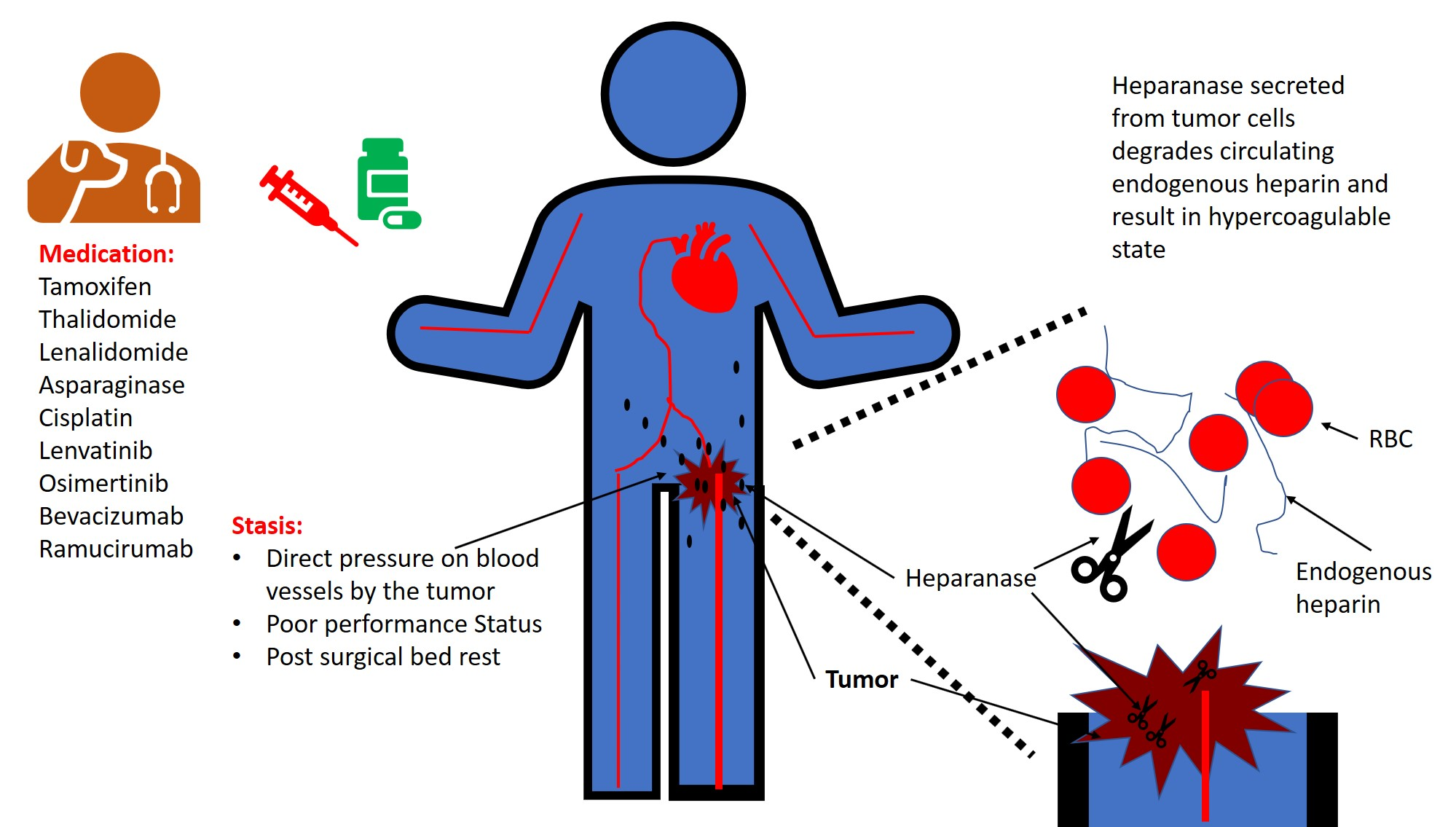
The Trousseau sign of malignancy or Trousseau's syndrome is a medical sign involving episodes of vessel inflammation due to blood clot (thrombophlebitis) which are recurrent or appearing in different locations over time (thrombophlebitis migrans or migratory thrombophlebitis). The location of the clot is tender and the clot can be felt as a nodule under the skin. Trousseau's syndrome is a rare variant of venous thrombosis that is characterized by recurrent, migratory thrombosis in superficial veins and in uncommon sites, such as the chest wall and arms. This syndrome is particularly associated with pancreatic, gastric and lung cancer and Trousseau's syndrome can be an early sign of cancer sometimes appearing months to years before the tumor would be otherwise detected. Heparin therapy is recommended to prevent future clots. The Trousseau sign of malignancy should not be confused with the Trousseau sign of latent tetany caused by low levels of calcium in the blood.
History
Armand Trousseau first described this finding in the 1860s; he later found the same sign in himself, was subsequently diagnosed with gastric cancer and died soon thereafter. Trousseau presciently attributed thromboembolism in malignancy to changes in blood composition rather than local inflammatory or mechanical forces. By correlating clinical observation with surgical and autopsy findings, Trousseau recognized that a localized cancer could induce a generalized hypercoagulable state in which thrombosis could occur elsewhere in the body, such as in extremities with visceral malignancy. Trousseau described several cases in which recurrent thrombosis was the presenting feature of visceral cancer, and his confidence in the utility of this connection led him to say, "So great, in my opinion, is the semiotic value of phlegmasia in the cancerous cachexia, that I regard this phlegmasia as a sign of the cancerous diathesis as certain as sanguinolent effusion into the serous cavities."
Pathophysiology
Some malignancies, especially gliomas (25%), as well as adenocarcinomas of the pancreas and lung, are associated with hypercoagulability (the tendency to form blood clots) for reasons that are incompletely understood, but may be related to factors secreted by the tumors, in particular a circulating pool of cell-derived tissue factor-containing microvesicles. Some adenocarcinomas secrete mucin that can interact with selectin found on platelets, thereby causing small clots to form.{{Cite journal | doi = 10.1182/blood-2006-10-053736 | issn = 0006-4971 | volume = 110 | issue = 6 | pages = 1723–1729 | last = Varki | first = Ajit | title = Trousseau's syndrome: multiple definitions and multiple mechanisms | journal = Blood
In patients with malignancy-associated hypercoagulable states, the blood may spontaneously form clots in the portal vessels (portal vein thrombosis), the deep veins of the limbs (deep vein thrombosis), or the superficial veins (superficial vein thrombosis) anywhere on the body. These clots present as visibly swollen blood vessels (thrombophlebitis), especially the veins, or as intermittent pain in the affected areas.
References
References
- [http://www.gpnotebook.co.uk/simplepage.cfm?ID=-1556807643 Trousseau's sign of visceral malignancy] in [[GPnotebook]], retrieved November 2012
- (Nov 2002). "The Hypercoagulable State of Malignancy: Pathogenesis and Current Debate". Neoplasia.
- Callander, N. (1993). "Trousseau's syndrome.". Western Journal of Medicine.
- {{DorlandsDict. nine/000957879. Trousseau sign
- Callander, N. (1993). "Trousseau's syndrome.". Western Journal of Medicine.
- (2002). "Case records of the Massachusetts General Hospital. Weekly clinicopathological exercises. Case 31-2002. A 61-year-old man with headache and multiple infarcts". N. Engl. J. Med..
- Del Conde I, Bharwani LD, Dietzen DJ, Pendurthi U, Thiagarajan P, López JA. (2007). "Microvesicle-associated tissue factor and Trousseau's syndrome.". J Thromb Haemost.
- (2003). "Selectin-mucin interactions as a probable molecular explanation for the association of Trousseau syndrome with mucinous adenocarcinomas". J Clin Invest.
- (2004-08-18). "Heparanase gene silencing, tumor invasiveness, angiogenesis, and metastasis". Journal of the National Cancer Institute.
- (July 1999). "Mammalian heparanase: gene cloning, expression and function in tumor progression and metastasis". Nature Medicine.
- (March 2006). "Heparanase neutralizes the anticoagulation properties of heparin and low-molecular-weight heparin". Journal of Thrombosis and Haemostasis.
- (January 2015). "Pharmacokinetics of low molecular weight heparin in patients with malignant tumors". Anti-Cancer Drugs.
- Rickles, F. R.. (March 2006). "If heparanase is the answer, what is the question?". Journal of Thrombosis and Haemostasis.
- (2020-02-29). "Potential Mechanisms of Cancer-Related Hypercoagulability". Cancers.
This article was imported from Wikipedia and is available under the Creative Commons Attribution-ShareAlike 4.0 License. Content has been adapted to SurfDoc format. Original contributors can be found on the article history page.
Ask Mako anything about Trousseau sign of malignancy — get instant answers, deeper analysis, and related topics.
Research with MakoFree with your Surf account
Create a free account to save articles, ask Mako questions, and organize your research.
Sign up freeThis content may have been generated or modified by AI. CloudSurf Software LLC is not responsible for the accuracy, completeness, or reliability of AI-generated content. Always verify important information from primary sources.
Report