From Surf Wiki (app.surf) — the open knowledge base
Toxidrome
Syndrome caused by a dangerous level of toxins
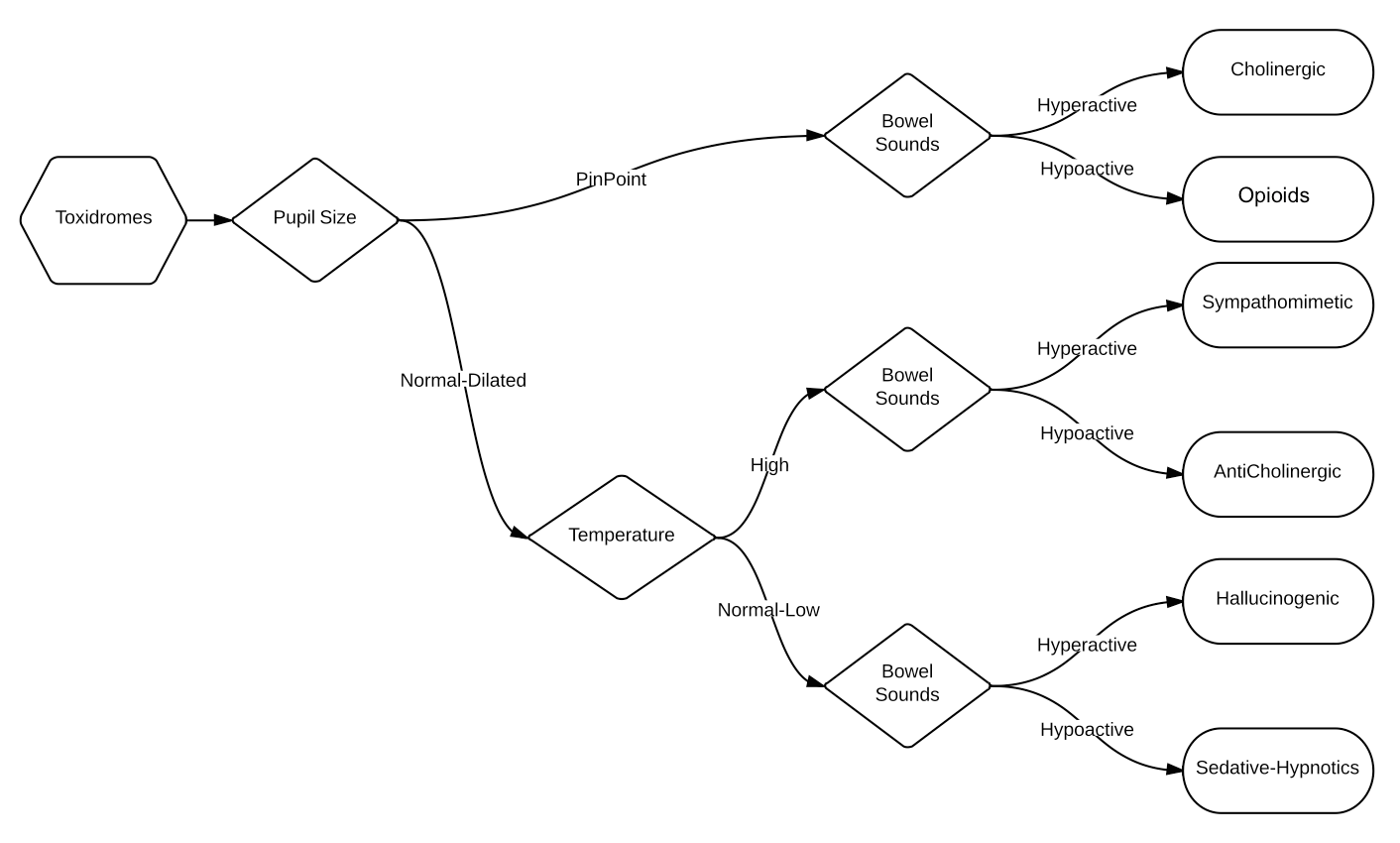
Syndrome caused by a dangerous level of toxins
| Symptoms | BP | HR | RR | Temp | Pupil size | Bowel sounds | Diaphoresis | |||||||
|---|---|---|---|---|---|---|---|---|---|---|---|---|---|---|
| anticholinergic | ||||||||||||||
| cholinergic | ||||||||||||||
| hallucinogenic | ||||||||||||||
| sympathomimetic | ||||||||||||||
| sedative-hypnotic |
A toxidrome (a portmanteau of toxic and syndrome, coined in 1970 by Mofenson and Greensher) is a syndrome caused by a dangerous level of toxins in the body. It is often the consequence of a drug overdose. Common symptoms include dizziness, disorientation, nausea, vomiting and oscillopsia. It may indicate a medical emergency requiring treatment at a poison control center. Aside from poisoning, a systemic infection may also lead to one. Classic toxidromes may be variable{{cite book | url-access = limited
A common tool for assessing for the presence of toxidrome in the United Kingdom is the CRESS tool.
Anticholinergic==
The symptoms of an anticholinergic toxidrome include blurred vision, coma, decreased bowel sounds, delirium, dry skin, fever, flushing, hallucinations, ileus, memory loss, mydriasis (dilated pupils), myoclonus, psychosis, seizures and urinary retention. Complications include hypertension, hyperthermia and tachycardia. Substances that may cause this toxidrome include antihistamines, antipsychotics, antidepressants, antiparkinsonian drugs, atropine, benztropine, datura, diphenhydramine and scopolamine.
Cholinergic
The symptoms of a cholinergic toxidrome include bronchorrhea, confusion, defecation, diaphoresis, diarrhea, emesis, lacrimation, miosis, muscle fasciculations, salivation, seizures, urination and weakness. Complications include bradycardia, hypothermia and tachypnea. Substances that may cause this toxidrome include carbamates, mushrooms and organophosphates.
Hallucinogenic
The symptoms of a hallucinogenic toxidrome include disorientation, hallucinations, hyperactive bowel sounds, panic and seizures. Complications include hypertension, tachycardia and tachypnea. Substances that may cause this toxidrome include substituted amphetamines, cocaine and phencyclidine.
Opiate
The symptoms of an opiate toxidrome include the classic triad of coma, pinpoint pupils and respiratory depression as well as altered mental states, shock, pulmonary edema and unresponsiveness. Complications include bradycardia, hypotension and hypothermia. Substances that may cause this toxidrome are opioids.
Sedative/hypnotic
The symptoms of sedative/hypnotic toxidrome include ataxia, blurred vision, coma, confusion, delirium, deterioration of central nervous system functions, diplopia, dysesthesias, hallucinations, nystagmus, paresthesias, sedation, slurred speech and stupor. Apnea is a potential complication. Substances that may cause it include anticonvulsants, barbiturates, benzodiazepines, gamma-Hydroxybutyric acid, Methaqualone and ethanol. While most sedative-hypnotics are anticonvulsant, some such as GHB and methaqualone instead lower the seizure threshold, so can cause paradoxical seizures in overdose.
Sympathomimetic
The symptoms of a sympathomimetic toxidrome include anxiety, delusions, diaphoresis, hyperreflexia, mydriasis, paranoia, piloerection and seizures. Complications include hypertension and tachycardia. Substances that may cause this toxidrome include cocaine, amphetamine and compounds based upon amphetamine's structure such as ephedrine (Ma Huang), methamphetamine, phenylpropanolamine and pseudoephedrine. The bronchodilator salbutamol may also cause this toxidrome. It may appear very similar to the anticholinergic toxidrome, but is distinguished by hyperactive bowel sounds and sweating.
References
References
- (1970). "The nontoxic ingestion". [[Pediatric Clinics of North America]].
- "CRESS tool".
This article was imported from Wikipedia and is available under the Creative Commons Attribution-ShareAlike 4.0 License. Content has been adapted to SurfDoc format. Original contributors can be found on the article history page.
Ask Mako anything about Toxidrome — get instant answers, deeper analysis, and related topics.
Research with MakoFree with your Surf account
Create a free account to save articles, ask Mako questions, and organize your research.
Sign up freeThis content may have been generated or modified by AI. CloudSurf Software LLC is not responsible for the accuracy, completeness, or reliability of AI-generated content. Always verify important information from primary sources.
Report