From Surf Wiki (app.surf) — the open knowledge base
Township (South Africa)
Urban living areas reserved for non-whites in Apartheid South Africa
Urban living areas reserved for non-whites in Apartheid South Africa
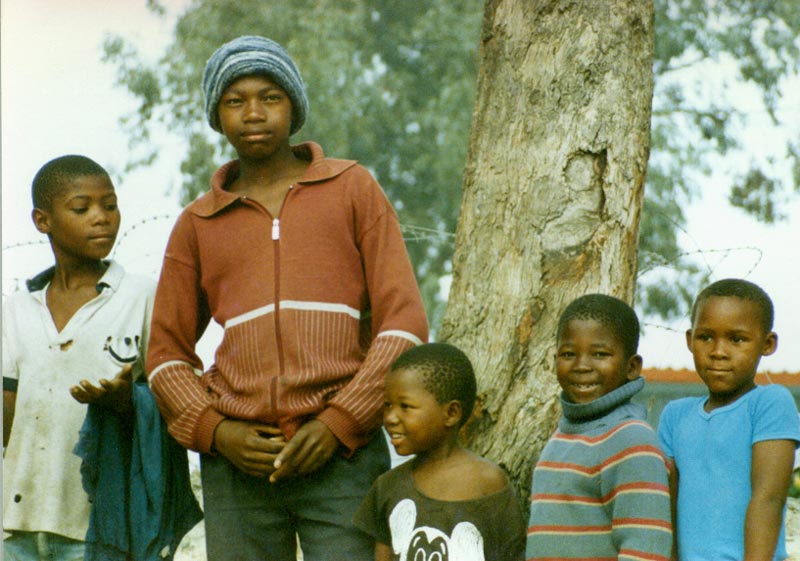

In South Africa, the terms township and location usually refer to an under-developed, racially segregated urban area, from the late 19th century until the end of apartheid, which were reserved for non-whites, namely Black Africans, Coloureds and Indians. Townships were usually built on the periphery of towns and cities. The term township also has a distinct legal meaning in South Africa's system of land title, which carries no racial connotations.
Townships for non-whites were also called locations or lokasies in Afrikaans and are often still referred to as such in the smaller towns. The slang term "kasie / kasi", a popular short version of "lokasie" is also used. Townships sometimes have large informal settlements nearby.
History
Early development
During 1900–1950 (roughly), the majority of the black population in the major urban areas lived in hostels or servants' accommodations, these were provided by employers, and the workers were mostly single men. In the period during and following World War II, urban areas of South Africa experienced a rapid period of urbanisation as the colour bar was relaxed due to the war. Neither employers nor the government built new accommodations or homes for the influx of new residents. This led to overcrowding, and poor living conditions, thus, contributing to high levels of crime and violence. High rents and overcrowding led to land invasions and the growth of shack settlements, which were largely ignored by the government.
By 1950, a large portion of the urban black population lived in townships. In 1950, upwards of 100,000 people were living in townships in the Witwatersrand area; 50,000 people lived in Cato Manor in Durban; and an estimated 150,000 black and coloured people lived in townships in Cape Town.
Living conditions in the shack township settlements were poor, but they had some advantage over the other more established options, like hostels, of being cheap and largely unregulated by the apartheid-era South African Police.
Apartheid: 1948–1994
In 1950, the Group Areas Act was enacted, which empowered the Governor-General to designate land for the sole use of a specific race. Under this law, black people were evicted from properties that were in areas designated as "white only" and forced to move into segregated townships. Separate townships were established for each of the three designated non-white race groups: black people, Coloureds, and Indians – as per the Population Registration Act, 1950.
Post-apartheid
Most South African towns and cities have at least one township associated with them. Some old townships have seen rapid development since 1994, with, for instance, wealthy and middle-income areas sprouting in parts of Soweto and Chatsworth. Despite their origins in apartheid South Africa, today the terms township, location, and informal settlement are not used pejoratively. However, policymakers are, as in the 1950s, once again using the term 'slums' in a highly pejorative way.
Largest townships
Largest townships in South Africa at the time of the 2011 census:
| Township | Population | Neighbouring city/town | ||
|---|---|---|---|---|
| Soweto | ||||
| Botshabelo | ||||
| Thembisa | ||||
| Katlehong | ||||
| Umlazi | ||||
| Soshanguve | ||||
| Khayelitsha | ||||
| Mamelodi | ||||
| Mitchells Plain | ||||
| Ibhayi | ||||
| Sebokeng | ||||
| Mangaung | ||||
| Philippi | ||||
| Ivory Park | ||||
| Alexandra | ||||
| Phoenix | ||||
| KwaMashu | ||||
| Vosloorus | ||||
| Mdantsane | ||||
| Delft | ||||
| Etwatwa | ||||
| Motherwell | ||||
| Tsakane | ||||
| Thabong | ||||
| Evaton | ||||
| Daveyton | ||||
| Ntuzuma | ||||
| Madadeni | ||||
| Embalenhle | ||||
| Kagiso | ||||
| Mabopane | ||||
| Galeshewe | ||||
| KwaNobuhle | ||||
| Saulsville | ||||
| Jouberton | ||||
| Thokoza | ||||
| KwaThema | ||||
| Guguletu | ||||
| Diepsloot | ||||
| Ga-Rankuwa | ||||
| Seshego | ||||
| Edendale | ||||
| Osizweni | ||||
| Orange Farm | ||||
| Hlubi | ||||
| Duduza | ||||
| Mfuleni | ||||
| Mpumalanga | ||||
| Matsulu | ||||
| Thembalethu | ||||
| Mahwelereng | ||||
| Sharpeville |
File:Aliwal North - Dukatole - 03.05 - Housebuilding Projekt.jpg|Construction of a house in the former township Dukathole (near Aliwal North) File:Aliwal North - Dukatole - 03.05 - Shack.jpg|A bigger shack made of corrugated iron within Dukathole File:Aliwal North - Dukatole - 03.05 - Street Shop.jpg|Little shop on the main street of Dukathole File:Aliwal North - Dukatole - 03.05 - Street scene.jpg|Dukathole - Street scene
Legal meaning
The legal meaning of the term "township" in South Africa differs from the popular usage and has a precise legal meaning without any racial connotations. The term is used in land titles and townships are subdivided into erfs (stands). "Township" can also mean a designated area or district, as part of a place name. For instance "Industrial Township" has been used in reference to an industrial area, e.g. "Westmead Industrial Township", in Pinetown, South Africa.
Often a township (in the legal sense) is established and then the adjoining townships, with the same name as the original township, and with a numbered "Extension" suffix are later established. For example, the Johannesburg suburb of Bryanston has an extension called Bryanston Extension 3.
Relationship with "suburb"
In traditionally or historically white areas, the term "suburb" is used for legally defined residential townships in everyday conversation.
A suburb's boundaries are often regarded as being the same as the (legal) township boundaries, along with its numbered extensions, and it usually shares its name with the township (with some notable exceptions, such as the Johannesburg suburb known as Rivonia, which is actually the township of Edenburg with numbered extensions called Rivonia Extensions).
Occasionally, formerly independent towns, such as Sandton (which itself consists of numerous suburbs), are referred to as "suburbs".
References
References
- Pettman, Charles. (1913). "Africanderisms; a glossary of South African colloquial words and phrases and of place and other names". Longmans, Green and Co..
- "International Encyclopedia of the Social Sciences".
- (2005). "Class, Race, and Inequality in South Africa". Yale University Press.
- Huchzermeyer, M., (2011).[http://uctpress.bookslive.co.za/blog/2011/10/19/marie-huchzermeyer-studies-informal-settlement-eradication-in-cities-with-slums/ ''Cities with ‘Slums’: From Informal Settlement Eradication to a Right To The City In Africa''] University of Cape Town Press, Cape Town
- Interactive Planning Workshop for Johannesburg. Greater Johannesburg Metropolitan Council. Johannesburg, South Africa. 27–30 September 2000. Web. 8 October 2011. http://web.mit.edu/urbanupgrading/upgrading/case-examples/overview-africa/alexandra-township.html
- [[Anton Harber. Harber, Anton]]. Diepsloot. Jeppestown: Jonathan Ball Publishers LTD, 2011. 2011. 1-226. Print.
- "Education in South Africa". SouthAfrica.info.
- Motloung, Hloni. "Township and Rural Schools continue to be marginalized as inequality in the education system persists commented Graeme Bloch, Education Specialist, Development Bank of Southern Africa at the Knowledge Week". Print.
- (2002-04-10). "Guns, gangs and culture of violence".
- Birkett, Richard. (August 2003). "The Survey System in South Africa". KZNLS Information Services.
- "Archived copy".
- "project management - tenure of land - development - community - south africa".
- "Alien spotted in Bryanston Extension 3 - Municipal | looklocal Randburg".
- "Title deeds handed over in Alex | Alexandra".
This article was imported from Wikipedia and is available under the Creative Commons Attribution-ShareAlike 4.0 License. Content has been adapted to SurfDoc format. Original contributors can be found on the article history page.
Ask Mako anything about Township (South Africa) — get instant answers, deeper analysis, and related topics.
Research with MakoFree with your Surf account
Create a free account to save articles, ask Mako questions, and organize your research.
Sign up freeThis content may have been generated or modified by AI. CloudSurf Software LLC is not responsible for the accuracy, completeness, or reliability of AI-generated content. Always verify important information from primary sources.
Report
Social issues
Informal settlements that are normally self established around regulated townships are faced with several social problems. Most often, the residents of informal settlements do not own the land on which their houses are built. In effect, these houses are built illegally. Construction is informal and unregulated by the government. This results in a lack of access to basic services such as sewerage, electricity, roads, and clean water, which adversely affects the residents' quality of life.
Infrastructure problems
Sewerage, water, and electrical infrastructure within townships are often in need of repair, resulting in a lack of sanitation due to problems with accessibility and availability. Electricity, water, and sewerage are managed by different government departments, resulting in inefficiencies in the absence of substantial coordination at all stages of the project planning, budgeting, and implementation cycle.
Sewerage
The sewer systems within townships are poorly planned and constructed. The population of townships typically grows faster than what the infrastructure was planned for, causing overloads that result in blockages, surges, and overflows. There often are only a limited number of public toilets that are overused, abused, and quickly become health hazards for the communities. Another issue is poor access to maintenance activities, which is caused by a lack of space between houses. Some of the areas on the township peripheries or near the riverbanks do not have access to sanitation facilities because they are not connected to the formal waterborne sewerage system.
Water
A consequence of inadequate pumping infrastructure and large populations is that the water pressure in the townships is very low. Each section of the townships normally has one pump per section. The water is used for everything from washing clothes to cooking, drinking, bathing, and cleaning the house. Having limited water accessible to each section makes it very hard to meet the daily water needs per household.
Electricity
Illegal electricity connections are all-pervasive in the townships with electrical wires strung along the trees leading to power boxes. Although dangerous, every house in the area has a wire coming out of it and every wire is known by their owner in order to fix problems as soon as they arise. Most of the sub-stations are very unsecured to begin with so having so many additional wires coming from them is very dangerous for the people nearby and the kids playing in the area. The electricity infrastructure has not undergone upgrades because of the government's disinclination to encourage power usage by non-residents.
Flood risk
Some townships, such as Alexandra and Diepsloot, are built near rivers, and on flood plains. These areas are extremely dense with only tortuous, narrow access, few communal water points and banks of chemical toilets on the peripheries of the settlements. The settlements are beginning to be built in the old tributaries due to the continuing growth of the townships. Constructing houses in the dried up tributaries is a potential problem in the event of a large storm as the tributary starts to fill up with water again or in case of a backup of sewerage coming into the tributary. The houses built in that area stand the risk of being destroyed by natural occurrences. As the area grows, the tributaries are piped and a number of concrete aprons and gullies are constructed over the tributary into which the communal water points drain. The gullies are then choked with garbage and the tributaries appear to be substantially blocked but this will not hold off the water for very long if a flood comes through. Due to overcrowding, residents choose to build on river banks in hopes of easy access to water and laundry facilities, however, the available water is unsuitable for these purposes due to pollution, and they remain vulnerable to floods.
Backyard shacks
Backyard shacks are additional units on a plot of land that are rented out by the land owner for additional income. Plots of land designed for single-family houses have been turned into plots, that, on average hold six families instead of one. These structures are illegally built in violation of planning and building codes and strain the infrastructure. Governments are loath to act on backyard dwellings, as doing so would result in large-scale displacement of people. A 2001 study of the township called Diepsloot near Johannesburg showed that 24% of the residents lived in brick structures, 43% were in shack areas, and 27% were in backyard shacks.
Education
Main article: Education in South Africa
Township schools are often overcrowded, and lack adequate infrastructure. There is a high dropout rate among poor youth, particularly around Grade 9. Despite government interventions, education outcomes remain skewed, with township students continuing to under-perform. This skewed distribution is mainly attributable to higher and more rapid drop-out rates among the poor, rather than to a lack of initial access to schooling. The formerly white schools uniformly produce better results as their governing bodies are able to raise substantial private funds. These funds are used to get resources that are usually inaccessible for the rural and township schools which survive on the commitment of their teachers.
Gangs and violence
Gangs are a problem in townships and children as young as 12 or 13 get initiated into local gangs. Some see violence and gangs as a way of life and a part of their culture. The weapon of choice for most is a gun and with easy accessibility anyone is able to get one. It is estimated that out of the 14 million guns in circulation, in South Africa, only four million are registered and licensed to legal gun owners.