From Surf Wiki (app.surf) — the open knowledge base
Tomb of Suleyman Shah
| Field | Value |
|---|---|
| image_skyline | Tombeau de Suleiman Chah.jpg |
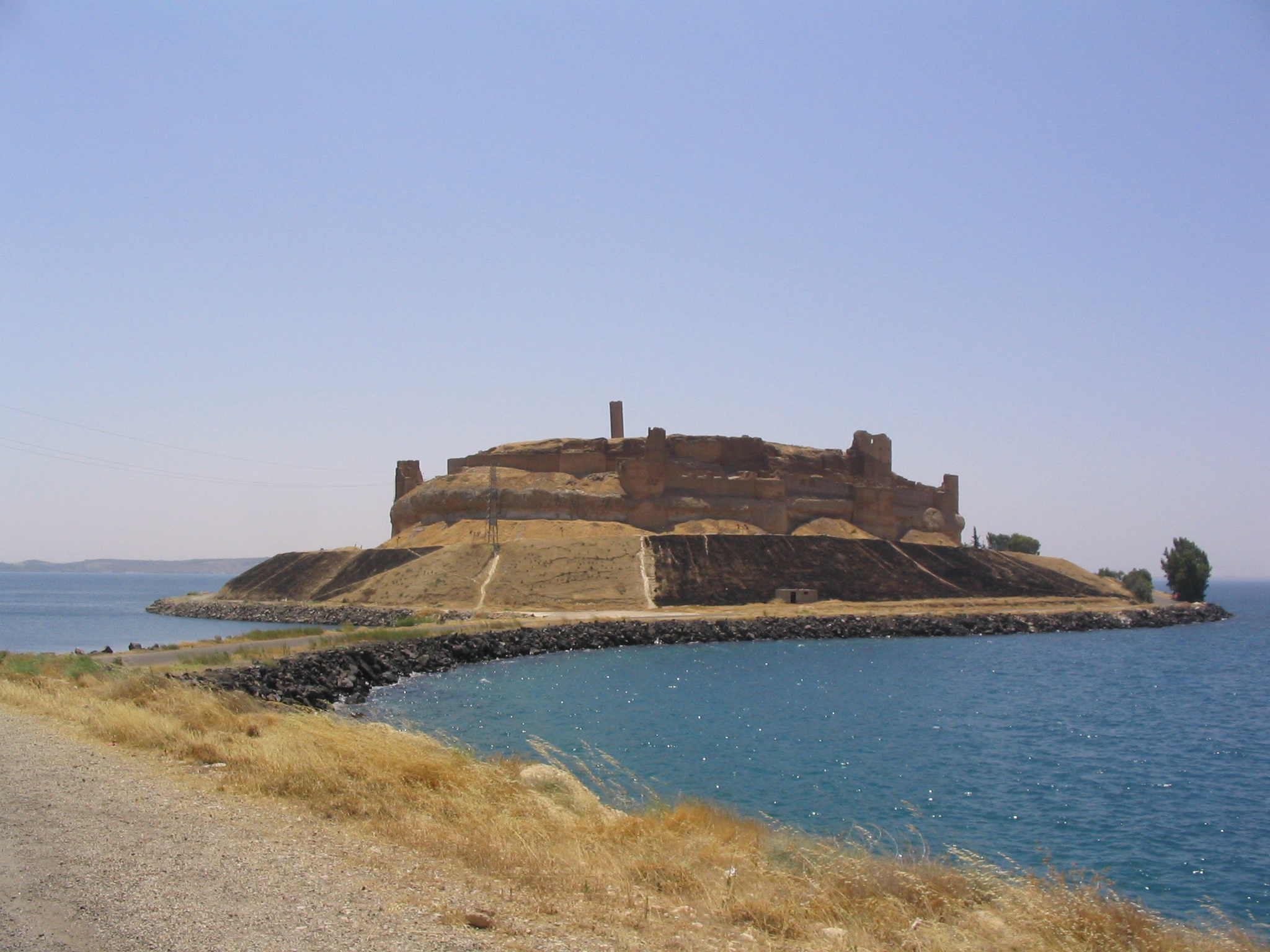
| image_caption | View of the building complex of the Tomb of Suleyman Shah (its second location, 1973 – February 2015), seen from the Euphrates river |
| official_name | Tomb of Suleyman Shah |
| native_name | Süleyman Şah Türbesi |
| native_name_lang | Turkish |
| pushpin_map | Syria |
| pushpin_mapsize | 300 |
| subdivision_type | Country |
| subdivision_name | Flag of the Syrian revolution.svg Syria (geographic location) |
| Turkey (ownership) | |
| subdivision_type1 | Governorate |
| subdivision_name1 | Aleppo Governorate |
| timezone | EET |
| utc_offset | +2 |
| coordinates | |
| elevation_m | 475 |
Turkey (ownership)
The Tomb of Suleyman Shah (; ) is, according to Ottoman tradition, the grave (tomb, mausoleum) housing the relics of Suleyman Shah (c. 1178–1236), grandfather of Osman I (d. 1323/4), the founder of the Ottoman Empire. This legendary tomb has since 1236 had three locations, all in present-day Syria.
From 1236 until 1973, its first location was near castle Qal'at Ja'bar in present-day Raqqa Governorate, Syria.
Under the Treaty of Lausanne (1923), breaking up the Ottoman Empire into Turkey, Syria, and other states, the tomb site remains the property of Turkey.
In 1973, when the area around castle Qal'at Ja'bar was due to be flooded under Lake Assad, the tomb by agreement between Turkey and Syria was moved 85 km northward on the Euphrates River in Syria, 27 km from the Turkish border.
In early 2015, during the Syrian civil war, Turkey unilaterally moved the tomb again to a new site in Syria, about 180 m from the Turkish border, 22 km west of Kobanî and just north of the Syrian village of Ashme, evacuating the approximately 40 Turkish soldiers guarding the tomb. The Turkish government has stated that the relocation is temporary, and that it does not constitute any change to the status of the tomb site.
Death of Suleyman Shah
Suleyman Shah (c. 1178–1236) was, according to some but not all Ottoman genealogies, the grandfather of Osman I (d. 1323/4), the founder of the Ottoman Empire. Suleyman Shah is believed to have drowned in the Euphrates river near castle Qal'at Ja'bar in present-day Raqqa Governorate, Syria, and was, according to legend, buried near that castle, in a tomb.
Legal status of tomb
Article 9 of the Treaty of Ankara, signed by France and Turkey in 1921, states that the tomb of Suleyman Shah (at its first location) "shall remain, with its appurtenances, the property of Turkey, who may appoint guardians for it and may hoist the Turkish flag there". Initially, an 11-man symbolic garrison of Turkish soldiers was guarding the tomb.
The Protocol of 2003 between the Republic of Türkiye and the Syrian Arab Republic regarding the Tomb of Suleyman Shah (at its second location) gave Turkey transit rights to the Tomb through Syrian territory, in order to maintain and carry out repairs at the Tomb. Since 2014, the official position of Turkey appears to be that the land around the second location (1973 – February 2015) of the tomb is or was the sovereign territory of Turkey. Turkey required visitors to the site to carry passports. However, there is no evidence to date that other countries, including Syria, have publicly supported this position.
The Syrian position is that the first relocation relinquished any Turkish rights over the sovereignty of the site, and the latest relocation of the tomb in February 2015 (to its third location) is a breach of the Treaty of Ankara.
First relocation
In 1973, the area around castle Qal'at Ja'bar, with the location of the tomb, was due to be flooded when the Tabqa Dam would create Lake Assad.

The tomb by agreement between Turkey and Syria then was moved to a new location at some 85 km northward but also on the Euphrates riverside and also in Syria, 10 km northwest of the town of Sarrin, in Aleppo Governorate, and some 27 km from the Turkish border.
Until February 2015, Turkey maintained at this site a small military presence as an honor guard.
Events during the Syrian civil war
On 5 August 2012, during the Syrian civil war, the Turkish prime minister Recep Tayyip Erdoğan stated that "The tomb of Suleyman Shah [in Syria] and the land surrounding it is our territory. We cannot ignore any unfavorable act against that monument, as it would be an attack on our territory, as well as an attack on NATO land... Everyone knows his duty, and will continue to do what is necessary".
ISIL threats
On 20 March 2014, the Islamic State of Iraq and the Levant (ISIL) threatened to attack Turkey's territory tomb site unless the Turkish troops guarding it were withdrawn within three days. The Turkish government reacted by saying it would retaliate against any such attack, and did not withdraw its guards. However, the threatened attack did not take place. Due to (such) tensions, the garrison at the tomb was increased to 38 men, in 2014 or earlier.
On 27 March 2014, recordings were released on YouTube of a conversation, probably recorded at then Turkish Foreign Minister Ahmet Davutoğlu's office on 13 March, purportedly involving Ahmet Davutoğlu, Foreign Ministry Undersecretary Feridun Sinirlioğlu, the then National Intelligence Organization (MİT) head Hakan Fidan, and the Deputy Chief of the General Staff General Yaşar Güler, discussing possible Turkish intervention or incursion into Syria ahead of the Turkish local elections of 30 March.
Between June and September 2014, while ISIL held 49 Turkish consulate personnel in Mosul hostage (see Fall of Mosul#Aftermath), there was a rumor that Turkey had agreed to disengage from the Süleyman Shah Tomb in exchange for the hostages’ release.
On 30 September 2014, Turkish Deputy Prime Minister Bülent Arınç said that ISIL militants were advancing on the Suleyman Shah tomb. An earlier report of pro-government newspaper Yeni Şafak, citing anonymous sources, had mentioned 1,100 ISIL militants surrounding the tomb. On 1 October, however, President Erdoğan denied that ISIL had encircled the tomb.{{cite web |url=http://www.dailysabah.com/politics/2014/10/01/president-erdogan-denies-claims-isis-encircled-suleiman-shah-tomb|title=President Erdoğan denies claims ISIS encircled Suleiman Shah Tomb — Politics — Daily Sabah|work=dailysabah.com| date=1 October 2014|access-date=8 September 2015}}
On 2 October 2014, Turkish Parliament authorized the use of the Turkish military force against ISIL. One argument mentioned in the parliamentary debate was the increasing security risks to the Süleyman Shah Tomb.
Second relocation (2015)
In early 2015, according to Al Jazeera, the tomb was surrounded by ISIL. The BBC, however, stated, that after having driven ISIL out of Kobanî in January 2015, the Kurdish People's Protection Units (YPG) and Syrian rebels took control of several villages surrounding the tomb.
"Operation Shah Euphrates"
Main article: Operation Shah Euphrates
In the night of 21–22 February 2015, a convoy of 572 Turkish troops in 39 tanks and 57 armoured vehicles entered Syria through Kobanî to evacuate the 38-man Turkish military garrison guarding the Suleyman Shah tomb and move the remains of Suleyman Shah to a different site. Those remains were moved to a site in Syria closer to the border in an area under Turkish military control, after which the rest of the old mausoleum was demolished. One soldier died in the overnight raid.
ISIL did not impede this Turkish operation. The operation went smoothly, and Syrian Kurds coordinators left Ankara. After this Turkish evacuation, entitled "Operation Shah Euphrates", Al Jazeera assumed the area to be "most probably" under full ISIL control.
New location
Since then, the tomb has been located in Turkish-controlled territory 180 m inside Syria, just north of the Syrian village of Ashme and less than 2 km southeast of the Turkish village of Esmesi (Esmeler or Esme or Eshme) in the southernmost Turkish Birecik District of Şanliurfa, 5 km east of the Euphrates, 10 km northeast of the Syrian town of Jarabulus and 22 km west of Kobanî.
The Turkish Foreign Minister has stated that the relocation is only a temporary measure and that it does not constitute any change to the status of the tomb. The Syrian Assad regime said the raid was an act of "flagrant aggression" and that it would hold Ankara responsible for its repercussions.
Return
On 2 April 2018, Turkey's Deputy Prime Minister Fikri Işık said the tomb would be relocated to its original location in northern Syria.
References
References
- (24 February 2015). "Minister invites Turks to visit planned tomb site in Syria". Hürriyet Daily News.
- (22 February 2015). "Turkish military enters Syria to evacuate soldiers, relocate tomb". Reuters.
- İnalcık, Halil. (2007). "Osmanlı Beyliği'nin Kurucusu Osman Beg". Belleten.
- Sourdel, D.. (2009). "ḎJabar or Ḳalat ḎJabar". Brill online.
- "Turkiye Buyuk Millet Meclisi Baskanligina".
- (2014-10-03). "Turkey to defend Syria exclave at all costs: President".
- Cagaptay, Soner. (9 April 2012). "A Piece of Turkey Lies in the Middle of the Syrian Desert". CNN Global Public Square blog.
- Said, Haifa. (2015-02-22). "Turkey's transgression into Syrian territory proves its connection with ISIS, Foreign Ministry says". [[Syrian Arab News Agency]].
- Burns, R.. (1999). "Monuments of Syria. An historical guide". I.B. Tauris.
- [http://www.hurriyetdailynews.com/ankara-warns-against-attack-on-tomb.aspx?pageID=238&nID=27233&NewsCatID=338 Ankara warns against attack on tomb], Hürriyet Daily News, 7 August 2012.
- [http://www.todayszaman.com/news-343121-erdogan-attacking-tomb-of-suleyman-sah-means-attacking-turkey.html Erdoğan: Attacking tomb of Süleyman Şah means attacking Turkey] {{Webarchive. link. (2014-03-27 , Today's Zaman, 26 March 2014.)
- (22 February 2015). "Turkey enters Syria to evacuate Suleyman Shah tomb". BBC.
- (30 September 2014). "Government confirms ISIL militants advancing on Turkish tomb in Syria". TodaysZaman.
- [http://www.todayszaman.com/news-343248-ankara-bar-association-challenges-youtube-ban.html ‘Ankara Bar Association challenges YouTube ban’] {{Webarchive. link. (2015-06-27 . Today’s Zaman, 28 March 2014. Retrieved 11 September 2015.)
- [http://www.todayszaman.com/news-343357-turkish-journalist-detained-over-leak-of-key-syria-meeting.html ‘Turkish journalist detained over leak of key Syria meeting’] {{Webarchive. link. (2015-06-27 . Today’s Zaman, 29 March 2014. Retrieved 11 September 2015.)
- (23 February 2015). "The truth about Operation Shah Euphrates". Al Jazeera.
- [http://www.cnn.com/2014/10/02/world/meast/isis-air-strikes/ Turkish lawmakers OK military action against ISIS] CNN, 3 October 2014. Retrieved 11 September 2015.
- (November 27, 2016). "Why Turkey issued arrest warrant for this Kurdish leader".
- The name of Ashme is spelled normally Eşme in Turkish media and often Esme in English-language media.
- (24 February 2015). "Süleyman Şah'ın yeni türbesi için hummalı çalışma". Hürriyet.
- (28 February 2015). "Meaning and Possible Consequences of Shah Euphrates Operation". ORSAM.
- "Evacuated military post in Syria still on Turkish land: FM". Xinhua.
- (2014-03-27). "No: 98, 27 March 2014, Press Release Regarding the Illegal Exposure of Certain Audio Records with Regard to the Tomb of Süleymanşah Memorial Outpost / Rep. of Turkey Ministry of Foreign Affairs".
- (2015-02-22). "No: 70, 22 February 2015, Press Release Regarding the Temporary Relocation of the Tomb of Süleyman Şah and Memorial Outpost / Rep. of Turkey Ministry of Foreign Affairs".
- "Syria condemns Turkey's 'flagrant aggression' in north". The Daily Star Newspaper — Lebanon.
- (2 April 2018). "Süleyman Shah's tomb will return to original location as 'Turkish land,' Deputy PM says".
This article was imported from Wikipedia and is available under the Creative Commons Attribution-ShareAlike 4.0 License. Content has been adapted to SurfDoc format. Original contributors can be found on the article history page.
Ask Mako anything about Tomb of Suleyman Shah — get instant answers, deeper analysis, and related topics.
Research with MakoFree with your Surf account
Create a free account to save articles, ask Mako questions, and organize your research.
Sign up freeThis content may have been generated or modified by AI. CloudSurf Software LLC is not responsible for the accuracy, completeness, or reliability of AI-generated content. Always verify important information from primary sources.
Report