From Surf Wiki (app.surf) — the open knowledge base
To Priestley
Sonnet by Samuel Taylor Coleridge
Sonnet by Samuel Taylor Coleridge
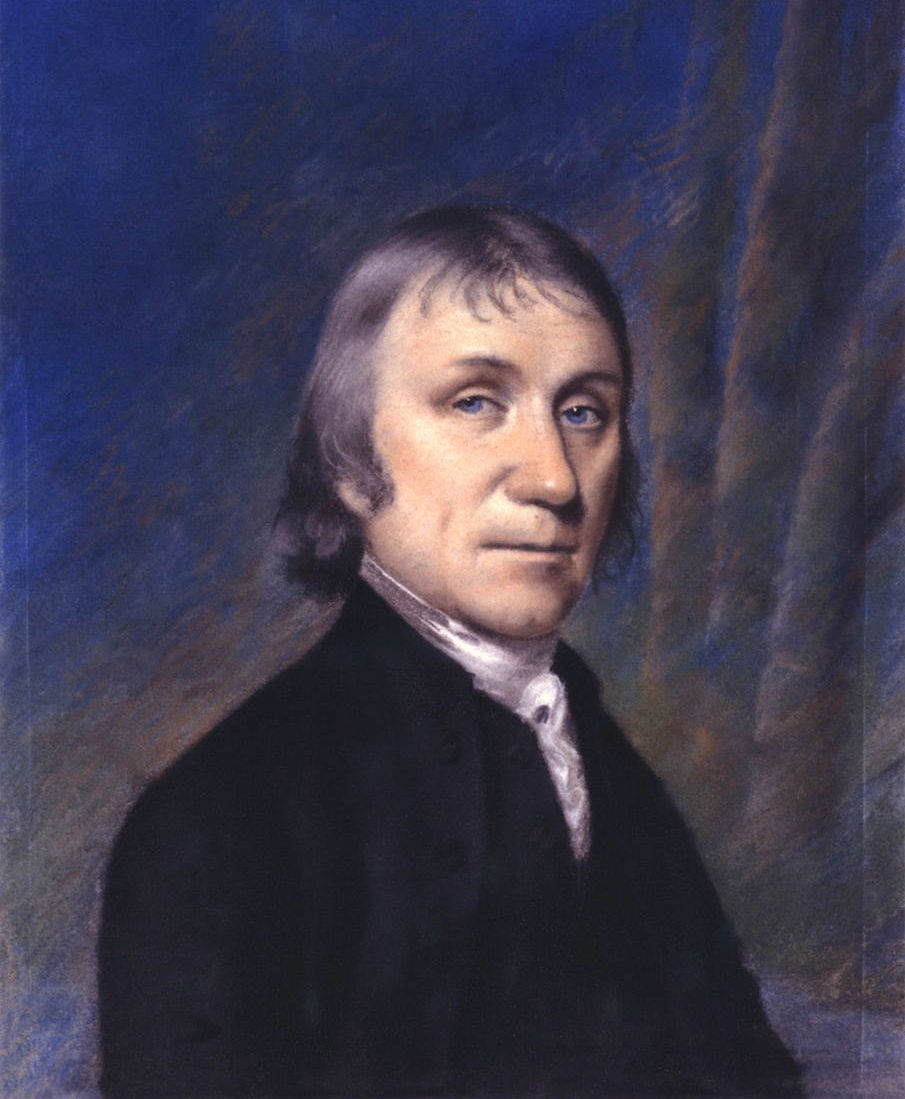
"To Priestley" is a sonnet by Samuel Taylor Coleridge first published in the 11 December 1794 Morning Chronicle. Like most of the Sonnets on Eminent Characters, "To Priestley" addresses an individual Coleridge particularly admired; Joseph Priestley held many political and theological beliefs that Coleridge adopted during this time.
Background
Coleridge completed "To Priestley" at the beginning of December 1794. Following "To Burke", "To Priestley was published in the 11 December 1794 Morning Chronicle as the third poem in the Sonnets on Eminent Characters series. The poem was later included in Coleridge's 1796 collection of poems and collections printed after with few changes.
After a mob burned Priestley's Birmingham house during the summer of 1791, he left England for America. The mob that drove Priestley away were motivated by Priestley's support of the French Revolution. Coleridge's own views were similar to Priestley's and even Priestley's ideas expressed in Experiments and Observations on Different Kinds of Air and Disquisitions relating to Matter and Spirit were discussed in part in Coleridge's poetry.
Coleridge was also corresponding with Priestley at the time, to discuss Coleridge and Robert Southey's idea of Pantisocracy. During this time, Priestley's sons were working with Thomas Cooper to find an appropriate location for Coleridge to start up his community. In general, Coleridge viewed Priestley as both a spiritual and intellectual leader, and Coleridge's political life was to spread Priestley's views after Priestley left for America. However, Coleridge was to abandon Priestley's ideas about Unitarianism and religion a decade later as he turned to Anglicanism.
Poem
Though rous'd by that dark Vizir Riot rude Have driven our o'er the Ocean swell; Though Superstition and her wolfish brood Bay his mild radiance, impotent and fell;
Calm in his halls of brightness he shall dwell! For lo! at his strong behest Starts with mild anger from the Papal spell, And flings to Earth her tinsel-glittering vest,
Her mitred State and cumbrous Pomp unholy; And wakes to bid th' Oppressor wail Insulting aye the wrongs of patient Folly; And from her dark retreat by Wisdom won
Meek slowly lifts her matron veil To smile with fondness on her gazing Son!}}
The original first line read "Tho' King-bred rage, with lawless uproar rude", the original seventh line read "Disdainful rouses from the Papal spell", and the original eleventh line read "That ground th' ensnared soul of patient Folly".
Themes
Like many of the Sonnets on Eminent Characters, "To Priestley" was dedicated to an individual that Coleridge viewed as one of his heroes. The imagery within the poem corresponds to the ideas in "To Burke" with an emphasis on Priestley being a defender of freedom and without flaws. The original line 1 of the poem described the royalty's role in the events leading up to the destruction of Priestley's home. The revised version describes John Reeves as the "dark Vizir" or, in the 1796 edition, describes Pitt.
Coleridge's views on Priestley appear in many of his works, including Religious Musings written at the end of 1794. John Bowring, in an 1830 review for the Westminster Review, emphasized how the poem served to represent a transitional stage in Coleridge's poetic career: "Happily he soon ascended into a purer region of fancy; and that not without leaving the print of his steps in the clay from which he sprung. The personifications in his Sonnet on the expatriation of Dr. Priestley, are as good as such things can be. The concluding reference to Priestley's philosophical discoveries, might suggest a noble group for the sculptor."
Notes
References
- Ashton, Rosemary. The Life of Samuel Taylor Coleridge. Oxford: Blackwell, 1997.
- Barfoot, Cedric. "A natural delineation of human passions": The Historical Moment of Lyrical Ballads. Amsterdam, Rodopi, 2004.
- Flynn, Christopher. Americans in British literature, 1770-1832. Aldershot: Ashgate, 2008.
- Jackson, James (ed). Samuel Taylor Coleridge: The Critical Heritage. London: Routledge, 1996.
- Levere, Trevor. Poetry Realized in Nature. Cambridge: Cambridge University Press, 1981.
- Mays, J. C. C. (editor). The Collected Works of Samuel Taylor Coleridge: Poetical Works Vol I.I. Princeton: Princeton University Press, 2001.
- Mays, J. C. C. (editor). The Collected Works of Samuel Taylor Coleridge: Poetical Works Vol II.I. Princeton: Princeton University Press, 2001.
References
- Mays 2001 p. 157
- Mays 2001 pp. 157–158
- Levere 1981 p. 9
- Flynn 2008 p. 73
- Barfoot 2004 p. 136
- Coleridge 1921 pp. 81-82
- Mays II.I 2001 pp. 208–209
- Ashton 1997 p. 61
- Jackson 1996 qtd. p. 531
This article was imported from Wikipedia and is available under the Creative Commons Attribution-ShareAlike 4.0 License. Content has been adapted to SurfDoc format. Original contributors can be found on the article history page.
Ask Mako anything about To Priestley — get instant answers, deeper analysis, and related topics.
Research with MakoFree with your Surf account
Create a free account to save articles, ask Mako questions, and organize your research.
Sign up freeThis content may have been generated or modified by AI. CloudSurf Software LLC is not responsible for the accuracy, completeness, or reliability of AI-generated content. Always verify important information from primary sources.
Report