From Surf Wiki (app.surf) — the open knowledge base
Thrombophlebitis
Inflammation of a vein due to a blood clot
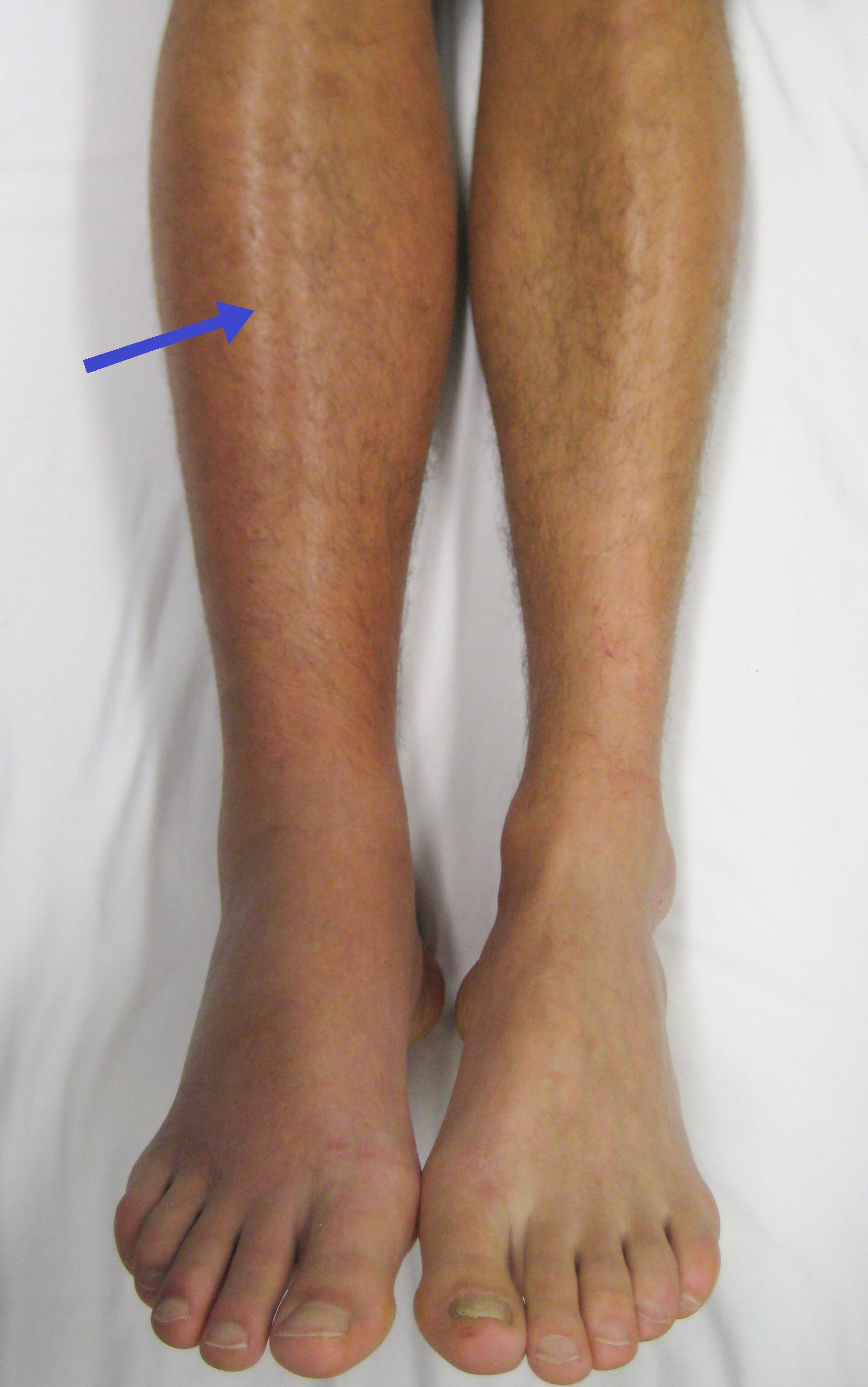
Inflammation of a vein due to a blood clot
| Field | Value |
|---|---|
| name | Thrombophlebitis |
| synonyms | Phlebitis |
| image | Great_saphenous_vein_thrombosis_05091312009.jpg |
| caption | Ultrasonographic image showing thrombosis of the great saphenous vein. |
| field | cardiology, emergency medicine, interventional radiology, infectious disease, oncology |
| symptoms | Skin redness |
| risks | Smoking, Lupus |
| diagnosis | Doppler ultrasound, Venography |
| differential | cellulitis, deep vein thrombosis, erythema nodosum, lymphangitis, lymphedema, tendonitis, septic thrombophlebitis |
| treatment | Blood thinners, Pain medication |
Thrombophlebitis is a phlebitis (inflammation of a vein) related to a thrombus (blood clot). When it occurs repeatedly in different locations, it is known as thrombophlebitis migrans (migratory thrombophlebitis).
Signs and symptoms
The following symptoms or signs are often associated with thrombophlebitis, although thrombophlebitis is not restricted to the veins of the legs.
- Pain (area affected)
- Skin redness/inflammation
- Edema
- Veins (hard and cord-like)
- Tenderness
Complications
Complications of thrombophlebitis include infection of the vein, concurrent thromboembolism, or recurrent thrombophlebitis.
Infection of the vein can include symptoms such as high fever, redness of the site that can spread, and purulent drainage, making it septic or suppurative thrombophlebitis. Septic thrombophlebitis is not common if there has not been a history of recent disruption of the vein such as catheterization or venipuncture. If left untreated, it can cause septic shock and death.
A deep vein thrombosis can accompany thrombophlebitis by extension of the original thrombosis. Factors that can also predict DVT with concurrent SVT include age 60 years, male sex, bilateral SVTs, presence of systemic infection, and absence of varicose veins.
Causes
Thrombophlebitis causes include disorders related to increased tendency for blood clotting and reduced speed of blood in the veins such as prolonged immobility; prolonged traveling (sitting) may promote a blood clot leading to thrombophlebitis but this occurs relatively less.
Long term use of intravenous catheters, intravenous antibiotics, and infusion of vein-irritating substances (such as potassium chloride or sclerotherapy agents) can contribute to development of thrombophlebitis. Larger size, longer duration, and some sites of insertion of catheters are risk factors for developing thrombophlebitis.
Patients with varicose veins, current or immediately post-pregnancy, advanced age, malignancy, recent trauma or surgery, autoimmune or infectious diseases including lupus and antiphospholipid syndrome, obesity, history of venous thrombosis (DVT), respiratory or cardiac failure, and history of or current exogenous estrogen use can increase risk of developing thrombophlebitis.Those with familial clotting disorders such as protein S deficiency, protein C deficiency, or factor V Leiden are also at increased risk of thrombophlebitis.
Specific disorders associated with thrombophlebitis include superficial thrombophlebitis which affects veins near the skin surface, deep vein thrombosis which affects deeper veins, and pulmonary embolism.
Thrombophlebitis can be found in people with vasculitis including Behçet's disease.
Migratory thrombophlebitis, which is when there is repeated thrombophlebitis of multiple different sites that moves around the body, is strongly associated with pancreatic cancer or other malignancies. This is also known as Trousseau syndrome.
Pathophysiology
Thrombophlebitis first develops as a thrombus, or blood clot. Virchow's triad helps describe how blood clots can begin to form in veins with increased turbulence, slowing of blood flow, or injury to the venous wall. From there, a microscopic thrombus becomes larger because it triggers inflammatory responses in the body that causes platelets to adhere. A large thrombus in a superficial vein is what we call thrombophlebitis.
Diagnosis
The diagnosis for thrombophlebitis is primarily based on the appearance of the affected area. Frequent checks of the pulse, blood pressure, and temperature may be required. If the cause is not readily identifiable, tests may be performed to determine the cause, including the following:
- Doppler ultrasound
- Extremity arteriography
- Blood coagulation studies
- Imaging for underlying malignancies (such as CT or MRI)
- Genetic testing for blood clotting disorders such as antiphospholipid syndrome, protein S deficiency, protein C deficiency, or factor V Leiden
Prevention
Prevention consists of walking, drinking fluids and if currently hospitalized, utilizing aseptic technique to place and change IV lines.
Treatment

The main treatments for thrombophlebitis include utilizing pain control (such as NSAIDs), application of heat, and use of anticoagulants. Compression stockings may help prevent these for people with varicose veins. If the cause of the thrombophlebitis is due to something else, such as underlying infection or malignancy, addressing these causes can help treat and prevent future episodes.
In general, treatment may include the following:
- Low molecular weight heparin
- Warfarin
- Surgery
- Nonsteroidal anti-inflammatory medications (NSAIDS) (Ibuprofen)
- Support stockings
For septic thrombophlebitis, treatment includes use of intravenous antibiotics, possible anticoagulation, and evaluation by a surgical team for possible intervention. If there is an abscess present, it may need to be drained surgically.
Overall, prognosis is positive if patients are low-risk at baseline. A very low number (less than 1% in one study) of patients go on to develop other life-threatening blood clots such as deep vein thrombosis or pulmonary embolism within 3 months.
Epidemiology
Thrombophlebitis occurs almost equally between women and men, though males do have a slightly higher possibility. The average age of developing thrombophlebitis, based on analyzed incidents, is 54 for men and 58 for women.
References
References
- (July 2006). "JAMA patient page. Thrombophlebitis". [[Journal of the American Medical Association.
- (2020). "Migratory Thrombophlebitis". StatPearls Publishing.
- "Thrombophlebitis: MedlinePlus Medical Encyclopedia".
- "Thrombophlebitis Clinical Presentation: History, Physical Examination, Causes".
- (2015). "Spontaneous acute superficial vein thrombosis of the legs: do we really need to treat?". Journal of Thrombosis and Haemostasis.
- (2025). "Septic Thrombophlebitis". StatPearls Publishing.
- (2009-07-01). "Clinical practice guidelines for the diagnosis and management of intravascular catheter-related infection: 2009 Update by the Infectious Diseases Society of America". Clinical Infectious Diseases.
- (1986-03-08). "Deep vein thrombosis in patients with superficial thrombophlebitis of the leg". British Medical Journal (Clinical Research Ed.).
- (2004). "Superficial venous thrombosis of the lower extremities: analysis of risk factors, and recurrence and role of anticoagulation". Vascular Medicine.
- (2020-04-01). "Peripheral Vein Thrombophlebitis in the Upper Extremity: A Systematic Review of a Frequent and Important Problem". The American Journal of Medicine.
- Kristo, Gentian. (2025-02-09). "Management of superficial venous thrombophlebitis associated with peripheral venous catheters: A review". Global Journal of Surgery and Case Reports.
- (2025). "Superficial Thrombophlebitis". StatPearls Publishing.
- (23 October 2016). "Air Travel and Venous Thromboembolism: A Systematic Review". Journal of General Internal Medicine.
- (12 July 2016). "Superficial Thrombophlebitis: Background, Pathophysiology, Etiology". Medscape.
- Varki, Ajit. (15 September 2007). "Trousseau's syndrome: multiple definitions and multiple mechanisms". Blood.
- Tamparo, Carol D.. (2016). "Diseases of the Human Body". F.A. Davis.
- Raval, P.. (1 January 2014). "Thrombophlebitis☆". Elsevier.
- (2019). "Treatment of Superficial Vein Thrombosis: A Systematic Review and Meta-Analysis". Thrombosis and Haemostasis.
- (2020-06-22). "Systematic review and meta-analysis of outcomes in patients with suspected deep vein thrombosis". Blood Advances.
This article was imported from Wikipedia and is available under the Creative Commons Attribution-ShareAlike 4.0 License. Content has been adapted to SurfDoc format. Original contributors can be found on the article history page.
Ask Mako anything about Thrombophlebitis — get instant answers, deeper analysis, and related topics.
Research with MakoFree with your Surf account
Create a free account to save articles, ask Mako questions, and organize your research.
Sign up freeThis content may have been generated or modified by AI. CloudSurf Software LLC is not responsible for the accuracy, completeness, or reliability of AI-generated content. Always verify important information from primary sources.
Report