From Surf Wiki (app.surf) — the open knowledge base
Thomas Mifflin
American politician and Founding Father (1744–1800)

American politician and Founding Father (1744–1800)
| Field | Value |
|---|---|
| name | Thomas Mifflin |
| image | Thomas Mifflin.jpg |
| office | 1st Governor of Pennsylvania |
| term_start | December 21, 1790 |
| term_end | December 17, 1799 |
| predecessor | Himself |
| as President of Pennsylvania | |
| successor | Thomas McKean |
| office1 | 7th President of Pennsylvania |
| vicepresident1 | George Ross |
| term_start1 | November 5, 1788 |
| term_end1 | December 21, 1790 |
| predecessor1 | Benjamin Franklin |
| successor1 | Himself |
| as Governor of Pennsylvania | |
| office2 | Speaker of the Pennsylvania House of Representatives |
| term_start2 | 1785 |
| term_end2 | 1787 |
| predecessor2 | John Bayard |
| successor2 | Richard Peters |
| office3 | 5th President of the Confederation Congress |
| term_start3 | November 3, 1783 |
| term_end3 | June 3, 1784 |
| predecessor3 | Elias Boudinot |
| successor3 | Richard Henry Lee |
| office4 | Continental Congressman |
| term_start4 | 1782 |
| term_end4 | 1784 |
| term_start5 | 1774 |
| term_end5 | 1775 |
| birth_date | |
| birth_place | Philadelphia, Province of Pennsylvania, British America |
| death_date | |
| death_place | Lancaster, Pennsylvania, U.S. |
| party | Federalist (before 1790) |
| Democratic-Republican (after 1790) | |
| education | University of Pennsylvania (B.A.) |
| spouse | |
| profession | Merchant, soldier, politician |
| signature | Thomas Mifflin Signature2.svg |
| rank | Major General |
| branch | Continental Army |
| allegiance | United States of America |
| battles | American Revolutionary War |
as President of Pennsylvania as Governor of Pennsylvania Democratic-Republican (after 1790)
- Battle of Trenton
- Battle of Princeton
Thomas Mifflin (January 10, 1744January 20, 1800) was an American merchant, soldier, and politician from Pennsylvania, who is regarded as a Founding Father of the United States for his roles during and after the American Revolution. Mifflin signed the United States Constitution, was the first governor of Pennsylvania, serving from 1790 to 1799, and was also the state's last president, succeeding Benjamin Franklin in 1788.
Born in Philadelphia, Mifflin became a merchant following his graduation from the College of Philadelphia. After serving in the Pennsylvania Provincial Assembly and the First Continental Congress, where he signed the Continental Association, he joined the Continental Army in 1775. During the Revolutionary War, Mifflin was an aide to General George Washington and was appointed the army's Quartermaster General, rising to the rank of major general. He returned to Congress in 1782 and was elected president of the Congress the following year. He served as speaker of the Pennsylvania House of Representatives from 1785 to 1787 and as president of Pennsylvania's Supreme Executive Council from 1788 to 1790.
Mifflin was a delegate to the Constitutional Convention in 1787 and signed the United States Constitution. He then presided over the committee that wrote Pennsylvania's state constitution, becoming the state's first governor after the constitution's ratification in 1790. Mifflin left office as governor in 1799 and died the following year.
Early life and family
Mifflin was born January 10, 1744, in Philadelphia, in the Province of Pennsylvania. He was the son of John Mifflin and Elizabeth Bagnall. His great-grandfather John Mifflin Jr. (1662–1714) was born in Warminster, Wiltshire, England and settled in the Province of Pennsylvania.
In 1760, Mifflin graduated from the College of Philadelphia (now the University of Pennsylvania) and joined the mercantile business of William Biddle. After returning from a trip to Europe in 1765, he established a commercial business partnership with his brother, George Mifflin.
He married a second cousin, Sarah Morris, on March 4, 1767. and a family source references a total of four daughters in the family, "all beautiful women." A source indicates that Sarah "had no children of her own."
Military service
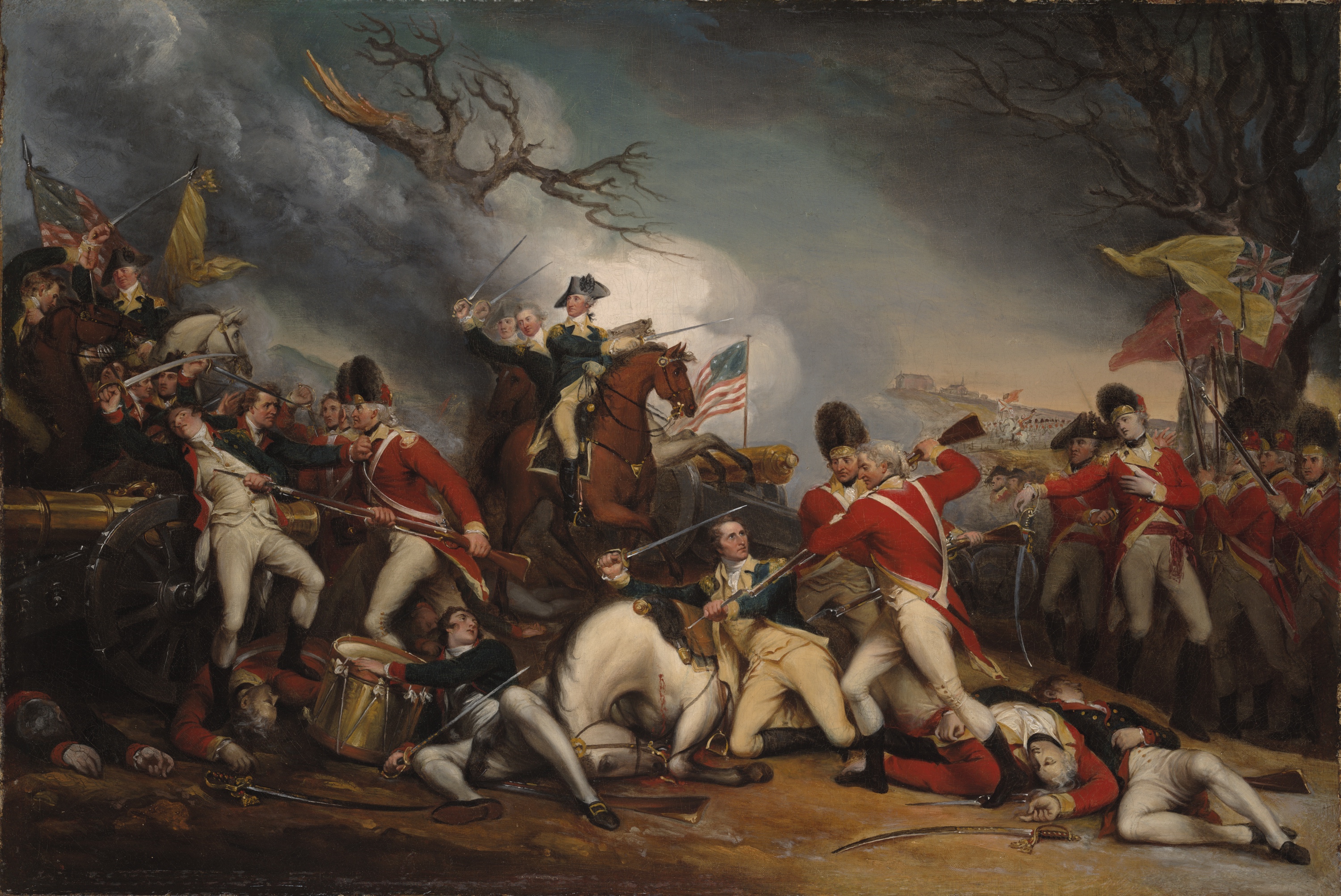
Early in the Revolutionary War, Mifflin left the Continental Congress to serve in the Continental Army. He was commissioned as a major, then became an aide-de-camp of George Washington.
On August 14, 1775, Washington appointed him to become the army's first quartermaster general, under order of Congress. Although it has been said that he was good at the job despite preferring to be on the front lines, questions were raised regarding his failure to properly supply Washington and the troops at Valley Forge, alleging that he had instead warehoused and sold supplies intended for Valley Forge to the highest bidder. Reportedly, after Washington confronted him about this, Mifflin asked to be relieved as quartermaster general but was persuaded to resume those duties because Congress was having difficulty finding a replacement.
Mifflin's leadership in the Battle of Trenton and the Battle of Princeton led to a promotion to major general. In Congress, there was debate regarding whether a national army was more efficient or whether the individual states should maintain their own forces. As a result of this debate the Congressional Board of War was created, on which Mifflin served from 1777 to 1778. He then rejoined the army but took little active role, following criticism of his service as quartermaster general. He was accused of embezzlement and welcomed an inquiry; however, one never took place. He resigned his commission, but Congress continued to ask his advice even after accepting his resignation.
Political career

Prior to American independence, Mifflin was a member of the Pennsylvania Provincial Assembly (1772–1776). He served two terms in the Continental Congress (1774–1775 and 1782–1784), including seven months (November 1783 to June 1784) as that body's presiding officer.
Mifflin's most important duty as president was to accept on behalf of Congress the resignation of General George Washington on December 23, 1783. After the war, the importance of Congress declined so precipitously that Mifflin found it difficult to convince the states to send enough delegates to Congress to ratify the Treaty of Paris, which finally took place on January 14, 1784, at the Maryland State House in Annapolis. He also appointed Thomas Jefferson as a minister to France on May 7, 1784, and he appointed his former aide, Colonel Josiah Harmar, to be the commander of the First American Regiment.
Mifflin later served as a delegate to the United States Constitutional Convention in 1787. He was a signatory to the Continental Association and the Constitution. He presided over the committee that wrote Pennsylvania's 1790 state constitution. That document did away with the Executive Council, replacing it with a single governor.
On December 21, 1790, Mifflin became the last president of Pennsylvania and the first governor of the Commonwealth. He held the latter office until December 17, 1799, when he was succeeded by Thomas McKean. The Whiskey Rebellion and the 1793 Philadelphia yellow fever epidemic happened during his term in office. Fries Rebellion also started during his term. He then returned to the state legislature, where he served until his death the following month.
Personal life
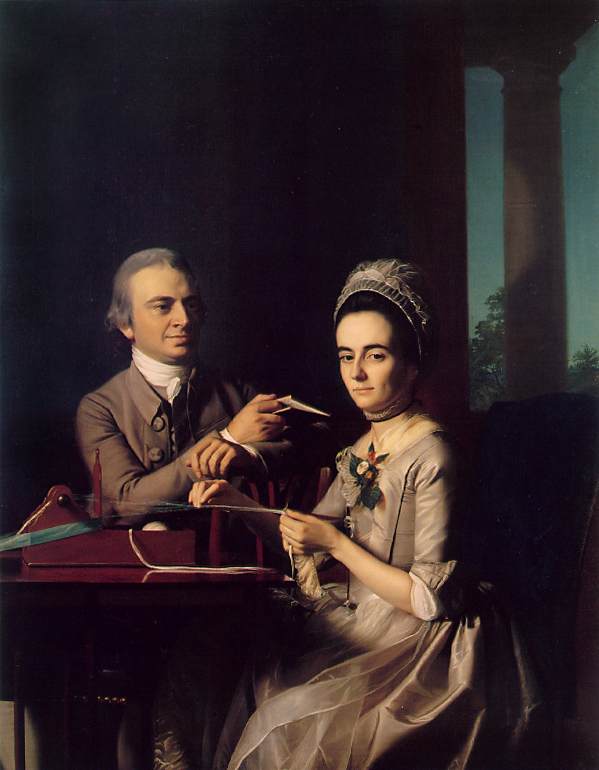
Although Mifflin's family had been Quakers for four generations, he was expelled from the Religious Society of Friends when he joined the Continental Army, because his involvement with the military contradicted that faith's pacifistic doctrines. Mifflin became a member of the American Philosophical Society in 1768 and served for two years as its secretary. He served from 1773 to 1791 as a trustee of the College and Academy of Philadelphia (now the University of Pennsylvania), including two years as treasurer (1773–1775).
Death and legacy
Mifflin died in Lancaster, Pennsylvania, on January 20, 1800.
A Commonwealth of Pennsylvania historical marker outside Holy Trinity, dedicated in 1975, commemorates Thomas Wharton and Mifflin, the first and last Presidents of Pennsylvania under the Pennsylvania Constitution of 1776. It reads: {{blockquote | Holy Trinity Lutheran Church. Founded in 1730. A session for an Indian treaty was held in the original church building in 1762. The present edifice was dedicated in 1766. Here are interred the remains of Thomas Wharton (1778) and Gov. Thomas Mifflin (1800). }}
Namesakes
Counties, cities, and townships
- Fort Mifflin, Philadelphia County, Pennsylvania
- Mifflin, Pennsylvania
- Mifflin County, Pennsylvania
- Mifflin Cross Roads, Pennsylvania
- Mifflin Township, Dauphin County, Pennsylvania
- Mifflin Township, Lycoming County, Pennsylvania
- Mifflinburg, Pennsylvania
- Mifflintown, Pennsylvania
- Mifflinville, Pennsylvania
- Upper Mifflin Township, Cumberland County, Pennsylvania
- West Mifflin, Pennsylvania
- Mifflin Township, Franklin County, Ohio
- Mifflin Street, Madison, Wisconsin
- Mifflin Street, Philadelphia, Pennsylvania
Schools and government buildings
- Governor Mifflin School District
- Governor Mifflin High School
- Mifflin Hall (dormitory at the Pennsylvania State University University Park Campus)
- Mifflin Hall (main building at the U.S. Army Quartermaster Center and School at Fort Gregg-Adams (formerly Fort Lee), Virginia)
- Thomas Mifflin School, School District of Philadelphia
Pop Culture
- Fictional company Dunder Mifflin in The Office TV show.
Footnotes
References
- {{cite book |url-access=registration
- {{cite book
References
- "[https://www.newspapers.com/image/325157119/?terms=%22David%20Rittenhouse%20Porter%22&match=1 The Governors of Pennsylvania]." Mount Union, Pennsylvania: ''The Mount Union Times'', January 27, 1911, p. 1 (subscription required).
- (September 22, 1661). "John Mifflin, II". Geni.
- Their daughter [https://collections.gilcrease.org/articles/article-mrs-joseph-hopkinson Emily Mifflin] married [[Joseph Hopkinson]], the son of [[Francis Hopkinson]]. After Sarah's death in 1790, Emily became her father's hostessMcKenney, Janice E. ''Women of the Constitution, Wives of the Signers,'' Sarah Morris Mifflin, Lanham, Maryland: The Scarecrow Press, Inc., 2013.
- (September 22, 2023). "Colonial and Revolutionary Families of Pennsylvania, New Series, Volume IV, Edited by Wilfred Jordan, p. 18, New York, Lewis Historical Publishing Company, Inc., 1932.".
- Egle, William Henry. (1898 }} Excerpt at {{cite web). "Some Pennsylvania Women During the War of the Revolution".
- (1994). "American Paintings in The Metropolitan Museum of Art". [[The Metropolitan Museum of Art]].
- Risch, Erna. (1981). "Supplying Washington's Army". U.S. Army Center of Military History.
- Unger, Harlow Giles. (2010). "Patrick Henry, Lion of Liberty". Da Capo Press.
- (1987). "Soldier-Statesmen of the Constitution". [[U.S. Army Center of Military History]].
- "General George Washington Resigning His Commission". [[Architect of the Capitol]].
- Alexander, John K.. (February 2000). "Mifflin, Thomas".
- "Avalon Project - Paris Peace Treaty - Proclamation of January 14, 1784".
- (1852–1853). "Minutes of the Supreme Executive Council of Pennsylvania, from its organization to the termination of the Revolution. [March 4, 1777 – December 20, 1790]". Commonwealth of Pennsylvania.
- "Thomas Mifflin".
- (1976). "Thomas Mifflin". U.S. Department of the Interior, National Park Service.
- "Thomas Mifflin (1744–1800)". University of Pennsylvania.
- He is interred at [[Holy Trinity Lutheran Church (Lancaster, Pennsylvania). M000701
- link. (May 26, 2008)
- Ackerman, Jan. (May 10, 1984). "Town names carry bit of history". Pittsburgh Post-Gazette.
- "History of Mifflin Hall".
- "History of Quartermaster Center, Fort Lee, Virginia".
- Bolton, Charles Knowles. (1927). "Bolton's American Armory". Boston: F.W. Faxon Co..
This article was imported from Wikipedia and is available under the Creative Commons Attribution-ShareAlike 4.0 License. Content has been adapted to SurfDoc format. Original contributors can be found on the article history page.
Ask Mako anything about Thomas Mifflin — get instant answers, deeper analysis, and related topics.
Research with MakoFree with your Surf account
Create a free account to save articles, ask Mako questions, and organize your research.
Sign up freeThis content may have been generated or modified by AI. CloudSurf Software LLC is not responsible for the accuracy, completeness, or reliability of AI-generated content. Always verify important information from primary sources.
Report