From Surf Wiki (app.surf) — the open knowledge base
Theophylline
Drug used to treat respiratory diseases
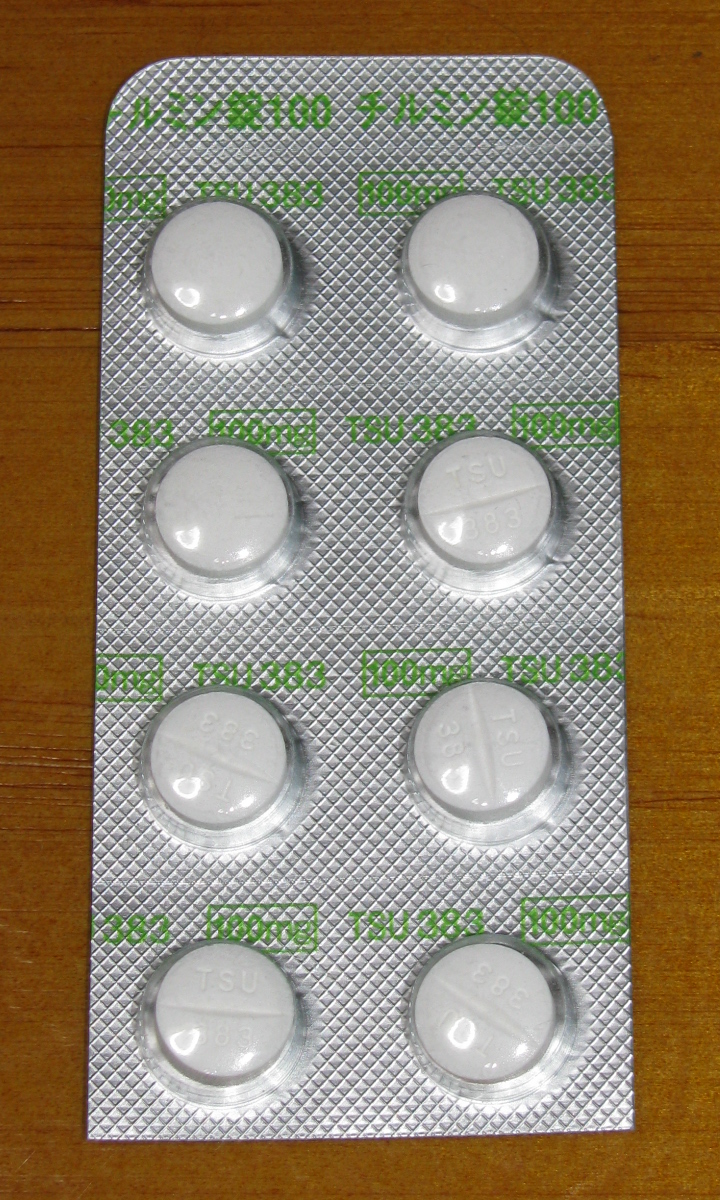
Drug used to treat respiratory diseases
| Field | Value | |
|---|---|---|
| Watchedfields | changed | |
| verifiedrevid | 470606142 | |
| IUPAC_name | 1,3-dimethyl-7H-purine-2,6-dione | |
| image | Theophylline.svg | |
| image_class | skin-invert-image | |
| width | 150 | |
| image2 | Theophylline 3D ball.png | |
| image_class2 | bg-transparent | |
| width2 | 180 | |
| <!--Clinical data--> | tradename | Theolair, Slo-Bid |
| Drugs.com | ||
| MedlinePlus | a681006 | |
| pregnancy_AU | A | |
| pregnancy_AU_comment | ||
| pregnancy_US | C | |
| legal_AU | S4 | |
| legal_CA | Rx-only | |
| legal_UK | P | |
| legal_US | Rx-only | |
| routes_of_administration | By mouth, intravenous, rectal | |
| <!--Pharmacokinetic data--> | bioavailability | 100% (oral) |
| protein_bound | 40% (primarily to albumin) | |
| metabolism | Hepatic: CYP1A2, CYP2E1, CYP3A4 | |
| metabolites | • 1,3-Dimethyluric acid | |
| • 1-Methyixanthine | ||
| • 3-Methylxanthine | ||
| elimination_half-life | 5–8 hours | |
| <!--Identifiers--> | CAS_number_Ref | |
| CAS_number | 58-55-9 | |
| ATC_prefix | R03 | |
| ATC_suffix | DA04 | |
| ATC_supplemental | R03DB04 | |
| ChEBI_Ref | ||
| ChEBI | 28177 | |
| PubChem | 2153 | |
| IUPHAR_ligand | 413 | |
| DrugBank_Ref | ||
| DrugBank | DB00277 | |
| ChemSpiderID_Ref | ||
| ChemSpiderID | 2068 | |
| UNII_Ref | ||
| UNII | 0I55128JYK | |
| KEGG_Ref | ||
| KEGG | D00371 | |
| ChEMBL_Ref | ||
| synonyms | 1,3-dimethylxanthine | |
| ChEMBL | 190 | |
| <!--Chemical data--> | C | 7 |
| H | 8 | |
| N | 4 | |
| O | 2 | |
| smiles | Cn1c2c(c(=O)n(c1=O)C)[nH]cn2 | |
| StdInChI_Ref | ||
| StdInChI | 1S/C7H8N4O2/c1-10-5-4(8-3-9-5)6(12)11(2)7(10)13/h3H,1-2H3,(H,8,9) | |
| StdInChIKey_Ref | ||
| StdInChIKey | ZFXYFBGIUFBOJW-UHFFFAOYSA-N |
| Drugs.com =
• 1-Methyixanthine • 3-Methylxanthine | elimination_half-life = 5–8 hours
Theophylline, also known as 1,3-dimethylxanthine, is a drug that inhibits phosphodiesterase and blocks adenosine receptors. It is used to treat chronic obstructive pulmonary disease (COPD) and asthma. Its pharmacology is similar to other methylxanthine drugs (e.g., theobromine and caffeine).
Medical uses
The main actions of theophylline involve:
- relaxing bronchial smooth muscle
- increasing heart muscle contractility and efficiency (positive inotrope)
- increasing heart rate (positive chronotropic)
- increasing blood pressure
- increasing renal blood flow
- anti-inflammatory effects
- central nervous system stimulatory effect, mainly on the medullary respiratory center
The main therapeutic uses of theophylline are for treating:
- Chronic obstructive pulmonary disease (COPD)
- Asthma
- Infant apnea
- Blocks the action of adenosine; an inhibitory neurotransmitter that induces sleep, contracts the smooth muscles and relaxes the cardiac muscle.
- Treatment of post-dural puncture headache.
Performance enhancement in sports
Theophylline and other methylxanthines are often used for their performance-enhancing effects in sports, as these drugs increase alertness, bronchodilation, and increase the rate and force of heart contraction. There is conflicting information about the value of theophylline and other methylxanthines as prophylaxis against exercise-induced asthma.
Adverse effects
The use of theophylline is complicated by its interaction with various drugs and by the fact that it has a narrow therapeutic window (
Interactions
Its toxicity is increased by erythromycin, cimetidine, and fluoroquinolones, such as ciprofloxacin. Some lipid-based formulations of theophylline can result in toxic theophylline levels when taken with fatty meals, an effect called dose dumping, but this does not occur with most formulations of theophylline. Theophylline toxicity can be treated with beta blockers. In addition to seizures, tachyarrhythmias are a major concern. Theophylline should not be used in combination with the SSRI fluvoxamine.
Pharmacology
Pharmacodynamics
Like other methylated xanthine derivatives, theophylline is a competitive nonselective phosphodiesterase inhibitor which increases intracellular levels of cAMP and cGMP, activates PKA, inhibits TNF-alpha and inhibits leukotriene synthesis, and reduces inflammation and innate immunity. Theophylline also acts as a nonselective adenosine receptor antagonist, antagonizing A1, A2, and A3 receptors almost equally, which explains many of its cardiac effects. Theophylline activates histone deacetylases.
Pharmacokinetics
Distribution
Theophylline is distributed in the extracellular fluid, in the placenta, in the mother's milk and in the central nervous system. The volume of distribution is 0.5 L/kg. The protein binding is 40%.
Metabolism
Theophylline is metabolized extensively in the liver. It undergoes N-demethylation via cytochrome P450 1A2. It is metabolized by parallel first order and Michaelis-Menten pathways. Metabolism may become saturated (non-linear), even within the therapeutic range. Small dose increases may result in disproportionately large increases in serum concentration. Methylation to caffeine is also important in the infant population. Smokers and people with hepatic (liver) impairment metabolize it differently. Cigarette and marijuana smoking induces metabolism of theophylline, increasing the drug's metabolic clearance.
Excretion
Theophylline is excreted unchanged in the urine (up to 10%). Clearance of the drug is increased in children (age 1 to 12), teenagers (12 to 16), adult smokers, elderly smokers, as well as in cystic fibrosis, and hyperthyroidism. Clearance of the drug is decreased in these conditions: elderly, acute congestive heart failure, cirrhosis, hypothyroidism and febrile viral illnesses.
The elimination half-life varies: 30 hours for premature neonates, 24 hours for neonates, 3.5 hours for children ages 1 to 9, 8 hours for adult non-smokers, 5 hours for adult smokers, 24 hours for those with hepatic impairment, 12 hours for those with congestive heart failure NYHA class I-II, 24 hours for those with congestive heart failure NYHA class III-IV, 12 hours for the elderly.
Spectroscopy
UV-visible
Theophylline is soluble in 0.1N NaOH and absorbs maximally at 277 nm with an extinction coefficient of 10,200 (cm−1 M−1).
Proton NMR
The characteristic signals, distinguishing theophylline from related methylxanthines, are approximately 3.23δ and 3.41δ, corresponding to the unique methylation possessed by theophylline. The remaining proton signal, at 8.01δ, corresponds to the proton on the imidazole ring, not transferred between the nitrogen. The transferred proton between the nitrogen is a variable proton and only exhibits a signal under certain conditions.
13C-NMR
The unique methylation of theophylline corresponds to the following signals: 27.7δ and 29.9δ. The remaining signals correspond to carbons characteristic of the xanthine backbone.
Natural occurrences
Theophylline is naturally found in cocoa beans. Amounts as high as 3.7 mg/g have been reported in Criollo cocoa beans.
Trace amounts of theophylline are also found in brewed tea, although brewed tea provides only about 1 mg/L, which is significantly less than a therapeutic dose.
Trace amounts of theophylline are also found in guarana (Paullinia cupana) and in kola nuts.
Crystalline forms in solid state
It has been shown, that Theophylline has five polymorphic forms. In all these crystalline materials hydrogen bonds play an important role.
History
Theophylline was first extracted from tea leaves and chemically identified around 1888 by the German biologist Albrecht Kossel. Seven years later, a chemical synthesis starting with 1,3-dimethyluric acid was described by Emil Fischer and Lorenz Ach. The Traube purine synthesis, an alternative method to synthesize theophylline, was introduced in 1900 by another German scientist, Wilhelm Traube. Theophylline's first clinical use came in 1902 as a diuretic. It took an additional 20 years until it was first reported as an asthma treatment. The drug was prescribed in a syrup up to the 1970s as Theostat 20 and Theostat 80, and by the early 1980s in a tablet form called Quibron.
Etymology
The name 'theophylline' derives from "Thea"—the former genus name for tea + Ancient Greek φύλλον (phúllon, "leaf") + -ine.
References
References
- (26 August 2023). "Theophylline". PubChem, US National Library of Medicine.
- (October 2013). "Theophylline". American Journal of Respiratory and Critical Care Medicine.
- (1991). "Coffee, Tea, Mate, Methylxanthines and Methylglyoxal.". International Agency for Research on Cancer.
- (November 1985). "Antagonism by theophylline of respiratory inhibition induced by adenosine". Journal of Applied Physiology.
- (August 2023). "Theophylline reverses oxycodone's but not fentanyl's respiratory depression in mice while caffeine is ineffective against both opioids". Pharmacology, Biochemistry, and Behavior.
- (10 January 2018). "Efficacy and side effects of intravenous theophylline in acute asthma: a systematic review and meta-analysis". Drug Design, Development and Therapy.
- (19 September 2022). "Comparative efficacy and safety of caffeine citrate and aminophylline in treating apnea of prematurity: A systematic review and meta-analysis". PLOS ONE.
- (August 2021). "The impact of aminophylline on incidence and severity of post-dural puncture headache: A meta-analysis of randomised controlled trials". Anaesthesia, Critical Care & Pain Medicine.
- (April 2023). "Post-dural puncture headache prevention and treatment with aminophylline or theophylline: a systematic review and meta-analysis". Anesthesia and Pain Medicine.
- (February 2022). "Performance-enhancing drugs and the Olympics". Journal of Internal Medicine.
- (January 2022). "Exercise-Induced Bronchospasm in Elite Athletes". Cureus.
- "Theophylline". U.S. National Library of Medicine.
- (June 1985). "Food-induced "dose-dumping" from a once-a-day theophylline product as a cause of theophylline toxicity". Chest.
- (June 1990). "Acute theophylline toxicity and the use of esmolol to reverse cardiovascular instability". Annals of Emergency Medicine.
- (September 1997). "Fluvoxamine-induced theophylline toxicity". The American Journal of Psychiatry.
- (November 1991). "Toxic interaction between fluvoxamine and sustained release theophylline in an 11-year-old boy". Drug Safety.
- (November 2001). "Cyclic nucleotide phosphodiesterases". The Journal of Allergy and Clinical Immunology.
- (June 2008). "Insights into the regulation of TNF-alpha production in human mononuclear cells: the effects of non-specific phosphodiesterase inhibition". Clinics.
- (February 1999). "Pentoxifylline inhibits TNF-alpha production from human alveolar macrophages". American Journal of Respiratory and Critical Care Medicine.
- (January 2005). "Leukotrienes: underappreciated mediators of innate immune responses". Journal of Immunology.
- (1987). "Adenosine receptors: development of selective agonists and antagonists". Progress in Clinical and Biological Research.
- (March 1976). "Relationship of urinary metabolites of theophylline to serum theophylline levels". Clinical Pharmacology and Therapeutics.
- (October 1978). "Enhanced biotransformation of theophylline in marihuana and tobacco smokers". Clinical Pharmacology and Therapeutics.
- (November 1949). "An ultraviolet spectrophotometric method for the determination of theophylline and theobromine in blood and tissues". The Journal of Pharmacology and Experimental Therapeutics.
- (August 2016). "Fragment Discovery for the Design of Nitrogen Heterocycles as Mycobacterium tuberculosis Dihydrofolate Reductase Inhibitors". Archiv der Pharmazie.
- (February 2008). "Pteridines. Part CXIX. A New Pteridine–Purine Transformation.". Helvetica Chimica Acta.
- (1998). "Caffeine". CRC Press.
- "TABLE 2a: Concentrations of caffeine, theobromine and theophylline in tea products.". MAFF, Department of Health and the Scottish Executive.
- (May 1985). "HPLC determination of caffeine and theophylline in Paullinia cupana Kunth (guarana) and Cola spp. samples". Zeitschrift für Lebensmittel-Untersuchung und -Forschung.
- (September 2024). "Supramolecular architecture of theophylline polymorphs, monohydrate and co-crystals with iodine: study from the energetic viewpoint". RSC Advances.
- (1888). "Über eine neue Base aus dem Pflanzenreich". Berichte der Deutschen Chemischen Gesellschaft.
- (1889). "Über das Theophyllin, einen neuen Bestandtheil des Thees". Hoppe-Seyler's Zeitschrift für Physiologische Chemie.
- (1895). "Synthese des Caffeins". Berichte der Deutschen Chemischen Gesellschaft.
- (1900). "Der synthetische Aufbau der Harnsäure, des Xanthins, Theobromins, Theophyllins und Caffeïns aus der Cyanessigsäure". Berichte der Deutschen Chemischen Gesellschaft.
- (1902). "Über Theocin (Theophyllin) als Diureticum". Therapie der Gegenwart.
- (March 1982). "The clinical and pharmacological history of theophylline: first report on the bronchospasmolytic action in man by S. R. Hirsch in Frankfurt (Main) 1922". Clinical Allergy.
This article was imported from Wikipedia and is available under the Creative Commons Attribution-ShareAlike 4.0 License. Content has been adapted to SurfDoc format. Original contributors can be found on the article history page.
Ask Mako anything about Theophylline — get instant answers, deeper analysis, and related topics.
Research with MakoFree with your Surf account
Create a free account to save articles, ask Mako questions, and organize your research.
Sign up freeThis content may have been generated or modified by AI. CloudSurf Software LLC is not responsible for the accuracy, completeness, or reliability of AI-generated content. Always verify important information from primary sources.
Report