From Surf Wiki (app.surf) — the open knowledge base
Terminal High Altitude Area Defense
US ballistic missile defense system
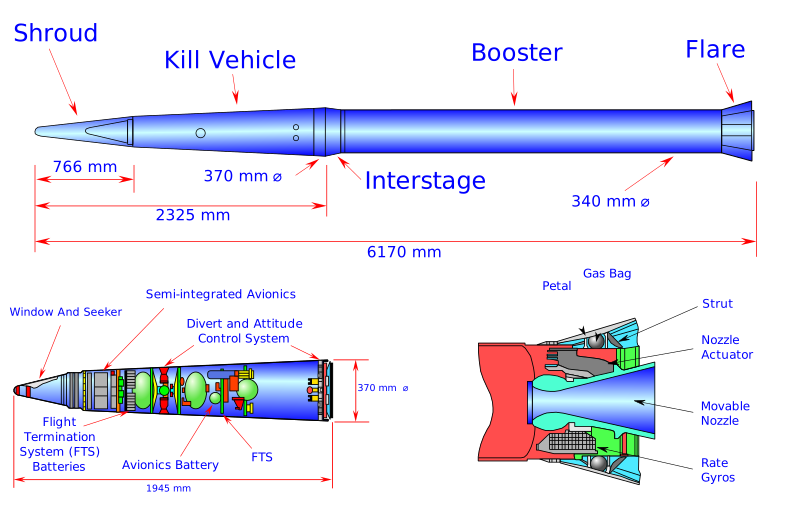
US ballistic missile defense system
| Field | Value | |
|---|---|---|
| name | Terminal High Altitude Area Defense (THAAD) | |
| image | The first of two Terminal High Altitude Area Defense (THAAD) interceptors is launched during a successful intercept test - US Army.jpg | |
| image_size | 300px | |
| caption | A Terminal High Altitude Area Defense interceptor being fired during an exercise in 2013 | |
| origin | United States | |
| type | Mobile anti-ballistic missile system | |
| is_vehicle | yes | |
| is_missile | yes | |
| is_UK | no | |
| <!-- Service history --> | service | 2008–present |
| used_by | United States Army | |
| <!-- Production history --> | designer | Lockheed |
| design_date | 1992–1999 | |
| manufacturer | Lockheed Martin Missiles and Fire Control | |
| production_date | 2008–present | |
| number | numerous | |
| unit_cost | US$1.25 billion per battery | |
| US$12.6 million per missile (FY2017) | ||
| weight | 900 kg | |
| length | 6.17 m | |
| diameter | 340 mm (booster); 370 mm (kill vehicle) | |
| crew | ||
| engine | Single-stage rocket by Aerojet Rocketdyne | |
| propellant | Pratt & Whitney solid-fueled rocket | |
| vehicle_range | 200 km | |
| ceiling | 150 km | |
| speed | 2800 m/s | |
| guidance | Indium-antimonide imaging infra-red seeker head | |
| accuracy | 0 ft (hit to kill) | |
| transport | Transporter erector launcher |
US$12.6 million per missile (FY2017)
Terminal High Altitude Area Defense (THAAD), formerly Theater High Altitude Area Defense, is an American anti-ballistic missile defense system designed to intercept and destroy short-, medium-, and intermediate-range ballistic missiles in their terminal phase (descent or reentry). The THAAD interceptor carries no warhead, instead relying on its kinetic energy of impact to destroy the incoming missile. THAAD was developed after the experience of Iraq's Scud missile attacks during the Gulf War in 1991.
Originally a United States Army program, THAAD has come under the umbrella of the Missile Defense Agency. The Navy has a similar program, the sea-based Aegis Ballistic Missile Defense System, which also has a land component ("Aegis Ashore"). THAAD was originally scheduled for deployment in 2012, but initial deployment took place in May 2008. THAAD has been deployed in the United Arab Emirates (UAE), Israel, Romania, and South Korea.
On 17 January 2022, THAAD made its first operational interception of an incoming hostile medium-range ballistic missile in the UAE.
Development
The THAAD missile defense concept was proposed in 1987, with a formal request for proposals submitted to industry in 1991. The THAAD program benefited from results of previous missile defense efforts like High Endoatmospheric Defense Interceptor (HEDI) and the Kinetic Kill Vehicle Integrated Technology Experiment (KITE). In September 1992, the US Army selected Lockheed, now Lockheed Martin, as the prime contractor for THAAD development.
Prior to the development of a physical prototype, the Aero-Optical Effect (AOE) software code was developed to validate the intended operational profile of Lockheed's proposed design. In April 1995, the first THAAD flight test occurred, with all flight tests in the demonstration-validation (DEM-VAL) program phase occurring at White Sands Missile Range. The first six intercept attempts missed the target (Flights 4–9). The first successful intercepts were conducted on 10 June 1999, and 2 August 1999, against Hera missiles.
The U.S. Army Research Laboratory (ARL) assessed the vulnerability of THAAD, which featured an evaluation of the effects of major electromagnetic elements, including EM interference, EM radiation operations, EM radiation hazards, EM pulse, electrostatic discharge, and lightning, on components of the system. The assessment was designed also to determine the system's growth potential given its tactical design as well as provide survivability analysis against threats such as conventional weapons, chemical weapons, and electronic warfare countermeasures. The data collected from the analyses were used to develop trajectory models for targets and missile as well as target trajectories using infrared scene generation of infrared countermeasures (IRCMs).
The THAAD system is being designed, built, and integrated by Lockheed Martin Missiles and Fire Control acting as prime contractor. Key subcontractors include Raytheon, Boeing, Aerojet Rocketdyne, Honeywell, BAE Systems, Oshkosh Defense, and MiltonCAT.
| Date | Result | Notes | 21 April 1995 | 31 July 1995 | 13 October 1995 | 13 December 1995 | 22 March 1996 | 15 July 1996 | 6 March 1997 | 12 May 1998 | 29 March 1999 | 10 June 1999 | 2 August 1999 |
|---|---|---|---|---|---|---|---|---|---|---|---|---|---|
| Success | First test flight to prove the propulsion system. There was no target in the test. | ||||||||||||
| Aborted | Kill vehicle control test. The test flight was aborted. There was no target in the test. | ||||||||||||
| Success | Launched to test its target-seeking system. There was no attempt to hit the target in the test. | ||||||||||||
| Failure | Failed to hit a test target due to software errors in the missile's fuel system. | ||||||||||||
| Failure | Failed to hit a test target due to mechanical problems with the kill vehicle's booster separation. | ||||||||||||
| Failure | Failed to hit a test target due to a malfunction in the targeting system. | ||||||||||||
| Failure | Failed to hit a test target due to a contamination in the electrical system. | ||||||||||||
| Failure | Failed to hit a test target due to an electrical short circuit in the booster system. At this point, the U.S. Congress reduced funding for the project due to repeated failures. | ||||||||||||
| Failure | Failed to hit a test target due to multiple failures, including guidance system. | ||||||||||||
| Success | Hit a test target in a simplified test scenario. | ||||||||||||
| Success | Hit a test target in the thermosphere at an altitude of 147 km |
Engineering and manufacturing
In June 2000, Lockheed won the Engineering and Manufacturing Development (EMD) contract to turn the design into a mobile tactical army fire unit. In 2006, flight tests of this system resumed with missile characterization and full system tests at White Sands Missile Range, then moved to the Pacific Missile Range Facility. The Interceptor was led through development and initial production by Tory Bruno, who later became the CEO of United Launch Alliance.
| Date | Result | Notes | |||||||
|---|---|---|---|---|---|---|---|---|---|
| 2005-11-22 | Success | Launched a missile in its first Flight EMD Test, known as FLT-01. The test was deemed a success by Lockheed and the Pentagon. | |||||||
| 2006-05-11 | Success | FLT-02, the first developmental flight test to test the entire system, including interceptor, launcher, radar, and fire control system. | |||||||
| 2006-07-12 | Success | FLT-03. Intercepted a live target missile. | |||||||
| 2006-09-13 | Aborted | Hera target missile launched, but had to be terminated in mid-flight before the launch of the FLT-04 missile. This has officially been characterized as a "no test". | |||||||
| Fall 2006 | Cancelled | FLT-05, a missile-only test, was postponed until mid-spring 2007. | |||||||
| 2007-01-27 | Success | FLT-06. Intercepted a "high endo-atmospheric" (just inside Earth's atmosphere) unitary (non-separating) target representing a "SCUD"-type ballistic missile launched from a mobile platform off Kauai in the Pacific Ocean. | |||||||
| 2007-04-06 | Success | FLT-07 test. Intercepted a "mid endo-atmospheric" unitary target missile off Kauai in the Pacific Ocean. It successfully tested THAAD's interoperability with other elements of the MDS system. | |||||||
| 2007-10-27 | Success | Conducted a successful exo-atmospheric test at the Pacific Missile Range Facility (PMRF) off Kauai, Hawaii. The flight test demonstrated the system's ability to detect, track and intercept an incoming unitary target above the Earth's atmosphere. The missile was hot-condition tested to prove its ability to operate in extreme environments. | |||||||
| 2008-06-27 | Success | Downed a missile launched from a C-17 Globemaster III. | |||||||
| 2008-09-17 | Aborted | Target missile failed shortly after launch, so neither interceptor was launched. Officially a "no test". | |||||||
| 2009-03-17 | Success | A repeat of the September flight test. This time it was a success. | |||||||
| 2009-12-11 | Aborted | FLT-11: The Hera target missile failed to ignite after air deployment, and the interceptor was not launched. Officially a "no test". | |||||||
| 2010-06-29 | Success | FLT-14: Conducted a successful endo-atmospheric intercept of unitary target at lowest altitude to date. Afterward, exercised Simulation-Over-Live-Driver (SOLD) system to inject multiple simulated targets into the THAAD radar to test system's ability to engage a mass raid of enemy ballistic missiles. | |||||||
| 2011-10-05 | Success | FLT-12: Conducted a successful endo-atmospheric intercept of two targets with two interceptors. | |||||||
| 2012-10-24 | Success | FTI-01 (Flight Test Integrated 01): test of the integration of THAAD with PAC-3 and Aegis against a raid of 5 missiles of different types. During this engagement THAAD successfully intercepted an Extended Long Range Air Launch Target (E-LRALT) missile dropped from a C-17 north of Wake Island. This marked the first time THAAD had intercepted a Medium Range Ballistic Missile (MRBM). | |||||||
| 2017-07-11 | Success | last1=Stewart | first1=Phil | last2=Ali | first2=Idrees | date=12 July 2017 | title=U.S. THAAD missile defenses hit test target as North Korea tension rises | url=https://www.reuters.com/article/us-northkorea-missiles-usa-defenses-idUSKBN19W15R/ | website=Reuters}} FTT-18 successfully occurred on 11 July 2017; an Alaska-based THAAD interceptor, launched from the Pacific Spaceport Complex – Alaska on Kodiak island, intercepted its target over Alaska airspace. The FTT-18 target simulated an intermediate-range ballistic missile. It was "launched" near Hawaii from the cargo hold of a C-17, being initially dropped by parachute. From there the mock IRBM proceeded in a north-easterly direction until reaching Alaskan airspace, where it was intercepted. |
| 2017-07-30 | Success | 1=[(3 August 2017) 11th ADA THAAD intercepts test target, again](https://web.archive.org/web/20170805015057/http://fortblissbugle.com/2017/08/02/11th-ada-thaad-intercepts-test-target-again/)}}. |
THAAD-ER
Lockheed is pushing for funding for the development of an extended-range (ER) version of the THAAD, to counter maturing threats posed by hypersonic glide vehicles that adversaries may deploy, namely the Chinese WU-14, to penetrate the gap between low- and high-altitude missile defenses. The company performed static fire trials of a modified THAAD booster in 2006 and continued to fund the project until 2008. The current 14.5 in-diameter single-stage booster design would be expanded to a 21 in first stage for greater range with a second "kick stage", to close the distance to the target and provide improved velocity at burnout and more lateral movement during an engagement.
Although the kill vehicle would not need redesign, the ground-based launcher would have only five missiles instead of eight. As of 2020, THAAD-ER is only an industry concept, but Lockheed believes that the Missile Defense Agency will show interest because of the weapons under development by potential adversaries. If funding for the THAAD-ER begins in 2020, a system could be produced by 2024 to provide an interim capability against a rudimentary hypersonic threat. The Pentagon is researching whether other technologies like directed energy weapons and railguns are better solutions for missile defense. These are expected to become available in the mid to late 2020s.
Production
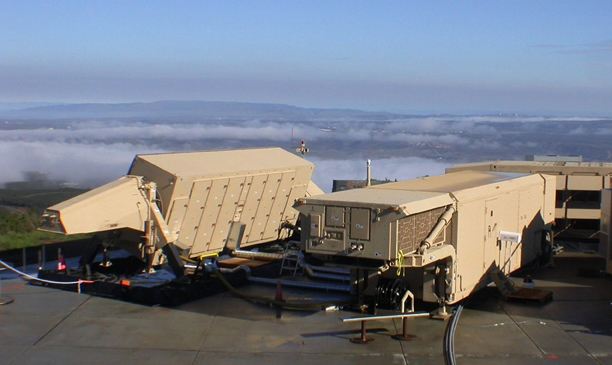
Sometimes called Kinetic Kill technology, the THAAD missile destroys missiles by colliding with them, using hit-to-kill technology, like the MIM-104 Patriot PAC-3, although the PAC-3 also contains a small explosive warhead. This is unlike the Patriot PAC-2, which carried only an explosive warhead detonated using a proximity fuze. Although the actual figures are classified, THAAD missiles have an estimated range of 125 miles (200 km), and can reach an altitude of 93 miles (150 km). A THAAD battery consists of at least six launcher vehicles, each equipped with eight missiles, with two mobile tactical operations centers (TOCs) and the AN/TPY-2 ground-based radar (GBR).
The U.S. Army plans to field at least six THAAD batteries, at a purchase cost of US$800 million per battery. In September 2018, the MDA planned to deliver 52 more interceptors to the Army.
The THAAD missile is manufactured at a Lockheed Martin facility near Troy, Alabama, which performs final integration, assembly and testing. The radar is an X-band active electronically scanned array radar developed and built by Raytheon at its Andover, Massachusetts Integrated Air Defense Facility. The THAAD radar and a variant developed as a forward sensor for ICBM missile defense, the Forward-Based X-Band – Transportable (FBX-T) radar, were assigned a common designator, AN/TPY-2, in late 2006/early 2007. The THAAD radar can interoperate with Aegis and Patriot systems, in a 3-layer antimissile defense.
First units equipped
On 28 May 2008, the U.S. Army activated Alpha Battery, 4th Air Defense Artillery Regiment (A-4), 11th Air Defense Artillery Brigade at Fort Bliss, Texas. Battery A-4 is part of the 32nd Army Air & Missile Defense Command. At the time, the battery had 24 THAAD interceptors, three THAAD launchers based on the M1120 HEMTT Load Handling System, a THAAD Fire Control and a THAAD radar. Full fielding began in 2009. In October 2009, the U.S. Army and the Missile Defense Agency activated the second Terminal High Altitude Area Defense Battery, Alpha Battery, 2nd Air Defense Artillery Regiment (A-2), at Fort Bliss.
In August 2012, Lockheed received a $150 million contract from the Missile Defense Agency (MDA) to produce THAAD weapon system launchers and fire control and communications equipment for the U.S. Army. The contract included 12 launchers, two fire control and communications units, and support equipment. The contract provided six launchers for THAAD Battery 5 and an additional three launchers each to Batteries 1 and 2. These deliveries will bring all batteries to the standard six launcher configuration.
General missile defense plans
In May 2017, the Pentagon proposed spending $7.9 billion in its FY 2018 budget on missile defense, which includes THAAD interceptors and Patriot interceptors, along with $1.5 billion for Ground-based Midcourse Defense (GMD) against intercontinental ballistic missiles.

Deployments
Israel
In 2012, the U.S. AN/TPY-2 early missile warning radar station on Mt. Keren in the Negev desert was the only active foreign military installation in Israel.
In March 2019, Bravo Battery, 2nd Air Defense Artillery Regiment (B-2 THAAD), 11th Air Defense Artillery Brigade was deployed at Nevatim Airbase during a joint US–Israeli drill, after which it moved to an undisclosed location in the Negev desert in southern Israel. The X-Band radar system, which is part of the THAAD system, has been deployed at Nevatim since 2008.
On 13 October 2024, President Biden directed Secretary of Defense Lloyd Austin to authorize the deployment of a THAAD battery to Israel to "help bolster Israel's air defenses following Iran's unprecedented attacks against Israel on April 13 and again on October 1".
On 27 December 2024, a THAAD battery conducted a successful combat interception of a ballistic missile fired from Yemen.
On 4 May 2025, Israeli sources told the BBC that a THAAD battery had, along with the Arrow system, failed to intercept a hypersonic missile fired at Ben Gurion Airport from Yemen.
On 9 May 2025, for the second time in a week, a THAAD failed to down a Houthi missile. Instead, the missile was shot down by an Arrow long-range air defense system.
On 26 July 2025, reports by The War Zone and The Wall Street Journal stated that approximately 150 THAAD interceptors were fired by U.S. forces during Iran's barrages targeting Israel, representing roughly 25% of all U.S. THAAD interceptors funded to date.
Romania
In 2019, while the Aegis Ashore at NSF Deveselu was being upgraded, B Battery, 62nd Air Defense Artillery Regiment (B-62 THAAD), was emplaced in NSF Deveselu, Romania during the interim.
South Korea

Main article: THAAD deployment by South Korea
In October 2013, the South Korean military asked the Pentagon to provide information on the THAAD system concerning prices and capabilities as part of efforts to strengthen defenses against North Korean ballistic missiles. However, South Korean Park Geun-hye administration decided it will develop its own indigenous long-range surface-to-air missile instead of buying the THAAD. South Korean Defense Ministry officials previously requested information on the THAAD, as well as other missile interceptors like the Israeli Arrow 3, with the intention of researching systems for domestic technology development rather than for purchase. Officials did however state that American deployment of the THAAD system would help in countering North Korean missile threats. In May 2014, the Pentagon revealed it was studying sites to base THAAD batteries in South Korea.
The deployment was opposed by China and Russia. In February 2016, Chinese Foreign Minister Wang Yi said that having THAAD in South Korea would "shatter the regional strategic balance" and that the system exceeded South Korea's need. In 2017, a Chinese military official said that the deployment had a negative influence on "bilateral military ties and mutual trust" with the United States. Western experts say that the range of THAAD's radar and interceptors should not pose a threat to China, and the U.S. has had similar capabilities in Taiwan and Japan for years.
Chinese officials believe that its location in South Korea would allow THAAD's radar to detect Chinese missile launches from behind during their boost phase and differentiate between decoys and warheads, sharing information with the rest of the U.S.-led network. This would erode China's nuclear deterrence, which has a much smaller stockpile compared to the United States and Russia. Missile tests in China usually pointed away from Korea, but that trajectory may also need to be reversed in order to minimize detection by THAAD. Chinese officials asked South Korea to downgrade the radar of the missile defence system, but no adjustments were made.
In July 2016, American and South Korean military officials announced the deployment of THAAD system in South Korea, following ballistic missile and nuclear tests by North Korea. Each THAAD unit consists of six truck-mounted launchers, 48 interceptors, a fire control and communications unit, and an AN/TPY-2 radar. Seongju County in North Gyeongsang Province was chosen as a THAAD site, partly because it is out of range of North Korean rocket artillery along the DMZ. This sparked protests from Seongju County residents, who feared that radiation emitted by the AN/TPY-2 radar would impact their health, and damage the region's famed oriental melon crop. On 30 September 2016, the U.S. and South Korea announced that THAAD would be relocated to the Lotte Skyhill Seongju Country Club, farther from the town's main residential areas and higher in elevation, to alleviate concerns.
On 6 March 2017, two THAAD launcher trucks arrived by air transport at Osan Air Base South Korea, for a deployment. Earlier that day, North Korea had launched 4 missiles. A Reuters article stated that with the THAAD defense system, a North Korean missile barrage would still pose a threat to South Korea, while an article in the International Journal of Space Politics & Policy said that South Korean forces already possess Patriot systems for point defense and Aegis destroyers capable of stopping ballistic missiles that may come from the north, in a three-layer antimissile defense for South Korea. On 16 March 2017, a THAAD radar arrived in South Korea. The THAAD system is kept at Osan Air Base until the site where the system is due to be deployed is prepared, with an expected ready date of June 2017. Osan Air Base has blast-hardened command posts with 3 levels of blast doors.
By 25 April 2017, six trailers carrying the THAAD radar, interceptor launchers, communications, and support equipment entered the Seongju site. On 30 April 2017, it was reported that South Korea would bear the cost of the land and facilities for THAAD, while the US will pay for operating it. On 2 May 2017, Moon Sang-gyun, with the South Korean Defense Ministry, and Col. Robert Manning III, a spokesman for the U.S. military, announced that the THAAD system in Seongju is operational and "has the ability to intercept North Korean missiles and defend South Korea."
It was reported that the system would not reach its full operational potential until later in 2017, when additional elements of the system were onsite. On 7 June 2017, President Moon Jae-in suspended further THAAD deployment pending a review, after discovering four additional launchers had entered South Korea without the defense ministry informing him. The 35th Air Defense Artillery Brigade (United States) has integrated THAAD into its layered defense on the Korean Peninsula, denoted Combined Task Force Defender, composed of both US and ROK personnel.
Even in the face of a North Korean ICBM test on 4 July 2017, which newly threatens Alaska, a Kodiak, Alaska-based THAAD interceptor test (FTT-18) against a simulated attack by an Intermediate Range Ballistic Missile had long been planned. FTT-18 was successfully completed by Battery A-2 THAAD (Battery A, 2nd Air Defense Artillery Regiment, Terminal High Altitude Area Defense) of the 11th Air Defense Artillery Brigade (United States) on 11 July 2017. The soldiers used the procedures of an actual combat scenario and were not aware of the IRBM's launch time.
Also in 2017 another Kodiak launch of a THAAD interceptor was scheduled in July, in preparation for a possible ICBM test by North Korea. On 28 July 2017, North Korea launched a test ICBM capable of reaching Los Angeles. In response, President Moon Jae-in called for deployment of the four remaining THAAD launchers which were put on hold when he came to power.
Lee Jong-kul, of South Korean President Moon Jae-in's Democratic Party of Korea stated "The nuclear and missile capabilities of North Korea…have been upgraded to pose serious threats; the international cooperation system to keep the North in check has been nullified...", citing tensions over the U.S. deployment of the Terminal High Altitude Area Defense anti-missile system in South Korea. The Atlantic Council, in the June 2017 memorandum "Eliminating the Growing Threat Posed by North Korean Nuclear Weapons" to President Trump, recommended a checklist of actions, including the following declarations to North Korea.
- No use of WMDs, or it will result in a unified Korea under Seoul after the North's assured destruction.
- No export of nuclear equipment or fissile material; it will be intercepted, and the US will respond.
- No missile or missile test aimed at ROK (South Korea), Japan, or the US; it can then be shot down or pre-empted.
On 30 July 2017, a Kodiak-sited THAAD interceptor shot down an MRBM which launched over the Pacific Ocean, the 15th successful test. The Missile Defense Agency (MDA) director emphasized the data collection from the intercept, which enhances the modelling and scenario simulation capabilities of the MDA. John Schilling estimates the current accuracy of the North's Hwasong-14 as poor at the mooted ranges which would require more testing to prove its accuracy.
In August 2017, The New York Times reviewed the anti-missile options that are available to counter a planned salvo of four Hwasong-12 missiles, were they to be launched in mid-August 2017 from the North, and aimed to land just outside the territorial waters of Guam, a distance of 2100 mi, flying at altitudes exceeding 60 mi, in a flight of 1,065 seconds (18 minutes). These options for the missile defense of South Korea include "sea-based, Patriots and THAAD" according to General John E. Hyten, commander of U.S. Strategic Command.
On 2 September 2017, the North Korean news agency KCNA released a photograph of an elongated payload, intended to fit in the warhead of one of its missiles. On 3 September 2017, both Japan's Foreign Ministry and the South Korean Joint Chiefs announced the detection of a magnitude 6.3 seismic event, centered near Punggye-ri, which is North Korea's underground nuclear test site. Japan's Foreign Ministry has concluded that the event was the North's sixth nuclear test.
Choe Sang-hun of the New York Times reports that the test was a major embarrassment for China's Paramount leader Xi Jinping, who was hosting a BRICS summit (Brazil, Russia, India, China, and South Africa) in Xiamen, China. Cheng Xiaohe, an expert on North Korea at China's Renmin University, said the timing of the test appears to be deliberate. China's Foreign Ministry urged the North to "stop taking wrong actions", and agreed that further UN actions are needed to resolve the impending crisis. By creating a thermonuclear-capable payload for at least one of its missiles, the North has created a need for THAAD, which is capable of intercepting ICBM threats at the lower altitudes and ranges estimated for a Hwasong-14 ICBM subjected to the load of a heavier warhead needed to carry a thermonuclear weapon.
In October 2017, Battery D, 2nd Air Defense Artillery Regiment, Terminal High Altitude Area Defense, reflagged with the 35th Air Defense Artillery Brigade in preparation for a permanent change of station to South Korea. In the interim before THAAD D-2's permanent transfer to South Korea with their families, THAAD Battery A-4 will deploy to South Korea.
The South Korean decision to deploy THAAD to protect itself against North Korea caused backlash and retaliation measures from China. On 30 October 2017, South Korea and China agreed to normalize relations, previously damaged due to the THAAD deployment.
Turkey
According to U.S. officials the AN/TPY-2 radar was deployed at Turkey's Kürecik Air Force base. The radar was activated in January 2012.
United Arab Emirates
In December 2011, the United Arab Emirates (UAE) signed a deal to purchase the missile defense system. The United Arab Emirates (UAE) graduated its first two THAAD unit classes at Fort Bliss in 2015 and 2016. Its first live-fire exercises with Patriot missiles took place in 2014.
On 17 January 2022, THAAD made its first real-world intercept against an incoming Houthi ballistic missile in the UAE.
United States
Hawaii

In June 2009, the United States deployed a THAAD unit to Hawaii, along with the SBX sea-based radar, to defend against a possible North Korean launch targeting the archipelago.
Guam
In April 2013, the United States declared that Alpha Battery, 4th Air Defense Artillery Regiment (A-4), would be deployed to Guam to defend against a possible North Korean IRBM attack targeting the island. In March 2014, Alpha Battery, 2nd ADA RGT (A-2), did a change of responsibility with A-4 and took over the Defense of Guam Mission. After a successful 12-month deployment by A-4, Delta 2 (D-2) took its place for a 12-month deployment. In 2018-2019 Echo Battery, 3rd ADA Regiment (E-3) deployed to Guam.
Wake Island

In November 2015, a THAAD system was a key component of Campaign Fierce Sentry Flight Test Operational-02 Event 2 (FTO-02 E2), a complex $230 million missile defense system test event conducted at Wake Island and the surrounding ocean areas. The objective was to test the ability of the Aegis Ballistic Missile Defense and THAAD weapon systems to defeat a raid of three near-simultaneous air and missile targets, consisting of one medium-range ballistic missile, one short-range ballistic missile and one cruise missile target. During the test, a THAAD system on Wake Island detected and destroyed a short-range target simulating a short-range ballistic missile
Future deployments: firm orders and possible plans
Europe and the Middle East
By March 2016, Army Space and Missile Defense Command was considering THAAD deployments to Europe with EUCOM and the Middle East with CENTCOM.
Japan
In November 2015, Japanese Defense Minister Gen Nakatani said he would consider the U.S. deploying the THAAD in Japan to counter the threat of North Korean ballistic missiles. By October 2016, Japan was considering procuring either THAAD or Aegis Ashore to add a new missile defense layer. In May 2017 it was reported that Japan government officials now favor the Aegis Ashore system as it comes with a wider coverage area, which would mean fewer units needed to protect Japan, and it is also cheaper.
At the Center for a New American Security 2017 conference, citing publicly available sources and simulations of strikes against US bases in Asia, two Navy Fellows, Commanders Shugart and Gonzalez, USN noted that two more Patriot batteries, two more Aegis ships, and five more THAAD batteries would counter China's published SRBM (short-range) and MRBM (medium-range) capabilities against Japan.
Russia has opposed the missile acquisitions and fears that the US will have access to the management of Aegis Ashore missile defense complexes after their deployment in Japan. "We do not know of any cases anywhere in the world when the United States deployed its weapons and transferred control over them to the country in whose territory it all happened. I very much doubt that they will make an exception and in this case," concluded the Russian Foreign Minister.
In 2020, Japan suspended plans to acquire the Aegis Ashore system. The Japanese government said that they were concerned about environmental issues caused by the system dropping spent boosters. Local citizens of the areas chosen to place the system also protested the acquisition, saying that such placement would guarantee strikes on their homes during wartime. the Japanese government had not made it clear whether or not they would re-evaluate purchasing THAAD systems.
Oman
In May 2013, Oman announced a deal for the acquisition of the THAAD air defense system. However, a sale has not been announced.
Qatar
During a visit to Qatar on 14 May 2025, U.S. President Donald Trump announced an agreement for Qatar to acquire $42 billion worth of advanced military equipment from the US. A prominent part of this agreement covers the acquisition of THAAD systems to enhance Qatar's missile air defense capabilities.
Saudi Arabia
In October 2017, the US reached a deal to provide Saudi Arabia with THAAD, in a deal worth $15 billion. The deal included seven fire units, each with a Raytheon AN/TPY-2 radar, two mobile tactical stations (with two spares for a total of 16), and six launchers (with two spares for a total of 44), and 360 interceptor missiles.
Taiwan
In 2017, a Hong Kong–based media report claimed that THAAD could be deployed in Taiwan to intercept People's Republic of China missiles. However, Taiwan's Foreign Minister, David Lee, said he was unaware of any talks with the US about possible deployment. Local military experts said that it was neither necessary nor affordable for Taiwan to deploy THAAD because China is threatening Taiwan with short-range missiles, whereas THAAD is designed to shoot down medium and long-range missiles.
In March 2017, the Minister of National Defense, Feng Shih-kuan, said that he was firmly opposed to the deployment of a THAAD system in Taiwan. Feng's deputy minister, Cheng De-mei, during a Foreign Affairs and National Defense Committee Q&A session held in April 2017, said that Taiwan did not need a THAAD system in the short term because its US-made phased-array radar system at Hsinchu County’s Leshan base was on par with the THAAD system in terms of detection capability; this was described as being "in slight contrast with Minister of National Defense Feng Shih-kuan's last month."
Freddy Lim urged the ministry during the same Q&A session "to procure whatever is necessary to ensure the nation’s defense capabilities, which could not be compromised due to China's pressure."
Operators

Current
;
- Royal Saudi Air Defense Forces – First battery activated in July 2025, 6 more to be procured.
;
- United Arab Emirates Air Force – 2 batteries
;
- United States Army – The US has 7 batteries of THAAD, which will expand to 8 batteries in the future.
- A Battery, 2nd Air Defense Artillery Regiment (A-2 ADA), at Fort Bliss (TX)
- B Battery, 2nd Air Defense Artillery Regiment (B-2 ADA), at Fort Bliss (TX)
- D Battery, 2nd Air Defense Artillery Regiment (D-2 ADA), at Camp Carroll (South Korea)
- E Battery, 3rd Air Defense Artillery Regiment (E-3 ADA), at Andersen Air Force Base (Guam)
- A Battery, 4th Air Defense Artillery Regiment (A-4 ADA), at Fort Bliss (TX)
- B Battery, 62nd Air Defense Artillery Regiment (B-62 ADA), at Fort Hood (TX)
- E Battery, 62nd Air Defense Artillery Regiment (E-62 ADA), at Fort Hood (TX)
Future
;
- Qatar is reportedly set to acquire THAAD. This was announced by U.S. President Donald Trump during his visit to the country in May 2025.
References
References
- "Australia can do better than THAAD or Iron Dome defences".
- "THAAD".
- Aerojet Rocketdyne. (13 June 2024). "Aerojet Rocketdyne Delivers 1,000th THAAD Solid Rocket Boost Motor and Divert and Attitude Control System Ahead of Schedule". L3Harris.
- [http://apps.dtic.mil/dtic/tr/fulltext/u2/a279085.pdf Development of a Hit-to-Kill Guidance Algorithm for Kinetic Energy Weapons, 1988]. {{Webarchive. link. (27 August 2020 .)
- Mehta, Aaron. (25 February 2016). "PACOM Head Supports Exercises Near China, Talks THAAD".
- [http://terms.naver.com/entry.nhn?docId=929232&cid=50299&categoryId=50299 "Naver Dictionary: THAAD"], Naver Dictionary.
- Judson, Jen. (14 August 2019). "Slippery slope: MDA boss fights transfer of missile defense system to Army".
- Singer, Jeremy. (5 September 2006). "Pentagon To Accelerate THAAD Deployment".
- (8 March 2012). "Lockheed Martin completes delivery of all components of 1st THAAD battery to U.S. Army".
- (21 January 2022). "THAAD, in first operational use, destroys midrange ballistic missile in Houthi attack".
- U.S. Naval Institute Staff. (17 October 2024). "Report to Congress on the Terminal High Altitude Area Defense System".
- Atkinson, James W.. (13 August 1996). "The Theater High Altitude Area Defense program: an interim examination of its acquisition strategy". Monterey, California: Naval Postgraduate School;Springfield, Va.: Available from National Technical Information Service.
- (2003). "A History of the Army Research Laboratory". United States Army Research Laboratory.
- (January 1999). "Army Research Laboratory. 1999 Annual Review". Army Research Laboratory.
- (3 April 2013). "U.S. to Send Missile-Defense Battery to Guam". Wall Street Journal.
- "Terminal High Altitude Area Defense (THAAD)".
- [http://www.mda.mil/mdalink/pdf/05news0011.pdf "Successful THAAD Interceptor Launch Achieved"] {{webarchive. link. (3 September 2006 , 22 November 2005.)
- [http://www.mda.mil/mdalink/pdf/06news0017.pdf Successful THAAD Integrated System Flight Test] {{webarchive. link. (18 June 2006 , 11 May 2006.)
- [http://www.mda.mil/mdalink/pdf/06news0019.pdf Successful THAAD Intercept Flight] {{webarchive. link. (20 July 2006 , 12 July 2006.)
- [http://www.mda.mil/mdaLink/pdf/07news0023.pdf Successful THAAD "High Endo-Atmospheric" Intercept Test] {{webarchive. link. (30 September 2007 , 27 January 2007.)
- [http://news.monstersandcritics.com/intelandterror/article_1288160.php/BMD_Focus_MDA%60s_new_THAAD_success "MDA's new THAAD success"] {{webarchive. link. (9 April 2007 , Martin Sieff, UPI, 6 April 2007.)
- [http://starbulletin.com/2007/04/06/news/story07.html "Army, Navy and Air Force shoot down test missile"] {{Webarchive. link. (24 July 2008 , Tom Finnegan, ''[[Honolulu Star-Bulletin]]'', 6 April 2007.)
- (26 October 2007). "Press Release by Lockheed Martin on Newswires". Prnewswire.com.
- (27 October 2007). "31st successful 'hit to kill' intercept in 39 tests". Frontierindia.net.
- [http://webarchive.loc.gov/all/20080709005838/http://airforcetimes.com/news/2008/06/ap_thaad_062608/ "THAAD shoots down missile from C-17"]. The Associated Press, 27 June 2008.
- [http://www.mda.mil/mdalink/pdf/08news0078.pdf/Missile Defense Test Conducted]{{dead link. (January 2018). MDA]], 27 September 2008.
- (17 March 2009). "Terminal High Altitude Area Defense". [[Missile Defense Agency.
- (12 December 2009). "Officials investigating cause of missile failure". [[The Garden Island]].
- (29 June 2010). "THAAD System Intercepts Target in Successful Missile Defense Flight Test".
- (5 October 2011). "THAAD Weapon System Achieves Intercept of Two Targets at Pacific Missile Range Facility".
- (15 October 2012). "FTI-01 Mission Data Sheet". Missile Defense Agency.
- (25 October 2012). "Ballistic Missile Defense System Engages Five Targets Simultaneously During Largest Missile Defense Flight Test in History". Missile Defense Agency.
- Butler, Amy. (5 November 2012). "Pentagon Begins To Tackle Air Defense 'Raid' Threat". Aviation Week & Space Technology.
- [http://www.washingtonexaminer.com/us-to-test-thaad-missile-defense-system-report/article/2628034 US to test THAAD missile defense system: Report].
- (12 July 2017). "U.S. THAAD missile defenses hit test target as North Korea tension rises".
- [https://www.foxnews.com/us/us-successfully-tests-thaad-missile-system-amid-north-korean-tensions "US successfully tests THAAD amid North Korean missile tensions"]. Foxnews.com, 11 July 2017.
- [https://www.youtube.com/watch?v=H-UdkzqchPg FTT-18 THAAD Flight Test Video (11 July 2017)] 2:25 minute clip.
- [https://www.youtube.com/watch?v=afIXoFH6RoI FET-01 (30 July 2017) video clip].
- {{usurped
- [https://www.globalsecurity.org/space/systems/thaad-test-demval.htm THAAD Demonstration-Validation program].
- (30 May 2017). "Ballistic Missile Defense Intercept Flight Test Record".
- (2 April 2019). "Lockheed Martin providing THAAD to US and Saudi Arabia - Land Warfare - Shephard Media".
- (8 January 2015). "China's Hypersonic Ambitions Prompt Thaad-ER Push {{!}} Aviation Week Network".
- (2 April 2019). "Lockheed Martin providing THAAD to US and Saudi Arabia - Land Warfare - Shephard Media".
- (20 January 2015). "Thaad-ER In Search Of A Mission {{!}} Aviation Week Network".
- Lamothe, Dan. (7 March 2017). "U.S. military deploys advanced defensive missile system to South Korea, citing North Korean threat". [[The Washington Post]].
- (2 January 2015). "U.S. Army has received the latest upgrade for THAAD air defense missile system".
- Sisk, Richard. (18 March 2017). "Amid Tough Talk on North Korea, US Wants More THAAD Interceptors".
- Freedberg Jr, Sydney J.. (24 June 2020). "SASC Trims Hypersonics & Robot Ships, Boosts Ships & F-35".
- "Raytheon: Army Navy/Transportable Radar Surveillance (AN/TPY-2)". Raytheon Corporate.
- (November 2016). "THAAD on the Korean Peninsula".
- (19 November 2014). "THAAD: America's Super Shield against Ballistic Missiles?".
- Unit numbering: e.g., "Battery D, 2nd Air Defense Artillery Regiment" would abbreviate as 'D-2' on its [[Guidon (United States). guidon]]
- (28 May 2008). "First Battery of THAAD Weapon System Activated at Fort Bliss".
- (16 October 2009). "Second Battery of Lockheed Martin's THAAD Weapon System Activated at Fort Bliss".
- (15 August 2012). "Lockheed Martin Receives $150 Million Contract To Produce THAAD Weapon System Equipment For The U.S. Army".
- Burns, Robert. "Leery of N. Korea, U.S. plans 1st test to shoot down intercontinental-range missile".
- (30 May 2012). "How a U.S. Radar Station in the Negev Affects a Potential Israel-Iran Clash".
- David Burge. (20 March 2019). "B-2 THAAD deploys to Israel: 11th ADA Bde. unit participates in joint rapid deployment exercise".
- Julian, Hana Levi. (4 March 2019). "US Army Deploys THAAD, Most Advanced Aerial Defense System, in Southern Israel".
- (4 March 2019). "In First, U.S. Deploys THAAD Missile Defense System in Israel in Joint Drill".
- "Statement by Pentagon Press Secretary Maj. Gen. Pat Ryder on the Deployment of a THAAD Bat".
- (27 December 2024). "U.S. Army's First Combat Use Of THAAD Missile Defense System Just Occurred In Israel".
- (4 May 2025). "Netanyahu vows response after Houthi missile hits near Israel's main airport".
- (9 May 2025). "Source: Houthi missile shot down by Arrow after US THAAD missed for 2nd time this week".
- Trevithick, Joseph. (2025-07-25). "150 THAAD Ballistic Missile Interceptors Fired By U.S. During Iran's Barrages On Israel: Report".
- FitzGerald, Shelby Holliday, Anat Peled and Drew. "Israel's 12-Day War Revealed Alarming Gap in America's Missile Stockpile".
- Epperson, Jason. (23 May 2019). "US deploys THAAD anti-missile system in first deployment to Romania".
- (9 August 2019). "NATO a finalizat actualizarea tehnică a sistemului de apărare antibalistică AEGIS de la Deveselu". [[Radio Free Europe]].
- (18 October 2013). "Army of South Korea shows interest for the U.S. THAAD Terminal High Altitude Area Defense".
- (3 June 2014). "S. Korea to develop indigenous missile defense system instead of adopting THAAD".
- (5 June 2014). "'S.Korea Requested Information on THAAD to Develop L-SAM'".
- Smith, Alexander. (26 March 2017). "North Korea's Missile Failure Won't Stop Kim Jong Un Trying to Strike U.S.".
- (29 May 2014). "United States Army has a plan to deploy THAAD air defense missile systems in South Korea".
- Kai. (18 April 2015). "The Other Reasons China Wants to Block THAAD Deployment". The Diplomat.
- Mody, Seema. (28 April 2017). "China lashes out as South Korea puts an American anti-missile system in place".
- Patranobis, Sutirtho. (13 January 2017). "China, Russia vow to deploy measures against US missiles in South Korea".
- Zhou, Laura. (8 July 2016). "China and Russia criticise THAAD missile defence system as destabilising region".
- (25 February 2016). "China cites concerns on U.S. missile defense system in South Korea". Reuters.
- Buckley, Chris. (11 March 2017). "Why U.S. Antimissile System in South Korea Worries China".
- Bin, Li. (6 March 2017). "The Security Dilemma and THAAD Deployment in the ROK".
- (8 July 2016). "For China, a Missile Defense System in South Korea Spells a Failed Courtship". New York Times.
- Judson, Jen. (8 July 2016). "THAAD To Officially Deploy to South Korea".
- Seung-woo, Kang. (12 July 2016). "Seongju picked as site for THAAD battery".
- Padden, Brian. (15 July 2016). "THAAD Radiation Fears Spark South Korean Protests".
- (30 September 2016). "THAAD's new home will be golf course in South Korean mountains". STARS AND STRIPES.
- (30 September 2016). "S. Korea selects golf course as new site for THAAD".
- Se-jeong, Kim. (13 July 2016). "Seongju residents vow to fight against THAAD". [[The Korea Times]].
- (6 March 2017). "U.S. Begins Shipping Controversial Anti-Missile System to South Korea".
- (6 March 2017). "THAAD arrives on the Korean Peninsula".
- Mullany, Gerry. (6 March 2017). "U.S. Starts Deploying Thaad Antimissile System in South Korea, After North's Tests". The New York Times.
- Osan AirBase. (6 March 2017). "THAAD Deploys to Republic of Korea".
- (8 March 2017). "Even with THAAD defense, North Korea missile barrage poses threat to South". Reuters.
- De Leon Petta Gomes da Costa. (16 March 2016). "Chinese Geopolitics: Space Program Cooperation among China, Brazil, and Russia". Astropolitics: The International Journal of Space Politics & Policy.
- Shim, Elizabeth. (16 March 2017). "THAAD radar arrives in South Korea over Chinese opposition".
- A view of the command posts at Osan Air base: [https://www.youtube.com/watch?v=xWqYTKsr43I 'Fight Tonight': Rare look at US defense against North Korea] access-date=2017-04-16
- Taylor, Adam. (7 March 2017). "Why China is so mad about THAAD, a missile defense system aimed at deterring North Korea". [[The Washington Post]].
- Fifield, Anna. (26 April 2017). "U.S. starts 'swiftly' installing controversial antimissile battery in South Korea". The Washington Post.
- Blanchard, Ben. (4 May 2017). "China urges all sides in North Korea standoff to 'stop irritating'...". Reuters.
- (30 April 2017). "US won't seek South Korean money for THAAD".
- Sang-Hun, Choe. (2 May 2017). "U.S. Antimissile System Goes Live in South Korea". The New York Times.
- (2 May 2017). "US anti-missile system operational in South Korea".
- Maresca, Thomas. (7 June 2017). "South Korean President Moon Jae-in suspends further THAAD deployment". USA Today.
- Chandran, Nyshka. (26 July 2017). "North Korea is more erratic than ever, but South Korea is in no rush for US missile defense". CNBC.
- Daniell, Capt. Jonathon. (13 June 2017). "35th ADA BDE welcomes new commander".
- Stewart, Phil. (8 July 2017). "Exclusive: U.S. plans to test THAAD missile defenses as North Korea...". Reuters.
- (7 July 2017). "US to test THAAD missile defense system". CNN.
- {{usurped
- Park, Madison. (25 July 2017). "Coast Guard gives notice: Missile launch expected in Alaska". CNN.
- (30 July 2017). "North Korea claims all of U.S. in strike range as Trump says China has done "nothing"".
- Kim, Jack. (28 July 2017). "South Korea's Moon orders talks with U.S. to deploy more THAAD units after North Korea ICBM test".
- (8 September 2017). "Trump - 'Sad day' for North Korea if U.S. takes military action".
- Burton, John. (26 July 2017) [https://www.koreatimes.co.kr/www/opinion/2017/07/396_233687.html "Moon's nuclear option"] ''[[The Korea Times]]'' (a sister publication of Hankook Ilbo 한국일보)] Quote: Absent a North Korean response to the request for de-nuclearization talks, South Korea has mooted its nuclear options: "If North Korea continues to conduct nuclear weapon and missile tests while the North Korean nuclear negotiations are sluggish, South Korea should decide whether to break the principle of denuclearization and start developing nuclear weapons," —Lee Jong-kul.
- Lockie, Alex. (27 July 2017). "China holds live-fire aircraft carrier drill, builds massive border force as North Korean missile test looms".
- Lockie, Alex. (25 July 2017). "China's army looks like it's getting ready for something big to go down in North Korea".
- Lockie, Alex. (16 March 2017). "How China could stop a US strike on North Korea — without starting World War III".
- Taylor, Adam. (1 December 2021). "Analysis {{!}} The inevitability of North Korea's nuclear weapons". Washington Post.
- (29 July 2017). "After North Korea Test, South Korea Pushes to Build Up Its Own Missiles". The New York Times.
- Pavel, Barry and Robert A. Manning (27 June 2017) [http://www.publications.atlanticcouncil.org/wp-content/uploads/2017/06/Rolling-Back-the-Growing-North-Korean-Threat-web-0627.pdf "Eliminating the Growing Threat Posed by North Korean Nuclear Weapons"] {{Webarchive. link. (29 July 2017 (pdf). The Atlantic Council)
- [https://www.youtube.com/watch?v=afIXoFH6RoI (30 July 2017) US military hits target missile in THAAD interceptor test] Interception at minute 1:04 of 1:20 video clip duration
- Lynch, Sarah N.. (30 July 2017). "U.S. THAAD missile hits test target amid growing pressure from...". Reuters.
- Ali, Idrees. (August 2017). "North Korea can hit most of United States: U.S. officials". Reuters.
- (31 July 2017). "Success of North Korean Missile Test Is Thrown Into Question". The New York Times.
- [https://www3.nhk.or.jp/news/special/northkorea_provocation/embed/northkorea_provocation_movie_185.html Payload Breakup Video: nhk static camera setup on Hokkaido island] 26-second video clip
- Elleman, Michael. (31 July 2017). "Video Casts Doubt on North Korea's Ability to Field an ICBM Re-entry Vehicle".
- Schilling, John. (10 July 2017). "What is True and Not True About North Korea's Hwasong-14 ICBM: A Technical Evaluation".
- Doyle, Gerry. (11 August 2017). "If Missiles Are Headed to Guam, Here Is What Could Stop Them". The New York Times.
- Kim, Christine. (9 August 2017). "North Korea will develop Guam strike plan by mid-August: KCNA". Reuters.
- Pellerin, Cheryl. (24 August 2017). "U.S., South Korean Military Leaders Reinforce Alliance".
- Mason, Jeff. (7 September 2017). "Trump says U.S. not 'putting up with' North Korea's actions". Reuters.
- Brumfiel, Geoff. (3 September 2017). "Here Are The Facts About North Korea's Nuclear Test".
- [http://www.armscontrolwonk.com/archive/1203852/sar-image-of-punggye-ri/ Jeffrey Lewis (13 September 2017) SAR image of Punggye-ri] Note especially the 'before and after' comparison of Mount Mantap, a subsidence of several meters spread over 85 acres, in the grey-scale gif which superimposed images of 26 August – 6 September 2017.
- (3 September 2017). "Nuclear test conducted by North Korea, country claims". CNN.
- (2 September 2017). "North Korean Nuclear Test Draws U.S. Warning of 'Massive Military Response'". The New York Times.
- Said-Moorhouse, Lauren. (3 September 2017). "Nuclear test in North Korea: Live updates". CNN.
- Oliphant, James. (8 September 2017). "Trump: 'Sad day' for North Korea if U.S. takes military action". Reuters.
- (4 September 2017). "North Korea says it tested hydrogen bomb that can fit in intercontinental missile".
- Daniell, Capt. Jonathon. (20 October 2017). "THAAD battery reflags to align with 35th ADA Brigade in South Korea".
- Patranobis, Sutirtho. (13 January 2017). "China, Russia vow to deploy measures against US missiles in South Korea".
- Lee, Kim Min Tayler'. (9 January 2016). "THAAD: Missile defense or diplomatic challenge?". Culture Mandala: The Bulletin of the Centre for East-West Cultural and Economic Studies.
- Mody, Seema. (28 April 2017). "China lashes out as South Korea puts an American anti-missile system in place".
- Kim, Christine. (31 October 2017). "China, South Korea agree to mend ties after THAAD standoff". Reuters.
- [https://archive.today/20130619211352/http://www.defensenews.com/article/20120130/DEFREG04/301300013/U-S-Maintains-Full-Control-Turkish-Based-Radar "U.S. Maintains Full Control of Turkish-Based Radar"] ''[[Defense News]]'', 30 January 2012
- Demirtas, Serkan. (24 December 2011). "NATO Activates Radar in Turkey Next Week".
- (30 December 2011). "U.S., UAE reach deal for missile-defense system".
- {{usurped
- Gienger, Viola. (18 June 2009). "Gates Orders Measures Against North Korea Missile (Update2)". Bloomberg.
- (3 April 2013). "US to move missiles to Guam after North Korea threats". BBC.
- Burge, David. (9 April 2013). "100 bound for Guam: Fort Bliss THAAD unit readies for historic mission".
- (5 November 2015). "2015 THAAD FTO2 Event2a".
- {{rp. intercepts @1:13 & 3:12 that was launched by parachute ejected from a C-17 transport aircraft. At the same time, the THAAD system and the [[USS John Paul Jones (DDG-53). intercepts @2:50 & 3:12 launched by parachute from a second C-17.[http://www.hookelenews.com/uss-john-paul-jones-participates-in-ballistic-missile-defense-test/ "USS John Paul Jones participates in ballistic missile defense test"] {{Webarchive. link. (5 October 2018 , Ho'okele – Pearl Harbor – Hickam News, 6 November 2015.)
- Shalal, Andrea. (1 November 2015). "U.S. completes complex test of layered missile defense system".
- Judson, Jen. (22 March 2016). "Army Weighing THAAD Deployments in Europe, Middle East".
- [http://armyrecognition.com/november_2015_global_defense_security_news_uk/japan_is_considering_deployement_of_us_missile_defense_system_including_the_thaad_42411153.html Japan is considering deployment of US missile defense system including the THAAD] – Armyrecognition.com, 24 November 2015
- [https://www.reuters.com/article/us-japan-northkorea-missiles-idUSKBN12H092 "Japan may accelerate missile defense upgrades in wake of North Korean tests: sources"]. Reuters.com, 17 October 2016
- (13 May 2017). "Japan favors Aegis Ashore over THAAD to boost missile defense: sources". Reuters.
- [https://www.cnas.org/events/cnas-2017-annual-conference Shugart and Gonzalez (28 June 2017) First Strike: China's Missile Threat to U.S. Bases in Asia]. Center for a New American Security
- Freedberg Jr, Sydney J. (28 June 2017). "Chinese Missiles Can Wipe Out US Bases In Japan: Aegis, THAAD Can Stop Em".
- Kurtenbach, Elaine. (20 March 2017). "Russia says US missile systems in Asia a risk to regional security".
- (15 January 2018). "МИД РФ выразил опасения в связи с возможным контролем США над ПРО в Японии".
- (25 September 2020). "Japan Cancels Aegis Ashore: Reasons, Consequences, and International Implications".
- Panda, Ankit. (23 June 2020). "Japan Suspends Aegis Ashore Missile Defense Plans. What Happens Now?".
- Panda, Ankit. (23 June 2020). "Japan Suspends Aegis Ashore Missile Defense Plans. What Happens Now?".
- Panda, Ankit. (23 June 2020). "Japan Suspends Aegis Ashore Missile Defense Plans. What Happens Now?".
- (27 May 2013). "Sultanate of Oman to buy the air defense missile system THAAD from United States".
- (1 June 2022). "Oman: Politics, Security, and U.S. Policy". Congressional Research Service.
- (15 May 2025). "Qatar Signs $42 Billion U.S. Defense Deal Including THAAD Air Defense Missile System". Army Recognition.
- (6 October 2017). "Thaad: US to sell $15bn missile defence to Saudi Arabia".
- Binnie, Jeremy. (9 October 2017). "Saudi THAAD sale approved".
- Everington, Keoni. (15 February 2017). "THAAD may be deployed in Taiwan". [[Taiwan News]].
- Yeh, Joseph. (10 March 2017). "Could Taiwan be up next in THAAD trouble?".
- Chen Wei-han. (6 April 2017). "Taiwan would welcome F-35 jet sales: ministry". Taipei Times.
- "PAVE PAWS Radar System".
- "A Dossier on the Pave Paws Radar Installation on Leshan, Taiwan".
- Perets, Shir. (3 July 2025). "Saudi Arabia unveils first THAAD missile defense system after $15b. dea".
- (3 July 2025). "Saudi Arabia activates first Thaad missile defence system".
- (3 July 2025). "Saudi Arabia activates US made THAAD missile defence system".
- Mehta, Aaron. (2 August 2022). "State Department approves $5 billion in missile defense for UAE, Saudi Arabia".
- (21 April 2022). "Lockheed Martin to Produce Eighth THAAD Battery for the US Government".
- Helou, Agnes. (15 May 2025). "Trump says Qatar to buy THAAD defenses, Pegasus refuelers among $42B investment".
- Panella, Chris. (24 June 2025). "Qatar shielded a US base from Iranian missiles. Here's what's in their air defense arsenal.".
This article was imported from Wikipedia and is available under the Creative Commons Attribution-ShareAlike 4.0 License. Content has been adapted to SurfDoc format. Original contributors can be found on the article history page.
Ask Mako anything about Terminal High Altitude Area Defense — get instant answers, deeper analysis, and related topics.
Research with MakoFree with your Surf account
Create a free account to save articles, ask Mako questions, and organize your research.
Sign up freeThis content may have been generated or modified by AI. CloudSurf Software LLC is not responsible for the accuracy, completeness, or reliability of AI-generated content. Always verify important information from primary sources.
Report