From Surf Wiki (app.surf) — the open knowledge base
Taq-e Bostan
Large rock reliefs in Iran from the Sassanid era
Large rock reliefs in Iran from the Sassanid era
| Field | Value |
|---|---|
| name | Taq-e Bostan |
| native_language | طاقبستان |
| image | تاقبستان.jpg |
| image_size | 300px |
| caption | Taq Bostan, a famous rock relief of Sassanid Iran |
| location | Kermanshah, Iran |
| built | ca. 4th century CE |
| architecture | Persian architecture |
| locmapin | Iran |
| map_relief | yes |
| map_width | 300 |
Taq-e Bostan (, ) is a site with a series of large rock reliefs in Kermanshah, Iran, carved around the 4th century CE during the Sasanian era.
This example of Sasanian art is located 5 km from the city center of Kermanshah. It is located in the heart of the Zagros Mountains, where it has endured almost 1,700 years of wind and rain. Originally, several natural springs were visible next to and below the reliefs and arches, some of which are now covered. Springs next to the reliefs still feed a large basin in front of the rock. The site has been turned into an archaeological park and a series of late Sasanian and Islamic column capitals have been brought together (some found at Taq Bostan, others at Mount Behistun and Kermanshah).
The carvings, some of the finest and best-preserved examples of Persian sculpture under the Sassanids, include representations of the investitures of Ardashir II (379–383) and Shapur III (383–388). Like other Sassanid symbols, Taq-e Bostan, and its relief patterns accentuate power, religious tendencies, glory, honour, the vastness of the court, game and fighting spirit, festivity, joy, and rejoicing.
Sassanid kings chose a beautiful setting for their rock reliefs along a historic Silk Road caravan route waypoint and campground. The reliefs are adjacent to sacred springs that empty into a large reflecting pool at the base of a mountain cliff.
Taq-e Bostan and its rock relief are one of the 30 surviving Sassanid relics of the Zagros Mountains. According to Arthur Pope, the founder of the Iranian Art and Archeology Institute in the United States of America, "art was characteristic of the Iranian people and the gift which they endowed the world with."
Description of the rock reliefs
The Taq-e Bostan complex comprise a rock relief standing on its own and several more reliefs associated with two rock cut arches.
Investiture of Ardashir II
Main article: Coronation of Ardashir II
The relief panel is approx. 4.07 m wide and 3.9 m high.
Shapur II and Shapur III
The smaller arch or iwan (Taq-e Bustan II) has, on the upper part of the back wall, two Pahlavi inscriptions identifying two royal figures as Shapur II (Shapur the Great) and his son Shapur III. They are shown facing each other. The arch's vestibule measures 6 x 5 x 3.6 meters. It has been suggested as having been built during the reign of Shapur III and some put the date of its completion at 385 AD. However, the royal crown of Shapur III does not agree with those on his coins and is closer to that of his predecessor Ardashir II. It has been argued that the texts represent an usurpation of Ardashir's relief by Shapur III. The translation of the inscriptions follows:
Shapur II inscription :
:This is the figure of Mazda-worshipping Lord Shapur, the king of kings of Iran and Aniran, whose race is from the Gods. Son of Mazda-worshipping Lord Hormizd, the king of kings of Iran and Aniran, whose race is from the Gods, grandson of Lord Nersi, the Shahanshah (king of kings). In Inscriptional Palhavi: 𐭯𐭲𐭪𐭫𐭩 𐭦𐭭𐭤 𐭬𐭦𐭣𐭩𐭮𐭭 𐭩𐭥𐭥𐭧𐭩𐭠 𐭱𐭧𐭯𐭥𐭧𐭥𐭩 𐭬𐭫𐭪𐭠𐭭 𐭬𐭫𐭪𐭠 𐭠𐭩𐭫𐭠𐭭 𐭥𐭠𐭭𐭩𐭫𐭠𐭭 𐭬𐭭𐭥 𐭰𐭲𐭫𐭩 𐭬𐭭 𐭩𐭦𐭣𐭠𐭭 𐭡𐭥𐭤 𐭬𐭦𐭣𐭩𐭮𐭭 𐭥𐭥𐭧𐭩𐭠 𐭠𐭥𐭧𐭥𐭬𐭦𐭣𐭩 𐭬𐭫𐭪𐭠𐭭 𐭬𐭫𐭪𐭠 𐭠𐭩𐭫𐭠𐭭 𐭥𐭠𐭭𐭩𐭫𐭠𐭭 𐭬𐭭𐭥 𐭰𐭲𐭫𐭩 𐭬𐭭 𐭩𐭦𐭣𐭠𐭭 𐭭𐭯𐭩 𐭥𐭥𐭧𐭩𐭠 𐭭𐭥𐭮𐭧𐭩 𐭬𐭫𐭪𐭠𐭭 𐭬𐭫𐭪𐭠
Shapur III inscription:
:This is the figure of Mazda-worshipping Lord Shapur, the king of kings of Iran and Aniran, whose race is from the Gods. Son of Mazda-worshipping Lord Shapur, the king of kings of Iran and Aniran, whose race is from the Gods, grandson of Lord Hormizd, the king of kings. In Inscriptional Pahlavi: 𐭯𐭲𐭪𐭫𐭩 𐭦𐭭𐭤 𐭬𐭦𐭣𐭩𐭮𐭭 𐭥𐭥𐭧𐭩𐭠 𐭱𐭧𐭯𐭥𐭧𐭥𐭩 𐭬𐭫𐭪𐭠𐭭 𐭬𐭫𐭪𐭠 𐭠𐭩𐭫𐭠𐭭 𐭥𐭠𐭭𐭩𐭫𐭠𐭭 𐭬𐭭𐭥 𐭰𐭲𐭫𐭩 𐭬𐭭 𐭩𐭦𐭣𐭠𐭭 𐭡𐭥𐭤 𐭬𐭦𐭣𐭩𐭮𐭭 𐭥𐭥𐭧𐭩𐭠 𐭱𐭧𐭯𐭥𐭧𐭥𐭩 𐭬𐭫𐭪𐭠𐭭 𐭬𐭫𐭪𐭠 𐭠𐭩𐭫𐭠𐭭 𐭥𐭠𐭭𐭩𐭫𐭠𐭭 𐭬𐭭𐭥 𐭰𐭲𐭫𐭩 𐭬𐭭 𐭩𐭦𐭣𐭠𐭭 𐭭𐭯𐭩 𐭥𐭥𐭧𐭩𐭠 𐭠𐭥𐭧𐭥𐭬𐭦𐭣𐭩 𐭬𐭫𐭪𐭠𐭭 𐭬𐭫𐭪𐭠
Iwan of Khosrow II
The three figures on the back wall of the large iwan are usually considered to represent Khosrow II flanked by Ahura Mazda and Anahita.
Scene of boar and deer hunting

There are two hunting scenes on each side of the ivan.
Dowlatshah Relief
The upper relief, added in the 19th century, shows the Qajar era Governor in Kermanshah, Mohammad-Ali Mirza Dowlatshah, in front of Fath-Ali Shah Qajar.
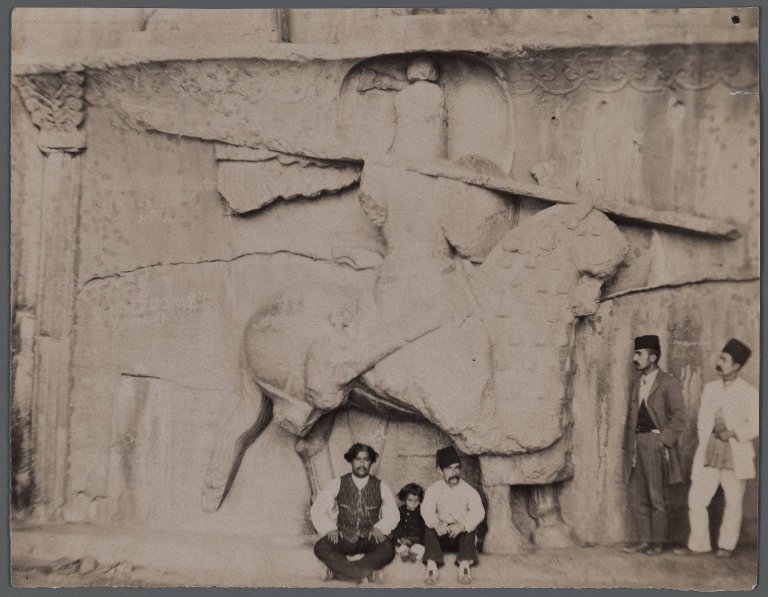
Taq-e Bostan Photos
Image:Sassanid-woman.png|Female musicians accompanying king during hunting Image:Capital of a Sasanian column in Taq-e Bostan complex (geomet).jpg|Capital of a Sasanian column in Taq-e Bostan complex with geometrical design Image:Capital of a Sasanian column in Taq-e Bostan complex (king).jpg|Capital of a column with figural decoration of a Sasanian king Image:Taq-e_Bostan_-_fallen_Roman.jpg|Details from a Sassanid relief on the incoronation of Ardashir showing a defeated Julian. Image:Fath Ali Shah holding court.jpg|Relief of Fath-Ali Shah Qajar, added to the ancient complex in the 19th century. Image:Taq-e Bostan-Khosro Parviz.JPG|Relief of Khosrow II Image:فرشته بر روی طاق بزرگ، طاق بستان - panoramio.jpg|Relief of Elaheh (Angel) Image:Status of ardeshir.jpg|Statue of Ardeshir II File:Capital of Khusrau II.jpg|Capital of Khosrow II
References
- Dr. Ali Akbar Sarfaraz, Dr. Bahman Firuzmandi "Mad, Hakhamanishi, Ashkani, Sasani" Marlik, 1996.
- Gardeshgary magazine Vol. 13, September 2002
- Iranian Cultural News Agency (CHN)
- Bruno Overlaet, Ardashir II or Shapur III?: reflections on the identity of a king in the smaller grotto at Taq-i Bustan, IRANICA ANTIQUA 46, 2011, p. 235–250 Ardashir II or Shapur III? Reflections on the Identity of a King in the Smaller Grotto at Taq-i Bustan, Iranica Antiqua 46, 2011, 235–250
- Bruno Overlaet, Ahura Mazda or Shapur II? A Note on Taq-i Bustan I, the Investiture of Ardashir II (379–383), Iranica Antiqua 47, 2012, p. 133–151 Ahura Mazda or Shapur II? A Note on Taq-i Bustan I, the Investiture of Ardashir II (379–383), Iranica Antiqua 47, 2012, 133–151
- Bruno Overlaet, And Man Created God? Kings, Priests and Gods on Sasanian Investiture Reliefs. Iranica Antiqua 48, 2013, 313–354. And Man Created God? Kings, Priests and Gods on Sasanian Investiture Reliefs. Iranica Antiqua 48, 2013, 313–354.
References
- (2 March 2010). "Which one is correct, Taq bostan or Taq va san?".
- "About the Sword of the Huns and the "Urepos" of the Steppes". The Metropolitan Museum.
This article was imported from Wikipedia and is available under the Creative Commons Attribution-ShareAlike 4.0 License. Content has been adapted to SurfDoc format. Original contributors can be found on the article history page.
Ask Mako anything about Taq-e Bostan — get instant answers, deeper analysis, and related topics.
Research with MakoFree with your Surf account
Create a free account to save articles, ask Mako questions, and organize your research.
Sign up freeThis content may have been generated or modified by AI. CloudSurf Software LLC is not responsible for the accuracy, completeness, or reliability of AI-generated content. Always verify important information from primary sources.
Report