From Surf Wiki (app.surf) — the open knowledge base
Tadao Ando
Japanese architect (born 1941)
Japanese architect (born 1941)
| Field | Value | ||
|---|---|---|---|
| name | Tadao Ando | ||
| image | Tadao Ando 2004 (4x5 cropped).jpg | ||
| image_size | 220 | ||
| caption | Ando in 2004 | ||
| alt | Black-and-white head shot of Ando | ||
| birth_date | |||
| birth_place | Minato-ku, Osaka, Japan | ||
| awards | |||
| practice | Tadao Ando Architects & Associates | ||
| significant_buildings | {{ubl | Row House, Sumiyoshi, 1979 | |
| significant_projects | Rokko Housing I, II, III, Kobe, 1983-1999 |
Church of the Light, Osaka, 1989|Water Temple, Awaji, 1991}} Tadao Ando is a Japanese architect. Self-taught, he is known for his unique integration of architecture and landscape. Architectural historian Francesco Dal Co described his work as an example of "critical regionalism". Ando was awarded the Pritzker Prize in 1995.
Early life
Tadao Ando was born in 1941 in Minato-ku, Osaka, Japan, just a few minutes before his twin brother. At the age of two, he was separated from his sibling and raised by his great-grandmother. Before becoming an architect, Ando worked as a boxer and fighter. He had no formal training in architecture, but a visit to Tokyo during high school, where he saw the Frank Lloyd Wright–designed Imperial Hotel, deeply inspired him. Less than two years after graduating from high school, he left boxing to pursue architecture, studying drawing at night and taking correspondence courses on interior design. He later travelled to study buildings by masters such as Le Corbusier, Ludwig Mies van der Rohe, Frank Lloyd Wright, and Louis Kahn. In 1968, he returned to Osaka and founded Tadao Ando Architects and Associates.
Career
Style
Enough images -don't add more in lead because it is CRASHING THE LAYOUT
-->
Ando was raised in Japan where the religion and style of life strongly influenced his architecture and design. Ando's architectural style is said to create a "haiku" effect, emphasizing nothingness and empty space to represent the beauty of simplicity. He favors designing complex spatial circulation while maintaining the appearance of simplicity. A self-taught architect, he keeps his Japanese culture and language in mind while he travels around Europe for research. As an architect, he believes that architecture can change society, that "to change the dwelling is to change the city and to reform society". "Reform society" could be a promotion of a place or a change of the identity of that place. Werner Blaser has said, "Good buildings by Tadao Ando create memorable identity and therefore publicity, which in turn attracts the public and promotes market penetration".
The simplicity of his architecture emphasizes the concept of sensation and physical experiences, mainly influenced by Japanese culture. The religious term Zen, focuses on the concept of simplicity and concentrates on inner feeling rather than outward appearance. Zen influences vividly show in Ando's work and became its distinguishing mark. In order to practice the idea of simplicity, Ando's architecture is mostly constructed with concrete, providing a sense of cleanliness and weightlessness (even though concrete is a heavy material) at the same time. Due to the simplicity of the exterior, construction, and organization of the space are relatively potential in order to represent the aesthetic of sensation.
Besides Japanese religious architecture, Ando has also designed Christian churches, such as the Church of the Light (1989) and the Church in Tarumi (1993). Although Japanese and Christian churches display distinct characteristics, Ando treats them in a similar way. He believes there should be no difference in designing religious architecture and houses. As he explains,
We do not need to differentiate one from the other. Dwelling in a house is not only a functional issue, but also a spiritual one. The house is the locus of heart (kokoro), and the heart is the locus of god. Dwelling in a house is a search for the heart (kokoro) as the locus of god, just as one goes to church to search for god. An important role of the church is to enhance this sense of the spiritual. In a spiritual place, people find peace in their heart (kokoro), as in their homeland.
Besides speaking of the spirit of architecture, Ando also emphasises the association between nature and architecture. He intends for people to easily experience the spirit and beauty of nature through architecture. He believes architecture is responsible for performing the attitude of the site and makes it visible. This not only represents his theory of the role of architecture in society but also shows why he spends so much time studying architecture from physical experience.
In 1995, Ando won the Pritzker Prize for architecture, considered the highest distinction in the field.
Buildings and works

Tadao Ando's body of work is known for the creative use of natural light and for structures that follow natural forms of the landscape, rather than disturbing the landscape by making it conform to the constructed space of a building. Ando's buildings are often characterized by complex three-dimensional circulation paths. These paths weave in between interior and exterior spaces formed both inside large-scale geometric shapes and in the spaces between them.
His Row House in Sumiyoshi (Azuma House, 住吉の長屋), a small two-story, cast-in-place concrete house completed in 1976, is an early work which began to show elements of his characteristic style. It consists of three equal rectangular volumes: two enclosed volumes of interior spaces separated by an open courtyard. The courtyard's position between the two interior volumes becomes an integral part of the house's circulation system. The house is famous for the contrast between appearance and spatial organization that allows people to experience the richness of the space within the geometry.
Ando's housing complex at Rokko, just outside Kobe, is a complex warren of terraces and balconies, atriums and shafts. The designs for Rokko Housing One (1983) and for Rokko Housing Two (1993) illustrate a range of issues in traditional architectural vocabulary—the interplay of solid and void, the alternatives of open and closed, the contrasts of light and darkness. More significantly, Ando's noteworthy engineering achievement in these clustered buildings is site-specific—the structures survived undamaged after the Great Hanshin earthquake of 1995. New York Times architectural critic Paul Goldberger argues that:
Ando is right in the Japanese tradition: spareness has always been a part of Japanese architecture, at least since the 16th century; [and] it is not without reason that Frank Lloyd Wright more freely admitted to the influences of Japanese architecture than of anything American."
Like Wright's Imperial Hotel in Tokyo Second Imperial Hotel 1923-1968, which did survive the Great Kantō earthquake of 1923, site specific decision-making, anticipates seismic activity in several of Ando's Hyōgo-Awaji buildings.
Unlike the architect Auguste Perret, who pioneered the use of reinforced concrete, Ando used shuttering formwork to give concrete building elements their shape. The finished Ando building bears the memory of wood texture. The smoothness of the concrete is achieved by the careful preparation of the casting moulds. Ando buildings are credited with the interior design use of exposed concrete. The use of prominent beams is perceived to be rooted in Japanese architectural history. The Rokko apartments and the Church of the Light earned Ando international recognition, and he was noted by those who detect a regional quality in concrete construction.
In 2003, Ando was commissioned by soap opera heir William Bell, Jr. and his wife Maria to design a house for an almost 6 acre oceanfront site on the East Pacific Coast Highway in the Paradise Cove area of Malibu, California. The house (designed with WHY Architects) is a 40,000 sqft modernist concrete structure in an L shape, with six bedrooms and walls of glass. Construction was completed in 2014, being prolonged due to the oceanfront location, soft soil, and California's extensive building codes. 7,645 cubic yards of unusually high quality concrete were used in the construction of the house, with its rebar specially treated to resist corrosion. The installation of the concrete in the driveway, garage, and parking areas in 2015 won an award for precision from the American Concrete Institute. Ando also designed a series of furniture pieces for the interior. In May 2023, couple Beyoncé and Jay-Z purchased the house through a trust for $200 million. It was the most expensive single-family home sold in the United States in 2023. and surpassed California's previous record price for a residence, set by businessman Marc Andreessen in 2021 for the adjacent house.
Projects
| Building/project | Location | Country | Date | ||||||||||
|---|---|---|---|---|---|---|---|---|---|---|---|---|---|
| Tomishima House | Osaka | Japan | 1973 | ||||||||||
| Uchida House | Japan | 1974 | |||||||||||
| Uno House | Kyoto | Japan | 1974 | ||||||||||
| Hiraoka House | Hyōgo Prefecture | Japan | 1974 | ||||||||||
| Shibata House | Ashiya, Hyogo Prefecture | Japan | 1974 | ||||||||||
| Tatsumi House | Osaka | Japan | 1975 | ||||||||||
| Soseikan-Yamaguchi House | Hyōgo Prefecture | Japan | 1975 | ||||||||||
| Takahashi House | Ashiya, Hyōgo Prefecture | Japan | 1975 | ||||||||||
| Matsumura House | Kobe | Japan | 1975 | ||||||||||
| Row House in Sumiyoshi (Azuma House) | Sumiyoshi, Osaka | Japan | 1976 | ||||||||||
| Hirabayashi House | Osaka Prefecture | Japan | 1976 | ||||||||||
| Bansho House | Aichi Prefecture | Japan | 1976 | ||||||||||
| Tezukayama Tower Plaza | Sumiyoshi, Osaka | Japan | 1976 | ||||||||||
| Tezukayama House-Manabe House | Osaka | Japan | 1977 | ||||||||||
| Wall House (Matsumoto House) | Ashiya, Hyōgo Prefecture | Japan | 1977 | ||||||||||
| Glass Block House (Ishihara House) | Osaka | Japan | 1978 | ||||||||||
| Okusu House | Setagaya, Tokyo | Japan | 1978 | ||||||||||
| Glass Block Wall (Horiuchi House) | Sumiyoshi, Osaka | Japan | 1979 | ||||||||||
| Katayama Building | Nishinomiya, Hyōgo Prefecture | Japan | 1979 | ||||||||||
| Onishi House | Sumiyoshi, Osaka | Japan | 1979 | ||||||||||
| Matsutani House | Kyoto | Japan | 1979 | ||||||||||
| Ueda House | Okayama Prefecture | Japan | 1979 | ||||||||||
| Step | Takamatsu, Kagawa | Japan | 1980 | ||||||||||
| Matsumoto House | Wakayama, Wakayama Prefecture | Japan | 1980 | ||||||||||
| Fuku House | Wakayama, Wakayama Prefecture | Japan | 1980 | ||||||||||
| Bansho House Addition | Aichi Prefecture | Japan | 1981 | ||||||||||
| Koshino House | Ashiya, Hyōgo Prefecture | Japan | 1981 | ||||||||||
| Kojima Housing (Sato House) | Okayama Prefecture | Japan | 1981 | ||||||||||
| Atelier in Oyodo | Osaka | Japan | 1981 | ||||||||||
| Tea House for Soseikan-Yamaguchi House | Hyōgo Prefecture | Japan | 1982 | ||||||||||
| Ishii House | Shizuoka Prefecture | Japan | 1982 | ||||||||||
| Akabane House | Setagaya, Tokyo | Japan | 1982 | ||||||||||
| Kujo Townhouse (Izutsu House) | Osaka | Japan | 1982 | ||||||||||
| Rokko Housing One () | Rokko, Hyōgo Prefecture | Japan | 1983 | ||||||||||
| Bigi Atelier | Shibuya, Tokyo | Japan | 1983 | ||||||||||
| Umemiya House | Kobe | Japan | 1983 | ||||||||||
| Kaneko House | Shibuya, Tokyo | Japan | 1983 | ||||||||||
| Festival | Naha, Okinawa prefecture | Japan | 1984 | ||||||||||
| Time's | Kyoto | Japan | 1984 | ||||||||||
| Koshino House Addition | Ashiya, Hyōgo Prefecture | Japan | 1984 | ||||||||||
| Melrose, Meguro | Tokyo | Japan | 1984 | ||||||||||
| Uejo House | Osaka Prefecture | Japan | 1984 | ||||||||||
| Ota House | Okayama Prefecture | Japan | 1984 | ||||||||||
| Moteki House | Kobe | Japan | 1984 | ||||||||||
| Shinsaibashi Tokyu Building | Osaka Prefecture | Japan | 1984 | ||||||||||
| Iwasa House | Ashiya, Hyōgo Prefecture | Japan | 1984 | ||||||||||
| Hata House () | Nishinomiya, Hyōgo Prefecture | Japan | 1984 | ||||||||||
| Atelier Yoshie Inaba | Shibuya, Tokyo | Japan | 1985 | ||||||||||
| Jun Port Island Building | Kobe | Japan | 1985 | ||||||||||
| Mon-petit-chou | Kyoto | Japan | 1985 | ||||||||||
| Guest House for Hattori House | Osaka | Japan | 1985 | ||||||||||
| Taiyō Cement Headquarters Building | Osaka | Japan | 1986 | ||||||||||
| TS Building | Osaka | Japan | 1986 | ||||||||||
| Chapel on Mount Rokko | Kobe | Japan | 1986 | ||||||||||
| Old/New Rokkov | Kobe | Japan | 1986 | ||||||||||
| Kidosaki House | Setagaya, Tokyo | Japan | 1986 | ||||||||||
| Fukuhara Clinic | Setagaya, Tokyo | Japan | 1986 | ||||||||||
| Sasaki House | Minato, Tokyo | Japan | 1986 | ||||||||||
| Main Pavilion for | Osaka | Japan | 1987 | ||||||||||
| Karaza Theater | Tokyo | Japan | 1987 | ||||||||||
| Ueda House Addition | Okayama Prefecture | Japan | 1987 | ||||||||||
| Church on the Water | Tomamu, Hokkaido | Japan | 1988 | ||||||||||
| Galleria Akka | Osaka | Japan | 1988 | ||||||||||
| Children's Museum | Himeji, Hyōgo | Japan | 1989 | ||||||||||
| Church of the Light () | Ibaraki Osaka Prefecture | Japan | 1989 | ||||||||||
| Collezione | Minato, Tokyo | Japan | 1989 | ||||||||||
| Morozoff P&P Studio | Kobe | Japan | 1989 | ||||||||||
| Raika Headquarters | Osaka | Japan | 1989 | ||||||||||
| Natsukawa Memorial Hall | Hikone, Shiga | Japan | 1989 | ||||||||||
| Yao Clinic, Neyagawa | Osaka Prefecture | Japan | 1989 | ||||||||||
| Matsutani House Addition | Kyoto | Japan | 1990 | ||||||||||
| Ito House, Setagaya | Tokyo | Japan | 1990 | ||||||||||
| Iwasa House Addition | Ashiya, Hyōgo Prefecture | Japan | 1990 | ||||||||||
| Garden of Fine Arts | Osaka | Japan | 1990 | ||||||||||
| S Building | Osaka | Japan | 1990 | ||||||||||
| Water Temple () | Awaji Island, Hyōgo Prefecture | Japan | 1991 | ||||||||||
| Atelier in Oyodo II | Osaka | Japan | 1991 | ||||||||||
| Time's II | Kyoto | Japan | 1991 | ||||||||||
| Museum of Literature | Himeji, Hyōgo | Japan | 1991 | ||||||||||
| Sayoh Housing | Hyōgo Prefecture | Japan | 1991 | ||||||||||
| Minolta Seminar House | Kobe | Japan | 1991 | ||||||||||
| Benesse House | Naoshima, Kagawa | Japan | last1=Williams | first1=Ingrid K | title=Japanese Island as Unlikely Arts Installation | url=https://www.nytimes.com/2011/08/28/travel/naoshima-japan-an-unlikely-island-as-art-attraction.html | access-date=13 December 2016 | work=The New York Times | date=26 August 2011 | url-status=live | archive-url=https://web.archive.org/web/20161220152255/http://www.nytimes.com/2011/08/28/travel/naoshima-japan-an-unlikely-island-as-art-attraction.html | archive-date=20 December 2016}} | |
| Japanese Pavilion for Expo 92 | Seville | Spain | 1992 | ||||||||||
| Otemae Art Center | Nishinomiya, Hyōgo Prefecture | Japan | 1992 | ||||||||||
| Forest of Tombs Museum | Kumamoto Prefecture | Japan | 1992 | ||||||||||
| Rokko Housing Two | Rokko, Kobe | Japan | 1993 | ||||||||||
| Vitra Seminar House | Weil am Rhein | Germany | 1993 | ||||||||||
| Gallery Noda | Kobe | Japan | 1993 | ||||||||||
| YKK Seminar House | Chiba Prefecture | Japan | 1993 | ||||||||||
| Suntory Museum | Osaka | Japan | 1994 | ||||||||||
| Maxray Headquarters Building | Osaka | Japan | 1994 | ||||||||||
| Chikatsu Asuka Museum | Osaka Prefecture | Japan | 1994 | ||||||||||
| Kiyo Bank, Sakai Building | Sakai, Osaka | Japan | 1994 | ||||||||||
| Garden of Fine Art | Kyoto | Japan | 1994 | ||||||||||
| Museum of wood culture | Kami, Hyōgo Prefecture | Japan | 1994 | ||||||||||
| Inamori Auditorium | Kagoshima | Japan | 1994 | ||||||||||
| Nariwa Museum | Okayama Prefecture | Japan | 1994 | ||||||||||
| Naoshima Contemporary Art Museum | Naoshima, Kagawa | Japan | 1995 | ||||||||||
| Atelier in Oyodo Annex | Osaka | Japan | 1995 | ||||||||||
| Nagaragawa Convention Center | Gifu | Japan | 1995 | ||||||||||
| Naoshima Contemporary Art Museum Annex | Naoshima, Kagawa Prefecture | Japan | 1995 | ||||||||||
| Meditation Space, UNESCO | Paris | France | 1995 | ||||||||||
| Asahi Beer Oyamazaki Villa Museum of Art | Kyoto Prefecture | Japan | 1995 | ||||||||||
| Shanghai Pusan Ferry Terminal | Osaka | Japan | 1996 | ||||||||||
| Museum of Literature II, Himeji | Hyōgo Prefecture | Japan | 1996 | ||||||||||
| Gallery Chiisaime (Sawada House) | Nishinomiya, Hyōgo Prefecture | Japan | 1996 | ||||||||||
| Museum of Gojo Culture & Annex | Gojo, Nara Prefecture | Japan | 1997 | ||||||||||
| Toto Seminar House | Hyōgo Prefecture | Japan | 1997 | ||||||||||
| Yokogurayama Natural Forest Museum | Kōchi Prefecture | Japan | 1997 | ||||||||||
| Harima Kogen Higashi Primary School & Junior High School | Hyōgo Prefecture | Japan | 1997 | ||||||||||
| Koumi Kogen Museum | Nagano Prefecture | Japan | 1997 | ||||||||||
| Eychaner/Lee House | Chicago, Illinois | United States | 1997 | ||||||||||
| Daikoku Denki Headquarters Building | Aichi Prefecture | Japan | 1998 | ||||||||||
| Daylight Museum | Shiga Prefecture | Japan | 1998 | ||||||||||
| Junichi Watanabe Memorial Hall | Sapporo | Japan | 1998 | ||||||||||
| Asahi Shimbun Okayama Bureau | Okayama | Japan | 1998 | ||||||||||
| Siddhartha Children and Women Hospital | Butwal | Nepal | 1998 | ||||||||||
| Church of the Light Sunday School | Ibaraki, Osaka Prefecture | Japan | 1999 | ||||||||||
| Rokko Housing III' | Kobe | Japan | 1999 | ||||||||||
| Shell Museum, Nishinomiya | Hyōgo Prefecture | Japan | 1999 | ||||||||||
| Fabrica (Benetton Communication Research Center) | Villorba | Italy | 2000 | ||||||||||
| Awaji-Yumebutai () | Hyōgo Prefecture | Japan | 2000 | ||||||||||
| Rockfield Shizuoka Factory | Shizuoka | Japan | 2000 | ||||||||||
| Pulitzer Arts Foundation | St. Louis, Missouri | United States | 2001 | ||||||||||
| Komyo-ji (shrine) | Saijō, Ehime | Japan | 2001 | ||||||||||
| Ryotaro Shiba Memorial Museum | Higashiosaka, Osaka prefecture | Japan | 2001 | ||||||||||
| Osaka Prefectural Sayamaike Museum | Ōsakasayama,Osaka | Japan | 2001 | ||||||||||
| Teatro Armani-Armani World Headquarters | Milan | Italy | 2001 | ||||||||||
| Hyōgo Prefectural Museum of Art | Kobe, Hyōgo Prefecture | Japan | 2002 | ||||||||||
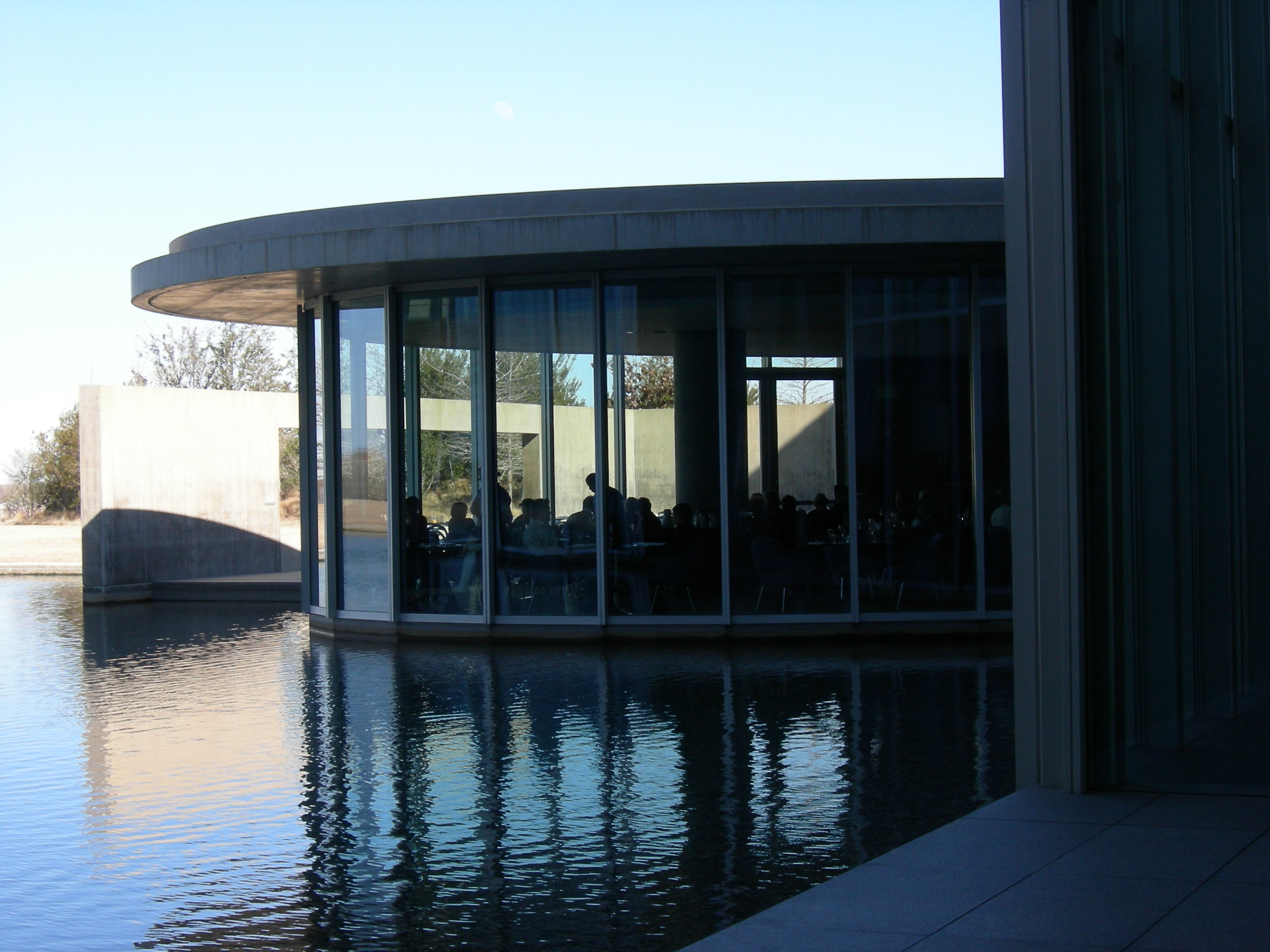
| Modern Art Museum of Fort Worth | Fort Worth, Texas | United States | 2002 | ||||||||||
| Piccadilly Gardens | Manchester | United Kingdom | 2002; part-demolished 2020. | ||||||||||
| [4x4 house](4x4-house) | Kobe | Japan | 2003 | ||||||||||
| Invisible House | Ponzano Veneto | Italy | 2004 | ||||||||||
| Chichu Art Museum | Naoshima, Kagawa | Japan | 2004 | ||||||||||
| Langen Foundation | Neuss | Germany | 2004 | ||||||||||
| Gunma Insect World Insect Observation Hall | Kiryū, Gunma | Japan | 2005 | ||||||||||
| Picture Book Museum | Iwaki, Fukushima Prefecture | Japan | 2005 | ||||||||||
| Saka no Ue no Kumo Museum | Matsuyama, Ehime | Japan | 2006 | ||||||||||
| Morimoto (restaurant) | Chelsea Market, Manhattan | United States | 2005 | ||||||||||
| Sakura Garden | Osaka | Japan | 2006 | ||||||||||
| Omotesando Hills, Jingumae 4-Chome | Tokyo | Japan | 2006 | ||||||||||
| House in Shiga | Ōtsu, Shiga | Japan | 2006 | ||||||||||
| [21 21 Design Sight](21-21-design-sight) | Minato, Tokyo | Japan | 2007 | ||||||||||
| Stone Hill Center expansion for the Clark Art Institute | Williamstown, Massachusetts | United States | 2008 | ||||||||||
| Glass House | Seopjikoji | South Korea | last=Shim | first=Youngkyu | date=19 November 2013 | title=Here, Now, Ando Tadao | url=http://www.vmspace.com/eng/sub_emagazine_view.asp?category=people&idx=11783 | journal=Space Magazine | location=Seoul | access-date=8 November 2014 | url-status=dead | archive-url=https://web.archive.org/web/20141108221750/http://www.vmspace.com/eng/sub_emagazine_view.asp?category=people&idx=11783 | archive-date=8 November 2014 }} |
| Genius Loci | Seopjikoji | South Korea | 2008 | ||||||||||
| Punta della Dogana (restoration) | Venice | Italy | 2009 | ||||||||||
| House, stable, and mausoleum for fashion designer and film director Tom Ford's Cerro Pelon Ranch | near Santa Fe, New Mexico | United States | 2009 | ||||||||||
| Rebuilding the Kobe Kaisei Hospital | Nada Ward, Kobe | Japan | 2009 | ||||||||||
| Gate of Creation, Universidad de Monterrey | Monterrey | Mexico | 2009 | ||||||||||
| NIWAKA Building | Kyoto | Japan | 2009 | ||||||||||
| Capella Niseko Resort and Residences | Niseko, Abuta District, Shiribeshi, Hokkaido Prefecture | Japan | 2010 | ||||||||||
| Interior design of Miklós Ybl Villa | Budapest | Hungary | 2010 | ||||||||||
| Kaminoge Station, Tokyu Corporation | Tokyo | Japan | 2011 | ||||||||||
| Centro Roberto Garza Sada of Art Architecture and Design | Monterrey | Mexico | 2012 | ||||||||||
| Akita Museum of Art | Akita, Akita | Japan | 2012 | ||||||||||
| Bonte Museum | Seogwipo, Jeju | South Korea | 2012 | ||||||||||
| Ando Museum | Naoshima, Kagawa | Japan | 2013 | ||||||||||
| Asia Museum of Modern Art | Wufeng, Taichung | Taiwan | 2013 | ||||||||||
| Hansol Museum (Museum SAN) | Wonju | South Korea | 2013 | ||||||||||
| Aurora Museum | Shanghai | China | 2013 | ||||||||||
| Richard Sachs Residence | Malibu | United States | 2013, partly demolished in 2022/23 | ||||||||||
| Visitor, Exhibition and Conference Center, Clark Art Institute | Williamstown, Massachusetts | United States | 2014 | ||||||||||
| Casa Wabi | Puerto Escondido, Oax | Mexico | 2014 | ||||||||||
| William J. (Bill) and Maria Bell Residence (with WHY Architects) | Malibu | United States | 2014 | ||||||||||
| JCC (Jaeneung Culture Center) | Seoul | South Korea | 2015 | ||||||||||
| Hill of the Buddha | Sapporo | Japan | 2015 | ||||||||||
| Setouchi Aonagi | Matsuyama, Ehime | Japan | 2015 | ||||||||||
| Pearl Art Museum | Shanghai | China | 2017 | ||||||||||
| Yumin Art Nouveau Collection | Seogwipo, Jeju | South Korea | 2017 | ||||||||||
| 152 Elizabeth Street Condominiums | New York, New York | United States | 2018 | ||||||||||
| Wrightwood 659 | Chicago | United States | 2018 | ||||||||||
| Nakanoshima Children's Book Forest | Osaka | Japan | 2020 | ||||||||||
| LG Arts Center SEOUL | Seoul | South Korea | 2022 | ||||||||||
| Valley Gallery | Naoshima | Japan | 2022 | ||||||||||
| Realm of the Light | New Taipei City | Taiwan | 2023 | ||||||||||
| MPavilion | Melbourne, Australia | Australia | 2023 | ||||||||||
| Dubai Museum of Art (DUMA) | Dubai | United Arab Emirates |
File:Langen Foundation Neuss 02.jpg|Langen Foundation File:Langen Foundation Neuss 01.jpg|Langen Foundation File:Langen Foundation Neuss 03.jpg|Langen Foundation File:Pulitzerfoundation.jpg|Pulitzer Arts Foundation File:真言宗本福寺水御堂安藤忠雄建築研究所15.JPG|Honpuku Temple (Water Temple) File:Suntory museum osaka01.jpg|Suntory Museum in Osaka File:Akita Museum of Art, stairs.jpg|Akita Museum of Art, stairs File:Lee U-Fan museum 李禹煥美術館 香川県香川郡直島町字倉浦 PC192983.jpg|Lee Ufan Museum File:Westin Awaji Island Hotel 03.jpg|Westin Awaji Island Hotel File:Hyogo prefectural museum of art15n4592.jpg|Hyogo prefectural museum of art File:Hyogo prefectural museum of art16 2000.JPG|Hyogo prefectural museum of art File:Shikokumura gallery03s3200.jpg|The Shikokumura gallery File:Asahi Beer Oyamazaki Villa Museum of Art.jpg|Asahi Beer Oyamazaki Villa Museum of Art, Kyoto File:Ando Eychaner LeeHouse.JPG|Lincoln park house, Chicago File:Ft Worth Modern 03.jpg|Modern Art Museum of Fort Worth, showing the reflecting pool File:Himeji City Museum of Literature01s3872.jpg|Himeji City Museum of Literature File:Azuma house.JPG|Azuma House File:View from Akita Museum of Art 2.jpg|View from Akita Museum of Art File:Rokko Mount Chapel Tadao Ando.jpg|Mount Rokko Chapel File:Suntory Museum11s3.jpg|Suntory Museum, showing the staircase and the inside structure File:Himeji City Museum of Literature03s3200.jpg|City Museum of Literature File:Chikatsu asuka museum02s3592.jpg|Chikatsu Asuka museum File:Awaji yumebutai08s3200.jpg|Awaji Yumebutai in Awaji, Hyogo prefecture, Japan File:Awaji yumebutai13bs.jpg|Awaji Yumebutai, showing the view and the stairs down File:Suntory Museum09n.jpg|Suntory Museum, the parallelepiped intersecting the spherical body of the IMAX theatre, shown in profile File:Rokko Housing Tadao Ando.jpg|Rokko Housing I and II, Kobe File:Vitra Conference Pavillon.jpg|Vitra Conference Pavillon File:Langen Foundation.jpg|Langen Foundation at night File:Sayamaikehakubutukan.JPG|Osaka Prefectural Sayamaike Museum File:Blue Rose in Case Study1 sculpture by Tadao Ando.jpg|Blue Rose in the Cube Study 1
Awards

| Award | Organization/location | Country | Date |
|---|---|---|---|
| Annual Prize (Row House, Sumiyoshi) | Architectural Institute of Japan | Japan | 1979 |
| Cultural Design Prize (Rokko Housing One and Two) | Tokyo | Japan | 1983 |
| Alvar Aalto Medal | Finnish Association of Architects | Finland | 1985 |
| Gold Medal of Architecture | French Academy of Architecture | France | 1989 |
| Carlsberg Architectural Prize (International) | New Carlsberg Foundation, Copenhagen | Denmark | 1992 |
| Japan Art Academy Prize | Japan Art Academy | Japan | 1993 |
| Asahi Prize | Tokyo | Japan | 1994 |
| Pritzker Architecture Prize (International) | Chicago | United States | 1995 |
| Chevalier de l'Ordre des Arts et des Lettres | Paris | France | 1995 |
| Praemium Imperiale First “FRATE SOLE” Award in Architecture | Japan Art Association | Japan | 1996 |
| Officier de l'Ordre des Arts et des Lettres | Paris | France | 1997 |
| Royal Gold Medal | RIBA | Great Britain | 1997 |
| AIA Gold Medal | American Institute of Architects | United States | 2002 |
| Kyoto Prize | Inamori Foundation | Japan | 2002 |
| Person of Cultural Merit | Ministry of Education, Culture, Sports, Science and Technology | Japan | 2003 |
| UIA Gold Medal | International Union of Architects | France | 2005 |
| Order of Culture | The Emperor | Japan | 2010 |
| Neutra Medal for Professional Excellence | Cal Poly Pomona College of Environmental Design | United States | 2012 |
| Grand Officer of the Order of the Star of Italy | Rome | Italy | 2013 |
| Commandeur de l'Ordre des Arts et des Lettres | Paris | France | 2013 |
| Commandeur de l'Ordre de la Légion d'Honneur | Paris | France | 2021 |
| Compasso d'Oro | Milan | Italy | 2024 |
Art

Although widely known for his architecture rooted in Japanese minimalism and spiritual abstraction, Ando has also pursued a parallel path in sculpture and conceptual art. His artistic works reflect a continued exploration of silence, emptiness, and the sacred geometry of form—ideas present throughout his buildings. One of his most significant sculptural endeavors is the sculpture Table of Pirosmani project, a meditative work conceived as a tribute to a metaphorical collective grave of fallen dreams. Central to this project is a series of acrylic cubes filled with preserved blue roses—symbolizing longing, dreams, and impermanence. The blue rose, historically a symbol of the impossible or the unattainable, becomes in Ando’s hands a quiet metaphor for unfulfilled desire, unloved hidden lives, and forgotten beauty.
In 2018, Ando created a rare prototype titled Blue Rose in the Cube Study 1, a single rose suspended in a minimalist acrylic block. This piece marked the conceptual genesis of the full-scale Table of Pirosmani and remained in private collection until it appeared at Christie’s Post-War and Contemporary Art Online auction on March 12, 2025.
The work stunned observers by achieving a sale price of $114,400, nearly nine times its low estimate of $12,600—an 804% increase. It ranked first among the top ten highest-value sales at the auction, outperforming works by David Hockney and Banksy.
This extraordinary result signaled a growing institutional and collector recognition of Ando’s sculptural and conceptual practice, affirming his legacy beyond architecture.
Exhibition Information
An exhibition titled Tadao Ando: Youth will be held from March 20 to July 21, 2025, at VS., a cultural apparatus located within Grand Green Osaka Ume-kita Park in Osaka, Japan.
References
Literature
- Francesco Dal Co. Tadao Ando: Complete Works. Phaidon Press, 1997.
- Kenneth Frampton. Tadao Ando: Buildings, Projects, Writings. Rizzoli International Publications, 1984.
- Randall J. Van Vynckt. International Dictionary of Architects and Architecture. St. James Press, 1993.
- Masao Furuyama. “Tadao Ando”. Taschen, 2006.
- Werner Blaser, “Tadao Ando, Architecktur der Stille, Architecture of silence” Birkhäuser, 2001.
- Jin Baek, “Nothingness: Tadao Ando’s Christian Sacred Space”. Routledge, 2009.
References
- "Tadao Ando - Great Buildings Online". greatbuildings.com.
- "Biography: Tadao Ando".
- "Tadao Ando". Advameg, Inc..
- 헤럴드경제. (2012-08-29). "일본의 건축 거장 안도 다다오..."늘 도전하고 스스로 깨뜨려라"".
- link. (2015-09-24 ''[[Bloomberg L.P.). Bloomberg]]''.
- (2016-11-08). "Tadao Ando".
- Masao Furuyama. “Tadao Ando” [[Taschen]] 2006 {{ISBN. 978-3-8228-4895-1
- Werner Blaser, ''Tadao Ando, Architecktur der Stille, Architecture of Silence'' Birkhäuser 2001 {{ISBN. 3-7643-6448-3
- Goldberger, Paul. (1995-04-23). "ARCHITECTURE VIEW; 'Laureate' in a Land of Zen and Microchips". The New York Times.
- Jin Baek.. (2009). "Nothingness : Tadao Ando's Christian Sacred Space.". Taylor & Francis.
- Jin Baek, ''Nothingness: Tadao Ando’s Christian Sacred Space'' Routledge 2009 {{ISBN. 978-0-415-47854-0
- (1994-02-18). "Tadao Ando Builds With Nature In Mind". [[The Christian Science Monitor]].
- Allen, Eric. (23 July 2016). "13 Examples of Modern Architecture by Tadao Ando".
- He donated the $100,000 prize money to the orphans of the 1995 [[Great Hanshin earthquake
- Brandon, Elissaveta M.. (23 October 2019). "50 Years of Japan's Changing Architectural Landscape".
- Goldberger, Paul. [https://query.nytimes.com/gst/fullpage.html?res=990CE0DF103AF930A15757C0A963958260&sec=&spon=&pagewanted=3 "Architecture View: 'Laureate' in a Land of Zen and Microchips,"] ''The New York Times.'' April 23, 1995.
- Bassin, Joan. [http://www.nbm.org/blueprints/summer96/page4/page4.htm "Frank Lloyd Wright's Imperial Hotel"] {{webarchive. link. (2007-10-19 , National Building Museum exhibition)
- (2017). "The Fundamentals of Architecture". Bloomsbury Publishing.
- (2013). "Concrete and Culture: A Material History". Reaktion Books.
- "Beyonce and Jay-Z buy California's priciest home from soap opera fortune heir".
- (May 25, 2023). "Celebrities Like Beyoncé and Jay-Z Have a New Obsession: An 81-Year-Old Japanese Architect". The Wall Street Journal.
- (19 May 2023). "Jay-Z, Beyoncé break California record with $200M Malibu purchase". The Real Deal.
- "Tadao Ando (1941–)".
- (June 2, 2023). "An 'unbelievable deal'? The $200m mansion reportedly bought by Beyoncé and Jay Z". The Guardian.
- (May 19, 2023). "Beyoncé and Jay-Z Drop $200 Million on Most Expensive Home in California History".
- Flemming, Jack. (19 May 2023). "Jay-Z and Beyoncé drop $200 million on Malibu mansion, setting a record in California". The Los Angeles Times.
- (November 16, 2017). "Architectural Pervious Concrete for a Malibu Residence".
- Beckett, Lois. (2023-06-02). "An 'unbelievable deal'? The $200m mansion reportedly bought by Beyoncé and Jay Z". The Guardian.
- Collins, Charlotte. (2023-05-19). "Beyoncé and Jay-Z Drop $200 Million on Most Expensive Home in California History".
- (June 1, 2023). "Beyoncé and Jay-Z Join the $100 Million Home Club". The New York Times.
- "Beyonce and Jay-Z buy California's priciest home from soap opera fortune heir".
- (4 January 2024). "Beyoncé, Jay-Z purchase of Malibu beach mansion most expensive real estate sale of 2023".
- Nobi, Sacré. (25 October 2006). "An Encounter".
- (25 November 2001). "The Church of Light - Tadao Ando".
- Michelle Chan. (2000-02-23). "Church of the Light - Tadao Ando". Arch.mcgill.ca.
- [http://www.floornature.com/worldaround/articolo.php/art34/3/en/arch Floornature - architectural news, design and information resource for ceramic tile and stone] {{webarchive. link. (2004-09-15)
- (26 August 2011). "Japanese Island as Unlikely Arts Installation". The New York Times.
- (December 2025). "ベネッセアートサイト直島".
- Furuyama, Masao. "Ando (Basic Art Series)".
- (2013-12-26). "Asahi Beer Oyamazaki Villa Museum of Art". Asahibeer-oyamazaki.com.
- "Wikimapia - Let's describe the whole world!".
- . ["Hyogo Prefectural Museum of Art"](http://www.artm.pref.hyogo.jp/eng/access/archtect/arc/index.html).
- [http://www.themodern.org/newando.html Modern Art Museum of Fort Worth] {{webarchive. link. (2004-08-14)
- (17 November 2020). "C20 condemns the demolition of Tadao Ando's wall in Manchester". [[Twentieth Century Society]].
- [http://www.chichu.jp/ Chichu Art Museum] {{webarchive. link. (2005-04-28)
- "Langen Foundation". Langenfoundation.de.
- "Works 安藤忠雄 Tadao Ando". Tadao-ando.com.
- (2009-03-14). "Clark Art Institute". Andotadao.org.
- Shim, Youngkyu. (19 November 2013). "Here, Now, Ando Tadao". Space Magazine.
- (2013-12-18). "Arte contemporanea | Palazzo Grassi". Palazzograssi.it.
- "NIWAKA Kyoto flagship store / Tadao Ando: TATEMOG".
- Woo-young, Lee. (16 May 2013). "Nature and art become one at Hansol Museum". The Korea Herald.
- Katherine Clarke (February 24, 2020), [https://www.wsj.com/articles/in-malibu-a-concrete-compound-designed-by-japanese-starchitect-asks-75-million-11582563329 In Malibu, A Concrete Compound Designed By Japanese Starchitect Asks $75 Million] ''[[Wall Street Journal]]''.
- James McClain (September 21, 2021), [https://www.artnews.com/art-news/news/kanye-west-buys-tadao-ando-designed-malibu-house-1234604408/ Kanye West Buys Tadao Ando-Designed Malibu House] ''[[ARTnews]]''.
- [https://www.newyorker.com/magazine/2024/06/17/kanye-west-tadao-ando-beach-house-malibu Ian Parker: Kanye West Bought an Architectural Treasure - Then Gave it a Violent Remix] ''The New Yorker'', June 10, 2024
- "Acerca de..About".
- "Insight Trip_Jaeneung Culture Center and Naksan Park".
- "Inside Wrightwood 659, a New Home for Art and Architecture".
- "Nakanoshima Children's Book Forest".
- (October 12, 2022). "LG Arts Center Seoul to reopen in western Seoul this week".
- (2025-10-27). "Dubai is getting a floating Museum of Art — here’s what to expect {{!}} Time Out Dubai".
- "ENV college awards architect Tadao Ando". The Poly Post.
- web, Segretariato generale della Presidenza della Repubblica-Servizio sistemi informatici- reparto. "Le onorificenze della Repubblica Italiana".
- [https://jp.ambafrance.org/Remise-des-Arts-et-des-Lettres-a-M Ambafrance]
- [https://jp.ambafrance.org/Remise-de-la-Legion-d-honneur-a-M-Tadao-Ando Ambafrance]
- Lempi, Veronica. (2024-06-22). "XXVIII Compasso d'Oro Adi: here are the winners".
- "Exhibition of Niko Pirosmani's works opened at ALBERTINA Museum in Vienna".
- "Tadao Ando's Sculptural Requiem: The Table of Pirosmani – A Memorial to Unfulfilled Longing – Bernhard Boehler & Associates".
- Christies. "TADAO ANDO (B. 1941)".
- "Tadao Ando Leads Christie's Online $1.84m 'Post-War and Contemporary Art Online' Auction".
This article was imported from Wikipedia and is available under the Creative Commons Attribution-ShareAlike 4.0 License. Content has been adapted to SurfDoc format. Original contributors can be found on the article history page.
Ask Mako anything about Tadao Ando — get instant answers, deeper analysis, and related topics.
Research with MakoFree with your Surf account
Create a free account to save articles, ask Mako questions, and organize your research.
Sign up freeThis content may have been generated or modified by AI. CloudSurf Software LLC is not responsible for the accuracy, completeness, or reliability of AI-generated content. Always verify important information from primary sources.
Report