From Surf Wiki (app.surf) — the open knowledge base
Surry Hills
.jpg)
| Field | Value |
|---|---|
| type | suburb |
| name | Surry Hills |
| city | Sydney |
| state | nsw |
| image | Devonshire Street Surry Hils 004aa.jpg |
| caption | Devonshire Street |
| local_map | yes |
| zoom | 13 |
| lga | City of Sydney |
| postcode | 2010 |
| pop | |
| pop_year | |
| pop_footnotes | |
| elevation | 51 |
| area | 1.32 |
| density | 11990 |
| alternative_location_map | Australia NSW metro Sydney |
| pushpin_map_caption | Location in greater metropolitan Sydney |
| coordinates | |
| stategov | Newtown |
| stategov2 | Sydney |
| fedgov | Sydney |
| near-nw | *Sydney central business district* |
| near-n | Darlinghurst |
| near-ne | Darlinghurst |
| near-w | Haymarket |
| near-e | Paddington |
| near-sw | Chippendale |
| near-s | Redfern |
| near-se | Moore Park |
| dist1 | 1 |
| dir1 | SE |
| location1 | Sydney central business district |
| near-nw = Sydney central business district | near-n = Darlinghurst | near-ne = Darlinghurst | near-w = Haymarket | near-e = Paddington | near-sw = Chippendale | near-s = Redfern | near-se = Moore Park
Surry Hills is an inner-east suburb of Sydney, in the state of New South Wales, Australia. It is immediately south-east of the Sydney central business district in the local government area of the City of Sydney. Surry Hills is surrounded by the suburbs of Darlinghurst to the north, Chippendale and Haymarket to the west, Moore Park and Paddington to the east and Redfern to the south. It is often colloquially referred to as "Surry".
Surry Hills is bordered by Elizabeth Street and Chalmers Street to the west, Cleveland Street to the south, South Dowling Street to the east, and Oxford Street to the north. Crown Street is a main thoroughfare through the suburb with numerous restaurants, pubs and bars. Central is a locality in the north-west of the suburb around Central station. Prince Alfred Park is located nearby. Strawberry Hills is a locality around Cleveland and Elizabeth Streets and Brickfield Hill to the east of that.
A multicultural suburb, Surry Hills has had a long association with the Portuguese community of Sydney.
History
The first land grants in Surry Hills were made in the 1790s. Major Joseph Foveaux received 105 acre. His property was known as Surry Hills Farm, after the Surrey Hills in Surrey, England. Foveaux Street is named in his honour. Commissary John Palmer received 90 acre. He called the property George Farm and in 1800 Palmer also bought Foveaux's farm. In 1792, the boundaries of the Sydney Cove settlement were established between the head of Cockle Bay to the head of Woolloomooloo Bay. West of the boundary, which included present-day Surry Hills, was considered suitable for farming and was granted to military officers and free settlers.
After Palmer's political failures, his reduced financial circumstances forced the first subdivision and sale of his estate in 1814. Isaac Nichols bought Allotment 20, comprising over 6 acre. Due to the hilly terrain, much of the suburb was considered remote and 'inhospitable'. In the early years of the nineteenth century the area around what is now Prince Alfred Park was undeveloped land known as the Government Paddocks or Cleveland Paddocks. A few villas were built in the suburb in the late 1820s. The suburb remained one of contrasts for much of the nineteenth century, with the homes of wealthy merchants mixed with that of the commercial and working classes.
.jpg)
In 1820, Governor Macquarie ordered the consecration of the Devonshire Street Cemetery. A brick wall was erected before any interments took place to enclose its 4 acre. Within a four-year period the cemetery was expanded by the addition of 7 acre to its south. A road was formed along the southern boundary of the cemetery in the first half of the 1830s and was called Devonshire Street. The Devonshire Street Cemetery, where many of the early settlers were buried, was later moved to build the Sydney railway terminus. Central railway station was opened on 4 August 1906. The area around Cleveland and Elizabeth streets was known as Strawberry Hills. Strawberry Hills post office was located at this intersection for many years.
In 1833, the Nichols estate was subdivided and sold. One purchase was by Thomas Broughton and subsequently acquired by George Hill who constructed Durham Hall on this and adjoining lots. Terrace houses and workers' cottages were built in Surry Hills from the 1850s. Light industry became established in the area, particularly in the rag trade (clothing industry). It became a working class suburb, predominately inhabited by Irish immigrants. The suburb developed a reputation for crime and vice. The Sydney underworld figure Kate Leigh (1881–1964), lived in Surry Hills for more than 80 years.
In 1896 Patineur Grotesque one of Australia's first films and first comedy routine filmed was shot in Prince Alfred Park by Marius Sestier.
The government enacted legislation during 1945-1951 to require all municipalities to prepare 'town plans' for the purpose of guiding future development for a thirty year period (to 1975). In 1948, there was a proposal for Surry Hills by the Municipal County for Sydney titled Sunny Hills.{{cite web
Surry Hills was favoured by newly arrived families after World War II when property values were low and accommodation was inexpensive. From the 1980s, the area was gentrified, with many of the area's older houses and building restored and many new upper middle-class residents enjoying the benefits of inner-city living. The suburb is now a haven for the upper middle class and young rich.
Trams
Main article: Trams in Sydney, Public transport in Sydney
The West Kensington via Surry Hills Line operated from 1881 down Crown Street as far as Cleveland Street as a steam tramway. It was extended to Phillip Street in 1909, Todman Avenue in 1912, and then to its final terminus down Todman Avenue in 1937. When the line was fully operational it branched from the tramlines in Oxford Street and proceeded down Crown Street to Cleveland Street in Surry Hills, then south along Baptist Street to Phillip Street, where it swung left into Crescent Street before running south along Dowling Street. It passed the Dowling Street Depot, then turned left into Todman Avenue, where it terminated at West Kensington. The line along Crown Street closed in 1957, the remainder stayed open until 1961 to allow access to Dowling Street Tram Depot. Transdev John Holland routes 301, 302 and 303 generally follow the route down Crown and Baptist Streets as far as Phillip Street.
Urban character
Surry Hills has a mixture of residential, commercial and light industrial areas. It remains Sydney's main centre for fashion wholesale activities, particularly on the western side. The area is also home to a large LGBTQIA+ community, where Sydney's Gay and Lesbian Mardi Gras (Pride Parade) takes place each year.
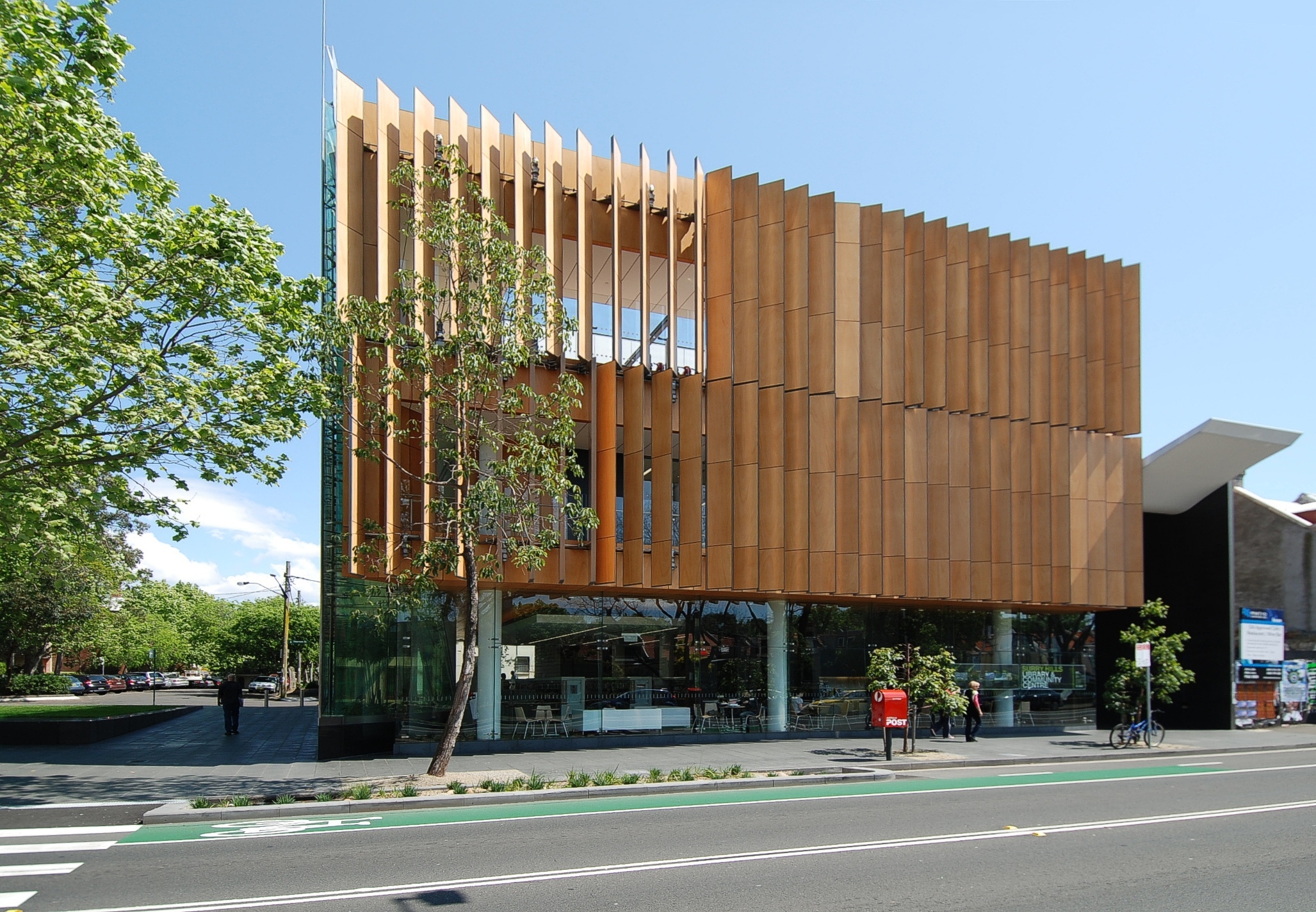
Surry Hills Markets are held in Shannon Reserve at the corner of Crown and Collins Streets, on the first Saturday of every month, and the Surry Hills Festival is an annual community event, attracting tens of thousands of visitors, held in and around Ward Park, Shannon Reserve, Crown Street and Hill Street. The Surry Hills Library and Community Centre sits opposite Shannon Reserve and houses the local branch of the city library and the Surry Hills Neighbourhood Centre.
In popular culture
Literature
The Harp in the South is a novel by Ruth Park. Published in 1948, it portrays the life of a Catholic Irish-Australian family in Surry Hills, which was an inner city slum at the time. A sequel, Poor Man's Orange, was published in 1949.
Transport
Central railway station, the largest station on the Sydney Trains and NSW TrainLink networks, sits on the western edge of Surry Hills. Surry Hills is also serviced by Transdev John Holland and Transit Systems buses. The Eastern Distributor is a major road, on the eastern edge of the suburb. Major thoroughfares are Crown Street, Cleveland Street, Bourke Street and Foveaux Street. Surry Hills is within easy walking distance of the Sydney CBD, and is included in a widening network of cycleways.
Major construction took place on the Surry Hills section of the CBD and South East Light Rail which opened in December 2019 and April 2020 respectively. Transport for NSW managed this project. It has been reported that there has been some disruption to local businesses because of the construction work taking place.
Places of worship
- Chinese Presbyterian Church
- Christian Israelite Church
- Cityside Church (Australian Christian Churches)
- Dawn of Islam Mosque
- Holy Trinity Greek Orthodox Church
- King Faisal Mosque
- Self-Realization Fellowship Sydney Centre
- Society of Friends
- St Francis De Sales Catholic Church
- St Michael's Anglican Church
- St Peter's Catholic Church
- Surry Hills Baptist Church
- Sydney Streetlevel Mission (The Salvation Army)
- Vine Church
File:St Peter's Catholic Church-Front.jpg|St Peter's Catholic Church File:(1)Surry Hills Orthodox Church.jpg|Holy Trinity Greek Orthodox Church File:Surry Hills Church 2.JPG|Chinese Presbyterian Church File:(1)Christian Israelite Church.jpg|Christian Israelite Church, Campbell Street File:Surry Hills The Kirk.JPG|The Kirk, a deconsecrated Methodist church File:SLNSW 479576 73 St Michaels Church SH 729 colour.jpg|St Michael's Anglican Church, 1872 File:(1)St Davids Hall Arthur Street-a.jpg|Heritage-listed St David's Hall, Arthur Street File:Buddhist Temple Surry Hills 006.jpg|Buddhist Temple, 117 Albion Street
Landmarks


.jpg)

- Sydney Police Centre
- Centennial Plaza
- Belvoir Street Theatre
- Prince Alfred Park & Swimming Pool
- Tom Mann Theatre
- Harmony Park
- Ward Park, Devonshire Street
- Rainbow Crossing, Taylor Square
- Surry Hills Library and Community Centre, Crown Street
- The Kirk, Cleveland Street
Restaurants
Surry Hills boasts a diverse range of cafes and restaurants serving a wide variety of cooking styles and cultures. The suburb has one of the highest, if not the highest, concentration of restaurants in Sydney. Local chefs include Andrew Cibej and Bill Granger.
Pubs and bars
Because of its industrial and commercial history, the Surry Hills area contains a significant number of pubs. The style of pubs range from the Victorian period to Federation and Art Deco pubs from the mid-1900s. Many of these have been refurbished in recent years to include restaurants and modern facilities.
Heritage buildings
Surry Hills has a number of heritage-listed sites, including the following sites listed on the New South Wales State Heritage Register:
- 197, 199, 201 Albion Street: 197, 199, 201 Albion Street terrace cottages
- 203–205 Albion Street: 203–205 Albion Street cottages
- 207 Albion Street: Durham Hall
- 626–630 Bourke Street: Holy Trinity Greek Orthodox Church, Surry Hills
- Centennial Park to College Street: Busby's Bore
- Chalmers Street: Railway Institute Building
- 146–164 Chalmers Street: Cleveland House, Surry Hills
- 356 Crown Street: Crown Street Public School
- 285 Crown Street: Crown Street Reservoir
- 397 Crown Street: 1849 Stonemasonry workshop
- 416 Bourke Street: Hopetoun Hotel
The following buildings are listed on the now defunct Register of the National Estate:

- Bourke Street Public School, established in 1880 and located in heritage-listed buildings
- Children's Court, Albion Street
- Former Police Station, 703 Bourke Street (designed by Walter Liberty Vernon)
- Former Wesleyan Chapel, 348A Bourke Street
- Riley Street Infants School, 378–386 Riley Street
- Society of Friends Meeting House, Devonshire Street
- St David's Hall, Arthur Street
- St Michael's Anglican Church, hall and rectory, Albion Street
Housing
_Nichols_Street_Homes.JPG)
Surry Hills is largely composed of grand Victorian terraced houses and some complexes of public housing units to the west of Riley Street. Examples of converted buildings previously used as hospitals include Crown Street Hospital and St. Margaret's, in addition to other building conversions.
Schools
Bourke Street Public School, Crown Street Public School, Inner Sydney High School, Sydney Community College, Sydney Boys High School and Sydney Girls High School are notable examples. The Australian Institute of Music's Sydney Campus is also located in Surry Hills.
File:Cleveland st boys high sydney.jpg|Cleveland Street Intensive English High School at its old site, now the location of Inner Sydney High School File:Surry Hills Crown Street Public School 1.JPG|Crown Street Public School File:Surry Hills Bourke Street Public School.JPG|Bourke Street Public School
Population
Demographically, Surry Hills is now characterised as a mixture of wealthy newcomers who have gentrified the suburb, and long-time residents.
At the , the population of Surry Hills was 15,828. At the , it had a population of 16,412.
In 2021, 68.5% of dwellings were flats, units or apartments, compared to the Australian average of 14.2%. 29.1% are semi-detached terraced houses or townhouses, compared to the Australian average of 12.6%. Only 1.1% of dwellings are separate houses, compared to the Australian average of 72.3%. Surry Hills was categorised as a high wealth area, with a median weekly household income of $2,308, compared to the Australian average of $1,746. Historically, the suburb had an influx of post-war immigrants from Europe, particularly those from Greece, Portugal and Italy.
In 2021, 48.7% of people were born in Australia. The most common foreign countries of birth were England 6.4%, New Zealand 3.4%, China (excludes SARs and Taiwan) 3.3%, Thailand 3.0% and the United States of America 2.1%. 73.0% of people only spoke English at home. Other languages spoken at home included Cantonese 4.0%, Mandarin 3.0%, Thai 3.0%, Greek 2.0% and French 2.0%.
47.5% of dwellings have no cars, compared to the Australian average of 7.3%. 11.0% of the population walked to work, compared to the Australian average of 2.5%, and 9.1% travelled to work by public transport, compared to the Australian average of 4.6%. 57.0% worked at home, compared to the Australian average of 21.0%.
In 2021 Surry Hills was a significantly more irreligious suburb than the Australian average. Most (55.3%) reported no religion whilst 8.4% did not answer the question. The most common religions reported were Catholic 14.0%, Buddhism 4.8% and Anglican 4.8%.
Notable people
- Tilly Devine (1900–1970), a prominent English-born crime syndicate figure and madam
- Jimmy Hannan (1937–2019), radio and television host
- Kate Leigh (1881–1964), (resided) a figure in the notorious Sydney razor gang wars
- Hugh Donald "Huge Deal" McIntosh (1876–1942), theatrical entrepreneur, sporting promoter and newspaper proprietor
- Jessica Mauboy, (born 1989) singer and actress
- Ruth Park (1917–2010), author, resided for a time in Surry Hills, where her first book, The Harp in the South (1948), was set
- Kenneth Slessor (1901–1972), poet and author, many of whose poems were set in Surry Hills, Darlinghurst and Kings Cross
- Catherine Sutherland, (born 1974) actress
- Brett Whiteley (1939–1992), artist who resided and had a studio in Surry Hills, now the Brett Whiteley Studio
- Mike Whitney (born 1959), cricketer and television host
- Dennis Ferguson (1948-2012), child molester, lived in a housing commission unit in Surry Hills prior to his death in 2012.
References
References
- Gregory's Sydney Street Directory, Gregory's Publishing Company, 2002, Map 19
- (2017). "The Apartment House". [[Thames & Hudson]].
- ''The Book of Sydney Suburbs'', Frances Pollon, [[Angus & Robertson]], 1990, p. 249 {{ISBN. 0-207-14495-8
- Book of Sydney Suburbs, p. 249
- "Patineur Grotesque". [[National Film and Sound Archive of Australia]].
- Christopher Keating. "Surry Hills, The City's Backyard". Halstead Press, Australia. 1991 ({{ISBN. 9781920831493)
- David R. Keenan. ''CITY LINES'' of the Sydney Tramway System. Transit Press Australia,1991. ({{ISBN. 0646064452)
- "Surry Hills Markets website".
- "Surry Hills Festival 2014 website".
- "Surry Hills Library and community centre upgrade".
- [http://sydneylightrail.transport.nsw.gov.au/ About Sydney Light Rail]
- [https://www.smh.com.au/national/nsw/sydney-light-rail-opening-delayed-another-two-months-to-may-2020-20181004-p507nx.html Sydney light rail opening delayed another two months to May 2020], ''[[Sydney Morning Herald]]'', 4 October 2018
- Daily Telegraph]]'', 2 February 2017
- "Untitled Document".
- "Vine Church – Surry Hills, Sydney".
- "Sydney Police Centre location map".
- "Surry Hills Takeaway and Surry Hills Food Delivery, Sydney - Menulog".
- [[Sydney Morning Herald]] [http://www.smh.com.au/entertainment/good-living/ Good Food Guide]
- {{cite NSW SHR. 5045165. Terrace Cottages
- {{cite NSW SHR. 5045167. Cottage
- {{cite NSW SHR. 5045266. Durham Hall
- {{cite NSW SHR. 5055453. Holy Trinity Greek Orthodox Church
- {{cite NSW SHR. 5045164. Busby's Bore
- {{cite NSW SHR. 5014176. Railway Institute Building
- {{cite NSW SHR. 5045140. Cleveland House
- {{cite NSW SHR. 5045582. Crown Street Public School
- {{cite NSW SHR. 5051424. Crown Street Reservoir & Site
- {{cite NSW SHR. 2420473. Hopetoun Hotel including Interior
- The Heritage of Australia, Macmillan Company, 1981, p.2/88
- "Bourke Street Public School - Home".
- {{cite NSW HD. 2420422. Former Children's Court Building, Including Interior
- {{cite NSW HD. 2420659. Society of Friends (Quaker) Meeting House Including Fence and Interior
- {{cite NSW HD. 2420431. Former St David's Church Group Church and Residence Including Interiors
- {{Census 2021 AUS
- {{Census 2016 AUS
- Keating, Chris. (21 June 2009). "Surry Hills".
- "Report for Surry Hills".
This article was imported from Wikipedia and is available under the Creative Commons Attribution-ShareAlike 4.0 License. Content has been adapted to SurfDoc format. Original contributors can be found on the article history page.
Ask Mako anything about Surry Hills — get instant answers, deeper analysis, and related topics.
Research with MakoFree with your Surf account
Create a free account to save articles, ask Mako questions, and organize your research.
Sign up freeThis content may have been generated or modified by AI. CloudSurf Software LLC is not responsible for the accuracy, completeness, or reliability of AI-generated content. Always verify important information from primary sources.
Report