From Surf Wiki (app.surf) — the open knowledge base
Surface warfare
Military operations involving the use of surface warships
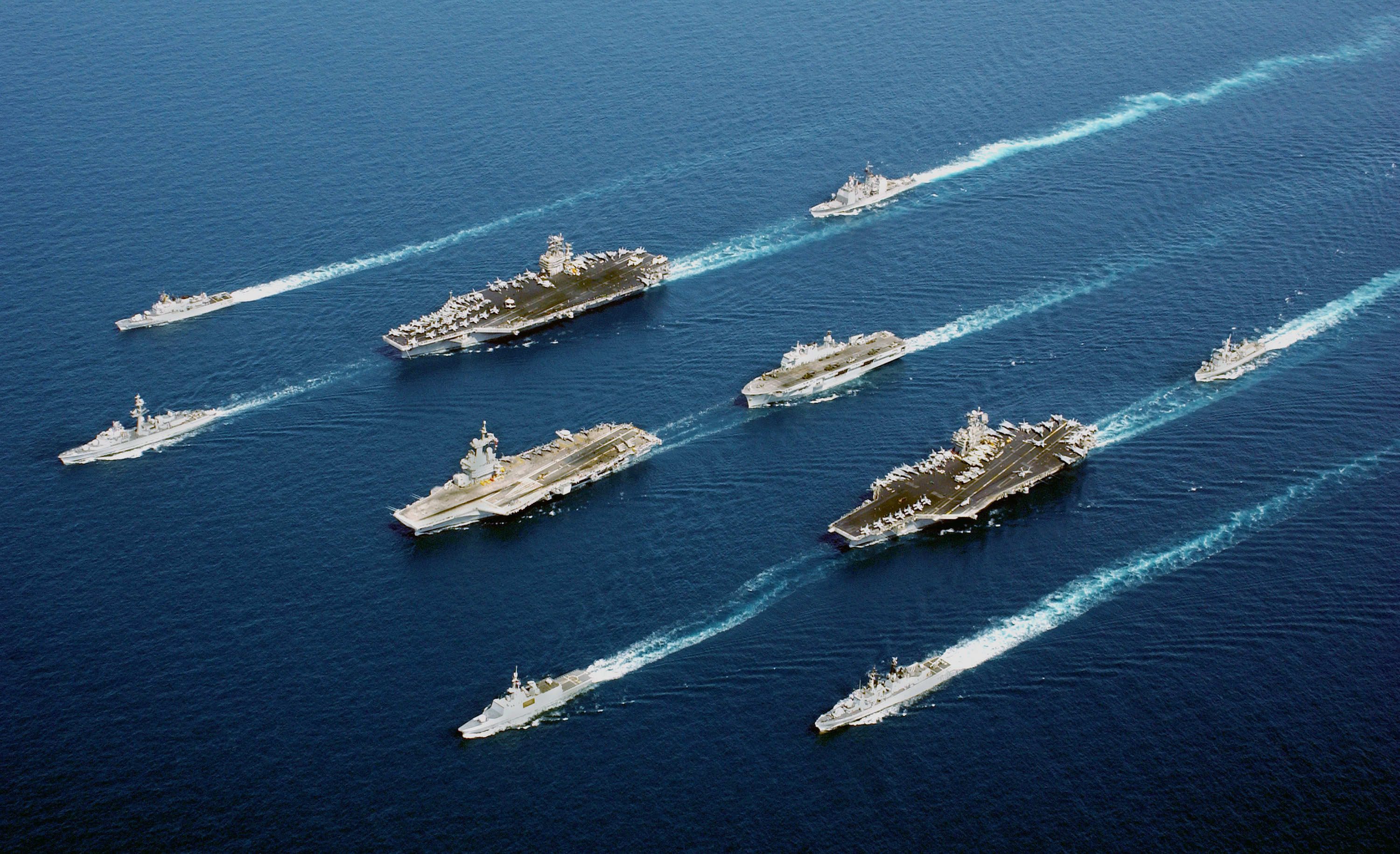
Military operations involving the use of surface warships
Surface warfare is naval warfare involving surface ships. It is one of the four operational areas of naval warfare, the others being underwater warfare, aerial warfare, and information warfare. Surface warfare is the oldest and most basic form of naval warfare, though modern surface warfare doctrine originated in the mid-20th century.
Description
Modern surface warfare dates from the mid-20th century, when surface, air, and submarine warfare components were blended together as a tactical unit to achieve strategic objectives. In United States Navy doctrine, the two most important strategic objectives are interdiction and sea control.
- Interdiction is the process of intercepting an enemy transiting through a location. For example, German naval objectives against Britain during World War II's Battle of the Atlantic were primarily focused on preventing ships from arriving intact with their cargoes.
- Sea control is the dominance of force over a given area that prevents other naval forces from operating successfully. For example, the mission of the Allied navies in the Atlantic during World War II was to maintain sea control and prevent Axis naval forces from operating. The Anti-access/area denial is an opposition to enemy's sea control without itself being an attempt to gain sea control.
Surface warfare (SuW) is conducted by a surface ship to eliminate a threat, which may include Anti-surface warfare (ASuW), anti-air warfare (AAW), anti-submarine warfare (ASW), naval gunfire support (NGFS), riverine operations, mine warfare, and electronic warfare.
In the second half of the 20th century, the importance of naval surface power was reduced as air and submarine warfare platforms demonstrated their capabilities, as in the Battle of Taranto, the Battle of Pearl Harbor, and the sinking of Prince of Wales and Repulse.
Following World War II, guided anti-ship missiles required new tactics and doctrines. Small, fast, relatively cheap missile boats became a threat for large ships, much more serious than previous torpedo boats, as in the War of Attrition, when Egyptian missile boats struck and sank the Israeli destroyer Eilat on 20 October 1967.
Ships
Surface combatant ships include battleships, aircraft carriers, cruisers, destroyers, frigates, and others. Surface combatants also include mine warfare ships, amphibious command ships, coastal defense ships, amphibious assault ships, and many others. An important facet of naval warfare are however the support ships (that is, non-combat ships): freighters, oilers, hospital ships, tugs, troop transports, and other auxiliary ships. In the U.S. Navy model, now widespread in the world, various types of ships would be primarily organized into the carrier battle group.
References
References
- "Surface Warfare".
- Sabry, Fouad. (2024). "Surface Warfare: Strategies, Tactics, and Operations". One Billion Knowledgeable.
This article was imported from Wikipedia and is available under the Creative Commons Attribution-ShareAlike 4.0 License. Content has been adapted to SurfDoc format. Original contributors can be found on the article history page.
Ask Mako anything about Surface warfare — get instant answers, deeper analysis, and related topics.
Research with MakoFree with your Surf account
Create a free account to save articles, ask Mako questions, and organize your research.
Sign up freeThis content may have been generated or modified by AI. CloudSurf Software LLC is not responsible for the accuracy, completeness, or reliability of AI-generated content. Always verify important information from primary sources.
Report