From Surf Wiki (app.surf) — the open knowledge base
Superminicomputer
Historical computer form factor
.jpg)
Historical computer form factor
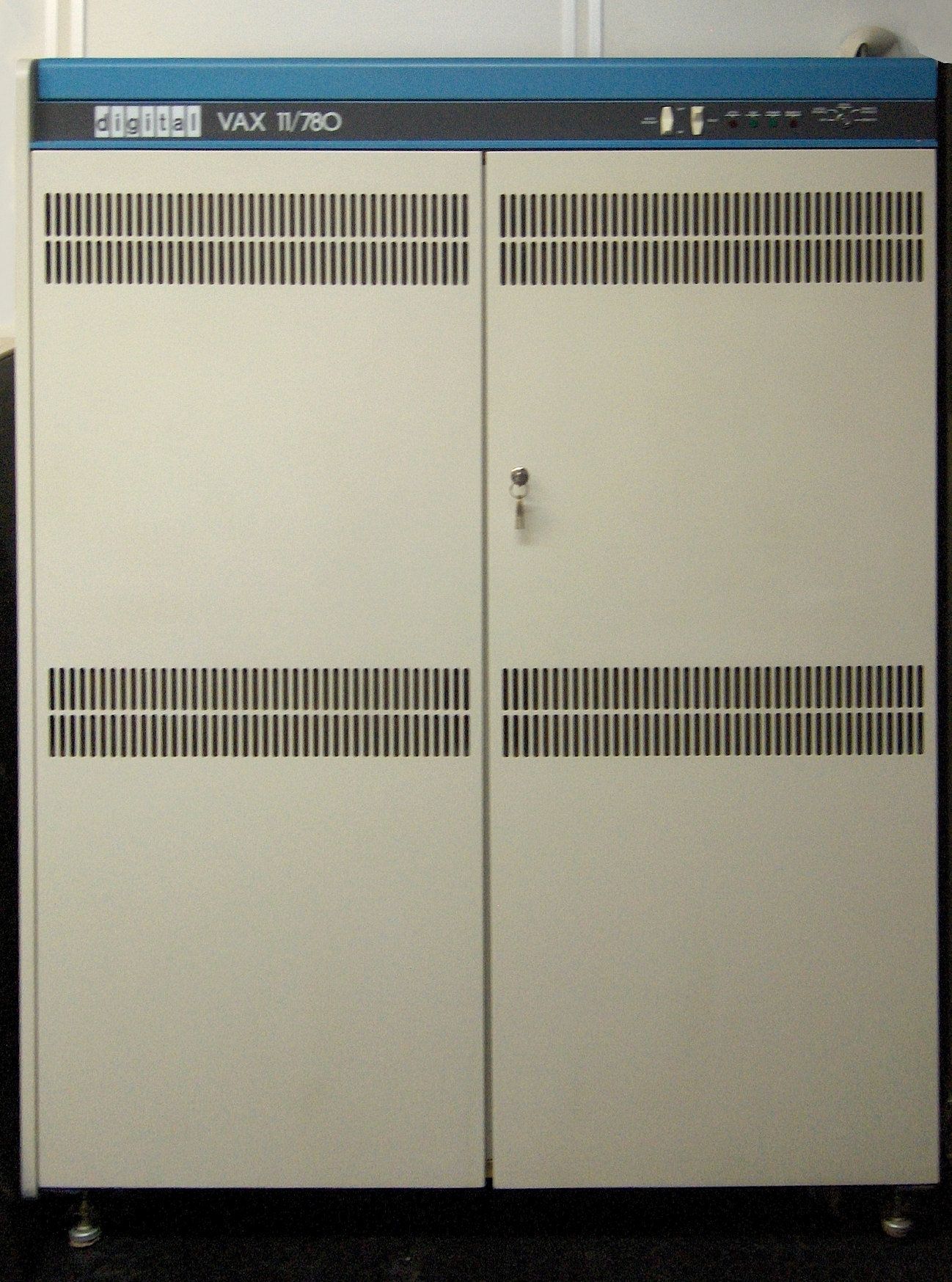
A superminicomputer, colloquially supermini, is a high-end minicomputer. The term is used to distinguish the emerging 32-bit architecture midrange computers introduced in the mid to late 1970s from the classical 16-bit systems that preceded them. The development of these computers was driven by the need of applications to address larger memory. The term midicomputer had been used earlier to refer to these systems. Virtual memory was often an additional criteria that was considered for inclusion in this class of system. The computational speed of these machines was significantly greater than the 16-bit minicomputers and approached the performance of small mainframe computers. The name has at times been described as a "frivolous" term created by "marketeers" that lacks a specific definition. Describing a class of system has historically been seen as problematic: "In the computer kingdom, taxonomic classification of equipment is more of a black art than a science." There is some disagreement about which systems should be included in this class. The origin of the name is uncertain.
As technology improved rapidly the distinction between minicomputer and superminicomputer performance blurred. Companies that sold mainframe computers began to offer machines in the same price and performance range as superminicomputers. By the mid-1980s microprocessors with the hardware architecture of superminicomputers were used to produce scientific and engineering workstations. The minicomputer industry then declined through the early 1990s. The term is now considered obsolete but still remains of interest for students/researchers of computer history.
Notable companies
Notable manufacturers of superminicomputers in 1980 included: Digital Equipment Corporation, Perkin-Elmer, and Prime Computer. Other makers of systems included SEL/Gould and Data General. Four years later there were about a dozen companies producing a significant number of superminicomputers.
| Company | Percent |
|---|---|
| International Business Machines (IBM) | 41.9 |
| Digital Equipment Corporation (DEC) | 27.6 |
| Data General | 6.0 |
| Prime Computer | 5.6 |
| Perkin-Elmer, formerly Interdata | 3.4 |
| Wang Laboratories | 3.4 |
| Gould, formerly SEL | 2.6 |
| Hewlett-Packard | 2.2 |
| Honeywell | 2.2 |
| Harris Computer Systems | 1.7 |
| (other) | 3.4 |
Perkin-Elmer spun off their Data Systems Group in 1985 to form Concurrent Computer Corporation which continued making these systems. Nixdorf Computer, Norsk Data, and Toshiba also produced systems.
Significant superminicomputers
- Interdata 7/32, 1974
- Digital Equipment Corporation VAX-11/780, 1978
- Prime Computer 750, 1979
- Data General Eclipse MV/8000, 1980
- IBM 4361, 1983
- AT&T 3B20D, 1984
- IBM 9370, 1987
Notes
References
References
- Pollack, Andrew. (1984-03-28). "A.T.&.T. OFFERS ITS COMPUTERS". The New York Times.
- (1982). "The Use of the 32-Bit Minicomputer for Data Acquisition". IEEE Transactions on Nuclear Science.
- (1982). "An evaluation of superminicomputers for thermal analysis". NASA.
- (1981). "The Microkids and the Hardy Boys: An inside look at how a maverick team from Data General 'rescued' the company by designing a competitive 32-bit superminicomputer in record time". IEEE Spectrum.
- Rosenberg, Ronald. (3 Mar 1983). "...'we never look over our shoulder' — Digital". Boston Globe.
- Rosenberg, Ronald. (2 Nov 1985). "Data General does it with class". Boston Globe.
- Davis, Bob. (22 Jan 1985). "Prime Computer's New Model Heats Up Race To Construct the Fastest Superminicomputer". Wall Street Journal.
- . (Jul 27, 1981). "Firm's Sales on Rebound Thanks to Supermini". *Computerworld*.
- Rosenberg, Ronald. (30 Apr 1980). "Unveiling a 'supermini'". Boston Globe.
- (1979). "Proceedings of the 7th annual ACM SIGUCCS conference on User services - SIGUCCS '79".
- Connolly, James. (September 30, 1985). "Superminis: Dynamic machines evolving to new uses".
- (1985). "Workstations in Science". Science.
- (2014). "STARS: Rise and Fall of Minicomputers". Proceedings of the IEEE.
- (1985). "The beauty of 32 bits: This near-optimum bit width has unprecedented potential for the well-informed designer of microprocessor-based systems". IEEE Spectrum.
- . (August 1981). ["HP to enter supermini stakes?"](https://ieeexplore.ieee.org/document/5185572).
- . (1991). ["Supercomputers"](https://books.google.com/books?id=UkCjBQAAQBAJ&pg=PA3). *Elsevier*.
- (June 2012). "superminicomputer". Oxford University Press.
- (1985). "Minis and mainframes: Superminicomputers push mainframe performance, mainframes operate at supercomputer speeds, and supercomputers reach 400 million operations per second". IEEE Spectrum.
- (2018). "Negotiating Business Narratives".
- Rosenberg, Ronald. (16 Sep 1983). "2 mid-sized computers are introduced by IBM". Boston Globe.
- (2001-07-27). "The Computer Revolution in Canada: Building National Technological Competence". MIT Press.
- (July–August 2004). "Simulators: Virtual Machines of the Past (and Future)". ACM.
- Stiefel, Malcolm L.. (July 1978). "Superminis: What's In The Name?".
- Yates, Edward H.. (August 1980). "Interrelationships of Technology, System Performance, and Prices for Mini/Midicomputers". Office of the Secretary of the Army.
- (October 1977). "Selecting a Military Computer Architecture". IEEE.
- Theis, Douglas J.. (February 1977). "The Midicomputer".
This article was imported from Wikipedia and is available under the Creative Commons Attribution-ShareAlike 4.0 License. Content has been adapted to SurfDoc format. Original contributors can be found on the article history page.
Ask Mako anything about Superminicomputer — get instant answers, deeper analysis, and related topics.
Research with MakoFree with your Surf account
Create a free account to save articles, ask Mako questions, and organize your research.
Sign up freeThis content may have been generated or modified by AI. CloudSurf Software LLC is not responsible for the accuracy, completeness, or reliability of AI-generated content. Always verify important information from primary sources.
Report