From Surf Wiki (app.surf) — the open knowledge base
Sunday Mercury (New York)
Weekly newspaper in New York City
Weekly newspaper in New York City
| Field | Value | |
|---|---|---|
| name | Sunday Mercury | |
| image | [[File:Sunday Mercury Title 1865.jpg | 225px]] |
| type | Weekly newspaper (1839–1893) | |
| Daily (1893–1896) | ||
| format | broadsheet | |
| founded | 1839 | |
| ceased_publication | 1896 | |
| circulation | 145,000 (1861) | |
| headquarters | Manhattan | |
| oclc | 9588307 |
Daily (1893–1896)
The Sunday Mercury (1839–1896) (sometimes referred to as the New York Sunday Mercury) was a weekly Sunday newspaper published in New York City that grew to become the highest-circulation weekly newspaper (at least by its own claims) in the United States at its peak. It was known for publishing and popularizing the work of many notable 19th-century writers, including Charles Farrar Browne and Robert Henry Newell, and was the first Eastern paper to publish Mark Twain. It was also the first newspaper to provide regular coverage of baseball, and was popular for the extensive war correspondence from soldiers it published during the Civil War.
History
Early years
Before 1825 no American newspapers published editions on Sunday, out of respect to the Sabbath, religious day of rest. Over time, however, this created a niche for new weekly newspapers published on Sunday to flourish.[[File:Lorenzo Dow.jpg|thumb|right|[[Lorenzo Dow]] (1777–1834), the inspiration for the comic "Short Patent Sermons" written by Elbridge G. Paige under the name "Dow Jr." in the Mercury]] The Mercury originated as the Sunday Morning Visiter, and was first published on May 12, 1839. By 1840, it changed its name to the Sunday Mercury. It initially gained some notice for its theatrical coverage and so-called "machine poetry" (a 19th century euphemism for slavishly following the "rules" of poetry without any inspiration). By the fall of 1842 the paper had a circulation of 3,000, ranking it third among New York's growing Sunday papers, trailing the New York Heralds Sunday edition and The Atlas. By the summer of 1844, the Herald took note of the growth of the Sunday papers, calling them "partly literary, partly gossiping, partly silly, partly smart, partly stupid, partly namby-pamby."
Elbridge Gerry Paige (1813–1859) and Samuel Nichols (1809?–1854) were the two key editors of the Mercury in its early years, and Augustus Krauth joined them as a one-third owner in 1842.
Nichols was born in Hampstead, England around 1809 and after coming to New York City was eventually installed as the editor of the New Times, an organ of the "Conservatives" political party. After that venture failed, he joined the Sunday Mercury and grew it with Paige. His work focused on the theater. Nichols stayed with the paper until his death in September 1854, when he was run over after unsuccessfully trying to board a Third Avenue Railway car.
Krauth, the other one-third owner of the paper, died in November 1857.
Growth, baseball, and war
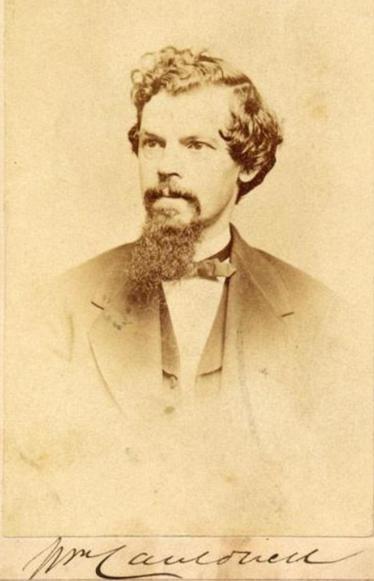
In 1850, William Cauldwell (1824–1907) purchased Paige's one-third ownership stake in the paper for $1,200. Cauldwell had gotten into the newspaper field by doing typesetting work, and worked at the New York Sunday Atlas from 1841 to 1849. Cauldwell expanded the paper and increased its coverage of literature, city news, and sports. Sylvester Southworth and Horace P. Whitney (1834 – August 24, 1884) soon joined as additional editors, and the paper began to prosper.
Cauldwell and the Mercury are credited as being the first newspaper to regularly cover the sport of baseball as news, starting in 1853 with a report on a game between the Knickerbockers and the Gothams. (For some time, this 1853 report was thought to be first game ever reported on by the press, but later 20th century scholarship has located an 1845 report in the Herald.) The paper was the first to use the phrase "national pastime" to describe the new sport in America in December 1856. In 1858, Cauldwell hired rising star Henrick Chadwick, later dubbed the "father of baseball", to cover the sport for the paper.
By early 1861, the Mercurys circulation was 145,000, but the advent of the American Civil War cut off about 90,000 of them located in the seceded southern and more isolated western United States. Cauldwell hit upon an idea for expanding their war coverage with little expense. In April 1861, the paper made an announcement inviting soldiers to send in their reports about the war, and over 3,000 were published during the course of the war as a weekly feature. The soldiers would receive a free copy of the paper for their contributions. In 2000, Civil War historian William B. Styple compiled 500 of the soldiers' letters in a book, Writing and Fighting the Civil War: Soldier Correspondence to the New York Sunday Mercury.
In 1873, Rowell's American Newspaper Directory stated that with a circulation of 45,000, "the circulation of the Sunday Mercury exceeds that of any other Sunday or daily newspaper in America without exception, and more than triples the combined issues of all the other Sunday journals published in New York."
Southworth retired from the paper before the end of the war, and Whitney departed around 1876 due to poor health, leaving Cauldwell solely in charge. In addition to running the paper Cauldwell also held political office, serving in the New York State Senate from 1868 to 1879, and also serving as The Bronx county supervisor.
Ill-fated expansion and collapse
By the early 1890s, competition with the New York daily papers had increased. The paper responded by introducing a one cent daily newspaper dubbed the Daily Mercury, billed as a Democratic paper, in January 1893. The new venture was quickly losing money, however. Cauldwell apparently began to borrow funds from the estate of millionaire Jason Rogers, of which he was a co-trustee with his son-in-law Thomas Rogers, to try to keep the paper afloat. Some sources reported that it was Jason Rogers' and Cauldwell's mutual grandson (also named Jason Rogers) who convinced Cauldwell to expand the paper in the first place. The younger Rogers, for his part, later blamed the failure of the paper on a decision by the "boss" to launch the daily edition as a morning paper, upsetting carefully laid plans and a large number of advance subscriptions for a paper based on afternoon publication. (Rogers later went on to transform the Commercial Advertiser into The New York Globe, and helped found the Audit Bureau of Circulations in North America.)
In August 1894, Cauldwell, now almost 70, gave up editorial control with his grandson Jason Rogers stepping in as publisher, and James F. Graham taking on the editorial duties. The paper also dropped the Daily America title, although it remained a Democratic paper.
The paper continued to lose money (reportedly about $2000 a week), and in March 1895 Cauldwell sold out to William Noble in a somewhat unusual exchange, where he received a hotel called the Hotel Empire (a project which Noble had bought out of foreclosure in 1893 and completed) in exchange for the paper.
News reports from mid-1895 reported that "silver men", whose support in the East had been limited, had now purchased the paper to be their house organ. Although the paper did advocate in support of free silver in 1895, it appears the anticipated sale to "silver men" fell apart, as Noble had to file for bankruptcy in 1899 due to his Mercury debts.
The Mercury ceased publishing altogether under that name around late 1896. Some older sources state the paper failed in 1895, but it was still being published well into 1896, though it was certainly on its last legs. On September 20, 1896, the New York Times reported that the office of the Mercury "was still closed last night" and the Chicago Tribune printed on September 28 that the "free silver sentiment in New York was not even warm enough to prevent the fail of the New York Mercury."
When Cauldwell died in 1907, the New York Tribune called him "the father of Sunday journalism."
Rebirth as the ''Morning Telegraph''
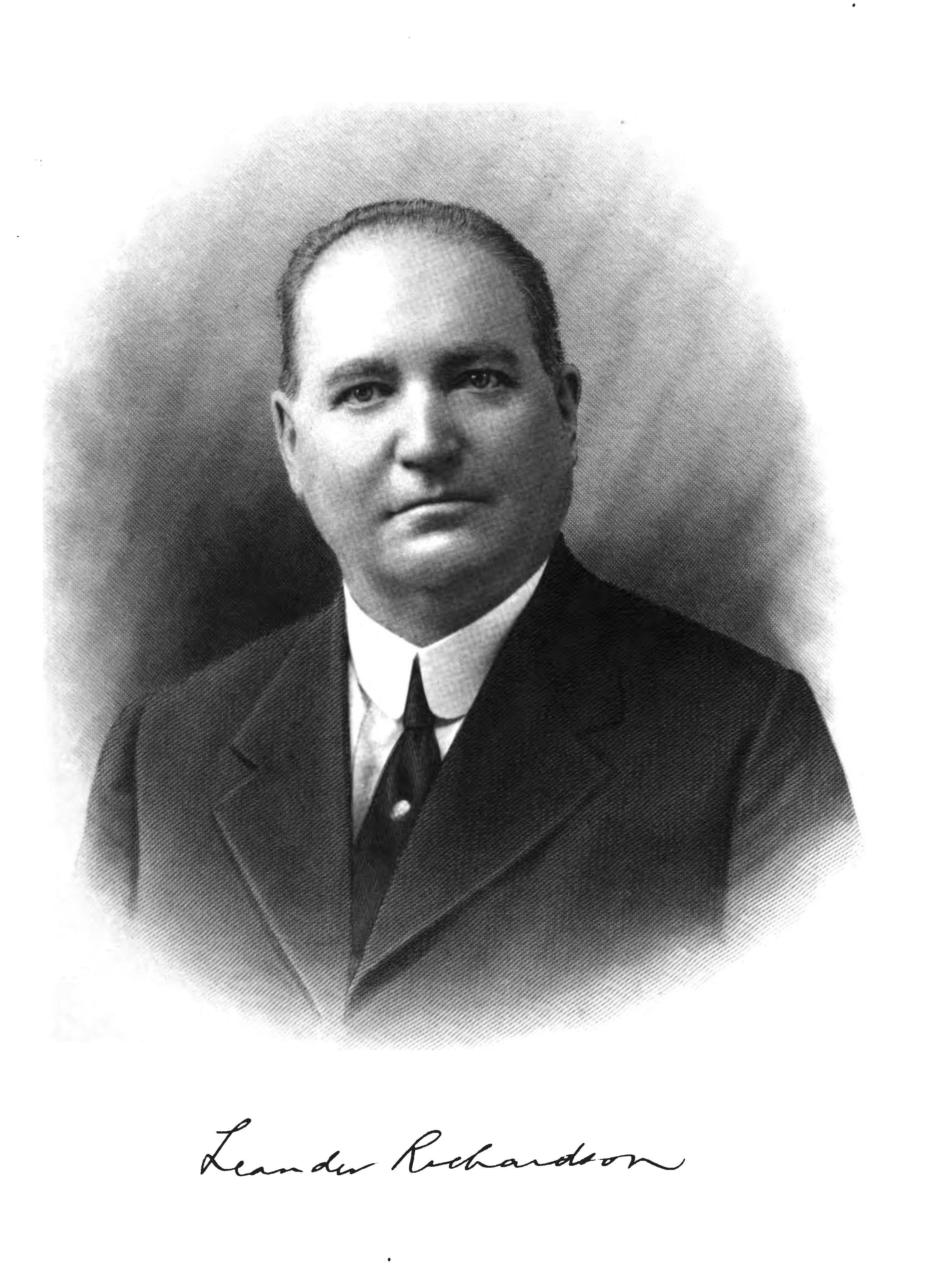
By end of 1896, the operations of the Mercury were taken over and redubbed the New York Morning Telegraph, focusing on sporting (especially horse racing) and theatrical news much as the Mercury had been doing at that point. According to one account published in 1940, the name change came about when Tammany Hall gave $10,000 to writer Blakely Hall, "to run it with the understanding that he was not to get a nickel more. Hall threw out the Mercury title, called the 'new' sheet the Morning Telegraph, hired Leander Richardson (1856–1918) as managing editor, and put it out as a daily sporting and theatrical newspaper."
The Telegraph went on to become a successful paper and was published until shut down during a strike in 1972. The Telegraph considered itself a continuation of the Mercury, though along the way it somehow backdated its claimed date of founding from 1839 to 1833.
Noted contributors and legacy
Aside from the Short Patent Sermons which brought acclaim to Paige's "Dow Jr." pseudonym in the 1840s, the Mercury went on to publish the work of many leading 19th-century writers, and was at times the first to introduce them to New York and national audiences, including Mark Twain, Josh Billings, Charles Farrar Browne (Artemus Ward), Robert Henry Newell (Orpheus C. Kerr), Ella Wheeler Wilcox, Charles Godfrey Leland, David Ross Locke (Petroleum V. Nasby), Ned Buntline, and Mortimer Thomson (Doesticks). Though most of those names are not familiar today, all became well-known popular writers of the time.
Mark Twain's first writing published in the East appeared in the Mercury in 1864 (prior to his success in 1865 with The Celebrated Jumping Frog of Calaveras County), and a number of additional pieces were published in 1867.
Newell, who wrote under the name "Orpheus C. Kerr" (a play on "office seeker"), served for a time as the literary editor of the Mercury, until around 1862. His satirical weekly columns started in Mercury and gained national fame, so much so that President Abraham Lincoln once remarked of Kerr's writings that "anyone who has not read them is a heathen."
Celebrated actress Adah Isaacs Menken contributed a series of poems to the Mercury in 1860–61, as well as a piece praising Walt Whitman and Leaves of Grass in 1860 as "centuries ahead of his contemporaries".
Starting in the mid-1870s, John W. Overall (1822–1899) served as literary editor of the paper (until at least 1890). A Southerner, Overall is best known for his pre-Civil War writing supporting the South.
Historian James W. Cook, in a 2005 compilation of writings by P. T. Barnum (of circus fame, who also appeared in the Mercury), notes that in the mid-1860s, the Mercury was "ubiquitous, with a masthead claim of the largest weekly circulation in America", yet today publications such as the Mercury, which contained few illustrations, are difficult to locate in library collections.
Chronology of editors and publishers
- Editors:
- 1855: Krauth, Cauldwell & Southworth
- 1858–61: Cauldwell, Southworth & Whitney
- 1867: Cauldwell & Whitney
- 1876: William Cauldwell
- 1894: James F. Graham
- Publishers:
- 1839: E.G. Paige & J.H. Wilson
- 1839–40: Paige, Wilson & Nichols
- 1840–41: Paige & Nichols
- 1842–48: Paige, Nichols & Krauth
- 1854–55: Krauth & Cauldwell
- 1855: Krauth, Cauldwell & Southworth
- 1858–61: Cauldwell, Southworth & Whitney
- 1862–70: Cauldwell & Whitney
- 1876: William Cauldwell
- 1894: Jason Rogers, grandson of Cauldwell
References
References
- 978-0826218025)
- Hudson, Frederic. [https://books.google.com/books?id=V5NZAAAAMAAJ&dq=%22sunday+mercury%22+1839&pg=PA339 Journalism in the United States, from 1690–1872], pp. 339–40 (1873)
- Lee, Alfred McClung. [https://books.google.com/books?id=FYM119rjXwwC&pg=PA392 The Daily Newspaper In America], p.392 (1937)
- [https://books.google.com/books?id=zuIOAAAAYAAJ&dq=%22sunday+mercury%22+paige&pg=PA175 Library of universal knowledge, Volume XI], p.175 (1881)
- Brother Jonathan]]'', p.101
- Paige, Elbridge Gerry. [https://books.google.com/books?id=8BEZAAAAYAAJ&dq=%22daily+mercury%22+hall&pg=PA3 Short Patent Sermons by 'Dow Jr.'] (1845)
- [https://books.google.com/books?id=i-MGAQAAIAAJ&dq=%22short+patent+sermons%22&pg=PA449 Lorenzo Dow's Successor], ''[[The Knickerbocker]]'' (November 1840, pp.449–51)
- 978-0195077827)
- [https://books.google.com/books?id=KgYgAQAAIAAJ&dq=%22short+patent+sermons%22+paige&pg=PA234 Gossip with readers and correspondents], ''[[The Knickerbocker]]'' (February 1860, pp.234–35)
- (20 September 1854) [https://www.nytimes.com/1854/09/20/archives/an-editor-killeddeath-of-mr-samnel-nicholis.html An Editor Killed – Death of Mr. Samuel Nicholls], ''[[The New York Times]]'', retrieved November 1, 2010
- (7 November 1857). [http://trove.nla.gov.au/work/32628150?q=%22augustus+h.+krauth%22&c=book Unknown title], ''Sunday Mercury''
- (3 December 1907) [http://chroniclingamerica.loc.gov/lccn/sn83030214/1907-12-03/ed-1/seq-8/;words=WILLIAM+William+CAULDWELL+Cauldwell Ex-Senator William Cauldwell], ''[[New York Tribune]]'', retrieved November 2, 2010
- (3 December 1907) [https://query.nytimes.com/gst/abstract.html?res=9905E7DF113EE033A25750C0A9649D946697D6CF&scp=7&sq=%22sunday+mercury%22&st=p Ex-Senator Cauldwell Dead Former Owner of The Mercury and The Successful American], ''[[The New York Times]]'', retrieved November 1, 2010
- Scharf, J. Thomas. [https://archive.org/stream/historywestches00schagoog/historywestches00schagoog_djvu.txt History of Westchester County, New York] (1886)
- Styple, William B. [https://www.amazon.com/Writing-Fighting-Civil-War-Correspondence/dp/1883926130#reader_1883926130 Writing & Fighting the Civil War: Soldier Correspondence to the New York Sunday Mercury], pp. 9–11 (2000) ({{ISBN. 978-1883926137)
- Cauldwell, William (26 January 1901) [https://query.nytimes.com/gst/abstract.html?res=F50B14F73F5911738DDDAF0A94D9405B818CF1D3 Walt Whitman as a Young Man], ''[[The New York Times]]'', retrieved November 8, 2010 (letter to editor from Cauldwell which notes he met [[Walt Whitman]] while doing typesetting at the ''Atlas'')
- [https://books.google.com/books?id=9GkUAAAAYAAJ&dq=%22new+york+sunday+mercury%22+whitney&pg=RA3-PA56 Mortuary Record, 1884 in Star Almanac], p. 95 (1885)
- 978-0803299207) (discussing different claims to who was "first" to cover baseball, noting that 1853 ''Mercury'' reports had been thought to be first in past baseball scholarship)
- [[Connie Mack
- Martinez, Jose (25 October 2000). [http://www.nydailynews.com/archives/ny_local/2000/10/25/2000-10-25_went_to_bat_for_baseball_new.html Went to bat for baseball: Newspaperman behind game accounts]{{Dead link. (December 2018). Daily News]]'' (New York), retrieved November 1, 2010.
- (13 October 1957) [https://www.nytimes.com/1957/10/13/archives/new-york-end-of-an-era.html End of an era], ''[[The New York Times]]'', retrieved November 1, 2010
- Henry Chadwick]] as reporting that the ''Mercury'' was the first paper covering baseball, with Cauldwell regularly reporting on games played in New York City)
- Tygiel, Jules. ''Past Time: Baseball as History'', p. 3 (Oxford University Press, 2000)(Paperback, 2001, {{ISBN. 978-0-19-514604-2)
- Spink, Alfred Henry. [https://books.google.com/books?id=TV-t-HQE3uoC&dq=%22sunday+mercury%22+baseball+cauldwell&pg=PA356 The national game], p. 356 (1911)
- Goode, Stephen (26 March 2001) [http://findarticles.com/p/articles/mi_m1571/is_12_17/ai_72274550/?tag=content;col1 Styple Delivers News From Civil war Front], ''[[Insight on the News]]'', retrieved November 2, 2010
- [https://books.google.com/books?id=NSsiAQAAIAAJ&dq=%22new+york+sunday+mercury%22+whitney&pg=PA153 Rowell's American Newspaper Directory], p. 153 (1873)
- Reilly, Brendan (18 March 2009). [http://www.27east.com/news/article.cfm/Noyac/200168/Noyac-house-nominated-to-historic-registers/start/2 Noyac house nominated to historic registers], ''Southampton Press'', retrieved November 8, 2010 (noting Cauldwell's political positions; article focuses on proposal to place his summer home in [[Noyack, New York]] built in 1892 on the national and New York registers of historical places)
- Rogers, Jason. [https://books.google.com/books?id=PyendzI0lwgC&dq=mercury+%22morning+telegraph%22&pg=PA80 Newspaper building], p.78-80 (1918)
- (16 January 1893). [https://news.google.com/newspapers?id=2B5YAAAAIBAJ&sjid=TkUNAAAAIBAJ&pg=3992,510840&dq=daily-mercury+tammany&hl=en A New Metropolitan Daily (short)], ''Free Press'' ([[Easton, Pennsylvania]]), retrieved November 5, 2010
- (17 January 1893). [https://web.archive.org/web/20121104103645/http://pqasb.pqarchiver.com/chicagotribune/access/432331222.html?dids=432331222:432331222&FMT=ABS&FMTS=ABS:AI&type=historic&date=Jan+17,+1893&author=&pub=Chicago+Tribune&desc=NEWS+NOTES+OF+THE+METROPOLIS.&pqatl=google New Notes of the Metropolis], ''[[Chicago Tribune]]'', retrieved November 5, 2010
- King, Moses. [https://books.google.com/books?id=MEEAAAAAYAAJ&dq=%22daily+mercury%22+1893&pg=PA626 Kings handbook of New York City], p.626 (1893)(noting 1893 founding and one cent price)
- (12 May 1898) [http://chroniclingamerica.loc.gov/lccn/sn84024441/1898-05-12/ed-1/seq-2/ A Heavy Fine: Thomas Rogers Goes To Jail in Default], ''The Evening Times'' (Washington, D.C.), retrieved November 2, 2010
- (27 April 1932) [https://www.nytimes.com/1932/04/27/archives/jason-rogers-dead-former-publisher-once-head-of-new-york-globe-he.html Jason Rogers Dead; Former Publisher], ''[[The New York Times]]'', retrieved November 8, 2010
- (14 May 1893) [https://www.nytimes.com/1893/05/14/archives/devoted-to-sports-and-politics.html?sq=%2522daily%2520america%2522&scp=39&st=cse Devoted to Sports and Politics], ''[[The New York Times]]'', retrieved November 2, 2010
- (28 November 1893) [https://news.google.com/newspapers?id=r80gAAAAIBAJ&sjid=vGoFAAAAIBAJ&pg=5802,5415519&dq=daily-america+richard-croker&hl=en Personal and political], ''[[Lewiston Evening Journal]]'', retrieved November 2, 2010
- (11 January 1894) [https://www.nytimes.com/1894/01/11/archives/three-to-be-unseated-one-senator-and-two-assemblymen-to-yield-their.html Two Newspapers Consolidated], ''[[The New York Times]]'', retrieved November 1, 2010
- (1 August 1894) [https://query.nytimes.com/gst/abstract.html?res=FA0613FC3E5515738DDDA80894D0405B8485F0D3 The Mercury Under A New Manager], ''[[The New York Times]]'', retrieved November 1, 2010
- 978-0313310775)
- (20 March 1895) [https://timesmachine.nytimes.com/timesmachine/1895/03/20/105978288.pdf "In the Real Estate Field ... Exchange of the Hotel Empire"], ''[[The New York Times]]'', retrieved November 4, 2010
- (10 November 1897) [http://chroniclingamerica.loc.gov/lccn/sn84024441/1897-11-10/ed-1/seq-3/ Accused by Sisters-In-Law], ''The Evening Times'' (Washington, D.C.), retrieved November 2, 2010
- (27 April 1895) [https://news.google.com/newspapers?id=o78gAAAAIBAJ&sjid=iWoFAAAAIBAJ&pg=4784,4833852&dq=new-york-mercury+1895&hl=en Few Liners], ''Lewiston Saturday Journal'', retrieved November 3, 2010
- (2 May 1895)[https://news.google.com/newspapers?id=PxMnAAAAIBAJ&sjid=2wIGAAAAIBAJ&pg=5334,4021770&dq=new-york-mercury+1895&hl=en Silver Organ for New York], ''Clinton Morning Age'', retrieved November 3, 2010
- [http://chroniclingamerica.loc.gov/lccn/sn86091038/1895-05-09/ed-1/seq-1/ Two More Free Coinage Papers], ''Evening Dispatch'' (Provo, Utah), retrieved November 3, 2010 (reporting that Senators Stewart and Bryan had tried to buy the paper, but rebuffed the $250,000 asking price, and negotiations have been renewed with John P. Miller and Major Thomas B. Kirby involved, trying to induce a contribution of funds from Marcus Daly of Montana)
- (28 May 1895) [https://news.google.com/newspapers?id=dNNBAAAAIBAJ&sjid=eLgMAAAAIBAJ&pg=4369,3523136&dq=daily-mercury+silver&hl=en Free Silver Men Have An Organ], ''[[Baltimore American]]'', retrieved November 3, 2010 (reporting that the Mercury will start advocating for free silver "tomorrow", with Major Kirby as its new editor, and claimed to be a "production" of Congressman William A. Jones of Virginia)
- [https://timesmachine.nytimes.com/timesmachine/1899/03/09/105967914.pdf William Noble a Bankrupt ... His Failure Attributed to a Newspaper Venture], ''[[The New York Times]]'', retrieved November 3, 2010
- [https://books.google.com/books?id=b-s7AAAAIAAJ&dq=%22new+york+mercury%22+cauldwell&pg=PA956 La Follette v. Noble] (Superior Court of New York City 1895) (providing details of the arrangements between Cauldwell, Noble, and the "silver men")
- Duffus, Robert L. (19 September 1926) [https://www.nytimes.com/1926/09/19/archives/18511926-the-story-of-the-times-in-the-annals-of-the-seventyfive.html 1851–1926: The Story of the Times], ''[[The New York Times]]'', retrieved November 3, 2010
- Davis, Elmer Holmes. [https://books.google.com/books?id=z0gOAAAAYAAJ&dq=%22new+york+mercury%22+silver&pg=PA178 History of the New York Times, 1851–1921] (1921)
- Tifft, Susan E. & Jones, Alex S. ''The Trust: The Private and Powerful Family Behind The New York Times'' (2000)({{ISBN. 9780316836319)
- (20 September 1896) [https://www.nytimes.com/1896/09/20/archives/will-of-ab-darling-the-deceased-hotel-man-makes-nu-merous-bequests.html City and Vicinity], ''[[The New York Times]]'' (noting that the office of the Mercury "was still closed last night"), retrieved November 2, 2010
- (28 September 1896) [https://web.archive.org/web/20121104102734/http://pqasb.pqarchiver.com/chicagotribune/access/428760711.html?dids=428760711:428760711&FMT=CITE&FMTS=CITE:AI&type=historic&date=Sep+28,+1896&author=&pub=Chicago+Tribune&desc=Other+4+--+No+Title&pqatl=google Other news items] ''[[Chicago Tribune]]'', retrieved November 5, 2010
- (27 September 1899) [https://books.google.com/books?id=O_E1AAAAMAAJ&dq=mercury+%22morning+telegraph%22&pg=RA3-PA64 Massage Advertising], ''Printers' Ink'', p. 16, retrieved November 5, 2010 (article noting that ''Morning Telegraph'' was at that point the only paper to allow "massage advertisements", and also noting that the ''Mercury'' changed to the ''Telegraph'' name but did not change that policy)
- Gilbert, Douglas. [https://books.google.com/books?id=Jpo5AAAAIAAJ&q=%22morning+telegraph%22+%22E.R.+thomas%22 American vaudeville, its life and times], p.154 (1940)
- (9 March 1956)[https://news.google.com/newspapers?id=9YEhAAAAIBAJ&sjid=posFAAAAIBAJ&pg=4118,5044799&dq=morning-telegraph+1833&hl=en Noted Newsman Is Guest At Whitehall Hotel], ''[[The Palm Beach Post]]'', retrieved November 3, 2010
- 0826415172)
- link. (2011-06-12 , ''[[Brooklyn Eagle]]'', retrieved November 5, 2010)
- Cook, James W. (ed.) ''The Colossal P. T. Barnum Reader'', p.10–11 (2005) ({{ISBN. 978-0252072956)
- [http://www.twainquotes.com/mercury/mercuryindex.html Mark Twain in the New York Sunday Mercury], twainquotes.com, retrieved November 5, 2010
- (13 July 1901) [https://www.nytimes.com/1901/07/13/archives/robert-h-newell-dead-he-achieved-fame-as-a-humorist-as-orpheus-c.html Robert H. Newell Dead], ''[[The New York Times]]'', retrieved November 5, 2010
- (20 July 1901). Derby, George. [https://www.nytimes.com/1901/07/20/archives/his-recent-death-in-brooklyn-and-the-true-facts-in-his-career.html Orpheus C. Kerr: His Recent Death in Brooklyn and the True Facts in his Career], ''[[The New York Times]]'', retrieved November 5, 2010
- [[Benjamin P. Thomas. Thomas, Benjamin P.]] "Lincoln’s Humor: An Analysis," 3 ''Journal of the Abraham Lincoln Association'' (1981)
- 978-0521820707)
- 978-1579580087)
- 978-0838633816)
- Herringshaw, Thomas William (ed.) [https://books.google.com/books?id=QQ5aAAAAMAAJ&dq=%22sunday+mercury%22+%22literary+editor%22&pg=PA711 Local and national poets of America], pp. 711–12 (1890) (biographical sketch and poetry samples of John W. Overall, noting that he has been literary editor of the paper for "over fourteen years")
- (21 May 1899). [https://query.nytimes.com/gst/abstract.html?res=F60614FD3E5811738DDDA80A94DD405B8985F0D3 Death list a day], retrieved November 19, 2010
- M'Caleb, Thomas. [https://books.google.com/books?id=F11sseKNM7wC&dq=%22john+w.+overall%22&pg=PA514 The Louisiana book: selections from the literature of the state], p.514 (1894)
- Davidson, James Wood. [https://books.google.com/books?id=RMdZAAAAMAAJ&dq=%22john+w.+overall%22&pg=PA403 The living writers of the South], p.403-07 (1869)
- [http://chroniclingamerica.loc.gov/lccn/sn83030554/ About this Newspaper: Sunday Mercury], [[Chronicling America]] website, retrieved November 2, 2010.
This article was imported from Wikipedia and is available under the Creative Commons Attribution-ShareAlike 4.0 License. Content has been adapted to SurfDoc format. Original contributors can be found on the article history page.
Ask Mako anything about Sunday Mercury (New York) — get instant answers, deeper analysis, and related topics.
Research with MakoFree with your Surf account
Create a free account to save articles, ask Mako questions, and organize your research.
Sign up freeThis content may have been generated or modified by AI. CloudSurf Software LLC is not responsible for the accuracy, completeness, or reliability of AI-generated content. Always verify important information from primary sources.
Report