From Surf Wiki (app.surf) — the open knowledge base
Submarine
Watercraft capable of independent underwater operation
Watercraft capable of independent underwater operation
| Field | Value |
|---|---|
| image | US Navy 040730-N-1234E-002 PCU Virginia (SSN 774) returns to the General Dynamics Electric Boat shipyard.jpg |
| caption | US underway in Groton, Connecticut, July 2004 |
| classification | Watercraft |
| industry | Arms |
| application | Underwater warfare |
| inventor | Cornelis Drebbel |
| invented |
watercraft designed for submerged operation

A submarine (often shortened to sub) is a watercraft capable of independent operation underwater. (It differs from a submersible, which has more limited underwater capability.) The term "submarine" is also sometimes used historically or informally to refer to remotely operated vehicles and robots, or to medium-sized or smaller vessels (such as the midget submarine and the wet sub). Submarines are referred to as boats rather than ships regardless of their size.
Although experimental submarines had been built earlier, submarine design took off during the 19th century, and submarines were adopted by several navies. They were first used widely during World War I (1914–1918), and are now used in many navies, large and small. Their military uses include: attacking enemy surface ships (merchant and military) or other submarines; aircraft carrier protection; blockade running; nuclear deterrence; stealth operations in denied areas when gathering intelligence and doing reconnaissance; denying or influencing enemy movements; conventional land attacks (for example, launching a cruise missile); and covert insertion of frogmen or special forces. Their civilian uses include: marine science; salvage; exploration; and facility inspection and maintenance. Submarines can be modified for specialized functions such as search-and-rescue missions and undersea cable repair. They are also used in the tourism industry and in undersea archaeology. Modern deep-diving submarines derive from the bathyscaphe, which evolved from the diving bell.
Most large submarines consist of a cylindrical body with hemispherical (or conical) ends and a vertical structure, usually located amidships, which houses communications and sensing devices as well as periscopes. In modern submarines, this structure is called the "sail" in American usage and "fin" in European usage. A feature of earlier designs was the "conning tower": a separate pressure hull above the main body of the boat that enabled the use of shorter periscopes. There is a propeller (or pump jet) at the rear, and various hydrodynamic control fins. Smaller, deep-diving, and specialty submarines may deviate significantly from this traditional design. Submarines dive and resurface by using diving planes and by changing the amount of water and air in ballast tanks to affect their buoyancy.
Submarines encompass a wide range of types and capabilities. They range from small, autonomous examples, such as one- or two-person subs that operate for a few hours, to vessels that can remain submerged for six months, such as the Russian (the biggest submarines ever built). Submarines can work at depths that are greater than what is practicable (or even survivable) for human divers.
History
Main article: History of submarines
Etymology
The word submarine means 'underwater' or 'under-sea' (as in submarine canyon, submarine pipeline) though as a noun it generally refers to a vessel that can travel underwater. The term is a contraction of submarine boat and occurs as such in several languages, e.g. French (sous-marin), and Spanish (submarino), although others retain the original term, such as Dutch (Onderzeeboot), German (Unterseeboot), Swedish (Undervattensbåt), and Russian (подводная лодка: ru), all of which mean 'submarine boat'. By naval tradition, submarines are usually referred to as boats rather than as ships, regardless of their size. Although referred to informally as boats, U.S. submarines employ the designation USS (United States Ship) at the beginning of their names, such as . In the Royal Navy, the designation HMS can refer to "His Majesty's Ship" or "His Majesty's Submarine", though the latter is sometimes rendered "HMS/m".For example, see HMS/m Tireless, at IWM, HMS/m A.1 at Historic England Submarines are generally referred to as boats rather than ships.The Submarine service page on the official website of the Royal Navy refers to "These powerful boats"https://www.royalnavy.mod.uk/the-equipment/submarines, and in at a speech in Washington, Adm. Sir Philip Jones announced "that the name Dreadnought will return as lead boat and class name" for Britain's latest ballistic missile submarines.https://www.royalnavy.mod.uk/news-and-latest-activity/news/2016/october/22/161022-first-sea-lord-trafalgar-night-speech-in-washington
Early human-powered submersibles
16th and 17th centuries
According to a report in Opusculum Taisnieri published in 1562:
In 1578, the English mathematician William Bourne recorded in his book Inventions or Devises one of the first plans for an underwater navigation vehicle. A few years later the Scottish mathematician and theologian John Napier wrote in his Secret Inventions (1596) that "These inventions besides devises of sayling under water with divers other devises and strategems for harming of the enemyes by the Grace of God and worke of expert Craftsmen I hope to perform." It is unclear whether he carried out his idea.
Jerónimo de Ayanz y Beaumont (1553–1613) created detailed designs for two types of air-renovated submersible vehicles. They were equipped with oars, autonomous floating snorkels worked by inner pumps, portholes and gloves used for the crew to manipulate underwater objects. Ayanaz planned to use them for warfare, using them to approach enemy ships undetected and set up timed gunpowder charges on their hulls.
The first submersible of whose construction there exists reliable information was designed and built in 1620 by Cornelis Drebbel, a Dutchman in the service of James I of England. It was propelled by means of oars.
18th century
By the mid-18th century, over a dozen patents for submarines/submersible boats had been granted in England. In 1747, Nathaniel Symons patented and built the first known working example of the use of a ballast tank for submersion. His design used leather bags that could fill with water to submerge the craft. A mechanism was used to twist the water out of the bags and cause the boat to resurface. In 1749, the Gentlemen's Magazine reported that a similar design had initially been proposed by Giovanni Borelli in 1680. Further design improvement stagnated for over a century, until application of new technologies for propulsion and stability.
The first military submersible was (1775), a hand-powered acorn-shaped device designed by the American David Bushnell to accommodate a single person. It was the first verified submarine capable of independent underwater operation and movement, and the first to use screws for propulsion.
19th century

In 1800, France built , a human-powered submarine designed by American Robert Fulton. They gave up on the experiment in 1804, as did the British, when they reconsidered Fulton's submarine design.
In 1850, Wilhelm Bauer's was built in Germany. It remains the oldest known surviving submarine in the world.
In 1864, late in the American Civil War, the Confederate navy's became the first military submarine to sink an enemy vessel, the Union sloop-of-war , using a gun-powder-filled keg on a spar as a torpedo charge. The Hunley also sank. The explosion's shock waves may have killed its crew instantly, preventing them from pumping the bilge or propelling the submarine.
In 1866, was the first submarine to successfully dive, cruise underwater, and resurface under the crew's control. The design by German American Julius H. Kroehl (in German, Kröhl) incorporated elements that are still used in modern submarines.
In 1866, was built at the Chilean government's request by Karl Flach, a German engineer and immigrant. It was the fifth submarine built in the world and, along with a second submarine, was intended to defend the port of Valparaiso against attack by the Spanish Navy during the Chincha Islands War.
Mechanically powered submarines
Submarines could not be put into widespread or routine service use by navies until suitable engines were developed. The era from 1863 to 1904 marked a pivotal time in submarine development, and several important technologies appeared. A number of nations built and used submarines. Diesel electric propulsion became the dominant power system and equipment such as the periscope became standardized. Countries conducted many experiments on effective tactics and weapons for submarines, which led to their large impact in World War I.
1863–1904

The first submarine not relying on human power for propulsion was the French (Diver), launched in 1863, which used compressed air at 180 psi. Narcís Monturiol designed the first air-independent and combustion-powered submarine, , which was launched in Barcelona, Spain in 1864.
The submarine became feasible as potential weapon with the development of the Whitehead torpedo, designed in 1866 by British engineer Robert Whitehead, the first practical self-propelled torpedo. The spar torpedo that had been developed earlier by the Confederate States Navy was considered to be impracticable, as it was believed to have sunk both its intended target, and H. L. Hunley, the submarine that deployed it.
The Irish inventor John Philip Holland built a model submarine in 1876 and in 1878 demonstrated the Holland I prototype. This was followed by a number of unsuccessful designs. In 1896, he designed the Holland Type VI submarine, which used internal combustion engine power on the surface and electric battery power underwater. Launched on 17 May 1897 at Navy Lt. Lewis Nixon's Crescent Shipyard in Elizabeth, New Jersey, Holland VI was purchased by the United States Navy on 11 April 1900, becoming the Navy's first commissioned submarine, christened .
Discussions between the English clergyman and inventor George Garrett and the Swedish industrialist Thorsten Nordenfelt led to the first practical steam-powered submarines, armed with torpedoes and ready for military use. The first was Nordenfelt I, a 56-tonne, 19.5 m vessel similar to Garrett's ill-fated (1879), with a range of 240 km, armed with a single torpedo, in 1885.
A reliable means of propulsion for the submerged vessel was only made possible in the 1880s with the advent of the necessary electric battery technology. The first electrically powered boats were built by Isaac Peral y Caballero in Spain (who built ), Dupuy de Lôme (who built ) and Gustave Zédé (who built Sirène) in France, and James Franklin Waddington (who built Porpoise) in England. Peral's design featured torpedoes and other systems that later became standard in submarines.

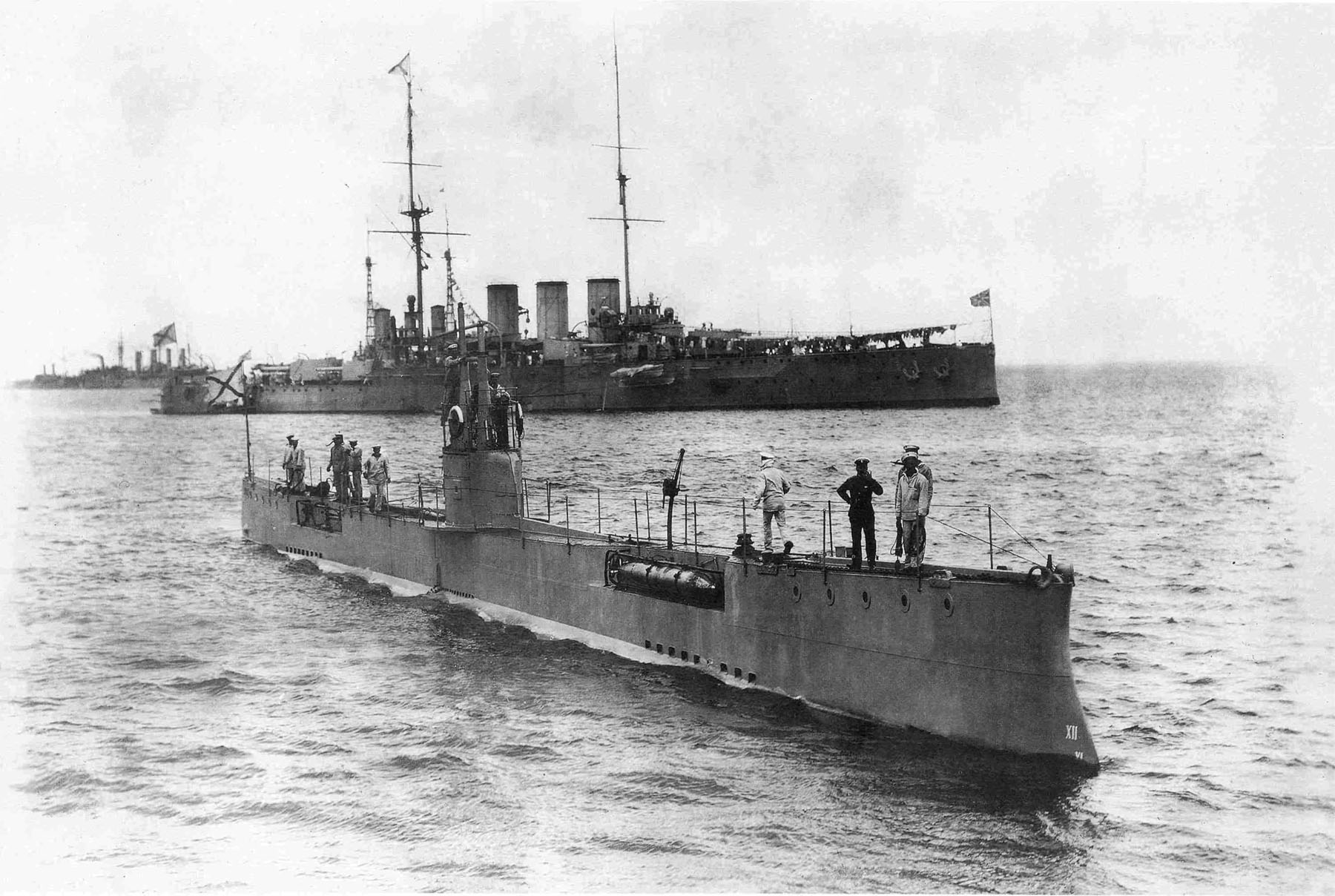
Commissioned in June 1900, the French steam and electric employed the now typical double-hull design, with a pressure hull inside the outer shell. These 200-ton ships had a range of over 100 mi underwater. The French submarine Aigrette in 1904 further improved the concept by using a diesel rather than a gasoline engine for surface power. Large numbers of these submarines were built, with seventy-six completed before 1914.
The Royal Navy commissioned five s from Vickers, Barrow-in-Furness, under licence from the Holland Torpedo Boat Company from 1901 to 1903. Construction of the boats took longer than anticipated, with the first only ready for a diving trial at sea on 6 April 1902. Although the design had been purchased entirely from the US company, the actual design used was an untested improvement to the original Holland design using a new 180 hp petrol engine.
These types of submarines were first used during the Russo-Japanese War of 1904–05. Due to the blockade at Port Arthur, the Russians sent their submarines to Vladivostok, where by 1 January 1905 there were seven boats, enough to create the world's first "operational submarine fleet". The new submarine fleet began patrols on 14 February, usually lasting for about 24 hours each. The first confrontation with Japanese warships occurred on 29 April 1905 when the Russian submarine Som was fired upon by Japanese torpedo boats, but then withdrew.
World War I
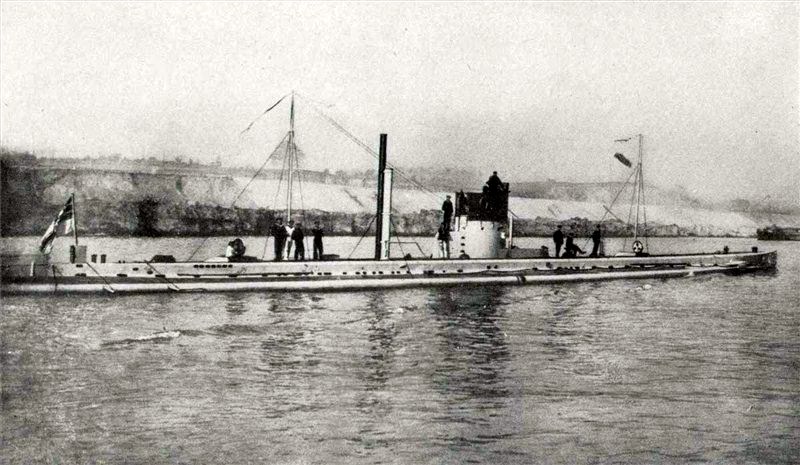
Military submarines first made a significant impact in World War I. Forces such as the U-boats of Germany saw action in the First Battle of the Atlantic, and were responsible for sinking , which was sunk as a result of unrestricted submarine warfare and is often cited among the reasons for the entry of the United States into the war.
At the outbreak of the war, Germany had only twenty submarines available for combat, although these included vessels of the diesel-engined U-19 class, which had a sufficient range of 5000 mi and speed of 8 kn to allow them to operate effectively around the entire British coast., By contrast, the Royal Navy had a total of 74 submarines, though of mixed effectiveness. In August 1914, a flotilla of ten U-boats sailed from their base in Heligoland to attack Royal Navy warships in the North Sea in the first submarine war patrol in history.
The U-boats' ability to function as practical war machines relied on new tactics, their numbers, and submarine technologies such as combination diesel–electric power system developed in the preceding years. More submersibles than true submarines, U-boats operated primarily on the surface using regular engines, submerging occasionally to attack under battery power. They were roughly triangular in cross-section, with a distinct keel to control rolling while surfaced, and a distinct bow. During World War I more than 5,000 Allied ships were sunk by U-boats.
The British responded to the German developments in submarine technology with the creation of the K-class submarines. However, these submarines were notoriously dangerous to operate due to their various design flaws and poor maneuverability.
World War II
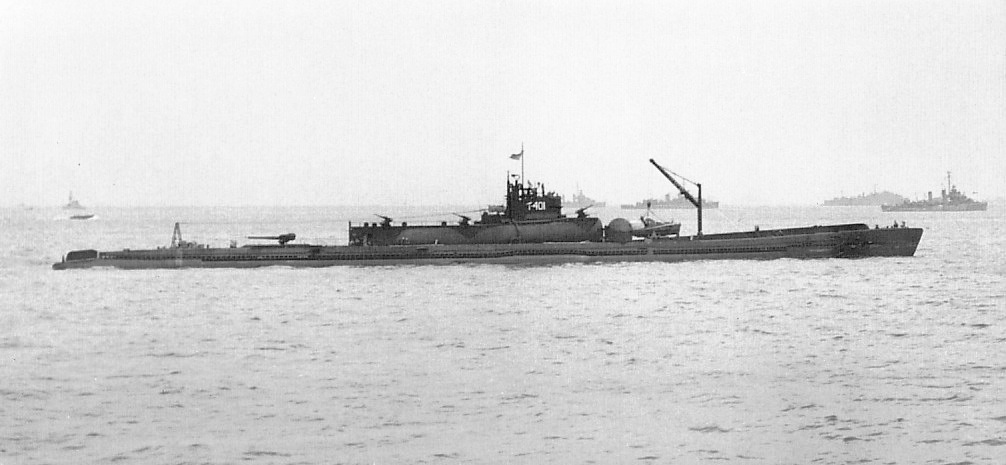
During World War II, Germany used submarines to devastating effect in the Battle of the Atlantic, where it attempted to cut Britain's supply routes by sinking more merchant ships than Britain could replace. These merchant ships were vital to supply Britain's population with food, industry with raw material, and armed forces with fuel and armaments. Although the U-boats had been updated in the interwar years, the major innovation was improved communications, encrypted using the Enigma cipher machine. This allowed for mass-attack naval tactics (Rudeltaktik, commonly known as "wolfpack"), which ultimately ceased to be effective when the U-boat's Enigma was cracked. By the end of the war, almost 3,000 Allied ships (175 warships, 2,825 merchantmen) had been sunk by U-boats. Although successful early in the war, Germany's U-boat fleet suffered heavy casualties, losing 793 U-boats and about 28,000 submariners out of 41,000, a casualty rate of about 70%.
The Imperial Japanese Navy operated the most varied fleet of submarines of any navy, including Kaiten crewed torpedoes, midget submarines ( and es), medium-range submarines, purpose-built supply submarines and long-range fleet submarines. They also had submarines with the highest submerged speeds during World War II (s) and submarines that could carry multiple aircraft (s). They were also equipped with one of the most advanced torpedoes of the conflict, the oxygen-propelled Type 95. Nevertheless, despite their technical prowess, Japan chose to use its submarines for fleet warfare, and consequently were relatively unsuccessful, as warships were fast, maneuverable and well-defended compared to merchant ships.
The submarine force was the most effective anti-ship weapon in the American arsenal. Submarines, though only about 2 percent of the U.S. Navy, destroyed over 30 percent of the Japanese Navy, including 8 aircraft carriers, 1 battleship and 11 cruisers. US submarines also destroyed over 60 percent of the Japanese merchant fleet, crippling Japan's ability to supply its military forces and industrial war effort. Allied submarines in the Pacific War destroyed more Japanese shipping than all other weapons combined. This feat was considerably aided by the Imperial Japanese Navy's failure to provide adequate escort forces for the nation's merchant fleet.
During World War II, 314 submarines served in the US Navy, of which nearly 260 were deployed to the Pacific.O'Kane, p. 333 When the Japanese attacked Hawaii in December 1941, 111 boats were in commission; 203 submarines from the , , and es were commissioned during the war. During the war, 52 US submarines were lost to all causes, with 48 directly due to hostilities. US submarines sank 1,560 enemy vessels, a total tonnage of 5.3 million tons (55% of the total sunk).
The Royal Navy Submarine Service was used primarily in the classic Axis blockade. Its major operating areas were around Norway, in the Mediterranean (against the Axis supply routes to North Africa), and in the Far East. In that war, British submarines sank 2 million tons of enemy shipping and 57 major warships, the latter including 35 submarines. Among these is the only documented instance of a submarine sinking another submarine while both were submerged. This occurred when engaged ; the Venturer crew manually computed a successful firing solution against a three-dimensionally maneuvering target using techniques which became the basis of modern torpedo computer targeting systems. Seventy-four British submarines were lost, the majority, forty-two, in the Mediterranean.
Cold-War military models

The first launch of a cruise missile (SSM-N-8 Regulus) from a submarine occurred in July 1953, from the deck of , a World War II fleet boat modified to carry the missile with a nuclear warhead. Tunny and its sister boat, , were the United States' first nuclear deterrent patrol submarines. In the 1950s, nuclear power partially replaced diesel–electric propulsion. Equipment was also developed to extract oxygen from sea water. These two innovations gave submarines the ability to remain submerged for weeks or months. Most of the naval submarines built since that time in the US, the Soviet Union (now Russia), the UK, and France have been powered by a nuclear reactor.
In 1959–1960, the first ballistic missile submarines were put into service by both the United States () and the Soviet Union () as part of the Cold War nuclear deterrent strategy.
During the Cold War, the US and the Soviet Union maintained large submarine fleets that engaged in cat-and-mouse games. The Soviet Union lost at least four submarines during this period: was lost in 1968 (a part of which the CIA retrieved from the ocean floor with the Howard Hughes-designed ship Glomar Explorer), in 1970, in 1986, and in 1989 (which held a depth record among military submarines—1000 m). Many other Soviet subs, such as (the first Soviet nuclear submarine, and the first Soviet sub to reach the North Pole) were badly damaged by fire or radiation leaks. The US lost two nuclear submarines during this time: due to equipment failure during a test dive while at its operational limit, and due to unknown causes.
During the Indo-Pakistani War of 1971, the Pakistan Navy's sank the Indian frigate . This was the first sinking by a submarine since World War II. During the same war, , a Tench-class submarine on loan to Pakistan from the US, was sunk by the Indian Navy. It was the first submarine combat loss since World War II. In 1982 during the Falklands War, the Argentine cruiser was sunk by the British submarine , the first sinking by a nuclear-powered submarine in war. Some weeks later, on 16 June, during the Lebanon War, an unnamed Israeli submarine torpedoed and sank the Lebanese coaster Transit, which was carrying 56 Palestinian refugees to Cyprus, in the belief that the vessel was evacuating anti-Israeli militias. The ship was hit by two torpedoes, managed to run aground but eventually sank. There were 25 dead, including her captain. The Israeli Navy disclosed the incident in November 2018.
Usage
Military
Main article: Submarine warfare, Attack submarine, Ballistic missile submarine, Cruise missile submarine, Nuclear submarine

Before and during World War II, the primary role of the submarine was anti-surface ship warfare. Submarines would attack either on the surface using deck guns, or submerged using torpedoes. They were particularly effective in sinking Allied transatlantic shipping in both World Wars, and in disrupting Japanese supply routes and naval operations in the Pacific in World War II.
Mine-laying submarines were developed in the early part of the 20th century. The facility was used in both World Wars. Submarines were also used for inserting and removing covert agents and military forces in special operations, for intelligence gathering, and to rescue aircrew during air attacks on islands, where the airmen would be told of safe places to crash-land so the submarines could rescue them. Submarines could carry cargo through hostile waters or act as supply vessels for other submarines.
Submarines could usually locate and attack other submarines only on the surface, although managed to sink with a four torpedo spread while both were submerged. The British developed a specialized anti-submarine submarine in WWI, the R class. After WWII, with the development of the homing torpedo, better sonar systems, and nuclear propulsion, submarines also became able to hunt each other effectively.
The development of submarine-launched ballistic missile and submarine-launched cruise missiles gave submarines a substantial and long-ranged ability to attack both land and sea targets with a variety of weapons ranging from cluster bombs to nuclear weapons.
The primary defense of a submarine lies in its ability to remain concealed in the depths of the ocean. Early submarines could be detected by the sound they made. Water is an excellent conductor of sound (much better than air), and submarines can detect and track comparatively noisy surface ships from long distances. Modern submarines are built with an emphasis on stealth. Advanced propeller designs, extensive sound-reducing insulation, and special machinery help a submarine remain as quiet as ambient ocean noise, making them difficult to detect. It takes specialized technology to find and attack modern submarines.
Active sonar uses the reflection of sound emitted from the search equipment to detect submarines. It has been used since WWII by surface ships, submarines and aircraft (via dropped buoys and helicopter "dipping" arrays), but it reveals the emitter's position, and is susceptible to counter-measures.
A concealed military submarine is a real threat, and because of its stealth, can force an enemy navy to waste resources searching large areas of ocean and protecting ships against attack. This advantage was vividly demonstrated in the 1982 Falklands War when the British nuclear-powered submarine sank the Argentine cruiser . After the sinking the Argentine Navy recognized that they had no effective defense against submarine attack, and the Argentine surface fleet withdrew to port for the remainder of the war. An Argentine submarine remained at sea, however.
Civilian
Although the majority of the world's submarines are military, there are some civilian submarines, which are used for tourism, exploration, oil and gas platform inspections, and pipeline surveys. Some are also used in illegal activities.
The Submarine Voyage ride opened at Disneyland in 1959, but although it ran under water, it was not a true submarine, as it ran on tracks and was open to the atmosphere. The first tourist submarine was , which went into service in 1964 at Expo64. By 1997, there were 45 tourist submarines operating around the world. Submarines with a crush depth in the range of 400 - are operated in several areas worldwide, typically with bottom depths around 100 to, with a carrying capacity of 50 to 100 passengers.
In a typical operation a surface vessel carries passengers to an offshore operating area and loads them into the submarine. The submarine then visits underwater points of interest such as natural or artificial reef structures. To surface safely without danger of collision the location of the submarine is marked with an air release and movement to the surface is coordinated by an observer in a support craft.
A recent development is the deployment of so-called narco-submarines by South American drug smugglers to evade law enforcement detection. Although they occasionally deploy true submarines, most are self-propelled semi-submersibles, where a portion of the craft remains above water at all times. In September 2011, Colombian authorities seized a 16-meter-long submersible that could hold a crew of 5, costing about $2 million. The vessel belonged to FARC rebels and had the capacity to carry at least 7 tonnes of drugs.
File:PX-8 Mésoscaphe - Swiss Submarine (15722856966).jpg|Model of the Mésoscaphe Auguste Piccard File:AtlantisSubInterior3497.JPG|Interior of the tourist submarine Atlantis whilst submerged File:AtlantisVIISubmarineClip3494.jpg|Tourist submarine Atlantis
Polar operations

- 1903 – Simon Lake submarine Protector surfaced through ice off Newport, Rhode Island.
- 1930 – operated under ice near Spitsbergen.
- 1937 – Soviet submarine Krasnogvardeyets operated under ice in the Denmark Strait.
- 1941–45 – German U-boats operated under ice from the Barents Sea to the Laptev Sea.
- 1946 – used upward-beamed fathometer in Operation Nanook in the Davis Strait.
- 1946–47 – used under-ice sonar in Operation High Jump in the Antarctic.
- 1947 – used upward-beamed echo sounder under pack ice in the Chukchi Sea.
- 1948 – developed techniques for making vertical ascents and descents through polynyas in the Chukchi Sea.
- 1952 – used an expanded upward-beamed sounder array in the Beaufort Sea.
- 1957 – reached 87 degrees north near Spitsbergen.
- 3 August 1958 – Nautilus used an inertial navigation system to reach the North Pole.
- 17 March 1959 – surfaced through the ice at the north pole.
- 1960 – transited 900 mi under ice over the shallow (125 to deep) Bering-Chukchi shelf.
- 1960 – transited the Northwest Passage under ice.
- 1962 – Soviet reached the north pole.
- 1970 – carried out an extensive undersea mapping survey of the Siberian continental shelf.
- 1971 – reached the North Pole.
- conducted three Polar Exercises: 1976 (with US actor Charlton Heston aboard); 1984 joint operations with ; and 1990 joint exercises with .
- 6 May 1986 – , and meet and surface together at the Geographic North Pole. First three-submarine surfacing at the Pole.
- 19 May 1987 – joined and at the North Pole.
- March 2007 – participated in the Joint US Navy/Royal Navy Ice Exercise 2007 (ICEX-2007) in the Arctic Ocean with the .
- March 2009 – took part in Ice Exercise 2009 to test submarine operability and war-fighting capability in Arctic conditions.
Technology
Buoyancy and trim
_Control_Room_HighRes.jpg)
All surface ships, as well as surfaced submarines, are in a positively buoyant condition, weighing less than the volume of water they would displace if fully submerged. To submerge hydrostatically, a ship must have negative buoyancy, either by increasing its own weight or decreasing its displacement of water. To control their displacement and weight, submarines have ballast tanks, which can hold varying amounts of water and air.
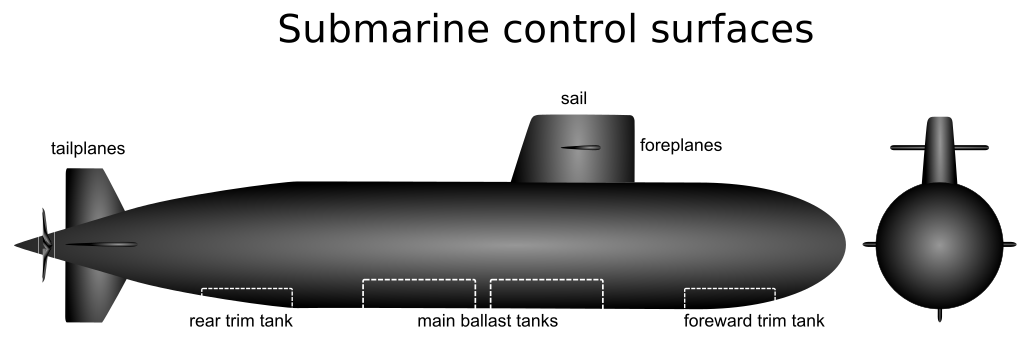
For general submersion or surfacing, submarines use the main ballast tanks (MBTs), which are ambient pressure tanks, filled with water to submerge or with air to surface. While submerged, MBTs generally remain flooded, which simplifies their design, and on many submarines, these tanks are a section of the space between the light hull and the pressure hull. For more precise control of depth, submarines use smaller depth control tanks (DCTs)—also called hard tanks (due to their ability to withstand higher pressure) or trim tanks. These are variable buoyancy pressure vessels, a type of buoyancy control device. The amount of water in depth control tanks can be adjusted to hydrostatically change depth or to maintain a constant depth as outside conditions (mainly water density) change. Depth control tanks may be located either near the submarine's center of gravity, to minimise the effect on trim, or separated along the length of the hull so they can also be used to adjust static trim by transfer of water between them.
When submerged, the water pressure on a submarine's hull can reach 4 MPa for steel submarines and up to 10 MPa for titanium submarines like , while interior pressure remains relatively unchanged. This difference results in hull compression, which decreases displacement. Water density also marginally increases with depth, as the salinity and pressure are higher. This change in density incompletely compensates for hull compression, so buoyancy decreases as depth increases. A submerged submarine is in an unstable equilibrium, having a tendency to either sink or float to the surface. Keeping a constant depth requires continual operation of either the depth control tanks or control surfaces.
Submarines in a neutral buoyancy condition are not intrinsically trim-stable. To maintain desired longitudinal trim, submarines use forward and aft trim tanks. Pumps move water between the tanks, changing weight distribution and pitching the sub up or down. A similar system may be used to maintain transverse trim.
Control surfaces
The hydrostatic effect of variable ballast tanks is not the only way to control the submarine underwater. Hydrodynamic maneuvering is done by several control surfaces, collectively known as diving planes or hydroplanes, which can be moved to create hydrodynamic forces when a submarine moves longitudinally at sufficient speed. In the classic cruciform stern configuration, the horizontal stern planes serve the same purpose as the trim tanks, controlling the trim. Most submarines additionally have forward horizontal planes, normally placed on the bow until the 1960s but often on the sail on later designs, where they are closer to the center of gravity and can control depth with less effect on the trim.
An obvious way to configure the control surfaces at the stern of a submarine is to use vertical planes to control yaw and horizontal planes to control pitch, which gives them the shape of a cross when seen from astern of the vessel. In this configuration, which long remained the dominant one, the horizontal planes are used to control the trim and depth and the vertical planes to control sideways maneuvers, like the rudder of a surface ship.
Alternatively, the rear control surfaces can be combined into what has become known as an X-stern or an X-form rudder. Although less intuitive, such a configuration has turned out to have several advantages over the traditional cruciform arrangement. First, it improves maneuverability, horizontally as well as vertically. Second, the control surfaces are less likely to get damaged when landing on, or departing from, the seabed as well as when mooring and unmooring alongside. Finally, it is safer in that one of the two diagonal lines can counteract the other with respect to vertical as well as horizontal motion if one of them accidentally gets stuck.
The x-stern was first tried in practice in the early 1960s on the USS Albacore, an experimental submarine of the US Navy. While the arrangement was found to be advantageous, it was nevertheless not used on US production submarines that followed due to the fact that it requires the use of a computer to manipulate the control surfaces to the desired effect. Instead, the first to use an x-stern in standard operations was the Swedish Navy with its Sjöormen class, the lead submarine of which was launched in 1967, before the Albacore had even finished her test runs. Since it turned out to work very well in practice, all subsequent classes of Swedish submarines (Näcken, Västergötland, Gotland, and Blekinge class) have or will come with an x-rudder.
The Kockums shipyard responsible for the design of the x-stern on Swedish submarines eventually exported it to Australia with the Collins class as well as to Japan with the Sōryū class. With the introduction of the type 212, the German and Italian Navies came to feature it as well. The US Navy with its Columbia class, the British Navy with its Dreadnought class, and the French Navy with its Barracuda class are all about to join the x-stern family. Hence, as judged by the situation in the early 2020s, the x-stern is about to become the dominant technology.
When a submarine performs an emergency surfacing, all depth and trim control methods are used simultaneously, together with propelling the boat upwards. Such surfacing is very quick, so the vessel may even partially jump out of the water, potentially damaging submarine systems.
Hull
Main article: Submarine hull
Overview
_-_dry_dock_Pearl_Harbor_(1).jpg)
Modern submarines are cigar-shaped. This design, also used in very early submarines, is sometimes called a "teardrop hull". It reduces hydrodynamic drag when the sub is submerged, but decreases the sea-keeping capabilities and increases drag while surfaced. Since the limitations of the propulsion systems of early submarines forced them to operate surfaced most of the time, their hull designs were a compromise. Because of the slow submerged speeds of those subs, usually well below 10 kt (18 km/h), the increased drag for underwater travel was acceptable. Late in World War II, when technology allowed faster and longer submerged operation and increased aircraft surveillance forced submarines to stay submerged, hull designs became teardrop shaped again to reduce drag and noise. was a unique research submarine that pioneered the American version of the teardrop hull form (sometimes referred to as an "Albacore hull") of modern submarines. On modern military submarines the outer hull is covered with a layer of sound-absorbing rubber, or anechoic plating, to reduce detection.
The occupied pressure hulls of deep-diving submarines such as are spherical instead of cylindrical. This allows a more even distribution of stress and efficient use of materials to withstand external pressure as it gives the most internal volume for structural weight and is the most efficient shape to avoid buckling instability in compression. A frame is usually affixed to the outside of the pressure hull, providing attachment for ballast and trim systems, scientific instrumentation, battery packs, syntactic flotation foam, and lighting.
A raised tower on top of a standard submarine accommodates the periscope and electronics masts, which can include radio, radar, electronic warfare, and other systems. It might also include a snorkel mast. In many early classes of submarines (see history), the control room, or "conn", was located inside this tower, which was known as the "conning tower". Since then, the conn has been located within the hull of the submarine, and the tower is now called the "sail" or "fin". The conn is distinct from the "bridge", a small open platform in the top of the sail, used for observation during surface operation.
"Bathtubs" are related to conning towers but are used on smaller submarines. The bathtub is a metal cylinder surrounding the hatch that prevents waves from breaking directly into the cabin. It is needed because surfaced submarines have limited freeboard, that is, they lie low in the water. Bathtubs help prevent swamping the vessel.
Single and double hulls
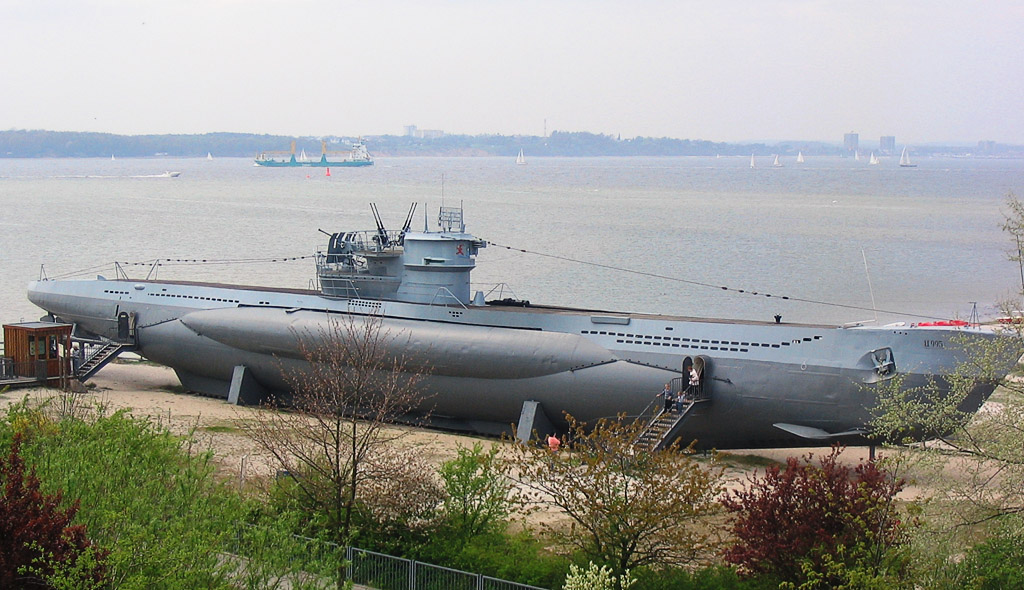
Modern submarines and submersibles usually have, as did the earliest models, a single hull. Large submarines generally have an additional hull or hull sections outside. This external hull, which actually forms the shape of submarine, is called the outer hull (casing in the Royal Navy) or light hull, as it does not have to withstand a pressure difference. Inside the outer hull there is a strong hull, or pressure hull, which withstands sea pressure and has normal atmospheric pressure inside.
As early as World War I, it was realized that the optimal shape for withstanding pressure conflicted with the optimal shape for seakeeping and minimal drag at the surface, and construction difficulties further complicated the problem. This was solved either by a compromise shape, or by using two layered hulls: the internal strength hull for withstanding pressure, and an external fairing for hydrodynamic shape. Until the end of World War II, most submarines had an additional partial casing on the top, bow and stern, built of thinner metal, which was flooded when submerged. Germany went further with the Type XXI, a general predecessor of modern submarines, in which the pressure hull was fully enclosed inside the light hull, but optimized for submerged navigation, unlike earlier designs that were optimized for surface operation.
After World War II, approaches split. The Soviet Union changed its designs, basing them on German developments. All post-World War II heavy Soviet and Russian submarines are built with a double hull structure. American and most other Western submarines switched to a primarily single-hull approach. They still have light hull sections in the bow and stern, which house main ballast tanks and provide a hydrodynamically optimized shape, but the main cylindrical hull section has only a single plating layer. Double hulls are being considered for future submarines in the United States to improve payload capacity, stealth and range.
Pressure hull
The pressure hull is generally constructed of thick high-strength steel with a complex structure and high strength reserve, and is separated by watertight bulkheads into several compartments. There are also examples of more than two hulls in a submarine, like the , which has two main pressure hulls and three smaller ones for control room, torpedoes and steering gear, with the missile launch system between the main hulls, all surrounded and supported by the outer light hydrodynamic hull. When submerged the pressure hull provides most of the buoyancy for the whole vessel.
The dive depth cannot be increased easily. Simply making the hull thicker increases the structural weight and requires reduction of onboard equipment weight, and increasing the diameter requires a proportional increase in thickness for the same material and architecture, ultimately resulting in a pressure hull that does not have sufficient buoyancy to support its own weight, as in a bathyscaphe. This is acceptable for civilian research submersibles, but not military submarines, which need to carry a large equipment, crew, and weapons load to fulfill their function. Construction materials with greater specific strength and specific modulus are needed.
WWI submarines had hulls of carbon steel, with a 100 m maximum depth. During WWII, high-strength alloyed steel was introduced, allowing 200 m depths. High-strength alloy steel remains the primary material for submarines today, with 250 - depths, which cannot be exceeded on a military submarine without design compromises. To exceed that limit, a few submarines were built with titanium hulls. Titanium alloys can be stronger than steel, lighter, and most importantly, have higher immersed specific strength and specific modulus. Titanium is also not ferromagnetic, important for stealth. Titanium submarines were built by the Soviet Union, which developed specialized high-strength alloys. It has produced several types of titanium submarines. Titanium alloys allow a major increase in depth, but other systems must be redesigned to cope, so test depth was limited to 1000 m for the , the deepest-diving combat submarine. An may have successfully operated at 1300 m, though continuous operation at such depths would produce excessive stress on many submarine systems. Titanium does not flex as readily as steel, and may become brittle after many dive cycles. Despite its benefits, the high cost of titanium construction led to the abandonment of titanium submarine construction as the Cold War ended. Deep-diving civilian submarines have used thick acrylic pressure hulls. Although the specific strength and specific modulus of acrylic are not very high, the density is only 1.18g/cm3, so it is only very slightly denser than water, and the buoyancy penalty of increased thickness is correspondingly low.
The deepest deep-submergence vehicle (DSV) to date is Trieste. On 5 October 1959, Trieste departed San Diego for Guam aboard the freighter Santa Maria to participate in Project Nekton, a series of very deep dives in the Mariana Trench. On 23 January 1960, Trieste reached the ocean floor in the Challenger Deep (the deepest southern part of the Mariana Trench), carrying Jacques Piccard (son of Auguste) and Lieutenant Don Walsh, USN. This was the first time a vessel, crewed or uncrewed, had reached the deepest point in the Earth's oceans. The onboard systems indicated a depth of 11521 m, although this was later revised to 10916 m and more accurate measurements made in 1995 have found the Challenger Deep slightly shallower, at 10911 m.
Building a pressure hull is difficult, as it must withstand pressures at its required diving depth. When the hull is perfectly round in cross-section, the pressure is evenly distributed, and causes only hull compression. If the shape is not perfect, the hull deflects more in some places and buckling instability is the usual failure mode. Inevitable minor deviations are resisted by stiffener rings, but even a one-inch (25 mm) deviation from roundness results in over 30 percent decrease of maximal hydrostatic load and consequently dive depth. The hull must therefore be constructed with high precision. All hull parts must be welded without defects, and all joints are checked multiple times with different methods, contributing to the high cost of modern submarines. (For example, each attack submarine costs US$2.6 billion, over US$200,000 per ton of displacement.)
Crew
A typical nuclear submarine has a crew of over 80; conventional boats typically have fewer than 40. The conditions on a submarine can be difficult because crew members must work in isolation for long periods of time, without family contact, and in cramped conditions. Submarines normally maintain radio silence to avoid detection. Operating a submarine is dangerous, even in peacetime, and many submarines have been lost in accidents.
Women
.jpg)
Most navies prohibited women from serving on submarines, even after they had been permitted to serve on surface warships. The Royal Norwegian Navy became the first navy to allow women on its submarine crews in 1985. The Royal Danish Navy allowed female submariners in 1988. Others followed suit including the Swedish Navy (1989), the Royal Australian Navy (1998), the Spanish Navy (1999), the German Navy (2001) and the Canadian Navy (2002). In 1995, Solveig Krey of the Royal Norwegian Navy became the first female officer to assume command on a military submarine, HNoMS Kobben.
On 8 December 2011, British Defence Secretary Philip Hammond announced that the UK's ban on women in submarines was to be lifted from 2013. Previously there were fears that women were more at risk from a build-up of carbon dioxide in the submarine. But a study showed no medical reason to exclude women, though pregnant women would still be excluded. Similar dangers to the pregnant woman and her fetus barred women from submarine service in Sweden in 1983, when all other positions were made available for them in the Swedish Navy. Today, pregnant women are still not allowed to serve on submarines in Sweden. However, the policymakers thought that it was discriminatory with a general ban and demanded that women should be tried on their individual merits and have their suitability evaluated and compared to other candidates. Further, they noted that a woman complying with such high demands is unlikely to become pregnant. In May 2014, three women became the RN's first female submariners.
Women have served on US Navy surface ships since 1993, and , began serving on submarines for the first time. Until presently, the Navy allowed only three exceptions to women being on board military submarines: female civilian technicians for a few days at most, women midshipmen on an overnight during summer training for Navy ROTC and Naval Academy, and family members for one-day dependent cruises. In 2009, senior officials, including then-Secretary of the Navy Ray Mabus, Joint Chief of Staff Admiral Michael Mullen, and Chief of Naval Operations Admiral Gary Roughead, began the process of finding a way to implement women on submarines. The US Navy rescinded its "no women on subs" policy in 2010.
Both the US and British navies operate nuclear-powered submarines that deploy for periods of six months or longer. Other navies that permit women to serve on submarines operate conventionally powered submarines, which deploy for much shorter periods—usually only for a few months. Prior to the change by the US, no nation using nuclear submarines permitted women to serve on board.
In 2011, the first class of female submarine officers graduated from Naval Submarine School's Submarine Officer Basic Course (SOBC) at the Naval Submarine Base New London. Additionally, more senior ranking and experienced female supply officers from the surface warfare specialty attended SOBC as well, proceeding to fleet Ballistic Missile (SSBN) and Guided Missile (SSGN) submarines along with the new female submarine line officers beginning in late 2011. By late 2011, several women were assigned to the Ohio-class ballistic missile submarine . On 15 October 2013, the US Navy announced that two of the smaller Virginia-class attack submarines, and , would have female crew-members by January 2015.
In 2020, Japan's national naval submarine academy accepted its first female candidate.
Abandoning the vessel

.jpg)
In an emergency, submarines can contact other ships to assist in rescue, and pick up the crew when they abandon ship. The crew can use escape sets such as the Submarine Escape Immersion Equipment to abandon the submarine via an escape trunk, which is a small airlock compartment that provides a route for crew to escape from a downed submarine at ambient pressure in small groups, while minimising the amount of water admitted to the submarine. The crew can avoid lung injury from over-expansion of air in the lungs due to the pressure change known as pulmonary barotrauma by maintaining an open airway and exhaling during the ascent. Following escape from a pressurized submarine, in which the air pressure is higher than atmospheric due to water ingress or other reasons, the crew is at risk of developing decompression sickness on return to surface pressure.
An alternative escape means is via a deep-submergence rescue vehicle that can dock onto the disabled submarine, establish a seal around the escape hatch, and transfer personnel at the same pressure as the interior of the submarine. If the submarine has been pressurised the survivors can lock into a decompression chamber on the submarine rescue ship and transfer under pressure for safe surface decompression.
Notes
References
Bibliography
General history
- Histoire des sous-marins: des origines à nos jours by Jean-Marie Mathey and Alexandre Sheldon-Duplaix. (Boulogne-Billancourt: ETAI, 2002).
Culture
- Redford, Duncan. The Submarine: A Cultural History From the Great War to Nuclear Combat (I.B. Tauris, 2010) 322 pages; focus on British naval and civilian understandings of submarine warfare, including novels and film. Submarines before 1914
1900/Russo-Japanese War 1904–1905
World War II
Cold War
- Hide and seek: the untold story of Cold War espionage at sea, by Peter Huchthausen and Alexandre Sheldon-Duplaix. (Hoboken, NJ: J. Wiley & Sons, 2008, )
References
- Fontenoy (2007), p. 1.
- "Marine Biologist and Bioluminescence Specialist Edith A. Widder: Video Transcript: Ocean Exploration Careers: NOAA Office of Ocean Exploration and Research".
- (1 October 2017). "Of Ships and Boats and ...". [[U.S. Naval Institute]].
- Sherman, Chris. (14 April 2009). "Worlds Biggest Submarine".
- [https://www.oed.com/view/Entry/192795?rskey=sQhrJW&result=1&isAdvanced=false#eid ''Submarine''] at [[OED]]; retrieved 4 September 2021
- [https://www.oed.com/view/Entry/192795?redirectedFrom=submarine+boat#eid227775172 ''Submarine boat''] at [[OED]]; retrieved 4 September 2021
- ''The New Shorter Oxford English Dictionary'', Clarendon Press, Oxford, 1993, Vol. 2 N–Z
- (19 October 1998). "Blind Man's Bluff: The Untold Story Of American Submarine Espionage". PublicAffairs.
- McHale, Gannon. (15 September 2013). "Stealth Boat: Fighting the Cold War in a Fast Attack Submarine". Naval Institute Press.
- [https://acronyms.thefreedictionary.com/HMS%2FM ''HMS/m''] at acronyms.thefreedictionary; retrieved 4 September 2021
- Joann Taisnier Hannon ([[Jean Taisnier]] (1508–1562)), ''Opusculum perpetua memoria dignissimum, de natura magnetis et eius effectibus'' [Most fitting work in perpetual remembrance, on the nature of the magnet and its effects] (Köln (Cologne, "Colonia"), (Germany): Johann Birckmann, 1562), pp. 43–45. Available from: [https://bildsuche.digitale-sammlungen.de/index.html?c=viewer&bandnummer=bsb00022856&pimage=49&v=100&nav=&l=en Bavarian State Library] From p. 43: ''"Ne autem Lector nostra dicta videatur refutare, arbitratus ea, quae miracula putat, naturae limites excedere, unica demonstratione elucidabo, quomodo scilicet quis in fundum alicuius aquae aut fluvij, sicco corpore intrare possit, quod me vidisse in celebri Oppido & Regno Tolleti affirmavi, coram piae memoriae Carolo Quinto Imperatore, & infinitis aliis spectatoribus."'' (Nevertheless, reader, our statement is seen to refute something witnessed, which one considers a wonder, exceeding the limits of nature; I will elucidate a unique demonstration, namely, how one can penetrate to the bottom of any water or river while remaining dry, which, I assert, I saw in the celebrated city and kingdom of Toledo in the presence of Emperor Charles V of blessed memory and a multitude of other spectators.) From p. 44: ''"Nunc venio ad experientiam praedictam, Tolleti demonstratam a duobus Graecis, qui Cacabo magnae amplitudinis accepto, orificio inverso, funibus in aere pendente, tabem & asseres in medio concavi Cacabi affigunt, ... "'' (Now I come to the experiment mentioned above: in Toledo, it was shown by two Greeks, who, I understand, attached to a cauldron (''cacabus'') of great size — [which had its] opening inverted [and which was] held in the air by ropes — a beam and poles inside of the hollow cauldron ... [The beam and poles formed seats for the divers.]) The German Jesuit scientist [[Gaspar Schott]] (1608–1666) quoted Taisnier's account and mentioned that Taisnier had witnessed the demonstration in 1538. Gaspar Schott, ''Technica Curiosa, sive Mirabilia Artis, Libris XII. ... '' [Curious works of skill, or marvelous works of craftsmanship, in 12 books ... ] (Nuremberg (Norimberga), (Germany): Johannes Andreas Endter & Wolfgang Endter, 1664), ''Liber VI: Mirabilium Mechanicorum'' (Book 6: Wonders of mechanics), [https://books.google.com/books?id=dhRTAAAAcAAJ&q=icon&pg=PA393 p. 393.] From p. 393: ''" ... quod nihilominus Anno 1538 in Hispaniae oppido Toleto &c. coram piae memoriae Carolo V. Imperatore, cum decem propemodum millibus hominum experientia vidi."'' ( ... that nevertheless I saw the experiment in the year 1538 in Spain in the city of Toledo, etc., in the presence of Emperor Charles V of blessed memory, with almost ten thousand people.)
- (March 7, 1980). "Espańa, Precursora de la Navegación Submarina". [[ABC (newspaper).
- Delgado (2011), p. 13.
- (September 26, 2021). "Jerónimo de Ayanz, el Da Vinci olvidado que diseñó un submarino y sistemas de aire acondicionado en la España de los Austrias". Xataka.
- Tierie, Gerrit. (10 June 1932). "Cornelis Drebbel (1572–1633)". Rijksuniversiteit te Leiden.
- Mary Bellis. "The Invention Of The Submarine".
- "The Submarine Turtle: Naval Documents of the Revolutionary War". Navy Department Library.
- [https://web.archive.org/web/20030415051537/http://web.mit.edu/invent/iow/bushnelld.html Inventor of the Week: Archive]. mit.edu
- Delgado, James P.. (2011). "Silent Killers: Submarines and Underwater Warfare". Bloomsbury Publishing.
- Lance, Rachel. "The New Explosive Theory About What Doomed the Crew of the 'Hunley'".
- James P. Delgado. (2006). "Archaeological Reconnaissance of the 1865 American-Built Sub Marine Explorer at Isla San Telmo, Archipielago de las Perlas, Panama". International Journal of Nautical Archaeology Journal.
- (25 November 2006). "Recovering Chile's 19th Century Shipwrecks in Valparaiso's Port". The Santiago Times.
- "Torpedo History: Whitehead Torpedo Mk1". Naval History and Heritage Command.
- "John Philip Holland".
- Bowers, Paul. (1999). "The Garrett Enigma and the Early Submarine Pioneers". Airlife.
- Sanmateo, Javier. (5 September 2013). "Isaac Peral, el genio frustrado". El Mundo.
- (2011). "Silent Killers: Submarines and Underwater Warfare". Bloomsbury Publishing.
- Galantin, Ignatius J., Admiral, USN (Ret.). Foreword to ''Submariner'' by Johnnie Coote, p. 1
- Olender p. 175
- Thomas Adam. "Germany and the Americas".
- Douglas Botting, pp. 18–19 "The U-Boats", {{ISBN. 978-0-7054-0630-7
- Gibson and Prendergast, p. 2
- 978-0-521-83432-2, p. 73
- "1915-1926: K Class". Barrow Submariners Association.
- Ian Jack. (4 November 2017). "From the K-class to the party boat, submarines have a history of disaster". The Guardian.
- Crocker III, H. W.. (2006). "Don't Tread on Me". Crown Forum.
- (30 March 2011). "The Battle of the Atlantic: The U-boat peril". BBC.
- Blair, Clay, Jr. ''Silent Victory'', pp. 991–92. The others were lost to accidents or, in the case of {{USS. Seawolf. SS-197. 2, [[friendly fire]].
- Blair, p. 878
- "Submarine History". The Royal Navy.
- (2006). "History of USS Nautilus (SSN 571)". [[Submarine Force Library and Museum.
- Tony Long. (10 May 2007). "10 May 1960: USS ''Triton'' Completes First Submerged Circumnavigation".
- "The Sinking of the Ghazi". Bharat Rakshak Monitor, 4(2).
- Rossiter, Mike. (2009). "Sink the Belgrano". Random House.
- "Stichting Maritiem Historische Data - Schip".
- (22 November 2018). "Israel admits it sank Lebanese refugee boat in 1982 war error, killing 25 — TV".
- Mattias, L.. (30 May 2011). "World's oldest submerged submarine reaches land". CNN.
- Finlan, Alastair. (2004). "The Royal Navy in the Falklands Conflict and the Gulf War: Culture and Strategy". Psychology Press.
- "Sail Away - The Last Voyages of the Disneyland Submarines".
- "Mesoscaph "August Piccard"". Verkehrshaus der Schweiz.
- David Bruce Weaver. (2001). "The Encyclopedia of Ecotourism". CABI.
- (6 June 2009). "Plying the Pacific, Subs Surface as Key Tool of Drug Cartels". The Washington Post.
- (5 September 2011). "FARC's drug submarine seized in Colombia". BBC News.
- McLaren, Alfred S., CAPT USN "Under the Ice in Submarines" ''United States Naval Institute Proceedings'' July 1981, pp. 105–9
- William J. Broad. (18 March 2008). "Queenfish: A Cold War Tale". New York Times.
- "History of the USS ''Gurnard'' and Polar Operations".
- (14 November 2016). "NavSource Online: Submarine Photo Archive".
- (12 January 2013). "HMS Superb (1976) (9th)". britainsnavy.co.uk.
- (20 March 2007). "Submarine Force Participates in Ice Exercise 2007". Government Press Releases (USA).
- (24 March 2009). "CNO Attends ICEX 2009". navy.mil.
- "The Fleet Type Submarine Online: Submarine Trim and Drain Systems. Navpers 16166".
- Nave, R.. "Bulk Elastic Properties". [[Georgia State University]].
- "Physics Of Liquids & Gases". Elementary Classical Physics.
- Richard O'Kane. (1987). "Wahoo". Presidio Press.
- (1995). "Concepts In Submarine Design". Cambridge University Press.
- Thomas Newdick. (29 July 2024). "China's Latest Submarine Features X-Shaped Stern".
- van de Put, F.A.. (September 1986). "2. "X" – Roeren.". Onderzeedienst Reünistenvereniging.
- (2020). "A Fault-tolerant Steering Prototype for X-rudder Underwater Vehicles". Sensors.
- (1 November 2012). "Ohio-class Replacement Details". US Naval Institute.
- Granholm, Fredrik. (2003). "Från Hajen till Södermanland: Svenska ubåtar under 100 år". Marinlitteraturföreningen.
- [http://www.nationaldefensemagazine.org/issues/2000/May/Virginia-Class.htm]. National Defense magazine. {{webarchive. link. (5 April 2008)
- "Federation of American Scientists". Fas.org.
- "Trieste". History.navy.mil.
- "US Naval Academy".
- "Details on German U-Boat Types". Sharkhunters International.
- (1987). "Modern Submarine Warfare". Salamander Books.
- Granholm, Fredrik. (2003). "Från Hajen till Södermanland: Svenska ubåtar under 100 år". Marinlitteraturföreningen.
- Granholm, Fredrik. (2003). "Från Hajen till Södermanland: Svenska ubåtar under 100 år". Marinlitteraturföreningen.
- Granholm, Fredrik. (2003). "Från Hajen till Södermanland: Svenska ubåtar under 100 år". Marinlitteraturföreningen.
- Granholm, Fredrik. (2003). "Från Hajen till Södermanland: Svenska ubåtar under 100 år". Marinlitteraturföreningen.
- Granholm, Fredrik. (2003). "Från Hajen till Södermanland: Svenska ubåtar under 100 år". Marinlitteraturföreningen.
- Friedman, Norman. (1995). "U.S. submarines through 1945: an illustrated design history". Naval Institute Press.
- Никoлaeв, A.C.. "Проект "Пaлтyc" (NATO-"Kilo")".
- (14 January 2019). "What is motivations for ship electric propulsion".
- "Diesel–electric Propulsion Plants: A brief guideline how to engineer a diesel–electric propulsion system".
- Ireland, Bernard. (2003). "Battle of the Atlantic". Pen & Sword Books.
- (1961). "The Far Distant Ships". Queen's Printer, Canada.
- (1987). "On the triangle run". Totem Books.
- Navy, United States. (September 2008). "The Submarine". United States Printing Office.
- "SS X-1". Historic Naval Ships Association.
- (15 December 2008). "S-80: A Sub, for Spain, to Sail Out on the Main". Defense Industry Daily.
- "Submarine Warfare".
- "France Current Capabilities". Nti.org.
- Thompson, Roger. (2007). "Lessons Not Learned". US Naval Institute Press.
- Lee, T. W.. (30 December 2008). "Military Technologies of the World [2 volumes]". ABC-CLIO.
- Soviet submarine. link. (26 March 2009 p. 14)
- Johnston, Robert. (23 September 2007). "Deadliest radiation accidents and other events causing radiation casualties". Database of Radiological Incidents and Related Events.
- (25 March 2009). "The Worst Nuclear Disasters".
- Judah, Jacob. (2025-06-12). "Submarines Are Hard to Detect. Climate Change Might Make It Even Harder.". The New York Times.
- (21 February 2021). "How Do Nuclear Submarines Make Oxygen?". Smarter Every Day 251.
- (9 May 2021). "How to Poop on a Nuclear Submarine (256)". Smarter Every Day.
- "U-1206". Uboat.net.
- "Cramped and heavily armed — see what life is like aboard a nuclear submarine with these photos".
- "CO07012 {{!}} Perils of the Deep: The Dangers of Submarine Operations in Asia". [[Nanyang Technological University, Singapore]].
- (31 August 2001). "NATO Review – Vol.49 – No 2 – Summer 2001: Women in uniform". Nato.int.
- "Historik".
- (2014). "La Mujer En Las Fuerzas Armadas". Temas Profesionales.
- "BOE-A-1999-11194 Ley 17/1999, de 18 de mayo, de Régimen del Personal de las Fuerzas Armadas.".
- "Forsvarsnett: Historikk".
- Hopkins, Nick. (8 December 2011). "Royal Navy will allow women to serve on submarines". The Guardian.
- (5 May 2014). "Royal Navy gets first female submariners". BBC.
- [http://www.chinfo.navy.mil/navpalib/ships/submarines/centennial/faqs.html question #10] {{webarchive. link. (27 September 2006)
- (27 September 2009). "SecNav, CNO: Women should serve on subs". Navy Times.
- "Commander, Submarine Force, U.S. Pacific Fleet".
- Scott Tyson, Ann. (26 September 2009). "Navy Seeks to Allow Women to Serve on Submarines". The Washington Post.
- Enter your Company or Top-Level Office. (19 July 2011). "OMA: Female Sub School Grads Say They Fit Right In". Ct.gov.
- Commander, Submarine Group 10 Public Affairs. "Navy Welcomes Women To Serve In Submarines". Navy.mil.
- "Report: 12 Sailors Implicated in Submarine Shower Scandal". Military.com.
- (15 October 2013). "Navy Names First Two Attack Boats to Have Female Crew". USNI News.
- Staff. (22 January 2020). "First woman enters Japan's submarine academy after end of restrictions".
- (1997). "A Biomedical Review Of The US Navy Submarine Escape System: 1996". Naval Submarine Medical Research Laboratory Technical Report.
- (1999). "Spirometric indices and the risk of pulmonary barotrauma in submarine escape training". Undersea and Hyperbaric Medicine Journal.
- (1999). "Estimated DCS Risks in Pressurized Submarine Rescue.". US Naval Medical Research Center Technical Report.
- Eckenhoff, RG. (1984). "Pressurized Submarine Rescue". Naval Submarine Medical Research Laboratory Technical Report.
This article was imported from Wikipedia and is available under the Creative Commons Attribution-ShareAlike 4.0 License. Content has been adapted to SurfDoc format. Original contributors can be found on the article history page.
Ask Mako anything about Submarine — get instant answers, deeper analysis, and related topics.
Research with MakoFree with your Surf account
Create a free account to save articles, ask Mako questions, and organize your research.
Sign up freeThis content may have been generated or modified by AI. CloudSurf Software LLC is not responsible for the accuracy, completeness, or reliability of AI-generated content. Always verify important information from primary sources.
Report