From Surf Wiki (app.surf) — the open knowledge base
Streetwear
Style of casual clothing
Style of casual clothing
Streetwear is a style of casual clothing that gained global popularity in the 1990s. Emerging from the fusion of New York hip-hop fashion and Californian surf culture, it evolved to incorporate elements of sportswear, punk, skateboarding, 1980s nostalgia, and Japanese street fashion.
Streetwear is commonly linked to exclusivity, as many brands limit production through artificial scarcity to drive demand. This has led to practices such as limited edition releases and resale markets. In the 21st century, streetwear intersected with haute couture, as luxury fashion houses adopted streetwear influences, while streetwear brands incorporated aspects of high fashion including runway presentation, designer collaborations, and premium branding.
History
Streetwear style is generally accepted to have been born out of the New York City hip-hop culture of the late 1970s and early 1980s, with elements of Los Angeles surf culture. Early streetwear in the 1970s and 1980s also took inspiration from the do-it-yourself aesthetic of punk, Japanese street fashion, new wave, heavy metal, and established legacy sportswear and workwear fashion brands such as Schott NYC, Dr. Martens, Kangol, Fila and Adidas.
During the 1980s, designer Dapper Dan (Daniel R. Day) in Harlem, New York, created early streetwear aesthetics. Working from his made-to-order customization boutique opened in 1982, Day combined luxury branding with custom designs influenced by experiences in Africa, helping popularize logo-centered and individualized fashion that diverged from mainstream norms.
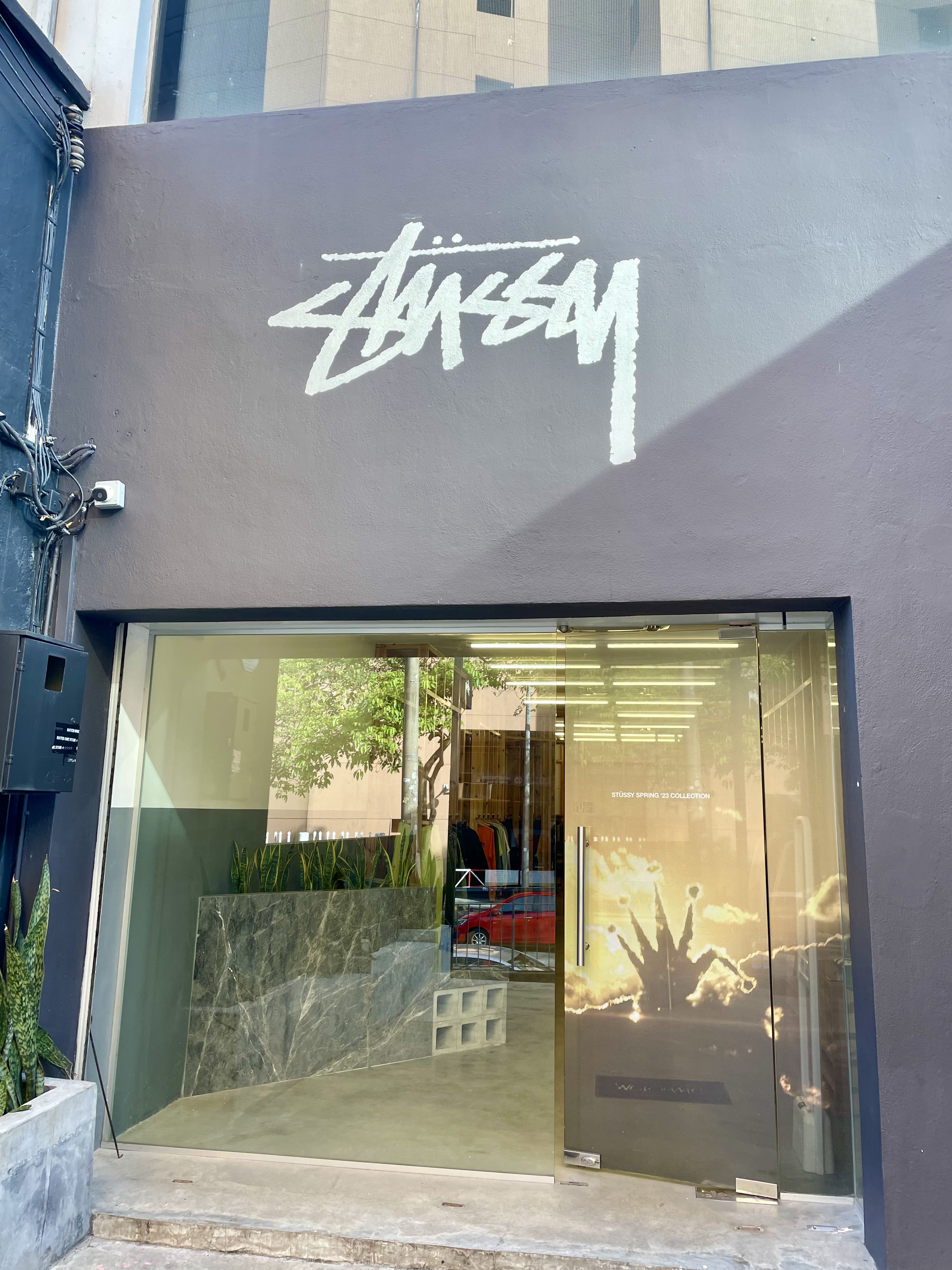
Likewise, Surfboard designer Shawn Stussy began selling printed T-shirts featuring the same trademark signature he placed on his custom surfboards. Initially selling the items from his own car, Stussy expanded sales to boutiques once his popularity increased. Then as sales peaked, Stüssy moved into exclusive sales to create product scarcity, which established streetwear's focus on T-shirts and exclusivity.

In the early 1990s, burgeoning record labels associated with popular hip-hop acts like Tommy Boy Records, Def Jam Recordings, and Delicious Vinyl began selling branded merchandise embroidered onto letterman and workwear jackets made by companies like Carhartt. By mid-decade, influences included skateboarding and gangsta rap. Professional American sports franchises have had a significant impact on the scene, especially the New York Yankees, Los Angeles Raiders and Chicago Bulls caps and jackets, with their production of oversized team jerseys, as well as boots from The Timberland Company and the latest shoe design releases from Nike, Inc. Brand launches by the chief executives of record companies followed, with Russell Simmons of Def Jam launching his Phat Farm label, Sean Combs of Bad Boy with Sean John, and Jay-Z and Damon Dash of Roc-a-Fella Records launching Rocawear.
Luxury sportswear
Jil Sander was the earliest luxury fashion brand to collaborate with a sportswear firm, Adidas, on a co-creation project in 1998. Since then, the advent of "bling" culture saw established luxury brands make inroads into the market, with Burberry, Gucci and Fendi making appearances in films and hip hop videos. Singer Pharrell Williams partnered with fashion designer and A Bathing Ape creator, Nigo, to create Billionaire Boys Club, is credited with mixing Japanese street fashion and streetwear and increasing their visibility in high fashion. Fashion clothing manufacturers began to follow the streetwear companies, co-opting the idea of very limited edition capsule collections, known as "drops", using social media and product scarcity as marketing tools.
In the 2010s, some streetwear brands were coveted as much as the most historically elite fashion brands. Japanese streetwear brands such as A Bathing Ape (BAPE) and Neighborhood played an important role in the global spread of streetwear. Complex Magazine named Stüssy, Supreme, and A Bathing Ape as the top streetwear brands, and many went on to collaborate on prized high fashion capsule collections such as Supreme x Louis Vuitton, Fila x Fendi, A Bathing Ape x Comme des Garcons, and Stüssy x Dior.
Contemporary streetwear has an increasing influence on haute couture and has itself been influenced by runway shows. Designers such as Virgil Abloh and Raf Simons have had a large impact on the evolution of streetwear through their influence on hip hop and popular culture. Other designers such as Demna Gvasalia, creative director of Vetements and Balenciaga, championed trends such as the chunky sneaker and oversized hoodie.
Streetwear is an inclusive style in fashion as it is gender neutral and often designed by people of many different ethnicities and backgrounds.
Hypebeast culture
The term "hypebeast" originated in the mid-2000s as a colloquial label for individuals who bought streetwear primarily to follow trends. Initially used as a derogatory term, it was later reappropriated by Hong Kong journalist Kevin Ma, who named his fashion blog Hypebeast after the phrase.
While the website grew into a global media platform, the term retained negative associations in some regions. In the United States, it was linked to a lack of authenticity and trend-chasing, while in the United Kingdom it became a pejorative for consumers who imitated celebrity styles, particularly those of mainstream hip-hop artists. Over time, some adopted the label as a self-identifier, using it in an ironic or affectionate sense, similar to the evolution of otaku in Japanese culture.
Hypebeast culture is often associated with logo-heavy clothing and the practice of purchasing multiple designer items to display wealth and trend awareness. It is closely connected to sneaker collecting and resale markets, where limited release shoes are bought for the purpose of reselling at higher prices. This practice has been criticized for prioritizing financial gain and prestige over cultural or stylistic significance.
Sneaker collecting
Main article: Sneaker collecting
Sneakers have been associated with streetwear since the late 1970s. By the late 1980s, sneaker collecting had become an established part of the subculture, driven in part by the popularity of Air Jordans, the signature line of basketball player Michael Jordan. Another influential model was the Nike Air Force 1, which gained prominence in the hip-hop, trap, and UK grime scenes.
Although preferred styles have shifted over time, sneakers remain a central element of streetwear. The global sneaker market was valued at approximately $85 billion (USD) in 2022 and is projected to reach $120 billion (USD) by 2026. Collecting and resale practices continue to link sneaker culture closely with streetwear and hypebeast communities.
References
References
- Laux, Cameron. (January 9, 2019). "Who Decides What is Cool?". [[British Broadcasting Corporation.
- Huguelet, M.C. (2010-11-13). "What is Streetwear Clothing?".
- Baggs, Michael. (2018-12-10). "Rental fashion: How luxury streetwear is changing the industry". [[British Broadcasting Corporation.
- Yotka, Steff. (12 January 2019). "Think Streetwear Is a New Phenomenon? Meet Luca Benini, Who Started the Hype 30 Years Ago". Vogue.
- DeLeon, Jian. (2018-10-02). "How Hip-Hop Left a Lasting Influence on Streetwear & Fashion".
- EDDY. (2025-02-04). "The Evolution of Streetwear: From Subculture to High Fashion".
- Sande, Steve. (6 November 2005). "Street Threads". [[San Francisco Chronicle]].
- (11 February 1991). "Style: Where Surf Meets Rap".
- Breinholt, Jacob. (5 August 2009). "Throwback Comeback: Stussy". SoJones.
- Marriott, Michel. (1992-11-29). "THING; The Carhartt Jacket".
- (2021-01-05). "Collaboration between luxury and sportswear: what are the roots?".
- Cook, Xerxes. (2015-11-27). "English Inspiration {{!}} The Brain Behind Japan's Biggest Streetwear Brand". [[Vice Media]].
- (Dec 3, 2013). "The Oral History of Billionaire Boys Club and Icecream".
- Fowler, Damian. (5 February 2018). "The hype machine: Streetwear and the business of scarcity". British Broadcasting Corporation.
- Berlinger, Max. (2019-02-26). "Why streetwear brands are now billion-dollar concerns".
- (20 March 2018). "A Bathing Ape: The Rise of a Global Streetwear Icon".
- Hundreds, Bobby. (21 June 2011). "50 Greatest Streetwear Brands of All Time". [[Complex Magazine]].
- Sawyer, Jonathan. (2019-12-04). "Kim Jones Takes Shawn Stussy's Artwork to "Couture Levels of Technique" in Dior's Fall 2020 Collection".
- Coretti, Valerio. (1 June 2017). "Why is streetwear obsessed with Raf Simons?".
- Schneier, Matthew. (2022-08-31). "What's Next for Off-White After Virgil?".
- Caramanica, Jon. (25 July 2018). "My 8-Month Search for $900 Sneakers". [[The New York Times]].
- Fumo, Nicola. (2 March 2016). "What Is Vetements and Why Is Everyone Freaking Out?". [[Racked]].
- "What is Streetwear? The 411 on Fashion's Biggest Buzzword".
- Anwar, Mehak. (14 July 2015). "What Is A Hypebeast? 5 Important Aspects of the Hypebeast Lifestyle".
- Bishop, Jordan. (June 28, 2016). "HYPEBEAST Founder Kevin Ma On Innovation, Learning, And Hong Kong".
- Bain, Marc. (May 22, 2019). "Streetwear is what happens to fashion when consumers start dictating the terms".
- Weissburg, Josie. (April 25, 2018). "Hypebeast Culture".
- Bassil, Ryan. (October 25, 2019). "How the Early Thirties Hypebeast Replaced the Hipster".
- DeLeon, Jian. (2013-08-22). "The Evolution of the Hypebeast: An Illustrated Guide".
- Groce, Nia. (15 March 2018). "Will the '90s Logo Trend Last? Here's What the Experts Have to Say".
- DeLeon, Jian. (April 18, 2016). "Why These Sneakers Cost as Much as a Car".
- Le, Nicholas. (11 October 2018). "Streetwear resale culture on rise, becomes source of profit for students".
- (5 January 2021). "I wear, therefore I am: investigating sneakerhead culture, social identity, and brand preference among men". Fashion and Textiles.
- Denny, Iain. (17 March 2020). "The sneaker – marketplace icon". Consumption Markets & Culture.
- (25 January 2017). "The Forgotten History of the White on White Air Force 1, Nike's Perfect Sneaker".
- "Global: Sneakers market value worldwide 2014-2027".
- Braithwaite, Naomi. (May 17, 2021). "The history of sneakers: from commodity to cultural icon".
This article was imported from Wikipedia and is available under the Creative Commons Attribution-ShareAlike 4.0 License. Content has been adapted to SurfDoc format. Original contributors can be found on the article history page.
Ask Mako anything about Streetwear — get instant answers, deeper analysis, and related topics.
Research with MakoFree with your Surf account
Create a free account to save articles, ask Mako questions, and organize your research.
Sign up freeThis content may have been generated or modified by AI. CloudSurf Software LLC is not responsible for the accuracy, completeness, or reliability of AI-generated content. Always verify important information from primary sources.
Report