From Surf Wiki (app.surf) — the open knowledge base
Straight stitch
Type of simple embroidery and sewing stitch
Type of simple embroidery and sewing stitch

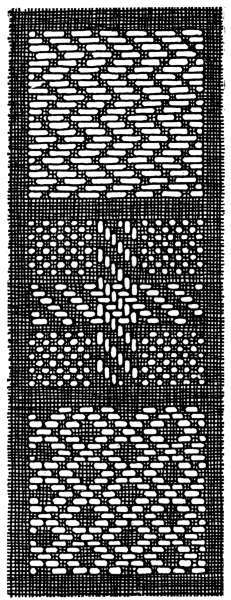
The straight or running stitch is the basic stitch in hand-sewing and embroidery, on which all other forms of sewing are based. The stitch is worked by passing the needle in and out of the fabric at a regular distance. All other stitches are created by varying the straight stitch in length, spacing, and direction.

Running stitches are most often not visible as they are used to close seams.
Running stitch, Holbein or double-running stitch, satin stitch and darning stitch are all classed as straight or flat stitches. Backstitch is also sometimes included in this category.
Terminology
Some sources only use the term straight stitch to refer to a single stitch and use running stitch for a line of single stitches, while others use it interchangeably with or in place of running stitch.
Uses
Embroidery
Seams, hems, and tailoring
Running stitches are used in hand-sewing and tailoring to sew basic seams, hems and gathers; in hand patchwork to assemble pieces of light fabrics; and in quilting to hold the fabric layers and batting or wadding in place. Loosely spaced rows of short running stitches are used to support padded satin stitch.
Darning
Darning has two purposes, decorative and functional, though it is often both. Darning for decorative purposes, often referred to as Pattern darning, is an ancient technique in which parallel rows of straight stitches in varying lengths are arranged to form geometric patterns. Japanese Kogin embroidery is a pattern darning style from the island of Honshū, often worked in white cotton thread on rough, dark blue indigo-dyed linen.
Running stitches are a component of many traditional embroidery styles, including kantha of India and Bangladesh, and Japanese sashiko quilting and other embroidery styles such as pattern darning and redwork. Running stitches are the primary stitch used in Colonial American bed rugs.
References
References
- Christie, Grace. (September 1906). "Embroidery and Tapestry Weaving". Macmillan.
- "Running Stitch".
- Reader's Digest ''Complete Guide to Needlework''. The Reader's Digest Association, Inc. (July 25th 2008). {{ISBN. 0-89577-059-8, p. 46
- Enthoven, Jacqueline: ''The Creative Stitches of Embroidery'', Van Norstrand Rheinhold, 1964, {{ISBN. 0-442-22318-8, p. 29-46
- "Straight Stitch Family".
- "CyberSeams".
- ''Complete Guide to Needlework'', p. 200, 220
- "Pattern Darning".
- Christie, Grace: ''Embroidery and Tapestry Weaving'', London, John Hogg, 1912
- Gillow, John, and Bryan Sentance: ''World Textiles'', Bulfinch Press/Little, Brown, 1999, {{ISBN. 0-8212-2621-5, p. 172-173
- Weissman, Judith R.. (1994). "Labors of love: America's textiles and needlework, 1650 - 1930". Wings Books.
- "Running Stitch Family".
- ''Complete Guide to Needlework'', p. 46-47
This article was imported from Wikipedia and is available under the Creative Commons Attribution-ShareAlike 4.0 License. Content has been adapted to SurfDoc format. Original contributors can be found on the article history page.
Ask Mako anything about Straight stitch — get instant answers, deeper analysis, and related topics.
Research with MakoFree with your Surf account
Create a free account to save articles, ask Mako questions, and organize your research.
Sign up freeThis content may have been generated or modified by AI. CloudSurf Software LLC is not responsible for the accuracy, completeness, or reliability of AI-generated content. Always verify important information from primary sources.
Report