From Surf Wiki (app.surf) — the open knowledge base
Steel grades
Classification system
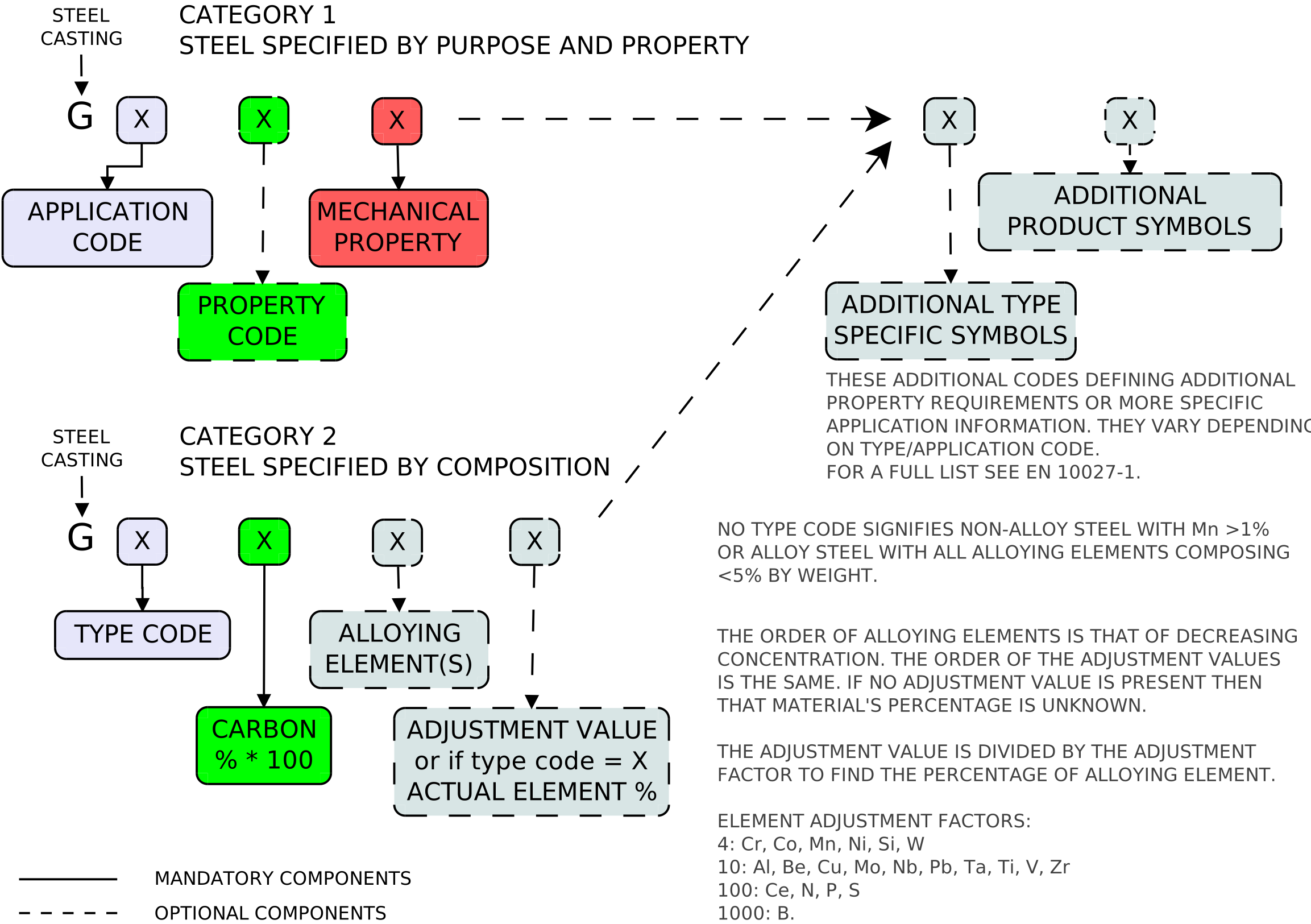
Classification system
Steel grades are grades used to classify various steels by their composition and physical properties. Steel grades have been developed by a number of standards organizations.
Steel grades standards by country
- For alloys in general (including steel), unified numbering system (UNS) of ASTM International and the Society of Automotive Engineers (SAE).
- American steel grades : AISI/SAE steel grades standard
- British Standards
- International Organization for Standardization ISO/TS 4949:2016
- European standards – EN 10027
- Japanese steel grades : Japanese Industrial Standards (JIS) standard and NK standard
- Germany steel grades : DIN standard
- China steel grades : GB standard
- Czech steel grades : ČSN standard
- Russia steel grades : GOST standard
- Spain steel grades : UNE standard
- France steel grades : AFNOR standard
- Italy steel grades : UNI standard
- Sweden steel grades : SIS standard
- Norway steel grades : DNV standard
Note that an increasing number of national European standards (DIN, AFNOR, UNE, UNI, etc.) and UK standards are being withdrawn and replaced by European Standards (EN). This task is carried out by the Comité Européen de Normalisation (CEN) (European Committee for Standardization).
European standard steel grades
European standard steel grade names fall into two categories:
- Steel specified by purpose of use and mechanical properties.
- Steel specified by chemical composition.
The inclusion of a letter 'G' before the code indicates the steel is specified in the form of a casting.
Category 1: Steel specified by purpose of use and mechanical properties
Basic grade designations for category 1 steels consist of a single letter (designating application) then a number signifying the mechanical property (often yield strength) dictated in the standard for that application designation. For some application designations another letter is included before the property value, this number is used to indicate any special requirements or conditions. These additional letters and values depend entirely on the application of the steel and are specified in the standard and far too numerous to mention here.
The next set of 3 digits gives the steel's minimum yield strength. So S355 has a minimum yield strength of 355 MPa for the smallest thickness range covered by the relevant standard – i.e. EN10025.
Below is a table indicating the most common application codes.
| Application symbol | Meaning | Mechanical Property | Details | |
|---|---|---|---|---|
| S | Structural steel | Minimum Yield Strength | ||
| P | Steel for pressure lines and vessels | Minimum Yield Strength | ||
| L | Steel for pipe and tube | Minimum Yield Strength | ||
| E | Engineering steels | Minimum Yield Strength | ||
| B | Steel for reinforced concrete | Characteristic Yield Case | ||
| R | Steel for rail use | Minimum Yield Case | ||
| H | High Tensile Strength Flat products | Minimum Yield Case | If followed by T then the given mechanical property is minimum tensile strength | |
| D | Flat Products for Cold Forming | Followed by C, D or X and two numbers characterising steel | ||
| T | Tinmill Products | Nominal Yield Case | ||
| M | Electrical Steel | Number = 100 × specific loss in W/kg |
Additional symbols
In addition to the above category codes there are symbols that can be added to the grade code to identify any additional compositional requirements, delivery conditions, mechanical properties, &c. These values depend solely on the type/application code given in the first part of the code and are so numerous as to be impossible to indicate here. Additional symbols are separated from the main code by the plus sign (+).
The most common additional symbols are the impact and temperature codes for structural steels, category 1 - Sxxx.
| Impact Resistance | Temperature | Impact | |||
|---|---|---|---|---|---|
| code | Testing | ||||
| strength | Temperature | ||||
| code | Testing | ||||
| temperature | |||||
| J | 27 J | R | Room temperature | ||
| K | 40 J | 0 | 0 °C | ||
| L | 60 J | 2 | -20 °C | ||
| 3 | -30 °C | ||||
| 4 | -40 °C | ||||
| 5 | -50 °C | ||||
| 6 | -60 °C |
Example : S355J2
Delivery condition codes are also relatively common, the most common being:
| Code | Condition |
|---|---|
| A | Annealed |
| QT | Quenched and tempered |
| N | Normalised |
| SR | Stress relieved |
| C | Cold worked |
| U | Untreated |
| G | Deoxidated |
Example : S355J2+N
Electrical steel
Electrical steel type of product letters (bold are most recent version 2016):
| Code | Maximum specific loss | Type of product |
|---|---|---|
| **A** | 1.5 T @50 Hz | non oriented |
| D (formerly B) | " | non-alloy semi-finished (not finally annealed) |
| E | " | alloy semi-finished (not finally annealed) |
| **K** (=D+E) | " | non-alloy and alloy electrical steel sheet/strip in the semi-processed state |
| N | " | for normal grain oriented products |
| **P** | 1.7 T @50 Hz | high permeability grain oriented |
| **S** | " | conventional grain oriented |
Standard per steel name
According to EN 10027-1
| Application | Mechanical | additional symbol | Standard |
|---|---|---|---|
| S | 235 | JR | EN 10025-2 |
| 355 | JR | EN 10025-2 | |
| J0 | EN 10025-2 | ||
| J2 | EN 10025-2 | ||
| K2 | EN 10025-2 | ||
| N | EN 10025-3 | ||
| NL | EN 10025-3 | ||
| 450 | J0 | EN 10025-2 | |
| P | 265 | GH | EN 10028-2 |
| NB | EN 10120 | ||
| 355 | NH | EN 10028-3 | |
| M | EN 10028-5 | ||
| ML1 | EN 10028-5 | ||
| Q | EN 10028-6 |
Category 2: Steel specified by chemical composition
In addition to the descriptive steel grade naming system indicated above, within EN 10027-2 is defined a system for creating unique steel grade numbers. While less descriptive and intuitive than the grand names they are easier to tabulate and use in data processing applications.
The number is in the following format: x.yyzz(zz) Where x is the material type (only 1 is specified so far), yy is the steel group number (specified in EN10027-2) and zz(zz) is a sequential number designated by the certifying body, the number in brackets being unused but reserved for later use.
The steel groups are indicated below:
| Code | Type | **Non-alloy steels** | **Alloy steels** |
|---|---|---|---|
| 00 & 90 | Basic steels | ||
| 0x & 9x | Quality steels | ||
| 1x | Special steels | ||
| 2x | Tool steels | ||
| 3x | Miscellaneous steels | ||
| 4x | Stainless and heat resistant steels | ||
| 5x – 8x | Structural, pressure vessel and engineering steels | ||
| 08 & 98 | Special physical properties | ||
| 09 & 99 | Other purpose steels |
The current certification body is the VDEh in Düsseldorf, Germany.
Comparisons
Below is a table comparing steel grades from different grading systems.
| EN steel number | |||||||||||||
|---|---|---|---|---|---|---|---|---|---|---|---|---|---|
| (Europe) | EN steel name | ||||||||||||
| (Europe) | ASTM grade | ||||||||||||
| (USA) | AISI/SAE grade | ||||||||||||
| (USA) | UNS | ||||||||||||
| (USA) | DIN | ||||||||||||
| (Germany) | BS | ||||||||||||
| (UK) | UNI | ||||||||||||
| (Italy) | JIS | ||||||||||||
| (Japan) | Carbon steels | Alloy steels | Stainless steels | Tool steels | |||||||||
| 1.1141 | |||||||||||||
| 1.0401 | |||||||||||||
| 1.0453 | C15D | ||||||||||||
| C18D | 1010 | ||||||||||||
| 1018 | CK15 | ||||||||||||
| C15 | |||||||||||||
| C16.8 | 040A15 | ||||||||||||
| 080M15 | |||||||||||||
| 080A15 | |||||||||||||
| EN3B | C15 | ||||||||||||
| C16 | |||||||||||||
| 1C15 | S12C | ||||||||||||
| S15 | |||||||||||||
| S15CK | |||||||||||||
| S15C | |||||||||||||
| 1.0503 | |||||||||||||
| 1.1191 | |||||||||||||
| 1.1193 | |||||||||||||
| 1.1194 | C45 | 1045 | C45 | ||||||||||
| CK45 | |||||||||||||
| CF45 | |||||||||||||
| CQ45 | 060A47 | ||||||||||||
| 080A46 | |||||||||||||
| 080M46 | C45 | ||||||||||||
| 1C45 | |||||||||||||
| C46 | |||||||||||||
| C43 | S45C | ||||||||||||
| S48C | |||||||||||||
| 1.0726 | |||||||||||||
| 1.0727 | 35S20 | ||||||||||||
| 45S20 | 1140/1146 | 35S20 | |||||||||||
| 45S20 | 212M40 | ||||||||||||
| En8M | |||||||||||||
| 1.0715 | |||||||||||||
| 1.0736 | 11SMn37 | 1215 | 9SMn28 | ||||||||||
| 9SMn36 | 230M07 | ||||||||||||
| En1A | CF9SMn28 | ||||||||||||
| CF9SMn36 | SUM 25 | ||||||||||||
| SUM 22 | |||||||||||||
| 1.0718 | |||||||||||||
| 1.0737 | 11SMnPb30 | ||||||||||||
| 11SMnPb37 | 12L14 | 9SMnPb28 | |||||||||||
| 9SMnPb36 | 230M07 Leaded | ||||||||||||
| En1B Leaded | CF9SMnPb29 | ||||||||||||
| CF9SMnPb36 | SUM 22 | ||||||||||||
| SUM 23 | |||||||||||||
| SUM 24 | |||||||||||||
| 1.1555 | C120U | C125W | BW1C | C120KU | SK2 | ||||||||
| 1.7218 | 4130 | 25CrMo4 | |||||||||||
| GS-25CrMo4 | 708A30 | ||||||||||||
| CDS110 | 25CrMo4 (KB) | ||||||||||||
| 30CrMo4 | SCM 420 | ||||||||||||
| SCM 430 | |||||||||||||
| SCCrM1 | |||||||||||||
| 1.7223 | |||||||||||||
| 1.7225 | |||||||||||||
| 1.7227 | |||||||||||||
| 1.3563 | 42CrMo4 | 4140/4142 | 41CrMo4 | ||||||||||
| 42CrMo4 | |||||||||||||
| 42CrMoS4 | |||||||||||||
| 43CrMo4 | 708M40 | ||||||||||||
| 708A42 | |||||||||||||
| 709M40 | |||||||||||||
| En19 | |||||||||||||
| En19C | 41CrMo4 | ||||||||||||
| 38CrMo4 (KB) | |||||||||||||
| G40 CrMo4 | |||||||||||||
| 42CrMo4 | SCM 440 | ||||||||||||
| SCM 440H | |||||||||||||
| SNB 7 | |||||||||||||
| SCM 4M | |||||||||||||
| SCM 4 | |||||||||||||
| 1.6582 | |||||||||||||
| 1.6562 | 34CrNiMo6 | 4340 | 34CrNiMo6 | ||||||||||
| 40NiCrMo8-4 | 817M40 | ||||||||||||
| En24 | 35NiCrMo6 (KB) | ||||||||||||
| 40NiCrMo7 (KB) | SNCM 447 | ||||||||||||
| SNB24-1-5 | |||||||||||||
| 1.6543 | |||||||||||||
| 1.6523 | 20NiCrMo2-2 | 8620 | 21NiCrMo22 | ||||||||||
| 21NiCrMo2 | 805A20 | ||||||||||||
| 805M20 | 20NiCrMo2 | SNCM 200 (H) | |||||||||||
| 1.5415 | 16Mo3 | A204 A/B/C | K12822 | ||||||||||
| K12320 | |||||||||||||
| K12020 | |||||||||||||
| K11820 | 15Mo3 | 1503-243B | |||||||||||
| 240 | |||||||||||||
| 243 | 15Mo3 | ||||||||||||
| 16Mo3 | STBA12 | ||||||||||||
| 1.4310 | X10CrNi18-8 | 301 | S30100 | ||||||||||
| 1.4318 | X2CrNiN18-7 | 301LN | |||||||||||
| 1.4305 | X8CrNiS18-9 | 303 | S30300 | X10CrNiS18-9 | 303S 31 | ||||||||
| En58M | X10CrNiS18-09 | SUS 303 | |||||||||||
| 1.4301 | X2CrNi19-11 | ||||||||||||
| X2CrNi18-10 | 304 | S30400 | X5CrNi18-9 | ||||||||||
| X5CrNi18-10 | |||||||||||||
| XCrNi19-9 | 304S 15 | ||||||||||||
| 304S 16 | |||||||||||||
| 304S 18 | |||||||||||||
| 304S 25 | |||||||||||||
| En58E | X5CrNi18-10 | SUS 304 | |||||||||||
| SUS 304-CSP | |||||||||||||
| 1.4306 | X2CrNi19-11 | 304L | S30403 | 304S 11 | SUS304L | ||||||||
| 1.4311 | X2CrNiN18-10 | 304LN | S30453 | ||||||||||
| 1.4948 | X6CrNi18-11 | 304H | S30409 | ||||||||||
| 1.4303 | X5CrNi18-12 | 305 | S30500 | ||||||||||
| 1.4401 | |||||||||||||
| 1.4436 | X5CrNiMo17-12-2 | ||||||||||||
| X5CrNiMo18-14-3 | url=https://powder.samaterials.com/stainless-steel-powder-301-vs-304-vs-316.html | title=Stainless Steel Powder: 301 vs. 304 vs. 316 | website=Stanford Advanced Materials | access-date=Sep 7, 2024}} | S31600 | X5CrNiMo17 12 2 | |||||||
| X5CrNiMo17 13 3 | |||||||||||||
| X5CrNiMo 19 11 | |||||||||||||
| X5CrNiMo 18 11 | 316S 29 | ||||||||||||
| 316S 31 | |||||||||||||
| 316S 33 | |||||||||||||
| En58J | X5CrNiMo17 12 | ||||||||||||
| X5CrNiMo17 13 | |||||||||||||
| X8CrNiMo17 13 | SUS 316 | ||||||||||||
| SUS316TP | |||||||||||||
| 1.4404 | X2CrNiMo17-12-2 | 316L | S31603 | 316S 11 | SUS316L | ||||||||
| 1.4406 | |||||||||||||
| 1.4429 | X2CrNiMoN17-12-2 | ||||||||||||
| X2CrNiMoN17-13-3 | 316LN | S31653 | |||||||||||
| 1.4462 | X2CrNiMoN22.5.3 | S31803 | X2CrNiMoN22.5.3 | ||||||||||
| 1.4571 | 316Ti | S31635 | X6CrNiMoTi17-12 | 320S 33 | |||||||||
| 1.4438 | X2CrNiMo18-15-4 | 317L | S31703 | ||||||||||
| 1.4541 | 321 | S32100 | X6CrNiTi18-10 | 321S 31 | SUS321 | ||||||||
| 1.4848 | GX40CrNiSi25-20 | A351 HK40 | J94204 | SEW 595 GX40CrNiSi25-20 | 310C40 | SCH22 | |||||||
| 1.4859 | GX10NiCrSiNb32-20 | N08151 | GX10NiCrSiNb32-20 | ||||||||||
| 1.4878 | X12CrNiTi18-9 | ||||||||||||
| X8CrNiTi18-10 | 321H | S32109 | |||||||||||
| 1.4906 | X7CrNiNb18-10 | 347H | S34709 | ||||||||||
| 1.4512 | X6CrTi12 | 409 | S40900 | SUH409 | |||||||||
| 410 | S41000 | ||||||||||||
| 1.4016 | 430 | S43000 | X6Cr17 | 430S 17 | SUS430 | ||||||||
| 440A | S44002 | ||||||||||||
| 1.4112 | 440B | S44003 | |||||||||||
| 1.4125 | [440C](440c) | S44004 | X105CrMo17 | SUS440C | |||||||||
| 1.4104 | 430F | S44020 | X14CrMoS17 | SUS430F | |||||||||
| 1.4057 | X17CrNi16-2 | 431 X | S43100 | X16CrNi16 | 431S 29 | SUS431 | |||||||
| 1.5423 | 16Mo5 | A335 P1 | 4520 | ||||||||||
| 4419H | |||||||||||||
| 4419 | K11522 | 16Mo5 | STPA12 | ||||||||||
| 1.7715 | 14MoV6-3 | A335 P2 | K11547 | 14MoV6-3 | 660 | STPA20 | |||||||
| 1.7335 | |||||||||||||
| 1.7338 | 13CrMo4-5 | ||||||||||||
| 10CrMo5-5 | A335 P11 | K11597 | STPA23 | ||||||||||
| 1.7375 | |||||||||||||
| 1.7380 | |||||||||||||
| 1.7383 | 10CrMo9-10 | ||||||||||||
| 11CrMo9-10 | |||||||||||||
| 12CrMo9-10 | A335 P22 | K21590 | 17175 10CrMo910 | STPA24 | |||||||||
| 1.7362 | |||||||||||||
| 1.7366 | X11CrMo5 | ||||||||||||
| X12CrMo5 | |||||||||||||
| 12CrMo19-5 | A335 P5 | 501 | |||||||||||
| 502 | K41545 | ||||||||||||
| S50100 | |||||||||||||
| S50200 | STPA25 | ||||||||||||
| 1.7386 | X11CrMo9-1 | ||||||||||||
| X12CrMo9-1 | A335 P9 | 503 | S50400 | ||||||||||
| S50488 | |||||||||||||
| K90941 | STPA26 | ||||||||||||
| 1.4903 | X10CrMoVNbN9-1 | A335 P91 | K91560 | X10CrMoVNbN9-1 | |||||||||
| 1.4905 | |||||||||||||
| 1.4906 | X11CrMoWVNb9-1-1 | ||||||||||||
| X12CrMoWVNbN10-1-1 | A335 P92 | K92460 | X11CrMoWVNb9-1-1 | ||||||||||
| X12CrMoWVNbN10-1-1 | |||||||||||||
| 1.4539 | X1NiCrMoCu25-20-5 | 904L | N08904 | ||||||||||
| 1.4547 | X1CrNiMoCuN20-18-7 | S31254 | |||||||||||
| 1.4565 | NIT50 | S20910 | |||||||||||
| NIT60 | S21800 | ||||||||||||
| 1.2363 | X100CrMoV5 | A-2 | T30102 | X100CrMoV51 | BA 2 | X100CrMoV5-1 KU | SKD 12 | ||||||
| A-3 | T30103 | ||||||||||||
| A-4 | T30104 | ||||||||||||
| A-6 | T30106 | ||||||||||||
| A-7 | T30107 | ||||||||||||
| A-8 | T30108 | ||||||||||||
| A-9 | T30109 | ||||||||||||
| 1.2365 | X32CrMoV3-3 | ||||||||||||
| 32CrMoV12-28 | H10 | T20810 | X32CrMoV3-3 | ||||||||||
| 32CrMoV12-28 | SKD 7 | ||||||||||||
| 1.2379 | X153CrMoV12 | D-2 | X153CrMoV12-1 | BD 2 | X155CrVMo12-1 | SKD 11 | |||||||
| 1.2510 | O-1 | 100MnCrW4 | Bo 1 | 95MnWCr-5 KU |
American Petroleum Institute (API) steel grades
The American Petroleum Institute has a standardized steel grading system for various properties of steel composites.
Color coding
In order to clearly distinguish the steel grade, tubing, casing and its coupling should be painted with color codes respectively. Color bands should be painted on tubing and casing body longer than 600mm to either end. The whole outer-body of the coupling needs to be painted color and then color codes.
| Steel Grade | Coupling | Tubular Body |
|---|---|---|
| **API Tubing and Casing** | H40 | None |
| J55 | all green. | one green band |
| K55 | all green | two green bands |
| N80-1 | all red | one red band |
| N80-Q | all red + one green band | one red band + one green band |
| L80-1 | all red + one brown band | one red band + one brown band |
| L80-9Cr | colorless + two yellow bands | one red band + one brown band + two yellow bands |
| L80-13Cr | colorless + one yellow band | one red band + one brown band + one yellow band |
| C90-1 | all purple | one purple band |
| T95-1 | all silver | one silver band |
| C110 | all white + two brown bands | one white band + two brown bands |
| P110 | all white | one white band |
| Q125 | all orange | one orange band |
API 5B and 5CT provide various steel grades and color codes of each grade, with general information of casing and tubing.
References
Notes
Bibliography
References
- "EN 10027". European Committee for Standardization.
- "EN 10027 Steel Names and their Meaning".
- "Designation systems for steels".
- (2016). "Handbook of Comparative World Steel Standards, 5th Edition".
- "Standards comparison".
- Oberg, pp. 411-412.
- (16 May 2022). "1045 Steel".
- "Stainless Steel Powder: 301 vs. 304 vs. 316".
- "Chronifer M-15 X (431 X) steel developed by L. Klein SA".
- "AISI A2". Efunda.
- "AISI A3". Efunda.
- "AISI A4". Efunda.
- "AISI A6". Efunda.
- "AISI A7". Efunda.
- "AISI A8". Efunda.
- "AISI A9". Efunda.
- "API Steel Grade for Casing & Tubing".
This article was imported from Wikipedia and is available under the Creative Commons Attribution-ShareAlike 4.0 License. Content has been adapted to SurfDoc format. Original contributors can be found on the article history page.
Ask Mako anything about Steel grades — get instant answers, deeper analysis, and related topics.
Research with MakoFree with your Surf account
Create a free account to save articles, ask Mako questions, and organize your research.
Sign up freeThis content may have been generated or modified by AI. CloudSurf Software LLC is not responsible for the accuracy, completeness, or reliability of AI-generated content. Always verify important information from primary sources.
Report