From Surf Wiki (app.surf) — the open knowledge base
Squire
Shield- or armour-bearer of a knight
Shield- or armour-bearer of a knight
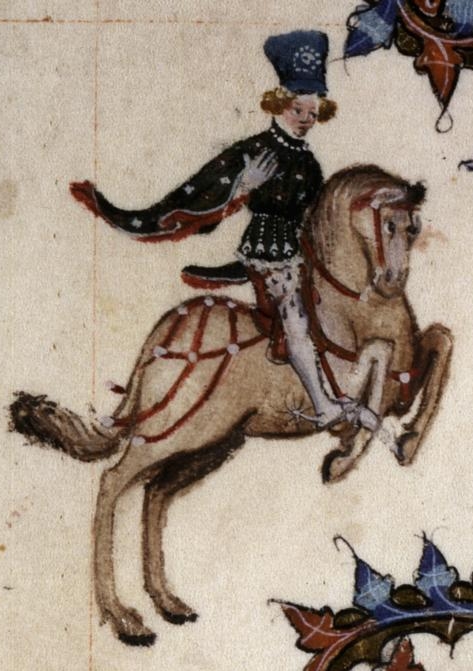
In the Middle Ages, a squire was the shield- or armour-bearer of a knight. Boys served a knight as an attendant, doing simple but important tasks, such as saddling a horse and caring for the knight's weapons and armour.
Terminology
Squire is a shortened version of the word esquire, from the Anglo-French esquier ("shield bearer"). Other terms include scutifer and the Latin armiger ("arms bearer").
Use of the term evolved over time. Initially, a squire could be a knight's servant that fought with his lord. It could also refer to sub-knightly Men-at-Arms and was used interchangeably with valet. Over time it referred to a broad social class of men, just below the rank of knight. Eventually, a lord of the manor might come to be known as a "squire".
Duties
A squire was typically a young boy, training to become a knight. A boy became a page at the age of 7, then a squire at age 14. Squires were the second step to becoming a knight, after having served as a page. A squire was responsible for taking care of the horse and arms of his knight. He was to take care of the knight’s armor, ensuring it was well-maintained, cleaned, and ready for battle. This also included helping the knight put on his armor. The squire was also responsible for grooming and saddling the knight’s horses. Squires would accompany their knights into battle. Outside of battle, a squire would serve his lord by making his bed, waiting on him during meals, and carving the knight's meat. A lord with multiple squires would give each squire a specific role such as squire of the chamber.
Many squires were hired servants with no known pedigree. Despite being a servant, it was a high status job and could serve as training for future knights.
While many squires were young men who would eventually become knights, others were of too low a rank to become a knight. These squires often still owned a manor. Some squires who were capable of becoming knights remained squires, resulting in two classes of landholding squires. A third class of squire were squires based on employment, their lord providing their military equipment. All three classes were officially recognized by the tax law of 1379.
References
References
- "Definition of Squire".
- (2014). "Historians on Chaucer: The ‘General Prologue’ to the Canterbury Tales".
- "Squire".
- (1995). "Knights, Esquires and the Origins of Social Gradation in England". Transactions of the Royal Historical Society.
- (1995). "Knights, Esquires and the Origins of Social Gradation in England". Transactions of the Royal Historical Society.
- (2015-09-20). "Medieval Squire".
- "How did a boy get to be a knight? What was the training for becoming one?".
- "page {{!}} rank {{!}} Britannica".
- (1831). "The World Displayed, in Its History and Geography Embracing a History of the World from the Creation to the Present Day ... To which is Added an Outline of Modern Geography".
- "Squires: the Invisible Component in Medieval Armies".
- (2014). "Historians on Chaucer: The ‘General Prologue’ to the Canterbury Tales".
- (1995). "Knights, Esquires and the Origins of Social Gradation in England". Transactions of the Royal Historical Society.
- (2014). "Historians on Chaucer: The ‘General Prologue’ to the Canterbury Tales".
This article was imported from Wikipedia and is available under the Creative Commons Attribution-ShareAlike 4.0 License. Content has been adapted to SurfDoc format. Original contributors can be found on the article history page.
Ask Mako anything about Squire — get instant answers, deeper analysis, and related topics.
Research with MakoFree with your Surf account
Create a free account to save articles, ask Mako questions, and organize your research.
Sign up freeThis content may have been generated or modified by AI. CloudSurf Software LLC is not responsible for the accuracy, completeness, or reliability of AI-generated content. Always verify important information from primary sources.
Report