From Surf Wiki (app.surf) — the open knowledge base
Sprayer
Agricultural machine used in farms
Agricultural machine used in farms
A sprayer is a device used to spray a liquid, where sprayers are commonly used for projection of water, weed killers, crop performance materials, pest maintenance chemicals, as well as manufacturing and production line ingredients. In agriculture, a sprayer is a piece of equipment that is used to apply herbicides, pesticides, and fertilizers on agricultural crops. Sprayers range in size from man-portable units (typically backpacks with spray guns) to trailed sprayers that are connected to a tractor, to self-propelled units similar to tractors with boom mounts of 4 – up to 60 – in length depending on engineering design for tractor and land size.
Engineering
Sprayers are fully integrated, mechanical systems, meaning they are composed of various parts and components that work together to achieve the desired effect, in this case: the projection of the spray fluid. This can be as simple as a hand sprayer attached to a bottle that is pumped and primed by a spring-lever, tube, and vacuum-pressure; or as complex as a 150 foot reach boom sprayer with a list of system components that work together to deliver the spray fluid.
For more complex sprayers, such as agricultural sprayers, common system components include: the spray nozzle, sometimes with a spray gun, fluid tank, sprayer pump, pressure regulators, valves and gaskets, and fluid plumbing. The sprayer pump can be just as important as the sprayer type itself as there are many sprayer pump design types with various construction materials, inlet/outlet sizes, and performance specifications. Common sprayer pump types include diaphragm, centrifugal, and roller pumps.
File:Sprayer.png|A bottle with a hand-pumped sprayer File:1264 Rogator Spraying Corn.JPG|Self-propelled row-crop sprayer
Agricultural sprayers

There are a number of agriculture sprayers designed for spraying applications and designed to be versatile and suitable for various uses from spot applications, gardens, crops, row crops, crop trees, fruit, groves, vineyards, perimeter maintenance, livestock needs, weed control, pastures and rangeland. Self-propelled sprayers help farmers improve spraying efficiency and productivity while taking full advantage of every minute they have in the field. Examples of general sprayer types include:
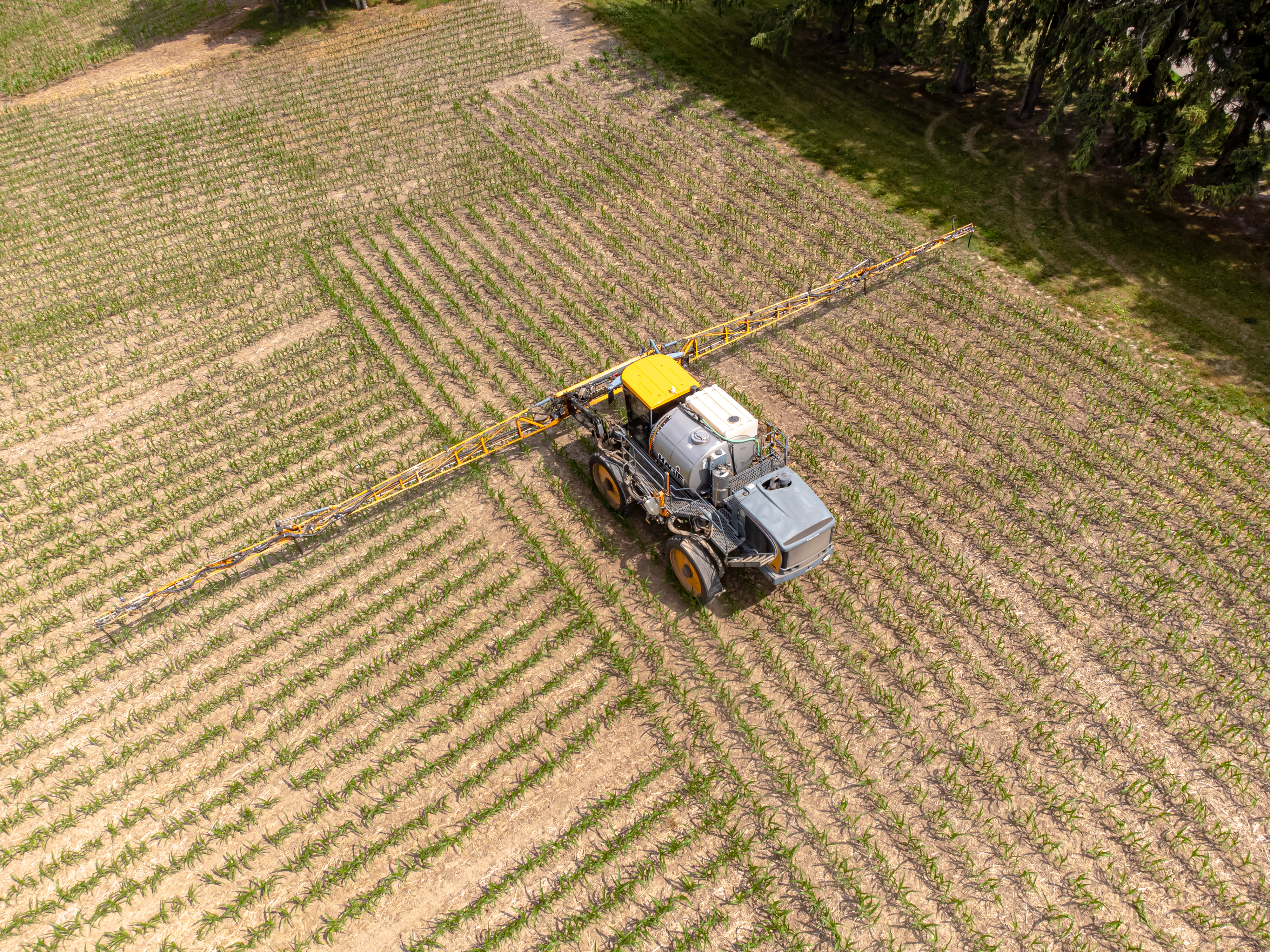
- Boom sprayer
- Boomless sprayer nozzle
- Mist sprayer
- Three-point hitch sprayer
- Truck-bed sprayer
- Towing-hitch sprayer
- UTV sprayer
- ATV sprayer
- Spot sprayer
- Backpack sprayer
References
References
- (2018-01-26). "Farm Sprayers Overview". Successful Farming.
- Grisso, Robert, Weaver, Mike. (2014). "Plumbing Systems of Agricultural Sprayers". Virginia Cooperative Extension.
- (2018-10-13). "Sprayer Pump Types, Costs, and Specifications". Sprayer Supplies.
- (2018-10-31). "Agriculture Sprayer Guide". Sprayer Supplies.
- (2019-08-28). "2020 Apache sprayers include enhanced design features, precision technology".
- (2018-10-15). "How to select the right sprayer pump". Ohio Farmer.
This article was imported from Wikipedia and is available under the Creative Commons Attribution-ShareAlike 4.0 License. Content has been adapted to SurfDoc format. Original contributors can be found on the article history page.
Ask Mako anything about Sprayer — get instant answers, deeper analysis, and related topics.
Research with MakoFree with your Surf account
Create a free account to save articles, ask Mako questions, and organize your research.
Sign up freeThis content may have been generated or modified by AI. CloudSurf Software LLC is not responsible for the accuracy, completeness, or reliability of AI-generated content. Always verify important information from primary sources.
Report