From Surf Wiki (app.surf) — the open knowledge base
Spotted-necked otter
Species of carnivore
Species of carnivore
The spotted-necked otter (Hydrictis maculicollis), or speckle-throated otter, is an otter native to sub-Saharan Africa.
Description
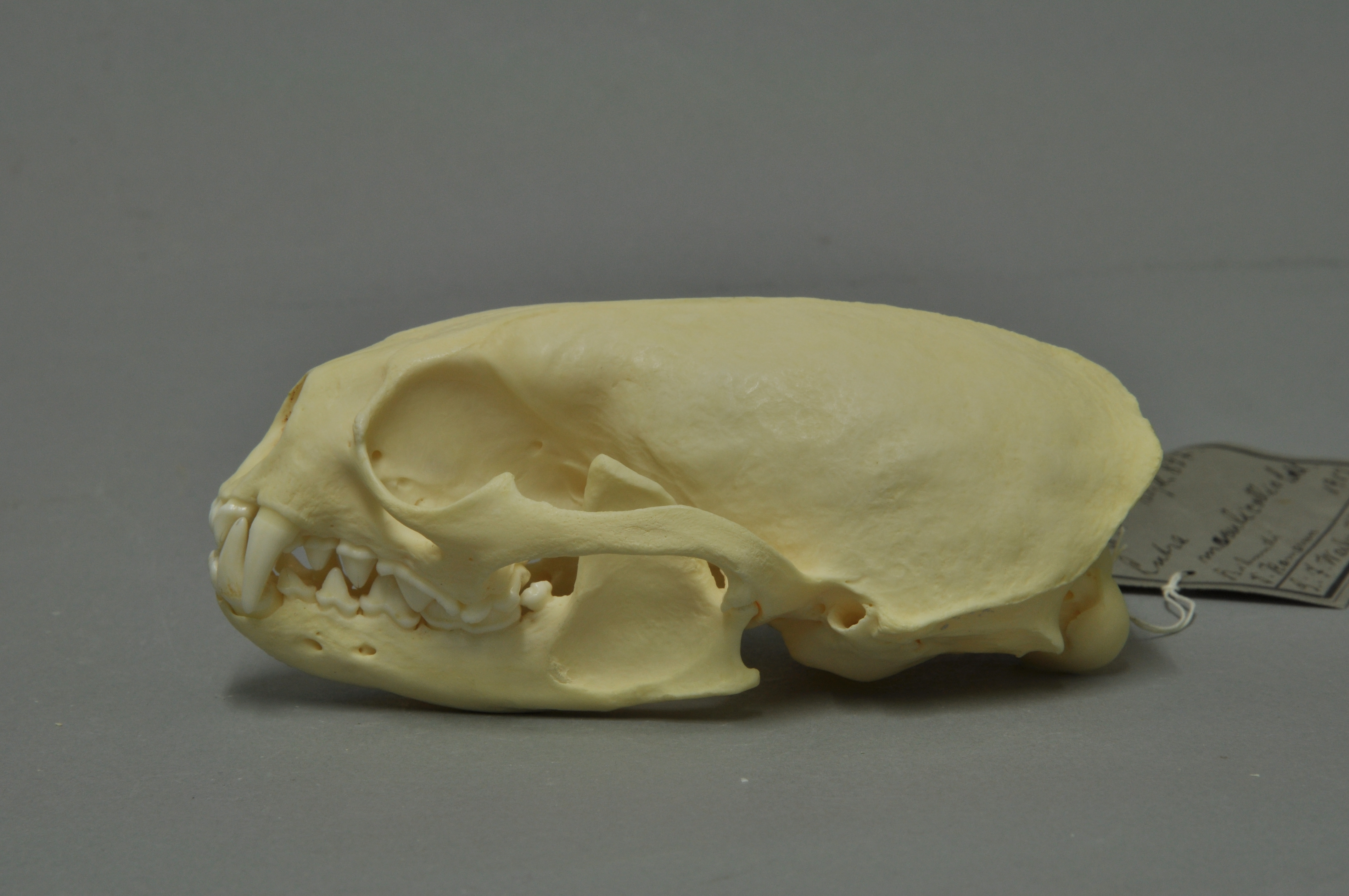
The spotted-necked otter is usually chocolate to reddish brown and marked with creamy or white blotches over the chest and throat. The head is broad with a short muzzle, small rounded ears, and a hairless nose pad. The teeth are adapted for consuming fish, with large sharp upper canine teeth, curved lower canines, and sharp carnassial teeth. The jaws are similarly adapted, with the mandibular fossa fitting so snugly into the condyle on the lower jaw that the latter cannot move sideways, making it easier to capture and hold fish. It is a relatively small species, with males measuring 71 to from nose to rump, and weighing 5.7 to, while females are 57 to and 3.0 to. The tail is long and muscular, measuring 39 to in both sexes. It is sleek and has webbed paws. Females have two pairs of teats, and while males have a large scrotum, the penis is hidden beneath the skin, to reduce drag while swimming.
Up to five subspecies have previously been identified, these most likely represent a natural variation in appearance between individuals, and no subspecies are currently recognised.
Distribution and habitat
The spotted-necked otter inhabits lakes and larger rivers throughout much of Africa south of 10°N. It is common in Lake Victoria and across Zambia, but is absent in the Zambezi below Victoria Falls, Zambia. It does not venture into salt water.
Behavior and ecology
The spotted-necked otter is very vocal, uttering high, thin whistles and rapid, shrill chatters. It sometimes lives in family groups, but appears to be social only under certain conditions. Males and females are separated for at least part of the year. They normally hunt alone, except when mothers are training their young, and are not territorial, sheltering through the night in short burrows, rock crevices, or patches of dense vegetation. On land, they travel mainly over regular paths, and rarely move more than 10 m from river or lake banks. Both mark these paths by "sprainting" sites, in which they habitually defecate and urinate.
The spotted-necked otter is diurnal and appears to hunt entirely by sight using short dives of less than 20 seconds each in clear water with good visibility. It carries larger prey ashore, but eats smaller prey while treading water.
The female bears a litter of up to three young after a gestation period around two months. The young are born blind and helpless, and the mother cares for them for almost a year.
Known predators of the spotted-necked otter include lions, crocodiles and African fish eagles.
Conservation
The spotted-necked otter is in decline, mostly due to habitat destruction and pollution of its clear-water habitats. It is hunted as bushmeat.
References
References
- {{MSW3 Wozencraft
- Reed-Smith, J.. (2015). "''Hydrictis maculicollis''".
- Larivière, S.. (2002). "''Lutra maculicollis''". Mammalian Species.
- (1992). "The Behavior Guide to African Mammals: Including Hoofed Mammals, Carnivores, Primates". University of California Press.
- Procter, J.. (1963). "A contribution to the natural history of the spotted-necked otter (''Lutra maculicollis'' Lichtenstein) in Tanganyika". East African Wildlife Journal.
- (1990). "Effects of changes in fish populations in Lake Victoria on the food of otters (''Lutra maculicollis'' Schinz and ''Aonyx capensis'' Lichtenstein)". African Journal of Ecology.
This article was imported from Wikipedia and is available under the Creative Commons Attribution-ShareAlike 4.0 License. Content has been adapted to SurfDoc format. Original contributors can be found on the article history page.
Ask Mako anything about Spotted-necked otter — get instant answers, deeper analysis, and related topics.
Research with MakoFree with your Surf account
Create a free account to save articles, ask Mako questions, and organize your research.
Sign up freeThis content may have been generated or modified by AI. CloudSurf Software LLC is not responsible for the accuracy, completeness, or reliability of AI-generated content. Always verify important information from primary sources.
Report