From Surf Wiki (app.surf) — the open knowledge base
Special administrative regions of China
Province-level autonomous subdivisions of the People's Republic of China
Province-level autonomous subdivisions of the People's Republic of China
| Field | Value | ||||
|---|---|---|---|---|---|
| conventional_long_name | Special administrative regions of the People's Republic of China | ||||
| image_flag | Flag of China.svg | ||||
| flag_caption | National flag of the People's Republic of China | ||||
| image_map | China-Special Administrative Regions.png | ||||
| map_caption | Hong Kong and Macau on the Pearl River Delta, | ||||
| South China | |||||
| other_symbol | [[File:Flag of Hong Kong.svg | border | 100px]] [[File:Flag of Macau.svg | border | 100px]] |
| Regional flags of Hong Kong and Macau | |||||
| languages | |||||
| languages_type | Official script | ||||
| government_type | One country, two systems | ||||
| leader_title1 | CCP General Secretary | ||||
| President of China | |||||
| leader_name1 | Xi Jinping | ||||
| leader_title2 | Premier of China | ||||
| leader_name2 | Li Qiang | ||||
| leader_title3 | Congress Chairman | ||||
| leader_name3 | Zhao Leji | ||||
| leader_title4 | Leader of the CCP Central Leading Group | ||||
| leader_name4 | Ding Xuexiang | ||||
| leader_title5 | Director of the Affairs Office | ||||
| leader_name5 | Xia Baolong | ||||
| leader_title6 | Chief Executive of Hong Kong | ||||
| leader_name6 | John Lee Ka-chiu | ||||
| leader_title7 | Chief Executive of Macau | ||||
| leader_name7 | Sam Hou Fai | ||||
| demonym | |||||
| membership_type | Special Administrative Regions | ||||
| membership | |||||
| population_estimate_year | 2014 | ||||
| population_estimate | 7,858,800 | ||||
| population_density_km2 | 6920 | ||||
| area_km2 | 2870.27 | ||||
| date_format | |||||
| currency | Hong Kong dollar (Hong Kong, Macau) | ||||
| Macanese pataca (Macau) | |||||
| footnotes | |||||
| official_languages | |||||
| drives_on | Left |
South China Regional flags of Hong Kong and Macau President of China Macanese pataca (Macau)
The special administrative regions (SAR) of the People's Republic of China are one of four types of province-level divisions of the People's Republic of China directly under the control of its Central People's Government (State Council). As a region, they possess the highest degree of autonomy from China's central government. However, despite the relative autonomy that the Central People's Government offers the special administrative regions, the National People's Congress and its Standing Committee remain capable of enforcing laws for the special administrative regions.
The legal basis for the establishment of SAR's, unlike the other administrative divisions of China, is provided for by Article 31, rather than Article 30, of the Constitution of China of 1982. Article 31 reads: "The state may establish special administrative regions when necessary. The systems to be instituted in special administrative regions shall be prescribed by law enacted by the National People's Congress in the light of the specific conditions".
At present, there are two SARs established by the Constitution: Hong Kong and Macau. These former British and Portuguese territories were transferred to China in 1997 and 1999 respectively, following the Sino-British and Sino-Portuguese Joint Declarations signed in 1984 and 1987, respectively. Pursuant to their Joint Declarations, which are binding inter-state treaties registered with the United Nations, and their Basic laws, the Chinese SARs "shall enjoy a high degree of autonomy". Generally, the two SARs are not considered to constitute a part of mainland China, by both SAR and mainland Chinese authorities.
The provision to establish special administrative regions appeared in the constitution in 1982, in anticipation of the talks with the United Kingdom over the question of the sovereignty of Hong Kong. It was envisioned as the model for the eventual unification with Taiwan and other islands, where the Republic of China has resided since 1949.
Under the one country, two systems principle, the Chinese Central Government is responsible for the diplomatic, military and other state-level affairs of the two SARs. Both two SARs continue to possess their own multi-party legislatures, legal systems, police forces, separate customs territory, immigration policies, left-hand traffic, official languages, academic and educational systems, representation on certain international bodies and representation in international competitions, and other aspects that fall within the autonomous level.
Special administrative regions should not be confused with special economic zones, which are areas in which special economic laws apply to promote trade and investments. The Wolong Special Administrative Region in Sichuan province is a nature reserve and not a political division.
List of special administrative regions of China
There are currently two special administrative regions established according to Article 31 of the Chinese Constitution. For the Wolong Special Administrative Region in Sichuan Province, please see the section Wolong below.
| Name | Chinese (T) / (S) | Yale | Pinyin | Postal map | Abbreviation and GB | Population | Area km2 | ISO | ISO:CN | Admin. Division |
|---|---|---|---|---|---|---|---|---|---|---|
| Hong Kong | 香港 | Hēunggóng | Xiānggǎng | Hongkong | 港 (Gǎng), HK, HKSAR | 7,184,000 | 1,104.4 | `HK` | `CN-HK` | List (18 districts) |
| Macau | 澳門 / 澳门 | Oumùhn | Àomén | Macao | 澳 (Ào), MO, MC, MSAR, RAEM | 614,500 | 31.3 | `MO` | `CN-MO` | List (8 freguesias) |
Characteristics
The two special administrative regions of Hong Kong and Macau (created in 1997 and 1999 respectively) each have a codified constitution called Basic Law. The law provides the regions with a high degree of autonomy, a separate political system, and a capitalist economy under the principle of "one country, two systems" proposed by Deng Xiaoping.
High degree of autonomy
Currently, the two SARs of Hong Kong and Macau are responsible for all affairs except those regarding diplomatic relations and national defence. Consequently, the National People's Congress authorises the SAR to exercise a high degree of autonomy and enjoy executive, legislative and independent judicial powers, and each with their own Courts of Final Appeal.
Currency
- Renminbi: The currency is commonly abbreviated as CNY¥. Adopt a stable exchange rate.
- Hong Kong dollar: The currency is commonly abbreviated as HK$. The exchange rate is pegged to the US dollar.
- Macanese pataca: The currency is commonly abbreviated as MOP$. The exchange rate is pegged to the Hong Kong dollar.
External affairs
Special administrative regions are empowered to contract a wide range of agreements with other countries and territories such as mutual abolition of visa requirement, mutual legal aid, air services, extradition, handling of double taxation and others, with no Chinese government involvement. However, in some diplomatic talks involving an SAR, the SAR concerned may choose to send officials to be part of the Chinese delegation. For example, when former Director of Health of Hong Kong Margaret Chan became the World Health Organization (WHO) Director-General, she served as a delegate from the People's Republic of China to the WHO.
At the same time they are members of various international organisations such as WTO, APEC, etc.
Hong Kong
- Hong Kong participates in 41 intergovernmental international organisations with countries as participating units.
- Hong Kong participates in 54 intergovernmental international organisations that do not use countries as their participating units.
Macao
- Macau participates in 19 intergovernmental international organisations with countries as participating units.
- Macau participates in 30 intergovernmental international organisations that do not use countries as their participating units.
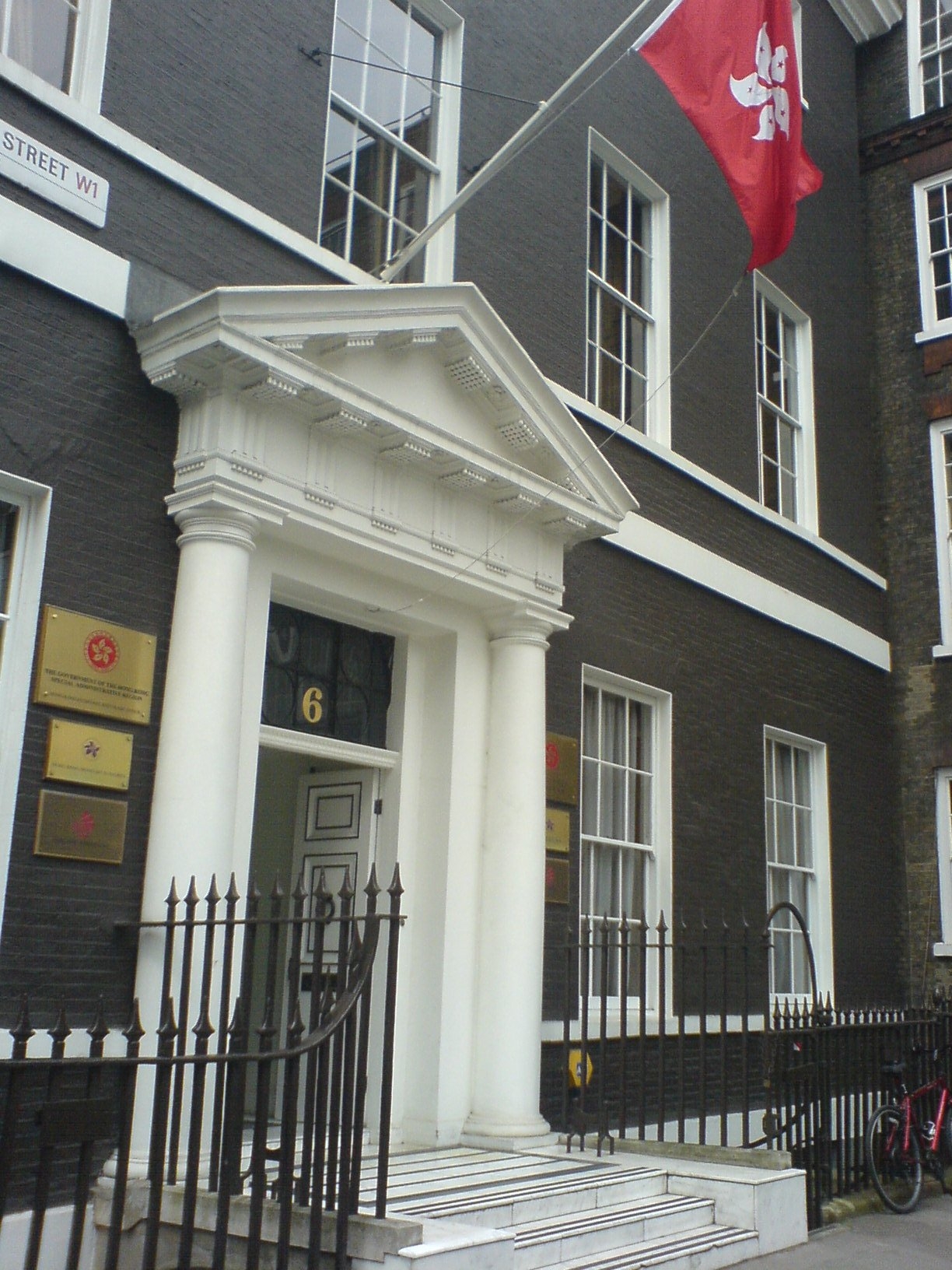
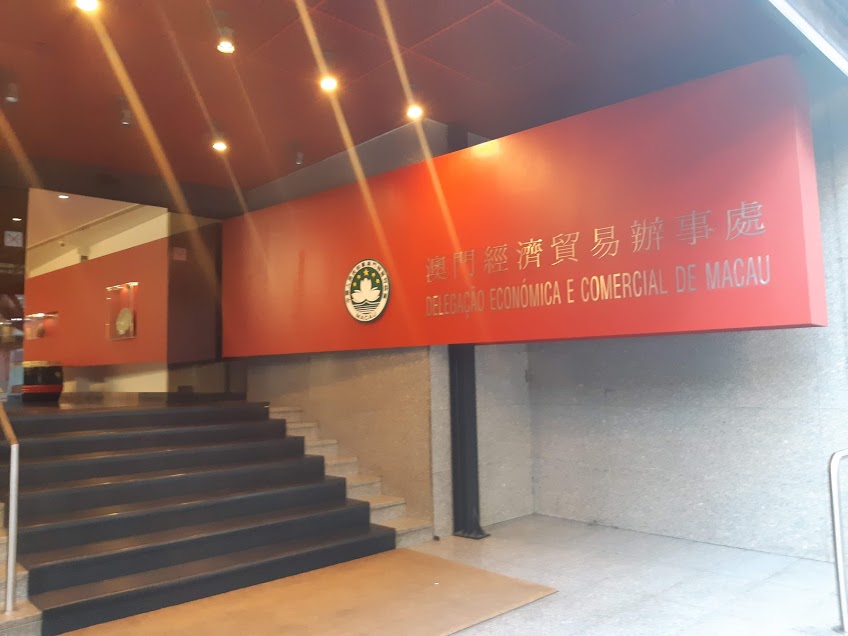
The Government of Hong Kong and Government of Macao have established Hong Kong Economic and Trade Offices (HKETOs) and Delegações Económicas e Comerciais de Macau (DECMs) respectively in some countries, as well as in the Greater China Region. HKETOs serve as a quasi-interests section in favour of Hong Kong. DECMs serve as a quasi-interests section in favour of Macao. For regions with no HKETOs and DECMs, Chinese diplomatic missions take charge of protecting Hong Kong-related and Macau-related interests.
Some countries which have a diplomatic relationship with the central Chinese government maintain Consulate-General offices in Hong Kong and Macau.
Olympic Games
In sporting events such as the Olympic Games or Asian Games, the SARs may have their own independent teams. They participate under the respective names of "Hong Kong, China" and "Macau, China", and compete as different entities as they had done since they were under foreign rules, but both SARs are usually allowed to omit the term ", China" for informal use.
Defence and military
The People's Liberation Army is garrisoned in both SARs. PRC authorities have said the PLA will not be allowed to interfere with the local affairs of Hong Kong and Macau, and must abide by its laws. In 1988, scholar Chen Fang of the Academy of Military Science even tried to propose the "One military, two systems" concept to separate the defence function and public functions in the army. The PLA does not participate in the governance of the SAR but the SAR may request them for civil-military participation, in times of emergency such as natural disasters. Defence is the responsibility of the PRC government.
A 1996 draft PRC law banned People's Liberation Army–run businesses in Hong Kong, but loopholes allow them to operate while the profits are ploughed back into the military. There are many PLA-run corporations in Hong Kong. The PLA also have sizeable land holdings in Hong Kong worth billions of dollars.
Immigration, nationality, and passports
Each of the SARs issues passports on its own to its permanent residents who are concurrently Chinese (PRC) citizens, provided that one of the following conditions is satisfied:
- born in the SAR;
- born anywhere while either parent was a permanent resident of the SAR;
- resided continuously and legally for seven or more years in the SAR and therefore gained a right of abode in the SAR. The Hong Kong SAR passport is issued to Hong Kong permanent residents with Chinese citizenship, while the Macau Macau SAR passport is issued to Macau permanent residents with Chinese citizenship. Mainland residents with Hukou are ineligible for either and may only hold a Chinese passport, which grants comparatively weaker visa-free access: the Hong Kong SAR passport is granted visa-free access or visa-on-arrival access for 174 countries and territories, the Macau SAR passport is granted such for 141 countries and territories, while the Chinese passport is granted such for 81 countries and territories.
There are no laws prohibiting a person from holding permanent residency in both SARs. A person may also hold concurrently hold passports from both SARs provided that they have Chinese nationality and permanent residency in both.
Apart from affording the holder consular protection by the Ministry of Foreign Affairs, these passports also specify that the holder has right of abode in the issuing SAR.
The National People's Congress has also put each SAR in charge of administering the PRC's Nationality Law in its respective realms, namely naturalisation, renunciation and restoration of PRC nationality and issuance of proof of nationality.
Due to their colonial past, many inhabitants of the SARs hold some form of non-Chinese nationality (e.g. British National (Overseas) status, British citizenship, British Overseas citizenship or Portuguese citizenship). However, SAR residents who are Chinese descent have always been considered as Chinese citizens by the PRC authorities, an exception to this case is Macau, wherein residents of Chinese descent may choose Chinese or Portuguese nationality. Special interpretation of the Nationality Law, while not recognising dual nationality, has allowed Chinese citizens to keep their foreign "right of abode" and use travel documents issued by the foreign country. However, such travel documents cannot be used to travel to mainland China and persons concerned must use Home Return Permit. Therefore, master nationality rule applies so the holder may not enjoy consular protection while in China. Chinese citizens who also have foreign citizenship may declare a change of nationality at the Immigration Department of the respective SARs, and upon approval, would no longer be considered Chinese citizens.
SAR permanent residents who are not Chinese citizens (including stateless persons) are not eligible for SAR passports. Persons who hold a non-Chinese citizenship must obtain passports from foreign diplomatic missions which represents their countries of citizenship. For example, a Russian citizen who has acquired right of abode in Hong Kong and thus holds a Hong Kong Permanent Identity Card would not be considered a Chinese citizen and would continue to hold their Russian passport unless they obtain PRC nationality. For those who are stateless, each SAR may issue its own form of certificates of identity, e.g. Document of Identity, in lieu of national passports to the persons concerned. Chinese citizens who are non-permanent residents of two SARs are also ineligible for SAR passports but may obtain CIs just like stateless persons.
Comparisons
| Body | Hong Kong | Macau | China **(national level)** | Constitutional Document | Final Authority of | ||||||||||||||||||
|---|---|---|---|---|---|---|---|---|---|---|---|---|---|---|---|---|---|---|---|---|---|---|---|
| Constitutional Interpretation & Review | Supreme leader of State | Representative of State / Territory | Head of Government / Territory | Executive | Legislative | Judiciary | Legal Supervisory | ||||||||||||||||
| or Prosecution | Police | Military | Currency | Official Language(s) | Foreign relations | Principal Agency | |||||||||||||||||
| in Foreign Affairs | Citizenship | Proof of Residency | Passport | Passport Issuing Authorities | Customs | ||||||||||||||||||
| Hong Kong Basic Law (based on the Sino-British Joint Declaration, subordinate to the Chinese constitution) | Macao Basic Law (based on the Sino-Portuguese Joint Declaration, subordinate to the Chinese constitution) | Constitution of China | |||||||||||||||||||||
| NPC Standing Committee | NPC Standing Committee | NPC Standing Committee | |||||||||||||||||||||
| General Secretary of the Chinese Communist Party | General Secretary of the Chinese Communist Party | ||||||||||||||||||||||
| Chief Executive of Hong Kong | Chief Executive of Macau | President of China | |||||||||||||||||||||
| Chief Executive of Hong Kong | Chief Executive of Macau | Premier of China | |||||||||||||||||||||
| Executive Council of Hong Kong | Executive Council of Macau | State Council | |||||||||||||||||||||
| Legislative Council | Legislative Assembly | National People's Congress (NPC); | |||||||||||||||||||||
| NPC Standing Committee | |||||||||||||||||||||||
| Hong Kong Court of Final Appeal | Court of Final Appeal of Macau | Supreme People's Court | |||||||||||||||||||||
| Department of Justice | Procurator General | Supreme People's Procuratorate | |||||||||||||||||||||
| Hong Kong Police Force (part of Hong Kong Disciplined Services) | Public Security Police Force of Macau; | ||||||||||||||||||||||
| Directorate of Judiciary Police (zh) (parts of Macau Security Force) | People's Police (of Public Security, State Security, Justice, Court and Procuratorate systems); | ||||||||||||||||||||||
| People's Armed Police | |||||||||||||||||||||||
| PLA Hong Kong Garrison | PLA Macau Garrison | People's Liberation Army (PLA); | |||||||||||||||||||||
| People's Armed Police; | |||||||||||||||||||||||
| Militia | |||||||||||||||||||||||
| Hong Kong dollar | Macanese pataca | Renminbi (*Chinese yuan*) | |||||||||||||||||||||
| Chinese (traditional), (simplified), (Cantonese), (Mandarin), English | Chinese (traditional), (simplified), (Cantonese), (Mandarin), Portuguese | Standard Chinese (*Putonghua*) (simplified) | |||||||||||||||||||||
| *limited* under "Hong Kong, China" | *limited* under "Macau, China" | *full rights* | |||||||||||||||||||||
| Office of the Commissioner of the Ministry of Foreign Affairs of China in Hong Kong | Office of the Commissioner of the Ministry of Foreign Affairs of China in Macau | Ministry of Foreign Affairs | |||||||||||||||||||||
| Chinese citizenship | Chinese citizenship | Chinese citizenship | |||||||||||||||||||||
| Right of abode | Right of abode | Hukou | |||||||||||||||||||||
| Hong Kong SAR passport | Macau SAR passport | Chinese passport | |||||||||||||||||||||
| Immigration Department | Identification Department (zh) | National Immigration Administration; | |||||||||||||||||||||
| Ministry of Foreign Affairs; | |||||||||||||||||||||||
| Customs and Excise Department | Macao Customs Service (zh) | General Administration of Customs |
Offer to Taiwan and other ROC-controlled areas
The status of a special administrative region for Taiwan and other areas controlled by the Republic of China (ROC) was first proposed in 1981. The 1981 proposal was put forth by NPC chairman Ye Jianying called "Ye's nine points" (葉九條). A series of different offers have since appeared. On 25 June 1983 Deng Xiaoping appeared at Seton Hall University in the US to propose "Deng's six points" (鄧六條), which called for a "Taiwan Special Administrative Region" (台湾特別行政区). It was envisioned that after Taiwan's unification with the PRC as an SAR, the PRC would become the sole representative of China. Under this proposal, Taiwan would be guaranteed its own military, its own administrative and legislative powers, an independent judiciary and the right of adjudication, although it would not be considered a separate government of China.
In 2005 the Anti-Secession Law of the PRC was enacted. It promises the lands currently ruled by the authorities of Taiwan a high degree of autonomy, among other things. The PRC can also employ non-peaceful means and other necessary measures to defend its claims to sovereignty over the ROC's territories in the event of an outright declaration of independence by Taiwan (ROC).
In January 2019, the 40-year anniversary of a statement made by the PRC to Taiwan in 1979, Chinese Communist Party general secretary Xi Jinping outlined in a speech how the "one country, two systems" principle would be applied to Taiwan. Several major points from the speech include:
- Taiwan would be a special administrative region of China, and part of the PRC. The ROC would cease to exist.
- Taiwan's institutions would metamorphose into sub-national bodies.
- Taiwan's social system and economic lifestyle would be respected.
- Taiwan's private property rights, belief systems, and legitimate rights and interests would be safeguarded.
- The Taiwan issue should not be passed down from generation to generation (i.e. reunification should be done promptly).
- The reunification of Taiwan would lead to the great rejuvenation of the Chinese nation.
Wolong
The Wolong Special Administrative Region () is located in the southwest of Wenchuan County, Ngawa Tibetan and Qiang Autonomous Prefecture of Sichuan. It was formerly known as Wolong Special Administrative Region of Wenchuan County, Sichuan Province and was founded in March 1983 with approval of the State Council. It was given its current name and placed under Sichuan provincial government with administrative supervision by the provincial department of forestry. Its area supersedes Sichuan Wolong National Nature Reserve and its administrative office is the same as the Administrative Bureau of the State Forestry Administration for the reserve. It currently has a population of 5,343.
Despite its name, This is primarily because the Wolong Special Administrative Region was established with the approval of the State Council, rather than "by law enacted by the National People's Congress" as stipulated in Article 31 of the Constitution.
Defunct SARs
In the Republic of China (ROC) era between 1912 and 1949, the "special administrative regions" () were historically used to designate special areas by the Beiyang government, most of which were eventually converted into provinces by the Nationalist government in 1928. All were suspended or abolished after the end of the Chinese Civil War, with the establishment of the People's Republic of China (PRC) and the ROC government's retreat to Taiwan, but they continued to exist as provinces under ROC law. The regions were:
| Name | Chinese | Pinyin | Created | Became | |
|---|---|---|---|---|---|
| province | Current status | ||||
| Suiyuan | 綏遠 | Suíyuǎn | 1914 | 1928 | Part of Inner Mongolia |
| Chahar | 察哈尔 | Cháhā'ěr | 1914 | 1928 | Distributed into Inner Mongolia, Beijing and Hebei |
| Jehol | 熱河 | Rèhé | 1914 | 1928 | Distributed into Hebei, Liaoning and Inner Mongolia |
| Chwanpien | 川边 | Chuānbiān | 1914 | 1935 (as Xikang Province) | Western Sichuan and eastern Tibet Autonomous Region |
| Tungsheng | 東省 | Dōngshěng | 1924 | Land along the Chinese Eastern Railway, now part of Heilongjiang | |
| Weihai | 威海 | Wēihǎi | 1930 | Part of Shandong | |
| Hainan | 海南 | Hǎinán | 1944 | In preparation in 1949 | Hainan Province since 1988 |
Notes
References
References
- (12 August 2014). "Mid-year Population for 2014". [[Census and Statistics Department (Hong Kong)]].
- (11 August 2014). "Demographic Statistics for the 2nd Quarter 2014". Statistics and Census Service of the Government of Macau SAR.
- (29 June 2020). "China passes sweeping Hong Kong national security law". CNN.
- (15 June 2005). "Administrative divisions of the People's Republic of China (中华人民共和国行政区划; Zhōnghuá Rénmín Gònghéguó Xíngzhèng Qūhuà)".
- "Chapter II: Relationship between the Central Authorities and the Hong Kong Special Administrative Region, Article 12".
- "Chapter II Relationship between the Central Authorities and the Macau Special Administrative Region, Article 12".
- Lauterpacht, Elihu. Greenwood, C. J. [1999] (1999). International Law Reports Volume 114 of International Law Reports Set Complete set. Cambridge University Press, 1999. {{ISBN. 0521642442, 9780521642446. p 394.
- Ghai, Yash P. (2000). ''Autonomy and Ethnicity: Negotiating Competing Claims in Multi-Ethnic States''. Cambridge University Press. {{ISBN. 0521786428, 9780521786423. p 92.
- Article 12, Basic Law of Hong Kong and Article 12, Basic Law of Macau
- (13 February 2018). "Right side of road the only way to travel on Hong Kong-Zhuhai-Macau bridge".
- Zhang Wei-Bei. [2006] (2006). Hong Kong: the pearl made of British mastery and Chinese docile-diligence. Nova Publishers. {{ISBN. 1594546002, 9781594546006.
- Chan, Ming K. Clark, David J. [1991] (1991). The Hong Kong Basic Law: Blueprint for Stabiliree Legal Orders – Perspectives of Evolution: Essays on Macau's Autonomy After the Resumption of Sovereignty by China. {{ISBN. 3540685715, 9783540685715. p 212.
- Oliveira, Jorge. Cardinal, Paulo. [2009] (2009). One Country, Two Systems, Three Legal Orders – Perspectives of Evolution: Essays on Macau's Autonomy After the Resumption of Sovereignty by China. {{ISBN. 3540685715, 9783540685715. p 212.
- "香港特区参与政府间国际组织/机制情况".
- (December 2019). "List of organizations and mechanisms in which Macao SAR participates".
- English.eastday.com. [http://english.eastday.com/eastday/englishedition/sports/userobject1ai1588031.html English.eastday.com] {{Webarchive. link. (21 January 2012 . "China keeps low key at East Asian Games." Retrieved on 13 December 2009.)
- Gurtov, Melvin. Hwang, Byong-Moo Hwang (1998). ''China's Security: The New Roles of the Military''. Lynne Rienner Publishing. {{ISBN. 1555874347, 9781555874346. pp. 203–204.
- "Visa-free access or visa-on-arrival for HKSAR Passport {{!}} Immigration Department".
- "The Official Passport Index Ranking".
- "Hong Kong e-Legislation".
- "Boletim Oficial -".
- link. (20 December 2004)
- United Nations refugee agency. "[http://www.unhcr.org/refworld/country,,NATLEGBOD,,CHN,,474403752,0.html UNHCR] {{webarchive. link. (18 October 2012 ." ''Anti-Secession Law (No. 34).'' Retrieved on 14 December 2009.)
- Bush, Richard C.. (7 January 2019). "8 key things to notice from Xi Jinping's New Year speech on Taiwan".
- link. (11 July 2015)
- "A Brief Review of the Special Administrative Regions and the Special Administrative Region System".
This article was imported from Wikipedia and is available under the Creative Commons Attribution-ShareAlike 4.0 License. Content has been adapted to SurfDoc format. Original contributors can be found on the article history page.
Ask Mako anything about Special administrative regions of China — get instant answers, deeper analysis, and related topics.
Research with MakoFree with your Surf account
Create a free account to save articles, ask Mako questions, and organize your research.
Sign up freeThis content may have been generated or modified by AI. CloudSurf Software LLC is not responsible for the accuracy, completeness, or reliability of AI-generated content. Always verify important information from primary sources.
Report