From Surf Wiki (app.surf) — the open knowledge base
South Asian Association for Regional Cooperation
Regional intergovernmental and geopolitical organisation
Regional intergovernmental and geopolitical organisation
| Field | Value | ||||||||
|---|---|---|---|---|---|---|---|---|---|
| conventional_long_name | South Asian Association for Regional Cooperation | ||||||||
| native_name | {{collapsible list | ||||||||
| titlestyle | text-align:center; font-size:85%; | ||||||||
| title | In other languages: | ||||||||
| {{Infobox | subbox | yes | bodystyle= font-size:80%; | ||||||
| rowclass1 | mergedrow | label1 = Assamese: | data1 = দক্ষিণ এছিয়াৰ আঞ্চলিক সহযোগিতাৰ সংঘ | ||||||
| rowclass2 | mergedrow | label2 = Baluchi: | data2 = دکھنی ایشیائی علاقائی تعاون دا اتحاد | ||||||
| rowclass3 | mergedrow | label3 = Bengali: | data3 = দক্ষিণ এশিয়ার আঞ্চলিক সহযোগিতা সংস্থা | ||||||
| rowclass4 | mergedrow | label4 = Dari: | data4 = جنوب آسیا منطقهای همکاری اتحاد | ||||||
| rowclass5 | mergedrow | label5 = Dzongkha: | data5 = ལྷོ་ཨེ་ཤེས་ཡའི་གནས་ཡུལ་མཉམ་འགྱུར་གyi་མཐུན་སྡེ | ||||||
| rowclass6 | mergedrow | label6 = Gujarati: | data6 = દક્ષિણ એશિયાઈ પ્રાદેશિક સહકાર સંઘ | ||||||
| rowclass7 | mergedrow | label7 = Hindi: | data7 = दक्षिण एशियाई क्षेत्रीय सहयोग संगठन | ||||||
| rowclass8 | mergedrow | label8 = Kannada: | data8 = ದಕ್ಷಿಣ ಏಷ್ಯಾದ ಪ್ರಾದೇಶಿಕ ಸಹಕಾರ ಸಂಘ | ||||||
| rowclass9 | mergedrow | label9 = Kashmiri: | data9 = جنوبی ایشیاہک علاقائی تعاون سنگتھ | ||||||
| rowclass10 | mergedrow | label10 = Malayalam: | data10 = തെക്കേ ഏഷ്യൻ പ്രാദേശിക സഹകരണ സംഘടന | ||||||
| rowclass11 | mergedrow | label11 = Maldivian: | data11 = ދެކުނު އޭޝިޔާގެ ސަރަޙައްދީ އެކުވެރިކަން ޖަމިއްޔާ | ||||||
| rowclass12 | mergedrow | label12 = Marathi: | data12 = दक्षिण आशियाई प्रादेशिक सहकार संघटना | ||||||
| rowclass13 | mergedrow | label13 = Nepali: | data13 = दक्षिण एसियाली क्षेत्रीय सहयोग सङ्गठन | ||||||
| rowclass14 | mergedrow | label14 = Odia: | data14 = ଦକ୍ଷିଣ ଏସୀୟ ଆଞ୍ଚଳିକ ସହଯୋଗ ସଂସ୍ଥା | ||||||
| rowclass15 | mergedrow | label15 = Pashto: | data15 = سویلي آسیا د سیمهییزې همکارۍ اتحاد | ||||||
| rowclass16 | mergedrow | label16 = Rajasthani: | data16 = दक्षिण एशियाई क्षेत्रीय सहयोग संगठन | ||||||
| rowclass17 | mergedrow | label17 = Sanskrit: | data17 = दक्षिणाशियायाः प्रादेशिकसहकारसङ्घः | ||||||
| rowclass18 | mergedrow | label18 = Sindhi: | data18 = ڏکڻ ايشيائي علائقائي تعاون جو سنگھ | ||||||
| rowclass19 | mergedrow | label19 = Sinhala: | data19 = දකුණු ආසියානු කලාපීය සහයෝගිතා සංවිධානය | ||||||
| rowclass20 | mergedrow | label20 = Tamil: | data20 = தெற்கு ஆசிய பிராந்திய ஒத்துழைப்பு சங்கம் | ||||||
| rowclass21 | mergedrow | label21 = Telugu: | data21 = దక్షిణ ఆసియా ప్రాంతీయ సహకార సంఘం | ||||||
| rowclass22 | mergedrow | label22 = Urdu: | data22 = جنوبی ایشیائی علاقائی تعاون تنظیم | ||||||
| linking_name | South Asia | ||||||||
| symbol_type | Logo | ||||||||
| image_symbol | SAARC Logo.svg | ||||||||
| image_flag | File:Flag of SAARC.svg | ||||||||
| image_map | {{Switcher | ||||||||
| [[File:South Asia (orthographic projection) without national boundaries.svg | upright | 1.25 | frameless]] | ||||||
| [[File:SAARC3.svg | upright | 1.25 | frameless]] | ||||||
| religion_year | 2025 | ||||||||
| alt_map | Globe projection with the SAARC in green | ||||||||
| map_caption | |||||||||
| largest_city | Dhaka, Bangladesh | ||||||||
| languages_type | Working language | ||||||||
| languages | English | ||||||||
| languages2 | 24 languages | ||||||||
| languages2_type | Official languages | ||||||||
| of contracting states | |||||||||
| membership_type | Member states | ||||||||
| org_type | Regional organisation | ||||||||
| membership | {{collapsible list | ||||||||
| title | 8 members: | Afghanistan | Bangladesh | Bhutan | India | Maldives | Nepal | Pakistan | Sri Lanka |
| title | 9 observers: | ||||||||
| religion | {{ubl | ||||||||
| religion_ref | |||||||||
| demonym | South Asian | ||||||||
| admin_center_type | Headquarters | ||||||||
| admin_center | Kathmandu, Nepal | ||||||||
| coordinates | |||||||||
| leader_title1 | Secretary-General | ||||||||
| leader_name1 | Golam Sarwar | ||||||||
| leader_title2 | Chairmanship of SAARC | ||||||||
| leader_name2 | Bangladesh | ||||||||
| legislature | *None* | ||||||||
| established | |||||||||
| GDP_PPP | $21.7 trillion | ||||||||
| GDP_PPP_per_capita | $11,136 | ||||||||
| GDP_PPP_year | 2025 | ||||||||
| GDP_nominal | $5.22 trillion | ||||||||
| GDP_nominal_per_capita | $2,665 | ||||||||
| GDP_nominal_year | 2025 | ||||||||
| currency | {{collapsible list | ||||||||
| titlestyle | background:transparent;text-align:left;font-weight:normal; | ||||||||
| title | 8 currencies | ||||||||
| time_zone | AFT, PST, MVT, IST, SLST, NPT, BST, BTT | ||||||||
| utc_offset | +4:30 to +6:00 | ||||||||
| calling_code | {{collapsible list | ||||||||
| titlestyle | background:transparent;text-align:left;font-weight:normal; | ||||||||
| title | 8 codes | ||||||||
| cctld | {{collapsible list | ||||||||
| titlestyle | background:transparent;text-align:left;font-weight:normal; | ||||||||
| title | 8 ccTLDs | ||||||||
| official_website | |||||||||
| area_km2 | 5,222,321 | ||||||||
| area_sq_mi | 5,222,321 km2 | ||||||||
| percent_water | 8 | ||||||||
| population_estimate | 1,992,790,035(1st) | ||||||||
| population_estimate_year | 2025 | ||||||||
| population_density_km2 | 381.6 | ||||||||
| population_density_sq_mi | 988.3 | ||||||||
| HDI | 0.659 | ||||||||
| HDI_change | increase | ||||||||
| HDI_ref | |||||||||
| HDI_year | 2023 |
|{{Infobox|subbox=yes|bodystyle= font-size:80%; | [[File:South Asia (orthographic projection) without national boundaries.svg|upright=1.25|frameless]] | Show globe | [[File:SAARC3.svg|upright=1.25|frameless]] | Member and observer states
of contracting states |Australia |China |European Union |Iran |Japan |Mauritius |Myanmar |South Korea | United States | 60.8% Hinduism | 30.5% Islam | 2.9% Buddhism | 1.9% Christianity | 1.3% Sikhism | 0.3% Jainism | 0.2% no religion | 0.05% Zoroastrianism | 0.05% Baháʼí Faith | 0.01% Judaism | 0.8% other |Afghan afghani (؋) (AFN) |Bangladeshi taka (৳) (BDT) |Bhutanese ngultrum (Nu.) (BTN) |Indian rupee (₹) (INR) |Maldivian rufiyaa (.ރ) (MVR) |Nepalese rupee (रु) (NPR) |Pakistani rupee (₨) (PKR) |Sri Lankan rupee (රු) (LKR) | Bangladesh +880 | India +91 | Pakistan +92 | Afghanistan +93 | Sri Lanka +94 | Maldives +960 | Bhutan +975 | Nepal +977 | .af | .bd | .bt | .in | .lk | .mv | .np | .pk The South Asian Association for Regional Cooperation (SAARC) is the regional intergovernmental organization and geopolitical union of states in South Asia. Its member states are Afghanistan, Bangladesh, Bhutan, India, Maldives, Nepal, Pakistan, and Sri Lanka. SAARC comprises 3% of the world's land area, 21% of the world's population and 5.21% (US$4.47 trillion) of the global economy, as of 2021.
SAARC was founded in Dhaka on 8 December 1985. Its secretariat is based in Kathmandu, Nepal. The organization promotes economic development and regional integration. It launched the South Asian Free Trade Area in 2006. SAARC maintains permanent diplomatic relations at the United Nations as an observer and has developed links with multilateral entities, including the European Union. However, due to the geopolitical conflict between India and Pakistan and the situation in Afghanistan, the organization has been suspended for a long time, and India currently cooperates with its eastern neighbors through BIMSTEC. Currently, there are plans to revive the organization by Bangladesh.
Historical background
The idea of co-operation among South Asian Countries was discussed in three conferences: the Asian Relations Conference held in New Delhi in April 1947; the Baguio Conference in the Philippines in May 1950; and the Colombo Powers Conference held in Sri Lanka in April 1954.
In the ending years of the 1970s, the seven inner South Asian nations that included Bangladesh, Bhutan, India, the Maldives, Nepal, Pakistan, and Sri Lanka, agreed upon the creation of a trade bloc and to provide a platform for the people of South Asia to work together in a spirit of friendship, trust, and understanding. For Bangladesh, a prime reason for proposing this regional cooperation framework was the failure of its attempt to join ASEAN. Seeking to replicate the successes of ASEAN and a way to legitimise his government, President Ziaur Rahman of Bangladesh later wrote official letters to the leaders of the countries of South Asia, presenting his vision for the future of the region and compelling arguments for co-operation.
During his visit to India in December 1977, Rahman discussed the issue of regional cooperation with the Indian Prime Minister, Morarji Desai. In the inaugural speech to the Colombo Plan Consultative Committee which met in Kathmandu also in 1977, King Birendra of Nepal gave a call for close regional cooperation among South Asian countries in sharing river waters.
After the USSR's intervention in Afghanistan, efforts to establish the union were accelerated in 1979 amid the resulting rapid deterioration of the South Asian security situation. Responding to Rahman and Birendra's convention, officials of the foreign ministries of the seven countries met for the first time in Colombo in April 1981. The Bangladeshi proposal was promptly endorsed by Nepal, Sri Lanka, Bhutan, and Maldives, however India and Pakistan were sceptical initially. The Indian concern was the proposal's reference to the security matters in South Asia and feared that Rahman's proposal for a regional organisation might provide an opportunity for new smaller neighbours to re-internationalize all bilateral issues and to join with each other to form an opposition against India. Pakistan assumed that it might be an Indian strategy to organize the other South Asian countries against Pakistan and ensure a regional market for Indian products, thereby consolidating and further strengthening India's economic dominance in the region.
However, after a series of diplomatic consultations headed by Bangladesh between South Asian UN representatives at the UN headquarters in New York, from September 1979 to 1980, it was agreed that Bangladesh would prepare the draft of a working paper for discussion among the foreign secretaries of South Asian countries. The foreign secretaries of the inner seven countries again delegated a Committee of the Whole in Colombo in September 1981, which identified five broad areas for regional cooperation. New areas of co-operation were added in the following years. "A Brief on SAARC." South Asian Association for Regional Cooperation. No date. See for a complete historical account of SAARC e.g. Michael, Arndt (2013). India's Foreign Policy and Regional Multilateralism (Palgrave Macmillan), pp. 57–112.
In 1983, at the international conference held in Dhaka by its Ministry of Foreign Affairs, the foreign ministers of the inner seven countries adopted the Declaration on South Asian Association for Regional Cooperation (SAARC) and formally launched the Integrated Programme of Action (IPA) initially in five agreed areas of cooperation, namely, Agriculture; Rural Development; Telecommunications; Meteorology; and Health and Population Activities.
Officially, the union was established in Dhaka with Kathmandu being the union's secretariat-general. The first SAARC summit was held in Dhaka on 7–8 December 1985 and hosted by the President of Bangladesh Hussain Ershad. The declaration was signed by, namely, King of Bhutan Jigme Singye Wangchuk; President of Pakistan Zia-ul-Haq; Prime Minister of India Rajiv Gandhi; King of Nepal Birendra Shah; President of Sri Lanka JR Jayewardene; and President of Maldives Maumoon Gayoom.
Members and observers
Economic data is sourced from the International Monetary Fund, current as of November 2024 unless stated otherwise, and is given in US dollars.
Members
| Country | Population (2024) | GDP (nominal) [US$ million, 2024] | GDP (PPP) [US$ million, 2024] | GDP per capita | |||||||||||||||||||||||
|---|---|---|---|---|---|---|---|---|---|---|---|---|---|---|---|---|---|---|---|---|---|---|---|---|---|---|---|
| (Nominal) | GDP per capita | ||||||||||||||||||||||||||
| (PPP) | GDP growth rate | ||||||||||||||||||||||||||
| (2024) | Exports | ||||||||||||||||||||||||||
| (US$ million, 2024 or earlier) | Foreign direct investment | ||||||||||||||||||||||||||
| (US$ million, 2023) | Foreign exchange reserves (US$ million) | Defence budget (US$ million) | Literacy rate (above age 15) | Life expectancy | Population below poverty line | Primary school enrolment | Secondary school enrollment | Population undernourished (%) | Human Development Index | Democracy Index | Global Terrorism Index | Afghanistan | Bangladesh | Bhutan | India | Maldives | Nepal | Pakistan | Sri Lanka | ||||||||
| 42,647,492 | $14,467 | $72,512 | $411 | $2,116 | $1,476 | $20.6 | $443 | $1,100 | 37.3% | 63.67 | 42% | 88% | 54% | 28.5% | 0.462 | 0.26 | 9.233 | ||||||||||
| 173,562,364 | $451,468 | $1,690,000 | $2,825 | $9,876 | 5.4% | $60,138 | $1,385.16 | $25,500 | $5,200 | 75.2% | 73.10 | 24.3% | 98% | 79% | 15.1% | 0.670 | 5.87 | 0 | |||||||||
| 791,524 | $3,110 | $12,980 | $4,068 | $16,754 | 5.2% | $791 | $11.92 | $972 | $7.3 | 66.6% | 70.20 | 12% | 97% | 78% | 8.7% | 0.681 | 5.54 | 0.305 | |||||||||
| 1,450,935,791 | $3,889,130 | $16,024,460 | $2,698 | $11,112 | 7.0% | $773,223 | $28,070.21 | $675,653 | $81,400 | 77.7% | 70.1 | 21.9% | 97% | 75% | 14.2% | 0.644 | 7.18 | 4.222 | |||||||||
| 527,799 | $7,199 | $13,870 | $17,287 | $34,322 | 4.7% | $5,096 | $761.52 | $588 | $55 | 97% | 77.34 | 16% | 97% | N/A | 3.1% | 0.762 | N/A | N/A | |||||||||
| 29,651,054 | $43,673 | $169,120 | $1,381 | $5,348 | 3.1% | $2,722 | $73.83 | $18,400 | $400 | 67.9% | 70.25 | 13.4% | 97% | 67% | 11.2% | 0.601 | 4.6 | 4.791 | |||||||||
| 251,269,164 | $374,595 | $1,580,000 | $1,588 | $6,715 | 2.4% | $38,700 | $1,818 | $15,965 | $11,000 | 58% | 66.48 | 24.3% | 92% | 34% | 18.3% | 0.540 | 3.25 | 10 | |||||||||
| 21,916,000 | $74,846 | $319,248 | $3,330 | $14,255 | $13,082 | $711.83 | $6,467 | $2,000 | 92.2% | 75.28 | 6.7% | 99% | 77% | 9.8% | 0.780 | 6.17 | 4.077 |
| Country | G20 | BRICS | BIMSTEC | IORA | APTA | BBIN | SASEC | AIIB | ACU | ACD | ADB | World Bank | Nuclear weapons | Afghanistan | Bangladesh | Bhutan | India | Maldives | Nepal | Pakistan | Sri Lanka |
|---|
The member states are Afghanistan, Bangladesh, Bhutan, India, the Maldives, Nepal, Pakistan, and Sri Lanka.
SAARC was founded by seven states in 1985. In 2005, Afghanistan began negotiating their accession to SAARC and formally applied for membership in the same year. The issue of Afghanistan joining SAARC generated a great deal of debate in each member state, including concerns about the definition of South Asian identity because Afghanistan is considered a Central Asian country, while it is neither accepted as a Middle Eastern country, nor as a Central Asian country, or as part of the Indian subcontinent, other than being only in part of South Asia.
SAARC member states imposed a stipulation for Afghanistan to hold a general election; the non-partisan elections were held in late 2005. Despite initial reluctance and internal debates, Afghanistan joined SAARC as its eighth member state in April 2007.
Despite the takeover of Afghanistan by the Taliban in 2021, Afghanistan is still a member of SAARC, despite calls for their suspension and none of the other SAARC members recognizing the Taliban government. The issue was further exasperated as it was Afghanistan's turn to select a Secretary General for SAARC in 2023. All other members decided to skip Afghanistan and award the selection to Bangladesh, with Nepali foreign secretary, Bharat Raj Paudyal, stating that "When the term of the Bangladeshi secretary general ends, if the problems in Afghanistan are resolved, the new secretary general will be from Afghanistan, not from Bhutan."
Observer countries
States with observer status include Australia, China, the European Union, Iran, Japan, Mauritius, Myanmar, South Korea, and the United States.
China's 2007 application for observer status received strong support from Bangladesh, Sri Lanka, Maldives, Nepal, and Pakistan. Other South Asian members of SAARC agreed to support China's observer status, but were not as strongly in favor.
On 2 August 2006, the foreign ministers of SAARC countries agreed in principle to grant observer status to three applicants; "SAARC to grant observer status to US, S Korea, EU ." Hindustan Times. 2 August 2006. the US and South Korea (both made requests in April 2006), as well as the European Union (requested in July 2006). Waliur Rahman. "US and S Korea to observe SAARC." BBC News , 11 April 2008. On 4 March 2007, Iran requested observer status, followed shortly by Mauritius.
Potential future members
Myanmar has expressed interest in upgrading its status from an observer to a full member of SAARC. China has requested joining SAARC. Russia has applied for observer status membership of SAARC. SAARC The Changing Dimensions: UNU-CRIS Working Papers United Nations University , Comparative Regional Integration Studies Russia keen to join SAARC as observer , Oneindia News Turkey applied for observer status membership of SAARC in 2012. South Africa has participated in meetings. Indonesia, Jordan, Canada, New Zealand, Ireland, Saudi Arabia, the United Kingdom and Yemen have expressed interest.
Secretariat
The SAARC Secretariat was established in Kathmandu on 16 January 1987 and was inaugurated by the late King Birendra Bir Bikram Shah of Nepal.
Specialized bodies
SAARC member states have established the following specialized bodies within the organization, which have distinct mandates and structures that differ from the regional centers. These bodies are managed by their respective governing boards, composed of representatives from all member states, the representative of H.E. Secretary-General of SAARC, and the Ministry of Foreign/External Affairs of the host government. The heads of these bodies serve as the member secretaries to the governing board, which reports to the Programming Committee of SAARC.
| Specialized Body | Location | Country | Website | SAARC Arbitration Council (SARCO) | SAARC Development Fund (SDF) | South Asian University (SAU) | South Asian Regional Standards Organization (SARSO) |
|---|---|---|---|---|---|---|---|
| Islamabad | Pakistan | [www.sarco-sec.org](http://sarco-sec.org/) | |||||
| Thimphu | Bhutan | [www.sdfsec.org](http://www.sdfsec.org/) | |||||
| New Delhi | India | [www.sau.int](http://www.sau.int/) | |||||
| Dhaka | Bangladesh | [www.sarso.org.bd](http://www.sarso.org.bd/) |
Regional Centres
The SAARC Secretariat is supported by following Regional Centres established in the Member States to promote regional co-operation. These Centres are managed by Governing Boards comprising representatives from all the Member States, SAARC Secretary-General and the Ministry of Foreign/External Affairs of the Host Government. The Director of the Centre acts as Member Secretary to the Governing Board which reports to the Programming Committee. After 31 December 2015, there 6 regional centers were stopped by unanimous decision. These are SMRC, SFC, SDC, SCZMC, SIC, SHRDC.
Source:
| Regional Centre | Location | Country | Website | SAARC Agriculture Centre (SAC) | SAARC Meteorological Research Centre (SMRC) | SAARC Forestry Centre (SFC) | SAARC Documentation Centre (SDC) | SAARC Disaster Management Centre (SDMC) | SAARC Coastal Zone Management Centre (SCZMC) | SAARC Information Centre (SIC) | SAARC Tuberculosis and HIV/AIDS Centre (STAC) | SAARC Human Resources Development Centre (SHRDC) | SAARC Energy Centre (SEC) | SAARC Cultural Centre (SCC) |
|---|---|---|---|---|---|---|---|---|---|---|---|---|---|---|
| Dhaka | Bangladesh | [www.sac.org.bd/](http://www.sac.org.bd/) | ||||||||||||
| Dhaka | Bangladesh | |||||||||||||
| Thimphu | Bhutan | |||||||||||||
| New Delhi | India | |||||||||||||
| Gandhinagar | India | [saarc-sdmc.org/](http://saarc-sdmc.org/) | ||||||||||||
| Malé | Maldives | |||||||||||||
| Kathmandu | Nepal | |||||||||||||
| Bhaktapur | Nepal | [www.saarctb.org/](http://www.saarctb.org/) | ||||||||||||
| Islamabad | Pakistan | |||||||||||||
| Islamabad | Pakistan | [www.saarcenergy.org/](http://www.saarcenergy.org/) | ||||||||||||
| Colombo | Sri Lanka | [www.saarcculture.org/](http://www.saarcculture.org/) |
Anthem
SAARC does not have an official anthem as yet like some other regional organizations (e.g. ASEAN). Will SAARC have an anthem-like ASEAN? Hindustan Times, 3 November 2014
Apex and Recognized Bodies
SAARC has six Apex Bodies, they are:
- SAARC Chamber of Commerce & Industry (SCCI),
- South Asian Association for Regional Cooperation in Law (SAARCLAW),
- South Asian Federation of Accountants (SAFA),
- South Asia Foundation (SAF),
- South Asia Initiative to End Violence Against Children (SAIEVAC),
- Foundation of SAARC Writers and Literature (FOSWAL)
SAARC also has about 18 recognized bodies.
SAARC Disaster Management Centre
The SAARC Disaster Management Centre (SDMC) is a regional organization established to enhance disaster risk management and response within the South Asian Association for Regional Cooperation (SAARC) member states. Its primary objective is to provide policy advice, technical support, capacity building, and training for comprehensive disaster risk management in the region.
SAARC SDMC
Key Functions:
- Policy Advice and Technical Support: SDMC offers guidance on disaster management policies and assists in developing systems to improve disaster resilience.
- Capacity Building and Training: The center conducts training programs and workshops to strengthen the disaster management capabilities of member states.
- Information Exchange: Facilitates the sharing of information and expertise among member countries to enhance collaborative disaster risk management efforts.
Initiatives:
- South Asian Disaster Knowledge Network: A platform for sharing disaster-related information and best practices across the region.
- South Asia Digital Vulnerability Atlas (SADVA): An initiative aimed at mapping and analyzing disaster vulnerabilities in South Asia.
Political issues
Lasting peace and prosperity in South Asia has been elusive because of the various ongoing conflicts in the region. Political dialogue is often conducted on the margins of SAARC meetings which have refrained from interfering in the internal matters of its member states. During the 12th and 13th SAARC summits, extreme emphasis was laid upon greater cooperation between SAARC members to fight terrorism.
The 19th SAARC summit scheduled to be held in Pakistan was called off as India, Bangladesh, Bhutan and Afghanistan decided to boycott it due to a terrorist attack on an army camp in Uri. It was the first time that four countries boycotted a SAARC summit, leading to its cancellation.
The failure of SAARC can also be attributed to conflicts among some of its members. Pakistan would “indirectly target” India at summits, and “try to get the other members to gang up against Delhi,” a retired Sri Lankan foreign secretary told The Diplomat in 2019. India, for its part, continued to emphasize its concerns over terrorism linked to Pakistan, which it regarded as a bilateral matter and therefore not appropriate for discussion in multilateral settings.
SAARC has faced persistent challenges related to terrorism, including cross-border militancy and allegations of state-sponsored extremism, over several decades. In this context, terrorism has come to symbolize the organization's stagnation, exacerbating existing divisions among member states. According to global and regional terrorism analysts, terrorism in South Asia manifests in various forms—such as state-supported militancy, extremist groups with alleged state backing, separatist movements, and transnational extremist networks—contributing to broader regional instability. The 2016 Uri attack significantly impacted bilateral diplomatic relations and further hindered regional cooperation efforts within SAARC.
Following political changes in Bangladesh, Dr. Muhammad Yunus, who served as the chief adviser to the interim government in Bangladesh, had publicly expressed interest in revitalizing the South Asian Association for Regional Cooperation (SAARC) on multiple occasions. However, some policymakers in India viewed Bangladesh's initiative with skepticism. India’s External Affairs Minister, S. Jaishankar, reportedly indicated that Bangladesh was “batting for Pakistan” by attempting to revive SAARC. During a bilateral meeting between Bangladesh’s Foreign Affairs Adviser Towhid Hossain and External Affairs Minister Jaishankar in Muscat, Oman, on 16 February, India issued a strong statement on terrorism. According to the Ministry of External Affairs (MEA), Jaishankar urged Bangladesh “to stop batting for Pakistan and normalising terrorism” through efforts to resume SAARC’s activities. MEA spokesperson Randhir Jaiswal, speaking at a press briefing, stated: “Everyone in South Asia is aware of which country and what activities are responsible for stymieing SAARC. EAM conveyed that it is important that Bangladesh should not normalise terrorism.” While Pakistan was not named directly, the remarks were widely interpreted as referring to its alleged role in undermining regional cooperation.
Dr. Minendra Rijal, former Defence Minister of Nepal, stated that Pakistan’s support for terrorism has contributed to the stagnation of SAARC, obstructed regional economic integration, and resulted in substantial economic losses for Pakistan.
China too has been trying to undermine the SAARC grouping and has been suggesting alternatives for the same. Analysts in New Delhi have expressed little surprise at the proposed initiative by China and Pakistan for regional cooperation in South Asia. According to a research fellow at the Manohar Parrikar Institute for Defence Studies and Analyses, China has sought to promote alternative regional frameworks since its proposal to join SAARC was rejected in 2005. Over the past two decades, it has launched several mechanisms for regional engagement, including the China-South Asia Cooperation Forum in 2006, the Belt and Road Initiative (BRI) Trans-Himalayan Connectivity Network in 2018—which includes Pakistan, Afghanistan, and Nepal—and the China-South Asian Countries Poverty Alleviation and Cooperative Development Center in 2021.All South Asian countries, except India and Bhutan, are members of the BRI. As such, the latest proposal for regional cooperation is seen as part of China's continued efforts to build alternatives to SAARC.
SAARC has generally been ineffective at achieving enhanced regionalism.
South Asian Free Trade Area

The SAFTA was envisaged primarily as the first step towards the transition to a South Asian Free Trade Area (SAFTA) leading subsequently towards a Customs Union, Common Market and the Economic Union. In 1995, Sixteenth session of the Council of Ministers (New Delhi, 18–19 December 1995) agreed on the need to strive for the realization of SAFTA and to this end, an Inter-Governmental Expert Group (IGEG) was set up in 1996 to identify the necessary steps for progressing to a free trade area. The Tenth SAARC Summit (Colombo, 29–31 July 1998) decided to set up a Committee of Experts (COE) to draft a comprehensive treaty framework for creating a free trade area within the region, taking into consideration the asymmetries in development within the region and bearing in mind the need to fix realistic and achievable targets.
The SAFTA Agreement was signed on 6 January 2004 during Twelfth SAARC Summit held in Islamabad, Pakistan. The Agreement entered into force on 1 January 2006, and the Trade Liberalization Programme commenced from 1 July 2006. Under this agreement, SAARC members will bring their duties down to 20 percent by 2009. Following the Agreement coming into force the SAFTA Ministerial Council (SMC) has been established comprising the Commerce Ministers of the Member States. In 2012 SAARC exports increased substantially to $354.6 billion from $206.7 billion in 2009. Imports too increased from $330 billion to $602 billion over the same period. But the intra-SAARC trade amounts to just a little over 1% of SAARC's GDP. In contrast to SAARC, in ASEAN (which is actually smaller than SAARC in terms of the size of the economy) the intra-bloc trade stands at 10% of its GDP.
The SAFTA was envisaged to gradually move towards the South Asian Economic Union, but the current intra-regional trade and investment relation are not encouraging and it may be difficult to achieve this target. SAARC intra-regional trade stands at just five percent on the share of intra-regional trade in overall trade in South Asia. Similarly, foreign direct investment is also dismal. The intra-regional FDI flow stands at around four percent of the total foreign investment.
The Asian Development Bank has estimated that inter-regional trade in SAARC region possessed the potential of shooting up agricultural exports by $14 billion per year from existing level of $8 billion to $22 billion. The study by Asian Development Bank states that against the potential average SAARC intra-regional trade of $22 billion per year, the actual trade in South Asia has been only around $8 billion. The uncaptured potential for intra-regional trade is therefore $14 billion per year, i.e., 68%.
SAARC Visa Exemption Scheme
The SAARC Visa Exemption Scheme was launched in 1992. The leaders at the Fourth Summit (Islamabad, 29–31 December 1988), realizing the importance of people-to-people contact among SAARC countries, decided that certain categories of dignitaries should be entitled to a Special Travel document. The document would exempt them from visas within the region. As directed by the Summit, the Council of Ministers regularly kept under review the list of entitled categories.
Currently, the list included 24 categories of entitled persons, which include dignitaries, judges of higher courts, parliamentarians, senior officials, entrepreneurs, journalists, and athletes.
The Visa Stickers are issued by the respective Member States to the entitled categories of that particular country. The validity of the Visa Sticker is generally for one year. The implementation is reviewed regularly by the Immigration Authorities of SAARC Member States.
Awards
SAARC Award
The Twelfth (12th) Summit approved the SAARC Award to support individuals and organizations within the region. The main aims of the SAARC Award are:
- To encourage individuals and organizations based in South Asia to undertake programmes and activities that complement the efforts of SAARC.
- To encourage individuals and organizations in South Asia contributing to bettering the conditions of women and children.
- To honour outstanding contributions and achievements of individuals and organizations within the region in the fields of peace, development, poverty alleviation, environmental protection, and regional cooperation.
- To honour any other contributions and achievement not covered above of individuals and organizations in the region.
The SAARC Award consists of a gold medal, a letter of citation, and cash prize of $25,000. Since the institution of the SAARC Award in 2004, it has been awarded only once and the Award was posthumously conferred upon the late President Ziaur Rahman of Bangladesh.
SAARC Literary Award
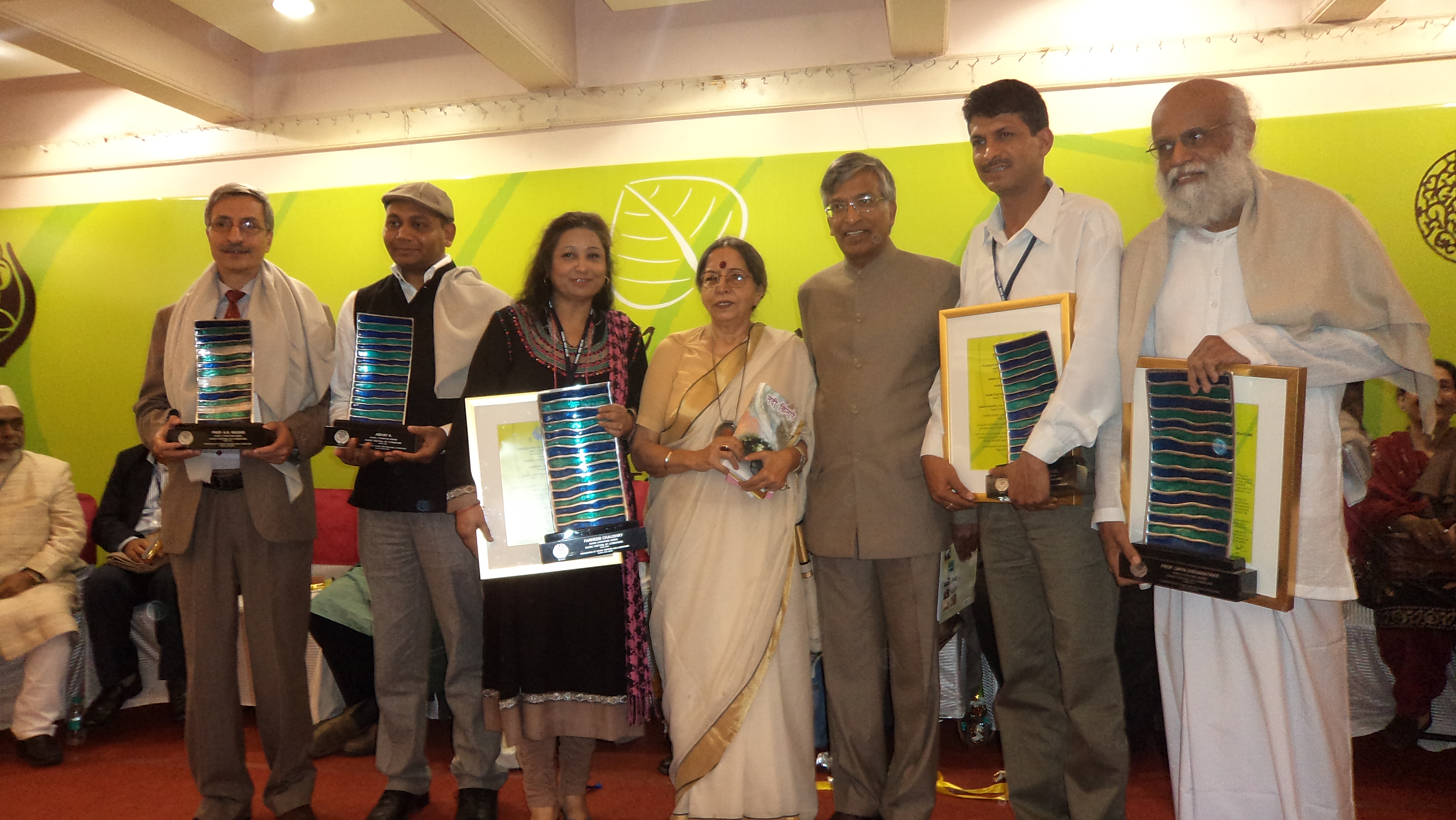
The SAARC Literary Award is an annual award conferred by the Foundation of SAARC Writers and Literature (FOSWAL) since 2001 which is an apex SAARC body. Some of the prominent recipients of this award include Shamshur Rahman, Mahasweta Devi, Jayanta Mahapatra, Abhi Subedi, Mark Tully, Sitakant Mahapatra, Uday Prakash, Suman Pokhrel, and Abhay K. Mahasweta Devi to get SAARC Literary Award Oneindia.in 30 March 2007
Nepali poet, lyricist, and translator Suman Pokhrel is the only poet/writer to be awarded twice.
SAARC Youth Award
The SAARC Youth Award is awarded to outstanding individuals from the SAARC region. The award is notable because of the recognition it gives to the Award winner in the SAARC region. The award is based on specific themes which apply to each year. The award recognizes and promotes the commitment and talent of the youth who give back to the world at large through various initiatives such as Inventions, Protection of the Environment and Disaster relief. The recipients who receive this award are ones who have dedicated their lives to their individual causes to improve situations in their own countries as well as paving a path for the SAARC region to follow. The Committee for the SAARC Youth Award selects the best candidate based on his/her merits and their decision is final.
Previous Winners:
- 1992: World Population Issue and Welfare - Painting; - Devang Soparkar (India)
- 1997: Outstanding Social Service in Community Welfare – Sukur Salek (Bangladesh)
- 1998: New Inventions and Shanu — Najmul Hasnain Shah (Pakistan)
- 2001: Creative Photography: South Asian Diversity – Mushfiqul Alam (Bangladesh)
- 2002: Outstanding contribution to protect the Environment – Masil Khan (Pakistan)
- 2003: Invention in the Field of Traditional Medicine – Hassan Sher (Pakistan)
- 2004: Outstanding contribution to raising awareness of TB and/or HIV/AIDS – Ajij Prasad Poudyal (Nepal)
- 2006: Promotion of Tourism in South Asia – Syed Zafar Abbas Naqvi (Pakistan)
- 2008: Protecting the Environment in South Asia – Deepani Jayantha (Sri Lanka)
- 2009: Outstanding contribution to humanitarian works in the aftermath of Natural Disasters – Ravikant Singh (India)
- 2010: Outstanding contribution for the Protection of Environment and mitigation of Climate Change – Anoka Primrose Abeyrathne (Sri Lanka)
- 2011: Youth leadership in the fight against social ills - Mr. Mohamed Faseen Rafiu (The Maldives)
Secretaries-General of SAARC
| # | Name | Country | Took office | Left office | Abul Ahsan | Kant Kishore Bhargava | Ibrahim Hussain Zaki | Yadav Kant Silwal | Naeem U. Hasan | Nihal Rodrigo | Q. A. M. A. Rahim | Chenkyab Dorji | Sheel Kant Sharma | Fathimath Dhiyana Saeed | Ahmed Saleem | Arjun Bahadur Thapa | Amjad Hussain B. Sial | Esala Ruwan Weerakoon | Golam Sarwar |
|---|---|---|---|---|---|---|---|---|---|---|---|---|---|---|---|---|---|---|---|
| 1 | Bangladesh | 16 January 1985 | 15 October 1989 | ||||||||||||||||
| 2 | India | 17 October 1989 | 31 December 1991 | ||||||||||||||||
| 3 | Maldives | 1 January 1992 | 31 December 1993 | ||||||||||||||||
| 4 | Nepal | 1 January 1994 | 31 December 1995 | ||||||||||||||||
| 5 | Pakistan | 1 January 1996 | 31 December 1998 | ||||||||||||||||
| 6 | Sri Lanka | 1 January 1999 | 10 January 2002 | ||||||||||||||||
| 7 | Bangladesh | 11 January 2002 | 28 February 2005 | ||||||||||||||||
| 8 | Bhutan | 1 March 2005 | 29 February 2008 | ||||||||||||||||
| 9 | India | 1 March 2008 | 28 February 2011 | ||||||||||||||||
| 10 | Maldives | 1 March 2011 | 11 March 2012 | ||||||||||||||||
| 11 | Maldives | 12 March 2012 | 28 February 2014 | ||||||||||||||||
| 12 | Nepal | 1 March 2014 | 28 February 2017 | ||||||||||||||||
| 13 | Pakistan | 1 March 2017 | 29 February 2020 | ||||||||||||||||
| 14 | Sri Lanka | 1 March 2020 | 3 March 2023 | ||||||||||||||||
| 15 | Bangladesh | 4 March 2023 | *Incumbent* |
SAARC summits
Main article: List of SAARC summits
| No | Date | Country | Host | Host leader | ||||||
|---|---|---|---|---|---|---|---|---|---|---|
| 1st | 7–8 December 1985 | Bangladesh | Dhaka | Ataur Rahman Khan | ||||||
| 2nd | 16–17 November 1986 | India | Bengaluru | Rajiv Gandhi | ||||||
| 3rd | 2–4 November 1987 | Nepal | Kathmandu | King Birendra Bir Bikram Shah | ||||||
| 4th | 29–31 December 1988 | Pakistan | Islamabad | Benazir Bhutto | ||||||
| 5th | 21–23 November 1990 | Maldives | Malé | Maumoon Abdul Gayoom | ||||||
| 6th | 21 December 1991 | Sri Lanka | Colombo | Ranasinghe Premadasa | ||||||
| 7th | 10–11 April 1993 | Bangladesh | Dhaka | Khaleda Zia | ||||||
| 8th | 2–4 May 1995 | India | New Delhi | P V Narasimha Rao | ||||||
| 9th | 12–14 May 1997 | Maldives | Malé | Maumoon Abdul Gayoom | ||||||
| 10th | 29–31 July 1998 | Sri Lanka | Colombo | Chandrika Kumaratunga | ||||||
| 11th | 4–6 January 2002 | Nepal | Kathmandu | Sher Bahadur Deuba | ||||||
| 12th | 2–6 January 2004 | Pakistan | Islamabad | Zafarullah Khan Jamali | ||||||
| 13th | 12–13 November 2005 | Bangladesh | Dhaka | Khaleda Zia | ||||||
| 14th | 3–4 April 2007 | India | New Delhi | Manmohan Singh | ||||||
| 15th | 1–3 August 2008 | Sri Lanka | Colombo | Mahinda Rajapaksa | ||||||
| 16th | 28–29 April 2010 | Bhutan | Thimphu | Jigme Thinley | ||||||
| [17th](17th-saarc-summit) | 10–11 November 2011 | Maldives | Addu | Mohammed Nasheed | ||||||
| [18th](18th-saarc-summit) | url=http://www.saarc-sec.org/press-releases/18th-SAARC-Summit-Declaration/121/ | title=Press Releases, 18th SAARC Summit Declaration, 27 November 2014 | agency=SAARC | access-date=2 December 2015 | archive-date=8 December 2015 | archive-url=https://web.archive.org/web/20151208082130/http://www.saarc-sec.org/press-releases/18th-SAARC-Summit-Declaration/121/ | url-status=dead }} | Nepal | Kathmandu | Sushil Koirala |
| [19th](19th-saarc-summit) | 15–16 November 2016 | Pakistan | Islamabad | Cancelled |
Current leaders of SAARC
Leaders are either heads of state or heads of government, depending on which is constitutionally the chief executive of the nation's government.
|File:Muhammad Yunus at the UNGA79 - 2024 (cropped).jpg|Bangladesh Muhammad Yunus Chief Adviser to the Government of Bangladesh |File:Dasho Tshering Tobgay.jpg|Bhutan Tshering Tobgay Prime Minister of Bhutan |File:Official Photograph of Prime Minister Narendra Modi Potrait.png|Republic of India Narendra Modi Prime Minister of India |File:Dr Mohamed Muizzu portrait.jpg|Maldives Mohamed Muizzu President of the Maldives |File:Hon. Sushila Karki (profile).jpg|Federal Democratic Republic of Nepal Sushila Karki Prime Minister of Nepal |File:Shehbaz Sharif 2023 (cropped).jpg|Islamic Republic of Pakistan Shehbaz Sharif Prime Minister of Pakistan |File:Minister of External Affairs, Govt. of Bharat, Dr. Subrahmanyam Jaishankar with the President of Sri Lanka Mr. Anura Kumara Dissanayake (cropped).jpg|Sri Lanka Anura Kumara Dissanayake President of Sri Lanka
Current leaders
| Country | Chief executive | Incumbent |
|---|---|---|
| Afghanistan | Supreme Leader (*de facto*) | Hibatullah Akhundzada |
| Bangladesh | Chief Adviser to the Government | Muhammad Yunus |
| Bhutan | Prime Minister | Tshering Tobgay |
| India | Prime Minister | Narendra Modi |
| Maldives | President | Mohamed Muizzu |
| Nepal | Prime Minister | Sushila Karki |
| Pakistan | Prime Minister | Shehbaz Sharif |
| Sri Lanka | President | Anura Kumara Dissanayake |
Notes
References
References
- "Archived copy".
- (7 March 2023). "Sarwar to be new Saarc secretary general".
- "Report for Selected Countries and Subjects".
- "Population of Southern Asia (2025) - Worldometer".
- "Human development report 2025".
- "Report for Selected Countries and Subjects". imf.org.
- Ahmad, Naveed. (6 August 2016). "Rest in peace SAARC: The tug of war between India and Pakistan". [[The Express Tribune]].
- "Charter of SAARC".
- Center, Asia Regional Integration. "South Asian Free Trade Area Free Trade Agreement".
- Longtail-e-media. "From SAARC to BIMSTEC: Neighborhood Perspective".
- "BIMSTEC Gets a New Lease of Life".
- (2025-09-25). "Bangladesh working to revive Saarc, pursuing Asean membership: CA".
- "12th SAARC Summit Islamabad: History and Evolution of SAARC".
- Bhushan, Bharat. (2019). "Status of Regional Cooperation in South Asia". South Asians for Human Rights Research Study.
- (1 August 2008). "History and mission of SAARC". Daily News.
- Muhammad, Jamshed Iqbal. "SAARC: Origin, Growth, Potential and Achievements". National Institute of Historical and Cultural Research in Islamabad.
- "History and Evolution of SAARC". Jang Media Research Unit.
- "South Asian Association for Regional Cooperation (SAARC) {{!}} Treaties & Regimes {{!}} NTI".
- "About SAARC".
- "1st Summit Declaration". SAARC Secretariat.
- (April 2015). "Report for Selected Countries and Subjects". International Monetary Fund.
- (October 2019). "World Economic Outlook Database".
- "Data for South Asia, Afghanistan, Bangladesh, Bhutan, India, Maldives, Pakistan, Sri Lanka".
- "School enrollment, secondary (% gross)".
- "Chapter 13 School enrollment in South Asia {{!}} South Asia Regional Micro Database (SARMD) User Guidelines".
- "Gross enrollment ratio, secondary, both sexes (%) - Data". World Bank.
- Times, Zan. (2023-05-11). "Analyzing the Taliban budget for 2023-24: Prioritizing military spending over citizen welfare".
- (June 2024). "National Budget Financial Year 2024-25". Ministry of Finance, Government of Bhutan.
- "South Asian Association for Regional Cooperation".
- (28 August 2005). "Afghanistan keen to join SAARC". rediff web services.
- (4 April 2004). "Afghanistan inducted as 8th member: 14th Saarc summit begins". Dawn.
- Sáez, Lawrence. (2012). "The South Asian Association for Regional Cooperation (SAARC): An emerging collaboration architecture". Routledge.
- (4 December 2013). "An Atlas of Middle Eastern Affairs". Routledge.
- O'Rourke, Breffni. "[https://www.rferl.org/a/1075660.html South Asia: Afghanistan Joins World's Largest Regional Grouping] {{Webarchive. link. (31 October 2020 ." Radio Free Europe/Radio Liberty, 3 April 2007.)
- "Making a case for suspending Afghanistan from SAARC to prevent the crippling of the organisation".
- (12 March 2023). "SAARC Secretary General Position not awarded to Afghanistan".
- "Bangladesh will get to pick new Saarc secretary general".
- "Cooperation with Observers".
- "Sri Lanka, 7 - 30 - 2008: Australia and Myanmar to admit as SAARC observers - Sri Lanka official". ColomboPage.
- "SAARC To Grant Observer Status To US, S Korea, EU". The Himalayan Times.
- "Australia, Myanmar seek SAARC observer status". The Island.
- "Cooperation with Observers".
- "SAARC Secretariat".
- Kelegama, Saman. (2016). "The new great game : China and South and Central Asia in the era of reform". [[Stanford University Press]].
- (4 March 2007). "Iran requests for observer status in SAARC". China Daily.
- "SAARC and Myanmar: Observer Research Foundation".
- Kumar, S. Y. Surendra. (December 2015). "China's SAARC membership: The debate". International Journal of China Studies.
- (16 February 2014). "Russia, Turkey seek observer status in SAARC". The Economic Times.
- "SAARC nations call for transparency in social sector". thaindian.com.
- "SAARC: Towards greater integration in South Asia". Daily News.
- "SAARC Secretariat".
- "SAARC Secretariat".
- "South Asian Association For Regional Cooperation — Apex and Recognised Bodies". saarc-sec.org.
- "SAARCLAW — South Asian Association for Regional Co-operation in Law". saarclaw.org.
- "SAARC Recognized Bodies".
- See for this aspect Michael, Arndt (2013). Sovereignty vs. Security: SAARC and its Role in the Regional Security Architecture in South Asia. Harvard Asia Quarterly Summer 2013, Vol. VX, No.2: 37-45
- Jhawar, Shiv. (2004). "Building a Noble World". Noble World Foundation.
- "The Nobel Peace Prize for 2012".
- "SAARC conference in Pakistan postponed".
- (29 September 2016). "SAARC summit to be called off as Dhaka, Kabul and Thimphu too slam Islamabad". The Indian Express.
- (28 September 2016). "Saarc summit collapses after India and three other members pull out". Hindustan Times.
- (28 September 2016). "Saarc summit in Pakistan postponed after member states pull out". Dawn.
- "China and Pakistan Mull a Beijing-led Alternative to SAARC".
- "Beyond Terrorism: A Brief History of SAARC's Failures".
- Padmanabhan, Keshav. (2025-02-21). "'Do not normalise terrorism' by backing Pakistan, Jaishankar told Bangladeshi counterpart last week".
- (2025-07-09). "LeT-Jaish terrorists from Pakistan may use Nepal as transit to enter India". The Economic Times.
- (2024-08-08). ""Terrorism knows no borders": Experts call for joint regional efforts to combat its menace".
- Kelegama, Saman. (2016). "The new great game : China and South and Central Asia in the era of reform". [[Stanford University Press]].
- "Challenges and opportunities for Pakistan under SAFTA".
- "Agreement on South Asian Free Trade Area (SAFTA)".
- "South Asian Association For Regional Cooperation — Area of Cooperation". saarc-sec.org.
- "Potential for Enhancing Intra-SAARC Trade: A Brief Analysis".
- (25 March 2016). "SAFTA meet likely next month". The Himalayan Times.
- "ADB urges Safta to exploit rich trade potential of member countries". The News International.
- (8 September 2016). "Coming closer together for trade". The Hindu.
- "South Asian Association For Regional Cooperation — SAARC Visa Exemption Scheme". saarc-sec.org.
- "South Asian Association For Regional Cooperation — SAARC Award". saarc-sec.org.
- "SAARC Literary Awards".
- "Five writers honoured at SAARC Literature Festival". Hindustan Times.
- "Apex and Recognised Bodies".
- Hindustan Times, New Delhi, Saturday, 14 February 2015
- "SAARC Youth Award".
- (3 September 2020). "SAARC Youth Awards".
- "Press Releases, 18th SAARC Summit Declaration, 27 November 2014".
This article was imported from Wikipedia and is available under the Creative Commons Attribution-ShareAlike 4.0 License. Content has been adapted to SurfDoc format. Original contributors can be found on the article history page.
Ask Mako anything about South Asian Association for Regional Cooperation — get instant answers, deeper analysis, and related topics.
Research with MakoFree with your Surf account
Create a free account to save articles, ask Mako questions, and organize your research.
Sign up freeThis content may have been generated or modified by AI. CloudSurf Software LLC is not responsible for the accuracy, completeness, or reliability of AI-generated content. Always verify important information from primary sources.
Report