From Surf Wiki (app.surf) — the open knowledge base
Solar eclipse of July 22, 2028
Total eclipse
Total eclipse
| Field | Value |
|---|---|
| previous | Solar eclipse of January 26, 2028 |
| next | Solar eclipse of January 14, 2029 |
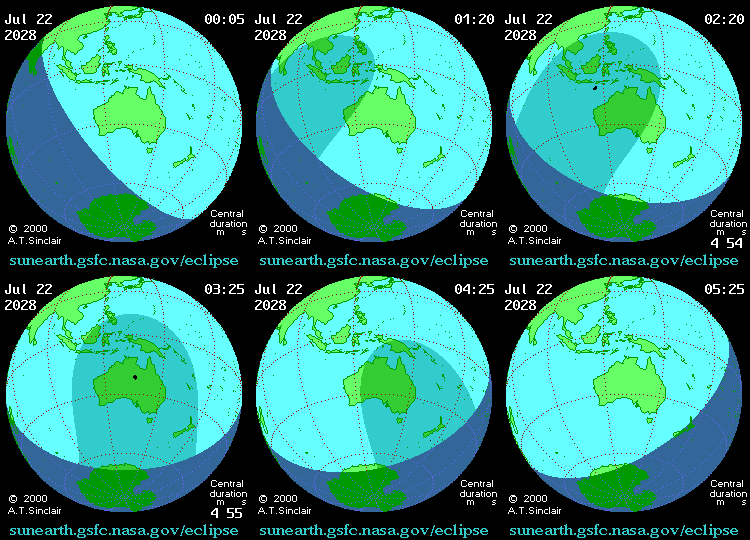
The solar eclipse of July 22, 2028, also called the Great Australasian Eclipse by some media outlets, is an upcoming total solar eclipse that will occur at the Moon's descending node of orbit on Saturday, July 22, 2028, with a magnitude of 1.056. A solar eclipse occurs when the Moon passes between Earth and the Sun, thereby totally or partly obscuring the image of the Sun for a viewer on Earth. A total solar eclipse occurs when the Moon's apparent diameter is larger than the Sun's, blocking all direct sunlight, turning day into darkness. Totality occurs in a narrow path across Earth's surface, with the partial solar eclipse visible over a surrounding region thousands of kilometres wide. Occurring about 1.8 days before perigee (on July 23, 2028, at 23:20 UTC), the Moon's apparent diameter will be larger.
The central line of the path of the eclipse will cross the Australian continent from the Kimberley region in the north-west and continue in a south-easterly direction through Western Australia, the Northern Territory, south-west Queensland and New South Wales, close to the towns of Wyndham, Kununurra, Tennant Creek, Birdsville, Bourke and Dubbo, and continuing on through the centre of Sydney, where the eclipse will have a duration of over three minutes. It will also cross Queenstown and Dunedin, New Zealand. Totality will also be viewable from two of Australia's external territories: Christmas Island and the Cocos (Keeling) Islands. A partial eclipse will be visible for parts of Southeast Asia, Australia, and Oceania.
This is the first time Sydney will experience a total solar eclipse since March 26, 1857 and will be the last until June 3, 2858.
Images
Eclipse timing
Places experiencing total eclipse
| Country or territory | City or place | Start of partial eclipse | Start of total eclipse | Maximum eclipse | End of total eclipse | End of partial eclipse | Duration of totality (min:s) | Duration of eclipse (hr:min) | Maximum magnitude | References: |
|---|---|---|---|---|---|---|---|---|---|---|
| Cocos (Keeling) Islands | Bantam | 07:03:38 | 08:12:03 | 08:13:48 | 08:15:34 | 09:35:17 | 3:31 | 2:32 | 1.0199 | |
| Flying Fish Cove | 07:39:42 | 08:54:49 | 08:56:45 | 08:58:42 | 10:25:33 | 3:53 | 2:46 | 1.0166 | ||
| Durack Range - Doon Doon, near Kununurra | 09:27:32 | 10:58:08 | 11:00:43 | 11:03:18 | 12:32:50 | 5:10 | 3:05 | 1.0283 | ||
| Kununurra | 09:27:52 | 10:59:46 | 11:01:13 | 11:02:40 | 12:33:14 | 2:54 | 2:54 | 1.0051 | ||
| Lake Argyle | 09:28:19 | 10:59:29 | 11:01:39 | 11:03:48 | 12:33:36 | 4:19 | 3:05 | 1.0129 | ||
| Tennant Creek | 11:16:50 | 12:47:58 | 12:49:41 | 12:51:24 | 14:17:30 | 3:26 | 3:01 | 1.0079 | ||
| Bourke | 12:27:17 | 13:50:08 | 13:52:11 | 13:54:13 | 15:09:20 | 4:05 | 2:42 | 1.022 | ||
| Dubbo | 12:34:34 | 13:55:20 | 13:57:16 | 13:59:11 | 15:12:17 | 3:51 | 2:38 | 1.0197 | ||
| Orange | 12:36:16 | 13:57:12 | 13:58:17 | 13:59:22 | 15:12:45 | 2:10 | 2:36 | 1.0049 | ||
| Mudgee | 12:36:45 | 13:56:52 | 13:58:49 | 14:00:46 | 15:13:12 | 3:54 | 2:36 | 1.0237 | ||
| Bathurst | 12:37:18 | 13:57:31 | 13:59:01 | 14:00:31 | 15:13:11 | 3:00 | 2:36 | 1.0098 | ||
| Katoomba | 12:38:53 | 13:58:23 | 14:00:08 | 14:01:53 | 15:13:50 | 3:30 | 2:35 | 1.0153 | ||
| Penrith | 12:39:39 | 13:58:48 | 14:00:41 | 14:02:34 | 15:14:11 | 3:46 | 2:35 | 1.0208 | ||
| Campbelltown | 12:40:03 | 13:59:09 | 14:00:55 | 14:02:39 | 15:14:15 | 3:30 | 2:34 | 1.0157 | ||
| Blacktown | 12:40:03 | 13:59:04 | 14:00:59 | 14:02:53 | 15:14:21 | 3:49 | 2:34 | 1.0239 | ||
| Kiama | 12:40:30 | 14:00:16 | 14:01:04 | 14:01:52 | 15:14:14 | 1:36 | 2:34 | 1.0029 | ||
| Wollongong | 12:40:25 | 13:59:40 | 14:01:05 | 14:02:30 | 15:14:17 | 2:50 | 2:34 | 1.009 | ||
| Pennant Hills | 12:40:20 | 13:59:17 | 14:01:12 | 14:03:06 | 15:14:30 | 3:49 | 2:34 | 1.0243 | ||
| Canterbury | 12:40:32 | 13:59:24 | 14:01:18 | 14:03:12 | 15:14:32 | 3:48 | 2:34 | 1.0241 | ||
| Sydney | 12:40:40 | 13:59:30 | 14:01:25 | 14:03:19 | 15:14:36 | 3:49 | 2:34 | 1.0248 | ||
| Darlinghurst | 12:40:42 | 13:59:31 | 14:01:26 | 14:03:20 | 15:14:37 | 3:49 | 2:34 | 1.0249 | ||
| Mosman | 12:40:43 | 13:59:33 | 14:01:28 | 14:03:21 | 15:14:38 | 3:48 | 2:34 | 1.0235 | ||
| Gosford | 12:40:40 | 13:59:51 | 14:01:31 | 14:03:10 | 15:14:44 | 3:19 | 2:34 | 1.0128 | ||
| Norah Head | 12:41:01 | 14:00:35 | 14:01:48 | 14:03:00 | 15:14:55 | 2:25 | 2:34 | 1.0058 | ||
| Queenstown | 15:07:25 | 16:15:04 | 16:16:32 | 16:17:59 | 17:20:03 | 2:55 | 2:13 | 1.0211 | ||
| Dunedin | 15:09:01 | 16:15:47 | 16:17:13 | 16:18:38 | 17:20:00 | 2:51 | 2:12 | 1.0218 | ||
| Ranfurly | 15:08:53 | 16:16:15 | 16:17:24 | 16:18:33 | 17:20:23 | 2:18 | 2:16 | 1.0091 |
Places experiencing partial eclipse
| Country or territory | City or place | Start of partial eclipse | Maximum eclipse | End of partial eclipse | Duration of eclipse (hr:min) | Maximum coverage | References: |
|---|---|---|---|---|---|---|---|
| Malé | 06:02:44 (sunrise) | 06:19:54 | 07:05:15 | 1:03 | 22.26% | ||
| Thiruvananthapuram | 06:12:50 | 06:50:02 | 07:30:03 | 1:18 | 13.49% | ||
| Sri Jayawardenepura Kotte | 06:07:56 | 06:50:56 | 07:37:51 | 1:35 | 20.77% | ||
| Addu City | 06:11:25 (sunrise) | 06:20:57 | 07:13:22 | 1:02 | 37.34% | ||
| Diego Garcia | 07:24:06 (sunrise) | 07:27:19 | 08:22:03 | 0:58 | 58.92% | ||
| Yangon | 07:26:22 | 08:00:48 | 08:37:31 | 1:11 | 6.21% | ||
| Bangkok | 07:47:51 | 08:35:20 | 09:27:12 | 1:39 | 15.89% | ||
| Kuala Lumpur | 08:34:02 | 09:39:56 | 10:55:08 | 2:21 | 52.16% | ||
| Phnom Penh | 07:45:40 | 08:41:22 | 09:42:57 | 1:57 | 24.12% | ||
| Singapore | 08:34:39 | 09:44:09 | 11:03:43 | 2:29 | 60.16% | ||
| Ho Chi Minh City | 07:45:39 | 08:44:12 | 09:49:04 | 2:03 | 27.17% | ||
| Jakarta | 07:38:03 | 08:54:52 | 10:23:12 | 2:45 | 88.63% | ||
| Île Amsterdam | 06:57:50 (sunrise) | 07:02:00 | 07:57:50 | 1:00 | 45.72% | ||
| Bandar Seri Begawan | 08:48:37 | 10:02:11 | 11:23:25 | 2:35 | 47.56% | ||
| Manila | 09:13:34 | 10:07:17 | 11:03:49 | 1:50 | 13.44% | ||
| Davao City | 09:11:07 | 10:23:39 | 11:39:10 | 2:28 | 32.46% | ||
| General Santos | 09:09:11 | 10:23:41 | 11:41:28 | 2:32 | 36.04% | ||
| Dili | 10:11:54 | 11:42:58 | 13:16:17 | 3:04 | 85.00% | ||
| Ngerulmud | 10:38:19 | 11:43:41 | 12:48:32 | 2:10 | 19.52% | ||
| Casey Station | 10:24:51 | 11:12:33 | 12:00:46 | 1:36 | 18.69% | ||
| Port Moresby | 12:17:02 | 13:35:33 | 14:47:12 | 2:30 | 41.44% | ||
| Dumont d'Urville Station | 12:43:51 | 13:38:47 | 14:32:41 | 1:49 | 31.38% | ||
| Melbourne | 12:32:23 | 13:52:56 | 15:07:12 | 2:35 | 81.47% | ||
| Honiara | 14:04:02 | 14:57:21 | 15:46:25 | 1:42 | 14.46% | ||
| Port Vila | 14:21:35 | 15:15:00 | 16:03:55 | 1:42 | 20.09% | ||
| Nouméa | 14:12:37 | 15:15:39 | 16:12:43 | 2:00 | 36.20% | ||
| Kingston | 14:12:04 | 15:19:11 | 16:19:52 | 2:08 | 54.42% | ||
| Wellington | 15:15:41 | 16:22:00 | 17:17:03 (sunset) | 2:01 | 82.62% | ||
| Auckland | 15:18:21 | 16:23:32 | 17:23:01 | 2:05 | 67.80% | ||
| Suva | 15:48:14 | 16:23:37 | 16:56:56 | 1:09 | 7.02% |
Eclipse details
Shown below are two tables displaying details about this particular solar eclipse. The first table outlines times at which the Moon's penumbra or umbra attains the specific parameter, and the second table describes various other parameters pertaining to this eclipse.
| Event | Time (UTC) |
|---|---|
| First Penumbral External Contact | 2028 July 22 at 00:28:44.4 UTC |
| First Umbral External Contact | 2028 July 22 at 01:31:51.9 UTC |
| First Central Line | 2028 July 22 at 01:33:16.8 UTC |
| First Umbral Internal Contact | 2028 July 22 at 01:34:42.2 UTC |
| Greatest Duration | 2028 July 22 at 02:53:30.9 UTC |
| Greatest Eclipse | 2028 July 22 at 02:56:39.6 UTC |
| Ecliptic Conjunction | 2028 July 22 at 03:02:52.3 UTC |
| Equatorial Conjunction | 2028 July 22 at 03:17:00.0 UTC |
| Last Umbral Internal Contact | 2028 July 22 at 04:18:21.6 UTC |
| Last Central Line | 2028 July 22 at 04:19:49.0 UTC |
| Last Umbral External Contact | 2028 July 22 at 04:21:15.8 UTC |
| Last Penumbral External Contact | 2028 July 22 at 05:24:22.4 UTC |
| Parameter | Value |
|---|---|
| Eclipse Magnitude | 1.05602 |
| Eclipse Obscuration | 1.11518 |
| Gamma | −0.60557 |
| Sun Right Ascension | 08h08m03.8s |
| Sun Declination | +20°10'53.0" |
| Sun Semi-Diameter | 15'44.5" |
| Sun Equatorial Horizontal Parallax | 08.7" |
| Moon Right Ascension | 08h07m16.7s |
| Moon Declination | +19°36'14.4" |
| Moon Semi-Diameter | 16'24.3" |
| Moon Equatorial Horizontal Parallax | 1°00'12.3" |
| ΔT | 73.2 s |
Characteristics
Eclipse path intersections
The path of the July 22, 2028 eclipse will be crossed by the paths of 3 more total solar eclipses within the following 10 years, including the November 2030, July 2037, and December 2038 total solar eclipses. The path of the July 2028 solar eclipse will intersect that of the November 2030 eclipse at a point between Thargomindah and Bourke in Eastern Australia, that of the July 2037 eclipse near Bedourjie, in southwestern Queensland, and that of the December 2038 eclipse at a point in the Tasman Sea, in between Australia and New Zealand. This is similar to the intersection in the paths of the August 2017 and April 2024 total solar eclipses in the United States, over southern Illinois, the intersection of the August 2027 and March 2034 total solar eclipses in Egypt, and the intersection of the August 1999 and March 2006 solar eclipses over Turkey; the intersections within these pairs of total eclipses occurred about 7 years apart. This phenomenon is considered to be unusual, since the average interval for any given spot on Earth to observe a total solar eclipse is about once every 375 years. The intersection patterns are caused by the dynamics of the Saros cycle.
Eclipse season
This eclipse is part of an eclipse season, a period, roughly every six months, when eclipses occur. Only two (or occasionally three) eclipse seasons occur each year, and each season lasts about 35 days and repeats just short of six months (173 days) later; thus two full eclipse seasons always occur each year. Either two or three eclipses happen each eclipse season. In the sequence below, each eclipse is separated by a fortnight.
| July 6 | |||
|---|---|---|---|
| Ascending node (full moon) | |||
| July 22 | |||
| Descending node (new moon) | |||
| [[File:Lunar eclipse chart close-2028Jul06.png | 200px]] | [[File:SE2028Jul22T.png | 200px]] |
| Partial lunar eclipse | |||
| Lunar Saros 120 | Total solar eclipse | ||
| Solar Saros 146 |
References
References
- Jamie Carter. (22 July 2024). "'Great Australasian Eclipse' Countdown Begins—Why You Need To Plan Now". Forbes.
- "July 22, 2028 Total Solar Eclipse". timeanddate.
- "Moon Distances for London, United Kingdom, England". timeanddate.
- Espenak, Fred. "Major Solar Eclipses visible from Sydney, Australia". [[NASA]] [[Goddard Space Flight Center]].
- "Total Solar Eclipse of 2028 Jul 22". EclipseWise.com.
- Jamie Carter. (29 April 2023). "The Lucky Country: Australia’s Five Total Solar Eclipses In Just 15 Years". Forbes.
- (2023). "Future Eclipses Coming To Australia". ASA Eclipse.
- Gordon Telepun. (7 April 2020). "2024 total solar eclipse: The novelty of "the cross"". [[AccuWeather]].
- Michael E. Bakich. (24 June 2024). "How to see the next 20 years of eclipses, including the eclipse of a lifetime". [[Astronomy (magazine).
This article was imported from Wikipedia and is available under the Creative Commons Attribution-ShareAlike 4.0 License. Content has been adapted to SurfDoc format. Original contributors can be found on the article history page.
Ask Mako anything about Solar eclipse of July 22, 2028 — get instant answers, deeper analysis, and related topics.
Research with MakoFree with your Surf account
Create a free account to save articles, ask Mako questions, and organize your research.
Sign up freeThis content may have been generated or modified by AI. CloudSurf Software LLC is not responsible for the accuracy, completeness, or reliability of AI-generated content. Always verify important information from primary sources.
Report