From Surf Wiki (app.surf) — the open knowledge base
Sinus bradycardia
Lower than typical heart rate
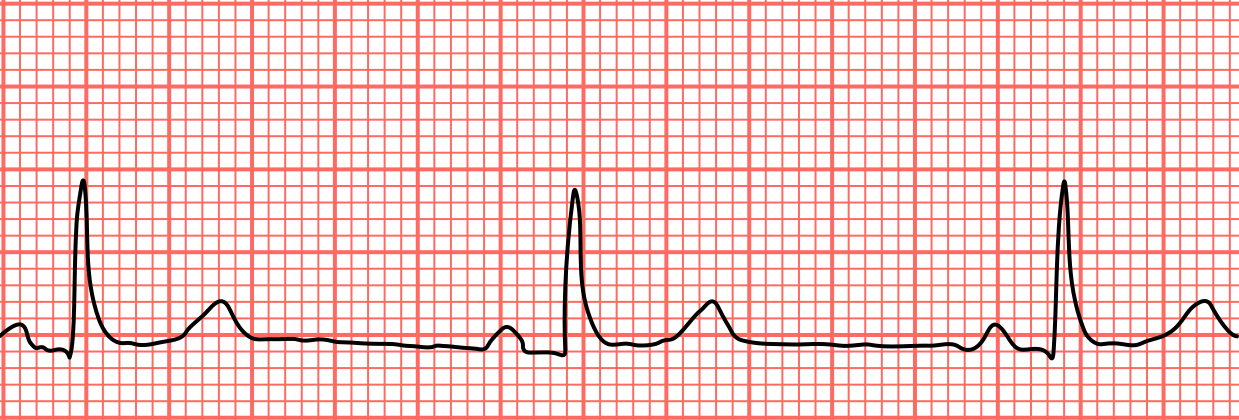
Lower than typical heart rate
| Field | Value |
|---|---|
| name | Sinus bradycardia |
| image | ECG Sinus Bradycardia 43 bpm.jpg |
| alt | An ECG showing sinus bradycardia at 43 bpm. The image is made up of a red grid on a white background. A black line traces the patients heart beat. |
| caption | ECG of Sinus bradycardia with a heart rate of 43 bpm. |
| specialty | Cardiology |
| diagnosis | electrocardiogram |
- lightheadedness
- dizziness
- hypotension
- vertigo
- syncope Sinus bradycardia is a sinus rhythm with a reduced rate of electrical discharge from the sinoatrial node, resulting in a bradycardia, a heart rate that is lower than the normal range (60–100 beats per minute for adult humans).
Signs and symptoms
The decreased heart rate can cause a decreased cardiac output resulting in symptoms such as lightheadedness, dizziness, hypotension, vertigo, and syncope. The slow heart rate may also lead to atrial, junctional, or ventricular ectopic rhythms.
Bradycardia is not necessarily problematic. People who practice sports may have sinus bradycardia, because their trained hearts can pump enough blood in each contraction to allow a low resting heart rate. Sinus bradycardia can also be an adaptive advantage; for example, diving seals may have a heart rate as low as 12 beats per minute, helping them to conserve oxygen during long dives.
Sinus bradycardia is a common condition found in both healthy individuals and those who are considered well-conditioned athletes.
Heart rates considered bradycardic vary by species; for example, in the house cat, a rate of under 120 beats per minute is abnormal. Generally, smaller species have higher and larger species lower rates.
Pathophysiology & etiology
- Sinus bradycardia is commonly seen in normal healthy persons and athletes in the absence of pathophysiological diseases or conditions.
- Different factors or etiologies could lead to the dysfunction of the sinus node, causing a malformation or prolongation of the impulse.
- In terms of pathophysiological diseases, sinus rhythm may be caused by:
- Diseases/Conditions:
- Acute myocardial infarction, carotid sinus syndrome, eating disorders (such as anorexia nervosa), rhodotoxin poisoning, hypothermia, hypothyroidism, infections (such as diphtheria, acute rheumatic fever, or viral myocarditis), intrinsic disease of the SA node (such as sick sinus syndrome), Roemheld syndrome, sleep apnea
- Physiological causes:
- Increased vagal tone, increased intracranial pressure
- Medications, most commonly: digitalis glycosides, beta-blockers, quinidine, adenosine, calcium channel blockers, class I antiarrhythmic agents, ivabradine, clonidine, reserpine, cimetidine, lithium, amitriptyline
- Diseases/Conditions:
Diagnosis
Diagnosis of sinus bradycardia can be confirmed by an electrocardiogram that shows the following characteristics:
- Rate: Less than 60 beats per minute.
- Rhythm: Regular.
- P waves: Upright, consistent, and normal in morphology and duration.
- PR interval: Between 0.12 and 0.20 seconds in duration.
- QRS complex: Less than 0.12 seconds in width, and consistent in morphology. Taking a thorough medical history and physical exam by healthcare providers can also help with narrowing differential diagnosis. Any recent changes to patient's medication history, new symptoms such as chest pain, shortness of breath and palpitations, family history of sinus bradycardia, physical exam that reveals cyanosis, peripheral edema, altered mental status, dyspnea, rales and crackles are all relevant information to consider for differential diagnosis.
References
References
- (2020). "StatPearls". StatPearls Publishing.
- "Sinus Bradycardia".
- "Bradycardia - Signs and Symptoms {{!}} CardioSmart – American College of Cardiology".
- (2004). "Oxygen and the diving seal". Undersea & Hyperbaric Medicine.
- (2007). "Essential emergency medicine: for the healthcare practitioner". Saunders/Elsevier.
- (March 2014). "Small and large animal models in cardiac contraction research: advantages and disadvantages". Pharmacology & Therapeutics.
- "Electrocardiogram Waves".
This article was imported from Wikipedia and is available under the Creative Commons Attribution-ShareAlike 4.0 License. Content has been adapted to SurfDoc format. Original contributors can be found on the article history page.
Ask Mako anything about Sinus bradycardia — get instant answers, deeper analysis, and related topics.
Research with MakoFree with your Surf account
Create a free account to save articles, ask Mako questions, and organize your research.
Sign up freeThis content may have been generated or modified by AI. CloudSurf Software LLC is not responsible for the accuracy, completeness, or reliability of AI-generated content. Always verify important information from primary sources.
Report