From Surf Wiki (app.surf) — the open knowledge base
Sindhis
Indo-Aryan ethnic group

Indo-Aryan ethnic group
| Field | Value | |||||||
|---|---|---|---|---|---|---|---|---|
| group | Sindhis | |||||||
| native_name | ||||||||
| native_name_lang | sd | |||||||
| image | Map of the Sindhi Diaspora in the World.png | |||||||
| population | ||||||||
| region1 | Pakistan | |||||||
| pop1 | 35,583,264 | |||||||
| {{cite web | url | https://www.cia.gov/the-world-factbook/countries/pakistan/ | title=Pakistan | date=17 August 2022 | access-date=11 August 2022 | archive-date=22 March 2021 | archive-url=https://web.archive.org/web/20210322084620/https://www.cia.gov/the-world-factbook/countries/pakistan/ | url-status=live }} |
| region2 | India | |||||||
| pop2 | ||||||||
| region3 | Saudi Arabia | |||||||
| pop3 | 180,980 (2020) | |||||||
| ref3 | ||||||||
| region4 | United Arab Emirates | |||||||
| pop4 | 94,620 | |||||||
| ref4 | ||||||||
| region5 | United States | |||||||
| pop5 | 50,000 | |||||||
| ref5 | ||||||||
| region6 | United Kingdom | |||||||
| pop6 | 25,000 | |||||||
| ref6 | ||||||||
| region7 | Malaysia | |||||||
| pop7 | 30,000 (2021) | |||||||
| region11 | Philippines | |||||||
| pop11 | 20,000 (1997) | |||||||
| region10 | Hong Kong | |||||||
| pop10 | 20,000 | |||||||
| ref10 | ||||||||
| region9 | Afghanistan | |||||||
| pop9 | 21,000 | |||||||
| ref9 | ||||||||
| region12 | Oman | |||||||
| pop12 | 15,000 | |||||||
| region13 | Bangladesh | |||||||
| pop13 | 14,700 (2020) | |||||||
| region14 | Canada | |||||||
| pop14 | 12,065 | |||||||
| ref14 | ||||||||
| region15 | Singapore | |||||||
| pop15 | 11,860 | |||||||
| ref15 | ||||||||
| region16 | Indonesia | |||||||
| pop16 | ~10,000 | |||||||
| region17 | Spain | |||||||
| pop17 | 10,000 | |||||||
| languages | Sindhi | |||||||
| rels | **Majority** | |||||||
| Islam ~94% | ||||||||
| Significant minority <br />Hinduism ~5%<ref>{{Cite web | url | https://www.encyclopedia.com/humanities/encyclopedias-almanacs-transcripts-and-maps/sindhis | title=Encyclopedias almanacs transcripts and maps Sindhis | access-date=10 June 2022 | archive-date=7 May 2021 | archive-url=https://web.archive.org/web/20210507065744/https://www.encyclopedia.com/humanities/encyclopedias-almanacs-transcripts-and-maps/sindhis | url-status=live}} | |
| **Smaller minorities of:** | ||||||||
| Christianity | ||||||||
| related_groups |
the ethnic group
Islam ~94%
Significant minority Hinduism ~5% Smaller minorities of: Christianity
Sindhis are an Indo-Aryan ethnic group originating from and native to Sindh, a region of Pakistan, who share a common Sindhi culture, history, ancestry, and language. The historical homeland of Sindhis is bordered by southeastern Balochistan; the Bahawalpur region of Punjab; the Marwar region of Rajasthan; and the Kutch region of Gujarat.
Sindhis are the third-largest ethnic group in Pakistan, after the Punjabis and Pashtuns, forming a majority in Sindh with historical communities also found in neighbouring Balochistan. They form a significant diasporic population in India, mostly partition-era migrants and their descendants. Sindhi diaspora is also present in other parts of South Asia; as well as in the Gulf states, the Western world and the Far East.
Sindhis are a diverse group in terms of religious affiliations and practices. Approximately 94% are adherents of Islam, primarily the Sunni denomination with a significant population also following the Shia denomination. A large minority of approximately 5% adheres to Hinduism; with smaller groups, each constituting a population of less than 1%, adhering to Christianity, Sikhism and Jainism. The Muslim population forms a majority in Sindh; with Hindus mainly concentrated in eastern Sindh, forming a majority in Umerkot district with significant populations in other districts as well. Sindhis in India are predominantly Hindu with smaller Muslim, Christian, Sikh, and Jain minorities. Despite being geographically separated, Sindhis still maintain strong ties to each other and share similar cultural values and practices.
Sindhis have largely been isolated throughout their history; due to which Sindhi culture has preserved its uniqueness. Belonging to various tribes and clans, Sindhis are closely related to other Sindhic-speaking groups.
Etymology
The name Sindhi is derived from the Sanskrit Sindhu, which translates as "river" or "sea body"; the Greeks used the term "Indos" to refer to the Indus River and the surrounding region, which is where Sindhi is spoken.
The historical spelling "Sind" (from the Perso-Arabic سند) was discontinued in 1988 by an amendment passed in the Sindh Assembly, and is now spelt "Sindh." Hence, the term "Sindhi" was also introduced to replace "Sindi". The Sindhi have a historic relationship with the Sinti people in Europe.
In the Balochi language, the traditional terms for Sindhis are Jadgal and Jamote. They are derived from the prefix Jatt referring to the tribe by that name, and the suffix gal meaning "speech". Thus, it signifies someone who speaks the language of the Jatts, i.e. a Jatt. The term Jatt historically encompassed Sindhis and Punjabis, and was frequently used by the British for Sindhis in their census records.
Geographic distribution
Sindh has been an ethnic historical region isolated from the rest of India; unlike its neighbors Sindh did not experience violent invasions. Boundaries of various Kingdoms and rulers in Sindh were defined on ethnic lines. Throughout history the geographical definition for Sindh referred to the south of Indus and its neighboring regions.
Pakistan
Besides Sindh the historical homeland of Sindhis are regions like Kacchi Plain, the Lasbela and Makran regions in Balochistan, the Bahawalpur region of Punjab, the Kutch region of Gujarat and Jaisalmer and Barmer regions of Rajasthan, India. There are many Sindhi-Hindus who migrated to India after partition in 1947.
Sindhis in Pakistan have their own province, Sindh, It also has the largest population of Hindus in Pakistan, with 93% of Pakistani Hindus residing in Sindh.
India
Sindhi Hindus were an economically prosperous community in urban Sindh before partition, but due to fear of persecution on the basis of religion and after large scale arrival of Muslim refugees from India, they migrated to India after partition. They had a hard time in India developing their economic status with no native homeland to claim, they chose to live in states that had similarity with Sindhi culture. Despite all of that they were successful in establishing themselves as one of India's richest communities, especially through business and trade. Sindhis have distinguished themselves in India, from famous actors such as Ranveer Singh and Jimmi Harkishin to veteran politicians such as L. K. Advani, all of whom had families that came from Sindh.
In India as per 2011 census, Sindhis have an estimated population of 2,770,000. Unlike Sindhis in Pakistan, Indian Sindhis are scattered throughout India in states such as Gujarat, Maharashtra and Rajasthan.
| State | Population (100 Thousands) | % of total |
|---|---|---|
| Gujarat | 11.84 | 42.7% |
| Maharashtra | 7.24 | 26.1% |
| Rajasthan | 3.87 | 13.9% |
| Madhya Pradesh | 2.45 | 8.8% |
| Chhattisgarh | 0.93 | 3.4% |
| Delhi | 0.31 | 1.1% |
| Uttar Pradesh | 0.29 | 1.0% |
| Assam | 0.20 | 0.7% |
| Karnataka | 0.17 | 0.6% |
| Andhra Pradesh | 0.11 | 0.4% |
Diaspora
Today many Sindhis live outside Pakistan and India, particularly in Afghanistan, where there are an estimated 25,000 of them, largely engaged in merchant trade. In addition, during the crackdown on separatist groups by Pervez Musharraf an estimated 400-500 Sindhi separatists, along with Balochis, fled to Afghanistan.
Another group of Sindhis migrated to the island of Ceylon, which is the now modern day country of Sri Lanka, roughly two centuries ago to engage in business and trade. They came via migration from Hyderabad city of Sindh. However, after partition this trend increased as Sindhi Hindus left their home province. Today they are mainly concentrated around Colombo.
Wealthy Sindhi communities can also be found in both Hong Kong and Singapore.
History
Sindh was the site of one of the cradles of civilization, the Bronze Age Indus Valley Civilisation that flourished from about 3000 BCE. The Indo-Aryan tribes of Sindh gave rise to the Iron Age vedic civilization, which lasted until 500 BCE. During this era, the Vedas were composed.
In 518 BCE, the Achaemenid Empire conquered Indus valley and established Hindush satrapy in Sindh. Following Alexander the Great's invasion, Sindh became part of the Mauryan Empire. After its decline, Indo-Greeks, Indo-Scythians and Indo-Parthians ruled in Sindh.
Sindh is sometimes referred to as the Bab-ul Islam (transl. 'Gateway of Islam'), as it was one of the first regions of the Indian subcontinent to come under Islamic rule. Parts of the modern-day province were intermittently subject to raids by the Rashidun army during the early Muslim conquests, but the region did not come under Muslim rule until the Arab invasion of Sind occurred under the Umayyad Caliphate, headed by Muhammad ibn Qasim in 712 CE. The conquest is celebrated in modern Pakistan on the 10th day of Ramadan as Yom-e Bab ul-Islam. Afterwards, Sindh was ruled by a series of dynasties including the Habbaris, Soomras, Sammas, Arghuns and Tarkhans.
The Mughal Empire conquered Sindh in 1591 and organized it as Subah of Thatta, the first-level imperial division. Sindh again became independent under the Kalhora dynasty. The British conquered Sindh in 1843 after their victory in the Battle of Hyderabad over the Talpur dynasty. Sindh became a separate province in 1936, and after independence became part of Pakistan.

Prehistoric period
Sindh and surrounding areas contain the ruins of the Indus Valley Civilization. There are remnants of ancient cities and structures, with a notable example in Sindh being that of Mohenjo Daro. Built around 2500 BCE., it was one of the largest settlements of the ancient Indus Civilisation or Harappan culture, with features such as standardized bricks, street grids, and covered sewer systems. It was one of the world's earliest major cities, contemporaneous with the civilizations of ancient Egypt, Mesopotamia, Minoan Crete, and Caral-Supe.
Mohenjo-daro was abandoned in the 19th century BCE as the Indus Valley Civilization declined, and the site was not rediscovered until the 1920s. Significant excavation has since been conducted at the site of the city, which was designated a UNESCO World Heritage Site in 1980. The site is currently threatened by erosion and improper restoration.
The cities of the ancient Indus were noted for their urban planning, baked brick houses, elaborate drainage systems, water supply systems, clusters of large non-residential buildings, and techniques of handicraft and metallurgy. Mohenjo-daro and Harappa very likely grew to contain between 30,000 and 60,000 individuals, and the civilisation may have contained between one and five million individuals during its florescence. A gradual drying of the region during the 3rd millennium BCE may have been the initial stimulus for its urbanisation. Eventually it also reduced the water supply enough to cause the civilisation's demise and to disperse its population to the east.
Historical period
For several centuries in the first millennium BCE and in the first five centuries of the first millennium CE, the western portions of Sindh, the regions on the western flank of the Indus River, were intermittently under Persian, Greek and Kushan rule, first during the Achaemenid dynasty (500–300 BCE) during which it made up part of the easternmost satrapies, then, by Alexander the Great, followed by the Indo-Greeks and still later under the Indo-Sassanids, as well as Kushans, before the Islamic conquest between the 7th and 10th centuries CE Alexander the Great marched through Punjab and Sindh, down the Indus river, after his conquest of the Persian Empire.
Medieval period
Sindh was one of the earliest regions to be conquered by the Arabs and influenced by Islam after 720 CE. Before this period, it was heavily Hindu and Buddhist. After 632 CE., it was part of the Islamic empires of the Abbasids and Umayyids. Habbari, Soomra, Samma, Kalhora dynasties ruled Sindh.
After the death of the Islamic prophet Muhammad, the Arab expansion towards the east reached the Sindh region beyond Persia. An initial expedition in the region, launched because of the Sindhi pirate attacks on Arabs in 711–12, failed.
The Arab military action in Sind had practical goals beyond spreading Islam. A key reason was to eliminate piracy and safeguard trade routes. Another cited justification was the recovery of Muslim women taken captive near Debal.
The expedition that left Shiraz in 710 A.D. was relatively small, much like other Arab conquest forces. It included six thousand cavalrymen from Syria, along with troops from Iraq and groups of mawālī (non-Arab Muslims). These were seasoned soldiers, unaccompanied by families, who did not view Syria as home anymore. Many of them remained in Sind, marrying local women and forming military settlements (junūd and amsār) near major urban centers. Unlike the Arab invasion of Iraq between 638 and 656, the invasion of Sind did not lead to a large-scale migration of Arab tribes. Muhammad al-Qasim, the commander, was reinforced by an advance detachment near the Sind border, as well as six thousand armed camel-mounted troops and a baggage caravan with three thousand Bactrian camels. Further support came by sea from Makran, including five catapults. Local communities like the Jats and Meds joined the Arab side, and additional forces trickled in from Syria after word of early victories reached them.
Al-Qasim maintained frequent communication with the caliph Hajjāj ibn Yusuf, who coordinated the campaign from Kufa. Al-Qasim submitted regular conquest reports (futuhnāma), and Hajjāj issued continual directives. Debal was the first target of the campaign. Hajjāj had ordered that amnesty (amān) be extended to any Sind resident requesting it—except for the inhabitants of Debal. Baladhuri recounts that Muhammad al-Qasim ordered a three-day massacre following the capture. The temple custodians were executed, the prominent stupa was demolished, and a separate Muslim district was established. Four thousand settlers were placed there, and a mosque was constructed—recognized as the first mosque in the Indian subcontinent. The Muslim prisoners and women who were captured were freed after the city of Debal was conquered.
A decisive battle took place between Muhammad al-Qasim and Raja Dahir. The conflict raged until only around a thousand of Dahir’s cavalry—mostly royal family members—remained by sunset. Dahir met his end after being struck by arrows and then killed with a sword. His elephant’s litter had caught fire from a naft (incendiary) arrow, causing the elephant to plunge into the water and throw him off. With Dahir dead, al-Qasim took full control over the region of Sind. Among the prisoners taken, those who had fought were executed, while non-combatants such as artisans, farmers, and merchants were spared. Dahir’s head, along with those of other regional leaders, was sent to Al-Hajjāj, alongside one-fifth of the loot.
After the fall of Dahir, major cities including Brahmanabad, Alor, and Multan were captured in sequence, along with towns and forts located in between. Killing was limited to those classified as combatants (ahl-i-harb), while the surviving families of the combatants especially women and children—were taken as slaves, though sources are unclear on exact figures. The standard practice of sending one-fifth of captured goods and people to Al-Hajjāj continued. In some cases, temple keepers from Buddhist sites were taken as prisoners. However, individuals seen as productive—like the poor, tradespeople, farmers, and artisans—were granted amān (protection) and allowed to maintain their professions. Brahmans and samanis often retained their roles as local administrators. Often, it was the leaders of commercial guilds who helped the Arab forces gain access to cities after prolonged sieges. Through their mediation, agreements were made, and cities were peacefully taken. Al-Qasim officially permitted trade between locals and Arabs. The Jats were also given amān. Taxation systems, including māl (general taxes) and kharāj (tribute), were established throughout the region.
Locals who chose to embrace were not only spared from enslavement but also enjoyed financial advantages. They were exempt from paying the jizīya tax levied on non-Muslims based on their wealth as a price for maintaining their traditional beliefs. Converts paid reduced taxes and avoided this obligation altogether.
Following the directives of Hajjāj, the Islamic administration took steps to establish a more permanent religious and political presence. New mosques were constructed, Friday congregational prayers were introduced, and coins were minted bearing the name of the caliph. Despite this Islamic expansion, the people of Sind were permitted to erect new temples, indicating a degree of religious tolerance.
Muhammad al-Qasim managed the affairs of the region similarly to how Muslim authorities handled non-Muslim communities—such as Jews, Christians, Zoroastrians, and others—in Iraq and Syria. Local governance was left largely in the hands of native officials, although a Muslim āmil (administrator) and a cavalry unit were stationed in each town to oversee and enforce central authority.
Al-Qasim also dispatched messages to regional rulers across Hind, urging them to submit and adopt Islam. A force of ten thousand cavalry was sent from Multan to Kanauj, carrying a decree from the caliph that invited the people to accept Islam, pledge loyalty, and pay tribute. Al-Qasim personally led a military expedition to the Kashmir frontier, specifically to the region known as the five rivers (panj-māhīyāt), although this seems to have been a limited incursion rather than a full-scale campaign.

In the late 16th century, Sindh was brought into the Mughal Empire by Akbar, himself born in the Rajputana kingdom in Umerkot in Sindh. Mughal rule from their provincial capital of Thatta was to last in lower Sindh until the early 18th century, while upper Sindh was ruled by the indigenous Kalhora dynasty, consolidating their rule until the mid-18th century, when the Persian sacking of the Mughal throne in Delhi allowed them to grab the rest of Sindh. It is during this the era that the famous Sindhi Shah Abdul Latif Bhittai composed his classic Sindhi text Shah Jo Risalo
_helmet,_1700s,_Kalhoro_Period.jpg)
The Talpur dynasty (Sindhi: ٽالپردور) succeeded the Kalhoras in 1783 and four branches of the dynasty were established. One ruled lower Sindh from the city of Hyderabad, another ruled over upper Sindh from the city of Khairpur, a third ruled around the eastern city of Mirpur Khas, and a fourth was based in Tando Muhammad Khan. They were ethnically Baloch, and for most of their rule, they were subordinate to the Durrani Empire and were forced to pay tribute to them.
They ruled from 1783 until 1843, when they were in turn defeated by the British at the Battle of Miani and Battle of Dubbo. The northern Khairpur branch of the Talpur dynasty, however, continued to maintain a degree of sovereignty during British rule as the princely state of Khairpur, whose ruler elected to join the new Dominion of Pakistan in October 1947 as an autonomous region, before being fully amalgamated into West Pakistan in 1955.
Baloch migrations in the region between 14th and 18th centuries and many Baloch dynasties saw a high Iranic mixture into Sindhis.
Modern period
British rule
The British East India Company conquered Sindh in 1843. General Charles Napier is said to have reported victory to the Governor General with a one-word telegram, namely "Peccavi" – or "I have sinned" (Latin), which was later turned into a pun known as "Forgive me for I have Sindh".
The British had two objectives in their rule of Sindh: the consolidation of British rule and the use of Sindh as a market for British products and a source of revenue and raw materials. With the appropriate infrastructure in place, the British hoped to exploit Sindh's economic potential.
The British incorporated Sindh, some years later after annexing it, into the Bombay Presidency. The distance from the provincial capital, Bombay, led to grievances that Sindh was neglected in contrast to other parts of the Presidency. The merger of Sindh into Punjab province was considered from time to time but was turned down because of British disagreement and Sindhi opposition, both from Muslims and Hindus, to being annexed to Punjab.
Post-colonial era
In 1947, violence did not constitute a major part of the Sindhi partition experience, unlike in Punjab. This was in part due to the Sufi-influenced culture of religious tolerance and in part because Sindh was not divided and was instead made part of Pakistan in its entirety. Sindhi Hindus who left generally did so out of a fear of persecution, rather than persecution itself, because of the arrival of Muslim refugees from India. Sindhi Hindus differentiated between the local Sindhi Muslims and the migrant Muslims from India. A large number of Sindhi Hindus travelled to India by sea, to the ports of Bombay, Porbandar, Veraval and Okha.
Demographics
Ethnicity and religion
Main article: Demographics of Sindh
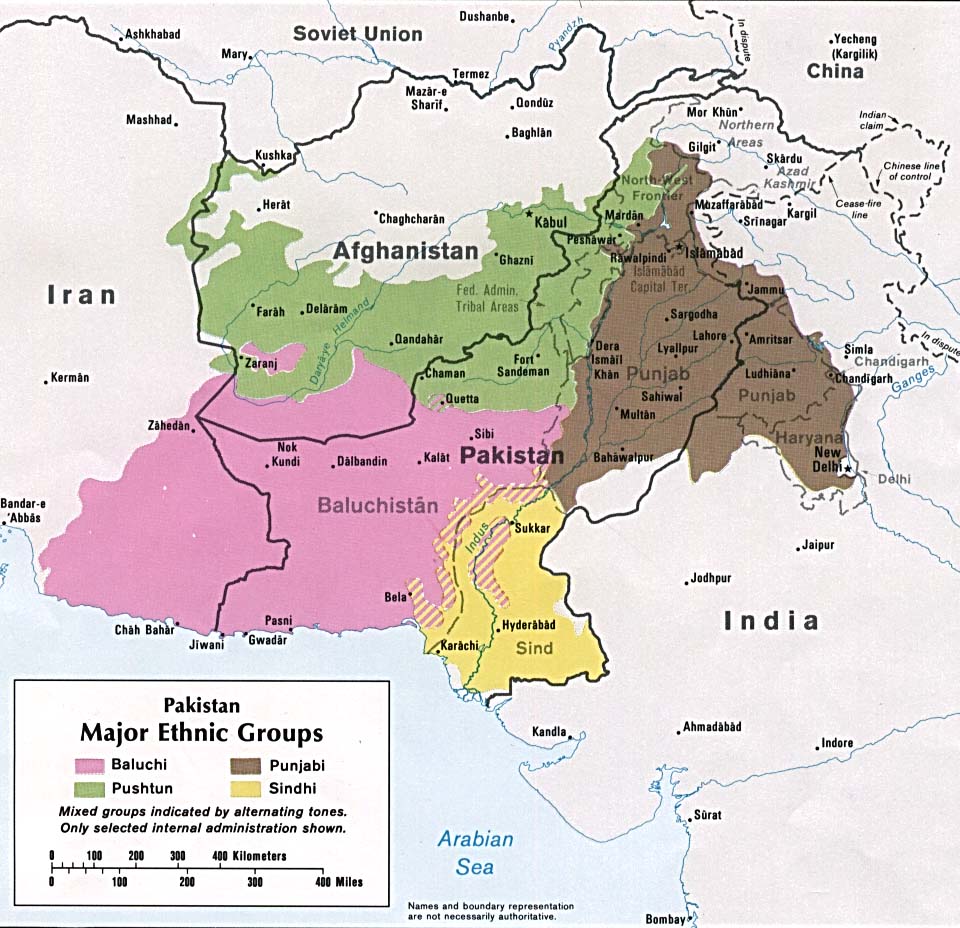
The two main tribes of Sindh are the Soomro—descendants of the Soomra dynasty, who ruled Sindh during 970–1351 C.E.—and the Samma—descendants of the Samma dynasty, who ruled Sindh during 1351–1521 CE. These tribes belong to the same bloodline.
Among other Sindhi Sammat and Sindhi Rajputs are the Bhuttos, Kambohs, Bhattis, Bhanbhros, Mahendros, Buriros, Bhachos, Chohans, Lakha, Sahetas, Lohanas, Mohano, Dahars, Indhar, Chhachhar, Chachar, Dhareja, Rathores, Dakhan, Langah, Junejo, Mahars, etc. One of the oldest Sindhi tribes is the Charan. The Sindhi-Sipahi of Rajasthan and the Sandhai Muslims of Gujarat are communities of Sindhi Rajputs settled in India. Closely related to the Sindhi Rajputs are the Sindhi Jats, who are found mainly in the Indus delta region. However, tribes are of little importance in Sindh as compared to in Punjab and Balochistan. Identity in Sindh is mostly based on a common ethnicity and language.
Islam in Sindh has a long history, starting with the capture of Sindh by Muhammad Bin Qasim in 712 CE. Over time, the majority of the population in Sindh converted to Islam, especially in rural areas. Today, Muslims make up over 90% of the population, and are more dominant in urban than rural areas.
Islam in Sindh has a strong Sufi ethos with numerous Muslim saints and mystics, such as the Sufi poet Shah Abdul Latif Bhittai, having lived in Sindh historically. One popular legend which highlights the strong Sufi presence in Sindh is that 125,000 Sufi saints and mystics are buried on Makli Hill near Thatta. The development of Sufism in Sindh was similar to the development of Sufism in other parts of the Muslim world. In the 16th century two Sufi tareeqat (orders)—Qadria and Naqshbandia—were introduced in Sindh. Sufism continues to play an important role in the daily lives of Sindhis.
Sindh also has Pakistan's highest percentage of Hindus overall, which accounts 8.7% of the population, roughly around 4.2 million people, and 13.3% of the province's rural population as per 2017 Pakistani census report. These numbers also include the scheduled caste population, which stands at 1.7% of the total in Sindh (or 3.1% in rural areas), and is believed to have been under-reported, with some community members instead counted under the main Hindu category. Although Pakistan Hindu Council claimed that there are 6,842,526 Hindus living in Sindh Province covering around 14.29% of the region's population. Umerkot district in the Thar Desert is Pakistan's only Hindu-majority district. The Shri Ramapir Temple in Tandoallahyar whose annual festival is the second largest Hindu pilgrimage in Pakistan is in Sindh. Sindh is also the only province in Pakistan to have a separate law for governing Hindu marriages.
Per community estimates, there are approximately 10,000 Sikhs in Sindh.
Sindhi Hindus
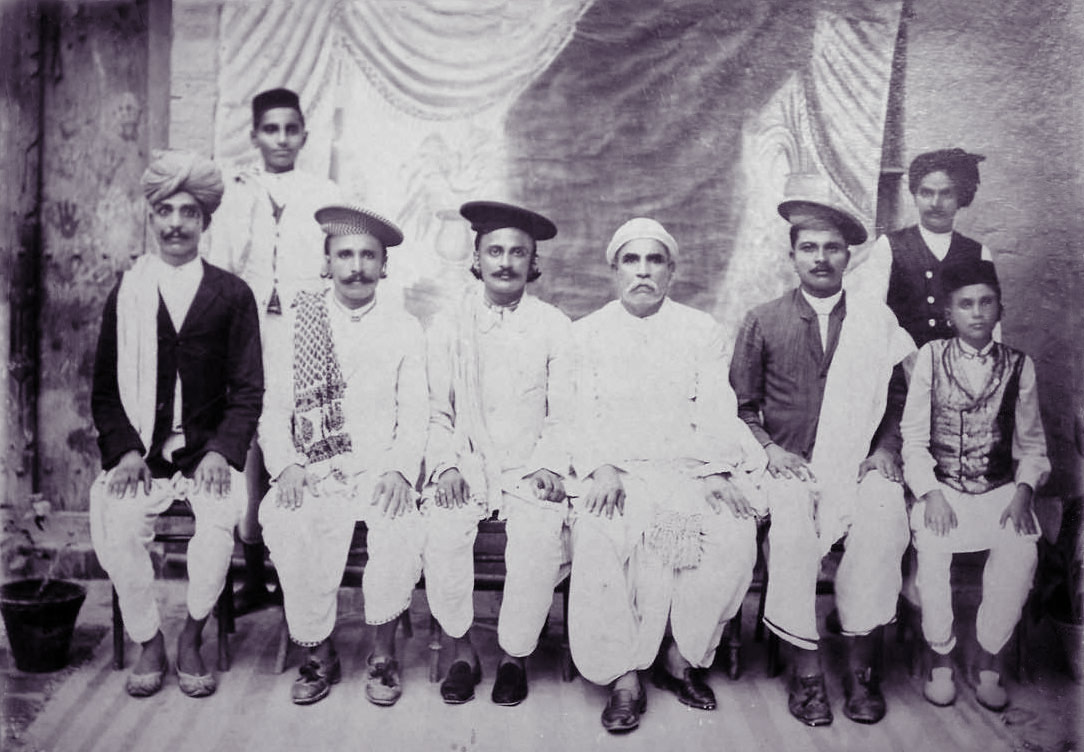
Hinduism along with Buddhism was the predominant religion in Sindh before the Arab Islamic conquest. The Chinese Buddhist monk Xuanzang, who visited the region in the years 630–644, said that Buddhism was declining in the region. While Buddhism declined and ultimately disappeared after the Arab conquest, mainly due to conversion of almost all of the Buddhist population of Sindh to Islam, Hinduism managed to survive as a significant minority through Muslim rule until before the partition of India. Derryl Maclean explains what he calls "the persistence of Hinduism" on the basis of "the radical dissimilarity between the socio-economic bases of Hinduism and Buddhism in Sind": Buddhism in this region was mainly urban and mercantile while Hinduism was rural and non-mercantile, thus the Arabs, themselves urban and mercantile, attracted and converted the Buddhist classes, but for the rural and non-mercantile parts, only interested by the taxes, they promoted a more decentralized authority and appointed Brahmins for the task, who often just continued the roles they had in the previous Hindu rule.
According to the 2017 Census of Pakistan, Hindus constituted about 8.7% of the total population of Sindh province, roughly around 4.2 million people. Most of them live in urban areas such as Karachi, Hyderabad, Sukkur and Mirpur Khas. Hyderabad is currently the largest centre of Sindhi Hindus in Pakistan, with 100,000–150,000 living there. The ratio of Hindus in Sindh was higher before the Partition of India in 1947.
Prior to the Partition of India, around 73% of the population of Sindh was Muslim with almost 26% of the remaining being Hindu.
Hindus in Sindh were concentrated in the urban areas before the Partition of India in 1947, during which most migrated to modern-day India according to Ahmad Hassan Dani. In the urban centres of Sindh, Hindus formed the majority of the population before the partition. The cities and towns of Sindh were dominated by the Hindus. In 1941, Hindus were 64% of the total urban population. According to the 1941 Census of India, Hindus formed around 74% of the population of Hyderabad, 70% of Sukkur, 65% of Shikarpur and about half of Karachi. By the 1951 Census of Pakistan, all of these cities had virtually been emptied of their Hindu population as a result of the partition.
Hindus were also spread over the rural areas of Sindh province. Thari (a dialect of Sindhi) is spoken in Sindh in Pakistan and Rajasthan in India.
Sindhi Muslims
The connection between Sindh and Islam was established by the initial Muslim missions. According to Derryl N. Maclean, a link between Sindh and Muslims during the Caliphate of Ali can be traced to Hakim ibn Jabalah al-Abdi, a companion of the Islamic Prophet Muhammad, who traveled across Sindh to Makran in the year 649 CE and presented a report on the area to the Caliph. He supported Ali ibn Abi Talib, and died in the Battle of the Camel alongside Sindhi Jats. He was also a poet and few couplets of his poem in praise of Ali ibn Abu Talib have survived, as reported in Chachnama:
ليس الرزيه بالدينار نفقدة
ان الرزيه فقد العلم والحكم
وأن أشرف من اودي الزمان به
أهل العفاف و أهل الجود والكرم
"Oh Ali, owing to your alliance (with the prophet) you are true of high birth, and your example is great, and you are wise and excellent, and your advent has made your age an age of generosity and kindness and brotherly love". |sign=|source=|title=}}

In 712 C.E., Sindh was incorporated into the Caliphate, the Islamic Empire, and became the "Arabian gateway" into India (later to become known as Bab-ul-Islam, the gate of Islam).
Sindh produced many Muslim scholars early on, "men whose influence extended to Iraq where the people thought highly of their learning", in particular in hadith, with the likes of poet Abu al- 'Ata Sindhi (d. 159) or hadith and fiqh scholar Abu Mashar Sindhi (d. 160), among many others. Sindhi scholars also translated scientific texts from Sanskrit into Arabic, for instance, the Zij al-Sindhind in astronomy.
The majority of Muslim Sindhis follow the Sunni Hanafi fiqh with a minority being Shia Ithna 'ashariyah. Sufism has left a deep impact on Sindhi Muslims and this is visible through the numerous Sufi shrines which dot the landscape of Sindh.
Sindhi Muslim culture is highly influenced by Sufi doctrines and principles. Some of the popular cultural icons are Shah Abdul Latif Bhitai, Lal Shahbaz Qalandar, Jhulelal and Sachal Sarmast.
Tribes
Main article: List of Sindhi tribes}}Major [[tribe]]s in Sindh include [[Soomros]],{{Cite conference
| **Religion** | Caste | Surnames |
|---|---|---|
| Muslim | Rajput/ Jats/ Sammat | Soomros, Samo, Kalhora, Bhutto, Rajper, Kambohs, Bhati, Bhanbhros, Detho, Mahendros, Buriro, Unar, Dahri, Bhachos, Chohans, Lakha, Sahetas, Kaka, Mohano, Dahars, Indhar, Dakhan, Langah, Mahar, Chhachhar, Chachar, Halo, Dhareja, Jadeja, Juneja, Panhwar, Rathores, Memon, Khatri, Mahesar, Thaheem, Palh, Warya, Abro, Thebo, Siyal, Khaskheli, Palijo, Kehar, Solangi, Joyo, Burfat, Ruk, Palari, Palijo, Jokhio, Jakhro, Noonari, Narejo, Samejo, Korejo, Shaikh, Naich, Sahu/Soho, Jat, Mirjat, Khuhro, Bhangar, Roonjha, Rajar, Dahri, Mangi, Tunio, Gaho, Ghanghro, Chhutto, Hingoro, Hingorjo, Dayo, Halaypotro, Phulpotro, Pahore, Shoro, Arisar, Rahu, Rahujo, Katpar, Pechuho, Bhayo, Odho, Otho, Larak, Mangrio, Bhurt, Bughio, Chang, Chand, Chanar, Hakro, Khokhar. |
| Hindu/Muslim | Sindhi Bhaiband Lohana | Aishani, Agahni, Aneja, Anandani, Ambwani, Asija, Bablani, Bajaj, Bhagwani, Bhaglani, Bhojwani, Bhagnani, Balani, Baharwani, Biyani, Bodhani, Channa, Chothani, Dalwani, Damani, Devnani, Dhingria, Dolani, Dudeja, Gajwani, Gangwani, Ganglani, Gulrajani, Hiranandani, Hotwani, Harwani, Jagwani, Jamtani, Jobanputra, Jumani, Kateja, Kodwani, Khabrani, Khanchandani, Khushalani, Lakhani, Lanjwani, Laungani, Lachhwani, Ludhwani, Lulia, Lokwani, Manghnani, Mamtani, Mirani, Mirpuri, Mirwani, Mohinani, Mulchandani, Nihalani, Nankani, Nathani, Parwani, Phull, Qaimkhani, Ratlani, Rajpal, Rustamani, Ruprela, Sambhavani, Santdasani, Soneji, Setia, Sewani, Tejwani, Tilokani, Tirthani, Wassan, Vangani, Varlani, Vishnani, Visrani, Virwani and Valbani |
| Sindhi Amil Lohana | Advani, Ahuja, Ajwani, Bathija, Bhambhani, Bhavnani, Bijlani, Chhablani, Chhabria, Chugani, Dadlani, Daryani, Dudani, Essarani, Gabrani, Gidwani, Hingorani, Idnani, Issrani, Jagtiani, Jhangiani, Kandharani, Karnani, Kewalramani, Khubchandani, Kriplani, Lalwani, Mahtani, Makhija, Malkani, Manghirmalani, Manglani, Manshani, Mansukhani, Mirchandani, Motwani, Mukhija, Panjwani, Punwani, Ramchandani, Raisinghani, Ramsinghani, Rijhsanghani, Sadarangani, Shahani, Shahukarani, Shivdasani, Sipahimalani (shortened to Sippy), Sitlani, Sarabhai, Singhania, Takthani, Thadani, Vaswani, Wadhwani Uttamsinghani. | |
| Muslim /Hindu | Artisan | Kumbhar, Machhi, Mallah, Kori, Jogi, Drakhan, Mochi Labano/Chahwan, Patoli, Maganhar, Chaki. |
Emigration
Main article: Sindhi diaspora}}The Sindhi [[diaspora]] is significant. [[Emigration]] from the Sindh became mainstream after the 19th century with the [[British conquest of Sindh]]. A number of Sindhi traders emigrated to the [[Canary Islands]]{{Cite web
The Lawatia (or Lawatiyya) community in Muttrah in Muscat has its origins in the Sindh province of Pakistan. The Lawatia are Sindhi Khoja by origin. They immigrated to Oman between 1780 and 1850. Luwatis converted to Twelver Shia Islam in the 19th century from Ismaili Shia Islam.
After the Partition of India, many Sindhi Hindus emigrated to Europe, especially to the United Kingdom, North America, and Middle Eastern states such as the United Arab Emirates and Saudi Arabia. Some settled in Hong Kong.
Culture

The local climate also reflects why the Sindhis have the language, folklore, traditions, customs and lifestyle that are so different from the neighbouring regions. The Sindhi culture is also strongly practiced by the Sindhi diaspora.
The roots of Sindhi culture go back to the distant past. Archaeological research during 19th and 20th centuries showed the roots of social life, religion and culture of the people of the Sindh: their agricultural practices, traditional arts and crafts, customs and tradition and other parts of social life, going back to a mature Indus Valley Civilization of the third millennium BC. Recent researches have traced the Indus valley civilization to even earlier ancestry.
Language

Sindhi is an Indo-Aryan language spoken by about 30 million people in the Pakistani province of Sindh, where it has official institutional status and has plans to being promoted further. It is also spoken by a further 4.8 million people in India, where it is a scheduled language, without any state-level official status. Despite that there have been online methods for teaching Sindhi.
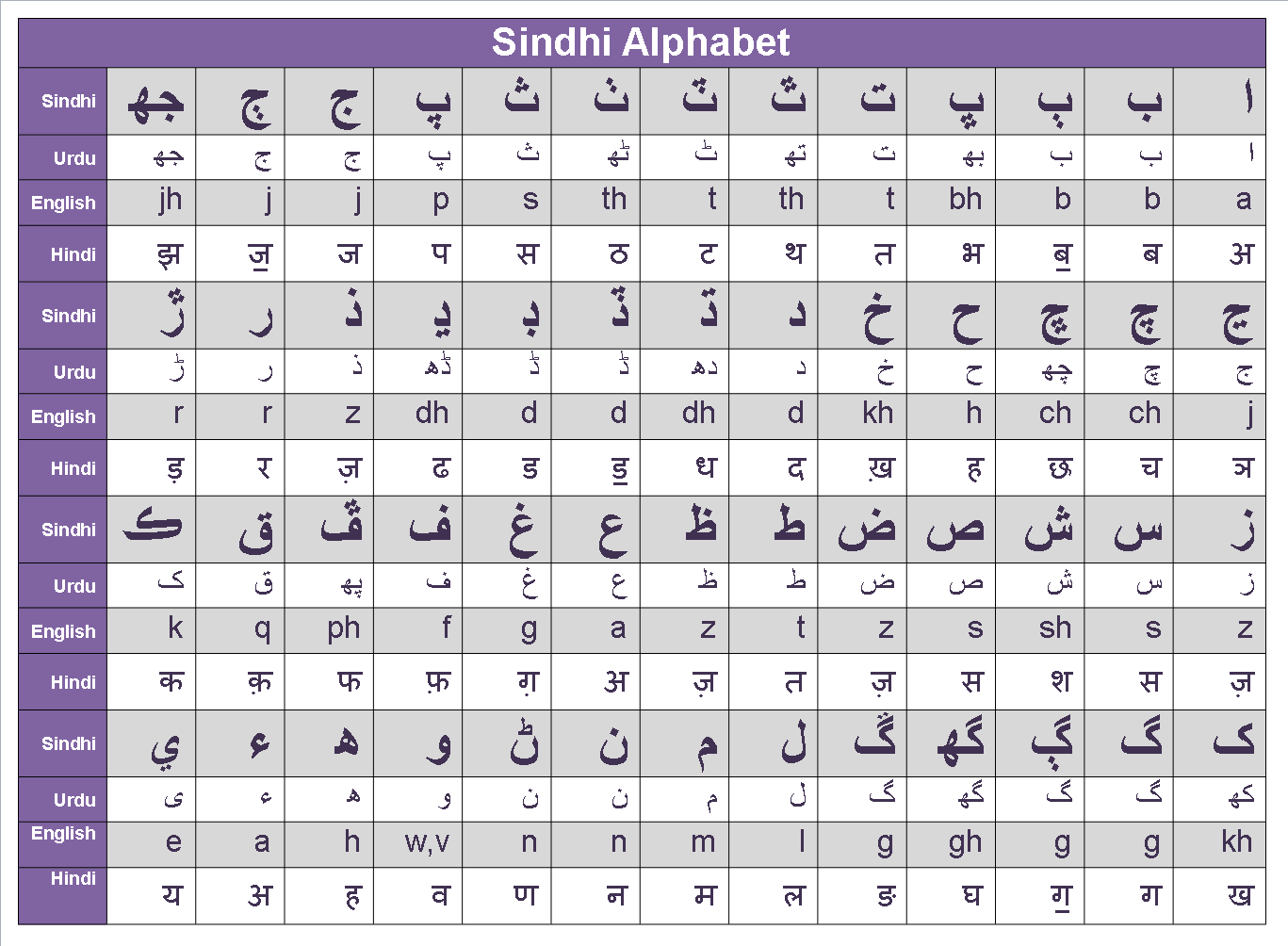
The main writing system is the Perso-Arabic script, which accounts for the majority of the Sindhi literature and is the only one currently used in Pakistan. In India, both the Perso-Arabic script and Devanagari are used. At the occasion of 'Mother Language Day' in 2023, the Sindh Assembly passed a unanimous resolution to extend and increase the status of Sindhi as the national language
Sindhi is believed to be originated from an older Indo-Aryan dialect spoken in Indus valley, Sindhi has an attested history from the 10th century CE. Sindhi was one of the first Indo-Aryan languages to encounter influence from Persian and Arabic following the Umayyad conquest in 712 CE.
A substantial body of Sindhi literature developed during the Medieval period, the most famous of which is the religious and mystic poetry of Shah Abdul Latif Bhittai from the 18th century. Modern Sindhi was promoted under British rule beginning in 1843, which led to the current status of the language in independent Pakistan after 1947. During British rule in India, a variant of the Persian alphabet was adopted for Sindhi in the 19th century. The script is used in Pakistan and India today. It has a total of 52 letters, augmenting the Persian with digraphs and eighteen new letters ({{Naskh|ڄ ٺ ٽ ٿ ڀ ٻ ڙ ڍ ڊ ڏ ڌ ڇ ڃ ڦ ڻ ڱ ڳ ڪ}}) for sounds particular to Sindhi and other Indo-Aryan languages. Some letters that are distinguished in Arabic or Persian are homophones in Sindhi.
| sd | }} | sd | }} | sd | }} | sd | }} | sd | }} | sd | }} | sd | }} | sd | }} | sd | }} | sd | }} | sd | }} | sd | }} | sd | }} | sd | }} | sd | }} | sd | }} | sd | }} | sd | }} | sd | }} | sd | }} | sd | }} | sd | }} | sd | }} | sd | }} | sd | }} | sd | }} | sd | }} | sd | }} | sd | }} | sd | }} | sd | }} | sd | }} | sd | }} | sd | }} | sd | }} | sd | }} | sd | }} | sd | }} | sd | }} | sd | }} | sd | }} | sd | }} | sd | }} | sd | }} | sd | }} | sd | }} | sd | }} | sd | }} | sd | }} | sd | }} | sd | }} | sd | }} |
|---|---|---|---|---|---|---|---|---|---|---|---|---|---|---|---|---|---|---|---|---|---|---|---|---|---|---|---|---|---|---|---|---|---|---|---|---|---|---|---|---|---|---|---|---|---|---|---|---|---|---|---|---|---|---|---|---|---|---|---|---|---|---|---|---|---|---|---|---|---|---|---|---|---|---|---|---|---|---|---|---|---|---|---|---|---|---|---|---|---|---|---|---|---|---|---|---|---|---|---|---|---|---|---|
| q |
The name "Sindhi" is derived from the Sanskrit síndhu, the original name of the Indus River, along whose delta Sindhi is spoken. Like other languages of the Indo-Aryan family, Sindhi is descended from Old Indo-Aryan (Sanskrit) via Middle Indo-Aryan (Pali, secondary Prakrits, and Apabhramsha). 20th century Western scholars such as George Abraham Grierson believed that Sindhi descended specifically from the Vrācaḍa dialect of Apabhramsha (described by Markandeya as being spoken in Sindhu-deśa, corresponding to modern Sindh) but later work has shown this to be unlikely.
In Pakistan, Sindhi is the first language of 30.26 million people, or % of the country's population as of the 2017 census. 29.5 million of these are found in Sindh, where they account for % of the total population of the province. There are 0.56 million speakers in the province of Balochistan, especially in the Kacchi Plain that encompasses the districts of Lasbela, Hub, Kachhi, Sibi, Usta Muhammad, Jafarabad, Jhal Magsi, Nasirabad and Sohbatpur.
In India, there were a total of 1.68 million speakers according to the 2011 census. The states with the largest numbers were Maharashtra (), Rajasthan (), Gujarat (), and Madhya Pradesh ().
Traditional dress
Main article: Sindhi clothing
The traditional Sindhi clothing varies from tribe to tribe but most common are Paro Cholo, Salwar Cholo and Ghagho, Abho and Jubo (different types of frocks) with Sindhi embroideries and mirror work for women and long wide veil is important. Traditional dress for men is the Sindhi version of Shalwar Qameez or Kurta and above kameez or kurta a traditional embroidered or printed koti/gidi/sadri and Ajrak or Lungi (shawls) with either Sindhi Patko or Sindhi topi. Ajrak is added to dress for allure.
Literature
Main article: Sindhi literature, Sindh Literature Festival
Sindhi literature is very rich, and is one of the world's oldest literatures. The earliest reference to Sindhi literature is contained in the writings of Arab historians. It is established that Sindhi was the first eastern language into which the Quran was translated, in the 8th or 9th century. There is evidence of Sindhi poets reciting their verses before the Muslim Caliphs in Baghdad. It is also recorded that treatises were written in Sindhi on astronomy, medicine and history during the 8th and 9th centuries.
Sindhi literature is the composition of oral and written scripts and texts in the Sindhi language in the form of prose: (romantic tales, and epic stories) and poetry: (Ghazal, Wai and Nazm). The Sindhi language is considered to be one of the oldest languages of Ancient India, due to the influence of the language of Indus Valley inhabitants. Sindhi literature has developed over a thousand years.
According to the historians, Nabi Bux Baloch, Rasool Bux Palijo, and GM Syed, Sindhi had a great influence on the Hindi language in pre-Islamic times. Nevertheless, after the advent of Islam in eighth century, Arabic language and Persian language influenced the inhabitants of the area and were the official language of the territory through different periods.
Music
The folk music of Sindh is generally of five genres that originated in Sindh. The first one is the "Baits". The Baits style is vocal music in which Sanhoon (low voice) or Graham (high voice) is used.
Second is "Waee" instrumental music, which is performed in a variety of ways using a string instrument. Waee is also known as Kafi.
Other genres are Lada/Sehra/Geech, Dhammal, Doheera etc. The Sindhi folk musical instruments are Algozo, Tamburo, Chung, Yaktaro, Dholak, Khartal/Chapri/Dando, Sarangi, Surando, Benjo, Bansri, Borindo, Murli/Been, Gharo/Dilo, Tabla, Khamach/Khamachi, Narr, Kanjhyun/Talyoon, Duhl Sharnai and Muto, Nagaro, Danburo, Ravanahatha etc.
Dance
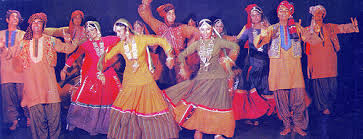
Dances of Sindh include the famous Ho Jamalo and Dhammal. Other common dances include Jhumar/Jhumir (different from the Jhumar dance of South Punjab), Kafelo, and Jhamelo. However, none of these have survived as much as Ho Jamalo. In marriages and on other occasions, a special type of song is produced; these are known as Ladas/Sehra/Geech and are sung to celebrate the occasion of marriage, birth and on other special days. They are mostly performed by women.
Some popular dances include:
- Jamalo: The notable Sindhi dance which is celebrated by Sindhis across the world.
- Jhumar/Jhumir: Performed on weddings and on special occasions.
- Dhamaal: is a mystical dance performed by Dervish.
- Chej, Although Chej has seen decline in Sindh it remains popular among Sindhi Hindus and the diaspora.
- Bhagat: is a dance performed by professionals to entertain visiting people.
- Doka/Dandio: Dance performed using sticks.
- Charuri: Performed in thar.
- Muhana Dance: A traditional dance performed by fisherfolk of Sindh.
- Rasudo: Dance of Nangarparkar.
Folk tales
Sindhi folklore folk traditions have developed in Sindh over a number of centuries. Sindh abounds with folklore, in all forms, and colours from such obvious manifestations as the traditional Watayo Faqir tales, The legend of Moriro, the epic tale of Dodo Chanesar, to the heroic character of Marui, which distinguishes it among the contemporary folklores of the region. The love story of Sassui, who pines for her lover Punhu, is known and sung in every Sindhi settlement. Examples of the folklore of Sindh include the stories of Umar Marui and Suhuni Mehar.
Sindhi folk singers and women play a vital role in transmitting Sindhi folklore. They sang the folktales of Sindh in songs with passion in every village of Sindh.
Sindhi folklore has been compiled in a series of forty volumes under Sindhi Adabi Board's project of folklore and literature. This valuable project was accomplished by noted Sindhi scholar Nabi Bux Khan Baloch. Folk tales such as Dodo Chanesar, Sassi Punnu, Moomal Rano, and Umar Marvi are examples of Sindhi folk tales.
The most famous Sindhi folk tales are known as the Seven Heroines of Shah Abdul Latif Bhittai. Some notable tales include:
- Umar Marui
- Sassui Punhun
- Sohni Mehar
- Lilan Chanesar
- Noori Jam Tamachi
- Sorath Rai Diyach
- Momal Rano
Festivals
Sindhis are very festive and like to organize festivals to commemorate their culture and heritage. Most Sindhi celebrate Sindhi Culture day, which is celebrated regardless of religion to express their love for their culture. It is observed with great zeal.
Muslims
Sindhi Muslims celebrate Islamic festivals such as Eid-ul-Adha, Eid al-Fitr and Jaatiyun wari Eid, which are celebrated with zeal and enthusiasm. A festival known as Jashn-e-Larkana is also celebrated by Sindhi Muslims.
Hindus
Compared to their Muslim counterparts, Hindu festivals are numerous and are based on ancient pre-islamic traditions of Sindh. Many Hindus have festivals based on a certain deity; common festivals include Cheti Chand (Sindhi new-year) Teejri, Thadri, Utraan.
Cuisine
Main article: Sindhi cuisine
Sindhi cuisine has been influenced by Central Asian, Iranian, and Mughal food traditions. It is mostly a non-vegetarian cuisine, with even Sindhi Hindus widely accepting of meat consumption. The daily food in most Sindhi households consists of wheat-based flat-bread (mani/roti) and rice accompanied by two dishes, one gravy and one dry with curd, papad or pickle. Freshwater fish and a wide variety of vegetables are usually used in Sindhi cuisine.
Restaurants specializing in Sindhi cuisine are rare, although it is found at truck stops in rural areas of Sindh province, and in a few restaurants in urban Sindh.
The arrival of Islam within India influenced the local cuisine to a great degree. Since Muslims are forbidden to eat pork or consume alcohol and the Halal dietary guidelines are strictly observed, Muslim Sindhis focus on ingredients such as beef, lamb, chicken, fish, vegetables and traditional fruit and dairy. Hindu Sindhi cuisine is almost identical with the difference that beef is omitted. The influence of Central Asian, South Asian and Middle Eastern cuisine in Sindhi food is ubiquitous. Sindhi cuisine was also found in India, where many Sindhi Hindus migrated following the Partition of India in 1947. Before Independence, the State of Sindh was under the Bombay Presidency.
Culture Day
Sindhi Cultural Day () is a popular Sindhi cultural festival. It is celebrated with traditional enthusiasm to highlight the centuries-old rich culture of Sindh. The day is celebrated each year in the first week of December on the Sunday. It is widely celebrated all over Sindh, and amongst the Sindhi diaspora population around the world. Sindhis celebrate this day to demonstrate the peaceful identity of Sindhi culture and acquire the attention of the world towards their rich heritage.
On this holiday people gather in all major cities of Sindh at press clubs, and other places to arrange various activities. They engage in literary (poetic) gatherings, mach katchehri (gathering in a place and sitting round in a circle and the fire on sticks in the center), musical concerts, seminars, lecture programs and rallies. On the occasion people wearing Ajrak and Sindhi Topi, traditional block printed shawls, attend musical programs and rallies in many cities. Major hallmarks of cities and towns are decorated with Sindhi Ajrak. People across Sindh exchange gifts of Ajrak and Topi at various ceremonies. Even the children and women dress up in Ajrak, assembling at the grand gathering, where famous Sindhi singers sing Sindhi songs. The musical performances of the artists inspire the participants to dance to Sindhi tunes and the national song ‘Jeay Sindh Jeay-Sindh Wara Jean’.
All political, social and religious organizations of Sindh, besides the Sindh Culture Department and administrations of various schools, colleges and universities, organize a variety of events including seminars, debates, folk music programs, drama and theatric performances, tableaus and literary sittings to mark this annual festivity. Sindhi culture, history and heritage are highlighted at the events.[[File:Sindhi Literature.JPG|left|thumb|[[Sindhi literature]] festival in [[Islamabad]]]]
Poetry
Prominent in Sindhi culture, poetry continues an oral tradition dating back a thousand years, based on folk tales. Sindhi is one of the major oldest languages of the Indus Valley, having a particular literary colour both in poetry and prose. Sindhi poetry is very rich in thought as well as containing a variety of genres like other developed languages.
The poetry of Shah Abdul Latif Bhittai and Sachal Sarmast is very famous throughout Sindh. Since the 1940s, Sindhi poetry has incorporated broader influences, including the sonnet and blank verse. Soon after the independence of Pakistan in 1947, these forms were reinforced by Triolet, Haiku, Renga and Tanka. At present, these forms continue to co-exist, albeit in a varying degree, with Azad Nazm having an edge over them all.
Notable people
Main article: List of Sindhi people
Notes
References
Bibliography
References
- (19 May 2021). "Pakistan's population is 207.68m, shows 2017 census result".
- (2024). "Ethnologue: Languages of the World". Ethnologue (Free All).
- (23 May 2023). "Now, class 6th & 8th students of U.P. Govt schools to learn about Sindhi deities, personalities". Hindustan Times.
- (29 June 2018). "Scheduled Languages in descending order of speaker's strength – 2011". [[Registrar General and Census Commissioner of India]].
- "Sindhi {{!}} Ethnologue".
- "Yearbook 2017-2018".
- (June 2005). "Let it flow: Economy, spirituality and gender in the Sindhi network". Sage Publications.
- "Explore Census Data".
- "United Kingdom". Ethnologue.
- (1999). "Language shift Amongst The Sindhis of Malaysia". Cambridge University Press.
- "Sindhi Association Hong Kong".
- (8 February 2017). "Census Profile, 2016 Census – Canada [Country] and Canada [Country]".
- (2008). "Rising India and Indian Communities in East Asia". Institute of Southeast Asian Studies.
- "Sindhis".
- (2019). "Contentious belonging: the place of minorities in Indonesia". ISEAS publishing.
- "Encyclopedias almanacs transcripts and maps > Sindhis".
- Butt, Rakhio. (1998). "Papers on Sindhi Language & Linguistics". Institute of Sindhology, University of Sindh.
- Siraj, Amjad. "Sindhi Language". [[Sindhi Language Authority]].
- Faiz, Asma. (2021). "In Search of Lost Glory: Sindhi Nationalism in Pakistan". Hurst Publishers.
- "The Sindh diaspora: India and the United Kingdom".
- (January 2022). "Young Sindhi Muslims in Cultural Maintenance in the Face of Language Shift".
- "Excerpt: For Some Sindhi Diaspora Members, Navigating Multiple Identities Is Not a Problem".
- "Culture".
- Kalhoro, Zulfiqar Ali. (2018). "Archaeology, Art and Religion in Sindh". Culture Department, Government of Sindh.
- "Sindhi Manual: Language and Culture".
- (2006). "Encyclopedia of Language & Linguistics". Elsevier Ltd.
- Malkani, Dada Kewalram Ratanmal. (4 July 1997). "The Sindh Story". Sani Hussain Panhwar.
- (1986). "The Jat of Pakistan". Lok Virsa.
- (2008). "The Baloch and Others: Linguistic, Historical and Socio-political Perspectives on Pluralism in Balochistan". Reichert Verlag.
- Mahajan, V. D.. (2007). "History of Medieval India". S. Chand Publishing.
- Pithawala, M. B.. (2018). "Historical Geography of Sindh". Sani Panhwar Publishers.
- Nicolini, Beatrice. (2004-01-01). "Makran, Oman, and Zanzibar: Three-Terminal Cultural Corridor in the Western Indian Ocean, 1799-1856". BRILL.
- Khan, Hussain Ahmad. (2004-08-01). "Re-Thinking Punjab: The Construction of Siraiki Identity". Research and Publication Centre, National College of Arts, Lahore.
- (1990). "Glossary of the Tribes and Castes of the Punjab and North West Frontier Province". Asian Educational Services.
- DADUZEN, Dayal N. Harjani aka. (2018-07-19). "Sindhi Roots & Rituals - Part 1". Notion Press.
- Faiz, Asma. (2021-12-09). "In Search of Lost Glory: Sindhi Nationalism in Pakistan". Hurst Publishers.
- (2005). "Bards, Ballads and Boundaries: An Ethnographic Atlas of Music Traditions in West Rajasthan". Seagull.
- Bhavnani, Nandita. (2014). "The Making of Exile: Sindhi Hindus and the Partition of India". Tranquebar Press.
- Falzon, Mark-Anthony. (2004). "Cosmopolitan Connections: The Sindhi Diaspora, 1860-2000". BRILL.
- (2020-07-17). "Hindus under the official Muslims of Pakistan".
- Singh, Rajkumar. (2019-11-11). "Religious profile of today's Pakistani Sindh Province".
- (2006-12-30). "RSS and Sindhi Hindus". Economic & Political Weekly.
- (2012-06-04). "Who orchestrated the exodus of Sindhi Hindus after Partition?".
- (2020-11-26). "Shortchanged by Partition, why Sindhis hold Karachi especially dear".
- Ganesan, Nikita Puri and Ranjita. (2019-03-08). "India's Sindhi community is flourishing but the going isn't always easy".
- Pioneer, The. "Scattered Sindhi society".
- (2019-01-07). "Most billionaires in India today once resided in Pakistan's Sindh".
- Aggarwal, Saaz. (August 11, 2017). "After Partition, Sindhis Turned Displacement Into Determination and Enterprise".
- Dogra, Palak. (29 January 2023). "Why Are Gujaratis, Marwaris, Sindhis So Good At Making Money?".
- Service, Tribune News. "'The Sindhis — Selling Anything, Anywhere' is story of the quintessential Sindhi businessman".
- (2017-11-06). "How Sindhis do Business, An Excerpt from 'Paiso'".
- Service, Statesman News. (2023-04-01). "Bhagwat lauds contribution of Sindhis to the nation".
- (2011). "2011 Census of India".
- (21 April 2022). "Hinduism in ancient and modern Afghanistan".
- (6 June 2011). "2009: Kabul admitted having 500 Baloch, Sindhi separatists in Afghanistan".
- "Proud of their heritage; proud to be Lankans".
- India, Ministry External Affairs. "India-Sri Lanka Relations".
- Nazim, Aisha. (12 August 2017). "Why the Partition of India was a tectonic event for Sri Lankan Sindhis".
- (2009-10-20). "The story of the Lankan Sindhis".
- Aggarwal, Saaz. (10 November 2022). "How did the Partition affect the people of Sindh? Using true stories, a new book finds out".
- (2017-10-27). "Documenting Sri Lanka's Ethnic Minorities: The Other 2% - Roar Media".
- (2019-08-15). "They made a life in Hong Kong: Hindus on India's partition".
- Auto, Hermes. (2022-03-13). "Sindhi community has contributed to Singapore: PM Lee {{!}} The Straits Times".
- "'Youm-e-Bab-ul-Islam: A day to renew our commitment and dedication to Pakistan'". www.thenews.com.pk.
- Sanyal, Sanjeev. (10 July 2013). "Land of the seven rivers : a brief history of India's geography". Penguin Books.
- "Mohenjo-Daro: An Ancient Indus Valley Metropolis".
- (2012-06-26). "Mohenjo Daro: Could this ancient city be lost forever?". BBC News.
- {{harvnb. Dyson. 2018
- Sharar, ʻAbdulḥalīm. (1907). "A History of Sindh: Volume I". Dilgudaz Press.
- Biagi, Paolo. (2007). "With Alexander in India and Central Asia: Moving East and Back to West". Oxbow Books.
- Dayal, N. Harjani. (2018). "Sindhi Roots & Rituals – Part 1". Notion Press.
- J.C, Aggarwal. (2017). "S. Chand's Simplified Course in Ancient Indian History". S. Chand Publishing.
- (1999). "1998 District Census Report of Sindh". Population Census Organisation, Statistics Division, Government of Pakistan.
- Gier, Nicholas F.. (May 2006). "From Mongols to Mughals: Religious violence in India, 9th–18th centuries".
- (2012). "The Spread of Islam Throughout the World". UNESCO.
- "History of India".
- (1999). "''The Cambridge History of Southeast Asia'' by Nicholas Tarling p.39". Cambridge University Press.
- "Hispania [Publicaciones periódicas]. Volume 74, Number 3, September 1991 – Biblioteca Virtual Miguel de Cervantes".
- Brohī, ʻAlī Aḥmad. (1998). "The Temple of Sun God: Relics of the Past". Sangam Publications.
- Burton, Sir Richard Francis. (1851). "Sindh, and the Races that Inhabit the Valley of the Indus". W. H. Allen.
- Verkaaik, Oskar. (2004). "Migrants and Militants: Fun and Urban Violence in Pakistan". Princeton University Press.
- (2018-04-21). "History of Khairpur and the royal Talpurs of Sindh".
- (2006). "Indian States: A Biographical, Historical, and Administrative Survey". Asian Educational Services.
- (1987). "The Problem of "Greater Baluchistan": A Study of Baluch Nationalism". Steiner Verlag Wiesbaden.
- (2021). "Hidden Caliphate: Sufi Saints Beyond the Oxus and Indus". Harvard University Press.
- "The Royal Talpurs of Sindh – Historical Background".
- Ahmed, Ashfaq. (7 December 2021). "Indian and Pakistani Sindhi expats together celebrate Sindhi Cultural Day with fanfare in Dubai".
- Maher, Mahim. (2014-03-27). "From Zardaris to Makranis: How the Baloch came to Sindh".
- Sheikh, Muhammad Ali. (2013). "A Monograph on Sindh through centuries". SMI University Press Karachi.
- Ratcliffe, Susan. (2011). "Concise Oxford Dictionary of Quotations". Oxford University Press.
- (2015). "State and Nation-Building in Pakistan: Beyond Islam and Security". Routledge.
- (July–December 2015). "British annexation of Sindh: The Opium Economy Factor".
- (1941). "British Policy towards Sindh upto Annexation". Sani Panhwar Publishers.
- Bhavnani, Nandita. (2014). "The Making of Exile: Sindhi Hindus and the Partition of India". Tranquebar Press.
- (2016). "Sindh, 1947 and Beyond". South Asia: Journal of South Asian Studies.
- Aggarwal, Saaz. (13 August 2022). "How refugees from Sindh rebuilt their lives – and India – after Partition".
- Kamphorst, Janet. (2008). "In praise of death: history and poetry in medieval Marwar (South Asia)". Leiden University Press.
- Abdullah, Ahmed. "The People and The Land of Sindh".
- Annemarie Schimmel, ''Pearls from Indus'' Jamshoro, Sindh, Pakistan: Sindhi Adabi Board (1986). See p. 150.
- (2013-09-25). "History of Sufism in Sindh discussed". DAWN.COM.
- (2015-02-02). "Can Sufism save Sindh?". DAWN.COM.
- "SALIENT FEATURES OF FINAL RESULTS CENSUS-2017".
- "Religion in Pakistan (2017 Census)". Pakistan Bureau of Statistics.
- "Scheduled castes have a separate box for them, but only if anybody knew".
- "Hindu Population (PK)". Pakistanhinducouncil.org.pk.
- (26 September 2012). "Hindu's converge at Ramapir Mela near Karachi seeking divine help for their security - The Times of India".
- Jatoi, Shahid. (8 June 2017). "Sindh Hindu Marriage Act—relief or restraint?". Express Tribune.
- Tunio, Hafeez. (31 May 2020). "Shikarpur's Sikhs serve humanity beyond religion". Century Publications Private Limited.
- Shu Hikosaka, G. John Samuel, Can̲ārttanam Pārttacārati (ed.), ''Buddhist themes in modern Indian literature'', Inst. of Asian Studies, 1992, p. 268
- MacLean, Derryl L.. (1989). "Religion and Society in Arab Sind". BRILL.
- "Pakistan Census Data".
- "TABLE 9 - POPULATION BY SEX, RELIGION AND RURAL/URBAN".
- "Scheduled castes have a separate box for them, but only if anybody knew".
- (17 August 2017). "Partition and the "other" Sindhi".
- Mehtab Ali Shah. (1997). "The foreign policy of Pakistan: ethnic impacts on diplomacy, 1971–1994". I B Tauris and Co Ltd.
- Rahimdad Khan Molai Shedai; Janet ul Sindh; 3rd edition, 1993; Sindhi Adbi Board, Jamshoro; page no: 2.
- Proceedings of the First Congress of Pakistan History & Culture held at the University of Islamabad, April 1973, Volume 1, University of Islamabad Press, 1975
- "INDIA – Part I – Tables". [[1941 Census of India.
- "Population According to Religion". [[1951 Census of Pakistan.
- M. Ishaq, "Hakim Bin Jabala – An Heroic Personality of Early Islam", Journal of the Pakistan Historical Society, pp. 145–50, (April 1955).
- Derryl N. Maclean," '''Religion and Society in Arab Sind'''", p. 126, BRILL, (1989) {{ISBN. 90-04-08551-3.
- چچ نامہ، سندھی ادبی بورڈ، صفحہ 102، جامشورو، (2018)
- Mirza Kalichbeg Fredunbeg, "The Chachnama", p. 43, The Commissioner's Press, Karachi (1900).
- Ibn Athir, Vol. 3, pp. 45–46, 381, as cited in: S. A. N. Rezavi, "'''The Shia Muslims'''", in History of Science, Philosophy and Culture in Indian Civilization, Vol. 2, Part. 2: "Religious Movements and Institutions in Medieval India", Chapter 13, Oxford University Press (2006).
- Ibn Sa'd, 8:346. The raid is noted by Baâdhurî, "fatooh al-Baldan" p. 432, and Ibn Khayyât, Ta'rîkh, 1:173, 183–84, as cited in: Derryl N. Maclean," '''Religion and Society in Arab Sind'''", p. 126, BRILL, (1989) {{ISBN. 90-04-08551-3.
- Tabarî, 2:129, 143, 147, as cited in: Derryl N. Maclean," '''Religion and Society in Arab Sind'''", p. 126, Brill, (1989) {{ISBN. 90-04-08551-3.
- Mazheruddin Siddiqui, "Muslim culture in Pakistan and India" in [[Kenneth W. Morgan]], ''Islam, the Straight Path: Islam Interpreted by Muslims'', Motilal Banarsidass Publ., 1987, p. 299
- Ahmed Abdulla, ''The historical background of Pakistan and its people'', Tanzeem Publishers, 1973, p. 109
- (11 November 2019). "Religious profile of today's Pakistani Sindh Province". South Asia Journal.
- Ansari, Sarah FD. ''Sufi saints and state power: the pirs of Sind, 1843–1947''. No. 50. Cambridge University Press, 1992.
- Siddiqui, Habibullah. "The Soomras of Sindh: their origin, main characteristics and rule. – an overview (general survey) (1025 – 1351 AD)". Literary Conference on Soomra Period in Sindh.
- Panhwar, M. H.. (2003). "Historical Atlas of Soomra Kingdom of Sindh (1011–1351 AD)". Soomra National Council.
- Lari, Suhail Zaheer. (1993). "A History of Sindh".
- "History of Sindh".
- Taseer, Salman. (3 September 1979). "Bhutto a Political Biography". Ithaca Press.
- "Census of India, 1911".
- U.T Thakur. (1959). "Sindhi Culture".
- Ansari, Sheikh Sadik Ali Sher Ali. (1901). "The Musalman Races found in Sind, Baluchistan and Afghanistan.".
- Kamalakaran, Ajay. (21 September 2022). "In the story of Sindhi migration, Canary Islands played a small but important role".
- Peck, James. (2004). "Hindus on a rock". Oxford Brookes University.
- "Oman".
- (1999). "Indian Merchant Networks outside India in the Nineteenth and Twentieth Centuries: A Preliminary Survey". Cambridge University Press.
- Wippel, Steffen. (2013-08-16). "Regionalizing Oman: Political, Economic and Social Dynamics". Springer Science & Business Media.
- David, Maya Khemlani. (2001). "The Sindhi Hindus of London". University of Malaya.
- (2019-08-15). "They made a life in Hong Kong: Hindus on India's partition".
- "Homepage of Sindhi Association of Hongkong & China".
- Shaheen, Yussouf. (2018). "The Story Of The Ancient Indus People". Culture and Tourism Department, Government of Sindh.
- (June 2014). "Restraints of language and culture of Sindh: An historical perspective". Grassroots Journal.
- (25 February 2023). "Love for Sindhi language brings together Indian and Pakistani expats in Dubai".
- Dootio, Mazhar Ali. (6 December 2018). "Sindhi culture and its importance". [[Daily Times Pakistan.
- (1997). "Anthropology". Atlantic Publishers & Dist.
- Zhang, Sarah. (5 September 2019). "A Burst of Clues to South Asians' Genetic Ancestry". [[The Atlantic]].
- Laurie Bauer, 2007, ''The Linguistics Student's Handbook'', Edinburgh
- (18 January 2023). "Pakistan: Sindh CM launches website aimed at digitising rare Sindhi language books".
- "India's first Sindhi OTT App launch - SINDHIPLEX".
- (2023-02-21). "Members decry delay in declaring Sindhi a national language".
- Siddiqui, Tahir. (2023-02-22). "Govt, opposition demand national language status for Sindhi".
- "Pakistan: Members of Sindh Assembly demand national language status for Sindhi".
- Allana, Ghulam Ali. (2009). "Sindhi Language and Literature at a Glance". [[Sindhi Language Authority]].
- "Sindhi". The Languages Gulper.
- (1981). "The Origin of the Sindhi Language". Bulletin of the Deccan College Post-Graduate and Research Institute.
- (28 May 2018). "CCI defers approval of census results until elections".
- Office of the Registrar General & Census Commissioner, India. "C-16: Population by mother tongue, India - 2011".
- Manian, Ranjini. (2011-02-09). "Doing Business in India For Dummies". John Wiley & Sons.
- Bilgrami, Noor Jehan. (2000). "Ajrak: Cloth from Soil of Sindh". Textile Society of America.
- Meena, R. P.. "Art, Culture and Heritage of India: for Civil Services Examination". New Era Publication.
- Rahman, Tariq. (1999). "The Teaching of Sindhi and Sindhi Ethnicity".
- Harjani, Dayal N.. (2018-07-19). "Sindhi Roots & Rituals - Part 1". Notion Press.
- (1975). "Sind Through the Centuries: An Introduction to Sind, a Progressive Province of Pakistan". Publicity and Publication Committee, Sind Through the Centuries Seminar.
- Mukherjee, Sibasis. (May 2020). "Sindhi Language and its History".
- "Sindhi Music".
- "Indigenous Sindhi Music Instruments".
- "Sindhi music on the streets of Karachi".
- "An Introduction To Sindhi Dance And Music".
- Reejhsinghani, Aroona. (2004). "Essential Sindhi Culturebook". Penguin Books India.
- (2021-04-09). "Sindhi Folk Dance Chhej - The Sindhu World Dance of Unity: Sindhi Group Dance: Cheti Chand: Bahrana: Jhulelal".
- Doctor, Roma. (2012). "Folklore: Sindhi Folklore, An Introductory Survey". Taylor Francis.
- Lalwani, Tamana. (March 2018). "Sindhi Folklore and Sindhi Folk Tales". Bharat College of Arts and Commerce.
- (2012-05-11). "The legend of Dodo Chanesar".
- "Legendary Folk Tales of Sindh - Moomal Rano".
- (4 December 2021). "Three-day Sindhi Culture Day family festival kicks off".
- (2022-12-23). "Sindhi Cultural Day".
- (2022-12-04). "Sindh Cultural Day being celebrated today across Pakistan".
- Report, Dawn. (2022-12-05). "Sindhi Culture Day observed with zeal in province".
- "Festivals In Pakistan List of cultural events".
- (2020-04-07). "Sindhi Festivals".
- (2021-05-08). "Sindhi Festivals - The Sindhu World Sindhi Cultural Heritage: Sindhi Folk Dance: Celebration".
- Reejhsinghani, Aroona. (2004). "Essential Sindhi Cookbook". Penguin Books India.
- (2013-07-12). "Lines in Water: Religious Boundaries in South Asia". Syracuse University Press.
- Reejhsinghani, Aroona. (2004-08-04). "The Essential Sindhi Cookbook". Penguin UK.
- Jillani, Maryam. (2019-04-02). "Sindhi food: A vibrant cuisine hidden from the Pakistani and Indian public".
- (2 December 2019). "Sindhi Culture Day completes first decade of celebrations with great gusto".
- (2022-12-03). "Sindhi Culture Day being celebrated across Sindh today".
- "Sindhi Cultural Day being celebrated today".
- (4 Dec 2022). "PM felicitates Sindh people on culture day celebrations".
- (4 December 2022). "Canadian PM Justin Trudeau sends heartfelt greetings on Sindhi Cultural Day".
- "Cultural Activity Archives - World Sindhi Congress World Sindhi Congress".
- (4 December 2016). "Sindhi Culture Day celebrated in Sindh". The News International.
- Hasan, Shazia. (2022-05-14). "Showcasing local cultures, Sindh Craft Festival gets under way".
- (3 December 2022). "Pakistan: Sindh CM celebrates Sindhi Culture Day with students".
This article was imported from Wikipedia and is available under the Creative Commons Attribution-ShareAlike 4.0 License. Content has been adapted to SurfDoc format. Original contributors can be found on the article history page.
Ask Mako anything about Sindhis — get instant answers, deeper analysis, and related topics.
Research with MakoFree with your Surf account
Create a free account to save articles, ask Mako questions, and organize your research.
Sign up freeThis content may have been generated or modified by AI. CloudSurf Software LLC is not responsible for the accuracy, completeness, or reliability of AI-generated content. Always verify important information from primary sources.
Report