From Surf Wiki (app.surf) — the open knowledge base
Sikh Empire
Empire on the Indian subcontinent, 1799–1849

Empire on the Indian subcontinent, 1799–1849
| Field | Value | ||
|---|---|---|---|
| conventional_long_name | Sikh Empire | ||
| common_name | Sikh Empire, Punjab Empire | ||
| year_start | 1799 | ||
| status | Empire | ||
| year_end | 1849 | ||
| date_start | 7 July | ||
| date_end | 29 March | ||
| motto | ਅਕਾਲ ਸਹਾਇ | ||
| *Akāl Sahāi* | |||
| "With God's Grace" | |||
| p1 | Sikh Confederacy | ||
| p2 | Durrani Empire | ||
| p3 | Kangra State | ||
| p4 | Jaswan State | ||
| p5 | Guler State | ||
| p6 | Nurpur kingdom | ||
| p7 | Datarpur State | ||
| p8 | Sial dynasty | ||
| p9 | Maqpon dynasty | ||
| p10 | Namgyal dynasty of LadakhNamgyal dynasty | ||
| p11 | Deva dynasty of JammuJammu State | ||
| p12 | Chattha State | ||
| s1 | Punjab Province (British India) | ||
| s2 | Jammu and Kashmir (princely state) Jammu and Kashmir (princely state) | ||
| flag_width | 140px | ||
| flag_border | no | ||
| symbol_type | Seal of Ranjit Singh | ||
| era | Early modern period | ||
| event_start | Capture of Lahore by Ranjit Singh | ||
| event_end | End of Second Anglo-Sikh War | ||
| image_map | File:Sikh Empire.svg | ||
| image_map_caption | The Sikh Empire , at the time of Ranjit Singh's death | ||
| capital | {{plainlist | ||
| anthem | ਦੇਗ ਤੇਗ ਫ਼ਤਿਹ | ||
| *Dēg Tēg Fateh* | |||
| "Victory to Charity and Arms" | |||
| stat_pop1 | 12,000,000 | ||
| stat_year1 | 1800s | ||
| stat_year2 | 1839 | ||
| stat_area2 | 200,000 mi2 | ||
| ref_area2 | |||
| religion | |||
| *1% Buddhism, Christianity, Judaism, others{{Efn | Buddhism was mostly confined to Ladakh. Christianity and Judaism includes firangi soldiers and officials. | group | note}} |
| currency | Nanakshahi Sikke | ||
| official_languages | Persian (court, administration) | ||
| languages_type | Common languages | ||
| languages | Punjabi (language of the Nobility) | ||
| government_type | Federal monarchy | ||
| title_leader | Maharaja | ||
| leader1 | Ranjit Singh (first) | ||
| year_leader1 | 1801–1839 | ||
| leader2 | Duleep Singh (last) | ||
| year_leader2 | 1843–1849 | ||
| title_representative | Regent | ||
| representative1 | Chand Kaur | ||
| year_representative1 | 1840–1841 | ||
| representative2 | Jind Kaur | ||
| year_representative2 | 1843–1846 | ||
| title_deputy | Vizier | ||
| deputy1 | Khushal Singh (first) | ||
| year_deputy1 | 1799–1818 | ||
| deputy2 | Gulab Singh (last) | ||
| year_deputy2 | 1846 | ||
| today | {{plainlist |
Akāl Sahāi "With God's Grace"
-
Gujranwala (1799–1802)
-
Lahore (1802–1849) Dēg Tēg Fateh "Victory to Charity and Arms"
-
9–10% Sikhism (official)
-
80% Islam
-
10% Hinduism
-
1% Buddhism, Christianity, Judaism, others
-
India
-
Pakistan
The Sikh Empire was a regional power based in the Punjab region of the Indian subcontinent. It existed from 1799, when Maharaja Ranjit Singh captured Lahore, to 1849, when it was defeated and conquered by the British East India Company following the Second Anglo-Sikh War. At its peak in the mid-19th century the empire extended from Gilgit and Tibet in the north to the deserts of Sindh in the south and from the Khyber Pass in the west to the Sutlej in the east, and was divided into eight provinces. Religiously diverse, with an estimated population of 4.5 million in 1831 (making it the 19th most populous state at the time), it was the last major region of the Indian subcontinent to be annexed by the British Empire.
In 1799, Ranjit Singh of Sukerchakia Misl captured Lahore from the Sikh triumvirate which had been ruling it since 1765, and was confirmed on the possession of Lahore by the Durrani ruler, Zaman Shah. He was formally crowned on 12 April 1801 by Sahib Singh Bedi, a descendant of Guru Nanak. Ranjit Singh rose to power in a very short period, from a leader of a single misl to finally becoming the Maharaja of Punjab. By 1813 all the remaining Sikh misls had been annexed by Ranjit Singh, and the following years saw progressive expulsion of the Afghans from Punjab; the Afghan influence east of Indus ended after the fall of Multan in 1818. In the subsequent decades Durrani Afghans lost Kashmir and Peshawar to the Sikhs as well. By 1840 Ladakh and Baltistan had been brought under Sikh suzerainty by Gulab Singh. Ranjit Singh modernised his army using the latest training as well as weapons and artillery.
After the death of Maharaja Ranjit Singh in 1839, the empire was weakened by the British East India Company stoking internal divisions and political mismanagement. Finally, in 1849, the state was dissolved after its defeat in the Second Anglo-Sikh War.
Terminology
The empire is also referred to as the Lahore State, such as in contemporary British maps. The term Lahore Darbar refers to the Sikh court at Lahore of the empire's ruling government. However, the term "Lahore Darbar" gained currency only around the time of Ranjit Singh's death, and was not found in British sources until then. The empire's own Persian chronicles refers to its ruling government as the Sarkar Khalsaji. According to Priya Atwal, the polity was known in Punjabi as Sarkar-i-Khalsa. The contemporary British and other Europeans referred to the state as the Kingdom of Lahore and its ruling family as the Lahore royal family. The term Sikh Empire came into popular usage in the 20th century, perhaps as an English-language equivalent to the Sarkar-i-Khalsa term.
History
Background
The foundation of the Sikh Empire can be traced to as early as 1707, the year of Aurangzeb's death and the start of the downfall of the Mughal Empire. With the Mughals significantly weakened, the Sikh army, known as the Dal Khalsa, a rearrangement of the Khalsa Fauj inaugurated by Guru Gobind Singh, led expeditions against them and the Afghans in the west. This led to a growth of the army which split into different confederacies or semi-independent misls. Each of these component armies controlled different areas and cities. However, in the period from 1762 to 1799, Sikh commanders of the misls appeared to be coming into their own as independent.
Mughal rule of Punjab
Sikhism began during the conquest of North India by Babur, the founder of the Mughal Empire. His grandson, Akbar, supported religious freedom and after visiting the langar of Guru Amar Das got a favourable impression of Sikhism. As a result of his visit, he donated land to the langar and the Mughals did not have any conflict with Sikh gurus until his death in 1605.
His successor Jahangir, saw the Sikhs as a political threat. He ordered Guru Arjan, who had been arrested for supporting the rebellious Khusrau Mirza, to change the passage about Islam in the Adi Granth. When the Guru refused, Jahangir ordered him to be put to death by torture. Guru Arjan's martyrdom led to the sixth Guru, Guru Hargobind, declaring Sikh sovereignty in the creation of the Akal Takht and the establishment of a fort to defend Amritsar.
Jahangir attempted to assert authority over the Sikhs by jailing Guru Hargobind at Gwalior Fort, but released him after a number of years when he no longer felt threatened. The Sikh community did not have any further issues with the Mughal Empire until the death of Jahangir in 1627. The succeeding son of Jahangir, Shah Jahan, took offence at Guru Hargobind's "sovereignty" and after a series of assaults on Amritsar forced the Sikhs to retreat to the Sivalik Hills.
The next guru, Guru Har Rai, maintained the guruship in these hills by defeating local attempts to seize Sikh land and playing a neutral role in the power struggle between two of the sons of Shah Jahan, Aurangzeb and Dara Shikoh, for control of the Mughal Empire. The ninth Guru, Guru Tegh Bahadur, moved the Sikh community to Anandpur and travelled extensively to visit and preach in defiance of Aurangzeb, who attempted to install the excommunicated Ram Rai as the new guru. Guru Tegh Bahadur aided Kashmiri Pandits in avoiding conversion to Islam and was arrested under the orders of Aurangzeb. When offered a choice between conversion to Islam and death, he chose to die rather than compromise his principles and was executed.
Formation of the Khalsa
Guru Gobind Singh assumed the guruship in 1675 and to avoid battles with Sivalik Hill rajas moved the guruship to Paonta. There he built a large fort to protect the city and garrisoned an army to protect it. The growing power of the Sikh community alarmed the Shivalik Hill rajas, who attempted to attack the city, but Guru Gobind Singh's forces routed them at the Battle of Bhangani. He moved on to Anandpur and established the Khalsa, a collective army of baptised Sikhs, on 30 March 1699.
The establishment of the Khalsa united the Sikh community against various Mughal-backed claimants to the guruship. In 1701, a combined army of the Sivalik Hill rajas and the Mughals under Wazir Khan attacked Anandpur. The Khalsa retreated but regrouped to defeat the Mughals at the Battle of Muktsar. In 1707, Guru Gobind Singh accepted an invitation by Aurangzeb's successor Bahadur Shah I to meet him. The meeting took place at Agra on 23 July 1707.
Banda Singh Bahadur
In August 1708, Guru Gobind Singh visited Nanded. There he met a Bairāgī recluse, Madho Das, who converted to Sikhism, rechristened as Banda Singh Bahadur. A short time before his death, Guru Gobind Singh ordered him to reconquer Punjab region and gave him a letter that commanded all Sikhs to join him. After two years of gaining supporters, Banda Singh Bahadur initiated an agrarian uprising by breaking up the large estates of zamindar families and distributing the land to the poor peasants who farmed the land.
Banda Singh Bahadur started his rebellion by defeating the Mughal armies at the Battle of Samana, establishing the First Sikh State in 1709. This was followed the next year by another Sikh victory at the Battle of Sadhaura. The rebellion culminated following their defeat at the Siege of Gurdaspur. During the rebellion, Banda Singh Bahadur made a point of destroying the cities in which Mughals had been cruel to the supporters of Guru Gobind Singh. He executed Wazir Khan in revenge for the deaths of Guru Gobind Singh's sons and Pir Budhu Shah after the Sikh victory at Sirhind.
He ruled the territory between the Sutlej river and the Yamuna river, established a capital in the Himalayas at Lohgarh and struck coinage in the names of Guru Nanak and Guru Gobind Singh. In 1716, his army was defeated by the Mughals after he attempted to defend his fort at Gurdas Nangal. He was captured along with 700 of his men and sent to Delhi, where they were all tortured and executed after refusing to convert to Islam.
Dal Khalsa period
Main article: Dal Khalsa (Sikh Army)
Sikh Confederacy
Main article: Misl
The period from 1716 to 1799 was a highly turbulent time politically and militarily in the Punjab region. This was caused by the overall decline of the Mughal empire that left a power vacuum in the region that was eventually filled by the Sikhs of the Dal Khalsa, meaning "Khalsa army" or "Khalsa party". In the late 18th century, after defeating several invasions by the Afghan rulers of the Durrani Empire and their allies, remnants of the Mughals and their viceroys, the Mughal-allied Hindu hill rajas of the Sivalik Hills, and hostile local Muslims siding with other Muslim forces. The Sikhs of the Dal Khalsa eventually formed their own independent Sikh administrative regions, Misls, derived from a Perso-Arabic term meaning 'similar', headed by Misldars. These Misls were united in large part by Maharaja Ranjit Singh.
Intra-Misl Wars
After the reign of Jassa Singh Ramgarhia, the Sikh Misls became divided and fought each other. A sort of 'Cold War' broke out with the Bhangi, Nakkai, Dalelwala and Ramgharia misls verses Sukerchakia, Ahluwalia, Karor Singhia and Kaniyeha. The Shaheedan, Nishania and Singhpuria also allied but did not engage in warfare with the others and continued the Dal Khalsa.
The Phulkian Misl was excommunicated from the confederacy. Sada Kaur of the Kanhaiya Misl rose in the vacuum and destroyed the power of the Bhangis. She later gave her throne to Maharaja Ranjit Singh.
Empire
The formal start of the Sikh Empire began with the unification of the Misls by 1801, creating a unified political state. All the Misl leaders, who were affiliated with the army, were the nobility with usually long and prestigious family backgrounds in Sikh history.
The main geographical footprint of the empire was from the Punjab region to Khyber Pass in the west, to Kashmir in the north, Sindh in the south, and Tibet in the east.
In 1797, Ranjit Singh besieged Rasulnagar and annexed the Chattha State who had been bitter enemies of Sukerchakia Misl, the ruler Jan Muhammad Chattha was killed in the siege.
In 1799, Ranjit Singh moved the capital to Lahore from Gujranwala, where it had been established in 1763 by his grandfather, Charat Singh.
Ranjit Singh annexed the Sial State, a local Muslim-ruled chieftaincy, after invading Jhang in 1807. The basis for this annexation was that the local ruler of Jhang, Ahmad Khan Sial, was conspiring with Nawab Muzaffar Khan of Multan and had signed a secret treaty with the latter.
Hari Singh Nalwa was Commander-in-Chief of the Sikh Khalsa Army from 1825 to 1837. He is known for his role in the conquests of Kasur, Sialkot, Multan, Kashmir, Attock and Peshawar. Nalwa led the Sikh army in freeing Shah Shuja from Kashmir and secured the Koh-i-Nor diamond for Maharaja Ranjit Singh. He served as governor of Kashmir and Hazara and established a mint on behalf of the Sikh empire to facilitate revenue collection. His frontier policy of holding the Khyber Pass was later used by the British Raj. Nalwa was responsible for expanding the frontier of Sikh empire to the Indus River. At the time of his death, the western boundary of the Sikh Empire was the Khyber Pass.
The Namgyal dynasty of Ladakh paid regular annual tribute to the Sikh Empire starting 1819 until 1834. The tribute was paid to the local Sikh governors of Kashmir. The Namgyal kingdom would later be conquered by the Dogras, under the leadership of Zorawar Singh.
The domain of the Maqpon dynasty of Baltistan, based in Skardu, under the rule of Ahmad Shah Maqpon, was conquered in 1839–40 and its local ruler was deposed. The Dogras at this time were under the suzerainty of the Sikh Empire.
During the Sino-Sikh War of 1841, the forces of the empire invaded Tibet, which was then under the control of the Qing dynasty. However, this control was short-lived and the military of the empire was forced to retreat to Ladakh due to a counterattack by the Chinese and Tibetans.
Cis-Sutlej states
Main article: Cis-Sutlej states
The Cis-Sutlej states were a group of Sikh states in the Punjab region lying between the Sutlej River to the north, the Himalayas to the east, the Yamuna River and Delhi district to the south, and Sirsa District to the west. These states fell under the suzerainty of the Maratha Empire after 1785 before the Second Anglo-Maratha War of 1803–1805, after which the Marathas lost control of the territory to the British East India Company. The Cis-Sutlej states included Kalsia, Kaithal, Patiala, Nabha, Jind, Thanesar, Malerkotla, Ludhiana, Kapurthala, Ambala, Ferozpur and Faridkot, among others. The Sikh Empire of Ranjit Singh occupied Faridkot State in 1807. However, control was restored to Gulab Singh of Faridkot in 1809 due to the signing of a treaty between the Lahore Darbar and the British East India Company.
While these Sikh states had been set up by the Dal Khalsa, they did not become part of the Sikh Empire. There was a mutual ban on warfare following the treaty of Amritsar in 1809 (in which the empire forfeited the claim to the Cis-Sutlej States, and the British were not to interfere north of the Sutlej or in the empire's existing territory south of the Sutlej), following attempts by Ranjit Singh to wrest control of these states from the British between 1806 and 1809
The Sikh crossing of the Sutlej, following British militarisation of the border with Punjab (from 2,500 men and six guns in 1838 to 17,612 men and 66 guns in 1844, and 40,523 men and 94 guns in 1845), and plans on using the newly conquered territory of Sindh as a springboard to advance on the Sikh-held region of Multan, eventually resulted in conflict with the British.
Decline

After Ranjit Singh's death in 1839, the empire was severely weakened by internal divisions and political mismanagement. This opportunity was used by the British East India Company to launch the First Anglo-Sikh War.
The Battle of Ferozeshah in 1845 marked many turning points, the British encountered the Khalsa Army, opening with a gun-duel in which the Sikhs "had the better of the British artillery". As the British made advances, Europeans in their army were specially targeted, as the Sikhs believed if the army "became demoralized, the backbone of the enemy's position would be broken". The fighting continued throughout the night. The British position "grew graver as the night wore on", and "suffered terrible casualties with every single member of the Governor General's staff either killed or wounded". Nevertheless, the British army took and held Ferozeshah. British General Sir James Hope Grant recorded: "Truly the night was one of gloom and forbidding and perhaps never in the annals of warfare has a British Army on such a large scale been nearer to a defeat which would have involved annihilation."
The reasons for the withdrawal of the Sikhs from Ferozeshah are contentious. Some believe that it was treachery of the non-Sikh high command of their own army which led to them marching away from a British force in a precarious and battered state. Others believe that a tactical withdrawal was the best policy.
The Sikh empire was finally dissolved at the end of the Second Anglo-Sikh War in 1849 into separate princely states and the British province of Punjab. Eventually, a Lieutenant Governorship was formed in Lahore as a direct representative of the British Crown.
Administration and state
Government
The business of the ruling government was carried out in Lahore, specifically the Musamman Burj located within the Lahore Fort. A public court was held from morning until noon in the Diwan-i-Aam ("hall of audience"), with the court being attended by important members of the court, including princes, ministers, nobles, and civil and military officers. Some matters discussed in the court include high-level civil and military appointments, reports from the provincial governors (provincial satraps) and kardars (tax collectors). When matters of the court were read-out, royal decrees made orally were transferred into writing for final approval. Tributes and nazaranas were also exchanged or bestowed within the court. Supplicants to the court were dismissed with khill'ats (robes) or monetary gifts. When the maharaja was travelling, the court ceased to be static and was held at whatever location the maharaja's retinue decided to hold-up at, often under a tree or whilst moving on horseback. The maharaja would dictate orders to provincial governors whilst inspecting their troops or even in the midst of battle.
Noble members of the court, including relatives of the royal family, resided in palatial haveli structures and donned expensive clothing and accessories (such as jewellery). The Sikh princes, and also Raja Dhian Singh, were permitted to hold their own miniature durbars (courts).
Foreign affairs
Foreign visitors to the Sikh court were treated with respect and hospitality, with many contemporary accounts of foreign visitors to the court noting the good-treatment afforded to them by the state. When a foreign visitor arrived, they would be greeted by a protocol officer, who would arrange for their temporary residence, which was based upon the status of the visitor. The state government paid for the expenses regarding the visitor's entertainment. There exists accounts of visitors being gifted by the state, with presents such as fruits, sweets, wines, and also money. Full displays of the empire's regalia and military forces were displayed during important ceremonial functions, such as the marriages of important nobles or when receiving high-level foreign diplomatic dignitaries.
In order to keep tabs and updated on the happenings of surrounding regions, including remote parts of its territory and foreign countries, the Sikh court received reports from the waqa'nawis (news-writers) located in the empire's provinces (subas). The reports were dispatched to the Lahore Darbar at regular intervals. Furthermore, the vakils (agents) of foreign countries were associated with the Sikh court on a reciprocal basis. The Sikh court had news-writers located in Afghanistan and also had its own vakil emissaries in the Cis-Sutlej States and also in territory under the British East India Company's rule. Other vakil emissaries of the Sikh court were sent to Rajputana, the Marathas, and Nepal on complimentary missions.
Western/European officers from various backgrounds, including Britishers, Frenchmen, Germans, Italians, Spaniards, Americans, and Russians, also rose to high levels within the Sikh court in many instances. However, the Sikh court was wary of the Westerners within the court, and kept them therefore under strict regulation. These foreign Western members of the court were persuaded by the state to integrate themselves by marrying a local woman, settling down within the empire, and adopt the cultural customs of the locals, such as growing out a beard or wearing a turban. The Western members of the court were also banned from publicly consuming beef or smoking.
The Sikh Empire did enact a simple border policy where it did not allow uninvited foreigners into the state. The purpose of this border policy was to dissuade potential foreign spies from entering the country. An example of the policy in-action is the case of Captain Arnold Mathews, who snuck into the Sikh Empire in circa 1808 to spy under the guise of being a tourist headed towards Kashmir but was intercepted and brought to Lahore.
Holidays
.jpg)
The Sikh court observed the festivals of Vaisakhi, Dussehra, Basant, Holi, and Diwali. Vaisakhi was considered an especially auspicious celebration within the Sikh court, with it giving and distributing gifts of money, gold, silver, cows, horses, elephants, gold-bangles, and food to Brahmins and the poor. During Basant celebrations, the military troops of the empire were paraded donning yellow uniforms, with members of the Sikh court and nobles also wearing yellow clothing on the day. During Basant, the officials bore gifts for the sovereign ruler, with the ruler in-turn bestowing robe-of-honours to the officials based on their rank and status. During celebrations of Dussehra, the Sikh court assembled itself at Amritsar and the jagirdari troops of the empire's military were paraded and inspected by the maharaja.
Geography
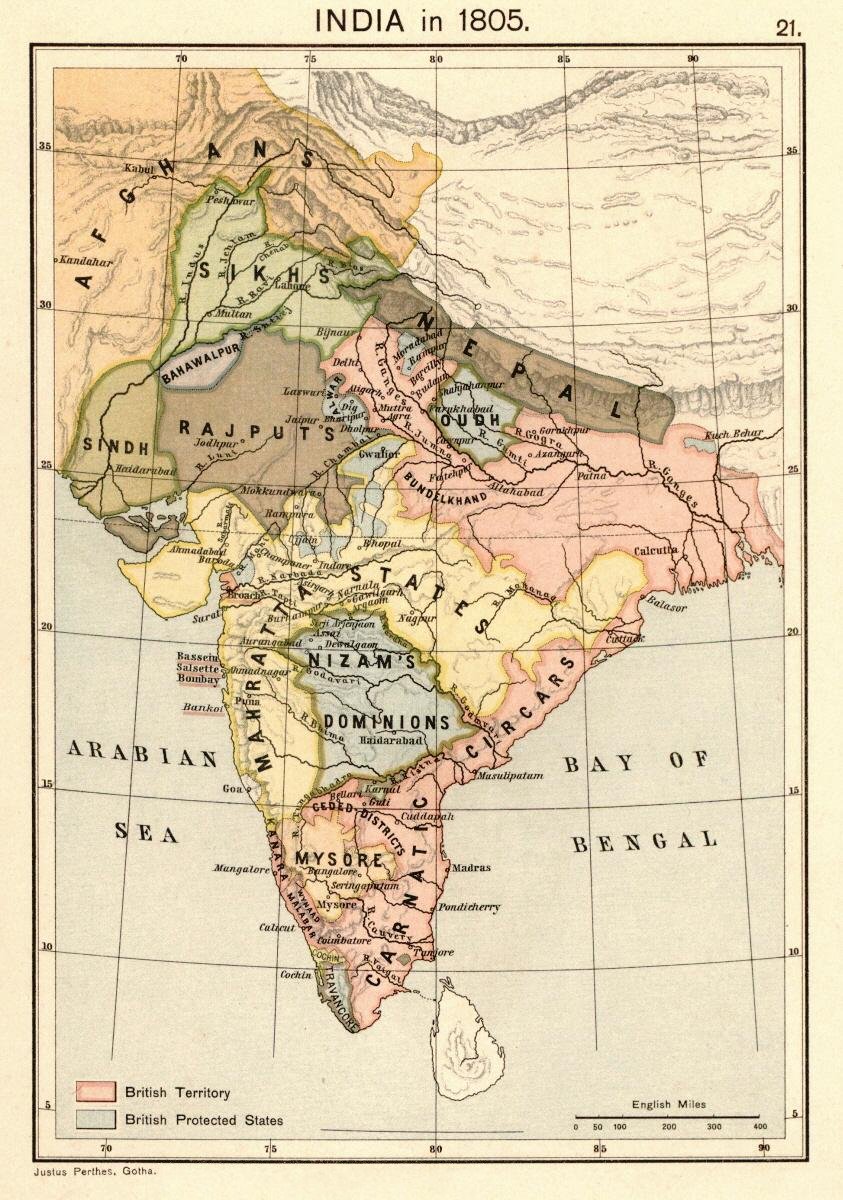
The Sikh Empire spanned a total of over 200,000 sqmi at its zenith. Another more conservative estimate puts its total surface area during its zenith at 100,436 sq mi (260,124 km sq). Jean-Marie Lafont states that the empire comprised a territory of 390,000 square kilometres.
The following modern-day political divisions made up the historical Sikh Empire:
- Punjab region, to Mithankot in the south
- Punjab, Pakistan, excluding Bahawalpur State
- Punjab, India, excluding the Cis-Sutlej states
- Himachal Pradesh, India, only the territories northwest of Sutlej river.
- Jammu Division, Jammu and Kashmir, India and Pakistan (1808–1846)
- Kashmir, from 5 July 1819 to 15 March 1846, India/Pakistan
- Kashmir Valley, India from 1819 to 1846
- Baltistan, from 1840 onwards
- Gilgit, Gilgit–Baltistan, Pakistan, from 1842 to 1846
- Ladakh, India 1834–1846
- Lower part of Khyber Pakhtunkhwa, Pakistan.
- Peshawar, Pakistan (taken in 1818, retaken in 1834)
- Excluding Waziristan, Ranjit Singh made no attempt to conquer Waziristan. Jamrud District (Khyber Agency, Pakistan) was the westernmost limit of the Sikh Empire. The westward expansion was stopped in the Battle of Jamrud, in which the Afghans managed to kill the prominent Sikh general Hari Singh Nalwa in an offensive, though the Sikhs successfully held their position at their Jamrud fort. Ranjit Singh sent his General Sirdar Bahadur Gulab Singh Powind thereafter as reinforcement and he crushed the Pashtun rebellion harshly. In 1838, Ranjit Singh with his troops marched into Kabul to take part in the victory parade along with the British after restoring Shah Shoja to the Afghan throne at Kabul.
Administrative divisions
The empire was divided into various provinces (known as Subas), with them namely being as follows as per Hari Ram Gupta:
| No. | Name | Map | Estimated population (1838) | Major population centres | |
|---|---|---|---|---|---|
| 1. | Lahore | 1,900,000 | Lahore, Amritsar and Gujranwala | ||
| 2. | Multan | [[File:Map of the trans-Indus frontier of the Punjab and the Multan Province of the Sikh Empire, surveyed by Herbert B. Edwardes, 1848–49 (F11-02).jpg | 215x215px]] | 750,000 | Multan, Laiah and Dera Ghazi Khan |
| 3. | Peshawar | 550,000 | Peshawar, Kohat, Hazara, Dera Ismail Khan and Bannu | ||
| 4. | Kashmir | [[File:Map of Sikh-ruled Kashmir, given by General Claude-Auguste Court to Victor Jacquemont, 1831.png | 150x150px]] | Srinagar | |
| 5. | Jammu | 1,100,000 | Jammu | ||
| 6. | Gujrat/Wazirabad | Gujrat, Attock, Rawalpindi and Mianwali | |||
| 7. | Jalandhar | Jalandhar | |||
| 8. | Kangra | Kangra, Chamba and Bilaspur |
Hans Herrli instead claims there were five provinces of the Sikh Empire, namely Lahore, Multan, Peshawar, Derajat, and Jammu and Hill States.
Religious policy

The Sikh Empire allowed men from religions other than their own to rise to commanding positions of authority.
The Fakir brothers were trusted personal advisors and assistants as well as close friends to Ranjit Singh, particularly Fakir Azizuddin, who would serve in the positions of foreign minister of the empire and translator for the maharaja, and played important roles in such important events as the negotiations with the British, during which he convinced Ranjit Singh to maintain diplomatic ties with the British and not to go to war with them in 1808, as British troops were moved along the Sutlej in pursuance of the British policy of confining Ranjit Singh to the north of the river, and setting the Sutlej as the dividing boundary between the Sikh and British empires; negotiating with Dost Muhammad Khan during his unsuccessful attempt to retake Peshawar, and ensuring the succession of the throne during the Maharaja's last days in addition to caretaking after a stroke, as well as occasional military assignments throughout his career. The Fakir brothers were introduced to the Maharaja when their father, Ghulam Muhiuddin, a physician, was summoned by him to treat an eye ailment soon after his capture of Lahore.
The other Fakir brothers were Imamuddin, one of his principal administrative officers, and Nuruddin, who served as home minister and personal physician, were also granted jagirs by the Maharaja.
Every year, while at Amritsar, Ranjit Singh visited shrines of holy people of other faiths, including several Muslim saints, which did not offend even the most religious Sikhs of his administration. As relayed by Fakir Nuruddin, orders were issued to treat people of all faith groups, occupations, and social levels equally and in accordance with the doctrines of their faith, per the Shastras and the Quran, as well as local authorities like judges and panches (local elder councils), as well as banning forcible possession of others' land or of inhabited houses to be demolished. There were special courts for Muslims which ruled in accordance to Muslim law in personal matters, and common courts preceded over by judicial officers which administered justice under the customary law of the districts and socio-ethnic groups, and were open to all who wanted to be governed by customary religious law, whether Hindu, Sikh, or Muslim.
One of Ranjit Singh's first acts after the 1799 capture of Lahore was to revive the offices of the hereditary Qazis and Muftis which had been prevalent in Mughal times. Qazi Nizamuddin was appointed to decide marital issues among Muslims, while Muftis Mohammad Shahpuri and Sadulla Chishti were entrusted with powers to draw up title-deeds relating to transfers of immovable property. The old mohalladari system was reintroduced with each mahallah, or neighbourhood subdivision, placed under the charge of one of its members. The office of Kotwal, or prefect of police, was conferred upon a Muslim, Imam Bakhsh.
Generals were also drawn from a variety of communities, along with prominent Sikh generals like Hari Singh Nalwa, Fateh Singh Dullewalia, Nihal Singh Atariwala, Chattar Singh Attariwalla, and Fateh Singh Kalianwala; Hindu generals included Misr Diwan Chand and Dewan Mokham Chand Nayyar, his son, and his grandson; and Muslim generals included Ilahi Bakhsh and Mian Ghaus Khan; one general, Balbhadra Kunwar, was a Nepalese Gurkha, and European generals included Jean-Francois Allard, Jean-Baptiste Ventura, and Paolo Avitabile. other notable generals of the Sikh Khalsa Army were Veer Singh Dhillon, Sham Singh Attariwala, Mahan Singh Mirpuri, and Zorawar Singh Kahluria, among others.
The appointment of key posts in public offices was based on merit and loyalty, regardless of the social group or religion of the appointees, both in and around the court, and in higher as well as lower posts. Key posts in the civil and military administration were held by members of communities from all over the empire and beyond, including Sikhs, Muslims, Khatris, Brahmins, Dogras, Rajputs, Pashtuns, Europeans, and Americans, among others, and worked their way up the hierarchy to attain merit. Dhian Singh, the prime minister, was a Dogra, whose brothers Gulab Singh and Suchet Singh served in the high-ranking administrative and military posts, respectively. Brahmins like finance minister Raja Dina Nath, Sahib Dyal, and others also served in financial capacities.
Muslims in prominent positions included the Fakir brothers, Qazi Nizamuddin, and Mufti Muhammad Shah, among others. Among the top-ranking Muslim officers there were two ministers, one governor and several district officers; there were 41 high-ranking Muslim officers in the army, including two generals and several colonels, and 92 Muslims were senior officers in the police, judiciary, legal department and supply and store departments. In artillery, Muslims represented over 50% of the numbers while the cavalry had some 10% Muslims from among the troopers.
Thus, the government was run by an elite corps drawn from many communities, giving the empire the character of a secular system of government, even when built on theocratic foundations.
A ban on cow slaughter, which can be related to Hindu sentiments, was universally imposed in the empire. Ranjit Singh also donated large amounts of gold for the plating of the Kashi Vishwanath Temple's dome.
The Sikhs attempted not to offend the prejudices of Muslims, noted Baron von Hügel, the Austrian botanist and explorer, yet the Sikhs were described as harsh. In this regard, Masson's explanation is perhaps the most pertinent: "Though compared to the Afghans, the Sikhs were mild and exerted a protecting influence, yet no advantages could compensate to their Mohammedan subjects, the idea of subjection to infidels, and the prohibition to slay kine, and to repeat the azan, or 'summons to prayer'."
According to Chitralekha Zutshi and William Roe Polk, Sikh governors adopted policies that alienated the Muslim population such as the ban on cow slaughter and the azan (the Islamic call to prayer), the seizure of mosques as property of the state, and imposed ruinous taxes on Kashmiri Muslims causing a famine in 1832. In addition, begar (forced labour) was imposed by the Sikh administration to facilitate the supply of materials to the imperial army, a policy that was augmented by the successive Dogra rulers. These policies led the Kashmiri Muslim population to emigrate en masse to more lenient neighbouring regions, particularly Ladakh. As a symbolic assertion of power, the Sikhs regularly desecrated Muslim places of worship, including closing of the Jamia Masjid of Srinagar and the conversion of the Badshahi Mosque in Lahore to an ammunition store and horse stable, but the empire still maintained Persian administrative institutions and court etiquette; the Sikh silver rupees were minted on the Mughal standard with Persian legends.
Christian missionaries had been active in the Punjab even prior to the dissolution of the empire in 1849.
Demography
The population of the Sikh empire during the time of Ranjit Singh's rule was estimated to be around 12 million people. There were 8.4 million Muslims, 2.88 million Hindus and 722,000 Sikhs.
The religious demography of the empire is estimated to have been just over 10% to 12% Sikh, 80% Muslim, and just under 10% Hindu. Surjit Hans gave different numbers by retrospectively projecting the 1881 census, putting Muslims at 51%, Hindus at 40% and Sikhs at around 8%, the remaining 1% being Europeans. The population was 3.5 million in 1831, according to Amarinder Singh's The Last Sunset: The Rise and Fall of the Lahore Durbar. Hans Herrli in The Coins of the Sikhs estimated the total population of the empire to be around 5.35 million during 1838. Meanwhile, Jean-Marie Lafont estimates that the population of the empire consisted of 15 million people.
An estimated 90% of the Sikh population at the time, and more than half of the total population, was concentrated in the upper Bari, Jalandhar, and upper Rachna Doabs, and in the areas of their greatest concentration formed about one third of the population in the 1830s; half of the Sikh population of this core region was in the area covered by the later districts of Lahore and Amritsar.
In 1839, a major pogrom, called the Allahdad, targeting the local Jews of Mashhad in Qajar Persia had occurred. A group of Persian Jewish refugees from Mashhad, escaping persecution back home in Qajar Persia, settled in the Sikh Empire around the year 1839. Most of the Jewish families settled in Rawalpindi (specifically in the Babu Mohallah neighbourhood) and Peshawar. Most of these Jews would leave for the Dominion of India during the partition of 1947.
Economy

Revenue
| Sr | Particulars | Revenue in Rupees |
|---|---|---|
| 1 | Land Revenue | |
| 1.a | Tributary States | |
| 1.b | Farms | |
| 1.c | Eleemosynary | |
| 1.d | Jagirs | |
| 2 | Customs | |
| **Total** |
Land revenue was the main source of income, accounting for about 70% of the state's income. Besides this, the other sources of income were customs, excises and monopolies.
Timeline
- 1699: Formation of the Khalsa by Guru Gobind Singh.
- 1710–1716: Banda Singh defeats the Mughals and declares Khalsa rule.
- 1716–1738: Mughals take back territorial control for two decades but Sikhs engage in guerrilla warfare
- 1733–1735: The Khalsa accepts, only to reject, the confederal status given by the Mughals.
- 1738–1757: Nader Shah's invasion of India; Afghan invasion by Ahmad Shah Durrani
- 1761–1767: Recapture of Punjab region by Afghan in Third Battle of Panipat
- 1763–1774: Charat Singh Sukerchakia, Misldar of Sukerchakia misl, establishes himself in Gujranwala.
- 1764–1783: Baba Baghel Singh, Misldar of Singh Krora Misl, imposes taxes on the Mughals.
- 1783: Sikh capture of Delhi and the Red Fort from the Mughals
- 1773: Ahmad Shah Durrani dies and his son Timur Shah launches several invasions into Punjab.
- 1774–1790: Maha Singh becomes Misldar of the Sukerchakia misl. [[File:Bataille de Sobraon.jpg|thumb|Contemporary painting of the [[Battle of Sobraon]] in 1846.]]
- 1790–1801: Ranjit Singh becomes Misldar of the Sukerchakia misl.
- 1799, formation of the Sikh Khalsa Army
- 12 April 1801 (coronation) – 27 June 1839: reign of Maharaja Ranjit Singh.
- March 1809 – August 1809: Nepal–Sikh War
- 20 February 1810: Siege of Multan (1810)
- 1 June 1813: Ranjit Singh is given the Kohinoor Diamond.
- 13 July 1813: Battle of Attock, the Sikh Empire's first significant victory over the Durrani Empire.
- – 2 March June 1818: Battle of Multan, the 2nd battle in the Afghan–Sikh wars.
- 3 July 1819: Battle of Shopian [[File:Bataille d'Aliwal 1.jpg|thumb|The charge of the British 16th Lancers at [[Battle of Aliwal|Aliwal]] on 28 January 1846, during the [[First Anglo-Sikh War]]]]
- 14 March 1823: Battle of Nowshera
- 30 April 1837: Battle of Jamrud
- 27 June 1839 – 5 November 1840: Reign of Maharaja Kharak Singh
- 5 November 1840 – 18 January 1841: Chand Kaur is briefly Regent
- 18 January 1841 – 15 September 1843: Reign of Maharaja Sher Singh
- May 1841 – August 1842: Sino-Sikh war
- 15 September 1843 – 31 March 1849: Reign of Maharaja Duleep Singh
- 1845–1846: First Anglo-Sikh War
- 1848–1849: Second Anglo-Sikh War
List of rulers
| S. No. | Name | Portrait | Birth and death | Reign | Note | |
|---|---|---|---|---|---|---|
| 1 | Maharaja Ranjit Singh | [[File:Maharaja Ranjit Singh, Lion of the Punjab.jpg | 101x101px]] | 13 November 1780 (Gujranwala) | 27 June 1839 (Lahore) | 12 April 1801 |
| 2 | Maharaja Kharak Singh | [[File:Painting of Yuvraj Kharak Singh, Maharaja of the Sikh Empire, seated on a chair.jpg | 75x75px]] | 22 February 1801 (Lahore) | 5 November 1840 (Lahore) | 27 June 1839 |
| 3 | Maharaja Nau Nihal Singh | [[File:Painting of Nau Nihal Singh seated on a blue oval rug against a bolster with a yellow shawl reaching up to the back of his head, ca.1840.jpg | 97x97px]] | 11 February 1820 (Lahore) | 6 November 1840 (Lahore) | 8 October 1839 |
| Maharani Chand Kaur | ||||||
| (regent) | [[File:Maharani Chand Kaur.jpg | 75px]] | 1802 (Fatehgarh Churian) | 11 June 1842 (Lahore) | 6 November 1840 | |
| 4 | Maharaja Sher Singh | [[File:Sher Singh, emperor of the Sikhs.jpg | 102x102px]] | 4 December 1807 (Batala) | 15 September 1843 (Lahore) | 18 January 1841 |
| 5 | Maharaja Duleep Singh | [[File:Photograph of Maharaha Duleep Singh during his reign as a child monarch of the Sikh Empire, by John McCosh, Lahore, ca.1848 (detail 2).jpg | 93x93px]] | 6 September 1838 (Lahore) | 22 October 1893 (Paris) | 15 September 1843 |
| Maharani Jind Kaur | ||||||
| (regent; nominal) | [[File:A wall painting of Maharani Jind Kaur from the old haveli of Sandhanwalia Sardars at Raja Sansi in Amritsar.jpg | 75x75px]] | 1817 (Gujranwala) | 1 August 1863 (Kensington) | 15 September 1843 |
Viziers/Wazirs (prime-ministers or chamberlains)
- Khushal Singh Jamadar (1799–1818)
- Dhian Singh Dogra (1818–1843)
- Hira Singh Dogra (1843–1845)
- Jawahar Singh (wazir) (14 May 1845 – 21 September 1845)
- Lal Singh (1845–1846)
- Gulab Singh (31 January – 9 March 1846)
Nizams/Diwans (provincial governors)
Kashmir
The nominal and acting governors of Kashmir during Sikh-rule and their tenures are as follows:**
- Diwan Moti Ram (1st term), end of 1819 – 1820
- Hari Singh Nalwa, 1820–1821
- Diwan Moti Ram (2nd term), December 1821 – spring of 1825
- Gurmak Singh, 1825 (acting governor)
- Diwan Chuni Lal, 1825 – end of 1826
- Diwan Kirpa Ram, early 1827 – 1830
- Maha Singh, 1830 (governor for one month after Kirpa Ram)
- Bhima Singh Ardali, summer 1830 – 1831
- Kanwar Sher Singh, 1831–1834
- Diwan Vesaka Singh, 1831–1832 (acting governor on behalf of Sher Singh)
- Shaikh Gholam Muhyi Addin & Jamadar Kushal Singh, 1832–1834 (acting governors for Sher Singh)
- Mihan Singh Kumedan, July 1834 – 17 April 1841
- Shaikh Gholam Muhyi Addin, April 1841 – 1845
- Shaikh Imam-ud-Din, 1845 – November 1847
Multan
- Several temporary Sikh governors of Multan, 1818–1820
- Diwan Sawan Mal Chopra, 1820–1844
- Diwan Mulraj Chopra, 1844–1849
Hazara
- Hukma Singh Chimni, 1814–1819
- Diwan Ram Dayal, 1819–1820
- Amar Singh Majithia, 1820–1822
- Hari Singh Nalwa, 1822–1837
- Mahan Singh Hazarawala, 1837–1838
- Tej Singh, 1838–1844
- Arbel Singh, 1844 – ?
- Chattar Singh Attariwalla, 1848–1849
Peshawar
- Hari Singh Nalwa, 1834–1837
- Paolo Avitabile, 1837 – ?
Jalandhar Doab
- Desa Singh Majithia, ? – 1832
- Shaikh Ghulam Muhy-ud-Din, 1834–1841
- Shaikh Imam-ud-Din, 1841–1845
Kangra
- Desa Singh Majithia, 1809–1832
- Lehna Singh Majithia, 1832 – ?
Family tree
A01=Jind Kaur (7) r. 1847 Regent 1843–1847|boxstyle_A01=border-color:#008000| A02=Datar Kaur| A03=Ranjit Singh (1) r. 1801–1839|boxstyle_A03=border-color:#008000| A04=Mehtab Kaur}}
A01=Duleep Singh (6) r. 1843–1849|boxstyle_A01=border-color:#008000| A02=Kharak Singh (2) r. 1839|boxstyle_A02=border-color:#008000| A03=Chand Kaur (4) r. 1840–1841|boxstyle_A03=border-color:#008000| A04=Sher Singh (5) r. 1841–1843|boxstyle_A04=border-color:#008000}}
A01=Nau Nihal Singh (3) r. 1839–1840|boxstyle_A01=border-color:#008000}}
Gallery
File:Maharaj Ranjit Singh.jpg|Ranjit Singh, . File:Ranjit Singh at Harmandir Sahib - August Schoefft - Vienna 1850 - Princess Bamba Collection - Lahore Fort.jpg| File:Sikh helmet.jpg|Sikh warrior helmet with butted mail neckguard, 1820–1840, iron overlaid with gold with mail neckguard of iron and brass
Notes
References
Citations
Sources
References
- (2016). "The Encyclopedia of Empire".
- Singh, Amarpal. (2010). "The First Anglo-Sikh War". Amberley Publishing Limited.
- {{cite EB1911
- (2013). "The Sikh Zafar-namah of Guru Gobind Singh: A Discursive Blade in the Heart of the Mughal Empire". Oxford University Press (US).
- Hunter, William Wilson. (1886). "The Indian empire : its peoples, history, and products". London : Trübner & co..
- Duggal. (February 2025). "Ranjit Singh: A Secular Sikh Sovereign". Abhinav Publication.
- Griffin, Lepel Henry. (1905). "Ranjit Síngh and the Sikh barrier between our growing empire and Central Asia;". Oxford : Clarendon press.
- Singh, Khushwant. (2004). "History of the Sikhs". Oxford University Press.
- [http://www.learnpunjabi.org/eos/ The Encyclopaedia of Sikhism] {{webarchive. link. (8 May 2014 , section ''Sāhib Siṅgh Bedī, Bābā (1756–1834)''.)
- Oberoi, Harjot. (1994). "The Construction of Religious Boundaries: Culture, Identity, and Diversity in the Sikh Tradition". University of Chicago Press.
- (1975). "Catalogue of the Historical Maps of the Survey of India, 1700–1900". National Archives of India.
- Murphy, Anne. (2020). "Routledge Handbook of South Asian Religions". Routledge.
- Hasrat, B. J.. (2011). "The Encyclopedia of Sikhism". Punjabi University.
- Atwal, Priya. "Royals and Rebels: The Rise and Fall of the Sikh Empire". Oxford University Press.
- {{harvnb. Kalsi. 2005
- {{harvnb. Markovits. 2004
- Melton, J. Gordon. (2014). "Faiths Across Time: 5,000 Years of Religious History". ABC-CLIO.
- {{harvnb. Jestice. 2004
- {{harvnb. Johar. 1975
- {{harvnb. Jestice. 2004
- "Gobind Singh Guru (1666–1708)". Punjabi University Patiala.
- "Banda Singh Bahadur". Encyclopædia Britannica.
- {{harvnb. Singh. 2008
- {{harvnb. Nesbitt. 2005
- Singh, Kulwant. (2006). "Sri Gur Panth Prakash: Episodes 1 to 81". Institute of Sikh Studies.
- (14 August 1947). "Sikh Period – National Fund for Cultural Heritage". Heritage.gov.pk.
- link. (3 April 2023 p. 70 Greenwood Publishing Group, 2007 {{ISBN). 0313337985
- (2007). "The Sikhs". [[Crown Publishing Group]].
- (19 December 2000). "Sikhs' Relation with Hill States".
- www.DiscoverSikhism.com. "History Of The Sikhs Vol. IV The Sikh Commonwealth Or Rise And Fall Of Sikh Misls".
- (2007). "World and Its Peoples: Middle East, Western Asia, and Northern Africa". Marshall Cavendish.
- Singh, Rishi. (2014). "State Formation and the Establishment of Non-Muslim Hegemony: Post-Mughal 19th-century Punjab". Sage Publications India.
- (2011). "War, Culture and Society in Early Modern South Asia, 1740–1849". Taylor & Francis.
- Petech, Luciano. (1977). "The Kingdom of Ladakh, c. 950–1842 A.D.". Instituto Italiano Per il Medio ed Estremo Oriente.
- Huttenback, Robert A.. (1961). "Gulab Singh and the Creation of the Dogra State of Jammu, Kashmir, and Ladakh.". The Journal of Asian Studies.
- (2015). "China's Regional Development and Tibet". Springer.
- (2007). "Aspects of India's International Relations, 1700 to 2000: South Asia and the World". Pearson Education.
- (2007). "Aspects of India's International Relations, 1700 to 2000: South Asia and the World". Pearson Education.
- Singh, Gursharan. (1991). "History of Pepsu: Patiala and East Punjab States Union, 1948–1956". Konark Publishers.
- Lt. Gen. Kirpal Singh Randhawa, PVSM, AVSM (Retd.). "Sikh Wars".
- (2007). "Aspects of India's International Relations, 1700 to 2000: South Asia and the World". Pearson Education.
- Sangat Singh, the Sikhs in History.
- (2007). "Aspects of India's International Relations, 1700 to 2000: South Asia and the World". Pearson Education.
- Ranjit Singh: administration and British policy, (Prakash, pp. 31–33)
- Maharaja Ranjit Singh, the last to lay arms, (Duggal, pp. 136–137)
- Chatterjee, Nandini. (22 May 2018). "Fieldwork in Punjab, Pakistan, March 2018".
- Madra, Amandeep Singh. (8 January 2012). "The Maharaja, the Spy & the Temple of Gold".
- Manning, Stephen. (2020). "Bayonet to Barrage Weaponry on the Victorian Battlefield". Pen & Sword Books Limited.
- Barczewski, Stephanie. (2016). "Heroic Failure and the British". Yale University Press.
- Khilani, N. M.. (1972). "British power in the Punjab, 1839–1858". Asia Publishing House.
- Lafont, Jean-Marie. (2003). "Maharaja Ranjit Singh: Lord of the Five Rivers".
- Khan, Nadhra Shahbaz Naeem. (2018). "THE SAMĀDHI OF MAHARAJA RANJIT SINGH IN LAHORE: A Summation of Sikh Architectural and Decorative Practices". EB-Verlag.
- "Punjab Current Affairs Yearbook 2020".
- The Masters Revealed, (Johnson, p. 128)
- Britain and Tibet 1765–1947, (Marshall, p. 116)
- (1995). "The Nurbakhshis of Baltistan: Crisis and Revival of a Five Centuries Old Community". Die Welt des Islams.
- (2002). "Trekking in the Karakoram & Hindukush". Lonely Planet Publications.
- Baloch, Sikandar Khan. (2004). "In the Wonderland of Asia, Gilgit & Baltistan". Sang-e-Meel Publications.
- (2017). "India's Major Military and Rescue Operations". Horizon Books.
- (2010). "Frontier: The Making of the Northern and Eastern Border in Ladakh From 1834 to the Present". SIT Digital Collections Independent Study Project (ISP) Collection. 920.
- (4 January 2024). "Frontier Facets: Pakistan's North-West Frontier Province". National Book Foundation; Lahore.
- The Khyber Pass: A History of Empire and Invasion, (Docherty, pp. 185–187)
- (1978). "History of the Sikhs: The Sikh Lion of Lahore, Maharaja Ranjit Singh, 1799–1839". Munshiram Manoharlal.
- (2013). "Imperial Frontier: Tribe and State in Waziristan". Routledge.
- link. (5 April 2023)
- "Encyclopædia Britannica – Ranjit Singh".
- Herrli, Hans. (1993). "The Coins of the Sikhs".
- Kartar Singh Duggal (2001). ''Maharaja Ranjit Singh: The Last to Lay Arms''. Abhinav Publications. pp. 125–126. {{ISBN. 978-81-7017-410-3.
- Singh, Amarinder. (2010). "The Last Sunset: The Rise and Fall of the Lahore Durbar". [[Roli Books]].
- Lodrick, D. O. 1981. ''Sacred Cows, Sacred Places''. Berkeley: University of California Press, p. 145
- Vigne, G. T., 1840. ''A Personal Narrative of a Visit to Ghuzni, Kabul, and Afghanistan, and a Residence at the Court of Dost Mohammed'', London: Whittaker and Co. p. 246 ''The Real Ranjit Singh''; by Fakir Syed Waheeduddin, published by Punjabi University, {{ISBN. 81-7380-778-7, 2001, 2nd ed.
- Matthew Atmore Sherring. (1868). "The Sacred City of the Hindus: An Account of Benares in Ancient and Modern Times". Trübner & co..
- Madhuri Desai. (August 2024). "Resurrecting Banaras: Urban Space, Architecture and Religious Boundaries".
- Hügel, Baron (1845) 2000. ''Travels in Kashmir and the Panjab, containing a Particular Account of the Government and Character of the Sikhs'', tr. Major T. B. Jervis. rpt, Delhi: Low Price Publications, p. 151
- Masson, Charles. 1842. ''Narrative of Various Journeys in Balochistan, Afghanistan and the Panjab'', 3 v. London: Richard Bentley (1) 37
- Chitralekha, Zutshi. (2019). "Kashmir". Oxford University Press.
- Polk, William Roe. (2018). "Crusade and Jihad: The Thousand-year War Between the Muslim World and the Global North". Yale University Press.
- Bray, John. (2008). "Modern Ladakh: Anthropological Perspectives on Continuity and Change". Brill.
- Dollfus, Pascale. (1995). "The History of Muslims in Central Ladakh". The Tibet Journal.
- Ziad, Waleed. (2021). "Hidden Caliphate: Sufi Saints Beyond the Oxus and Indus". Harvard University Press.
- Chida-Razvi, Mehreen. (2020). "The Friday Mosque in the City: Liminality, Ritual, and Politics". Intellect Books.
- Kumar, Ram Narayan. (1991). "The Sikh struggle : origin, evolution, and present phase". Chanakya Publications.
- Puri, Harish K.. (June–July 2003). "Scheduled Castes in Sikh Community: A Historical Perspective". Economic and Political Weekly.
- (2001). "Maharaja Ranjit Singh, the Last to Lay Arms". Abhinav Publications.
- Hans, Surjit. (April 2006). "Why are we sentimental about Ranjit Singh ?". The Panjab, Past and Present.
- Singh, Amarinder. (2010). "The Last Sunset: The Rise and Fall of the Lahore Durbar". [[Roli Books]].
- Miller, Yvette Alt. (3 September 2023). "When Jews Found Refuge in the Sikh Empire".
- Tahir, Saif. (3 March 2016). "The lost Jewish history of Rawalpindi, Pakistan".
- Considine, Craig. (2017). "Islam, race, and pluralism in the Pakistani diaspora". Routledge.
- Khan, Naveed Aman. (12 May 2018). "Pakistani Jews and PTI".
- "Rawalpindi – Rawalpindi Development Authority".
- Daiya, Kavita. (2008). "Violent belongings : partition, gender, and national culture in postcolonial India". Temple University Press.
- Cunningham, Joseph Davey. (1849). "A History of the Sikhs, from the Origin of the Nation to the Battles of the Sutlej". J. Murray.
- "Archived copy".
- Singh, Bawa Satinder. (1971). "Raja Gulab Singh's Role in the First Anglo-Sikh War". Modern Asian Studies.
- Herrli, Hans. (2004). "The Coins of the Sikhs". Munshiram Manoharlal.
- Miniature painting from the photo album of princely families in the Sikh and Rajput territories by [[James Skinner (East India Company officer). Colonel James Skinner (1778–1841)]]
This article was imported from Wikipedia and is available under the Creative Commons Attribution-ShareAlike 4.0 License. Content has been adapted to SurfDoc format. Original contributors can be found on the article history page.
Ask Mako anything about Sikh Empire — get instant answers, deeper analysis, and related topics.
Research with MakoFree with your Surf account
Create a free account to save articles, ask Mako questions, and organize your research.
Sign up freeThis content may have been generated or modified by AI. CloudSurf Software LLC is not responsible for the accuracy, completeness, or reliability of AI-generated content. Always verify important information from primary sources.
Report