From Surf Wiki (app.surf) — the open knowledge base
Shrubland
Vegetation dominated by shrubs

Vegetation dominated by shrubs
Shrubland, scrubland, scrub, brush, or bush is a plant community characterized by vegetation dominated by shrubs, often also including grasses, herbs, and geophytes. Shrubland may either occur naturally or be the result of human activity. It may be the mature vegetation type in a particular region and remain stable over time, or it may be a transitional community that occurs temporarily as the result of a disturbance, such as fire. A stable state may be maintained by regular natural disturbance such as fire or browsing.
Shrubland may be unsuitable for human habitation because of the danger of fire. The term was coined in 1903.
Shrubland species generally show a wide range of adaptations to fire, such as heavy seed production, lignotubers, and fire-induced germination.
Botanical structural form
In botany and ecology a shrub is defined as a much-branched woody plant less than 8 m high, usually with many stems. Tall shrubs are mostly 2–8 m high, small shrubs 1–2 m high and subshrubs less than 1 m high.
There is a descriptive system widely adopted in Australia to describe different types of vegetation is based on structural characteristics based on plant life-form, as well as the height and foliage cover of the tallest stratum or dominant species.
For shrubs that are 2 - high, the following structural forms are categorized:
- dense foliage cover (70–100%) — closed-shrubs
- mid-dense foliage cover (30–70%) — open-shrubs
- sparse foliage cover (10–30%) — tall shrubland
- very sparse foliage cover (
For shrubs less than 2 m high, the following structural forms are categorized:
- dense foliage cover (70–100%) — closed-heath or closed low shrubland—(North America)
- mid-dense foliage cover (30–70%) — open-heath or mid-dense low shrubland—(North America)
- sparse foliage cover (10–30%) — low shrubland
- very sparse foliage cover (
Biome plant group


Similarly, shrubland is a category that is used to describe a type of biome plant group. In this context, shrublands are dense thickets of evergreen sclerophyll shrubs and small trees, called:
- Chaparral in California
- Matorral in Chile, Mexico, and Spain
- Maquis in France and elsewhere around the Mediterranean
- Macchia in Italy
- Fynbos in South Africa
- Eastern Suburbs Banksia Scrub in Sydney
- Kwongan in Southwest Australia
- Cedar scrub in Texas Hill Country
- Caatinga in northeastern Brazil
In some places, shrubland is the mature vegetation type. In other places, it is the result of degradation of former forest or woodland by logging or overgrazing, or disturbance by major fires.
A number of World Wildlife Fund biomes are characterized as shrublands, including the following:
Desert scrublands
Xeric or desert scrublands occur in the world's deserts and xeric shrublands ecoregions or in fast-draining sandy soils in more humid regions. These scrublands are characterized by plants with adaptations to the dry climate, which include small leaves to limit water loss, thorns to protect them from grazing animals, succulent leaves or stems, storage organs to store water, and long taproots to reach groundwater.
Mediterranean scrublands
Mediterranean scrublands occur naturally in the Mediterranean scrub biome, located in the five Mediterranean climate regions of the world. Scrublands are most common near the seacoast and have often adapted to the wind and salt air of the ocean. Low, soft-leaved scrublands around the Mediterranean Basin are known as garrigue in France, phrygana in Greece, tomillares in Spain, and batha in Israel. Northern coastal scrub and coastal sage scrub occur along the California coast, strandveld in the Western Cape of South Africa, coastal matorral in central Chile, and sand-heath and kwongan in Southwest Australia.
Interior scrublands
Interior scrublands occur naturally in semi-arid areas with nutrient-poor soils, such as on the matas of Portugal, which are underlain by Cambrian and Silurian schists. Florida scrub is another example of interior scrublands.
Dwarf shrubs
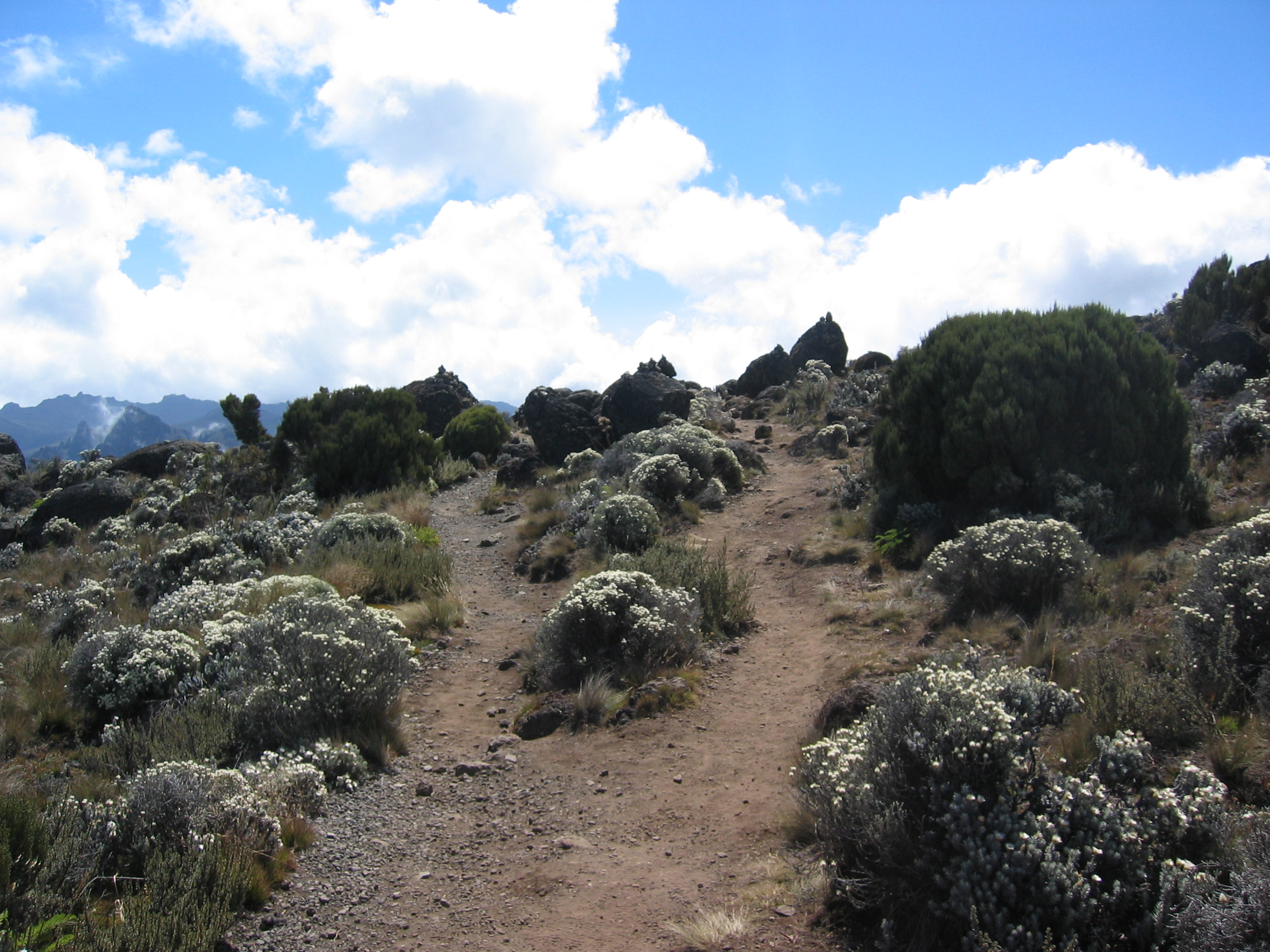
Some vegetation types are formed of dwarf-shrubs, low-growing or creeping shrubs. They include the maquis and the garrigues of Mediterranean climates and the acid-loving dwarf shrubs of heathland and moorland.
References
- Merriam-Webster's Collegiate Dictionary, 11th Edition (2003).
- (1999). "Encyclopedia of deserts". University of Oklahoma Press.
- ''Flora of New South Wales'', Vol.4 ed. Gwen J. Harden, Royal Botanic Gardens, Sydney {{ISBN. 0-86840-188-9
- Costermans, L. F. (1993) ''Native trees and shrubs of South-Eastern Australia''. rev. ed. {{ISBN. 0-947116-76-1
- Woodward, Susan. "Mediterranean Shrublands". Radford University.
- "Deserts and Xeric Shrublands". [[World Wildlife Fund]].
- "Mediterranean Forests, Woodlands and Scrub". [[World Wildlife Fund]].
This article was imported from Wikipedia and is available under the Creative Commons Attribution-ShareAlike 4.0 License. Content has been adapted to SurfDoc format. Original contributors can be found on the article history page.
Ask Mako anything about Shrubland — get instant answers, deeper analysis, and related topics.
Research with MakoFree with your Surf account
Create a free account to save articles, ask Mako questions, and organize your research.
Sign up freeThis content may have been generated or modified by AI. CloudSurf Software LLC is not responsible for the accuracy, completeness, or reliability of AI-generated content. Always verify important information from primary sources.
Report