From Surf Wiki (app.surf) — the open knowledge base
Shqiptar
Albanian endonym
Albanian endonym
Shqiptar (Shqip(ë)tari; ; plural: Shqiptarë/-t, Shqyptarë/-t) is an Albanian ethnonym (endonym), by which Albanians call themselves. They call their country Shqipëria (). It has gradually replaced the Old Albanian endonym Arbënesh/Arbëresh after the Middle Ages in the western Balkans.
Etymology
The first documentation of the adverb/adjective shqip can already be found in the Meshari, the oldest Albanian language book published in 1555 by Gjon Buzuku. Johann Georg von Hahn (1854) was the first to derive the term Shqiptar from the Albanian verbs shqipoj ("to speak clearly") and shqiptoj ("to speak out, pronounce"), while Gustav Meyer (1891) was the first to derive shqipoj from the Latin verb excipere, denoting people who speak the same language, similar to the ethno-linguistic dichotomies Sloven—Nemac and Deutsch—Wälsch. This etymology is widely accepted by modern Albanologists. Demetrio Camarda (1864), on the other hand, was the first to derive Shqiptar from the Albanian noun shqipe or shqiponjë (eagle). This theory, now considered a folk etymology, is based mainly on the symbolic meaning of the eagle for the Albanian people, as it is their national bird, a totem associated with freedom and heroism in Albanian folklore. It has been used as a national symbol since their earliest records, and was a common heraldic symbol for many Albanian dynasties in the Late Middle Ages; an example is the flag of Skanderbeg, whose family symbol was the black double-headed eagle, which is displayed on the Albanian flag.
History
During the Middle Ages, the Albanians called their country Arbëria (Gheg: Arbënia) and referred to themselves as Arbëresh (Gheg: Arbënesh) while known through derivative terms by neighbouring peoples as Arbanasi, Arbanenses / Albaneses, Arvanites (Arbanites), Arnaut, Arbineş and so on. The words Shqipëri and Shqiptar are attested from 14th century onward, but it was only at the end of 17th and beginning of the early 18th centuries that the placename Shqipëria and the ethnic demonym Shqiptarë gradually replaced Arbëria and Arbëreshë amongst Albanian speakers. This was due to socio-political, cultural, economic and religious complexities that Albanians experienced during the Ottoman era. The usage of the old endonym Arbënesh/Arbëresh, however, persisted and was retained by Albanian communities which had migrated from Albania and adjacent areas centuries before the change of the self-designation, namely the Arbëreshë of Italy, the Arvanites of Greece as well as Arbanasi in Croatia. As such, the medieval migrants to Greece and later migrants to Italy during the 15th-century are not aware of the term Shqiptar.
Non-Albanian usage
Use in Western Europe
Skipetar/s is a historical rendering or exonym of the term Shqiptar by some Western European authors in use from the late 18th century to the early 20th century.
Use in South Slavic languages
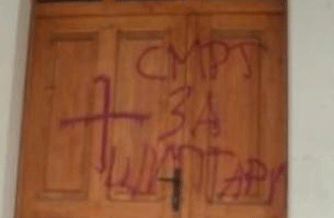
The term Shiptar (Serbo-Croatian Latin and Slovene: Šiptar; Serbo-Croatian Cyrillic and Macedonian: Шиптар) used in Serbo-Croatian, Slovene and Macedonian is an ethnic slur, and it is also considered derogatory by Albanians when used by South Slavic peoples, due to its negative connotations.
After 1945, in pursuit of a policy of national equality, the Communist Party of Yugoslavia designated the Albanian community as Shiptars, however with increasing autonomy during the 1960s for Kosovo Albanians, their leadership requested, and attained in 1974, the term Albanians be officially used stressing a national over an only ethnic, self-identification.
These developments resulted in the word Šiptar in Serbian usage acquiring pejorative connotations that implied Albanian racial and cultural inferiority. It continued to be used by some Yugoslav and Serb politicians to relegate the status of Albanians to simply one of the minority ethnic groups.
The official (and often neutral) terms for Albanians in South Slavic languages are Albanac (in Serbo-Croatian Latin), Албанац (in Serbo-Croatian Cyrillic), Albanec (in Slovene) and Албанец (in Macedonian).
Dušan Spasojević, a Serbian gangster, was nicknamed "Šiptar". In 2018, the Supreme Court in Belgrade defined the word as racist and discriminatory against Albanians. In 2019, the Serbian Defense Minister, Aleksandar Vulin, sparked controversy by using the pejorative for Albanians.
During a game between Austria and North Macedonia at the UEFA Euro 2020, immediately after scoring a goal, Austrian forward Marko Arnautović—who is of paternal Serb descent—shouted to Macedonian players Ezgjan Alioski and Egzon Bejtulai—both Macedonian Albanians—. He was punished with suspension for the next game against Netherlands.
Sources
Citations
Bibliography
References
- [https://archive.org/details/fialuurivoghels00junggoog ''Fialuur i voghel Sccyp e ltinisct'' [Small Dictionary of Albanian and Latin], 1895, [[Shkodër]].
- Frashëri, Kristo (2013). ''Etnogjeneza e shqiptarëve - Vështrim historik''.
- Frashëri, Kristo (2013). ''Etnogjeneza e shqiptarëve - Vështrim historik''.
- Demetrio Camarda, ''Saggio di grammatologia comparata sulla lingua albanese'', vol. 2 (Livorno: Successore di Egisto Vignozzi, 1864), 152.
- (1987-01-01). "The Flag Bulletin". Flag Research Center..
- {{harvnb. Malcolm. 1998. "The name used in all these references is, allowing for linguistic variations, the same: 'Albanenses' or 'Arbanenses' in Latin, 'Albanoi' or 'Arbanitai' in Byzantine Greek. (The last of these, with an internal switching of consonants, gave rise to the Turkish form 'Arnavud', from which 'Arnaut' was later derived.)"
- {{harvnb. Elsie. 2010. "Their traditional designation, based on a root ''*alban-'' and its rhotacized variants ''*arban-'', ''*albar-'', and ''*arbar-'', appears from the 11th century onwards in Byzantine chronicles as ''Albanoi'', ''Arbanitai'', ''Arbanites'', and from the 14th century onwards in Latin and other Western documents as ''Albanenses'' and ''Arbanenses''."
- Kristo Frasheri (1964). ''History of Albania (A Brief Overview)''. Tirana.
- {{harvnb. Rusakov. 2017. "The name with the root ''arb-'' is mentioned in old Albanian documents, but it went out of use in the main part of Albanian-speaking area and remains in use only in diaspora dialects (It.-Alb. ''arbëresh'', Gr.-Alb. ''arvanitas''). In other areas, it has been replaced by the term with the root ''shqip-''."
- {{harvnb. Demiraj. 2010. "The ethnic name shqiptar has always been discussed together with the ethnic complex: (tosk) arbëresh, arbëror, arbër — (gheg) arbënesh, arbënu(e)r, arbën; i.e. [arbën/r(—)]. [...] Among the neighbouring peoples and elsewhere the denomination of the Albanians is based upon the root arb/alb, cp. Greek 'Αλβανός, 'Αρβανός "Albanian", 'Αρβανίτης "Arbëresh of Greece", Serbian Albanac, Arbanas, Bulg., Mac. албанец, Arom. arbinés (Papahagi 1963 135), Turk. arnaut, Ital. albanese, German Albaner etc. This basis is in use among the Arbëreshs of Italy and Greece as well."
- {{harvnb. Lloshi. 1999. "They called themselves arbënesh, arbëresh, the country Arbëni, Arbëri, and the language arbëneshe, arbëreshe. In the foreign languages, the Middle Ages denominations of these names survived, but for the Albanians they were substituted by shqiptarë, Shqipëri and shqipe... Shqip spread out from the north to the south, and Shqipni/Shqipëri is probably a collective noun, following the common pattern of Arbëni, Arbëri."
- {{harvnb. Cole. 2011. "Arbëreshë was the term self-designiation of Albanians before the Ottoman invasion of the 15 century; similar terms are used for Albanian origins populations living in Greece ("Arvanitika," the Greek rendering of Arbëreshë) and Turkey ("Arnaut," Turkish for the Greek term Arvanitika)".
- {{harvnb. Malcolm. 1998. "The Albanians who use the 'Alb-' root are the ones who emigrated to Italy in the fifteenth century, who call themselves 'Arberesh'."
- {{harvnb. Bartl. 2001. "Today, the common name for Albanians, i.e. Albania, shqiptar, Shqiperia, is more recent. Albanians who settled in Greece in the Middle Ages and those who emigrated to Italy in the 15th century and later do not actually know about this name. The origin of the name Shqiptar is not clearly established. Until recently, the favorite interpretation was that it was derived from the Albanian shqipe "lord, nobility", thus "lord's sons". It is more likely, however, that the modern name given by the Albanians to themselves is derived from shqipon "to speak clearly" or from shqipton "to pronounce" (compared to the Slavic name nemci "dumb; those who do not speak intelligibly")."
- {{harvnb. Guzina. 2003. "There is similar terminological confusion over the name for the inhabitants of the region. After 1945, in pursuit of a policy of national equality, the Communist Party designated the Albanian community as 'Šiptari' (Shqiptare, in Albanian), the term used by Albanians themselves to mark the ethnic identity of any member of the Albanian nation, whether living in Albania or elsewhere.… However, with the increased territorial autonomy of Kosovo in the late 1960s, the Albanian leadership requested that the term 'Albanians' be used instead—thus stressing national, rather than ethnic, self-identification of the Kosovar population. The term 'Albanians' was accepted and included in the 1974 Yugoslav Constitution. In the process, however, the Serbian version of the Albanian term for ethnic Albanians—'Šiptari'—had acquired an openly pejorative flavor, implying cultural and racial inferiority. Nowadays, even though in the documents of post- socialist Serbia the term 'Albanians' is accepted as official, many state and opposition party leaders use the term 'Šiptari' indiscriminately in an effort to relegate the Kosovo Albanians to the status of one among many minority groups in Serbia. Thus the quarrel over the terms used to identify the region and its inhabitants has acquired a powerful emotional and political significance for both communities."
- "Serbian Defense Minister Sparks Controversy by Using Pejorative for Albanians".
- (31 August 2018). "Croatia Museum Upsets Albanians by Using Insulting Term".
- Garde, Paul. (2009). "Balkanske rasprave". Ceres.
- (6 March 2012). "Glavni ortak zemljak". [[Večernje novosti]].
- "Banditi pod šapkom zemljaka". [[Večernje novosti]].
- (22 October 2018). "Serbia: l'Alta corte emette sentenza storica. "Šiptar", un termine offensivo".
- "Serbian Defense Minister Sparks Controversy by Using Pejorative for Albanians".
- "Arnautovic says he is 'not a racist' and apologises after North Macedonia clash".
- (15 June 2021). "'I'm f***ing your Albanian mother' - Marko Arnautovic apologises for Euro 2020 outburst".
- "Arnautović apologises and denies being a racist after outburst at Alioski".
- (16 June 2021). "AB: Austria v North Macedonia". Union of European Football Associations.
This article was imported from Wikipedia and is available under the Creative Commons Attribution-ShareAlike 4.0 License. Content has been adapted to SurfDoc format. Original contributors can be found on the article history page.
Ask Mako anything about Shqiptar — get instant answers, deeper analysis, and related topics.
Research with MakoFree with your Surf account
Create a free account to save articles, ask Mako questions, and organize your research.
Sign up freeThis content may have been generated or modified by AI. CloudSurf Software LLC is not responsible for the accuracy, completeness, or reliability of AI-generated content. Always verify important information from primary sources.
Report