From Surf Wiki (app.surf) — the open knowledge base
Shin (letter)
Twenty-first letter in many Semitic alphabets
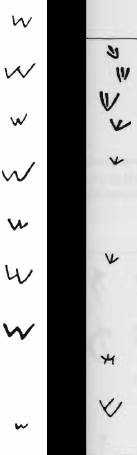
Twenty-first letter in many Semitic alphabets
| Field | Value |
|---|---|
| name | Šīn شين |
| letter | ش |
| script | Arabic script |
| type | Abjad |
| language | Arabic language |
| phonemes | |
| alphanumber | 13 |
| direction | Right-to-left |
| fam2 | 𐡔 |
| fam3 | [س](s) |
| fam4 | [سٕ](s) |
| fam1 | 𐤔 |
Shin (also spelled Šin (ar) or Sheen) is the twenty-first and penultimate letter of the Semitic abjads, including Phoenician šīn 𐤔, Hebrew šīn , Aramaic šīn 𐡔, Syriac šīn ܫ, and Arabic sīn .
The Phoenician letter gave rise to the Greek Sigma () (which in turn gave rise to the Latin S, the German ẞ and the Cyrillic С), and the letter Sha in the Glagolitic and Cyrillic scripts (, ). The South Arabian and Ethiopian letter Śawt is also cognate. The letter šīn is the only letter of the Arabic alphabet with three dots with a letter corresponding to a letter in the Northwest Semitic abjad or the Phoenician alphabet.
Origins
| Egyptian hieroglyph | Proto-Sinaitic | Phoenician | Paleo-Hebrew | ||||||
|---|---|---|---|---|---|---|---|---|---|
| Aa32 | [[File:Proto-canaaniteŠ01.svg | class=skin-invert-image | frameless | 35x35px]] | [[File:Phoenician sin.svg | class=skin-invert-image | 35px]] | [[File:Early_Aramaic_character_-_shin.png | class=skin-invert-image]] |
The Proto-Sinaitic glyph, according to William Albright, was based on a "tooth" and with the phonemic value š "corresponds etymologically (in part, at least) to original Semitic ṯ (th), which was pronounced s in South Canaanite". However, the Proto-Semitic word for "tooth" has been reconstructed as ***š**inn-.
The Phoenician sem letter expressed the continuants of two Proto-Semitic phonemes, and may have been based on a pictogram of a tooth (in modern Hebrew shen).
The history of the letters expressing sibilants in the various Semitic alphabets is somewhat complicated, due to different mergers between Proto-Semitic phonemes. As usually reconstructed, there are nine Proto-Semitic coronal fricative phonemes that evolved into the various sibilants of its daughter languages, as follows:
| Voiceless consonants | Proto-Semitic | Old South | |||||||||||||||||||||||||||||||||||||||
|---|---|---|---|---|---|---|---|---|---|---|---|---|---|---|---|---|---|---|---|---|---|---|---|---|---|---|---|---|---|---|---|---|---|---|---|---|---|---|---|---|---|
| Arabian | Old North | ||||||||||||||||||||||||||||||||||||||||
| Arabian | Modern South | ||||||||||||||||||||||||||||||||||||||||
| Arabian 1, 2 | Standard | ||||||||||||||||||||||||||||||||||||||||
| Arabic | Aramaic | Modern | |||||||||||||||||||||||||||||||||||||||
| Hebrew | Ge'ez | Phoenician | Akkadian | s₃ (s) | s₁ (š) | ṯ | s₂ (ś) | Emphatic consonants | Proto-Semitic | Old South | |||||||||||||||||||||||||||||||
| Arabian | Old North | ||||||||||||||||||||||||||||||||||||||||
| Arabian | Modern South | ||||||||||||||||||||||||||||||||||||||||
| Arabian | Standard | ||||||||||||||||||||||||||||||||||||||||
| Arabic | Aramaic | Modern | |||||||||||||||||||||||||||||||||||||||
| Hebrew | Ge'ez | Phoenician | Akkadian | ṣ | ṯ̣ | ṣ́ | Voiced consonants | Proto-Semitic | Old South | ||||||||||||||||||||||||||||||||
| Arabian | Old North | ||||||||||||||||||||||||||||||||||||||||
| Arabian | Modern South | ||||||||||||||||||||||||||||||||||||||||
| Arabian | Standard | ||||||||||||||||||||||||||||||||||||||||
| Arabic | Aramaic | Modern | |||||||||||||||||||||||||||||||||||||||
| Hebrew | Ge'ez | Phoenician | Akkadian | z | ḏ | ||||||||||||||||||||||||||||||||||||
| 𐪏 | s | s | s | s | |||||||||||||||||||||||||||||||||||||
| 𐪊 | , sometimes | š | š | š | |||||||||||||||||||||||||||||||||||||
| 𐪛 | , later | *ṯ, š, | |||||||||||||||||||||||||||||||||||||||
| later t | |||||||||||||||||||||||||||||||||||||||||
| 𐪆 | , later | *ś, s | ś | ||||||||||||||||||||||||||||||||||||||
| 𐪎 | , rarely | ṣ | ṣ | ṣ | ṣ | ||||||||||||||||||||||||||||||||||||
| 𐪜 | , later | *ṱ, ṣ, | |||||||||||||||||||||||||||||||||||||||
| later ṭ | |||||||||||||||||||||||||||||||||||||||||
| 𐪓 | , later | *ṣ́, q/ḳ, | |||||||||||||||||||||||||||||||||||||||
| later ʿ | ṣ́ | ||||||||||||||||||||||||||||||||||||||||
| 𐪘 | z | z | z | z | |||||||||||||||||||||||||||||||||||||
| 𐪙 | , later | *ḏ, z, | |||||||||||||||||||||||||||||||||||||||
| later d | |||||||||||||||||||||||||||||||||||||||||
| Notes |
Arabic shīn{{anchor|Arabic}}
Based on Semitic linguists (hypothesized), Samekh has no surviving descendant in the Arabic alphabet, and that sīn is derived from Phoenician šīn 𐤔 rather than Phoenician sāmek 𐤎, but it corresponds exclusively to Arabic س Sīn when comparing etymologically to other Semitic languages. In the Mashriqi abjadi order س Phonecar takes the place of Samekh at 15th position; meanwhile, the ش ar is placed at the 21st position, represents , and is the 13th letter of the modern hijā’ī (هِجَائِي) or alifbāʾī (أَلِفْبَائِي) order and is written thus:
In the Arabic alphabet, according to McDonald (1986), "there can be no doubt that ش is a formal derivative of سٕ and that س is descended from 𐡔." but unlike the Hebrew Sīn/Šīn and Aramaic Sīn/Šīn, Arabic س Sīn is considered a completely separate letter from ش Šīn .
The Arabic letter shīn was an acronym for "something" (شيء shayʾ(un) ) meaning the unknown in algebraic equations. In the transcription into Spanish, the Greek letter Khi (χ) was used which was later transcribed into Latin x. The letter shīn, along with Ṯāʾ, are the only two surviving letters in Arabic with three dots above. According to some sources, this is the origin of x used for the unknown in the equations. However, according to other sources, there is no historical evidence for this. In Modern Arabic mathematical notation, س sīn, i.e. shīn without its dots, often corresponds to Latin x. This led a debate to many Semitic linguists that the letter shīn is Arabic for samekh, although many Semitic linguists argue this debate as samekh has no surviving descendant in the Arabic alphabet.
In the Maghrebian abjad sequence :
- ص Ṣād replaces Samekh at 15th position and retains the numerical value of 60;
- سٕ §īn replaces Šīn at 21st position and retains the numerical value of 300;
- ش Šīn takes the places of the 28th letter with a numerical value of 1000.
Aramaic shin/sin
In Aramaic, where the use of shin is well-determined, the orthography of sin was never fully resolved.
To express an etymological *sem, a number of dialects chose either sin or samek exclusively, where other dialects switch freely between them (often 'leaning' more often towards one or the other). For example:
| *ʿaśar* | Old Aramaic | Imperial Aramaic | Middle Aramaic | Palestinian Aramaic | Babylonian Aramaic |
|---|---|---|---|---|---|
| Syrian Inscriptions | Idumaean Ostraca, Egyptian, Egyptian-Persian, Ezra | Qumran | Galilean | Gaonic, Jewish Babylonian Aramaic | |
| Tell Halaf | *(none recorded)* | Palmyrene, Syriac | Zoar, Christian Palestinian Aramaic | Mandaic | |
| both | *(none recorded)* | *(none recorded)* | *(none recorded)* | Targum Jehonathan, Original Manuscript Archival Texts, Palestinian Targum (Genizah), Samaritan | Late Jewish Literary Aramaic |
Regardless of how it is written, *sem in spoken Aramaic seems to have universally resolved to /s/.
Hebrew shin/sin
| Orthographic variants | Various print fonts | Cursive | ||||||||
|---|---|---|---|---|---|---|---|---|---|---|
| Hebrew | Rashi | |||||||||
| script | Serif | Sans-serif | Monospaced | |||||||
| ש | ש | ש | [[File:Hebrew letter Shin handwriting.svg | class=skin-invert-image | 28px]] | [[File:Shin (Rashi-script - Hebrew letter).svg | class=skin-invert-image | 20px]] |
Hebrew spelling: שִׁין
The Hebrew version according to the reconstruction shown above is descended from Proto-Semitic *sem, a phoneme thought to correspond to a voiceless alveolar lateral fricative , similar to Welsh Ll in "Llandudno" ().
See also Hebrew phonology, Śawt.
Sin and Shin dot===
The Hebrew letter represents two different phonemes: a sibilant , like English sour, and a , like English shoe. Prior to the advent and ascendancy of Tiberian orthography, the two were distinguished by a superscript samekh, i.e. vs. , which later developed into the dot. The two are distinguished by a dot above the left-hand side of the letter for and above the right-hand side for . In the biblical name Issachar () only, the second sin/shin letter is always written without any dot, even in fully vocalized texts. This is because the second sin/shin is always silent.
| Name | Symbol | IPA | Transliteration | Example |
|---|---|---|---|---|
| Sin dot (left) | s | **s**our | ||
| Shin dot (right) | sh | **sh**op |
Unicode encoding
| Glyph | Unicode | Name |
|---|---|---|
| U+05C1 | SHIN DOT | |
| U+05C2 | SIN DOT |
Significance
In gematria, Shin represents the number 300. The breakdown of its namesake, Shin[300] - Yodh[10] - Nunh[50] gives the geometrical meaningful number 360, which can be interpreted as encompassing the fullness of the degrees of circles.
Shin as a prefix commonly used in late-Biblical and Modern Hebrew language carries similar meaning as specificity faring relative pronouns in English: "that (..)", "which (..)" and "who (..)". When used this way, it is pronounced as 'sheh-' (IPA /ʃɛ-/. In colloquial Hebrew, Kaph and Shin together are a contraction of כּאשר, *ka'asher (*as, when).
Shin is also one of the seven letters which receive “crowns” (called tagin) in a Sefer Torah. (See Gimmel, Ayin, Teth, Nun, Zayin, and Tzadi).
According to Judges 12:6, the tribe of Ephraim could not differentiate between Shin and Samekh; when the Gileadites were at war with the Ephraimites, they would ask suspected Ephraimites to say the word shibboleth; an Ephraimite would say sibboleth and thus be exposed. This episode is the origin of the English term shibboleth.
In Judaism
Shin also stands for the word Shaddai, a Name of God. A kohen forms the letter Shin with each of his hands as he recites the Priestly Blessing. In the mid-1960s, actor Leonard Nimoy used a single-handed version of this gesture to create the Vulcan hand salute for his character, Mr. Spock, on Star Trek.
The letter Shin is often written on the case of a mezuzah, a scroll of parchment containing select Biblical texts. Sometimes the whole word Shaddai will be written.
The Shema Yisrael prayer also commands the Israelites to write God's commandments on their hearts (Deut. 6:6); the shape of the letter Shin mimics the structure of the human heart: the lower, larger left ventricle (which supplies the full body) and the smaller right ventricle (which supplies the lungs) are positioned like the lines of the letter Shin.
A religious significance has been applied to the fact that there are three valleys that comprise the city of Jerusalem's geography: the Valley of Ben Hinnom, Tyropoeon Valley, and Kidron Valley, and that these valleys converge to also form the shape of the letter shin, and that the Temple in Jerusalem is located where the dagesh (horizontal line) is. This is seen as a fulfillment of passages such as that instructs Jews to celebrate the Pasach at "the place the LORD will choose as a dwelling for his Name" (NIV).
In the Sefer Yetzirah the letter Shin is King over Fire, Formed Heaven in the Universe, Hot in the Year, and the Head in the Soul.
The 13th-century Kabbalistic text Sefer HaTemunah, holds that a single letter of unknown pronunciation, held by some to be the four-pronged shin on one side of the teffilin box, is missing from the current alphabet. The world's flaws, the book teaches, are related to the absence of this letter, the eventual revelation of which will repair the universe.
In Russian
The corresponding letter for the sound in Russian is nearly identical in shape to the Hebrew shin. Given that the Cyrillic script includes borrowed letters from a variety of different alphabets such as Greek and Latin, it is often suggested that the letter sha is directly borrowed from the Hebrew letter shin (other hypothesized sources include Coptic and Samaritan).
Hebrew terms containing ''Shin''
Shin Bet is a commonly used acronym for the Israeli Department of Internal General Security. Despite referring to a former name of the department, it remains the term usually used in English. In Modern Hebrew and Palestinian Arabic, the security service is known as the Shabak.
A Shin-Shin clash is Israeli military parlance for a battle between two tank divisions (from ).
Sh'at haShin ('Shin hour') is the last possible moment for any action, usually in a military context. Corresponds to the English expression **.
Syriac shin
Character encodings
|05E9|name1=Hebrew Letter Shin |0633|name2=Arabic Letter Seen |0634|name3=Arabic Letter Sheen |072B|name4=Syriac Letter Shin |FB2A|name5=Hebrew Letter Shin With Shin Dot |FB2B|name6=Hebrew Letter Shin With Sin Dot |FB2C|name7=Hebrew Letter Shin With Dagesh And Shin Dot |FB2D|name8=Hebrew Letter Shin With Dagesh And Sin Dot
|0814|name1=Samaritan Letter Shan |214F|name2=Symbol for Samaritan Source |1038C|name3=Ugaritic Letter Shen |10854|name4=Imperial Aramaic Letter Shin |10914|name5=Phoenician Letter Shin |10A86|name6=Old North Arabian Letter Es-2 |10A66|name7=Old South Arabian Letter Shin |1220|name8=Ethiopic Letter Sza
Notes
References
Sources
References
- Albright, W. F.. (1948). "The Early Alphabetic Inscriptions from Sinai and their Decipherment". Bulletin of the American Schools of Oriental Research.
- "*šinn- - tooth".
- Schneider, Roey. (2024). "The Semitic Sibilants". The Semitic Sibilants.
- [https://www.ted.com/talks/terry_moore_why_is_x_the_unknown Terry Moore: Why is 'x' the unknown?]
- [http://www.etymonline.com/index.php?allowed_in_frame=0&search=x&searchmode=none Online Etymological Dictionary]
- Cajori, Florian. (1993). "A History of Mathematical Notation". Courier Dover Publications.
- "Oxford Dictionary".
- [http://cal1.cn.huc.edu The Comprehensive Aramaic Lexicon]
- Dussaud 1924
- Two distinct forms of the Phoenician shin are shown, the later more resembling Hebrew's.
- [[Star Trek: The Original Series]], episode #30 "[[Amok Time]]" (production #34), and ''[[I Am Not Spock]]'', [[Leonard Nimoy]], 1977.
- (February 6, 2014). "Live Long and Prosper: The Jewish Story Behind Spock, Leonard Nimoy's Star Trek Character". Yiddish Book Center.
This article was imported from Wikipedia and is available under the Creative Commons Attribution-ShareAlike 4.0 License. Content has been adapted to SurfDoc format. Original contributors can be found on the article history page.
Ask Mako anything about Shin (letter) — get instant answers, deeper analysis, and related topics.
Research with MakoFree with your Surf account
Create a free account to save articles, ask Mako questions, and organize your research.
Sign up freeThis content may have been generated or modified by AI. CloudSurf Software LLC is not responsible for the accuracy, completeness, or reliability of AI-generated content. Always verify important information from primary sources.
Report