From Surf Wiki (app.surf) — the open knowledge base
Shenzhen Metro
Rapid transit system in Shenzhen
_System_Map.svg)
Rapid transit system in Shenzhen
| Field | Value | |||
|---|---|---|---|---|
| name | Shenzhen Metro | |||
| imagesize | 150px | |||
| locale | Shenzhen | |||
| transit_type | Rapid transit | |||
| began_operation | ||||
| system_length | 622 km | |||
| lines | 17: | |||
| stations | 421 | |||
| website | ||||
| ridership | 8.46 million (2024) | |||
| 11.88 million (December 31, 2024, Record)<ref>{{Cite web | url | https://www.sz.gov.cn/en_szgov/news/latest/content/post_11934674.html | title = Metro ridership hits new daily record}} | |
| annual_ridership | 1.8775 billion (2018) | |||
| top_speed | {{plainlist | |||
| * {{convert | 80 | km/h | abbr | on}} (Lines 1, 2, 4, 5, 7, 8, 9, 10, 12, 16) |
| * {{convert | 90 | km/h | abbr | on}} (Line 3) |
| * {{convert | 100 | km/h | abbr | on}} (Line 6, 13) |
| * {{convert | 120 | km/h | abbr | on}} (Lines 11, 14, 20, Line 6 Branch) |
| track_gauge | ||||
| el | overhead catenary or third rail | |||
| operator | {{plainlist | |||
| map | [[File:Shenzhen Metro (Rapid Transit) System Map.svg | 260px]] | ||
| image2 | Shenzhen Metro Line 3.jpg | |||
| imagesize2 | 275px |
11.88 million (December 31, 2024, Record)
- 80 km/h (Lines 1, 2, 4, 5, 7, 8, 9, 10, 12, 16)
- 90 km/h (Line 3)
- 100 km/h (Line 6, 13)
- 120 km/h (Lines 11, 14, 20, Line 6 Branch)
- SZMC (Shenzhen Metro Group) (all except lines 4 and 13)
- MTR Corporation (Shenzhen) (lines 4 and 13 only)
The Shenzhen Metro () is the rapid transit system of the city of Shenzhen in Guangdong Province, China. The newest lines and extensions which opened on December 27, 2024 put the network at 609.5 km of trackage. It currently operates on 17 lines with 421 stations. Despite having only opened on December 28, 2004, the Shenzhen Metro is the 5th longest metro system in the world. By 2035, the network is planned to comprise 8 express and 24 non-express lines totaling 1142 km of trackage.
Current system
Currently the network has 622 km of route, operating on 17 lines with 421 stations. Line 1, Line 4 and Line 10 run to the border crossings between the Shenzhen Special Economic Zone and the Hong Kong Special Administrative Region at Luohu/Lo Wu and Futian Checkpoint/Lok Ma Chau, where riders can transfer to Hong Kong's MTR East Rail line for travel onwards to Hong Kong.
| Line | Terminals | ||||||||
|---|---|---|---|---|---|---|---|---|---|
| (District) | Service patterns | Commencement | Latest | ||||||
| extension | Length | ||||||||
| km | Stations | Operator | **Total** | 622 | 421 | ||||
| shenzhen | 1}} | **Luohu** | |||||||
| (Luohu) | **Airport East** | ||||||||
| (Bao'an) | ↔ | 2004 | 2011 | 41.04 | 30 | [[File:Shenzhen Metro Corporation logo.svg | 30x30px]] | ||
| Shenzhen Metro Group | |||||||||
| shenzhen | 2}} | **Chiwan** | |||||||
| (Nanshan) | **Liantang** | ||||||||
| (Luohu) | Chiwan ↔ Liantang | ||||||||
| Rush Hour: Wanxia ↔ Liantang | |||||||||
| Partial: Houhai ↔ Liantang | 2010 | 2024 | 39.78 | 32 | |||||
| shenzhen | 3}} | **** | |||||||
| (Futian) | **** | ||||||||
| (Longgang) | ↔ | ||||||||
| Rush Hour: ↔ | |||||||||
| Partial: ↔ | 2010 | 2024 | 52.33 | 38 | |||||
| shenzhen | 4}} | **Futian Checkpoint** | |||||||
| (Futian) | **Niuhu** | ||||||||
| (Longhua) | Futian Checkpoint ↔ Niuhu | ||||||||
| AM Rush Hour: Futian Checkpoint ↔ Xikeng | 2004 | 2020 | 31.3 | 23 | [[File:HK MTR logo.svg | 30x30px]] | |||
| MTR Corporation (Shenzhen) | |||||||||
| shenzhen | 5}} | **Chiwan** | |||||||
| (Nanshan) | **Grand Theater** | ||||||||
| (Luohu) | Chiwan ↔ Grand Theater | ||||||||
| Rush Hour: Qianhaiwan ↔ Huangbeiling | |||||||||
| Partial: Changlingpi ↔ Chiwan | |||||||||
| Changlingpi ↔ Huangbeiling | 2011 | 2025 | title=约起!深圳地铁5号线二期9月28日开通 | url=https://www.sznews.com/news/content/2019-09/17/content_22475609.htm | quote=5号线运营总里程将延长至47.393公里}} | 37 | [[File:Shenzhen Metro Corporation logo.svg | 30x30px]] | |
| Shenzhen Metro Group | |||||||||
| shenzhen | 6}} | **Science Museum** | |||||||
| (Futian) | **Songgang** | ||||||||
| (Bao'an) | Science Museum ↔ Songgang | ||||||||
| Partial: Songgang ↔ Fenghuang Town/Science Museum ↔ Fenghuang Town | 2020 | — | date=August 18, 2020 | title=刚刚,深圳地铁6号线10号线正式开通!你要先打卡哪条线? | url=https://www.thepaper.cn/newsDetail_forward_8772659}} | 27 | |||
| 6B | **** | ||||||||
| (Guangming) | **SIAT** | ||||||||
| (Guangming) | ↔ SUAT | 2022 | 2025 | 11.07 | 7 | ||||
| 07 | **** | ||||||||
| (Nanshan) | **** | ||||||||
| (Luohu) | ↔ | ||||||||
| Partial: ↔ / ↔ | 2016 | 2024 | 32.32 | 29 | |||||
| **Liantang** | |||||||||
| (Luohu) | **Xichong** | ||||||||
| (Dapeng) | Liantang ↔ Xichong | 2020 | 2025 | 20.38 | 11 | ||||
| 09 | **Qianwan** | ||||||||
| (Nanshan) | **Wenjin** | ||||||||
| (Luohu) | Qianwan ↔ Wenjin | ||||||||
| Partial: Shenzhen Bay Park ↔ Wenjin | 2016 | 2019 | 36.18 | 32 | |||||
| 10 | **Futian Checkpoint** | ||||||||
| (Futian) | **Shuangyong Street** | ||||||||
| (Longgang) | Futian Checkpoint ↔ Shuangyong Street | ||||||||
| Partial: Futian Checkpoint → Gankeng | 2020 | — | 29.3 | 24 | |||||
| 11 | **Hongling South** | ||||||||
| (Futian) | **Bitou** | ||||||||
| (Bao'an) | Hongling South ↔ Bitou | ||||||||
| AM Mon–Fri Peak: Hongling South ↔ Airport North | 2016 | 2025 | 57.3 | 22 | |||||
| 12 | **Zuopaotai East** | ||||||||
| (Nanshan) | **Songgang** | ||||||||
| (Bao'an) | ↔ | ||||||||
| Partial: ↔ | 2022 | 2024 | 48.59 | 39 | |||||
| 13 | **Shenzhen Bay Checkpoint** | ||||||||
| (Nanshan) | **Shangwu** | ||||||||
| (Bao'an) | Shenzhen Bay Checkpoint ↔ Shangwu | 2024 | 2025 | 22.5 | 15 | [[File:HK MTR logo.svg | 30x30px]] | ||
| MTR Corporation (Shenzhen) | |||||||||
| 14 | **Gangxia North** | ||||||||
| (Futian) | **Shatian** | ||||||||
| (Pingshan) | Gangxia North ↔ Shatian | 2022 | — | 50.3 | 18 | [[File:Shenzhen Metro Corporation logo.svg | 30x30px]] | ||
| Shenzhen Metro Group | |||||||||
| 16 | **** | ||||||||
| (Longgang) | **Tianxin** | ||||||||
| (Pingshan) | ↔ Tianxin | 2022 | 2025 | 38.66 | 32 | ||||
| shenzhen | 20}} | **Airport North** | |||||||
| (Bao'an) | **Convention & Exhibition City** | ||||||||
| (Bao'an) | Airport North ↔ Convention & Exhibition City | 2021 | — | 8.43 | 5 |
Line 1
Main article: Line 1 (Shenzhen Metro)
Line 1, formerly known as Luobao line, runs westward from Luohu to Airport East. Trains operate every 2 minutes during peak hours and every 4 minutes at other times.
- December 28, 2004: Luohu – Window of the World
- September 28, 2009: Window of the World – Shenzhen University
- June 15, 2011: Shenzhen University – Airport East
Line 2
Main article: Line 2 (Shenzhen Metro)
Line 2, formerly known as Shekou line, runs from Chiwan to Liantang. Line 2 is connected with Line 8 at Liantang station.
- December 28, 2010: Chiwan – Window of the World
- June 28, 2011: Window of the World – Xinxiu
- October 28, 2020: Xinxiu – Liantang
Line 3
Main article: Line 3 (Shenzhen Metro)
Line 3, formerly known as Longgang line, runs from Futian Bonded Area to Pingdi Liulian in Longgang, in the north-east part of the city. Construction began on December 26, 2005. The line is operated by Shenzhen Metro Line 3 Operations, which has been a subsidiary of SZMC (Shenzhen Metro Group) since April 11, 2011, when an 80% stake was transferred to SZMC.
- December 28, 2010: Caopu – Shuanglong
- June 28, 2011: Yitian – Caopu
- October 28, 2020: Futian Bonded Area – Yitian
- December 28, 2024: –
Line 4
Main article: Line 4 (Shenzhen Metro)
Line 4, formerly known as Longhua line, runs northward from Futian Checkpoint to Niuhu. Trains operate every 2.5 minutes at peak hours and every 6 minutes during off-peak hours. Stations from Futian Checkpoint to Shangmeilin Station are underground. The line has been operated by MTR Corporation (Shenzhen), a subsidiary of MTR Corporation, since July 1, 2010.
- December 28, 2004: Fumin – Children's Palace
- June 28, 2007: Futian Checkpoint – Fumin
- June 16, 2011: Children's Palace – Qinghu
- October 28, 2020: Qinghu – Niuhu
Line 5
Main article: Line 5 (Shenzhen Metro)
Line 5, formerly known as Huanzhong line, runs from Chiwan in the west to in the east via an arch-like shape. Construction began in May 2009 and the line opened on June 22, 2011. Line 5 required a total investment of 20.6 billion RMB. The line is operated by SZMC (Shenzhen Metro Group).
- June 22, 2011: Qianhaiwan – Huangbeiling
- September 28, 2019: Qianhaiwan – Chiwan
- December 28, 2025: Huangbeiling – Grand Theater
Line 6
Main article: Line 6 (Shenzhen Metro)
Line 6, formerly known as Guangming line, runs from Songgang in the north to Science Museum in the south, with a length of 49.4 km and a total of 27 stations. Construction began in August 2015 and the line opened on August 18, 2020.
- August 18, 2020: Science Museum – Songgang
Line 6 Branch
Main article: Line 6 Branch (Shenzhen Metro)
Line 6 Branch, also known as Branch Line 6, runs from Guangmingcheng to SUAT in the north. The line opened on November 28, 2022.
- November 28, 2022: Guangming – SUAT
- September 28, 2025: Guangmingcheng – Guangming
Line 7
Main article: Line 7 (Shenzhen Metro)
Line 7, formerly known as Xili line of the Shenzhen Metro, opened on October 28, 2016, with a length of 32.84 km and a total of 29 stations. It connects SZU Lihu Campus at Shenzhen University to Tai'an. The line travels East–West across Shenzhen in a "V" shape.
- October 28, 2016: Xili Lake – Tai'an
- December 28, 2024: –
Line 8
Main article: Line 8 (Shenzhen Metro)
Line 8, formerly known as Yantian line of the Shenzhen Metro, opened on October 28, 2020, with a length of 20.377 km and a total of 11 stations. It connects the eastern suburbs of Liantang to Yantian Road, then towards the beach resorts at Dameisha, Xiaomeisha before entering Dapeng at the beach resort at . However, this line serves as the extension of Line 2 in actual operation.
- October 28, 2020: Liantang – Yantian Road
- December 27, 2023: Yantian Road – Xiaomeisha
- December 28, 2025: Xiaomeisha – Xichong
Line 9
Main article: Line 9 (Shenzhen Metro)
Line 9, formerly known as Meilin line or Neihuan line of the Shenzhen Metro, opened on October 28, 2016. The line runs eastward from to . It has 10 transfer stations. The line is 36.18 km long, running through the districts of Nanshan, Futian and Luohu.
- October 28, 2016: –
- December 8, 2019: –
Line 10
Main article: Line 10 (Shenzhen Metro)
Line 10 formerly known as Bantian line, runs from Futian Checkpoint in the south to Shuangyong Street in the north, with a length of 29.3 km and a total of 24 stations. Construction began in September 2015 and the line opened on August 18, 2020.
- August 18, 2020: Futian Checkpoint – Shuangyong Street
Line 11
Main article: Line 11 (Shenzhen Metro)
Line 11, also known as the Airport Express, runs from Bitou in the northwest to in the city centre via Shenzhen Bao'an International Airport. Construction began in April 2012 and the line opened on June 28, 2016. Line 11 runs at a higher speed of 120 km/h.
- June 28, 2016: Bitou – Futian
- October 28, 2022: Futian – Gangxia North
- December 28, 2024: Gangxia North – Huaqiang South
- December 28, 2025: Huaqiang South – Hongling South
Line 12
Main article: Line 12 (Shenzhen Metro)
Line 12, also known as Nanbao Line, runs from in the southwest to in the northwest. Construction began in 2018 and the line opened on November 28, 2022.
- November 28, 2022: Zuopaotai East – Waterlands Resort East
- December 28, 2024: –
Line 13
Main article: Line 13 (Shenzhen Metro)
Line 13, also known as Shiyan Line, runs from Shenzhen Bay Checkpoint at the Shenzhen Bay Port in Nanshan to Shangwu in northeast Bao'an. Construction began in 2018 and the first phase of the line between Shenzhen Bay Checkpoint and Hi-Tech Central opened on December 28, 2024.
- December 28, 2024: –
- December 28, 2025: –
Line 14
Main article: Line 14 (Shenzhen Metro)
Line 14, also known as the Eastern Express, runs from Gangxia North in the city centre to Shatian in the northeast. Construction began in 2018 and the line opened on October 28, 2022.
- October 28, 2022: Gangxia North – Shatian
Line 16
Main article: Line 16 (Shenzhen Metro)
Line 16, also known as Longping Line, runs from Yuanshan Xikeng in the south of Longgang to Tianxin in the northeast. Construction began in 2018 and the line opened on December 28, 2022.
- December 28, 2022: Universiade – Tianxin
- September 28, 2025: Yuanshan Xikeng – Universiade
Line 20
Main article: Line 20 (Shenzhen Metro)
Line 20, formerly known as Fuyong line, runs from Airport North in the north-west to Convention & Exhibition City near Shenzhen World. Construction began in September 2016 and the line opened on December 28, 2021. Line 20 runs at the same top speed as line 11, at 120 km/h.
- December 28, 2021: Airport North – Convention & Exhibition City
History

Early planning
In late 1983, Party Secretary of Shenzhen Mayor Liang Xiang led a team to Singapore to study its mass transit system. Upon returning it was decided that 30 m on each side of Shennan Avenue should be protected as a green belt, and to set aside a 16 m wide median reserved for a light rail or light metro line. In 1984, the "Shenzhen Special Economic Zone Master Plan (1985–2000)" pointed out that, with the growing population and traffic in Shenzhen, a light metro system would not have sufficient capacity to meet future demand. Instead the report proposed a heavy rail subway line to be built along Shennan Avenue. The project was finally approved by the Central Planning Department in 1992.
In August 1992, during and re-feasibility and rail network planning, The Shenzhen Municipal Government decided to move from building a light metro line to a heavy rail subway line. The rapid growth of Shenzhen City made a lower capacity light metro line impractical. In 1994, Shenzhen organized the preparation of the "Shenzhen urban rail network master plan" to be incorporated into the "Shenzhen City Master Plan (1996–2010)". The city's vision for an urban rail network would consists of nine lines. Of the nine transit lines, three of them would be commuter rail lines upgraded from existing national mainline railways. The total length of the proposed network would be about 270 km. The three upgraded commuter rail lines would overlap the Guangzhou–Shenzhen railway, Pinghu–Nanshan railway and Pingyan railway. This plan established the basic framework for the Shenzhen Metro network.
Construction suspended and restarted
In December 1995, the State Council issued the "moratorium on approval of urban rapid transit projects" to suspend approval of rail transit projects in all Chinese cities except Beijing, Shanghai, and Guangzhou. The Shenzhen Metro project was postponed. In 1996, prior to the handover of Hong Kong, authorities attempted to restart construction by renaming the project "The Luohu, Huanggang / Lok Ma Chau border crossing passenger rail connection project", stressing that the project is designed to meet the potential growing demand for cross-border passenger traffic after the handover.
In 1997, Shenzhen reapplied its Subway plans to the State Planning Commission, and received approval in May 1998. The project was renamed the "Shenzhen Metro first phase". In July 1998, SZMC (Shenzhen Metro Group). was formally established. By April 1999, the subway project feasibility study report has been approved by the state.
Phase I (1998–2004)
Construction of the first sections of Line 1 and Line 4 began in 1999. The grand opening of the Shenzhen Metro system occurred at 5:00 pm on Tuesday, December 28, 2004. This made Shenzhen the seventh city in mainland China to have a subway after Beijing, Tianjin, Shanghai, Guangzhou, Dalian and Wuhan.
Initially the trains operated at 15-minute frequencies and consisted of Line 1 services between Luohu and Shijie Zhi Chuang (now Window of the World) and the Line 4 services between Fumin and Shaonian Gong (now Children's Palace). Initially the English names of the stations were rendered in Hanyu Pinyin, but some of the names were changed to English translation with American spelling like the rest of mainland China, despite being close to the Hong Kong, which uses British spelling and ongoing political tensions with the US, in mid-2011.
The Futian Checkpoint station opened on June 28, 2007, using the name Huanggang.
| Date Opened | Line | Termini | Length | |
|---|---|---|---|---|
| in km | Stations | |||
| December 28, 2004 | – phase 1 | Luohu | Window of the World | 17.4 |
| – phase 1 (initial section) | Fumin | Children's Palace | 3.4 | 4 |
| June 28, 2007 | – phase 1 (extension) | Futian Checkpoint | Fumin | 1.1 |
Name changes
On April 23, 2008, Shenzhen Municipal Planning Bureau announced that it would change the nomenclature of Shenzhen's subway lines according to the "2007 Urban Rail Transit Plan Scheme". Instead of using numbers as the lines official designation, as typically used in other mainland Chinese metro systems, lines would be given Chinese names more akin to the Hong Kong MTR. In 2010, the Scheme was reviewed and adjusted with new routes and names in addition to newly proposed lines. On October 23, 2013, the SZMC (Shenzhen Metro Group) decided that current operational lines will have their number and names combined, while future lines will only be numbered. Due to the change in the construction order of several lines, some numerical names have been reviewed in order to prevent big jump between numbers. By 2016, only numerical names are used.
Lines currently in operation:
| Original No. | 2007 Scheme | 2010 Scheme | Current name |
|---|---|---|---|
| Line 1 | Luobao Line | Luobao Line (Line 1) | Line 1 |
| Line 2 | Shekou Line | Shekou Line (Line 2) | Line 2 |
| Line 3 | Longgang Line | Longgang Line (Line 3) | Line 3 |
| Line 4 | Longhua Line | Longhua Line (Line 4) | Line 4 |
| Line 5 | Huanzhong Line | Huanzhong Line (Line 5) | Line 5 |
| Line 7 | Xili Line | Xili Line (Line 7) | Line 7 |
| Line 8 | Yantian Line | Yantian Line (Line 8) | Line 2 Extension (Line 8 Phase 1) |
| Line 9 | Neihuan Line | Meilin Line (Line 9) | Line 9 |
| Line 16 | Pinghu Line | Bantian Line (Line 16/Line 10) | Line 10 |
| Line 11 | Airport Line | Airport Line (Line 11) | Line 11 |
| Line 10 | Bao'an Line | Nanbao Line (Line 10/Line 12) | Line 12 |
| Line 14 | Eastern Express | Eastern Express (Line 14) | Line 14 |
| Line 12 | Pingshan Line | Longping Line (Line 12/Line 16) | Line 16 |
| – | – | Fuyong Line (Line 20) | Line 20 (International Expo Conveyance Project) |
Lines under construction:
| Original No. | 2007 Scheme | 2010 Scheme | Current name |
|---|---|---|---|
| Line 15 | Shiyan Line | Shiyan Line (Line 15/Line 13) | Line 13 |
Phase II (2007–2011) + 2025
From 2004 to 2007, there was a lack of official government interest and attention to expanding the subway after completion of Phase 1 with little or no active projects. Subway construction speed was ridiculed as "earthworm speed". On January 17, 2007, Shenzhen won the right to host the 2011 Universiade. In the bid Shenzhen committed to complete 155 km of subway lines before the games. The mayor of Shenzhen at the time, Xu Zongheng, sharply criticized the speed and efficiency of Shenzhen's subway construction procedures and calls for reform. Subsequently, the Shenzhen municipal government and various departments signed a liability form, requiring Phase II subway expansion to be completed in time for the Universiade. Shenzhen Metro increased to over a hundred operating metro stations in June 2011, just before the Shenzhen Universiade games. In the span of two weeks, the network expanded from 64 km to 177 km. This expansion increased rail transit's share of total public transit trips from 6% to 29% in 2014.
| Date Opened | Line | Termini | Length | |
|---|---|---|---|---|
| in km | Stations | |||
| September 28, 2009 | – phase 2 (trial) | Window of the World | Shenzhen University | 3.39 |
| December 28, 2010 | – phase 1 | Chiwan | Window of the World | 15.1 |
| – phase 1 (elevated section) | Shuanglong | Caopu | 25.6 | 16 |
| June 15, 2011 | – phase 2 | Shenzhen University | Airport East | 23.6 |
| June 16, 2011 | – phase 2 (first north extension) | Children's Palace | Qinghu | 15.9 |
| June 22, 2011 | – phase 1 | Qianhaiwan | Huangbeiling | 40.0 |
| June 28, 2011 | – phase 2 (first east extension) | Window of the World | Xinxiu | 20.65 |
| – phase 1 (underground section) & phase 2 (first south extension) | Caopu | Yitian | 16.52 | 14 |
| December 28, 2025 | – phase 1 (remaining section) | Huangbeiling | Grand Theatre | 2.88 |
Phase III (2012–2023)
In 2010, the Shenzhen Urban Planning and Land Resources Committee proposed a building program (Phase III) between 2011 and 2020. In 2011 this plan was approved by the NDRC. Phase III formally commenced in May 2011 with an expected cost of 125.6 billion yuan. It will cover Lines 6, 7, 8, 9, and 11 and will extend the length of the Shenzhen Metro to 348 km and 10 lines. In June 2011, the Shenzhen Urban Planning and Land Resources Commission started gather public input on Phase III station names. On June 28, 2016, Line 11 opened being the first subway line in Shenzhen with 8 car trains and 120 km/h maximum service speed and the first in China with a First Class service. Lines 7 and 9 followed on October 28, 2016. South extension of Line 5 opened on September 28, 2019, and west extension of Line 9 opened on December 8, 2019. Line 6 and Line 10 opened on August 18, 2020, bringing the length of the Shenzhen Metro to 382.1 km and the fourth longest in China. Second east extension of Line 2, second south extension of Line 3, second north extension of Line 4 and phase 1 of Line 8 opened on October 28, 2020, bringing the length of the Shenzhen Metro to 411 km. Phase III is also the first phase in which the lines are officially numbered instead of named and colored.
| Date Opened | Line | Termini | Length | |||
|---|---|---|---|---|---|---|
| in km | Stations | |||||
| June 28, 2016 | – phase 1 | Futian | Bitou | 51.936 | ||
| October 28, 2016 | – phase 1 | Tai'an | Xili Lake | 30.173 | ||
| – phase 1 | Wenjin | Hongshuwan South | 25.38 | 22 | ||
| September 28, 2019 | – phase 2 | Qianhaiwan | Chiwan | 7.65 | ||
| December 8, 2019 | – phase 2 | Hongshuwan South | Qianwan | 10.79 | ||
| August 18, 2020 | – phase 1 & 2 | Science Museum | Songgang | url=https://www.thepaper.cn/newsDetail_forward_8772659 | date=August 18, 2020 | title=刚刚,深圳地铁6号线10号线正式开通!你要先打卡哪条线?}} |
| Futian Checkpoint | Shuangyong Street | 29.3 | 24 | |||
| October 28, 2020 | – phase 3 (second east extension) | Liantang | 3.82 | |||
| – phase 3 (second south extension) | 1.5 | 1 | ||||
| – phase 3 (second north extension) | 10.791 | 8 | ||||
| (through operation to ) – phase 1 | Liantang | 12.367 | 7 | |||
| December 27, 2023 | (through operation to ) – phase 2 | 8.01 |
Phase IV & Phase IV revised expansion (2017–2026)
With the shortening of the Phase III implementation period, a number of lines (Lines 16 and 12) planned in 2007's Phase III moved into the next phase. By 2016, it was determined that Phase IV will have an implementation period between 2017 and 2022 and consist of 274 km of new subway. Lines 13 and 14 which originally had a long term 2030 completion deadline were moved into Phase IV expansion. In addition, a branch line of Line 6 will connect with the neighboring Dongguan Rail Transit system. Lines 12, 13, 14, and 16 and branch of Line 6 was approved by the NDRC in July 2017 and started construction in January 2018. The first phase of Line 20 was fast tracked from Phase IV to provide a shuttle between Line 11 and a new International Convention Center, now called Convention & Exhibition City. The construction started in September 2016, but as for early 2019, the construction is paused because the Development and Reform Commission did not approve the project. The Phase IV revised plan approved by the NDRC on March 26, 2020, approved the first Phase of Line 20 allowing for construction to continue. The line eventually opened on December 28, 2021. Futian to Gangxia North in the first section of Phase 2 of Line 11 opened on October 28, 2022 in tandem with Line 14 Phase I. Soon after, Line 6 Branch and Line 12 Phase I opened on November 28, 2022, and Line 16 Phase I opened on December 28, 2022. Two years later, Line 3 Phase IV, Line 7 Phase II, Line 11 Phase II, Line 12 Phase II and Line 13 Phase I south section opened on December 28, 2024. On 28 September 2025, Line 6 Branch Phase II and Line 16 Phase II opened, bringing the length of the Shenzhen Metro to 609.5 km.
| Date Opened | Line | Termini | Length | |
|---|---|---|---|---|
| in km | Stations | |||
| December 28, 2021 | – phase 1 | Airport North | Convention & Exhibition City | 8.43 |
| October 28, 2022 | – phase 2 (trial) | Futian | Gangxia North | 1.6 |
| – phase 1 | Gangxia North | Shatian | 50.3 | 17 |
| November 28, 2022 | – phase 1 | Guangming | SIAT | 6.13 |
| – phase 1 | Zuopaotai East | Waterlands Resort East | 40.54 | 33 |
| December 28, 2022 | – phase 1 | Universiade | Tianxin | 29.2 |
| December 28, 2024 | – phase 4 | 9.4 | ||
| – phase 2 | 2.36 | 2 | ||
| – phase 2 | 4.39 | 2 | ||
| – phase 2 | 8.16 | 5 | ||
| – phase 1 (South section) | 6.36 | 7 | ||
| September 28, 2025 | – phase 2 | 4.94 | ||
| – phase 2 | 9.46 | 8 | ||
| December 28, 2025 | – phase 1 (North section) | 16.86 | ||
| – phase 3 | 3.69 | 1 | ||
| – remaining station | 2.34 | 1 |
Future expansion
Phase IV Revised Expansion
The Phase IV revised plan approved by the NDRC on March 26, 2020, added a number of extension projects.
| Expected opening | Line | Section | Terminals | Length | |
|---|---|---|---|---|---|
| in km | Stations | ||||
| 2026 | Phase 2 North | 18.8 | |||
| Phase 2 South | 4.47 | 3 |
Phase V (2023–2028)
In the Shenzhen Metro 2007 masterplan proposed four more lines (Lines 13, 14, 15 and 16) which have a planned completion target of 2030. In 2016, all aforementioned lines but Line 15 were designated as part of the Phase IV expansion, moving the completion date forward from 2030 to 2022. In 2012, four further lines Qiannan (Line 17), Pinghu (Line 18), Pingshan (Line 19) and Fuyong (Line 20) where unveiled, making the total planned length of the Shenzhen Metro to 720 km spread out over 20 lines. The first phase of Line 20 was fast-tracked and included in the Phase III revised expansion with a completion date of 2018. This leaves Line 15, 17–19 and the rest of Line 20 available for the next phase (Phase V) of subway expansion. In September 2022, the Shenzhen municipal government confirmed the projects proposed to be included in its phase V expansion. A total of 227 km of new lines are proposed.
On March 31, 2023, the Bureau of Housing and Urban Rural Development of Shenzhen Metro Municipality will open the bidding for the fifth phase planning of Shenzhen Metro Metro, including Line 15, Line 17 Phase I, Line 19 Phase I, Line 20 Phase II (Airport East—Baishizhou), Line 22 Phase I, Line 25 Phase I, Line 27 Phase I, Line 29 Phase I and Line 32 Phase I, This means that these 9 lines have been approved with an investment amount of 191.1 billion yuan. However, Line 18 Phase I, Line 21 Phase I, Line 10 East Extension (Shenzhen Section) and Metro Line 11 North Extension (Shenzhen Section), which were previously proposed to be included in the fifth phase plan of Shenzhen Metro, were not included in this announcement.
In June 2023, the Fifth Phase Construction Plan of Shenzhen Urban Rail Transit (2023–2028) has been approved for a total of 11 construction projects, including Line 15, Line 17 Phase I, Line 19 Phase I, Line 20 Phase II (Airport East—Baishizhou), Line 22 Phase I, Line 25 Phase I, Line 27 Phase I, Line 29 Phase I, Line 32 Phase I, Line 10 East Extension (Shenzhen Section) and Metro Line 11 North Extension (Shenzhen Section).
| Line | Section | Terminals | Length | |||
|---|---|---|---|---|---|---|
| in km | Stations | Status | Total | |||
| East extension | Shuangyong Street | Huanggekeng | 9.8 (2.9 in Shenzhen) | 5 | Approved | |
| North extension | Bitou | Chang'an | 3.7 (0.8 in Shenzhen) | 1 | Approved | |
| West extension | Gangxia North | Xiangmihu West | 1 | Approved | ||
| Loop Line | 32.2 | 24 | Under Construction | |||
| Phase 1 | Luohu West | Shanglilang | 18.8 | 18 | Under Construction | |
| Phase 1 | Nantangwei | Julong | 12.5 | 12 | Under Construction | |
| Phase 2 | Airport North | Baishizhou | 24.9 | 11 | Under Construction | |
| Phase 1 | Shangsha | Liguang | 34.2 | 21 | Under Construction | |
| Phase 1 | Shilong | Jihua Hospital | 16.2 | 14 | Under Construction | |
| Phase 1 | Songpingcun, Jihua Hospital | Gangtou West, Lizhi Orchard | 25.6 | 21 | Under Construction | |
| Phase 1 | Hongshuwan South | Xingdong | 11.3 | 10 | Under Construction | |
| Phase 1 | Xichong | Kuichong East | 9.5 | 4 | Under Construction | |
| 196.3 | 140 |
Long-term plan
Aside from the set masterplan, at the 12th Guangdong Provincial People's Congress in January 2014, it was proposed to extend Line 4 beyond the planned Phase III terminus at the Songyuan Bus Terminal in Guanlan. The proposal wanted to further extend this line to reach the future planned Dongguan Metro Line 4 at Tangxia station. This proposal aims to shorten the distance between the two cities in residents' minds, boost tourism industries in both cities and expand housing options. It would also allow for direct connection between Hong Kong and Dongguan. As the area in the proposed area is less developed, the cost in building the line is expected to be lower, with a feasibility study yet to be conducted. In addition to metro lines, 5 Pearl River Delta Rapid Transit lines connecting neighboring urban centers in the Pearl River Delta such as Dongguan, Huizhou, Foshan and Guangzhou, totaling 146 km, have also been revealed. In 2016, an even more ambitious masterplan, expanding the previously planned 20 lines to 32, was unveiled. The new plan envisions a 1142 km subway network to be completed by 2030. This will allow for travel between the central and suburban districts to be shortened to 45 minutes and for public transit to make up more than 70% of all motorized trips in Shenzhen.
Ridership
| 2005 |58 | 2006 |90 | 2007 |118 | 2008 |136 | 2009 |138 | 2010 |163 | 2011 |460 | 2012 |781 | 2013 |914 | 2014|1037 | 2015 |1122 | 2016|1297 | 2017 |1654 | 2018 |1878 | 2019|2018 | 2020|1623 | 2021|2178 | 2022|1751 | 2023|2711
Since the opening of the first phase in 2004, there has been a steady growth in passenger traffic. In 2009 and 2010, passenger traffic soared with major openings of new phase 2 lines, with a three-fold increase in passenger traffic in 2010. On July 12, 2019, it set a new record for its peak ridership at 6.63 million.
July is the busiest month of the year for the Shenzhen Metro, accounting for 9.3% of annual passenger traffic, while January is the least busy month, accounting for only 6.7%. This is caused by Shenzhen's large migrant worker population.
Fares and tickets
Metro rides are priced according to distance travelled, and fares vary from 2 RMB to 14 RMB. Since December 2010 fares are based on a usage fee (2 RMB) + a distance fee. The distance fee is 1 RMB for each 4 km from 4 km to 12 km; after that 1 RMB for each 6 km from 12 km to 24 km and finally 1 RMB for every 8 km over 24 km distance. For passengers who wish to ride on business coach in line 11, they have to pay 3 times the amount of price that calculated by the regulations above.
| Distance (km) | Fares (RMB) |
|---|---|
| 0~12 | 1+1/per 4 km |
| 12~24 | 5+1/per 6 km |
| over 24 | 7+1/per 8 km |
Children under the height of 120 cm or aged below 6 may ride for free when accompanied by an adult. The metro also offers free rides to senior citizens over the age of 65, the physically disabled and military personnel. Tickets for children between 120 cm and 150 cm, or aged between 6 and 14 years, or middle school students, are half priced.
Metro fares can be paid for with single-ride tokens, multiple-ride Shenzhen Tong cards or 1- day passes.
Tokens

When using cash, a RFID token (NXP Mifare Classic) is purchased and used for a single, non-returnable journey. There are two different types of tokens, with green tokens for Standard Class, and yellow tokens used for Business Class which is only available on Line 11. All ticket vending machines offer both English and Chinese interface. The purchaser touches a station name to calculate the fare. After payment, a green token is dispensed, which must be scanned at the entrance station and deposited at the exit station. A penalty applies should a token be lost. Purchasers of green tokens cannot ride Business Class on Line 11 directly. Instead, they must get off at any transfer stations with Line 11 and purchase a separate yellow token.
Note that as of 2015, many machines accept only 5 or 10 RMB notes. The token(s) are only valid at the station where issued. Passengers are unable to buy an extra token for return journey prior to departure. Baggage X-Ray machines are located at each station, and may be staffed during peak hours.
Shenzhen Tong cards
Main article: Shenzhen Tong
Shenzhen Tong is a pre-paid currency card similar to Oyster card system in London and the Octopus card system used in Hong Kong. The multiple fare card stores credit purchased at stations. The card can be used by waving it in front of the card reader located at all entrances and exits to the subway system. Riders who pay for metro fare with a card receive a 5% discount. Since March 1, 2008, riders who pay for a bus fare with a card and then a subway fare within 90 minutes receive an additional 0.4 RMB discount on the subway fare. Card users pay a distance based fare.
Since June 30, 2011, cards containing both a Shenzhen Tong and Hong Kong Octopus chip have been available in both Shenzhen and Hong Kong. There are plans to further integrate the two systems, and for a new card which will be accepted all over Guangdong province and China's two SARs.
Unlike Hong Kong Octopus Cards, Shenzhen Tong cards cannot be sold back to the stations or have faults dealt with by SZMC. Instead, the customer must go to the offices of Shenzhen Tong. Students studying in Shenzhen can use the Shenzhen Tong to receive a 50% discount.
Note that discounts are not applicable for people who ride Business Class carriages on Line 11.
Metro cards can also be used on Shenzhen's public bus system.
Metro 1-day passes
Metro 1-day pass is a smart card that allowed the card holder have unlimited access of the metro system in 24 continuous hours. Passengers can purchase a 1-day pass for RMB 25 in the service center in any metro station. The pass will be activated and the passenger will have 24 continuous hour for unlimited access after the first entrance. When the pass expired, the pass is no longer available for entering a station but able to exiting a station and finish a journey in 27.5 hours. The 1-day passes are not applicable for Business Class carriages on Line 11.
Station facilities, amenities and services
Some stations have toilets (free of charge), and public telephones. SZMC also operates luggage storage facilities in the concourse above Luohu Station. Mobile phone service is available throughout the system provided by China Mobile, China Telecom, and China Unicom.
Like the Hong Kong MTR, Guangzhou, and Foshan metros, station announcements are in Mandarin, Cantonese and English. Some announcements, such as train arrival, are in Mandarin and English only. Cantonese, an important local language, is chosen for the local Cantonese population as well as Cantonese speakers in Guangdong, Hong Kong and Macau.
The stations of Line 6 and Line 10 are the first metro stations in China to have 5G coverage.
Equipment

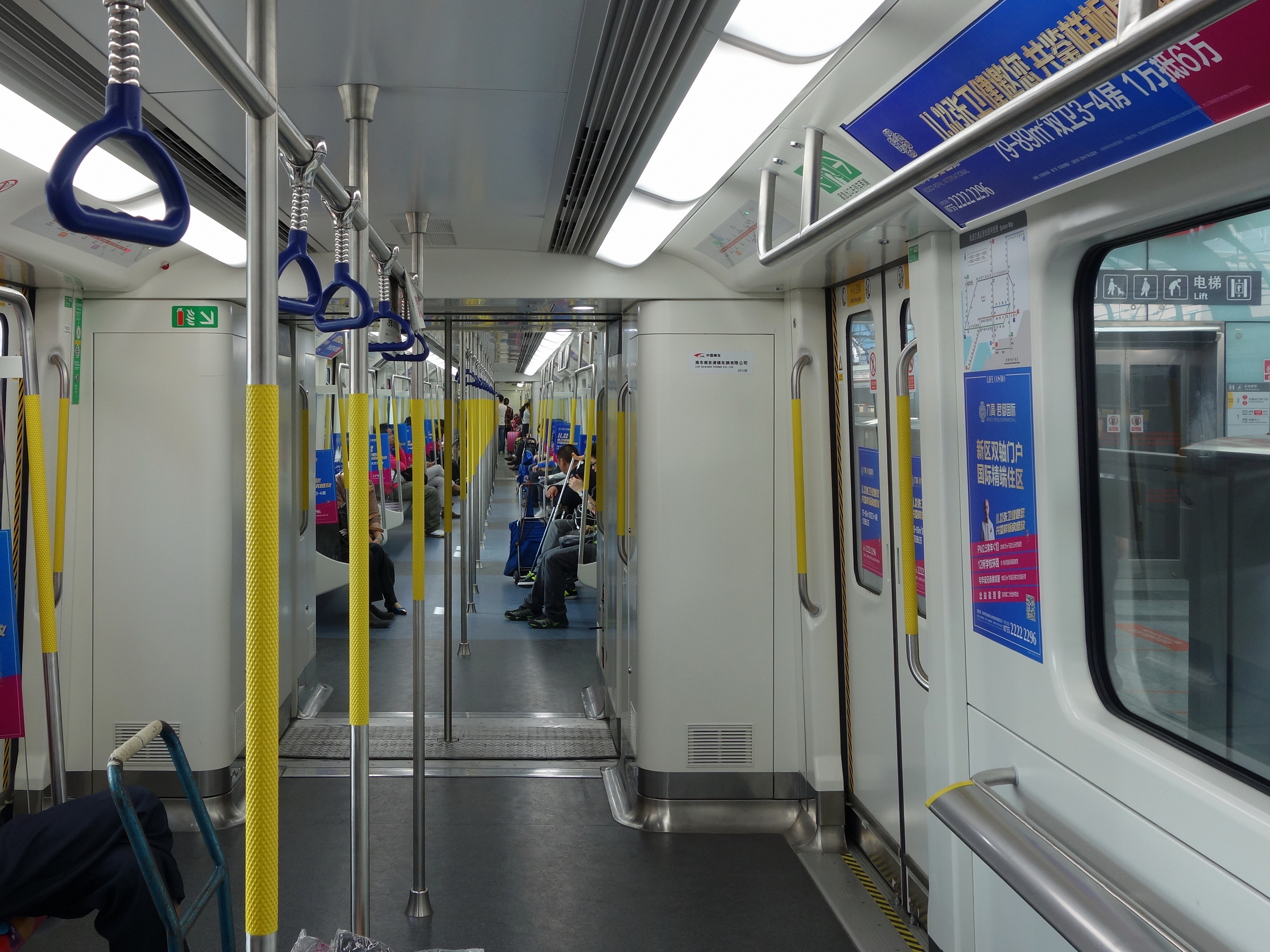

Rolling stock
Line 1
- 22 Bombardier Transportation Movia 456 6-car sets (101–122, Some trains now use CRRC Times Electric traction units after have a maintenance in Changchun)
- 4 Changchun Railway Vehicles Type A 6-car sets, traction units by Bombardier Transportation (123–126)
- 26 Zhuzhou Electric Locomotive Works Type A 6-car sets, traction units by Siemens (127–152, Some trains now use CRRC Times Electric traction units after have a maintenance in Zhuzhou)
- 33 Zhuzhou Electric Locomotive Works Type A 6-car sets, traction units by CSR Times Electric (153–185)
Line 2
- 35 Changchun Railway Vehicles Type A 6-car sets, traction units by Bombardier Transportation (201–235)
- 17 Changchun Railway Vehicles Type A 6-car sets, traction units by Bombardier Transportation (236–239、241–252), by CRRC Qingdao Sifang (240).
- 5 Zhuzhou Electric Locomotive Works Type A 6-car sets, traction units by CRRC Times Electric (253–257)
Line 3
- 43 Changchun Railway Vehicles Type B 6-car sets, traction units by Hyundai Rotem (301–343, Some trains now use CRRC Times Electric traction units after have a maintenance in Changchun)
- 33 Nanjing Puzhen Rolling Stock Works Type B 6-car sets, traction units by Hyundai Rotem (344–376)
- 22 Nanjing Puzhen Rolling Stock Works Type B 6-car sets, traction units by Jiangsu Kingway Rail (377-398)
Line 4
- 28 Nanjing Puzhen Rolling Stock Works Type A 6-car sets, traction units by ABB (401–428)
- 24 Nanjing Puzhen Rolling Stock Works Type A 6-car sets, traction units by Nanjing Huashi (429–452)
Line 5
- 22 Zhuzhou Electric Locomotive Works Type A 6-car sets, traction units by Siemens (501–522)
- 8 Zhuzhou Electric Locomotive Works Type A 6-car sets, traction units by CSR Times Electric (523–530)
- 21 Changchun Railway Vehicles Type A 6-car sets, traction units by Bombardier Transportation (531–551)
- 6 Zhuzhou Electric Locomotive Works Type A 6-car sets, traction units by CRRC Times Electric (552–557)
- 39 Changchun Railway Vehicles Type A 6-car sets, traction units by CRRC Times Electric (559–597)
Line 6
- 51 Nanjing Puzhen Rolling Stock Works Type A 6-car sets, traction units by Bombardier Transportation (601–651)
Line 6 Branch
- 9 Nanjing Puzhen Rolling Stock Works Type B 6-car sets, traction units by INVT (6Z01–6Z09)
Line 7
- 41 Changchun Railway Vehicles Type A 6-car sets, traction units by Bombardier Transportation (701–741)
Line 8
- 24 Zhuzhou Electric Locomotive Works Type A 6-car sets, traction units by CRRC Times Electric (258–281[801–824], 273-281[816-824] traction units sounds are much higher)
Line 9
- 29 Changchun Railway Vehicles Type A 6-car sets, traction units by CRRC Times Electric (901–929).
- 22 Changchun Railway Vehicles Type A 6-car sets, traction units by INVT (930–951).
Line 10
- 35 Changchun Railway Vehicles Type A 8-car sets, traction units by CRRC Times Electric (1001–1035)
Line 11
- 33 Zhuzhou Electric Locomotive Works Type A 8-car sets, traction units by CRRC Times Electric (1101–1133)
- 40 Changchun Railway Vehicles Type A 8-car sets, traction units by CRRC Times Electric (1134–1173)
Line 12
- 56 Nanjing Puzhen Rolling Stock Works Type A 6-car sets, traction units by Bombardier Transportation (1201–1256)
Line 13
- 19 CRRC Qingdao Sifang Type A 8-car sets, traction units by Siemens (1301-1319)
Line 14
- 44 Changchun Railway Vehicles Type A 8-car sets, traction units by CRRC Times Electric (1401–1444)
Line 16
- 32 Zhuzhou Electric Locomotive Works Type A 6-car sets, traction units by Jiangsu Kingway Rail (1601–1632)
- 12 Zhuzhou Electric Locomotive Works Type A 6-car sets, traction units by Jiangsu Kingway Rail (1633–1644)
Line 20
- 9 Changchun Railway Vehicles Type A 8-car sets, traction units by CRRC Times Electric (2001–2009)
Signalling system
On Line 1 and Line 4, Siemens supplied 7 (Phase 1) and 6 (Phase 2) LZB 700 M continuous automatic control systems; 7 (Phase 1) and 6 (Phase 2) electronic Sicas ESTT interlockings; the Vicos OC 501 operations control system with 2 operations control centers, fall-back level with Vicos OC 101 and RTU (FEP), 230 (Phase 1) and 240 (Phase 2) FTG S track vacancy detection units.
Line 2 and Line 5 use Casco CBTC system with 2.4 GHz frequencies, and so the system has suffered frequent problems with interference from consumer Wi-Fi equipment. By the end of November 2012, CASCO solved the problem on Lines 2 and 5 by switching to their standard solution with frequency diversity on 2 different channels.
Accidents and incidents
- April 4, 2011 – One worker was killed and four others injured on April 4 when a manually controlled chain hoist broke loose in a Line 5 tunnel in Longgang district. A preliminary investigation by district safety authorities found mechanical failure was to blame.
- September 9, 2013 – Three passengers abandoned in Line 1 tunnel after train door opens.
- June 25, 2015 – Worker killed during tunnel collapse in Line 7 construction.
- April 19, 2017 – Scaffolding for a metro station collapsed during the construction of the Line 8 on Yantian Rd, killing a worker and injuring three.
- May 11, 2017 – During the construction of the extension of Line 3 heavy rains caused a partial cave in at an excavation pit for a station on the southern extension of Line 3, killing 2 workers and injuring another.
- July 5–7, 2018 – Over a span of three days, at least seven incidents occurred, where power cables were accidentally cut at various construction sites of Shenzhen Metro, causing blackouts in large areas.
- July 10, 2018 – During the construction of Line 10, workers accidentally dug up the pipes of Shenzhen Buji Water Supply Co., Ltd., disrupting water distribution system. The Shenzhen Economic and Information Commission warned and penalized the contractor responsible.
Network map
| frame-lat = 22.61 | frame-long = 114.02 | frame-width = 700 | frame-height = 400
Connections
Pingshan Center station on Line 14 connects to Line 1 of the Pingshan Skyshuttle. This 8.5 km monorail line opened on December 28, 2022, with 11 stations, all in Pingshan district. Two of the stations will eventually connect to Line 16 stations.
Branding

The mascot of Shenzhen Metro named "Tiebao" (Simplified Chinese: 铁宝; Traditional Chinese: 鐵寳) was unveiled on December 27, 2023. It is a cute anthropomorphic of a Shenzhen Metro train's front.
References
References
- (December 27, 2024). "深圳地铁开通20周年 累计运送乘客超206亿人次". 深圳市地铁集团有限公司.
- "Metro ridership hits new daily record".
- (July 21, 2018). "创历史新高!21日深圳地铁总客流量达646.9万人次". stnn.cc.
- "深圳地铁8号线开始铺设轨道,盐田2020年进入地铁时代_深圳新闻网".
- "开通倒计时!4 号线三期工程试运行紧锣密鼓进行全线行车组织、服务时间、车厢温度同步优化调整".
- "约起!深圳地铁5号线二期9月28日开通".
- (August 18, 2020). "刚刚,深圳地铁6号线10号线正式开通!你要先打卡哪条线?".
- [http://www.szcpost.com/2010/01/subway-line1.html#comment-39880 Shenzhen Metro Line 1, from Luohu to Airport East was put into a trial operation]
- [http://www.startinchina.com/shenzhen/transport/shenzhen_metro_subway.html photo of ongoing construction in Shekou] {{webarchive. link. (September 25, 2013)
- (Chinese) [http://www.southcn.com/news/dishi/shenzhen/ttxw/200512270201.htm Wang, Xiaoqing (王晓晴) and Qiu, Gang (邱刚), "深圳地铁3号线动工 2009年建成通车" southcn.com] December 27, 2005
- (Chinese) [http://bm.szhk.com/2008/08/21/282694112503133.html 深圳地铁3号线规划线路图] August 21, 2008
- (Chinese) [https://web.archive.org/web/20090123081240/http://www.gd.xinhuanet.com/dishi/2008-09/19/content_14440157.htm Wang, Xiaoqing (王晓晴) "深圳地铁5号线全面开工" ''Xinhua''] September 19, 2008
- (October 28, 2016). "深圳地铁7、9号线试运营 轨道网络规模居国内第三".
- Colston, Paul. (January 6, 2022). "Shenzhen World now connected by Metro Line 20". Exhibition World.
- 彭森. (August 21, 2005). "从7米到140米——深南大道的宽度之谜". 深圳晚报.
- 深圳经济特区总体规划简介[J]. 城市规划,1986,06:9–14.
- 深圳市地铁有限公司. (2007). "深圳地铁一期工程建设与管理实践.上册". 人民交通出版社.
- (June 22, 2011). "深圳地铁十年始获"出生证"". 深圳新闻网.
- (June 25, 2011). "深圳地铁网络框架15年前基本敲定". 深圳特区报.
- (April 10, 2010). "深圳地铁"十年怀胎"终圆梦". 深圳特区报.
- "深圳地鐵一期工程主要里程碑時間". 深圳新闻网.
- "深圳地铁皇岗站正式开通".
- "關於我市近期建設地鐵線路及站點命名的通告".
- "New Line Naming Scheme". Shenzhen Metro Group.
- (February 1, 2007). "地铁不如期完工,我主动请求处分". 南方日报.
- (January 19, 2007). "网友声讨"进度慢",市长强调"拖不起",地铁建设"蚯蚓速度"". [[南方日报]].
- ""地铁不如期完工,我主动请求处分"_新闻中心_新浪网".
- "2011年5地铁贯通深圳-搜狐新闻".
- ""【深圳】2011年地铁达177公里 长过香港地铁" ''星岛网讯''".
- "Shenzhen metro – Update – August 2017". SZMC.
- L_104026. "深圳5条地铁线路同时开工 2022年底建成通车--深圳频道--人民网".
- "City to spend 48b yuan on 3 Metro lines". Shenzhen Daily.
- "The Shenzhen urban rail transportation recent construction plan approval (2011–2016)". National Development and Reform Commission.
- "Public notice (draft)". Shenzhen Urban Planning and Land Resources Committee.
- (June 17, 2019). "历经四年多的建设 地铁5号线二期工程今年9月底正式开通!".
- (November 21, 2018). "深圳地铁5号线南延线和9号线西延线具备通车条件啦!".
- (August 18, 2020). "刚刚,深圳地铁6号线10号线正式开通!你要先打卡哪条线?".
- (June 22, 2019). "地铁4号线北延线明年年底通车 清湖至松元厦区间隧道提前贯通".
- (August 1, 2019). "深圳地铁8号线开始铺设轨道,盐田2020年进入地铁时代".
- "未来五年深圳再建五条地铁". 南方都市报.
- "轨道交通近期建设规划方案". Shenzhen Urban Planning and Land Resources Committee.
- "查看项目公示-深圳市城市交通规划设计研究中心".
- "深圳地铁四期规划来了!新增5条线,与东莞地铁对接方案出炉 – 市场 -深圳乐居网".
- (July 7, 2017). "国家发展改革委关于深圳市城市轨道交通第四期建设规划(2017–2022年)的批复".
- (March 26, 2020). "国家发展改革委关于调整深圳市城市轨道交通第四期建设规划方案的批复".
- "轨道线网规划方案". Shenzhen Urban Planning and Land Resources Committee.
- "深圳市城市轨道交通第五期建设规划(2023–2028年)环境影响评价第二次公示-通知公告-深圳市发展和改革委员会网站".
- "深圳地铁五期9条线路公示!".
- "深圳轨道交通五期开建 两条延伸至东莞 预计2028年全部建成通车".
- "深圳地铁15号线开工 轨道五期建设规划获批2028年全部建成通车-资讯-隧道网".
- 腾讯网. (2023-10-12). "深圳地铁17号线一期正式开工!12号线二期、29号线、深惠城际、深大城际最新进展来了!_腾讯新闻".
- "『深圳』轨道交通19号线开工_城轨_新闻_轨道交通网-新轨网".
- 腾讯网. (2024-05-19). "高质量!深圳地铁20号线二期工程一工区项目正式开工建设_腾讯新闻".
- (2024-01-04). "总投资近400亿元!地铁22号线正式开工,链接龙华多个重点区".
- 孫聖然. (2024-11-16). "深圳地鐵25號線一期開工 連接寶安、龍崗加強軌道盲區覆蓋".
- 腾讯网. (2024-11-14). "连接两大高铁站,深圳地铁27号线一期开建_腾讯新闻".
- "深圳29号线地铁动工 全长约11.3公里预计2028年通车".
- 腾讯网. (2024-05-09). "大鹏这条地铁开工!轨道32号线将设4个站、联通8号线_腾讯新闻".
- "Dongguan Metro connection called for". Shenzhen Daily.
- "Four more Metro lines planned". Shenzhen Daily.
- "关于地铁2号线东延线、地铁3号线西延线线站位初步方案".
- 深圳市统计局. "2005年度12月份深圳统计月报:运输邮电:地铁客流量1-12月累计".
- 深圳市统计局. (December 2, 2008). "深圳市2006年国民经济和社会发展统计公报".
- 深圳市统计局. (December 2, 2008). "深圳市2007年国民经济和社会发展统计公报".
- 深圳市统计局. (March 24, 2009). "深圳市2008年国民经济和社会发展统计公报".
- 深圳市统计局. (April 27, 2010). "深圳市2009年国民经济和社会发展统计公报".
- 深圳市统计局. (April 28, 2011). "深圳市2010年国民经济和社会发展统计公报".
- 深圳市统计局. "2011年度12月份深圳统计月报:运输邮电:地铁客流量1-12月累计".
- (January 10, 2013). "深圳地铁客流量 去年猛增近七成". 深圳商报.
- (April 8, 2014). "深圳市2013年国民经济和社会发展统计公报". 深圳市统计局.
- "2014年度全市交通运输运营主要概况及分析".
- 深圳市交通运输委员会. (January 19, 2016). "2015年12月交通运输运营指标统计月报".
- (February 6, 2017). "2016年交通运输运营指标统计年报". 深圳市交通运输委员会.
- (January 23, 2018). "2017年交通运输运营指标统计年报". 深圳市交通运输委员会.
- link. 深圳市交通运输委员会. (January 18, 2019)
- "2019年12月交通运输运营指标统计月报 - 统计信息 - 深圳市交通运输局(深圳市港务管理局)". jtys.sz.gov.cn.
- "2020年12月交通运输运营指标统计月报 - 统计信息 - 深圳市交通运输局(深圳市港务管理局)". jtys.sz.gov.cn.
- "2021年12月交通运输运营指标统计月报 - 统计信息 - 深圳市交通运输局(深圳市港务管理局)". jtys.sz.gov.cn.
- "2022年12月交通运输运营指标统计月报".
- "深圳市城市轨道交通线网达567公里 日均保障近800万人通勤".
- 杨丽,杨德明. (2012). "深圳市城市轨道交通网络化客流变化研究". 现代城市轨道交通.
- 陈煜. (2011). "深圳地铁运营对轨道交通客流预测的启示". 铁道工程学报.
- (Chinese) [http://www.szmc.net/page/service/infor.html?code=2120 fare information]
- [http://szdaily.sznews.com/html/2010-12/24/content_1374832.htm New Metro fares announced]
- Business coach fears is three times as matching normal coach fears.
- (Chinese) [http://www.szmc.net/page/service/infor.html?code=2121 SZMC fare policy]
- [http://www.szmc.net/page/en/fare.html?code=9103 types of tickets]
- [http://www.thenanfang.com/blog/one-smartcard-to-rule-them-all-guangdong-hong-kong-team-up-to-offer-unified-travel-card/ One smartcard to rule them all: Guangdong, HK team up to offer unified travel card. The Nanfang]
- [http://www.lifeofguangzhou.com/node_981/node_989/node_997/node_1006/2012/06/29/1340955092104022.shtml Guangdong and Hong Kong Linked by One Transportation Card _Life of Guangzhou]
- "features". southcn.com.
- (August 26, 2020). "官方回应深圳一地铁站命名华为:报批时并未禁止企业名命名".
- "Metro Lines 1 and 4, Shenzhen, China".
- [https://www.theregister.co.uk/2012/11/21/wi_fi_knockout/ "Pocket Wi-Fi hotspots paralyse Chinese metro lines."]
- (April 23, 2011). "Accidents on Metro expansion hurt Shenzhen".
- "Passengers abandoned in Shenzhen metro tunnel after train door opens". South China Morning Post.
- (June 26, 2015). "Shenzhen Metro Tunnel Collapses... for the 4th Time This Year {{!}} The Nanfang". The Nanfang.
- (April 20, 2017). "深圳在建地铁倒塌1死3伤 乘坐地铁前这一点你不能不知".
- (May 11, 2017). "深圳地铁工地发生坍塌事故 2人遇难1人被困".
- (July 12, 2018). "施工3天挖断7根电缆 深圳地铁:已对施工单位顶格处罚".
- (July 12, 2018). "深圳地铁施工三天挖断七条电缆 又挖爆供水主管道".
- "深圳地铁来新朋友啦~_铁宝_服务大局_老铁".

This article was imported from Wikipedia and is available under the Creative Commons Attribution-ShareAlike 4.0 License. Content has been adapted to SurfDoc format. Original contributors can be found on the article history page.
Ask Mako anything about Shenzhen Metro — get instant answers, deeper analysis, and related topics.
Research with MakoFree with your Surf account
Create a free account to save articles, ask Mako questions, and organize your research.
Sign up freeThis content may have been generated or modified by AI. CloudSurf Software LLC is not responsible for the accuracy, completeness, or reliability of AI-generated content. Always verify important information from primary sources.
Report