From Surf Wiki (app.surf) — the open knowledge base
Sheihantaur
Architectural monument in Tashkent, Uzbekistan
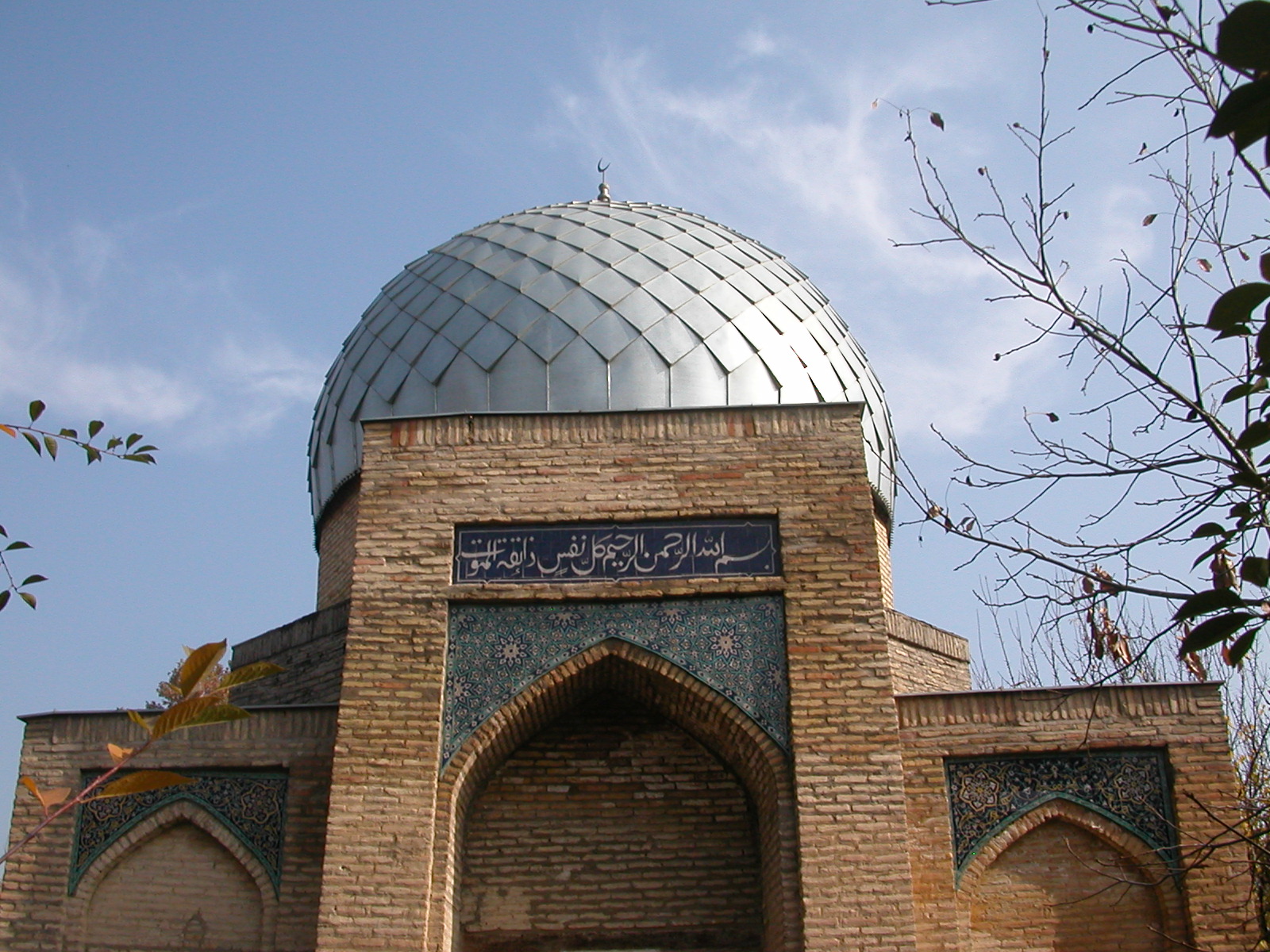
Architectural monument in Tashkent, Uzbekistan
Sheihantaur () is a historic mausoleum complex in Tashkent, Uzbekistan. It is the burial site of Sheikh Hovendi at-Tahur, a local Sufi figure of historical significance.
Hovendi at-Tahur
Sheikh Hovendi at-Tahur (Sheihantaur) was born in the late 13th century in Bogʻiston near Charvak Lake in the Tashkent Province of Uzbekistan.**** He was a sayyid, meaning he claimed descent from the Quraish, a tribe associated with Muhammad and believed to be a descendant of the Rashidun Caliph Umar and Umar ibn al-Khattab. He died in Tashkent around 1360; his tomb is contemporary, though heavily restored.
The build of mausoleum of Sheihantaur
The mazar (mausoleum) of Sheihantaur was erected in the 14th century,{{cite journal |access-date=27 October 2025 |access-date=27 October 2025 |access-date=27 October 2025 |access-date=27 October 2025
Sheihantaur burial complex
The mausoleum is surrounded by a burial complex to which the saint has given his name. Several prominent figures from Tashkent's history are buried here. Such individuals include Yunus Khoja.
In addition to the mausoleum of Shaihantaur, the mausoleum of Qaldirghochbiy can be found here.
References
References
- "Complex Sheihantaur, Sights of Tashkent".
- "The mausoleum (mazar) of Sheihantaur".
- "Bogiston (Bogustan) village of Brichmulla-Nanai area".
- "Euroasia Travels – Group & Private Trip, Uzbekistan And Turkmenistan".
- "Sheikhantaur cemetry, Tashkent, Uzbekistan".
- "[:en]YUNUS-HANA MAUSOLEUM[:ru]Мавзолей Юнус-хана[:]".
This article was imported from Wikipedia and is available under the Creative Commons Attribution-ShareAlike 4.0 License. Content has been adapted to SurfDoc format. Original contributors can be found on the article history page.
Ask Mako anything about Sheihantaur — get instant answers, deeper analysis, and related topics.
Research with MakoFree with your Surf account
Create a free account to save articles, ask Mako questions, and organize your research.
Sign up freeThis content may have been generated or modified by AI. CloudSurf Software LLC is not responsible for the accuracy, completeness, or reliability of AI-generated content. Always verify important information from primary sources.
Report