From Surf Wiki (app.surf) — the open knowledge base
Shades of green
Varieties of the color green
Varieties of the color green
| Field | Value |
|---|---|
| title | Green |
| image | Shades of Green.svg |
| hex | 00FF00 |
| wavelength | 520–570 |
| frequency | ≈526–577 |
| source | RGB color system |
| symbolism | nature, environmentally friendly, St. Patrick's Day, Earth Day, Christmas, money, Earth |
| caveat | Some tints and shades of green |
| cmyk | (100, 0, 100, 0) |
Varieties of the color green may differ in hue, chroma (also called saturation or intensity) or lightness (or value, tone, or brightness), or in two or three of these qualities. Variations in value are also called tints and shades, a tint being a green or other hue mixed with white, a shade being mixed with black. A large selection of these various colors is shown below.
Core definitions of green
Green (sRGB)
X11 green
The color defined as green in the sRGB color space is approximately the most chromatic green that can be reproduced on an average computer screen, and is the color named green in X11. It is one of the three primary colors used in the sRGB color space along with red and blue. The three additive primaries in the RGB color system are the three colors of light chosen such as to provide the maximum range of colors that are capable of being represented on a computer or television set.
This color is also called regular green. It is at precisely 120 degrees on the HSV color wheel. Its complementary color is magenta.
HTML/CSS uses the name lime for this color, using green to refer to a darker shade. See the chart Color names that clash between X11 and HTML/CSS in the X11 color names article to see those colors which are different in HTML and X11.
Green (HTML/CSS color) (Office Green) {{anchor|Office green}}
The color defined as green in HTML/CSS color standard is the color called green, low green, or medium green in many of the older eight-bit computer palettes.
Another name for this color is green W3C or office green.
Green (CMYK) (pigment green)
Note: The source says that it is a CMYK color, and this means there is no authoritative RGB value. The hex code is nominal for screen display in this box only, but should not be taken as an RGB standard for the color because the ink colors used in CMYK printing may vary according to different formulations. -- The color defined as green in the CMYK color system used in printing, also known as pigment green, is the tone of green that is achieved by mixing process (printer's) cyan and process (printer's) yellow in equal proportions.
The purpose of the CMYK color system is to provide the maximum possible gamut of color reproducible in printing.
The color indicated is only approximate as the colors of printing inks may vary.
The color displayed is an approximation of the CMYK color on an RGB screen, and cannot replicate the color accurately.
Green (NCS) (psychological primary green)
The color defined as green in the NCS or Natural Color System is NCS 2060-G. The natural color system is a color system based on the four unique hues or psychological primary colors red, yellow, green, and blue. The NCS is based on the opponent process theory of vision. The Natural Color System is widely used in Scandinavia.
Green (Munsell)
The Munsell color system is a color space that specifies colors based on three color dimensions: hue, value (lightness), and chroma (colorfulness), spaced uniformly (in terms of human perception) in three dimensions in the Munsell color solid. In order for all the colors to be spaced uniformly, it was found necessary to use a color wheel with five, non-arbitrary, equally spaced primary colors: red, yellow, green, blue, and purple.
The color of the sample is the most chromatic (colorful) green in the sRGB gamut that falls in the hue of 5G (primary green) in the Munsell color space.
Green (Pantone)
Green (Pantone) is the color that is called green in Pantone.
The source of this color is the "Pantone Textile Paper eXtended (TPX)" color list, color # green C, EC, HC, PC, U, or UP—green.
Green (Crayola)
Green (Crayola) is the color called green in Crayola crayons.
Green was one of the original Crayola crayons introduced in 1903.
Additional computer web greens
Bright green
This is the color bright green.
Dark green (X11)
This is the X11/HTML color dark green.
Erin
Main article: Erin (color)
The first recorded use of erin as a color name was in 1922.
Harlequin
Harlequin is a color described as being located between green and yellow (closer to green than to yellow) on the color wheel. On color plate 17 in the 1930 book A Dictionary of Color (see reference below), the color harlequin is shown as being a highly saturated rich color at a position halfway between chartreuse and green. Thus in modern color terminology, harlequin is the color halfway between green and chartreuse green on the RGB color wheel.
The first recorded use of harlequin as a color name in English was in 1923.
Harlequin is a pure spectral color at approximately 552 nanometers on the visible spectrum when plotted on the CIE chromaticity diagram.
Silver Patron tequila is sold in harlequin-colored boxes.
Harlequin is also an adjective used to describe something that is colored in a pattern, usually a diamond-shaped pattern, as in the dress traditionally associated with harlequins. Similarly, it can mean anything multicolored or prismatic, such as opals or other precious gems which are highly variegated in color and hue. In the early 2000s, a harlequin color paint was invented for automobiles that appears different colors from different angles of view.
Light green
Light green is a light tint of green.
Lime green (X11)
Lime green is a vivid, yellowish shade of green named after the lime fruit.
Neon green
Neon green is a bright tone of green used in psychedelic art and in fashion. Neon green became a signature of English singer/songwriter Charli XCX with the release of her 2024 album Brat. | access-date = 2024-08-12
Pale green
This is the X11/HTML color pale green.
Green in biological nature
Main article: Green#Biology
Green is common in nature, especially in plants. Many plants are green mainly because of a complex chemical known as chlorophyll which is involved in photosynthesis. Many shades of green have been named after plants or are related to plants. Due to varying ratios of chlorophylls (and different amounts as well as other plant pigments being present), the plant kingdom exhibits many shades of green in both hue (true color) and value (lightness/darkness). The chlorophylls in living plants have distinctive green colors, while dried or cooked portions of plants are different shades of green due to the chlorophyll molecules losing their inner magnesium ion.
Acid green
Acid green is a shade of yellow-green. Sources differ as to the exact color, but those shown here are representative.
Apple green
Apple green is a representation of the color of the outer skin of a Granny Smith apple. A darker version of this color has been used for the IRT Lexington Avenue Line since June 1979, when the NYCTA decided to assign line colors to all the routes within the major trunk lines in the Central Business District, plus different colors for services not entering Manhattan. By doing this, they scrapped the 1967 colors that were assigned separately to each service, it was also used on locomotives of the London & North Eastern Railway.
The first recorded use of apple green as a color name in English was in 1648.
Artichoke green (Pantone)
This is the color called artichoke green in Pantone. The source is Pantone 18-0125 TPX.
Evergreen
Evergreen is a color that resembles evergreens.
It is currently unknown when evergreen was first used as a color name.
Fern green
Fern green is a color that resembles ferns. A Crayola crayon named fern was created in 1998.
The first recorded use of fern green as a color name in English was in 1902.
Forest green
Main article: Forest green
Forest green refers to a green color said to resemble the color of the trees and other plants in a forest.
The first recorded use of forest green as the name of a color in the English language was in 1810.
Honeydew
The color honeydew is a pale, greenish off-white based on the color of the interior flesh of a honeydew melon.
Jungle green
Main article: Jungle green
In 1990, Crayola named and formulated a specific tone called jungle green.
The first recorded use of jungle green as a name of a color in the English language was in 1926.
Kelly green
Kelly green is an intense, pure green named after the common Irish family name, Kelly. It evokes the lush green Irish meadows and is also commonly associated with St. Patrick's Day.
Kombu green
The color kombu green is a representation of the color of kombu, edible kelp from the family Laminariaceae widely eaten in East Asia.
The source of this color is the "Pantone Textile Paper eXtended (TPX)" color list, color #19-0417 TPX—Kombu Green.
Laurel green
Laurel green is a medium light hue of chartreuish gray similar to asparagus, but lighter.
The first recorded use of laurel green as a name of a color in the English language was in 1705.
Mantis
Mantis green represents the green color of certain grass-dwelling species of praying mantis.
The first use of mantis as a color name in English was when it was included as one of the colors on the Xona.com color list, promulgated in 2001.
Moss green
Moss is a tone of green that resembles green moss.
The first recorded use of moss green as a color name in English was in 1884.
Mint green
Mint green is a pale tint of green that resembles the color of mint green pigment, and was a popular color in the 1990s.
Myrtle
Myrtle is a dark green shade that resembles the color of Myrtus leaves.
Olive
Main article: Olive (color)
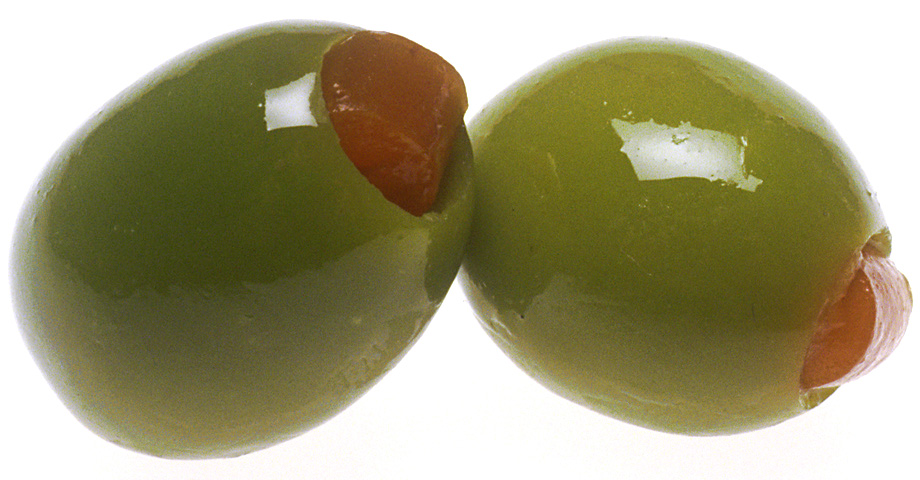
Olive is a dark yellowish-green color, like that of unripe or green olives.
As a color word in the English language, it appears in late Middle English. Shaded toward brown, it becomes olive drab.
Pine green
Pine green is a rich dark shade of cyan that resembles the color of pine trees. It is an official Crayola color (since 1903) that is this exact shade in the Crayola crayon, but in the markers, it is known as crocodile green.
The color pine green is a representation of the average color of the leaves of the trees of a coniferous forest. The color pine green was originally known as pine tree. The first recorded use of pine tree as a color name in English was in 1923.
Reseda green
Main article: Reseda green
Reseda green, is a shade of greyish green in the classic range of colors of the German RAL colour standard, in which it is named "RAL 6011".
The name derives from the color of the leaves of Reseda odorata, commonly known as mignonette.
Sap green
Sap green is a green-looking pigment that was traditionally made of ripe buckthorn berries mixed with alum. However, modern colors marketed under this name are usually a blend of other pigments, commonly with a basis of Phthalocyanine Green G. It is one of the greens used in The Joy of Painting.
Tea green
Tea green is a light shade of green. It is a representation of the color of brewed green tea, i.e., the color of the hot green tea after the green tea leaves have been brewed in boiling water.
The first recorded use of tea green as a color name in English was in 1858.
Green in non-biological nature
Emerald
| Emerald as a quinary color |
|---|
| on the RYB color wheel |
Emerald, also called emerald green, is a tone of green that is particularly light and bright, with a faint bluish cast. The name derives from the typical appearance of the emerald gemstone. The first recorded use of emerald as a color name in English was in 1598.
Ireland is sometimes referred to as the Emerald Isle due to its lush greenery. The May birthstone is emerald. Seattle is sometimes referred to as the Emerald City, because its abundant rainfall creates lush vegetation. In the Middle Ages, The Emerald Tablet of Hermes Trismegistus was believed to contain the secrets of alchemy. "Emerald City", from the story of The Wonderful Wizard of Oz, by L. Frank Baum, is a city where everything from food to people are emerald green. However, it is revealed at the end of the story that everything in the city is normal colored, but the glasses everyone wears are emerald tinted. The Green Zone in Baghdad is sometimes ironically and cynically referred to as the Emerald City. The Emerald Buddha is a figurine of the sitting Buddha, made of green jade (rather than emerald), clothed in gold, and about 45 cm tall. It is kept in the Chapel of the Emerald Buddha (Wat Phra Kaew) on the grounds of the Grand Palace in Bangkok. The Emerald Triangle refers to the three counties of Mendocino, Humboldt, and Trinity in Northern California, United States because these three counties are the biggest marijuana producing counties in California and also the US. A county-commissioned study reports pot accounts for up to two-thirds of the economy of Mendocino. Emerald Cities: Urban Sustainability and Economic Development is a book published in 2010 by Joan Fitzgerald, director of the law, policy and society program at Northeastern University, about ecologically sustainable city planning.
An emerald pigment was invented in Germany in 1814. By taking acetic acid, mixing and boiling it with vinegar, and then by adding some arsenic, a bright blue-green hue was formed. This toxic inorganic compound was marketed in England during the 19th century under the name Paris green. Victorian women used this bright color for dresses, and florists used it on fake flowers. It became notorious for causing deaths due to it being a popular color used for wallpaper.
Green earth
Main article: Green earth
The color green earth is also known as terre verte and Verona green. It is an inorganic pigment derived from the minerals celadonite and glauconite.
Hooker's green
Hooker's green is a dark green color created by mixing Prussian blue and gamboge. Hooker's green takes its name from botanical artist William Hooker (1779–1832) who first created it particularly for illustrating leaves.
Jade
Jade, also called jade green, is a representation of the color of the gemstone called jade, although the stone itself varies widely in hue.
The color name jade green was first used in Spanish in the form piedra de ijada in 1569. The first recorded use of jade green as a color name in English was in 1892.
Malachite
Malachite, also called malachite green, is a color that is a representation of the color of the mineral malachite.
The first recorded use of malachite green as a color name in English was in the 1200s (exact year uncertain).
Sea green
Main article: Spring green#Sea green
Sea green is a color that resembles the hue of shallow seawater as seen from the surface.
Other notable green colors
Android green
Main article: Android green
British racing green
Main article: British racing green
Celadon
Main article: Celadon
Celadon is a pale greyish shade of green, or rather a range of such shades. Celadon originates as a term for a class of Chinese ceramics, copied by Korea and Japan. However, the name, which is European, may originate from the character Celadon in L'Astrée, a French pastoral novel of 1627, who wore a light green color.
Celadon glazes were very common, with the green color being reliably produced from about the tenth century onwards; this was appreciated in Asia for resembling jade, the most prestigious material of all. The glaze color comes from iron oxide's transformation from ferric to ferrous iron (Fe2O3 → FeO) during the firing process, but is affected by a wide range of other factors and chemicals, making the precise color very difficult to control. As well as green, a wide range of browns, yellows, greys and sometimes blues all count as "celadon".
Hungarian green
The web color Hungarian green is a dark green color seen on the national flag of Hungary.
Hunter green
Hunter green is a color that is a representation of the color worn as camouflage by hunters in the 19th century. Most hunters began wearing the color olive drab instead of hunter green about the beginning of the 20th century. Some hunters still wear hunter green clothing or hunter green bandanas.
The first recorded use of hunter green as a color name in English was in 1892.
Hunter green has been the official primary color of the Green Bay Packers since 1957, the New York Jets from 1998 to 2019, one of the two official colors of Ohio University and Oswego State, and one of the two official colors of the Phi Kappa Psi fraternity. It is also one of the main colors of Deerfield Academy.
Hunter green is one of the colors defined by the bandana code of the gay leather subculture. A hunter green bandana, if worn on the left, indicates that one is a "leather daddy", whereas if a hunter green bandana is worn on the right, it indicates that one is looking for a leather daddy, i.e., looking for a "daddy-boy" relationship.
Prison uniforms issued by the New York State Department of Corrections and Community Supervision are colored hunter green.
New York City uses hunter green on its construction site fences and sidewalk sheds.
India green
India green, the color of the lower band of the national flag of India, represents fertility and prosperity. It originates with a flag proposed by Mahatma Gandhi, with green representing the Muslim minority and orange representing the Hindu majority.
Islamic green
Main article: Green in Islam
The color green () has a number of traditional associations in Islam. In the Quran, it is associated with Islamic paradise.
It was also chosen as a color by pro-Alid (Shi'a) factions. Thus in 817, when the Abbasid caliph al-Ma'mun adopted the Alid Ali al-Ridha a his heir-apparent, he also changed the dynastic color from black to green. The change was reverted al-Ma'mun had Ali killed, and returned to Baghdad in 819. Green remains particularly popular in Shi'ite iconography, but it is also widely used in by Sunni states. It is notably used in the flag of Saudi Arabia and flag of the Organisation of Islamic Cooperation.
MSU green
Green and white are the primary school colors representing Michigan State University. The university board of trustees officially standardized MSU green as part of a larger university branding effort, replacing a lighter green (PMS 341) used from 1997 to 2010. The official color was chosen based on the traditional darker Spartan green found on the original university varsity letter jackets and marching band jackets. The official green of Michigan State University is represented by Pantone Matching System ink color 567 (PMS 567).
NDHU green
NDHU green is the official color of National Dong Hwa University, adopted in 1994. The university officially set NDHU green as part of a larger university branding effort. It represents the books, forest of knowledge, and its campus with nature-based setting.
Pakistan green
Pakistan green is a shade of dark green, used in web development and graphic design. It originates with the field of green used on the flag of Pakistan, only stipulated as "dark green" in the national flag code. It is almost identical to the HTML/X11 dark green in sRGB and HSV values.
Persian green
Main article: Persian green
Persian green is a color used in Persian pottery and Persian carpets in Iran.
The first recorded use of Persian green as a color name in English was in 1892.
Rifle green
The source of rifle green is the Pantone Textile Paper eXtended (TPX) color list, color No. 19-0419 TPX—Rifle green.
The first recorded use of rifle green as a color name in English was in 1858.
Rifle green is so named from the distinctive color of the uniform of rifle regiments (a form of light infantry) of a number of European armies, and is still used as such by rifle regiments in many Commonwealth armies, such as the Rifles and Royal Gurkha Rifles of the British Army and the Queen's Own Rifles of Canada.
Rifle green was originally adopted by rifle regiments in the 18th century, including the famous 95th Rifles of the Napoleonic Wars. As the traditional role of riflemen was that of marksmen and skirmishers who attacked behind the cover of trees, a dark green uniform was adopted as an early form of camouflage, as opposed to the colorful uniforms worn by other soldiers of the period. The vegetable based dyes used during the 18th and early 19th centuries were not fast, frequently fading after exposure to the elements to lighter shades of green or even brown. While this had advantages in terms of reduced visibility on active service, it did not make for a smart appearance on the peace-time parade ground. Accordingly, the color of the rifleman's uniform was progressively darkened until it approached black. After 1890 the development of chemical dyes permitted the adoption of the stable shade of rifle green now worn.

Rifle green was the official uniform colour of the Canadian Forces (CF) after unification; it was thereafter generally referred to as "CF green". After the introduction of the distinctive environmental uniform (DEU), rifle green remained as the uniform colour of the winter land environment DEU; a short-lived tan uniform was worn in summer. After the demise of the tans, the rifle green DEU was worn year-round. Rifle green was also the colour of the uniform worn by the Northern Irish Royal Ulster Constabulary (RUC) until 2001 where the RUC was renamed the PSNI and while the uniform color remained the same, terminology changed to "bottle green". In the U.S. armed forces, personnel qualified as special forces soldiers wear a green beret, which has given them their nickname. Rifle green uniforms were issued to Hiram Berdan's elite 1st and 2nd United States Sharpshooters during the American Civil War.
Rifle green is 19–0419 TPX in the Pantone palette, or hex code #444C38 in the sRGB color space, as shown above. Despite being referred to as bottle green in some contexts, Pantone rifle green is a distinct shade from RAL 6007 Bottle green.
Russian green
The first recorded use of Russian green as a color name in English was in the 1830s (exact year uncertain). The term appears to refer to the medium shade of green worn by most regiments of the Imperial Russian Army from 1700 to 1914.
SGBUS green
SGBUS green is the color voted by the public and used by Singapore to color all its government-owned public buses.
References
References
- "X11 rgb.txt". [[XFree86]].
- (18 March 2007). "Tintbooks – Get Accurate CMYK Color Results For Your Printing Projects".
- The sRGB values are taken by converting the NCS color {{nobr. 2060-G using the "NCS Navigator" tool at [http://www.ncscolour.com/ the NCS website].
- "Pantone TPX Pantone Color Finder—Type the word "Green" into the indicated window on the Pantone Color Finder and the color will appear. There are six versions, all with the same color codes—C, EC, HC, PC, U, and UP.". [[Pantone]].
- Maerz and Paul ''A Dictionary of Color'' New York:1930 McGraw-Hill Page 194; Color Sample of Erin Page 81 Plate 29 Color Sample F12; A deep tone of the color Erin is shown as lying half way between a deep tone of green and a deep tone of the color that is now called spring green, on the bottom row of color samples on the color plate, which represent the deeper tones of the colors between green and the color now called spring green.
- The color displayed in the color box above matches the color called ''harlequin'' in the 1930 book by Maerz and Paul ''A Dictionary of Color'' New York:1930 [[McGraw-Hill]]; the color ''harlequin'' is displayed on page 57, Plate 17, Color Sample K11.
- (1930). "A Dictionary of Color". [[McGraw-Hill]].
- Paterson, Ian. (2003). "A Dictionary of Colour". Thorogood Publishing.
- "W3C TR CSS3 Color Module, HTML4 color keywords". [[W3.org]].
- "Neon Green Default Layout 1 Picture and Photo | Imagesize: Kilobyte".
- "W3C TR CSS3 Color Module, HTML4 color keywords". [[W3.org]].
- [[The New Encyclopædia Britannica]]. Chicago: [[Encyclopædia Britannica]], 2002. {{ISBN. 0-85229-787-4
- {{usurped
- Maerz and Paul ''A Dictionary of Color'' New York:1930 McGraw-Hill p. 189; Color Sample of Apple Green: p. 61 Plate 19 Color Sample J6
- "PANTONE 18-0125 TPX Artichoke Green".
- [https://www.picmonkey.com/colors/green/evergreen PicMonkey]
- The color displayed in the color box above matches the color called ''fern green'' in the 1930 book by Maerz and Paul ''A Dictionary of Color'' New York:1930 [[McGraw-Hill]]; the color ''fern green'' is displayed on page 65, Plate 21, Color Sample F5. Crayola's ''fern'' colour is a lighter shade.
- Maerz and Paul ''A Dictionary of Color'' New York:1930 [[McGraw-Hill]] Page 195; color sample of Fern Green: Page 65 Plate 21 Color Sample F5
- "SVG Color Keywords, CSS3 Color Module, W3C Candidate Recommendation 14 May 2003". [[W3C]].
- Maerz and Paul ''A Dictionary of Color'' New York:1930 [[McGraw-Hill]] Page 195; color sample of Jungle Green: Page 69 Plate 23 Color Sample L6
- Maerz and Paul ''A Dictionary of Color'' New York:1930 [[McGraw-Hill]] Page 201; color sample of Jungle Green: Page 87 Plate 32 Color Sample L12 Note: The Color Sample shown as Jungle Green in Maerz and Paul is the color shown in the article on "jungle green" as ''dark jungle green''.
- [https://www.canva.com/colors/color-meanings/kelly-green/ canva.com]
- (2018). "The Colours of History: How Colours Shaped the World". QED Publishing.
- [http://www.pantone.com/pages/pantone/colorfinder.aspx Pantone TPX]
- Type the words "Kombu Green" into the indicated window on the Pantone Color Finder and the color will appear.
- "- Find a Pantone Color – Quick Online Color Tool".
- The color displayed in the color box above matches the color called ''laurel green'' in the 1930 book by Maerz and Paul ''A Dictionary of Color'' New York:1930 [[McGraw-Hill]]; the color ''laurel green'' is displayed on page 67, Plate 22, Color Sample L1.
- Maerz and Paul ''A Dictionary of Color'' New York:1930 [[McGraw-Hill]] Page 197; color sample of Laurel Green: Page 67 Plate 22 Color Sample L1. The color displayed in the color box above as "laurel green" matches the color shown in the color sample in Maerz and Paul
- [http://xona.com/colorlist/ Xona.com color list]
- (1955). "Ca through Cz". John C. Foster and Texas Precancel Club.
- The color displayed in the color box above matches the color called ''moss green'' in the 1930 book by Maerz and Paul ''A Dictionary of Color'' New York:1930 [[McGraw-Hill]]; the color ''moss green'' is displayed on page 65, Plate 21, Color Sample L2.
- Maerz and Paul ''A Dictionary of Color'' New York:1930 [[McGraw-Hill]] p. 199; Color Sample of Moss Green: p. 65 Plate 21 Color Sample L2
- "Myrtle / #21421e hex color".
- (31 October 2023). "Olive – Definition of olive by Merriam-Webster". merriam-webster.com.
- Maerz and Paul ''A Dictionary of Color'' New York:1930 McGraw-Hill Page 190; Color Sample of Pine Tree: Page 85 Plate 31 Color Sample L6
- Maerz and Paul ''A Dictionary of Color'' New York:1930 [[McGraw-Hill]] Page 190; Color Sample of Pine Tree: Page 85 Plate 31 Color Sample L6
- [http://www.ral-farben.de/content/application-help/all-ral-colours-names/overview-ral-classic-colours.html Overview of all RAL Classic colours]. RAL gemeinnützige GmbH. Retrieved January 2016.
- 9780750685023.
-
- "Tea green / Caparol 28/11 / #d0f0c0 Hex Color Code".
- I. Patterson, ''A Dictionary of Colour'', Thorogood, 2003, {{ISBN. 1-85418-247-1, page 381. "tea green – The greyish green of green tea."
- Maerz and Paul ''A Dictionary of Color'' New York:1930 McGraw-Hill Page 205; Color Sample of Tea Green: Page 65 Plate 21 Color Sample C2
- The color displayed in the color box above matches the color called ''emerald green'' in the 1930 book by Maerz and Paul ''A Dictionary of Color'' New York:1930 [[McGraw-Hill]]; the color ''emerald green'' is displayed on page 75, Plate 26, Color Sample J10.
- St. Clair, Kassia. (2016). "The Secret Lives of Colour". John Murray.
- Maerz and Paul ''A Dictionary of Color'' New York:1930 [[McGraw-Hill]] Page 194; Color Sample of Emerald: Page 75 Plate 26 Color Sample J10
- Chandraseekaran, Rajiv ''[[American imperialism. Imperial]] Life in the Emerald City: Inside Iraq's Green Zone'' 2007
- Regan, Trish. (22 January 2009). "Pot growers thrive in Northern California: Cash crop now accounts for two-thirds of Mendocino County economy". [[CNBC]].
- "Pigments through the Ages – History – Emerald green".
- (5 March 2010). "Emerald Green or Paris Green, the Deadly Regency Pigment".
- Wright, Jennifer. (17 March 2017). "The History of Green Dye Is a History of Death".
- The color in the color box above matches the color called ''green earth'' in ''[[Derwent Cumberland Pencil Company. Derwent]]'' colored pencils.{{citation needed. (May 2019)
- [http://colourlex.com/project/green-earth/ Green earth] Colourlex. Retrieved 29 August 2016.
- [http://www.webexhibits.org/pigments/indiv/overview/greenearth.html Green earth]. Pigments through the Ages. www.webexhibits.com. Retrieved 29 August 2016.
- "Colour Chart – Hooker's Green". [[Winsor & Newton]].
- St. Clair, Kassia. (2016). "The Secret Lives of Colour". John Murray.
- Maerz and Paul ''A Dictionary of Color'' New York:1930 [[McGraw-Hill]] Page 162—Discussion of color Jade Green
- Maerz and Paul ''A Dictionary of Color'' New York:1930 [[McGraw-Hill]] Page 197
- The color displayed in the color box above matches the color called ''malachite'' in the 1930 book by Maerz and Paul ''A Dictionary of Color'' New York:1930 McGraw-Hill; the color ''malachite green'' is displayed on page 79, Plate 28, Color Sample A9.
- Maerz and Paul ''A Dictionary of Color'' New York:1930 [[McGraw-Hill]] Page 198; Color Sample of Malachite Green: Page 79 Plate 28 Color Sample A9
- "Celadon / #ace1af Hex Color Code".
- Gompertz, G.St.G.M., ''Chinese Celadon Wares'', p. 21, 1980 (2nd edn.), Faber & Faber, {{ISBN. 057118003521
- St. Clair, Kassia. (2016). "The Secret Lives of Colour". John Murray.
- Dewar, Richard. (2002). ''Stoneware''. Philadelphia: University of Pennsylvania Press. {{ISBN. 0-8122-1837-X, p. 42.
- Vainker, S.J., ''Chinese Pottery and Porcelain'', 1991, British Museum Press, 9780714114705, pp.53–55
- "PANTONE 18-6320 TCX Fairway".
- "ISCC-NBS No. 137".
- Maerz and Paul ''A Dictionary of Color'' New York:1930 [[McGraw-Hill]] Page 162—Discussion of color Hunter Green
- Maerz and Paul ''A Dictionary of Color'' New York:1930 [[McGraw-Hill]] Page 196; Color Sample of Hunter Green Page Plate 24 Color Sample C11—Hunter Green
- Andrews, Vincent. (2010). "The Leatherboy Handbook". The Nazca Plains Corp..
- [http://www.gaycityusa.com/hankycodes.htm Hankycode on gaycitiusa.com] {{webarchive. link. (6 December 2007 access date 30 March 2012)
- {{usurped
- Beam, Christopher. (3 December 2010). "When did prisoners start dressing in orange?". [[Slate (magazine).
- "Tribeca Citizen {{!}} Nosy Neighbor: Why Are Construction Fences Always Green?".
- "The Color India Green | Codes, Matching Paint, and More".
- "Islamic green / Caparol 34/05 / #009000 Hex Color Code".
- {{The Prophet and the Age of the Caliphates
- "The MSU Brand – Design and Visual Identity".
- "The NDHU Brand Identity".
- (15 August 2020). "T003 – Designing the Flag of Pakistan – Takhleeq".
- "ISCC-NBS".
- Maerz and Paul ''A Dictionary of Color'' New York:1930 McGraw-Hill Page 201; color sample of Persian green: Page 85 Plate 31 Color Sample H7
- The source of this color is the ISCC-NBS Dictionary of Color Names (1955), a color dictionary used by stamp collectors to identify the colors of stamps, now on the Internet—see sample of the color Persian green (color sample #159) displayed on indicated web page: {{usurped
- Type the words "Rifle green" into the indicated window on the Pantone Color Finder and the color will appear. http://www.pantone.com/pages/pantone/colorfinder.aspx
- The color displayed in the color box above matches the color called ''Rifle green'' in the 1930 book by Maerz and Paul ''A Dictionary of Color'' New York:1930 [[McGraw-Hill]]; the color ''Rifle green'' is displayed on page 87, Plate 32, Color Sample A2.
- "Pantone TPX Pantone Color Finder—Type the words "Rifle green" into the indicated window on the Pantone Color Finder and the color will appear". pantone.com.
- Maerz and Paul ''A Dictionary of Color'' New York:1930 McGraw-Hill p. 203; Color Sample of Russian Green: p. 87 Plate 32 Color Sample A2
- "Patten Report". [[BBC News]].
- "ISCC NBS".
- The color displayed in the color box above (color sample No. 136 on the ISCC-NBS color list) matches the color called ''Russian green'' in the 1930 book by Maerz and Paul ''A Dictionary of Color'' New York:1930 [[McGraw-Hill]]; the color ''Russian green'' is displayed on page 83, Plate 30, Color Sample D7.
- Maerz and Paul ''A Dictionary of Color'' New York:1930 [[McGraw-Hill]] Page 203; Color Sample of Russian Green: Page 83 Plate 30 Color Sample D7
- (11 March 2016). "'Lush Green' picked as colour for new Singapore buses". Channel NewsAsia.
This article was imported from Wikipedia and is available under the Creative Commons Attribution-ShareAlike 4.0 License. Content has been adapted to SurfDoc format. Original contributors can be found on the article history page.
Ask Mako anything about Shades of green — get instant answers, deeper analysis, and related topics.
Research with MakoFree with your Surf account
Create a free account to save articles, ask Mako questions, and organize your research.
Sign up freeThis content may have been generated or modified by AI. CloudSurf Software LLC is not responsible for the accuracy, completeness, or reliability of AI-generated content. Always verify important information from primary sources.
Report