From Surf Wiki (app.surf) — the open knowledge base
Settler
Person who has migrated to an area and established permanent residence there
Person who has migrated to an area and established permanent residence there
A settler or colonist is a person who establishes or joins a permanent presence that is separate to existing communities. The entity that settlers establish is a settlement. A settler is called a pioneer if they are among the first settling at a place that is new to the settler community. While settlers can act independently, they may receive support from the government of their nation or its colonial empire, or from a non-governmental organization, as part of a larger campaign.
The process of settling land can be, and has often been, controversial; while human migration is itself a normal phenomenon, it has not been uncommon throughout human history for settlers to have arrived in already-inhabited lands without the intention of living alongside the native population. In these cases, the conflict that arises between the settlers and the natives, or Indigenous peoples, may result in warfare and possibly the dispossession of the latter within the contested territory desired, usually violently.
The lifestyle of a native population is often disturbed or destroyed if they come into contact with a settler population, particularly when the settler population seeks to mostly replace them. Settlers may also engender a change in culture, or alteration of the existing culture, among the natives. New populations have also been created by the mixing of settlers and natives, including Cape Coloureds in South Africa and Anglo-Indians.
Historical usage
Many times throughout history, settlers occupied land that was previously inhabited by long-established peoples, who are designated as "native" or "Indigenous". The process by which Indigenous territories are settled by foreign peoples is usually called settler colonialism. Such a process relies upon dispossession, often violent.
In the figurative usage, a pioneer (a "person who goes first or does something first") also applies to the American English use of "pioneer" to refer to a settlera person who has migrated to a less-densely occupied area and established permanent residence there, often to colonize the area, as recorded in the English language from at least 1605. Compare . In United States history, "settlers" can refer to the Europeans who were part of the process of settling lands which were new to them.

The Russian Empire regularly invited Russian subjects and foreign nationals to settle in sparsely populated lands, mostly in North Asia, but also in Central Asia and the Russian Far East. Such exercises resulted in the inception of Slavo-Serbia, the Volga Germans, Volhynia, Russians in Kazakhstan and Green Ukraine, among other phenomena.
Although settlers in the early modern era frequently made use of sea-routes, significant waves of settlement could also use long overland routes, as in the 19th-century cases of the Great Trek by the Boer-Afrikaners in South Africa, or of the Oregon Trail in the United States.
Anthropological usage
Anthropologists record the tribal displacement of native settlers who drive another tribe from the lands it held. Examples include:
- the settlement of lands in the area now called Carmel-by-the-Sea, California, where the Ohlone people settled in areas that were previously inhabited by the Esselen people
- the Māori settlement of the Chatham Islands from 1835
Modern usage
In Canada, the term "settler" is used by some to characterise "the non-Indigenous peoples living in Canada who form the European-descended sociopolitical majority", thereby suggesting that settler colonialism is an ongoing phenomenon. The usage is controversial.

In the Middle East and North Africa, there are more recent examples of settler communities being established:
- Iraq – the Ba'athist Arabization campaigns in northern Iraq, which began in 1968, resulted in the ethnic cleansing of non-Arabs, especially Kurds, whom Arab settlers then replaced in a process that continued until the 2003 invasion of Iraq.
- Israel – large-scale immigration of Jews to modern Palestine began by 1882—namely to Jerusalem, Hebron, Tiberias, Safed, Jaffa, Haifa, Peki'in, Acre, Nablus, Shfaram, Petah Tikva and various other locations. By 1948, about 630,000 Jewish residents lived there, of which about 460,000 were immigrants. After the 1967 Arab–Israeli War and the Jewish exodus from the Muslim world, Jews from around the world began moving into the formerly restricted and Jordan-occupied West Bank and the formerly Egyptian-occupied Gaza Strip. Since the Israeli Declaration of Independence in 1948, more than 3 million Jews have made aliyah (), the immigration of Jews from the diaspora to the geographical Land of Israel. Israeli settlement has been discussed in the Israeli–Palestinian peace process.
- Cyprus – after the Turkish invasion of Cyprus in 1974, citizens of the Republic of Turkey began moving into the internationally unrecognized Turkish Republic of Northern Cyprus. it was estimated that these Turkish settlers constituted around half of the population of Northern Cyprus.
- Morocco – from the beginning of the Western Sahara conflict in the 1970s, citizens of the Kingdom of Morocco began moving into the Moroccan-occupied Western Sahara.
Settler sociology
The right of freedom of movement may imply that anyone may settle anywhere, laws and limitations notwithstanding, and non-African modern humans, who originated in Africa, all descend from settlers who travelled elsewhere. However, various types of settlers may stand out in initial settlement-patterns:
Misfits
Societies with rigid structural institutions such as primogeniture may make it desirable for younger sons to settle elsewhere.{{efn | Winston Churchill explained British primogeniture habits: 'We give everything to the eldest and the others strive to duplicate it and found empires.' |author-link1 = Andrew Roberts, Baron Roberts of Belgravia |orig-date = 2008 |publication-place = London |access-date = 30 November 2025 The American slogan "Go West, young man" directly addresses the young in promoting settlement of the American West. And folk-tales exemplify the role of younger brothers: the archetypal youngest son must go out into the world to seek his fortune; often he rescues and marries a (foreign) princess and inherits half of her father's kingdom.{{efn | Compare Aarne–Thompson type 530.
Social systems featuring habits of polygyny or of concubinage, which occurred commonly in pre-modern society, |publication-place = New York |access-date = 30 November 2025 |editor-last1 = Mielke |editor-first1 = Christopher |editor-last2 = Znorovszky |editor-first2 = Andrea-Bianka |publication-place = Budapest |access-date = 2 December 2025 can generate quantities of unmarriageable young males. Exported excess testosterone in the form of young unmarried males can produce new ethnic groups abroad including secondary settler-populations (descendants of settlers who themselves can become settlers) such as the Métis in Canada |editor-last1 = Adams |editor-first1 = Christopher |editor-last2 = Dahl |editor-first2 = Gregg |editor-last3 = Peach |editor-first3 = Ian |publication-place = Edmonton |access-date = 2 December 2025 and the Griqua people in southern Africa. |author-link1 = Karel Schoeman |publication-place = Pretoria |access-date = 4 December 2025 |author-link1 = Mohamed Adhikari |editor-last1 = Blackhawk |editor-first1 = Ned |editor-link1 = Ned Blackhawk |editor-last2 = Kiernan |editor-first2 = Ben |editor-link2 = Ben Kiernan |editor-last3 = Madley |editor-first3 = Benjamin |editor-last4 = Taylor |editor-first4 = Rebe |editor-link4 = Rebe Taylor |publication-place = Cambridge |access-date = 4 December 2025
Trouble-makers
Britain exported indentured convicts to its North American settlements, |publication-place = Basingstoke |access-date = 4 December 2025 |editor-last1 = Matson |editor-first1 = Cathy D. |publication-place = University Park, Pennsylavania |access-date = 4 December 2025 and later (1788 to 1868) to the Australian colonies which convicts and ex-convicts helped to develop and to populate. |orig-date = 1980 |publication-place = Sydney |access-date = 4 December 2025 Russia and the Soviet Union developed and peopled much of Siberia with convicts and exiles. |publication-place = Berkeley |access-date = 7 December 2025 France sent convicts to Devil's Island in French Guiana |author-link1 = Robert Aldrich (historian) |publication-place = Basingstoke |access-date = 7 December 2025 |author-link1 = Clare Anderson |publication-place = Cambridge |access-date = 8 December 2025 and exiled socialist revolutionary communards and other prisoners to New Caledonia. |publication-place = Washington |publication-date = 24 August 1910 |access-date = 8 December 2025 Disgraced remittance-men might skulk on the outskirts of settler society: paid by their relatives to stay a decent distance away from the metropole. |publication-place = Irvington-on-the Hudson, New York |publication-date = November 1894 |access-date = 8 December 2025
Opportunists
Frontiersmen and colonial entrepreneurs represent the classical romantic type of "sturdy-pioneer" settlers. Portuguese and Spanish conquistadors, British traders in India and pioneer planters in the early colonies of the Southern United States belong traditionally in this group. Some early colonial land-grants made ownership conditional on attracting more people via headrights using territory to lure settlers who would recruit further settlers. Gold rushes drew many people, some of whom subsequently became settlers in remote lands (Brazil, California, and Australia, for example). |author-link1 = A. J. R. Russell-Wood |editor-last1 = Bethencourt |editor-first1 = Francisco |editor-link1 = Francisco Bethencourt |access-date = 10 December 2025 The 1870 U.S. Census recorded 149,473 persons in San Francisco. Economic incentives have long influenced the movements of migrants |publication-place = Berlin |access-date = 10 December 2025 |author-link1 = William Cunningham (economist) |publication-place = Cambridge |access-date = 11 December 2025 most recently in the form of "golden passports". |access-date = 11 December 2025
Refugees
Political, religious, or economic oppression or disadvantage can induce whole sub-groups to emigrate. Anti-monarchist Norsemen traditionally settled Iceland; |publication-place = Leiden |access-date = 11 December 2025 nomad tribes seek more favorable territories for temporary or permanent settlement; |access-date = 12 December 2025 Puritans fled from Europe to North America; Jews move to and fro across the globe; disadvantaged people from (for example) the Third World seek opportunities elsewhere.
Chain migrants
Main article: Chain migration
Families, fiances and fellow-villagers (for example) can follow earlier settlers to new lands. The practice of chain migration requires reverse communication or return migration, but has a long tradition with several variants. Chain migration, with voyaging to and fro, can explain the island-hopping strategies that led to the peopling of the Pacific Ocean by Austronesian peoples from about 3000 BCE onwards. |editor-last1 = Simanjuntak |editor-first1 = Truman |editor-link1 = Harry Truman Simanjuntak |access-date = 15 December 2025 |access-date = 16 December 2025 Seventeenth-century France exported les Filles du Roy to French settlements in Canada with the aim of stabilising and boosting the population of the French settler society there. |access-date = 17 December 2025 In the 1950s, young women from the Netherlands arrived in New Zealand by the plane-load with a view to marrying their erstwile compatriots.
Causes of emigration
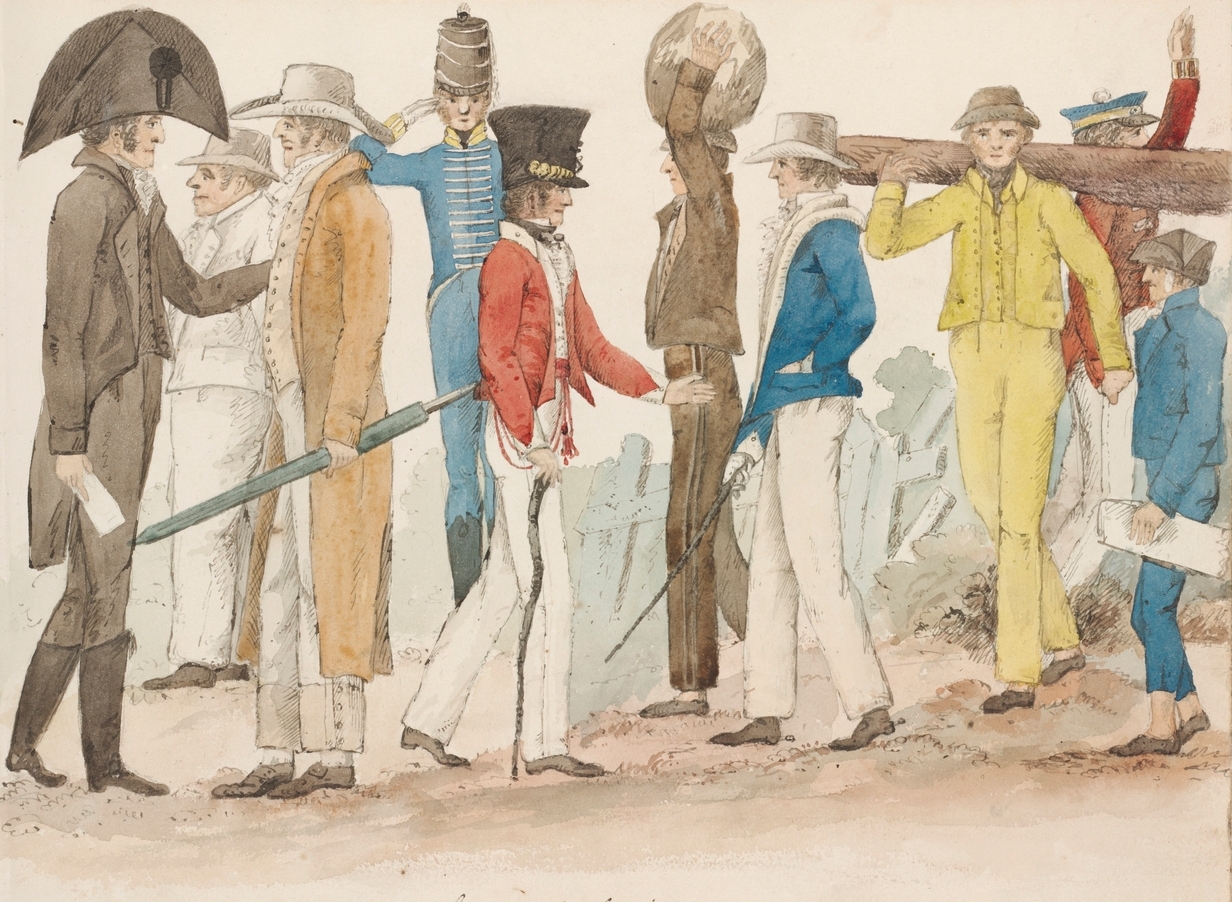
The reasons for the emigration of settlers vary, but often they include the following factors and incentives: the desire to start a new and better life in a foreign land, personal financial hardship, social, cultural, ethnic, or religious persecution (e.g., the Pilgrims and Mormons), penal deportation (e.g. of convicted criminals from England to Australia), political oppression, and governmental incentive-policies aimed at encouraging foreign settlement.Lambright, Bri. "The Ainu, Meiji Era Politics, and Its Lasting Impacts: A Historical Analysis of Racialization, Colonization, and the Creation of State and Identity in Relation to Ainu-Japanese History." (2022). King, Russell. Atlas of Human Migration
Accounts of the "barbarian" Völkerwanderung of Late antiquity in Eurasia give the impression that whole tribes sometimes migrated en masse into new areas of settlement: warriors bringing their households ("women and children") with them. |author-link1 = Peter Heather |editor-last1 = Nicholson |editor-first1 = Oliver |access-date = 25 November 2025 Postulated causes of these mass-migrations include:
- the defeat of the migrants by other migrants (such as the Huns) encroaching into their former territories |publication-place = Ludlow, Shropshire |access-date = 25 November 2025 |publication-place = London |access-date = 25 November 2025
- climate change disrupting societies on and around the Eurasian steppe |publication-place = Barnsley, Yorkshire |access-date = 25 November 2025 |publication-place = Lanham, Maryland |access-date = 27 November 2025
- natural disasters such as the outbreak of disease or plague |orig-date = 2011 |publication-place = Singapore |access-date = 27 November 2025
Settler economics
Humans have taken various approaches when starting and sustaining the settling process, and may employ such means individually, successively or in parallel:
Packing a picnic lunch
Initially, settlers come as travelers in vehicles, on horseback, or on foot. For example: |publication-place = Boston |access-date = 20 December 2025 The first hours and days of settlement resemble the journey, with supplies and comestibles brought by and with the incomers. The first human settlers arriving on Mars, for example, must expect to carry with them all things needed in order for them to survive for a lengthy period of time: not just food and water, but oxygen as well; not just clothing and shelter, but protection against radiation and against low atmospheric pressure. Sustaining such an unintegrated settlement over the long haul requires careful and detailed planning.
Living off the land
A completely uninhabited target territory for settling a true terra nullius minimises potential land-ownership disputes. Thus the first Polynesian settlers in the Pacific Islands, |publication-place = Apia, Samoa |access-date = 20 December 2025 or the early Norse settlers in medieval Iceland and Greenland, |publication-place = Cambridge |access-date = 20 December 2025 or the pioneering French settlers in the Falkland Islands/Malvinas in 1764, |author-link1 = Charles Prestwood Lucas |publication-place = Oxford |access-date = 28 December 2025 could unload their belongings and start farming, hunting or fishing in short order. Self-sufficient settlements may result until the economic and other processes of globalisation come to bear. For example: |author-link1 = Trevor Lummis |access-date = 12 January 2026
Befriending the locals
Incoming settlers seen as invaders may not last long.{{efn | For example, Viking settlement in Vinland proved short-lived. Tradition implicates conflict between the Norse and the skrælingjar. |access-date = 28 December 2025 Wholesale land-grabs with a view to settlement can prove costly and provoke reaction.{{ efn | In the 1940s, Nazi Germany's conquest of Lebensraum in Eastern Europe for settlement by Wehrbauern and others |author-link1 = Christian Gerlach |author-link2 = Nicolas Werth |editor-last1 = Geyer |editor-first1 = Michael |editor-link1 = Michael Geyer |editor-last2 = Fitzpatrick |editor-first2 = Sheila |editor-link2 = Sheila Fitzpatrick |access-date = 13 January 2026 cost millions of Reichsmarks and lives and ended in failure. Limited numbers of immigrants with a reputation for behaving arrogantly in a culturally hostile environment may have to operate under disadvantageous conditions.{{efn | Prior to 1853, Japanese authorities severely restricted the activities of foreigners operating in trading settlements such as Dejima in Japan during the Edo period of 1603 to 1868. |access-date = 28 December 2025 It often pays to make friends with existing populations{{efn | According to the myth of the First Thanksgiving, the Pilgrim Fathers in Massachusetts owed their survival to (initially) benevolent indigenes. and to establish mutually beneficial trading{{efn | Trading posts or factories, comprised generally of small minorities of foreigners settling in a foreign land, depend on a certain minimum of cordial relationships with at least some local contacts. Exclaves like the Hanse kontors provide examples. |author-link1 = Helen Zimmern |publication-place = London |access-date = 31 December 2025 |editor-last1 = Brand |editor-first1 = Hanno |publication-place = Hilversum |access-date = 30 December 2025 or military{{efn | The Roman Empire settled various fleeing or defeated Germanic peoples in imperial borderlands, and employed them as auxiliary troops. |author-link1 = Randall Lesaffer |translator-last1 = Arriens |translator-first1 = Jan |access-date = 29 December 2025 relationships: survival may depend on some degree of integration into a local environment and society. It may help incoming arrivals to find or invent a legend of invitation{{efn | Thus pro-Saxon propaganda tells the tale of Vortigern and the invitations to Anglo-Saxons to settle in 5th-century sub-Roman Britain, For example: |publication-place = Parkland, Florida |access-date = 31 December 2025 while Normanist historians make much of traditions of Eastern Slavs inviting Norsemen to come and rule over their lands. |author-link1 = Vasily Klyuchevsky |translator-last1 = Djambov |translator-first1 = Vladimir |orig-date = 1904 |access-date = 31 December 2025 (an invitation implies friendly agreement with at least some element of the locals, such as (for example) an oppressed tribe, or a (formerly) ruling faction fallen on hard times). Trade-oriented settlers may establish a modus vivendi with their local compradors. |access-date = 31 December 2025
Exploiting the locals
Failing a speedy social integration, settlers and locals may form distinct groups, classes or castes.{{efn | As a possibly extreme example, successive waves of settlers in India contributed to shaping the complex caste system which developed there, whether they (allegedly) originated the concept |publication-place = Chennai, Tamil Nadu |access-date = 31 December 2025 or merely adapted it. |author-link1 = S. Srikanta Sastri |translator-last1 = Naganath |translator-first1 = S. |publication-place = Chennai, Tamil Nadu |access-date = 31 December 2025 In the United States of America, for example, some settler-descendants from Western Europe, Eastern Europe, Asia or Latin America have developed as distinct groupings. |author-link1 = Paul Robeson Jr. |orig-date = 2006 |publication-place = New York |access-date = 4 January 2026 (The "divide and rule" mantra has general application.) One group may harness the labor of another through tribute, wages, servanthood or slavery. New trading patterns may alter existing economies.{{efn | In Africa, hut taxes could draw locals into the ambit of a cash economy. |publication-place = Athens, Ohio |access-date = 4 January 2026 In Siberia and Alaska, Russian promyshlennik settlers and officials demanded taxes ( "tribute") payable in furs. |author-link1 = Dominic Ziegler |orig-date = 2015 |access-date = 4 January 2026 Social and cultural boundaries may arise. In reaction, earlier populations may move away (forcibly or voluntarily),{{efn | Note for example the Trail of Tears in 19th-century North America and the Great Trek of the voortrekkers in 19th-century South Africa. succumb to genocide, exploitation or disease,{{efn | Many Native Americans in the early years of Spanish settlement in the Americas died of disease or in slavery. Notably, much of the indigenous population of the Caribbean Islands disappeared from history. |access-date = 6 January 2026 In the 19th century, European settlers severely depleted numbers of the population of Aboriginal Tasmanians. |editor-last1 = Nederveen Pieterse |editor-first1 = Jan |editor-link1 = Jan Nederveen Pieterse |editor-last2 = Parekh |editor-first2 = Bhikhu C. |editor-link2 = Bhikhu Parekh |publication-place = London |access-date = 6 January 2026 or revolt.
Replacing the locals
If settlement results, by whatever means, in reducing or eliminating earlier populations, this is one possible cause of gaps in the economic system, deficiencies which may result in fewer trading opportunities, under-exploited lands and waters, and a dearth of cheap available labor. Mass new immigration can fill such gaps, but suitable volunteers may come in insufficient numbers. Enter the systems of indentured labor,{{efn | Examples of indentured labor include its operation in British colonies in America, |author-link1 = David Galenson |access-date = 6 January 2026 as well as the girmitiya system in places like Fiji. |author-link1 = Brij Lal (historian) |orig-date = 1983 |publication-place = Lautoka |access-date = 6 January 2026 |publication-place = Footscray, Victoria, Australia |access-date = 6 January 2026 transported felons,{{efn | Notable examples of penal exile with the aim or side-effect of developing newly settled areas include the Imperial Russian systems of katorga () and exile For example: |publication-place = Cham, Zug |access-date = 8 January 2026 and the British Empire's export of convicts to colonies in America |publication-place = Basingstoke |access-date = 8 January 2026 and in Australia. |author-link1 = Robert Hughes (critic) |orig-date = 1986 |access-date = 8 January 2026 and imported slaves.{{efn | Dutch settlers in the Cape Colony imported slaves from Asia and from Madagascar (some of their descendants became the Cape Coloured and Cape Malay populations in South Africa); |editor-last1 = Worden |editor-first1 = Nigel |editor-link1 = Nigel Worden |editor-last2 = Crais |editor-first2 = Clifton C. |publication-place = Johannesburg |access-date = 8 January 2026 the Atlantic slave trade had the purpose of supplying labor to settler economies in the Americas. For example: |editor-last1 = De Ferranti |editor-first1 = David M. |editor-link1 = David de Ferranti |publication-place = Washington, DC |access-date = 8 January 2026
Replicating the homeland
Where the environment permits, settlers can express a preference for familiar landscapes and economies mirroring their metropole. Thus fields of crops and clusters of commercial urban centers can emerge in distant lands.{{efn | Settlers in Brazil, for example, can convert rain-forest into ranch-land; |access-date = 9 January 2026 and Chinese settler communities have developed Chinatowns |editor-last1 = Künnemann |editor-first1 = Vanessa |editor-last2 = Mayer |editor-first2 = Ruth |orig-date = 2011 |access-date = 9 January 2026 across the globe for centuries.
Serving the homeland
Apart from any demographic, military or strategic use, metropoles can view new settlements as suppliers of goods{{efn | Early-modern settlements planted by Spain and Portugal had the function of producing profitable output such as spices and precious metals. and as markets for metropolitan products.{{efn | Ancient Greek colonies on the coasts of the Mediterranean could off-load manufactured goods (pottery, art) for trading into the hinterland. Theoretically, mercantilist practices emphasise the role of colonies in enriching the motherland. But perceived exploitation of or by settlers can lead to ruptures between new lands and the settlers' ancestral homelands (as with the Thirteen Colonies in the 1770s, or Ireland in the 20th century).
Surpassing the homeland
Brazil, peopled by formerly Portuguese settlers, became the headquarters of the Portuguese Empire in 1808, then established independence and its own Brazilian Empire in 1822; Luso-Brazilians now arguably wield more heft than the citizens of their former metropole. Propaganda encouraging British settlement in New Zealand envisaged the antipodes as a "better Britain". |publication-place = Wellington |access-date = 12 January 2026 And the United States of America has somewhat outgrown its former role as a cluster of British settlements on the fringes of the north-west Atlantic to become a major force in the Anglosphere.
Notes
References
References
- (1 January 2025). "pioneer".
- (December 2006). "Settler colonialism and the elimination of the native". Journal of Genocide Research.
- Olson, Pamela. (2013). "Fast Times in Palestine". Seal Press.
- (June 2023). "Indigenous communities and the mental health impacts of land dispossession related to industrial resource development: a systematic review". The Lancet Planetary Health.
- Khan, Razib. (16 June 2011). "The Cape Coloureds are a mix of everything". Discover Magazine.
- Mollan, Cherylann. (20 February 2023). "The young Anglo-Indians retracing their European roots". BBC News.
- LeFevre, Tate A.. (May 29, 2015). "Settler Colonialism". Oxford University Press.
- "Pioneer".
- (23 November 2005). "Russians left behind in Central Asia". BBC News.
- ''Prehistoric Sources Technical Study'', prepared for the city of Monterey by Bainbridge Behrens Moore Inc., 23 May 1977{{verify source. (April 2021)
- (February 2015). "Contact Theory in a Small-Town Settler-Colonial Context: The Reproduction of Laissez-Faire Racism in Indigenous-White Canadian Relations". American Sociological Review.
- (Spring–Summer 2018). "The 'Settler' Nonsense". The Dorchester Review.
- "Introducing yourself as a 'settler' creates division". CBC.
- (21 May 1915). "A YOUNG VICTORIAN NOVELIST.". Darling Downs Gazette.
- Hobby, Nathan. (2022). "The red witch: a biography of Katharine Susannah Prichard". The Miegunyah Press.
- Abiew, Francis Kofi. (1991). "The Evolution of the Doctrine and Practice of Humanitarian Intervention".
- Schneider, Jan. (June 2008). "Israel". Hamburg Institute of International Economics.
- (1991). "Ethnicity, Religion and Class in Israeli Society".
- Branovsky, Yael. (6 May 2008). "400 olim arrive in Israel ahead of Independence Day". Ynetnews.
- Beauchamp, Zack. (20 November 2018). "What are settlements, and why are they such a big deal?".
- "Israeli Settlements". Bloomberg L.P..
- (31 March 2016). "Best chance Cyprus has had for peace". Politico.
- Shefte, Whitney. (6 January 2015). "Western Sahara's stranded refugees consider renewal of Morocco conflict".
- "Film takes brides back to start of new lives".
- (2018). "Religious Pilgrimage Routes and Trails: Sustainable Development and Management". CAB International.
This article was imported from Wikipedia and is available under the Creative Commons Attribution-ShareAlike 4.0 License. Content has been adapted to SurfDoc format. Original contributors can be found on the article history page.
Ask Mako anything about Settler — get instant answers, deeper analysis, and related topics.
Research with MakoFree with your Surf account
Create a free account to save articles, ask Mako questions, and organize your research.
Sign up freeThis content may have been generated or modified by AI. CloudSurf Software LLC is not responsible for the accuracy, completeness, or reliability of AI-generated content. Always verify important information from primary sources.
Report