From Surf Wiki (app.surf) — the open knowledge base
Secondary market
Market in issued financial instruments
Market in issued financial instruments
the financial term
The secondary market, also called the aftermarket and follow on public offering, is the financial market in which previously issued financial instruments such as stock, bonds, options, and futures are bought and sold. The initial sale of the security by the issuer to a purchaser, who pays proceeds to the issuer, is the primary market. All sales after the initial sale of the security are sales in the secondary market. Whereas the term primary market refers to the market for new issues of securities, and "[a] market is primary if the proceeds of sales go to the issuer of the securities sold," the secondary market in contrast is the market created by the later trading of such securities.
With primary issuances of securities or financial instruments (the primary market), often an underwriter purchases these securities directly from issuers, such as corporations issuing shares in an initial public offering (IPO) or private placement. Then the underwriter re-sells the securities to other buyers, in what is referred to as a secondary market or aftermarket (or a buyer in contrast may buy directly from the federal government, in the case of a government issuing treasuries).
Forms of secondary market
The secondary market can be for a variety of assets, that can vary from stocks to loans, from fragmented to centralized, and from illiquid to very liquid.
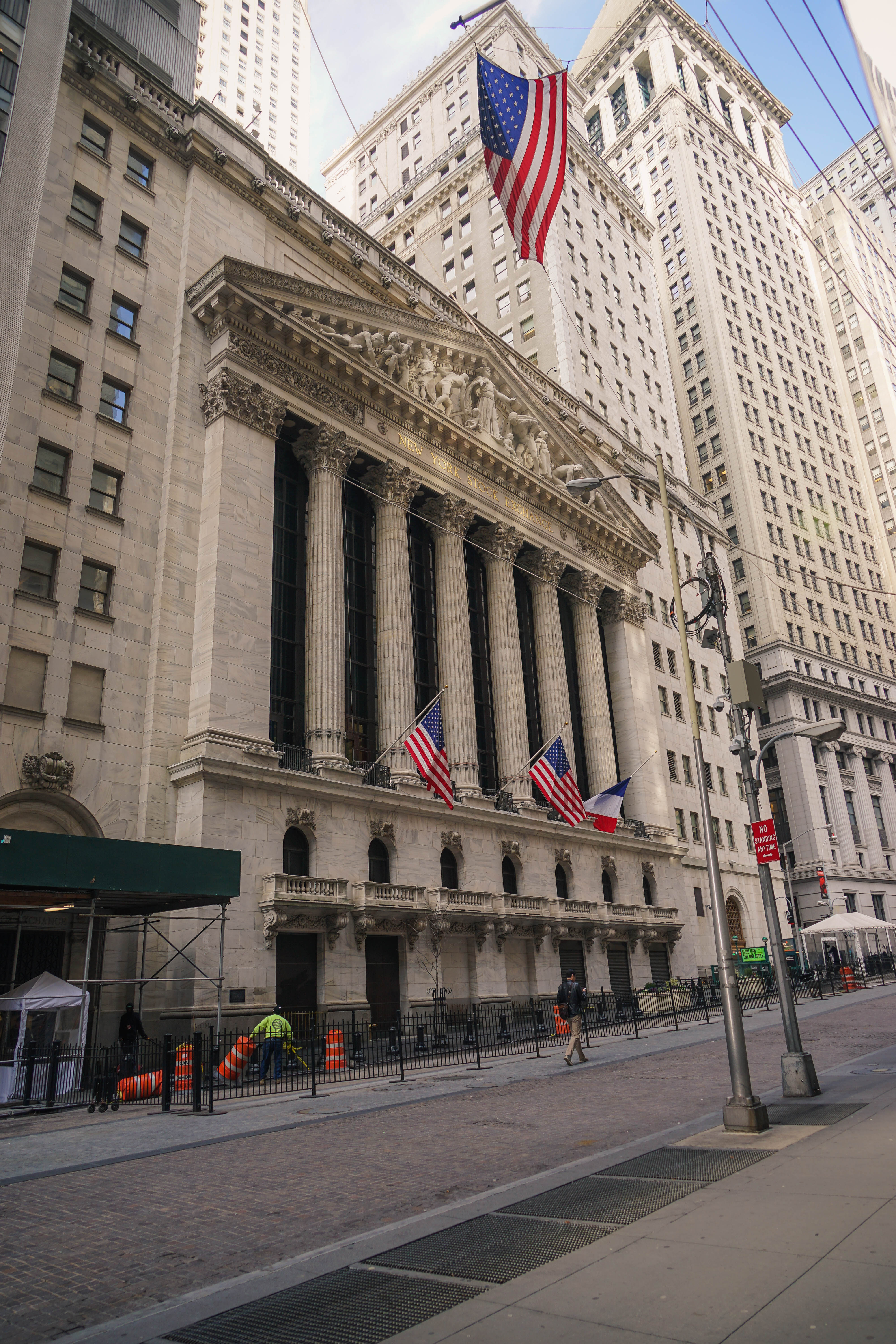
The major stock exchanges are the most visible example of liquid secondary markets—in this case, for stocks of publicly traded companies. Exchanges such as the New York Stock Exchange, London Stock Exchange, and Nasdaq Stock Market provide centralized, liquid secondary markets for investors who wish to buy or sell stocks that trade on those exchanges. Most bonds and structured products trade "over the counter", or by phoning the bond desk of one's broker-dealer. Loans sometimes trade online, using a loan exchange.
Another usage of "secondary market" is to refer to loans which are sold by a mortgage bank to investors such as Fannie Mae and Freddie Mac. The term "secondary market" is also used to refer to the market for any used goods or assets, or an alternative use for an existing product or asset where the customer base is the second market (for example, corn has been traditionally used primarily for food production and feedstock, but a "second" or "third" market has developed for use in ethanol production).
Function
In the secondary market, securities are sold by and transferred from one buyer to another. It is therefore important that the secondary market be highly liquid. Originally, the only way to create this liquidity was for investors and speculators to meet at a fixed place regularly; this is how stock exchanges originated (see History of the Stock Exchange). As a general rule, the greater the number of investors that participate in a given marketplace, and the greater the centralization of that marketplace, the more liquid the market.
Accurate share price allocates scarce capital more efficiently when new projects are financed through a new primary market offering, but accuracy may also matter in the secondary market because: 1) price accuracy can reduce the agency costs of management, and make hostile takeover a less risky proposition and thus move capital into the hands of better managers; and 2) accurate share price aids the efficient allocation of debt finance whether debt offerings or institutional borrowing.
Private secondary markets
Private-equity secondary market refers to the buying and selling of pre-existing investor commitments to private-equity funds. Sellers of private-equity investments sell not only the investments in the fund, but also their remaining unfunded commitments to the funds.Ryan Cotton (2012). https://www.harrismycfo.com/pdf/secondary-funds-benefit.pdf "The Benefits of Secondary Funds in a Private Equity Portfolio."
Due to the increased compliance and reporting obligations on U.S. public company boards of directors and management and public accounting firms enacted in the Sarbanes–Oxley Act of 2002, private secondary markets began to emerge, such as SecondMarket and SecondaryLink. These markets are generally only available to institutional or accredited investors, and allow trading of unregistered and private company securities.
References
References
- "Primary Market". U.S. Securities and Exchange Commission.
- "Section 7.03.120 - Definitions; Primary Market".
- (March 30, 2022). "Secondary Market". Investopedia.
- Manjula A. Soudatti (2021). [https://books.google.com/books?id=wk0-EAAAQBAJ&dq=loans+sometimes+trade+online&pg=PA24 ''Investment Management'']
- Raghu Korrapati (2014). [https://books.google.com/books?id=z4psBQAAQBAJ&dq=The+term+%22secondary+market%22+is+also+used+to+refer+to+the+market+for+any+used+goods&pg=PT278 ''Validated Management Practices'']
- Artyom Durnev et al. (2003). "Law, Share Price Accuracy and Economic Performance: The New Evidence", 102 ''MICH. L. REV.'' 331.
- Robert P. Merges. (May 17, 2012). "Secondary Patent Markets: A Possible Role for Startups". The Media Institute.
- Bharati V. Pathak (2011). [https://books.google.com/books?id=KWw8BAAAQBAJ&dq=%22secondary+market%22+provides+instant+%22valuation%22+of+securities+caused+by+changes+in+the+environment&pg=PA186 ''The Indian Financial System; Markets, Institutions and Services.'']
This article was imported from Wikipedia and is available under the Creative Commons Attribution-ShareAlike 4.0 License. Content has been adapted to SurfDoc format. Original contributors can be found on the article history page.
Ask Mako anything about Secondary market — get instant answers, deeper analysis, and related topics.
Research with MakoFree with your Surf account
Create a free account to save articles, ask Mako questions, and organize your research.
Sign up freeThis content may have been generated or modified by AI. CloudSurf Software LLC is not responsible for the accuracy, completeness, or reliability of AI-generated content. Always verify important information from primary sources.
Report