From Surf Wiki (app.surf) — the open knowledge base
Science fiction
Literary genre
Literary genre
Science fiction (often shortened to sci-fi or abbreviated SF) is the genre of speculative fiction that imagines advanced and futuristic scientific or technological progress. The elements of science fiction have evolved over time: from space exploration, extraterrestrial life, time travel, and robotics; to parallel universes, dystopian societies, and biological manipulations; and, most lately, to information technology, transhumanism, posthumanism, and environmental challenges. Science fiction often specifically explores human responses to the consequences of these types of projected or imagined scientific advances.
The precise definition of science fiction has long been disputed among authors, critics, scholars, and readers. It contains many subgenres, including hard science fiction, which emphasizes scientific accuracy, and soft science fiction, which focuses on social sciences. Other notable subgenres are cyberpunk, which explores the interface between technology and society; climate fiction, which addresses environmental issues; and space opera, which emphasizes pure adventure in a universe in which space travel is common.
Precedents for science fiction are claimed to exist as far back as antiquity. Some books written in the Scientific Revolution and the Enlightenment Age were considered early science-fantasy stories. The modern genre arose primarily in the 19th and early 20th centuries, when popular writers began looking to technological progress for inspiration and speculation. Mary Shelley's Frankenstein, written in 1818, is often credited as the first true science fiction novel. Jules Verne and H. G. Wells are pivotal figures in the genre's development. In the 20th century, the genre grew during the Golden Age of Science Fiction; it expanded with the introduction of space operas, dystopian literature, and pulp magazines.
Science fiction has come to influence not only literature, but also film, television, and culture at large. Science fiction can criticize present-day society and explore alternatives, as well as provide entertainment and inspire a sense of wonder.
Definitions
Main article: Definitions of science fiction
The Encyclopedia of Science Fiction, edited by John Clute and Peter Nicholls in 1993, contains an extensive discussion of the problem of defining the genre.
American writer and professor of biochemistry Isaac Asimov wrote, "Science fiction can be defined as that branch of literature which deals with the reaction of human beings to changes in science and technology."
Science fiction writer Robert A. Heinlein wrote, "A handy short definition of almost all science fiction might read: realistic speculation about possible future events, based solidly on adequate knowledge of the real world, past and present, and on a thorough understanding of the nature and significance of the scientific method."
American science fiction author and editor Lester del Rey wrote, "Even the devoted aficionado or fan—has a hard time trying to explain what science fiction is," and no "full satisfactory definition" exists because "there are no easily delineated limits to science fiction."
Another definition is provided in The Literature Book by the publisher DK: "scenarios that are at the time of writing technologically impossible, extrapolating from present-day science...[,]...or that deal with some form of speculative science-based conceit, such as a society (on Earth or another planet) that has developed in wholly different ways from our own."
There is a tendency among science fiction enthusiasts to be their own arbiters in deciding what constitutes science fiction. David Seed says that it may be more useful to talk about science fiction as the intersection of other more concrete subgenres. American science fiction author, editor, and critic Damon Knight summed up the difficulty, saying "Science fiction is what we point to when we say it."
Alternative terms
American magazine editor, science fiction writer, and literary agent Forrest J Ackerman has been credited with first using the term sci-fi (reminiscent of the then-trendy term hi-fi) in about 1954. The first known use in print was a description of Donovan's Brain by movie critic Jesse Zunser in January 1954. As science fiction entered popular culture, writers and fans in the field came to associate the term with low-quality pulp science fiction and with low-budget, low-tech B movies. By the 1970s, critics in the field, such as Damon Knight and Terry Carr, were using sci fi to distinguish hack-work from serious science fiction.
Australian literary scholar and critic Peter Nicholls writes that SF (or sf) is "the preferred abbreviation within the community of sf writers and readers."
Robert Heinlein found the term science fiction insufficient to describe certain types of works in this genre, and he suggested that the term speculative fiction be used instead for works that are more "serious" or "thoughtful".
Literature
Main article: History of science fiction, Timeline of science fiction
18th century and earlier
Some scholars assert that science fiction had its beginnings in ancient times, when the distinction between myth and fact was blurred. Written in the 2nd century CE by the satirist Lucian, the novel A True Story contains many themes and tropes that are characteristic of modern science fiction, including travel to other worlds, extraterrestrial lifeforms, interplanetary warfare, and artificial life. Some consider it to be the first science fiction novel. Some stories from the folktale collection The Arabian Nights, along with the 10th-century fiction The Tale of the Bamboo Cutter and Ibn al-Nafis's 13th-century novel Theologus Autodidactus, are also argued to contain elements of science fiction.
Several books written during the Scientific Revolution and later the Age of Enlightenment are considered true works of science-fantasy. Francis Bacon's New Atlantis (1627), Johannes Kepler's Somnium (1634), Athanasius Kircher's Itinerarium extaticum (1656), Cyrano de Bergerac's Comical History of the States and Empires of the Moon (1657) and The States and Empires of the Sun (1662), Margaret Cavendish's "The Blazing World" (1666), Jonathan Swift's Gulliver's Travels (1726), Ludvig Holberg's Nicolai Klimii Iter Subterraneum (1741) and Voltaire's Micromégas (1752).
Isaac Asimov and Carl Sagan considered Johannes Kepler's 1634 novel Somnium to be the first science fiction story; it depicts a journey to the Moon and how the Earth's motion is seen from there. Kepler has been called the "father of science fiction".
19th century
Following the 17th-century development of the novel as a literary form, Mary Shelley's Frankenstein (1818) and The Last Man (1826) helped to define the form of the science fiction novel. Brian Aldiss has argued that Frankenstein was the first work of science fiction. Edgar Allan Poe wrote several stories considered to be science fiction, including "The Unparalleled Adventure of One Hans Pfaall" (1835) about a trip to the Moon.
Jules Verne was noted for his attention to detail and scientific accuracy, especially in the novel Twenty Thousand Leagues Under the Seas (1870). In 1887, the novel El anacronópete by Spanish author Enrique Gaspar y Rimbau introduced the first time machine. An early French/Belgian science fiction writer was J.-H. Rosny aîné (1856–1940). Rosny's masterpiece is Les Navigateurs de l'Infini (The Navigators of Infinity) (1925) in which the word astronaut (astronautique in French) was used for the first time.
Many critics consider H. G. Wells to be one of science fiction's most important authors, or even "the Shakespeare of science fiction". His novels include The Time Machine (1895), The Island of Doctor Moreau (1896), The Invisible Man (1897), and The War of the Worlds (1898). His science fiction imagined alien invasion, biological engineering, invisibility, and time travel. In his non-fiction futurologist works, he predicted the advent of airplanes, military tanks, nuclear weapons, satellite television, space travel, and something like the World Wide Web.
20th century
Edgar Rice Burroughs's novel A Princess of Mars, published in 1912, was the first of his thirty-year planetary romance series about the fictional Barsoom; the novels were set on Mars and featured John Carter as the hero.
One of the first dystopian novels, We, was written by the Russian author Yevgeny Zamyatin and published in 1924. It describes a world of harmony and conformity within a united totalitarian state.
In 1926, Hugo Gernsback published the first American science fiction magazine, Amazing Stories. In its first issue, he provided the definition:
In 1928, E. E. "Doc" Smith's first published novel, The Skylark of Space (co-authored with Lee Hawkins Garby), appeared in Amazing Stories. It is often described as the first great space opera. That same year, Philip Francis Nowlan's original story about Buck Rogers, Armageddon 2419, also appeared in Amazing Stories. This story was followed by a Buck Rogers comic strip, the first serious science fiction comic.
Last and First Men: A Story of the Near and Far Future is a future history novel written in 1930 by the British author Olaf Stapledon. A work of innovative scale in the science fiction genre, it describes the fictional history of humanity from the present forward across two billion years.
In 1937, John W. Campbell became the editor of Astounding Science Fiction magazine; this event is sometimes considered the beginning of the Golden Age of Science Fiction, which was characterized by stories celebrating scientific achievement and progress. The "Golden Age" is often said to have ended in 1946, but sometimes the late 1940s and the 1950s are included in this period.
In 1942, Isaac Asimov began the Foundation series of novels, which chronicles the rise and fall of galactic empires, and also introduces the concept of psychohistory. The series was later awarded a one-time Hugo Award for "Best All-Time Series". Theodore Sturgeon's novel More Than Human (1953) explored possible future human evolution. In 1957, the novel Andromeda: A Space-Age Tale by the Russian writer and paleontologist Ivan Yefremov presented a view of a future interstellar communist civilization; it is considered one of the most important Soviet science fiction novels.
In 1959, Robert A. Heinlein's novel Starship Troopers marked a departure from his earlier juvenile stories and novels. It is one of the first and most influential examples of military science fiction, and it introduced the concept of powered armor exoskeletons. The German space opera series Perry Rhodan, written by various authors, started in 1961 with an account of the first Moon landing; the series has since expanded in space to multiple universes and in time by billions of years. It has become the most popular book series in science fiction to date.
During the 1960s and 1970s, New Wave science fiction was known for embracing a high degree of experimentation (in both form and content), as well as a highbrow and self-consciously "literary" or "artistic" sensibility.
In 1961, Stanisław Lem's novel Solaris was published in Poland. The novel dealt with the theme of human limitations, as its characters attempted to study a seemingly intelligent ocean on a newly discovered planet. Lem's work anticipated the creation of microrobots and micromachinery, nanotechnology, smartdust, virtual reality, and artificial intelligence (including swarm intelligence); his work also developed the ideas of necroevolution and artificial worlds.
In 1965, the novel Dune by Frank Herbert imagined a more complex and detailed future society than had most previous science fiction.
In 1967 Anne McCaffrey, began a science fantasy series called Dragonriders of Pern . Two novellas included in the series' first novel, Dragonflight, led McCaffrey to win the first Hugo or Nebula award given to a female author.
In 1968, Philip K. Dick's novel Do Androids Dream of Electric Sheep? was published. It is the literary source of the Blade Runner movie franchise. Published in 1969, the novel The Left Hand of Darkness by Ursula K. Le Guin is set on a planet where the inhabitants have no fixed gender. The novel is one of the most influential examples of social, feminist, or anthropological science fiction.
In 1979, Science Fiction World magazine began publication in the People's Republic of China. It dominates the Chinese science fiction magazine market, at one time claiming a circulation of 300,000 copies per issue and an estimated 3–5 readers per copy, giving it a total readership of at least 1 million people—making it the world's most popular science fiction periodical.
In 1984, William Gibson's first novel, Neuromancer, helped to popularize cyberpunk and the word cyberspace, a term he originally coined in the 1982 short story Burning Chrome. In the same year, Octavia Butler's short story "Speech Sounds" won the Hugo Award for Best Short Story. She went on to explore themes of racial injustice, global warming, women's rights, and political conflict. In 1995, she became the first science fiction author to receive a MacArthur Fellowship.
In 1986, the novel Shards of Honor by Lois McMaster Bujold began her Vorkosigan Saga science opera. 1992's novel Snow Crash by Neal Stephenson predicted immense social upheaval due to the information revolution.
21st century
In 2007, Liu Cixin's novel The Three-Body Problem was published in China. It was translated into English by Ken Liu and published by Tor Books in 2014; it won the Hugo Award for Best Novel in 2015, making Liu the first Asian writer to win the award.
Emerging themes in late 20th- and early 21st-century science fiction include environmental issues, the implications of the Internet and the expanding information universe, questions about biotechnology, nanotechnology, and post-scarcity societies. Recent trends and subgenres include steampunk, biopunk, and mundane science fiction.
Film
Main article: Science fiction film, Lists of science fiction films
One of the first recorded science fiction films is A Trip to the Moon from 1902, directed by French filmmaker Georges Méliès. It influenced later filmmakers, offering a different kind of creativity and fantasy. Méliès's innovative editing and special effects techniques were widely imitated, and they became important elements of the cinematic medium.
The 1927 film Metropolis, directed by Fritz Lang, is the first feature-length science fiction film. Though not well received in its time, it is now ranked as one of the best films ever made.
In 1954, Godzilla, directed by Ishirō Honda, started the kaiju subgenre of science fiction film; this subgenre features large creatures in any form, usually attacking a major city or engaging other monsters in battle.
The 1968 film 2001: A Space Odyssey, was directed by Stanley Kubrick and based on stories by Arthur C. Clarke. The film improved on the largely B-movie offerings to date in both scope and quality, and it influenced later science fiction films.
The original Planet of the Apes movie, directed by Franklin J. Schaffner and based on the 1963 French novel La Planète des Singes by Pierre Boulle, was also released in 1968. The film vividly depicts a post-apocalyptic world in which intelligent apes dominate humans. The film received both popular and critical acclaim.
In 1977, George Lucas began the Star Wars series with the film later called "Star Wars: Episode IV – A New Hope." The series, often called a space opera, became a worldwide popular culture phenomenon and the third-highest-grossing film series of all time.
Since the 1980s, science fiction films, along with fantasy, horror, and superhero films, have dominated Hollywood's big-budget productions. Escape Velocity: American Science Fiction Film, 1950–1982, Bradley Schauer, Wesleyan University Press, 3 January 2017, page 7 Science fiction films often cross over with other genres. Some examples include film noir (Blade Runner, 1982), family (E.T. the Extra-Terrestrial, 1982), war (Enemy Mine, 1985), comedy (*Spaceballs , 1987; *Galaxy Quest, 1999), animation (WALL-E, 2008; Big Hero 6, 2014), Western (Serenity, 2005), action (Edge of Tomorrow, 2014; The Matrix, 1999), adventure (Jupiter Ascending, 2015; Interstellar, 2014), mystery (Minority Report, 2002), thriller (Ex Machina, 2014), drama (Melancholia, 2011; Predestination, 2014), and romance (Eternal Sunshine of the Spotless Mind, 2004; Her, 2013).
Television
Main article: Science fiction on television, List of science fiction television programs
Science fiction and television have consistently had a close relationship. Television or similar technology often appeared in science fiction before television itself became widely available in the late 1940s and early 1950s. Science Fiction TV, J. P. Telotte, Routledge, 26 March 2014, pages 112, 179
The first known science fiction television program was a 35-minute adapted excerpt of the play RUR, written by the Czech playwright Karel Čapek, broadcast live from the BBC's Alexandra Palace studios on 11 February 1938. The first popular science fiction program on American television was the children's adventure serial Captain Video and His Video Rangers, which ran from June 1949 to April 1955.{{cite web |access-date=17 January 2007 |archive-date=30 March 2009 |archive-url=https://web.archive.org/web/20090330104139/http://www.museum.tv/archives/etv/C/htmlC/captainvideo/captainvideo.htm |url-status=live
The original The Twilight Zone series, produced and narrated by Rod Serling, ran from 1959 to 1964. (Serling also wrote or co-wrote most of the episodes.) The series featured fantasy, suspense, and horror as well as science fiction, with each episode being a complete story. Critics have ranked it as one of the best TV programs of any genre.
The animated series The Jetsons, while intended as comedy and only running for one season (1962–1963), predicted many inventions now in common use: flat-screen televisions, newspapers on a computer-like screen, computer viruses, video chat, tanning beds, home treadmills, and more.
In 1963, the series Doctor Who premiered on BBC Television with a time-travel theme. The original series ran until 1989 and was revived in 2005. It has been popular globally and has significantly influenced later science fiction TV.
Other British sci-fi dramas which are broadcast in the 1970s are UFO (1970–1971), The Tomorrow People (1973–1979), Space: 1999 (1975–1977) and Blake's 7 (1978–1981). Other notable programs during the 1960s included The Outer Limits (1963–1965), Lost in Space (1965–1968), and The Prisoner (1967-1968).
The original Star Trek series, created by Gene Roddenberry, premiered in 1966 on NBC Television and ran for three seasons. It combined elements of space opera and Space Western. Only mildly successful at first, the series gained popularity through syndication and strong fan interest. It became a popular and influential franchise with many films, television shows, novels, and other works and products. The series Star Trek: The Next Generation (1987–1994) led to six additional live action Star Trek shows: Deep Space Nine (1993–1999), Voyager (1995–2001), Enterprise (2001–2005), Discovery (2017–2024), Picard (2020–2023), and Strange New Worlds (2022–present); additional shows are in some stage of development.
The miniseries V premiered in 1983 on NBC. It depicted an attempted conquest of Earth by reptilian aliens. Red Dwarf, a comic science fiction series, aired on BBC Two between 1988 and 1999, and on Dave since 2009. The X-Files, which featured UFOs and conspiracy theories, was created by Chris Carter and broadcast by Fox Broadcasting Company from 1993 to 2002, and again from 2016 to 2018.
Stargate, a film about ancient astronauts and interstellar teleportation, was released in 1994. The series Stargate SG-1 premiered in 1997 and ran for 10 seasons (1997–2007). Spin-off series included Stargate Infinity (2002–2003), Stargate Atlantis (2004–2009), and Stargate Universe (2009–2011).
Other 1990s series included Quantum Leap (1989–1993) and Babylon 5 (1994–1999). The Syfy channel, launched in 1992 as The Sci-Fi Channel, specializes in science fiction, supernatural horror, and fantasy.
The space-Western series Firefly premiered in 2002 on Fox. It is set in the year 2517, after humans arrive in a new star system, and it follows the adventures of the renegade crew of Serenity, a "Firefly-class" spaceship. The series Orphan Black began a five-season run in 2013, focusing on a woman who takes on the identity of one of her genetically identical clones. In late 2015, Syfy premiered the series The Expanse to great critical acclaim—an American show about humanity's colonization of the Solar System. Its later seasons were aired through Amazon Prime Video.
Study
Main article: Science fiction studies
The field of science fiction studies involves the critical assessment, interpretation, and discussion of science fiction literature, film, TV shows, new media, fandom, and fan fiction. Science fiction scholars study the genre to better understand it and its relationship to science, technology, politics, other genres, and culture at large.
Science fiction studies began around the turn of the 20th century, but it was not until later that science fiction studies solidified as a discipline with the publication of the academic journals Extrapolation (1959), Foundation: The International Review of Science Fiction (1972), and Science Fiction Studies (1973), and the establishment of the oldest organizations devoted to the study of science fiction in 1970, the Science Fiction Research Association and the Science Fiction Foundation. The field has grown considerably since the 1970s with the establishment of more journals, organizations, and conferences, as well as science fiction degree-granting programs such as those offered by the University of Liverpool.
Classification
Science fiction has historically been subdivided into hard and soft categories, with the division centering on the feasibility of the science. However, this distinction has come under increased scrutiny in the 21st century. Some authors, such as Tade Thompson and Jeff VanderMeer, have observed that stories focusing explicitly on physics, astronomy, mathematics, and engineering tend to be considered hard science fiction, while stories focusing on botany, mycology, zoology, and the social sciences tend to be considered soft science fiction (regardless of the relative rigor of the science).
Max Gladstone defined hard science fiction as stories "where the math works", but he pointed out that this definition identifies stories that often seem "weirdly dated", as scientific paradigms shift over time. Michael Swanwick dismissed the traditional definition of hard science fiction altogether, instead stating that it was defined by characters striving to solve problems "in the right way–with determination, a touch of stoicism, and the consciousness that the universe is not on his or her side."
Ursula K. Le Guin also criticized the traditional contrast between hard and soft science fiction: "The 'hard' science fiction writers dismiss everything except, well, physics, astronomy, and maybe chemistry. Biology, sociology, anthropology—that's not science to them, that's soft stuff. They're not that interested in what human beings do, really. But I am. I draw on the social sciences a great deal."
Literary merit
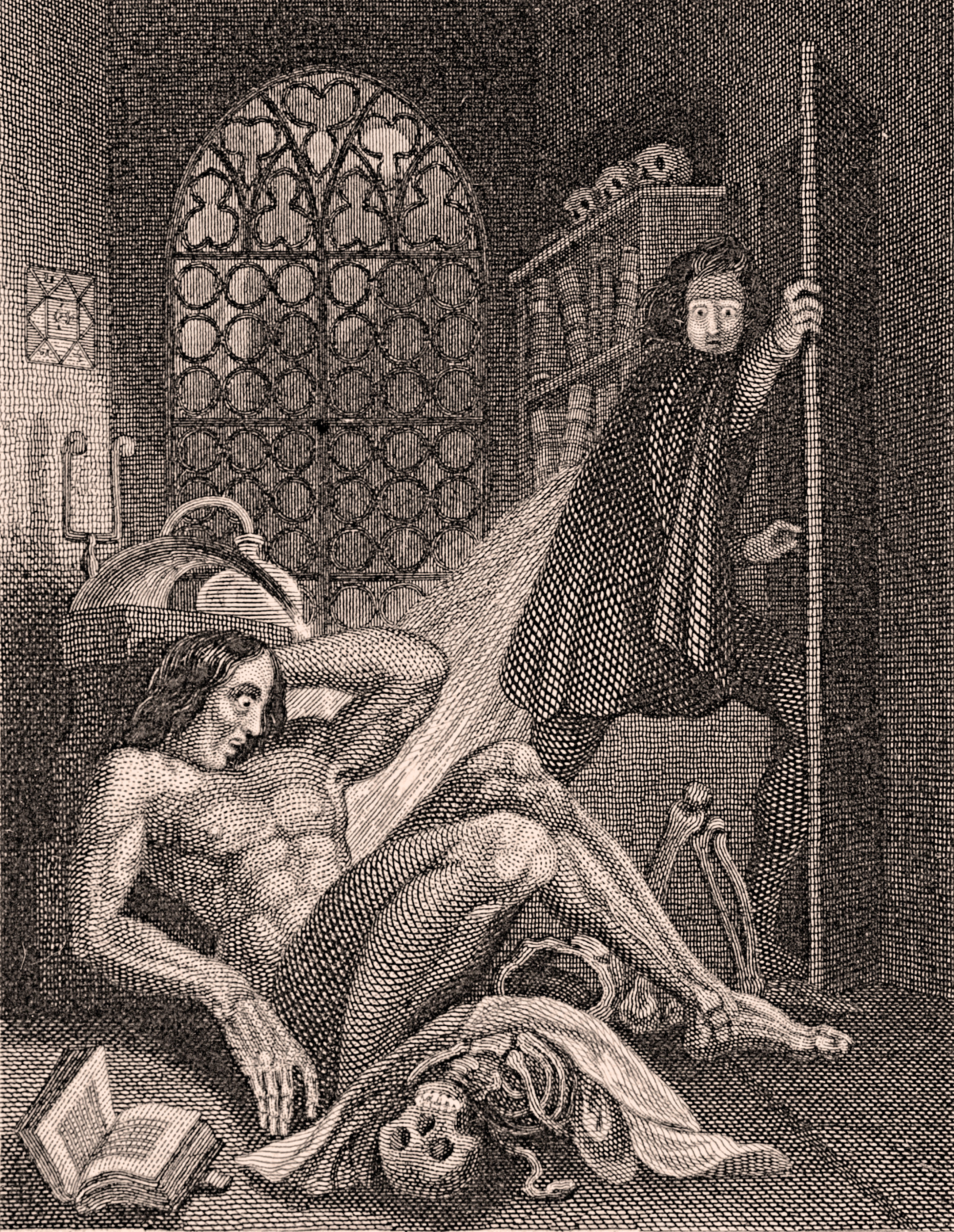
Many critics remain skeptical of the literary value of science fiction and other forms of genre fiction, though some mainstream authors have written works claimed by opponents to be science fiction. Mary Shelley wrote a number of scientific romance novels in the Gothic literature tradition, including Frankenstein; or, The Modern Prometheus (1818). Kurt Vonnegut was a respected American author whose works have been argued by some to contain science fiction premises or themes.
Other science fiction authors whose works are widely considered to be "serious" literature include Ray Bradbury (especially Fahrenheit 451 and The Martian Chronicles), Arthur C. Clarke (especially Childhood's End), and Paul Myron Anthony Linebarger (using the pseudonym Cordwainer Smith). Doris Lessing, who was later awarded the Nobel Prize in Literature, wrote a series of five science fiction novels, Canopus in Argos: Archives (1979–1983); these novels depict the efforts of more advanced species and civilizations to influence less advanced ones, including humans on Earth.
David Barnett has indicated that some novels use recognizable science fiction tropes, but they are not classified by their authors and publishers as science fiction; such novels include The Road (2006) by Cormac McCarthy, Cloud Atlas (2004) by David Mitchell, The Gone-Away World (2008) by Nick Harkaway, The Stone Gods (2007) by Jeanette Winterson, and Oryx and Crake (2003) by Margaret Atwood. Atwood in particular argued against categorizing works such as the Handmaid's Tale as science fiction; instead she labeled this novel, Oryx and Crake, and The Testaments as speculative fiction, and she criticized science fiction as "talking squids in outer space."
In his book The Western Canon, literary critic Harold Bloom includes the novels Brave New World, Stanisław Lem's Solaris, Kurt Vonnegut's Cat's Cradle, and The Left Hand of Darkness as culturally and aesthetically significant works of Western literature, though Lem actively spurned the label science fiction.
In her 1976 essay "Science Fiction and Mrs Brown", Ursula K. Le Guin was asked, "Can a science fiction writer write a novel?" She answered that "I believe that all novels ... deal with character... The great novelists have brought us to see whatever they wish us to see through some character. Otherwise, they would not be novelists, but poets, historians, or pamphleteers."
Orson Scott Card is best known for his 1985 science fiction novel Ender's Game; he has postulated that in science fiction, the message and intellectual significance of the work are contained within the story itself—therefore the genre can omit accepted literary devices and techniques that he characterized as gimmicks or literary games.
In 1998, Jonathan Lethem wrote an essay titled "Close Encounters: The Squandered Promise of Science Fiction" in the Village Voice. In this essay, he recalled the time in 1973 when Thomas Pynchon's novel Gravity's Rainbow was nominated for the Nebula Award and was passed over in favor of Arthur C. Clarke's novel Rendezvous with Rama; Lethem suggests that this point stands as "a hidden tombstone marking the death of the hope that SF was about to merge with the mainstream." In the same year, science fiction author and physicist Gregory Benford wrote that "SF is perhaps the defining genre of the twentieth century, although its conquering armies are still camped outside the Rome of the literary citadels."
Community
Authors
Science fiction has been written by authors from diverse cultural and geographical backgrounds. Among submissions to the science fiction publisher Tor Books, men account for 78% and women account for 22% (according to 2013 statistics from the publisher). A controversy about voting slates for the 2015 Hugo Awards highlighted a tension in the science fiction community between two things: a trend toward increasingly diverse works and authors being honored by awards, and a reaction by groups of authors and fans who preferred more "traditional" science fiction.
Awards
Main article: List of science fiction awards
Among the most significant and well-known awards for science fiction are the Hugo Award for literature, presented by the World Science Fiction Society at Worldcon, and voted on by fans; the Nebula Award for literature, presented by the Science Fiction and Fantasy Writers of America, and voted on by the community of authors; the John W. Campbell Memorial Award for Best Science Fiction Novel, presented by a jury of writers; and the Theodore Sturgeon Memorial Award for short fiction, presented by a jury. One notable award for science fiction films and TV programs is the Saturn Award, which is presented annually by The Academy of Science Fiction, Fantasy, and Horror Films.
There are other national awards, like Canada's Prix Aurora Awards, regional awards, like the Endeavour Award presented at Orycon for works from the U.S. Pacific Northwest, and special interest or subgenre awards such as the Chesley Award for art, presented by the Association of Science Fiction & Fantasy Artists, or the World Fantasy Award for fantasy. Magazines may organize reader polls, notably the Locus Award.
Conventions
Main article: Science fiction convention
Conventions (often abbreviated by fans as cons, such as Comic-con) are held in cities around the world; these cater to a local, regional, national, or international membership. General-interest conventions cover all aspects of science fiction, while others focus on a particular interest such as media fandom or filk music. Most science fiction conventions are organized by volunteers in non-profit groups, though most media-oriented events are organized by commercial promoters.
Fandom and fanzines
Main article: Science fiction fandom, Science-fiction fanzine

Science fiction fandom emerged from the letters column in Amazing Stories magazine. Fans began writing letters to each other, and then assembling their comments in informal publications that became known as fanzines. Once in regular communication, these fans wanted to meet in person, so they organized local clubs. During the 1930s, the first science fiction conventions gathered fans from a larger area.
The earliest organized online fandom was the SF Lovers Community, originally a mailing list in the late 1970s, with a text archive file that was updated regularly. In the 1980s, Usenet groups greatly expanded the circle of fans online. In the 1990s, the development of the World-Wide Web increased online fandom through websites devoted to science fiction and related genres in all media.
The first science fiction fanzine, The Comet, was published in 1930 by the Science Correspondence Club in Chicago, Illinois. As of 2025, one of the best known fanzines is Ansible, edited by David Langford, winner of numerous Hugo awards. Other notable fanzines to win one or more Hugo awards include File 770, Mimosa, and Plokta. Artists working for fanzines have often risen to prominence in the field, including Brad W. Foster, Teddy Harvia, and Joe Mayhew; the Hugo Awards include a category for Best Fan Artists.
Elements
Science fiction elements can include the following:
- Temporal settings in the future or in alternative histories;
- Predicted or speculative technology such as brain-computer interface, bio-engineering, superintelligent computers, robots, ray guns, and advanced weapons;
- Space travel, or settings in outer space, on other worlds, in subterranean earth, or in parallel universes;
- Fictional concepts in biology such as aliens, mutants, and enhanced humans;
- Undiscovered scientific possibilities such as teleportation, time travel, and faster-than-light travel or communication;
- Social/political systems and situations that are new and different, including utopian, dystopian, post-apocalyptic, or post-scarcity;
- Future history and speculative evolution of humans on Earth or other planets;
- Paranormal abilities such as mind control, telepathy, and telekinesis.
International examples
- Africanfuturism
- Australian science fiction
- Bengali science fiction
- Brazilian science fiction
- Canadian science fiction
- Chinese science fiction
- Croatian science fiction
- Czech science fiction and fantasy
- French science fiction
- Japanese science fiction
- Norwegian science fiction
- Science fiction in Poland
- Romanian science fiction
- Russian science fiction and fantasy
- Serbian science fiction
- Spanish science fiction
- Yugoslav science fiction}}
Subgenres
While science fiction is a genre of fiction, a science fiction genre is a subgenre within science fiction. Science fiction may be divided along any number of overlapping axes. Gary K. Wolfe's Critical Terms for Science Fiction and Fantasy identifies over 30 subdivisions of science fiction, not including science fantasy (which is a mixed genre).
- Afrofuturism
- Anthropological science fiction
- Apocalyptic and post-apocalyptic fiction
- Biopunk
- Black science fiction
- Christian science fiction
- Climate fiction
- Comic science fiction
- Cyberpunk
- Dieselpunk
- Dying Earth
- Far future in fiction
- Feminist science fiction
- Gothic science fiction
- Indigenous Futurism
- Libertarian science fiction
- Military science fiction
- Mundane science fiction
- Pastoral science fiction
- Planetary romance
- Social science fiction
- Solarpunk
- Space opera
- Space Western
- Steampunk
References
General and cited sources
- Aldiss, Brian. Billion Year Spree: The True History of Science Fiction, 1973.
- Aldiss, Brian, and Wingrove, David. Trillion Year Spree: The History of Science Fiction, revised and updated edition, 1986.
- Amis, Kingsley. New Maps of Hell: A Survey of Science Fiction, 1958.
- Barron, Neil, ed. Anatomy of Wonder: A Critical Guide to Science Fiction (5th ed.). Westport, Conn.: Libraries Unlimited, 2004. .
- Broderick, Damien. Reading by Starlight: Postmodern Science Fiction. London: Routledge, 1995. Print.
- Clute, John Science Fiction: The Illustrated Encyclopedia. London: Dorling Kindersley, 1995. .
- Clute, John and Peter Nicholls, eds., The Encyclopedia of Science Fiction. St Albans, Herts, UK: Granada Publishing, 1979. .
- Clute, John and Peter Nicholls, eds., The Encyclopedia of Science Fiction. New York: St Martin's Press, 1995. .
- Disch, Thomas M. The Dreams Our Stuff Is Made Of. New York: The Free Press, 1998. .
- Jameson, Fredric. Archaeologies of the Future: This Desire Called Utopia and Other Science Fictions. London and New York: Verso, 2005.
- Milner, Andrew. Locating Science Fiction. Liverpool: Liverpool University Press, 2012.
- Raja, Masood Ashraf, Jason W. Ellis and Swaralipi Nandi. eds., The Postnational Fantasy: Essays on Postcolonialism, Cosmopolitics and Science Fiction. McFarland 2011. .
- Reginald, Robert. Science Fiction and Fantasy Literature, 1975–1991. Detroit, MI/Washington, D.C./London: Gale Research, 1992. .
- Roy, Pinaki. "Science Fiction: Some Reflections". Shodh Sanchar Bulletin, 10.39 (July–September 2020): 138–42.
- Suvin, Darko. Metamorphoses of Science Fiction: on the Poetics and History of a Literary Genre, New Haven : Yale University Press, 1979.
- Weldes, Jutta, ed. To Seek Out New Worlds: Exploring Links between Science Fiction and World Politics. New York: Palgrave Macmillan, 2003. .
- Westfahl, Gary, ed. The Greenwood Encyclopedia of Science Fiction and Fantasy: Themes, Works, and Wonders (three volumes). Westport, Conn.: Greenwood Press, 2005.
- Wolfe, Gary K. Critical Terms for Science Fiction and Fantasy: A Glossary and Guide to Scholarship. New York: Greenwood Press, 1986. .
References
- Stableford, Brian. (1993). "Definitions of SF". [[Orbit Books.
- "SFE: Definitions of SF".
- Asimov, Isaac. (April 1975). "How Easy to See the Future!". [[American Museum of Natural History]].
- (2016). "The Literature Book". [[DK (publisher).
- (1 October 2020). "An Empirical Revision of the Definition of Science Fiction: It Is All in the Techne . . .". SAGE Open.
- Seed, David. (23 June 2011). "Science Fiction: A Very Short Introduction". OUP Oxford.
- (7 December 2008). "Forrest J Ackerman, 92; Coined the Term 'Sci-Fi'". [[The Washington Post]].
- "sci-fi n.".
- Whittier, Terry }}{{full citation needed. (December 2019). "Neo-Fan's Guidebook".
- Scalzi, John. (2005). "The Rough Guide to Sci-Fi Movies". Rough Guides.
- Ellison, Harlan. (1998). "Harlan Ellison's responses to online fan questions at ParCon".
- (29 September 2016). "Sci-Fi Icon Robert Heinlein Lists 5 Essential Rules for Making a Living as a Writer".
- (August 28, 2018). "Out of This World".
- (March 1976). "Lucian's True History as SF". DePauw University.
- Jacqueline Glomski. (2013). "Science Fiction in the Seventeenth Century: The Neo-Latin Somnium and its Relationship with the Vernacular". BoD.
- White, William. (September 2009). "Science, Factions, and the Persistent Specter of War: Margaret Cavendish's Blazing World". Intersect: The Stanford Journal of Science, Technology and Society.
- Murphy, Michael. (2011). "A Description of the Blazing World". Broadview Press.
- (2 January 2011). "Margaret Cavendish's The Blazing World (1666)". Skulls in the Stars.
- Robin Anne Reid. (August 2023). "Women in Science Fiction and Fantasy: Overviews". ABC-CLIO.
- [[Lee Cullen Khanna. Khanna, Lee Cullen]]. "The Subject of Utopia: Margaret Cavendish and Her Blazing-World". ''Utopian and Science Fiction by Women: World of Difference''. Syracuse: Syracuse UP, 1994. 15–34.
- (21 February 2008). "Carl Sagan on Johannes Kepler's persecution". YouTube.
- Asimov, Isaac. (1977). "The Beginning and the End". Doubleday.
- (16 November 2015). "Kepler, the Father of Science Fiction".
- Popova, Maria. (27 December 2019). "How Kepler Invented Science Fiction and Defended His Mother in a Witchcraft Trial While Revolutionizing Our Understanding of the Universe".
- (1993). "Mary W. Shelley". Orbit/Time Warner Book Group UK.
- Wingrove, Aldriss. (2001). "Billion Year Spree: The History of Science Fiction (1973) Revised and expanded as [[Trillion Year Spree]] (with David Wingrove)(1986)". House of Stratus.
- Tresch, John (2002). "Extra! Extra! Poe invents science fiction". In Hayes, Kevin J. The Cambridge Companion to Edgar Allan Poe. Cambridge: Cambridge University Press. pp. 113–132. {{ISBN. 978-0-521-79326-1.
- Roberts, Adam. (2000). "Science Fiction". Routledge.
- Renard, Maurice. (November 1994). "On the Scientific-Marvelous Novel and Its Influence on the Understanding of Progress". Science Fiction Studies.
- Thomas, Theodore L.. (December 1961). "The Watery Wonders of Captain Nemo".
- Margaret Drabble. (8 May 2014). "Submarine dreams: Jules Verne's ''Twenty Thousand Leagues Under the Seas''". New Statesman.
- La obra narrativa de Enrique Gaspar: El Anacronópete (1887), María de los Ángeles Ayala, Universidad de Alicante. Del Romanticismo al Realismo : Actas del I Coloquio de la S. L. E. S. XIX, Barcelona, 24–26 October 1996 / edited by Luis F. Díaz Larios, Enrique Miralles.
- El anacronópete, English translation (2014), www.storypilot.com, Michael Main, accessed 13 April 2016
- (28 February 2012). "Professor explores the work of a science fiction pioneer".
- link. (28 December 2022 . In: ''Science fiction studies'', vol. 15, no. 1, p. 1-11.)
- Siegel, Mark Richard. (1988). "Hugo Gernsback, Father of Modern Science Fiction: With Essays on Frank Herbert and Bram Stoker". Borgo Pr.
- (2004). "H.G. Wells: Traversing Time". Wesleyan University Press.
- (8 October 2017). "HG Wells: A visionary who should be remembered for his social predictions, not just his scientific ones". The Independent.
- Porges, Irwin (1975). Edgar Rice Burroughs. Provo, Utah: Brigham Young University Press. {{ISBN. 0-8425-0079-0.
- "Science fiction". [[Encyclopedia Britannica]].
- [[#Translations. Brown]], p. xi, citing Shane, gives 1921. Russell, p. 3, dates the first draft to 1919.
- (4 January 1946). "Review of ''WE'' by E. I. Zamyatin". Tribune.
- Originally published in the April 1926 issue of ''[[Amazing Stories]]''
- Stableford, Brian. (1993). "Definitions of SF". [[Orbit Books.
- Edwards, Malcolm J.; Nicholls, Peter (1995). "SF Magazines". In John Clute and Peter Nicholls. ''The Encyclopedia of Science Fiction ''(Updated ed.). New York: St Martin's Griffin. p. 1066. {{ISBN. 0-312-09618-6.
- (2007). "The New Space Opera". Eos.
- Roberts, Garyn G.. (2001). "Buck Rogers". Bowling Green State University Popular Press.
- (23 January 1995). "Last and first man of vision". Times Higher Education.
- (23 June 2021). "Golden Age of SF". The Encyclopedia of Science Fiction.
- Nicholls, Peter (1981) ''The Encyclopedia of Science Fiction'', Granada, p. 258
- (2014). "From Robots to Foundations". CreateSpace Independent Publishing Platform.
- Asimov, Isaac. (1980). "In Joy Still Felt: The Autobiography of Isaac Asimov, 1954–1978". Doubleday.
- (26 July 2007). "1966 Hugo Awards". [[Hugo Award]].
- "The Long List of Hugo Awards, 1966". [[New England Science Fiction Association]].
- "Time and Space", ''Hartford Courant'', 7 February 1954, p.SM19
- "Reviews: November 1975".
- Aldiss & Wingrove, ''[[Trillion Year Spree]]'', [[Victor Gollancz]], 1986, p.237
- "Ivan Efremov's works".
- (December 2006). "OFF-LINE интервью с Борисом Стругацким". Russian Science Fiction & Fantasy.
- Gale, Floyd C.. (October 1960). "Galaxy's 5 Star Shelf".
- (3 November 2016). "Why 'Starship Troopers' May Be Too Controversial to Adapt Faithfully". Hollywood Reporter.
- (3 November 2016). "Four things that we want to see in the Starship Troopers reboot". The Verge.
- (1987). "Intersections: Fantasy and Science Fiction Alternatives". Southern Illinois University Press.
- (May 2013). "Exoskeletons in Neurological Diseases – Current and Potential Future Applications". Advances in Clinical and Experimental Medicine.
- Weiss, Peter. "Dances with Robots". Science News Online.
- "Unternehmen Stardust – Perrypedia".
- "Der Unsterbliche – Perrypedia".
- Mike Ashley (14 May 2007). Gateways to Forever: The Story of the Science-Fiction Magazines from 1970–1980. Liverpool University Press. p. 218. {{ISBN. 978-1-84631-003-4.
- McGuirk, Carol. (1992). "Fiction 2000". University of Georgia Press.
- Caroti, Simone. (2011). "The Generation Starship in Science Fiction". McFarland.
- Peter Swirski (ed), The Art and Science of Stanislaw Lem, McGill-Queen's University Press, 2008, {{ISBN. 0-7735-3047-9
- Stanislaw Lem, ''[[Science Fiction and Futurology. Fantastyka i Futuriologia]]'', Wedawnictwo Literackie, 1989, vol. 2, p. 365
- ''Benét's Reader's Encyclopedia'', fourth edition (1996), p. 590.
- Fiałkowski, Tomasz. "Stanisław Lem czyli życie spełnione". Lem.pl.
- Oramus, Marek. (2006). "Bogowie Lema". Wydawnictwo Kurpisz.
- Jarzębski, Jerzy. "Cały ten złom". Lem.pl.
- Szewczyk, Olaf. (2016-03-29). "Fantomowe wszechświaty Lema stają się rzeczywistością". [[Polityka]].
- Roberts, Adam. (2000). "Science Fiction". Routledge.
- [[#isfdb-dop. Dragonriders of Pern, ISFDB]].
- ''Publishers Weekly'' review of Robin Roberts, ''Anne McCaffrey: A Life with Dragons'' (2007). [https://www.amazon.com/dp/157806998X Quoted by Amazon.com] {{Webarchive. link. (1 June 2021 . Retrieved 16 July 2011.)
- Sammon, Paul M. (1996). Future Noir: the Making of Blade Runner. London: Orion Media. p. 49. {{ISBN. 0-06-105314-7.
- Wolfe, Gary K.. (23 October 2017). "'Blade Runner 2049': How does Philip K. Dick's vision hold up?".
- Stover, Leon E. "Anthropology and Science Fiction" ''Current Anthropology'', Vol. 14, No. 4 (Oct. 1973)
- Reid, Suzanne Elizabeth (1997). Presenting Ursula Le Guin. New York, New York, USA: Twayne. {{ISBN
- Spivack, Charlotte (1984). Ursula K. Le Guin (1st ed.). Boston, Massachusetts, USA: Twayne Publishers. {{ISBN
- "Brave New World of Chinese Science Fiction".
- "Science Fiction, Globalization, and the People's Republic of China".
- Fitting, Peter (July 1991). "The Lessons of Cyberpunk". In Penley, C.; Ross, A. Technoculture. Minneapolis: University of Minnesota Press. pp. 295–315
- Schactman, Noah. (23 May 2008). "26 Years After Gibson, Pentagon Defines 'Cyberspace'".
- Pfeiffer, John R. "Butler, Octavia Estelle (b. 1947)." in Richard Bleiler (ed.), ''Science Fiction Writers: Critical Studies of the Major Authors from the Early Nineteenth Century to the Present Day'', 2nd edn. New York: Charles Scribner's Sons, 1999. 147–158.
- "Octavia Butler".
- Walton, Jo. (31 March 2009). "Weeping for her enemies: Lois McMaster Bujold's ''Shards of Honor''".
- "Loud Achievements: Lois McMaster Bujold's Science Fiction".
- Mustich, James. (13 October 2008). "Interviews – Neal Stephenson: Anathem – A Conversation with James Mustich, Editor-in-Chief of the Barnes & Noble Review". [[Barnes & Noble.
- (23 January 2015). "Three Body".
- Benson, Ed. (31 March 2015). "2015 Hugo Awards".
- (24 August 2015). "Out of this world: Chinese sci-fi author Liu Cixin is Asia's first writer to win Hugo award for best novel".
- Anders, Charlie Jane. (27 July 2012). "10 Recent Science Fiction Books That Are About Big Ideas".
- "Science fiction in the 21st century".
- Bebergal, Peter. (26 August 2007). "The age of steampunk:Nostalgia meets the future, joined carefully with brass screws". [[The Boston Globe]].
- Pulver, David L.. (1998). "GURPS Bio-Tech". [[Steve Jackson Games]].
- Paul Taylor. (June 2000). "Fleshing Out the Maelstrom: Biopunk and the Violence of Information". Journal of Media and Culture.
- (18 March 2009). "How sci-fi moves with the times". BBC News.
- Walter, Damien. (2 May 2008). "The really exciting science fiction is boring". The Guardian.
- (2008). "A Short History of Film". Rutgers University Press.
- Kramer, Fritzi. (29 March 2015). "A Trip to the Moon (1902) A Silent Film Review".
- Eagan, Daniel. "A Trip to the Moon as You've Never Seen it Before".
- Schneider, Steven Jay. (1 October 2012). "1001 Movies You Must See Before You Die 2012". Octopus Publishing Group.
- (1 March 2008). "A Short History of Film". Rutgers University Press.
- link. (10 October 2017 – ''Though most agree that the first science fiction film was Georges Méliès' A Trip to the Moon (1902), Metropolis (1926) is the first feature length outing of the genre.'' (scififilmhistory.com, retrieved 15 May 2013))
- "Metropolis".
- (11 June 2010). "The 100 Best Films of World Cinema". empireonline.com.
- "The Top 100 Silent Era Films". silentera.com.
- (1 August 2012). "The Top 50 Greatest Films of All Time". [[British Film Institute]].
- "Introduction to Kaiju [in Japanese]". dic-pixiv.
- (September 2009). "A Study of Chinese monster culture – Mysterious animals that proliferates in present age media [in Japanese]". Hokkai-Gakuen University.
- Kazan, Casey. (10 July 2009). "Ridley Scott: "After 2001 -A Space Odyssey, Science Fiction is Dead"". Dailygalaxy.com.
- In ''Focus on the Science Fiction Film'', edited by William Johnson. Englewood Cliff, N.J.: Prentice-Hall, 1972.
- DeMet, George D.. "2001: A Space Odyssey Internet Resource Archive: The Search for Meaning in 2001". Palantir.net (originally an undergrad honors thesis).
- Cass, Stephen. (2 April 2009). "This Day in Science Fiction History – 2001: A Space Odyssey".
- Russo, Joe; Landsman, Larry; Gross, Edward (2001). Planet of the Apes Revisited: The Behind-The Scenes Story of the Classic Science Fiction Saga (1st ed.). New York: Thomas Dunne Books/St. Martin's Griffin. {{ISBN. 0-312-25239-0.
- "Star Wars: Episode IV – A New Hope (1977) – IMDb".
- Bibbiani, William. (24 April 2018). "The Best Space Operas (That Aren't Star Wars)".
- "Star Wars – Box Office History". The Numbers.
- "Star Wars Episode 4: A New Hope {{!}} Lucasfilm.com".
- "Movie Franchises and Brands Index".
- Science Fiction Film: A Critical Introduction, Keith M. Johnston, Berg, 9 May 2013, pages 24–25. Some of the examples are given by this book.
- Telotte, J. P.. (2008). "The essential science fiction television reader". University Press of Kentucky.
- "The Twilight Zone [TV Series] [1959–1964]". AllMovie.
- (2007). "Dimensions Behind the Twilight Zone: A Backstage Tribute to Television's Groundbreaking Series". ECW press.
- (26 April 2002). "TV Guide Names Top 50 Shows". [[CBS Interactive]].
- "101 Best Written TV Series List".
- O'Reilly, Terry. (24 May 2014). "21st Century Brands".
- "Doctor Who Classic Episode Guide – An Unearthly Child – Details".
- Deans, Jason. (21 June 2005). "Doctor Who finally makes the Grade". The Guardian.
- (14 September 2006). "The end of Olde Englande: A lament for Blighty". [[The Economist]].
- "ICONS. A Portrait of England".
- Moran, Caitlin. (30 June 2007). "Doctor Who is simply masterful". The Times.
- (1997). "Special Collectors' Issue: 100 Greatest Episodes of All Time". [[TV Guide]].
- British Science Fiction Television: A Hitchhiker's Guide, John R. Cook, Peter Wright, I.B.Tauris, 6 January 2006, page 9
- Gowran, Clay. "Nielsen Ratings Are Dim on New Shows". Chicago Tribune. 11 October 1966: B10.
- Gould, Jack. "How Does Your Favorite Rate? Maybe Higher Than You Think." ''New York Times''. 16 October 1966: 129.
- (1 August 2007). "NBC: America's Network". University of California Press.
- (22 July 1986). "A First Showing for 'Star Trek' Pilot". The New York Times.
- Roddenberry, Gene (11 March 1964). [http://leethomson.myzen.co.uk/Star_Trek/1_Original_Series/Star_Trek_Pitch.pdf ''Star Trek'' Pitch] {{Webarchive. link. (12 May 2016 , first draft. Accessed at ''LeeThomson.myzen.co.uk''.)
- "STARTREK.COM: Universe Timeline". Startrek.com.
- (1 November 1996). "Star Trek Chronology: The History of the Future". Pocket Books.
- (August 2023). "The Milwaukee Journal - Google News Archive Search".
- (26 September 1987). "Star Trek: The Next Generation".
- Whalen, Andrew. (5 December 2018). "'Star Trek' Picard series won't premiere until late 2019, after 'Discovery' Season 2".
- "New Trek Animated Series Announced".
- (4 August 2018). "Patrick Stewart to Reprise 'Star Trek' Role in New CBS All Access Series".
- Bedell, Sally (4 May 1983). "'V' SERIES AN NBC HIT". The New York Times. p. 27
- Susman, Gary. (17 November 2005). "Mini Splendored Things". EW.com.
- "Worldwide Press Office – Red Dwarf on DVD". BBC.
- Bischoff, David. (December 1994). "Opening the X-Files: Behind the Scenes of TV's Hottest Show". [[Omni (magazine).
- Goodman, Tim. (18 January 2002). "'X-Files' Creator Ends Fox Series". [[San Francisco Chronicle]].
- (10 January 2018). "Gillian Anderson Confirms She's Leaving The X-Files {{!}} TV Guide".
- (24 March 2015). "'The X-Files' Returns As Fox Event Series With Creator Chris Carter And Stars David Duchovny & Gillian Anderson".
- Sumner, Darren. (10 May 2011). "''Smallville'' bows this week – with ''Stargate''{{'}}s world record". [[GateWorld]].
- "CultT797.html".
- (9 March 2018). "The 20 Best SyFy TV Shows of All Time".
- "About Us".
- Hines, Ree. (27 April 2010). "So long, nerds! Syfy doesn't need you".
- Brioux, Bill. "Firefly series ready for liftoff". jam.canoe.ca.
- Astounding Wonder: Imagining Science and Science Fiction in Interwar America, John Cheng, University of Pennsylvania Press, 19 March 2012 pages 1–12.
- (1 November 2018). "When Science Fiction Predicts the Future".
- Kotecki, Peter. "15 wild fictional predictions about future technology that came true".
- Munene, Alvin. (23 October 2017). "Eight Ground-Breaking Inventions That Science Fiction Predicted".
- The Greenwood Encyclopedia of Science Fiction and Fantasy: Themes, Works, and Wonders, Volume 2, Gary Westfahl, Greenwood Publishing Group, 2005
- Handwerk, Brian. "The Many Futuristic Predictions of H.G. Wells That Came True".
- Bainbridge, William Sims. (1982). "Science fiction and space futures: past and present". Univelt.
- Sagan, Carl. (28 May 1978). "Growing up with Science Fiction". The New York Times.
- (8 November 2018). "These 15 sci-fi books actually predicted the future". [[Business Insider]].
- "Future Shock: 11 Real-Life Technologies That Science Fiction Predicted". [[Micron Technology.
- Ерёмина Ольга Александровна. "Предвидения и предсказания". Иван Ефремов.
- (April 2021). "Listening for the landing: Seismic detections of Perseverance's arrival at Mars with InSight". Earth and Space Science.
- Kilgore, De Witt Douglas. (March 2010). "Difference Engine: Aliens, Robots, and Other Racial Matters in the History of Science Fiction". Science Fiction Studies.
- (1986). "[[Trillion Year Spree]]". Victor Gollancz.
- (2017). "Human Culture and Science Fiction: A Review of the Literature, 1980–2016". SAGE Open.
- Miller, Bettye. (6 November 2014). "George Slusser, Co-founder of Renowned Eaton Collection, Dies".
- Murphy, Bruce. (1996). "Benét's reader's encyclopedia". Harper Collins.
- Aaronovitch, David. (8 February 2013). "1984: George Orwell's road to dystopia". BBC News.
- Kelley, Sonaiya. (28 March 2017). "As a Trump protest, theaters worldwide will screen the film version of Orwell's '1984'".
- "Nineteen Eighty-Four and the politics of dystopia".
- Gross, Terry. (18 February 2010). "James Cameron: Pushing the limits of imagination". [[National Public Radio]].
- (November 2004). "Review: Science Fiction in Latin America and Spain". Science Fiction Studies.
- Androids, Humanoids, and Other Science Fiction Monsters: Science and Soul in Science Fiction Films, Per Schelde, NYU Press, 1994, pages 1–10
- (13 January 2016). "The Palgrave handbook of posthumanism in film and television". Palgrave Macmillan.
- (31 May 2013). "Global warning: the rise of 'cli-fi'".
- (10 March 2015). "'Cli-Fi' Reaches into Literature Classrooms Worldwide". Inter Press Service News Agency.
- (31 March 2014). "College Classes Use Arts to Brace for Climate Change". [[The New York Times]].
- (Summer 2013). "Cli-Fi: Birth of a Genre". [[Dissent (American magazine).
- (July 4, 2000). "OUT OF THIS WORLD: A BIOGRAPHY OF ROBERT HEINLEIN".
- The Animal Fable in Science Fiction and Fantasy, Bruce Shaw, McFarland, 2010, page 19
- "Comedy Science Fiction". Sfbook.com.
- Hartwell, David. ''Age of Wonders'' (New York: McGraw-Hill, 1985, page 42)
- Asimov, Isaac. 'Forward 1 – The Second Revolution' in Ellison, Harlan (ed.). ''Dangerous Visions'' (London: Victor Gollancz, 1987)
- "Critical Approaches to Science Fiction".
- "What Is The Purpose of Science Fiction Stories? {{!}} Project Hieroglyph".
- "Index".
- "Science Fiction Studies on JSTOR".
- "Science Fiction Research Association – About".
- "About: Science Fiction Foundation".
- "English: Science Fiction Studies MA – Overview – Postgraduate Taught Courses – University of Liverpool".
- "BCLS: Hard Versus Soft Science Fiction".
- (20 February 2017). "Ten Authors on the 'Hard' vs. 'Soft' Science Fiction Debate".
- Wilde, Fran. (21 January 2016). "How Do You Like Your Science Fiction? Ten Authors Weigh In On 'Hard' vs. 'Soft' SF".
- (24 January 2018). "Ursula K. Le Guin Proved That Sci-Fi is for Everyone".
- Browne, Max. "Holst, Theodor Richard Edward von (1810–1844)".
- (1991). "Understanding Kurt Vonnegut". University of South Carolina Press.
- (11 April 2013). "Laughing in the Face of Death: A Vonnegut Roundtable". [[The Paris Review]].
- Jonas, Gerald. (6 June 2012). "Ray Bradbury, Master of Science Fiction, Dies at 91". [[The New York Times]].
- Barlowe, Wayne Douglas (1987). Barlowe's Guide to Extraterrestrials. Workman Publishing Company. {{ISBN. 0-89480-500-2.
- Baxter, John (1997). "Kubrick Beyond the Infinite". Stanley Kubrick: A Biography. Basic Books. pp. 199–230. {{ISBN. 0-7867-0485-3.
- Gary K. Wolfe and Carol T. Williams, "The Majesty of Kindness: The Dialectic of Cordwainer Smith", ''Voices for the Future: Essays on Major Science Fiction Writers'', Volume 3, Thomas D. Clareson editor, Popular Press, 1983, pages 53–72.
- Hazelton, Lesley. (25 July 1982). "Doris Lessing on Feminism, Communism and 'Space Fiction'". [[The New York Times]].
- Galin, Müge. (1997). "Between East and West: Sufism in the Novels of Doris Lessing". [[State University of New York Press]].
- Lessing, Doris. (1994). "The Sirian Experiments". Flamingo.
- Donoghue, Denis. (22 September 1985). "Alice, The Radical Homemaker". [[The New York Times]].
- Potts, Robert. (26 April 2003). "Light in the wilderness". The Guardian.
- [[David Langford. Langford, David]], [http://www.ansible.co.uk/sfx/sfx107.html "Bits and Pieces"], [[SFX (magazine). ''SFX'' magazine]] No. 107, August 2003. {{Webarchive. link. (20 August 2009)
- "Lem and SFWA".
- "Orson Scott Card {{!}} Authors {{!}} Macmillan".
- (10 July 2013). "Sexism in Genre Publishing: A Publisher's Perspective".
- McCown, Alex. (6 April 2015). "This year's Hugo Award nominees are a messy political controversy". [[The Onion]].
- (10 May 2016). "Awards".
- "Nebula Awards".
- "The John W. Campbell Award".
- "The Theodore Sturgeon Award".
- "The Academy of Science Fiction Fantasy and Horror Films".
- "Aurora Awards {{!}} Canadian Science Fiction and Fantasy Association".
- "The Endeavour Award Home Page".
- "ASFA".
- "Awards {{!}} World Fantasy Convention".
- "Awards – Locus Online".
- (29 August 2017). "Conventions".
- Kelly, Kevin. (21 February 2008). "A History Of The Science Fiction Convention".
- "ScifiConventions.com – Worldwide SciFi and Fantasy Conventions Directory – About Cons".
- "FenCon XVI – September 20–22, 2019 {{!}}".
- Mark A. Mandel (7–9 January 2010). [https://www.ldc.upenn.edu/sites/www.ldc.upenn.edu/files/ads2010-conomastics.pdf ''Conomastics: The Naming of Science Fiction Conventions'']. {{Webarchive. link. (13 April 2018)
- "Usenet Fandom – Crisis on Infinite Earths".
- (1 November 2014). "Fandom". Oxford University Press.
- "Ansible Home/Links".
- "Culture : Fanzine: SFE: Science Fiction Encyclopedia".
- (19 July 2007). "Hugo Awards by Year".
- Bunzl, Martin. (June 2004). "Counterfactual History: A User's Guide". American Historical Review.
- (2015). "The Sherlock Holmes Book". [[DK (publisher).
- Westfahl, Gary. (2005). "The Greenwood Encyclopedia of Science Fiction and Fantasy: Themes, Works, and Wonders". [[Greenwood Press]].
- (1977). "Biological Themes in Modern Science Fiction". UMI Research Press.
- Peter Fitting. (2010). "The Cambridge Companion to Utopian Literature". Cambridge University Press.
- Hartwell, David G.. (1996). "Age of Wonders: Exploring the World of Science Fiction". Tor Books.
- Ashley, M. (April 1989). The Immortal Professor, Astro Adventures No.7, p.6.
- H. G. Stratmann. (14 September 2015). "Using Medicine in Science Fiction: The SF Writer's Guide to Human Biology". Springer, 2015.
- Sterling, Bruce. (17 January 2019). "Science Fiction".
- Lawrence Watt-Evans. (15 March 1988). "What Are Science Fiction Conventions Like?".
- [[Jonathan Lethem. Lethem, Jonathan]] (1998), "Close Encounters: The Squandered Promise of Science Fiction", ''Village Voice'', June. Also reprinted in a slightly expanded version under the title "Why Can't We All Live Together?: A Vision of Genre Paradise Lost" in the ''[[New York Review of Science Fiction]]'', September 1998, Number 121, Vol 11, No. 1.
- Elyce Rae Helford, in Westfahl, Gary. ''The Greenwood Encyclopedia of Science Fiction and Fantasy'': Greenwood Press, 2005: 289–290.
- (26 July 2006). "Hugo Awards by Category". World Science Fiction Society.
- Glyer, Mike. (November 1998). "Is Your Club Dead Yet?". File 770.
- (12 August 1999). "Fancyclopedia I: C – Cosmic Circle". fanac.org.
- von Thorn, Alexander. (August 2002). "Aurora Award acceptance speech".
- Wertham, Fredric. (1973). "The World of Fanzines". Carbondale & Evanston: Southern Illinois University Press.
- Hansen, Rob. (13 August 2003). "British Fanzine Bibliography".
- Hayward, Philip. (1993). "Future Visions: New Technologies of the Screen". British Film Institute.
- Card, O.. (2006). "Ender's Game". Macmillan.
- Barnett, David. (28 January 2009). "Science fiction: the genre that dare not speak its name". The Guardian.
- [[Ursula K. Le Guin. Le Guin, Ursula K.]] (1976) "Science Fiction and Mrs Brown", in ''The Language of the Night: Essays on Fantasy and Science Fiction'', Perennial HarperCollins, Revised edition 1993; in ''Science Fiction at Large'' (ed. Peter Nicholls), Gollancz, London, 1976; in ''Explorations of the Marvellous'' (ed. Peter Nicholls), Fontana, London, 1978; in ''Speculations on Speculation. Theories of Science Fiction'' (eds. [[James Gunn (author). James Gunn]] and Matthew Candelaria), The Scarecrow Press, Inc. Maryland, 2005.
- Hartwell, David G.. (August 1996). "Age of Wonders". Tor Books.
- {{cite conference. Advent Publishers. Heinlein. Robert A.. (1959)
- Card, Orson Scott. (1990). "How to Write Science Fiction and Fantasy". Writer's Digest Books.
- Knight, Damon Francis. (1967). "In Search of Wonder: Essays on Modern Science Fiction". Advent Publishing.
- Bennett, An Introduction, ix–xi, 120–21; Schor, Introduction to ''Cambridge Companion'', 1–5; Seymour, 548–61.
- Clute, John. (1993). ""SF" (article by Peter Nicholls)". Orbit/Time Warner Book Group UK.
- (April 2002). "Science and Engineering Indicators–2002". [[National Science Foundation]], Division of Science Resources Statistics.
- Poe, Edgar Allan. "The Works of Edgar Allan Poe, Volume 1, "The Unparalleled Adventures of One Hans Pfaal"".
- Richardson, Matthew. (September 2002). "The Halstead Treasury of Ancient Science Fiction". Halstead Press.
- (6 February 2008). "Islamset-Muslim Scientists-Ibn Al Nafis as a Philosopher".
- (2003). "Science Fiction: The Literature of Ideas". WritingWorld.com.
- Benford, Gregory (1998) "Meaning-Stuffed Dreams:Thomas Disch and the future of SF", ''New York Review of Science Fiction'', September, Number 121, Vol. 11, No. 1
- Taormina, Agatha. (19 January 2005). "A History of Science Fiction". Northern Virginia Community College.
- Lynch, Keith. (14 July 1994). "History of the Net is Important".
- "Fantasy and Science Fiction: Editorials & Editor's Recommendations".
- "Information About SFWA". Science Fiction and Fantasy Writers of America, Inc..
- Irwin, Robert. (2003). "The Arabian Nights: A Companion". [[I.B. Tauris.
- Glassy, Mark C.. (2001). "The Biology of Science Fiction Cinema". McFarland.
- "The Harmony of the Worlds".
- Del Rey, Lester. (1980). "The World of Science Fiction 1926–1976". Ballantine Books.
- Clute, John. (1993). ""Sci fi" (article by Peter Nicholls)". Orbit/Time Warner Book Group UK.
- (12 September 2005). "Website Interview with Toni Weisskopf on SF Canada". Baen Books.
- Maas, Wendy. (July 2004). "Ray Bradbury: Master of Science Fiction and Fantasy". Enslow Publishers.
- (10 May 2004). "Shards of Honor". NESFA Press.
- Nazarian, Vera. (21 May 2005). "Intriguing Links to Fabulous People and Places...".
- "Cyberpunk - a short story by Bruce Bethke".
- ''The American Heritage College Dictionary'' (New York: Houghton Mifflin, 1993), 494.
- Chu, Seo-Young. (2011). "Do Metaphors Dream of Literal Sleep? A Science-Fictional Theory of Representation". [[Harvard University Press]].
- (2003). "The American Heritage Dictionary of the English Language". Houghton Mifflin Company.
- (26 July 2006). "The Hugo Awards By Category". World Science Fiction Society.
- Jenkins, Henry. (23 July 1999). "Joe Haldeman, 1943–".
- Resnick, Mike. (1997). "The Literature of Fandom". Mimosa.
- (17 February 2000). "Time Travel and Modern Physics".
- (24 December 2003). "SF TIMELINE 1960–1970". Magic Dragon Multimedia.
- (May 1993). "The Horror Timeline, "Part I: Pre-20th Century"". Burnt Toast.
- Austin, Chad. "Horror Films Still Scaring – and Delighting – Audiences". North Carolina State University News.
- "Cazando el Snark: siguiendo el rastro de la cf en la India ← Literatura Prospectiva". Literaturaprospectiva.com.
- (26 April 2006). "Aeon Magazine Writer's Guidelines". Aeon Magazine.
- (November 2006). "Utopian ideas hidden inside Dystopian sf". False Positives.
- (16 August 1999). "Anne McCaffrey". tor.com.
- Glenn, Joshua. (22 December 2000). "Philip K. Dick (1928–1982)". Hermenaut.
- Jean Déjeux, ''Mohammed Dib'', CELFAN Editions, 1987 (p. 15).
- McBride, Jim. (November 1997). "Spotlight On... Robert J. Sawyer". Crime Writes of Canada.
- Robert B. Marks. (May 1997). "On Incorporating Mythology into Fantasy, or How to Write Mythical Fantasy in 752 Easy Steps". Story and Myth.
- (8 September 1996). "Perry Rhodan 35th anniversary". Perry-Rhodan-USA.com.
- Bell, Andrea (1999), "Science Fiction in Latin America: Reawakenings", ''[[Science Fiction Studies]]'', November, Number 26, No. 3, pp. 441–46.
- Elkins, Charles. (November 1980). "Recent Bibliographies of Science Fiction and Fantasy". Science Fiction Studies.
- Stableford, Brian. (2006). "Science Fact and Science Fiction: An Encyclopedia". Taylor & Francis Group.
- (1971). "Science Fiction: Bridge between the Two Cultures". The English Journal.
- (9 March 1962). "The Twilight Zone, "The Fugitive"".
- Browning, Tonya. (1993). "A brief historical survey of women writers of science fiction".
- "Science Fiction Citations".
This article was imported from Wikipedia and is available under the Creative Commons Attribution-ShareAlike 4.0 License. Content has been adapted to SurfDoc format. Original contributors can be found on the article history page.
Ask Mako anything about Science fiction — get instant answers, deeper analysis, and related topics.
Research with MakoFree with your Surf account
Create a free account to save articles, ask Mako questions, and organize your research.
Sign up freeThis content may have been generated or modified by AI. CloudSurf Software LLC is not responsible for the accuracy, completeness, or reliability of AI-generated content. Always verify important information from primary sources.
Report
Social influence
Science fiction's rapid increase in popularity during the first half of the 20th century was closely tied to public respect for science during that era, as well as the rapid pace of technological innovation and new inventions. Science fiction has often predicted scientific and technological progress. Some works imagine that this progress will tend to improve human life and society, for instance, the stories of Arthur C. Clarke and Star Trek. Other works, such as H.G. Wells's The Time Machine and Aldous Huxley's Brave New World, warn of possible negative consequences.
In 2001 the National Science Foundation conducted a survey of "Public Attitudes and Public Understanding: Science Fiction and Pseudoscience". The survey found that people who read or prefer science fiction may think about or relate to science differently than other people. Such people also tend to support the space program and efforts to contact extraterrestrial civilizations. Carl Sagan wrote that "Many scientists deeply involved in the exploration of the solar system (myself among them) were first turned in that direction by science fiction."
Science fiction has predicted several existing inventions, such as the atomic bomb, robots, and borazon. In the 2020 TV series Away, astronauts use a Mars rover called InSight to listen for a landing on Mars. In 2022, scientists actually used InSight to listen for the landing of a spacecraft.
Science fiction can act as a vehicle for analyzing and recognizing a society's past, present, and potential future social relationships with the other. Science fiction offers a medium for and a representation of alterity and differences in social identity. Brian Aldiss described science fiction as "cultural wallpaper".
This broad influence can be seen in the trend for writers to use science fiction as a tool for advocacy and generating cultural insights, as well as for educators who teach across a range of academic disciplines beyond the natural sciences. Scholar and science fiction critic George Edgar Slusser said that science fiction "is the one real international literary form we have today, and as such has branched out to visual media, interactive media and on to whatever new media the world will invent in the 21st century. Crossover issues between the sciences and the humanities are crucial for the century to come."
As protest literature
Science fiction has sometimes been used as a means of social protest. George Orwell's novel Nineteen Eighty-Four (1949) is an important work of dystopian science fiction. The novel is often invoked in protests against governments and leaders who are seen as totalitarian. James Cameron's film Avatar (2009) was intended as a protest against imperialism, specifically the European colonization of the Americas. Science fiction in Latin America and Spain explores the concept of authoritarianism.
Robots, artificial humans, human clones, intelligent computers, and their possible conflicts with human society have all been major themes of science fiction since the publication of Shelly's novel Frankenstein (or earlier). Some critics have seen this tendency as reflecting authors' concerns over the social alienation seen in modern society.
Feminist science fiction poses questions about social issues such as how society constructs gender roles, the role reproduction plays in defining gender, and the inequitable political or personal power of one gender over others. Some works have illustrated these themes using utopias in which gender differences or gender power imbalances do not exist, or dystopias in which gender inequalities are intensified, thus asserting a need for feminist work to continue.
Climate fiction (or cli-fi) deals with issues of climate change and global warming. University courses on literature and environmental issues may include climate change fiction in their syllabi, and these issues are often discussed by other media beyond science fiction fandom.
Libertarian science fiction focuses on the politics and social order implied by right libertarian philosophies with an emphasis on individualism and private property, and in some cases anti-statism.{{cite web |access-date=4 December 2007 |archive-date=20 December 2015 |archive-url=https://web.archive.org/web/20151220012359/http://www.catb.org/~esr/writings/sf-history.html |url-status=live
Science fiction comedy often satirizes and criticizes present-day society, and it sometimes makes fun of the conventions and clichés of more serious science fiction.
Sense of wonder
Main article: Sense of wonder
Science fiction is often said to inspire a sense of wonder. Science fiction editor, publisher, and critic David Hartwell wrote that "Science fiction's appeal lies in combination of the rational, the believable, with the miraculous. It is an appeal to the sense of wonder."
Carl Sagan wrote about growing up with science fiction:
In 1967, Isaac Asimov commented on changes occurring in the science fiction community: