From Surf Wiki (app.surf) — the open knowledge base
SARS
Severe acute respiratory syndrome
Severe acute respiratory syndrome
| Field | Value |
|---|---|
| name | Severe acute respiratory syndrome |
| (SARS) | |
| synonyms | Sudden acute respiratory syndrome |
| pronounce | |
| image | SARS virion.gif |
| caption | Electron micrograph of SARS coronavirus virion |
| field | Infectious disease |
| symptoms | Fever, persistent dry cough, headache, muscle pains, difficulty breathing |
| complications | Acute respiratory distress syndrome (ARDS) with other comorbidities that eventually leads to death |
| onset | 4–6 days post-exposure |
| causes | Severe acute respiratory syndrome coronavirus (SARS-CoV-1) |
| prevention | N95 or FFP2 respirators, ventilation, UVGI, avoiding travel to affected areas |
| prognosis | 9.5% chance of death (all countries) |
| frequency | 8,096 total confirmed cases (2002–2004), no new cases since 2004 |
| deaths | 783 known (Particularly in Asia) |
(SARS) Severe acute respiratory syndrome (SARS) is a viral respiratory disease of zoonotic origin caused by the virus SARS-CoV-1, the first identified strain of the SARS-related coronavirus. The first known cases occurred in November 2002, and the syndrome caused the 2002–2004 SARS outbreak. In the 2010s, Chinese scientists traced the virus through the intermediary of Asian palm civets to cave-dwelling horseshoe bats in Xiyang Yi Ethnic Township, Yunnan.The locality was referred to be "a cave in Kunming" in earlier sources because the Xiyang Yi Ethnic Township is administratively part of Kunming, though 70 km apart. Xiyang was identified on
- For an earlier interview of the researchers about the locality of the caves, see:
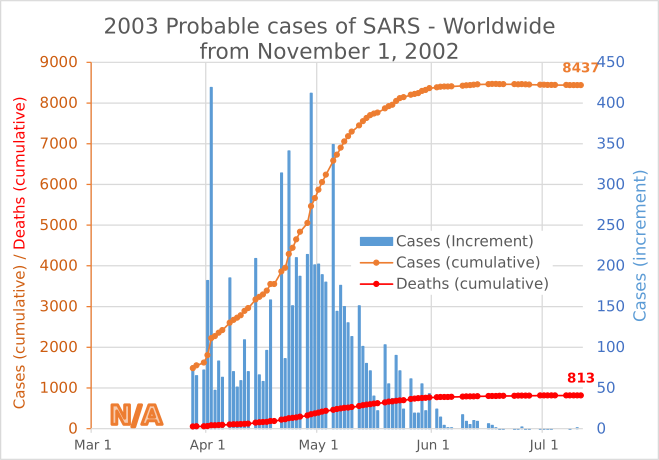
SARS was a relatively rare disease; at the end of the epidemic in June 2003, the incidence was 8,422 cases with a case fatality rate (CFR) of 11%. No cases of SARS-CoV-1 have been reported worldwide since 2004.
In December 2019, a second strain of SARS-CoV was identified: SARS-CoV-2. This strain causes coronavirus disease 2019 (COVID-19), the disease behind the COVID-19 pandemic.
Signs and symptoms
SARS produces flu-like symptoms which may include fever, muscle pain, lethargy, cough, sore throat, and other nonspecific symptoms. SARS often leads to shortness of breath and pneumonia, which may be direct viral pneumonia or secondary bacterial pneumonia.
The average incubation period for SARS is four to six days, although it is rarely as short as one day or as long as 14 days.
Transmission
The primary route of transmission for SARS-CoV is contact of the mucous membranes with respiratory droplets or fomites. As with all respiratory pathogens once presumed to transmit via respiratory droplets, it is highly likely to be carried by the aerosols generated during routine breathing, talking, and even singing. While diarrhea is common in people with SARS, the fecal–oral route is another mode of transmission. The basic reproduction number of SARS-CoV, R0, ranges from 2 to 4 depending on different analyses. Control measures introduced in April 2003 reduced the R to 0.4.
Diagnosis
SARS-CoV may be suspected in a patient who has:
- Any of the symptoms, including a fever of 38 C or higher, and
- Either a history of:
- Contact (sexual or casual) with someone with a diagnosis of SARS within the last 10 days or
- Travel to any of the regions identified by the World Health Organization (WHO) as areas with recent local transmission of SARS.
- Clinical criteria of Sars-CoV diagnosis
- Early illness: equal to or more than 2 of the following: chills, rigors, myalgia, diarrhea, sore throat (self-reported or observed)
- Mild-to-moderate illness: temperature of 38 C plus indications of lower respiratory tract infection (cough, dyspnea)
- Severe illness: ≥1 of radiographic evidence, presence of ARDS, autopsy findings in late patients.
For a case to be considered probable, a chest X-ray must be indicative for atypical pneumonia or acute respiratory distress syndrome.
The WHO has added the category of "laboratory confirmed SARS" which means patients who would otherwise be considered "probable" and have tested positive for SARS based on one of the approved tests (ELISA, immunofluorescence or PCR) but whose chest X-ray findings do not show SARS-CoV infection (e.g. ground glass opacities, patchy consolidations unilateral).
The appearance of SARS-CoV in chest X-rays is not always uniform but generally appears as an abnormality with patchy infiltrates.
Prevention
There is a vaccine for SARS, although in March 2020 immunologist Anthony Fauci said the CDC developed one and placed it in the Strategic National Stockpile. That vaccine is a final product and field-ready as of March 2022. Clinical isolation and vaccination remain the most effective means to prevent the spread of SARS. Other preventive measures include:
- Hand-washing with soap and water, or use of alcohol-based hand sanitizer
- Disinfection of surfaces of fomites to remove viruses
- Avoiding contact with bodily fluids
- Put down toilet lid when flushing
- Using separate washrooms (if possible)
- Washing the personal items of someone with SARS in hot, soapy water (eating utensils, dishes, bedding, etc.)
- Avoiding travel to affected areas
- Wearing masks and gloves
- Keeping people with symptoms home from school
- Simple hygiene measures
- Distancing oneself at least 6 feet if possible to minimize the chances of transmission of the virus
Many public health interventions were made to try to control the spread of the disease, which is mainly spread through respiratory droplets in the air, either inhaled or deposited on surfaces and subsequently transferred to a body's mucous membranes. These interventions included earlier detection of the disease; isolation of people who are infected; droplet and contact precautions; and the use of personal protective equipment (PPE), including masks and isolation gowns. A screening process was also put in place at airports to monitor air travel to and from affected countries.
SARS-CoV is most infectious in severely ill patients, which usually occurs during the second week of illness. This delayed infectious period meant that quarantine was highly effective; people who were isolated before day five of their illness rarely transmitted the disease to others.
As of 2017, the CDC was still working to make federal and local rapid-response guidelines and recommendations in the event of a reappearance of the virus.
Treatment
As SARS is a viral disease, antibiotics do not have direct effect but may be used against bacterial secondary infection. Treatment of SARS is mainly supportive with antipyretics, supplemental oxygen and mechanical ventilation as needed. While ribavirin is commonly used to treat SARS, there seems to have little to no effect on SARS-CoV, and no impact on patient's outcomes. There is currently no proven antiviral therapy. Tested substances, include ribavirin, lopinavir, ritonavir, type I interferon, that have thus far shown no conclusive contribution to the disease's course. Administration of corticosteroids, is recommended by the British Thoracic Society/British Infection Society/Health Protection Agency in patients with severe disease and O2 saturation of
People with SARS-CoV must be isolated, preferably in negative-pressure rooms, with complete barrier nursing precautions taken for any necessary contact with these patients, to limit the chances of medical personnel becoming infected. In certain cases, natural ventilation by opening doors and windows is documented to help decreasing indoor concentration of virus particles.
Some of the more serious damage caused by SARS may be due to the body's own immune system reacting in what is known as cytokine storm.
Vaccine
Vaccines can help the immune system to create enough antibodies and decrease a risk of side effects like arm pain, fever, and headache. According to research papers published in 2005 and 2006, the identification and development of novel vaccines and medicines to treat SARS was a priority for governments and public health agencies around the world. In early 2004, an early clinical trial on volunteers was planned. A major researcher's 2016 request, however, demonstrated that no field-ready SARS vaccine had been completed because likely market-driven priorities had ended funding.
Prognosis
Several consequent reports from China on some recovered SARS patients showed severe long-time sequelae. The most typical diseases include, among other things, pulmonary fibrosis, osteoporosis, and femoral necrosis, which have led in some cases to the complete loss of working ability or even self-care ability of people who have recovered from SARS. As a result of quarantine procedures, some of the post-SARS patients have been diagnosed with post-traumatic stress disorder (PTSD) and major depressive disorder.
Epidemiology
Main article: 2002–2004 SARS outbreak
The epidemic origin of SARS was first reported in Foshan, China, on November 16, 2002. On February 28, 2003, Dr. Carlo Urbani, the WHO physician, formally identified SARS in patient zero in Vietnam French Hospital of Hanoi in Vietnam, died from the virus in Bangkok. His contributions on the epistemological traces of the virus have been highly regarded by the WHO.
No new cases of SARS have been reported since 2004. At the end of the epidemic in June 2003, the reported incidence was 8,422 cases with a case fatality rate (CFR) of 11%. The case fatality rate (CFR) ranges from 0% to 50% depending on the age group of the patient. Patients under 24 were least likely to die (less than 1%); those 65 and older were most likely to die (over 55%).
As with MERS and COVID-19, SARS resulted in significantly more deaths of males than females.
| Country or region | Cases | Deaths | Fatality (%) |
|---|---|---|---|
| China | 5,327 | 349 | 6.6 |
| Hong Kong | 1,755 | 299 | 17.0 |
| Taiwan | 346 | 81 | 23.4 |
| Canada | 251 | 43 | 17.1 |
| Singapore | 238 | 33 | 13.9 |
| Vietnam | 63 | 5 | 7.9 |
| United States | 27 | 0 | 0 |
| Philippines | 14 | 2 | 14.3 |
| Thailand | 9 | 2 | 22.2 |
| Germany | 9 | 0 | 0 |
| Mongolia | 9 | 0 | 0 |
| France | 7 | 1 | 14.3 |
| Australia | 6 | 0 | 0 |
| Malaysia | 5 | 2 | 40.0 |
| Sweden | 5 | 0 | 0 |
| United Kingdom | 4 | 0 | 0 |
| Italy | 4 | 0 | 0 |
| Brazil | 3 | 0 | 0 |
| India | 3 | 0 | 0 |
| South Korea | 3 | 0 | 0 |
| Indonesia | 2 | 0 | 0 |
| South Africa | 1 | 1 | 100.0 |
| Colombia | 1 | 0 | 0 |
| Kuwait | 1 | 0 | 0 |
| Ireland | 1 | 0 | 0 |
| Macao | 1 | 0 | 0 |
| New Zealand | 1 | 0 | 0 |
| Romania | 1 | 0 | 0 |
| Russia | 1 | 0 | 0 |
| Spain | 1 | 0 | 0 |
| Switzerland | 1 | 0 | 0 |
| 2,769 | 454 | 16.4 | |
| Total (29 territories) | 8,096 | 782 | 9.6 |
Outbreak in South China
The SARS epidemic began in the Guangdong province of China in November 2002. The earliest case developed symptoms on 16 November 2002. Despite taking some action to control it, Chinese government officials did not inform the World Health Organization of the outbreak until February 2003. This lack of openness caused delays in efforts to control the epidemic, resulting in criticism of the People's Republic of China from the international community. China officially apologized for early slowness in dealing with the SARS epidemic. In 2003, when the virus broke out in China, a 72 year old with SARS infected multiple people on board an Air China Boeing 737, causing 5 deaths. The viral outbreak was subsequently genetically traced to a colony of cave-dwelling horseshoe bats in Xiyang Yi Ethnic Township, Yunnan.
The outbreak first came to the attention of the international medical community on 27 November 2002, when Canada's Global Public Health Intelligence Network (GPHIN), an electronic warning system that is part of the World Health Organization's Global Outbreak Alert and Response Network (GOARN), picked up reports of a "flu outbreak" in China through Internet media monitoring and analysis and sent them to the WHO. While GPHIN's capability had recently been upgraded to enable Arabic, Chinese, English, French, Russian, and Spanish translation, the system was limited to English or French in presenting this information. Thus, while the first reports of an unusual outbreak were in Chinese, an English report was not generated until 21 January 2003. The first super-spreader was admitted to the Sun Yat-sen Memorial Hospital in Guangzhou on 31 January, which soon spread the disease to nearby hospitals.
In early April 2003, after a prominent physician, Jiang Yanyong, pushed to report the danger to China, there appeared to be a change in official policy when SARS began to receive a much greater prominence in the official media. Some have directly attributed this to the death of an American teacher, James Earl Salisbury, in Hong Kong. It was around this same time that Jiang Yanyong made accusations regarding the undercounting of cases in Beijing military hospitals. After intense pressure, Chinese officials allowed international officials to investigate the situation there. This revealed problems plaguing the aging mainland Chinese healthcare system, including increasing decentralization, red tape, and inadequate communication.
Many healthcare workers in the affected nations risked their lives and died by treating patients, and trying to contain the infection before ways to prevent infection were known.
Spread to other regions
The epidemic reached the public spotlight in February 2003, when an American businessman traveling from China, Johnny Chen, became affected by pneumonia-like symptoms while on a flight to Singapore. The plane stopped in Hanoi, Vietnam, where the patient died in Hanoi French Hospital. Several of the medical staff who treated him soon developed the same disease despite basic hospital procedures. Italian doctor Carlo Urbani identified the threat and communicated it to WHO and the Vietnamese government; he later died from the disease.
The severity of the symptoms and the infection among hospital staff alarmed global health authorities, who were fearful of another emergent pneumonia epidemic. On 12 March 2003, the WHO issued a global alert, followed by a health alert by the United States Centers for Disease Control and Prevention (CDC). Local transmission of SARS took place in Toronto, Ottawa, San Francisco, Ulaanbaatar, Manila, Singapore, Taiwan, Hanoi and Hong Kong whereas within China it spread to Guangdong, Jilin, Hebei, Hubei, Shaanxi, Jiangsu, Shanxi, Tianjin, and Inner Mongolia.
Hong Kong
The disease spread in Hong Kong from Liu Jianlun, a Guangdong doctor who was treating patients at Sun Yat-Sen Memorial Hospital. He arrived in February and stayed on the ninth floor of the Metropole Hotel in Kowloon, infecting 16 of the hotel visitors. Those visitors traveled to Canada, Singapore, Taiwan, and Vietnam, spreading SARS to those locations.
Another larger cluster of cases in Hong Kong centred on the Amoy Gardens housing estate. Its spread is suspected to have been facilitated by defects in its bathroom drainage system that allowed sewer gases including virus particles to vent into the room. Bathroom fans exhausted the gases and wind carried the contagion to adjacent downwind complexes. Concerned citizens in Hong Kong worried that information was not reaching people quickly enough and created a website called sosick.org, which eventually forced the Hong Kong government to provide information related to SARS in a timely manner. The first cohort of affected people were discharged from hospital on 29 March 2003.
Canada
The first case of SARS in Toronto was identified on 23 February 2003. Beginning with an elderly woman, Kwan Sui-Chu, who had returned from a trip to Hong Kong and died on 5 March, the virus eventually infected 257 individuals in the province of Ontario. The trajectory of this outbreak is typically divided into two phases, the first centring around her son Tse Chi Kwai, who infected other patients at the Scarborough Grace Hospital and died on 13 March. The second major wave of cases was clustered around accidental exposure among patients, visitors, and staff within the North York General Hospital. The WHO officially removed Toronto from its list of infected areas by the end of June 2003.
The official response by the Ontario provincial government and Canadian federal government has been widely criticized in the years following the outbreak. Brian Schwartz, vice-chair of Ontario's SARS Scientific Advisory Committee, described public health officials' preparedness and emergency response at the time of the outbreak as "very, very basic and minimal at best". Critics of the response often cite poorly outlined and enforced protocol for protecting healthcare workers and identifying infected patients as a major contributing factor to the continued spread of the virus. The atmosphere of fear and uncertainty surrounding the outbreak resulted in staffing issues in area hospitals when healthcare workers elected to resign rather than risk exposure to SARS.
Identification of virus
In late February 2003, Italian doctor Carlo Urbani was called into The French Hospital of Hanoi to look at Johnny Chen, an American businessman who had fallen ill with what doctors thought was a bad case of influenza. Urbani realized that Chen's ailment was probably a new and highly contagious disease. He immediately notified the WHO. He also persuaded the Vietnamese Health Ministry to begin isolating patients and screening travelers, thus slowing the early pace of the epidemic. He subsequently contracted the disease himself, and died in March 2003.
Malik Peiris and his colleagues became the first to isolate the virus that causes SARS, a novel coronavirus now known as SARS-CoV-1. By June 2003, Peiris, together with his long-time collaborators Leo Poon and Guan Yi, has developed a rapid diagnostic test for SARS-CoV-1 using real-time polymerase chain reaction. The CDC and Canada's National Microbiology Laboratory identified the SARS genome in April 2003. Scientists at Erasmus University in Rotterdam, the Netherlands demonstrated that the SARS coronavirus fulfilled Koch's postulates thereby suggesting it as the causative agent. In the experiments, macaques infected with the virus developed the same symptoms as human SARS patients.
Origin and animal vectors
In late May 2003, a study was conducted using samples of wild animals sold as food in the local market in Guangdong, China. The study found that "SARS-like" coronaviruses could be isolated from masked palm civets (Paguma sp.). Genomic sequencing determined that these animal viruses were very similar to human SARS viruses, however they were phylogenetically distinct, and so the study concluded that it was unclear whether they were the natural reservoir in the wild. Still, more than 10,000 masked palm civets were killed in Guangdong Province since they were a "potential infectious source." The virus was also later found in raccoon dogs (Nyctereuteus sp.), ferret badgers (Melogale spp.), and domestic cats.
In 2005, two studies identified a number of SARS-like coronaviruses in Chinese bats. Phylogenetic analysis of these viruses indicated a high probability that SARS coronavirus originated in bats and spread to humans either directly or through animals held in Chinese markets. The bats did not show any visible signs of disease, but are the likely natural reservoirs of SARS-like coronaviruses. In late 2006, scientists from the Chinese Centre for Disease Control and Prevention of Hong Kong University and the Guangzhou Centre for Disease Control and Prevention established a genetic link between the SARS coronavirus appearing in civets and in the second, 2004 human outbreak, bearing out claims that the disease had jumped across species.
It took 14 years to find the original bat population likely responsible for the SARS pandemic. In December 2017, "after years of searching across China, where the disease first emerged, researchers reported ... that they had found a remote cave in Xiyang Yi Ethnic Township, Yunnan province, which is home to horseshoe bats that carry a strain of a particular virus known as a coronavirus. This strain has all the genetic building blocks of the type that triggered the global outbreak of SARS in 2002." The research was performed by Shi Zhengli, Cui Jie, and co-workers at the Wuhan Institute of Virology, China, and published in PLOS Pathogens. The authors are quoted as stating that "another deadly outbreak of SARS could emerge at any time. The cave where they discovered their strain is only a kilometre from the nearest village." The virus was ephemeral and seasonal in bats. In 2019, a similar virus to SARS caused a cluster of infections in Wuhan, eventually leading to the COVID-19 pandemic.
A small number of cats and dogs tested positive for the virus during the outbreak. However, these animals did not transmit the virus to other animals of the same species or to humans.
Containment
The World Health Organization declared severe acute respiratory syndrome contained on 5 July 2003. The containment was achieved through successful public health measures. In the following months, four SARS cases were reported in China between December 2003 and January 2004.
While SARS-CoV-1 probably persists as a potential zoonotic threat in its original animal reservoir, human-to-human transmission of this virus may be considered eradicated because no human case has been documented since four minor, brief, subsequent outbreaks in 2004.
Laboratory accidents
After containment, there were four laboratory accidents that resulted in infections.
- One postdoctoral student at the National University of Singapore in Singapore in August 2003
- A 44-year-old senior scientist at the National Defense University in Taipei in December 2003. He was confirmed to have the SARS virus after working on a SARS study in Taiwan's only BSL-4 lab. The Taiwan CDC later stated the infection occurred due to laboratory misconduct.
- Two researchers at the Chinese Institute of Virology in Beijing, China around April 2004, who spread it to around six other people. The two researchers contracted it 2 weeks apart.
Study of live SARS specimens requires a biosafety level 3 (BSL-3) facility; some studies of inactivated SARS specimens can be done at biosafety level 2 facilities.
Society and culture
Fear of contracting the virus from consuming infected wild animals resulted in public bans and reduced business for meat markets in southern China and Hong Kong. The WHO declared the end of the pandemic on 24 March 2004.
References
References
- (April 2006). "SARS Revisited". The Virtual Mentor.
- (2007). "Effect of ultraviolet germicidal irradiation on viral aerosols". Environmental Science & Technology.
- (12 September 2022). "Safety and Efficacy of antiviral drugs against covid-19 infection: an updated systemic review". Medical and Pharmaceutical Journal.
- (3 October 2014). "SARS (severe acute respiratory syndrome)". UK [[National Health Service]].
- (17 March 2020). "New coronavirus stable for hours on surfaces". NIH.gov.
- (2019). "Myth busters". [[World Health Organization]].
- (May 2003). "Clinical progression and viral load in a community outbreak of coronavirus-associated SARS pneumonia: a prospective study". Lancet.
- (2003). "Consensus document on the epidemiology of severe acute respiratory syndrome (SARS)". World Health Organization.
- (27 Aug 2021). "Airborne transmission of respiratory viruses". Science.
- (22 October 2019). "SARS {{!}} Home {{!}} Severe Acute Respiratory Syndrome {{!}} SARS-CoV Disease {{!}} CDC".
- (May 2004). "Laboratory diagnosis of SARS". Emerging Infectious Diseases.
- (July 2003). "Chest X-ray imaging of patients with SARS". Chinese Medical Journal.
- (14 February 2017). "Pandemic Preparedness in the Next Administration: Keynote Address by Anthony S. Fauci". YouTube video- see 27 min.
- National Center for Biotechnology Information. (2009). "WHO-recommended handrub formulations". World Health Organization.
- (6 January 2011). "SARS: Prevention". MayoClinic.com.
- (19 October 2017). "SARS (Severe acute respiratory syndrome)".
- (November 2017). "Effectiveness of Masks and Respirators Against Respiratory Infections in Healthcare Workers: A Systematic Review and Meta-Analysis". Clinical Infectious Diseases.
- (19 October 2017). "SARS (severe acute respiratory syndrome)".
- "SARS".
- "Harrison's Internal Medicine, 17th ed.". Parisianou Publications.
- (September 2006). "SARS: systematic review of treatment effects". PLOS Medicine.
- (July 2004). "Hospital management of adults with severe acute respiratory syndrome (SARS) if SARS re-emerges—updated 10 February 2004". The Journal of Infection.
- (5 May 2003). "Vietnam Took Lead In Containing SARS". [[The Washington Post]].
- (December 2005). "Immunopathogenesis of coronavirus infections: implications for SARS". Nature Reviews. Immunology.
- (January 2013). "Development of SARS vaccines and therapeutics is still needed". Future Virology.
- (19 October 2017). "SARS (severe acute respiratory syndrome)".
- (February 2005). "Development and characterization of a severe acute respiratory syndrome-associated coronavirus-neutralizing human monoclonal antibody that provides effective immunoprophylaxis in mice". The Journal of Infectious Diseases.
- (September 2005). "Monoclonal antibodies to SARS-associated coronavirus (SARS-CoV): identification of neutralizing and antibodies reactive to S, N, M and E viral proteins". Journal of Virological Methods.
- (March 2006). "Therapy with a severe acute respiratory syndrome-associated coronavirus-neutralizing human monoclonal antibody reduces disease severity and viral burden in golden Syrian hamsters". The Journal of Infectious Diseases.
- (20 January 2004). "China in SARS vaccine trial". The Scientist Magazine.
- (8 March 2020). "Scientists were close to a coronavirus vaccine years ago. Then the money dried up". [[NBC News]].
- (July 2004). "SARS control and psychological effects of quarantine, Toronto, Canada". Emerging Infectious Diseases.
- (15 July 2009). "(Silence of the Post-SARS Patients)". Southern People Weekly.
- (2003). "SARS and Carlo Urbani". The New England Journal of Medicine.
- (2022). "SARS Fast Facts". A Warner Bros. Discovery Company.
- "WHO commemorates the 20th anniversary of the death of Dr Carlo Urbani". World Health Organization.
- "Severe acute respiratory syndrome (SARS)".
- (November 2003). "SARS: epidemiology". Respirology.
- (2004). "SARS: Down But Still a Threat". National Academies Press (US).
- (21 April 2004). "Summary of probable SARS cases with onset of illness from 1 November 2002 to 31 July 2003". World Health Organization.
- "衛生署針對報載SARS死亡人數有極大差異乙事提出說明".
- (November 2009). "The SARS epidemic in mainland China: bringing together all epidemiological data". Tropical Medicine & International Health.
- (6 April 2003). "WHO targets SARS 'super spreaders'". CNN.
- (2005). "Global Public Health Intelligence Network". Public Health Agency of Canada.
- (February 2004). "Global surveillance, national surveillance, and SARS". Emerging Infectious Diseases.
- (2004). "Twenty-first Century Plague: The Story of SARS". Johns Hopkins University Press.
- (12 July 2007). "China bars U.S. trip for doctor who exposed SARS cover-up". The New York Times.
- (31 August 2004). "The 2004 Ramon Magsaysay Awardee for Public Service". Ramon Magsaysay Foundation.
- (10 April 2003). "SARS death leads to China dispute". CNN.
- Huang, Yanzhong. (2004). "THE SARS EPIDEMIC AND ITS AFTERMATH IN CHINA: A POLITICAL PERSPECTIVE". National Academies Press (US).
- (16 August 2013). "They risked their lives to stop Sars". BBC News.
- (29 March 2003). "Dr. Carlo Urbani of the World Health Organization dies of SARS".
- (27 March 2003). "Inside the hospital where Patient Zero was infected". South China Morning Post.
- "SARS in Hong Kong". Oxford Medical School Gazette.
- "Hong Kong Residents Share SARS Information Online".
- (24 April 2004). "Severe Acute Respiratory Syndrome (SARS) overview". AZO network.
- "Update: Severe Acute Respiratory Syndrome – Toronto, Canada, 2003".
- (2004). "Learning from SARS: Preparing for the Next Disease Outbreak: Workshop Summary".
- "Is Canada ready for MERS? 3 lessons learned from SARS".
- (31 December 2003). "Summary of probable SARS cases with onset of illness from 1 November 2002 to 31 July 2003". [[World Health Organization]] (WHO).
- "Dr Carlo Urbani Health expert who identified the Sars outbreak as an epidemic, and was killed by the virus". The Times.
- (29 March 2003). "Dr. Carlo Urbani of the World Health Organization dies of SARS". WHO.
- (2003). "Coronavirus as a possible cause of severe acute respiratory syndrome". The Lancet.
- (2005). "Pathogenesis of severe acute respiratory syndrome". [[Current Opinion (Elsevier)#Journals.
- (2003). "Up Close and Personal With SARS". [[Science (journal).
- (2003). "Rapid Diagnosis of a Coronavirus Associated with Severe Acute Respiratory Syndrome (SARS)". [[Clinical Chemistry (journal).
- (11 April 2013). "Remembering SARS: A Deadly Puzzle and the Efforts to Solve It". Centers for Disease Control and Prevention.
- (16 April 2006). "Coronavirus never before seen in humans is the cause of SARS". United Nations World Health Organization.
- (May 2003). "Aetiology: Koch's postulates fulfilled for SARS virus". Nature.
- (October 2003). "Isolation and characterization of viruses related to the SARS coronavirus from animals in southern China". Science.
- (September 2005). "Molecular evolution analysis and geographic investigation of severe acute respiratory syndrome coronavirus-like virus in palm civets at an animal market and on farms". J Virol.
- (October 2005). "Bats are natural reservoirs of SARS-like coronaviruses". Science.
- (September 2005). "Severe acute respiratory syndrome coronavirus-like virus in Chinese horseshoe bats". Proceedings of the National Academy of Sciences of the United States of America.
- (23 November 2006). "Scientists prove SARS-civet cat link". China Daily.
- (16 July 2021). "The 'Occam's Razor Argument' Has Not Shifted in Favor of a Lab Leak". Snopes.
- (1 December 2017). "Bat cave solves mystery of deadly SARS virus — and suggests new outbreak could occur". Nature.
- "How China's 'Bat Woman' Hunted Down Viruses from SARS to the New Coronavirus".
- (4 March 2020). "Coronavirus: Italy and Iran close schools and universities – BBC News". Bbc.co.uk.
- "Expert reaction to reports that the (Previously reported) pet dog in Hong Kong has repeatedly tested 'weak positive' for COVID-19 virus | Science Media Centre".
- (September 2020). "Emerging Pandemic Diseases: How We Got to COVID-19". Cell.
- (11 March 2013). "SARS 2013: 10 Years Ago SARS Went Around the World, Where is It Now?".
- (5 July 2003). "SARS outbreak contained worldwide".
- (November 2003). "Recent Singapore SARS case a laboratory accident". The Lancet. Infectious Diseases.
- (17 December 2003). "Taiwanese SARS researcher infected".
- "SARS (Severe Acute Respiratory Syndrome)".
- "SARS escaped Beijing lab twice".
- "SARS {{!}} Guidance {{!}} Lab Biosafety for Handling and Processing Specimens {{!}} CDC".
- (March 2005). "Civet Cats, Fried Grasshoppers, and David Beckham's Pajamas: Unruly Bodies after SARS". American Anthropologist.
This article was imported from Wikipedia and is available under the Creative Commons Attribution-ShareAlike 4.0 License. Content has been adapted to SurfDoc format. Original contributors can be found on the article history page.
Ask Mako anything about SARS — get instant answers, deeper analysis, and related topics.
Research with MakoFree with your Surf account
Create a free account to save articles, ask Mako questions, and organize your research.
Sign up freeThis content may have been generated or modified by AI. CloudSurf Software LLC is not responsible for the accuracy, completeness, or reliability of AI-generated content. Always verify important information from primary sources.
Report