From Surf Wiki (app.surf) — the open knowledge base
San Francisco Giants
Major League Baseball franchise in San Francisco, California, US
Major League Baseball franchise in San Francisco, California, US
| Field | Value | ||||||||||||||||
|---|---|---|---|---|---|---|---|---|---|---|---|---|---|---|---|---|---|
| name | San Francisco Giants | ||||||||||||||||
| established | 1883 | ||||||||||||||||
| misc | Based in San Francisco since | ||||||||||||||||
| logo | San Francisco Giants Logo.svg | ||||||||||||||||
| uniformlogo | San Francisco Giants Cap Insignia.svg | ||||||||||||||||
| current league | National League | ||||||||||||||||
| y1 | 1883 | ||||||||||||||||
| division | West Division | ||||||||||||||||
| y2 | 1969 | ||||||||||||||||
| Uniform | MLB-NLW-SF-Uniforms.png | ||||||||||||||||
| retirednumbers | |||||||||||||||||
| colors | Black, orange, metallic gold, cream | ||||||||||||||||
| y3 | 1958 | ||||||||||||||||
| nicknames | The G-Men | ||||||||||||||||
| ballpark | Oracle Park | ||||||||||||||||
| y4 | 2000 | ||||||||||||||||
| WS | (8) | ||||||||||||||||
| WORLD CHAMPIONS | |||||||||||||||||
| LEAGUE | NL | ||||||||||||||||
| P | (23) | ||||||||||||||||
| PENNANTS | {{hlist | [1888](1888-new-york-giants-season) | [1889](1889-new-york-giants-season) | [1904](1904-new-york-giants-season) | [1905](1905-new-york-giants-season) | [1911](1911-new-york-giants-season) | [1912](1912-new-york-giants-season) | [1913](1913-new-york-giants-season) | [1917](1917-new-york-giants-season) | [1921](1921-new-york-giants-season) | [1922](1922-new-york-giants-season) | [1923](1923-new-york-giants-season) | [1924](1924-new-york-giants-season) | [1933](1933-new-york-giants-mlb-season) | [1936](1936-new-york-giants-mlb-season) | [1937](1937-new-york-giants-mlb-season) | |
| DIV | West | ||||||||||||||||
| DV | (9) | ||||||||||||||||
| Division Champs | {{hlist | [1971](1971-san-francisco-giants-season) | [1987](1987-san-francisco-giants-season) | [1989](1989-san-francisco-giants-season) | [1997](1997-san-francisco-giants-season) | ||||||||||||
| misc5 | **Temple Cup** (1) | ||||||||||||||||
| OTHER DIV CHAMPS | |||||||||||||||||
| WC | (3) | ||||||||||||||||
| Wild Card | |||||||||||||||||
| misc7 | **Pre-modern World Series** (2) | ||||||||||||||||
| OTHER DIV CHAMPS 2 | |||||||||||||||||
| owner | Charles B. Johnson | ||||||||||||||||
| Greg E. Johnson (Chairman) | |||||||||||||||||
| president | Larry Baer | ||||||||||||||||
| manager | Tony Vitello | ||||||||||||||||
| gm | Zack Minasian | ||||||||||||||||
| presbo | Buster Posey | ||||||||||||||||
| website |
- Los Gigantes
- The Orange and Black
- New York Giants (–)
- New York Gothams (–)
- Candlestick Park (–)
- Seals Stadium (–)
- Hilltop Park ()
- Polo Grounds III (–)
- Polo Grounds II (–)
- St. George Cricket Grounds ()
- Oakland Park ()
- Polo Grounds I (–) 1951 | 1954 | 1962 | | | | | }} 2000 | 2003 | 2010 | 2012 | 2021 }} | OTHER DIV CHAMPS 2 = Greg E. Johnson (Chairman)
The San Francisco Giants are an American professional baseball team based in San Francisco. The Giants compete in Major League Baseball (MLB) as a member club of the National League (NL) West Division. Founded in 1883 as the New York Gothams, the team was renamed the New York Giants three years later, eventually relocating from New York City to San Francisco in 1958. The Giants play their home games at Oracle Park in San Francisco.
The franchise is one of the oldest and most successful in professional baseball, with more wins than any other team in the history of major American sports. The team was the first major-league organization based in New York City, most memorably playing home games at several iterations of the Polo Grounds. The Giants have played in the World Series 20 times and have won 23 National League pennants; they held the record for the most NL pennants from 2012 to 2020. Their eight World Series championships are the third-most in the NL, and are the sixth-most of any franchise.
The franchise won 17 pennants and five World Series championships while in New York, led by managers John McGraw, Bill Terry, and Leo Durocher. New York-era star players including Christy Mathewson, Carl Hubbell, Mel Ott, and Willie Mays join 63 other Giants in the Baseball Hall of Fame, the most of any franchise. The Giants' rivalry with the Los Angeles Dodgers, one of the longest-standing and most famed rivalries in American sports, began in New York and continued when both teams relocated to California in 1958.
Despite the efforts of Mays and Barry Bonds, regarded as two of baseball's all-time best players, the Giants endured a 56-year championship drought following the move west, a stretch that included three World Series losses. The drought finally ended in the early 2010s; under manager Bruce Bochy, the Giants embraced sabermetrics and eventually formed a baseball dynasty that saw them win the World Series in , , and , making the Giants the second team in NL history to win three championships in five years.
Through 2025, the franchise's all-time record is (). Since moving to San Francisco in 1958, the Giants have an overall win–loss record of () through the end of 2025.
History
New York Giants
Main article: New York Giants (baseball)
The Giants originated in New York City as the New York Gothams in 1883, and were known as the New York Giants from 1885 until the team relocated to San Francisco after the 1957 season. During most of their 75 seasons in New York City, the Giants played home games at various incarnations of the Polo Grounds in Upper Manhattan.
Numerous inductees of the National Baseball Hall of Fame and Museum played for the New York Giants, including John McGraw, Christy Mathewson, Mel Ott, Bill Terry, Willie Mays, Monte Irvin, and Travis Jackson. During the club's tenure in New York, they produced five of the franchise's eight World Series wins (1905, 1921, 1922, 1933, 1954) and 17 of its 23 National League pennants. Famous moments in the Giants' New York history include the 1922 World Series, in which the Giants swept the Yankees in four games, the 1951 home run by New York Giants outfielder and third baseman Bobby Thomson known as the "Shot Heard 'Round the World", and the defensive feat by Mays during Game 1 of the 1954 World Series known as "the Catch".
The Giants had intense rivalries with their fellow New York teams, the New York Yankees and the Brooklyn Dodgers. The Giants faced the Yankees in six World Series and played the league rival Dodgers multiple times per season. Games between any two of these three teams were known collectively as the Subway Series. The Dodgers-Giants rivalry continues, as both teams moved to California after the 1957 season, with the Dodgers relocating to Los Angeles. The New York Giants of the National Football League (NFL) are named after the team.
San Francisco Giants
Main article: History of the San Francisco Giants
The Giants, along with their rival Los Angeles Dodgers, became the first Major League Baseball teams to play on the West Coast. On April 15, 1958, the Giants played their first game in San Francisco, defeating the former Brooklyn and now Los Angeles Dodgers, 8–0. The Giants played for two seasons at Seals Stadium (from 1931 to 1957, the stadium was the home of the PCL's San Francisco Seals) before moving to Candlestick Park in 1960. The Giants played at Candlestick Park until 1999, before opening Pacific Bell Park (now known as Oracle Park) in 2000, where the Giants currently play.
The Giants struggled to sustain consistent success in their first 50 years in San Francisco. They made nine playoff appearances and won three NL pennants between 1958 and 2009. The Giants lost the 1962 World Series in seven games to the New York Yankees. The Giants were swept in the 1989 World Series by their cross-Bay rival Oakland Athletics, a series best known for the 1989 Loma Prieta earthquake, which caused a 10-day delay between Games 2 and 3. The Giants also lost the 2002 World Series to the Anaheim Angels. One of the team's biggest highlights during this time was the 2001 season, in which outfielder Barry Bonds hit 73 home runs, breaking the record for most home runs in a season. In 2007, Bonds would surpass Hank Aaron's career record of 755 home runs. Bonds finished his career with 762 home runs (586 hit with the Giants), which is still the MLB record.
The Giants won three World Series championships in 2010, 2012, and 2014, giving the team eight total World Series titles, including the five won as the New York Giants when they still played in New York.
Players inducted into the National Baseball Hall of Fame and Museum as members of the San Francisco Giants include CF Willie Mays, 1B Orlando Cepeda, P Juan Marichal, 1B Willie McCovey, and P Gaylord Perry.
Uniforms
1958–1972
Upon moving to San Francisco, the Giants kept the same uniform they wore in New York, save for two changes. The cap logo now had an interlocking "SF" in orange, while the road uniform now featured "San Francisco" in black block letters with orange trim. Neckline, pants and sleeves feature thin black and orange stripes.
1973–1976
Changing to double-knit polyester, the Giants made a few noticeable changes to their uniform. The color scheme on the letters was changed to orange with black trim, and player names were added on the back. The cap logo remained the same.
1977–1982
For the 1977 season, the Giants switched to pullover uniforms. "Giants" on the home uniform was changed from serifed block lettering to cursive script, and the color scheme returned to black with orange trim. The road uniform became orange, with letters in black with white trim. Neck and sleeve stripes are in black, orange and white. Both uniforms received chest numbers. The standard cap was changed to feature an orange brim.
The 1978 season saw the Giants add a black alternate uniform, an inverse of their road orange uniform. All three uniforms now featured the "Giants" script previously exclusive to the home uniform.
1983–1993
Before the 1983 season, the Giants returned to a traditional buttoned uniform designed by Sidjakov Berman & Gomez. This design returned to the classic look they wore early in their San Francisco tenure, but with a few exceptions. The lettering became more rounded (save for the player's name), the neck stripes were removed, and the interlocking "SF" and black piping was added on the road gray uniform. The caps returned to an all-black design.
1994–1999
In 1994, the Giants made a few changes to their uniform. The road uniform reverted to "San Francisco" in front and removed the piping. The front of both uniforms returned to stylized block letters with pointed edges, but kept the rounded numbers. The "SF" on the cap was also changed to reflect the lettering change.
2000–present
Coinciding with the move to Oracle Park (then Pacific Bell Park) in 2000, the Giants unveiled new uniforms which were aesthetically close to the style they originally wore in their early years. On each uniform, numbers returned to a block letter style.
Home
The base of the home uniform was changed to cream. The "Giants" wordmark kept the same stylized block letter treatment but the arrangement was changed from a vertical to a radial arch. Neck stripes also returned with this uniform. Gold drop shadows were also added. A sleeve patch containing the team logo and the words "San Francisco Baseball Club" was also featured.
Road
The gray road uniform returned to the classic "San Francisco" wordmark used in the 1960s, though in 2005 gold drop shadows were also added. This uniform was then tweaked to include black piping in 2012. Two sleeve patches were used. Between 2000 and 2010, the patch featured "SF" in orange letters in front of a baseball, with the full name added within a black circle. In 2011, this was changed to the sleeve patch used on the home uniform. Until 2020, only the road uniform featured player names; since 2021, all Giants uniforms have player names on the back.
Black alternate
In 2001, the Giants added a road and home alternate black uniform. Each uniform shared the same design as their home and road counterparts, with the exception of the road alternate receiving gold drop shadows. The home design was dropped after only one season, and the road version was retired the following year. Both sets were worn with an all-black cap but with the squatchee in black (the primary cap has an orange squatchee) and the "SF" wordmark changed to black with orange trim.
In 2015, the Giants unveiled a new black alternate uniform to be used on select Saturday home games. This set has the interlocking "SF" in front along with orange piping and a new sleeve patch containing the Golden Gate Bridge atop the "Giants" wordmark. Initially, the letters were in black with orange trim, but this was changed to orange with black trim and orange drop shadows. In 2025, the Giants began wearing this uniform on select road games as well.
Orange alternate
Before the 2010 season, the Giants unveiled a new orange alternate uniform to be used on Friday home games. Initially, this design was similar to the home uniform save for a trim change to cream, but in 2011, the sleeve patch was changed to the one previously used on the team's road uniform. In 2014, the orange alternate were tweaked slightly, adding black piping and a new sleeve patch featuring the interlocking "SF" logo, and returning to the script "Giants" lettering previously used in the late 1970s. This design is usually paired with a black cap with orange brim featuring the "SF" logo.
Road alternate
Between 2012 and 2019, the Giants wore a second gray road uniform. This design was similar to the primary roads, but with the "SF" in place of the city name (a nod to the 1983–1993 road uniforms).
City Connect
In 2021, Major League Baseball and Nike introduced the "City Connect" program, with teams wearing special uniforms that reflect the pride and personality of their community. The Giants' version is a white base with orange accents, featuring the stylized "G" in an orange/white gradient. The gradient represents the San Francisco fog that envelopes the Bay Area many months per year. An orange silhouette of the Golden Gate Bridge is printed on the sleeves. The uniform is paired with an all-orange cap with the "SF" in orange with white trim. The uniforms are usually worn on Tuesday home games. In 2025, Nike announced they were making changes the "City Connect" program, the Giants are confirmed to be changing their "City Connect" uniform for the 2025 Major League Baseball season.
On April 8th, 2025, the Giants unveiled their City Connect 2.0s. They are called a "remix". The jerseys are a dark gray/black, and feature "Giants" in a script wordmark outlined in a purple and orange gradient. The sleeves will feature a special glove design which says "San Francisco Giants Est 1958” in a style which is very reminiscent of San Francisco rock music posters from the 1960s. Also on the jersey are the waves which the team is calling "sound waves" which are "pressed like grooves on vinyl" that permeate the jersey. Front jersey numbers are orange, in a whimsical font. The hat highlights the "SF" in the same font, with a gradient bill. The pants are white with gradient piping.
Rivalries
The Giants' rivalry with the Los Angeles Dodgers dates back to when the two teams were based in New York, as does their rivalry with the New York Yankees. The Dodger and Giants rivalry is one of the longest and fiercest rivalries in sports history. Their rivalry with the Oakland Athletics (now Athletics baseball club since leaving Oakland) dates back to when the Giants were in New York and the A's were in Philadelphia and played each other in the 1905, 1911, & 1913 World Series, and was renewed in 1968 when the A's moved from Kansas City and the teams again played each other in the earthquake-interrupted 1989 Bay Bridge World Series. The Giants share a high divisional rivalry with fellow National League West member Arizona Diamondbacks. The 2010 NLCS inaugurated a Giants rivalry with the Philadelphia Phillies after confrontations between Jonathan Sánchez and Chase Utley, and between Ramón Ramírez and Shane Victorino. However, with the Philadelphia Phillies dropping off as one of the premier teams of the National League, this rivalry has died down since 2010 and 2011. Another rivalry that has intensified recently is with the St. Louis Cardinals, whom the team has faced 4 times in the NLCS.
The rivalry between the New York Giants and Chicago Cubs in the early 20th century was once regarded as one of the most heated in baseball, with Merkle's Boner leading to a 1908 season-ending matchup in New York of particular note. That historical rivalry was revisited when the Giants beat the Cubs in the 1989 National League Championship Series, in their tiebreaker game in Chicago at the end of the 1998 season, on June 6, 2012, in a "Turn Back The Century" game in which both teams wore replica 1912 uniforms, and in the 2016 National League Division Series in which the Cubs won.
Los Angeles Dodgers
Main article: Dodgers–Giants rivalry
The Giants-Dodgers rivalry is one of the longest-standing rivalries in team sports.
The Giants-Dodgers feud began in the late 19th century when both clubs were based in New York City, with the Dodgers based in Brooklyn and the Giants playing at the Polo Grounds in upper Manhattan. After the 1957 season, Dodgers owner Walter O'Malley decided to move the team to Los Angeles primarily for financial reasons. Along the way, he managed to convince Giants owner Horace Stoneham (who was considering moving his team to Minnesota) to preserve the rivalry by taking his team to San Francisco as well. Given that the cities of Los Angeles and San Francisco have long been competitors in economic, cultural and political arenas, their new California venues became fertile ground for transplantation of the ancient rivalry. In the wake of the Giants' and Dodgers' leaving New York, a new ballclub was born in 1962 in Queens: The New York Mets. The team's colors (blue and orange) were an homage to the recently departed teams.
Both teams' having endured for over a century while leaping across an entire continent, as well as the rivalry's growth from cross-city to cross-state, have led to its being considered one of the greatest in sports history.
The Giants-Dodgers rivalry has seen both teams enjoy periods of success at the expense of the other. While the Giants have more total wins and head-to-head wins in their overall franchise histories, the Dodgers have more total wins and head-to-head wins since the two teams moved to California in 1958. The Dodgers have also won the National League West 14 more times than the Giants since the start of division play in 1969. Both teams have made the postseason as a National League wild card three times. The Giants won their first world championship in California in 2010, while the Dodgers won their most recent world title in 2025. As of the end of the 2024 baseball season, the Los Angeles Dodgers lead the San Francisco Giants in California World Series triumphs, 7–3, whereas in 20th-century New York, the Giants led the Dodgers in World Series championships, 5–1. Overall, the two franchises are tied 8–8 in total World Series championships.
Oakland Athletics
Main article: Bay Bridge Series
A geographic rivalry with the cross-Bay American League Athletics greatly increased with the 1989 World Series, nicknamed the "Battle of the Bay", which Oakland swept (and which was interrupted by the Loma Prieta earthquake moments before the scheduled start of Game 3 in San Francisco). This dates back to when the Giants and Athletics were rivals, when the Giants were in New York and the Athletics in Philadelphia. They met in the 1905, 1911, and 1913 World Series. In addition, the introduction of interleague play in 1997 has pitted the two teams against each other for usually six games every season since 1997, three in each city (but only four in 2013, two in each city). Before 1997, they played each other only in Cactus League spring training. Their interleague play wins and losses (63–57 in favor of the A's) have been fairly evenly divided despite differences in league, style of play, stadium, payroll, fan base stereotypes, media coverage and World Series records, all of which have heightened the rivalry in recent years. The intensity of the rivalry and how it is understood varies among Bay Area fans. A's fans generally view the Giants as a hated rival, while Giants fans generally view the A's as a friendly rival much lower on the scale. This is most likely due to the A's lack of a historical rival, while the Giants have their heated rivalry with the Dodgers. Some Bay Area fans are fans of both teams. The "split hats" that feature the logos of both teams best embodies the shared fan base. Other Bay Area fans view the competition between the two teams as a "friendly rivalry", with little actual hatred compared to similar ones such as the Subway Series (New York Mets vs. New York Yankees), the Red Line Series (Chicago Cubs vs. Chicago White Sox) and the Freeway Series (Los Angeles Dodgers vs. Los Angeles Angels).
The Giants and A's enjoyed a limited rivalry at the start of the 20th century before the Yankees began to dominate after the acquisition of Babe Ruth in 1920, when the Giants were in New York and the A's were in Philadelphia. The teams were managed by legendary leaders John McGraw and Connie Mack, who were considered not only friendly rivals but the premier managers during that era, especially in view of their longevity (Mack for 50 years, McGraw for 30) since both were majority owners. Each team played in five of the first 15 World Series (tying them with the Red Sox and Cubs for most World Series appearances during that time period). As the New York Giants and the Philadelphia A's, they met in three World Series, with the Giants winning in and the A's in & . After becoming the San Francisco Giants and Oakland A's, they met in a fourth Series in resulting in the A's last world championship (as of 2024).
New York Yankees
Main article: Giants–Yankees rivalry, Subway Series
Though in different leagues, the Giants have also been historical rivals of the Yankees, starting in New York before the Giants moved to the West Coast. Before the institution of interleague play in 1997, the two teams had little opportunity to play each other except in seven World Series: , , , , , and , the Yankees winning last five of the seven Series. The teams have met five times in regular season interleague play: In 2002 at the old Yankee Stadium, in 2007 at Oracle Park (then known as AT&T Park), in 2013, 2016, and 2023 at the current Yankee Stadium, and in 2019 at Oracle Park. The teams' next regular season meetings will occur yearly, with the advent of the balanced schedule format introduced in 2023.
In his July 4, 1939, farewell speech ending with the renowned "Today, I consider myself the luckiest man on the face of the earth", Yankee slugger Lou Gehrig, who played in 2,130 consecutive games, declared that the Giants were a team he "would give his right arm to beat, and vice versa".
Baseball Hall of Famers
As of 2025, the National Baseball Hall of Fame and Museum has inducted 67 representatives of the Giants (56 players and 11 managers) into the Hall of Fame, more than any other team in the history of baseball.


| ColorA# = 000000 | ColorB# = FFFFFF | ColorC# = FD5A1E | ColorD# = 000000 | List 1.1 = Dave Bancroft Jake Beckley Roger Bresnahan * Dan Brouthers Jesse Burkett Roger Connor * George Davis * Leo Durocher | List 1.2 = Buck Ewing * Frankie Frisch Burleigh Grimes Gabby Hartnett Rogers Hornsby Waite Hoyt Carl Hubbell * Monte Irvin Travis Jackson * | List 1.3 = Tim Keefe * Willie Keeler George Kelly * King Kelly Tony Lazzeri Freddie Lindstrom * Ernie Lombardi Rube Marquard * Christy Mathewson * | List 1.4 = Joe McGinnity * John McGraw * Joe Medwick Johnny Mize Hank O'Day Jim O'Rourke * Mel Ott * Edd Roush Amos Rusie * | List 1.5 = Ray Schalk Red Schoendienst Bill Terry * John Montgomery Ward * Mickey Welch * Hoyt Wilhelm Hack Wilson Ross Youngs * | List 2.1 = Carlos Beltrán Steve Carlton Gary Carter
| List 2.2 = Orlando Cepeda * Goose Gossage Randy Johnson | List 2.3 = Jeff Kent * Juan Marichal * Willie Mays *
| List 2.4 = Willie McCovey * Joe Morgan Gaylord Perry * | List 2.5 = Frank Robinson Duke Snider Warren Spahn | List 3.1 = | List 3.2 = | List 3.3 = | List 3.4 = | List 3.5 = | List 4.1 = | List 4.2 = | List 4.3 = | List 4.4 = | List 4.5 = |}}
Ford C. Frick Award recipients
| ColorA# = 000000 | ColorB# = FFFFFF | ColorC# = FD5A1E | ColorD# = 000000 | Names in bold received the award based primarily on their work as Giants broadcasters. | Russ Hodges Al Michaels Lindsey Nelson | | | |}}
Other
The following inducted members of the Hall of Fame played or managed for the Giants, but either played for the Giants and were inducted as a manager having never managed the Giants, or managed the Giants and were inducted as a player having never played for the Giants:
- Cap Anson – inducted as player, managed Giants in 1898.
- Hughie Jennings – inducted as player, managed Giants from 1924 to 1925.
- Bill McKechnie – inducted as manager, played for Giants in 1916.
- Frank Robinson – inducted as player, managed Giants from 1981 to 1984.
- Casey Stengel – inducted as manager, played for Giants from 1921 to 1923.
Broadcasters Russ Hodges, Lon Simmons, and Jon Miller are permanently honored in the Hall's "Scribes & Mikemen" exhibit as a result of winning the Ford C. Frick Award in 1980, 2004, and 2010 respectively. As with all Frick Award winners, none are officially recognized as an inducted member of the Hall of Fame.
Bay Area Sports Hall of Famers
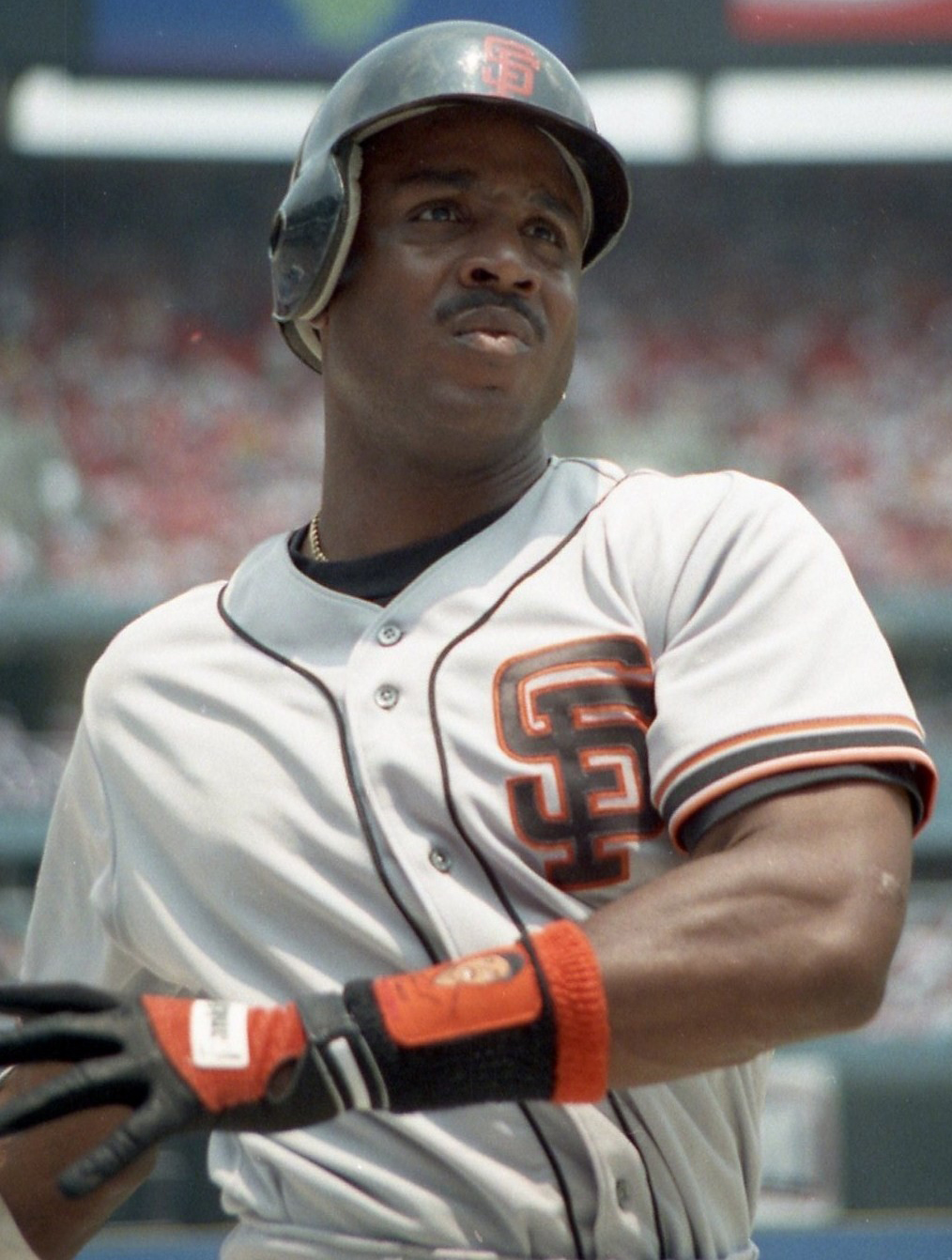


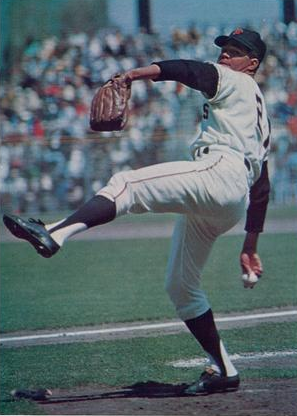

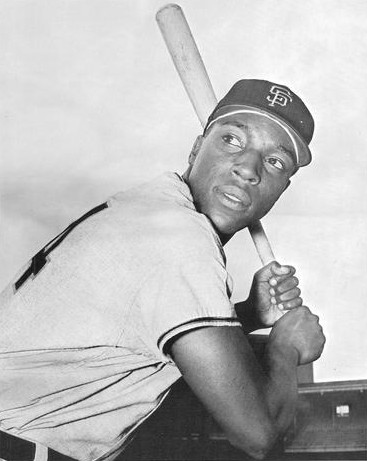
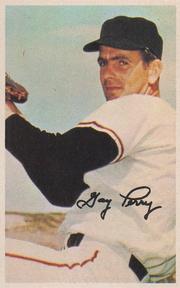
Main article: Bay Area Sports Hall of Fame
| San Francisco Giants}};" | No. | San Francisco Giants}};" | Name | San Francisco Giants}};" | Position | San Francisco Giants}};" | Tenure | San Francisco Giants}};" | Notes |
|---|---|---|---|---|---|---|---|---|---|
| — | Bob Lurie | Owner | 1976–1993 | Born in San Francisco | |||||
| — | Peter Magowan | Owner/President | 1993–2008 | Attended Stanford University | |||||
| 1, 18 | Bill Rigney | IF | |||||||
| Manager | 1946–1953 | ||||||||
| 1956–1960, 1976 | Born and raised in Alameda | ||||||||
| 2 | Dick Bartell | SS | 1935–1938 | ||||||
| 1941–1943, 1946 | Grew up in Alameda | ||||||||
| 4 | Ernie Lombardi | C | 1943–1947 | Elected mainly on his performance with Cincinnati Reds, grew up in Oakland | |||||
| 6 | Tony Lazzeri | 2B | 1939 | Elected mainly on his performance with New York Yankees, born and raised in San Francisco | |||||
| 8 | Joe Morgan | 2B | 1981–1982 | Elected mainly on his performance with Cincinnati Reds, raised in Oakland | |||||
| 9, 10, 60 | Matt Williams | 3B | 1987–1996 | ||||||
| 12 | Dusty Baker | OF | |||||||
| Manager | 1984 | ||||||||
| 1993–2002 | |||||||||
| 14 | Vida Blue | P | 1978–1981 | ||||||
| 1985–1986 | Elected mainly on his performance with Oakland A's | ||||||||
| 15 | Bruce Bochy | Manager | 2007–2019 | Managed 2010, 2012, 2014 World Series winners | |||||
| 16 | Lefty O'Doul | LF | 1928 | ||||||
| 1933–1934 | Born in San Francisco | ||||||||
| 18, 43 | Matt Cain | P | 2005–2017 | Pitched a perfect game in 2012 | |||||
| 19, 33 | Dave Righetti | P | |||||||
| Coach | 1991–1993 | ||||||||
| 2000–2017 | Born and raised in San Jose | ||||||||
| 20 | Frank Robinson | Manager | 1981–1984 | Elected mainly on his performance with Cincinnati Reds and Baltimore Orioles | |||||
| 21 | Jeff Kent | 2B | 1997–2002 | Attended UC Berkeley | |||||
| 22 | Will Clark | 1B | 1986–1993 | ||||||
| 24 | Willie Mays | CF | 1951–1952 | ||||||
| 1954–1972 | |||||||||
| 25 | Barry Bonds | LF | 1993–2007 | Grew up in San Carlos | |||||
| 27 | Juan Marichal | P | 1960–1973 | ||||||
| 30 | Orlando Cepeda | 1B | 1958–1966 | ||||||
| 36 | Gaylord Perry | P | 1962–1971 | ||||||
| 43 | Dave Dravecky | P | 1987–1989 | ||||||
| 44 | Willie McCovey | 1B | 1959–1973 | ||||||
| 1977–1980 |
Wall of Famers
The Giants Wall of Fame recognizes retired players whose records stand highest among their teammates on the basis of longevity and achievements.
Those honored have played a minimum of nine seasons for the San Francisco Giants, five seasons with at least one All-Star selection as a Giant, or won three World Series championships as a Giant.
| Year | **Bold** |
|---|---|
| Year inducted | |
| Member of the Baseball Hall of Fame | |
| Member of the Baseball Hall of Fame as a Giant |
| San Francisco Giants}};" | Year | San Francisco Giants}};" | No. | San Francisco Giants}};" | Name | San Francisco Giants}};" | Position(s) | San Francisco Giants}};" | Tenure |
|---|---|---|---|---|---|---|---|---|---|
| 2008 | 23, 49 | Felipe Alou | OF/1B | ||||||
| Manager | 1958–1963 | ||||||||
| 2003–2006 | |||||||||
| 46 | Gary Lavelle | P | 1974–1984 | ||||||
| 33 | Jim Barr | P | 1971–1978 | ||||||
| 1982–1983 | |||||||||
| 10 | Johnnie LeMaster | SS | 1975–1985 | ||||||
| 14, 24 | **Willie Mays** | CF | 1951–1952, 1954–1972 | ||||||
| 47 | Rod Beck | P | 1991–1997 | ||||||
| 00, 20, 26 | Jeffrey Leonard | LF | 1981–1988 | ||||||
| 14 | Vida Blue | P | 1978–1981 | ||||||
| 1985–1986 | |||||||||
| 8, 17, 19 | Kirt Manwaring | C | 1987–1996 | ||||||
| 44 | **Willie McCovey** | 1B | 1959–1973 | ||||||
| 1977–1980 | |||||||||
| 42 | Bobby Bolin | P | 1961–1969 | ||||||
| 27 | **Juan Marichal** | P | 1960–1973 | ||||||
| 49 | Jeff Brantley | P | 1988–1993 | ||||||
| 15, 22 | Jack Clark | RF/1B | 1975–1984 | ||||||
| 29, 40 | Mike McCormick | P | 1956–1962 | ||||||
| 1967–1970 | |||||||||
| 15, 19 | Bob Brenly | C | 1981–1988 | ||||||
| 1989 | |||||||||
| 32, 33, 40, 51 | John Burkett | P | 1987 | ||||||
| 1990–1994 | |||||||||
| 23, 37 | Stu Miller | P | 1957–1962 | ||||||
| 25 | Bobby Bonds | RF | 1968–1974 | ||||||
| 30 | **Orlando Cepeda** | 1B | 1958–1966 | ||||||
| 17, 39 | Randy Moffitt | P | 1972–1981 | ||||||
| 38, 41 | Greg Minton | P | 1975–1987 | ||||||
| 7, 9 | Kevin Mitchell | LF | 1987–1991 | ||||||
| 22 | Will Clark | 1B | 1986–1993 | ||||||
| 34, 39 | Mike Krukow | P | 1983–1989 | ||||||
| 12 | Jim Davenport | 3B | |||||||
| Manager | 1958–1970 | ||||||||
| 1985 | |||||||||
| 26, 50 | John Montefusco | P | 1974–1980 | ||||||
| 30, 33 | Chili Davis | OF | 1981–1987 | ||||||
| 9, 10, 60 | Matt Williams | 3B | 1987–1996 | ||||||
| 31 | Robb Nen | P | 1998–2002 | ||||||
| 2 | Dick Dietz | C | 1966–1971 | ||||||
| 22, 28, 35, 36 | **Gaylord Perry** | P | 1962–1971 | ||||||
| 41 | Darrell Evans | 3B/1B | 1976–1983 | ||||||
| 16 | Jim Ray Hart | 3B/LF | 1963–1973 | ||||||
| 48 | Rick Reuschel | P | 1987–1991 | ||||||
| 6 | J. T. Snow | 1B | 1997–2005 | ||||||
| 2008 | |||||||||
| 23, 26, 29 | Tito Fuentes | 2B | 1965–1974 | ||||||
| 42, 45, 46 | Kirk Rueter | P | 1996–2005 | ||||||
| 31, 43, 50, 52, 54 | Scott Garrelts | P | 1982–1991 | ||||||
| 6 | Robby Thompson | 2B | 1986–1996 | ||||||
| 5, 51 | Tom Haller | C | 1961–1967 | ||||||
| 2, 35 | Chris Speier | SS | 1971–1977 | ||||||
| 1987–1989 | |||||||||
| 7, 14, 17 | Atlee Hammaker | P | 1982–1985 | ||||||
| 1987–1990 | |||||||||
| 2009 | 21 | **Jeff Kent** | 2B | 1997–2002 | |||||
| 2010 | 33, 35, 57 | Rich Aurilia | SS | 1995–2003 | |||||
| 2007–2009 | |||||||||
| 36, 55 | Shawn Estes | P | 1995–2001 | ||||||
| 2011 | 7, 56 | Marvin Benard | OF | 1995–2003 | |||||
| 29 | Jason Schmidt | P | 2001–2006 | ||||||
| 2017 | 25 | Barry Bonds | LF | 1993–2007 | |||||
| 2018 | 18, 43 | Matt Cain | P | 2005–2017 | |||||
| 33, 38 | Brian Wilson | P | 2006–2012 | ||||||
| 14, 32, 51 | Ryan Vogelsong | P | 2000–2001 | ||||||
| 2011–2015 | |||||||||
| 2019 | — | Peter Magowan | Managing General Partner | 1993–2008 | |||||
| 2021 | — | Bob Lurie | Owner | 1976–1993 | |||||
| 2022 | 8 | Hunter Pence | RF | 2012–2018 | |||||
| 2020 | |||||||||
| 2023 | — | Mike Murphy | Clubhouse Manager | 1958–2023 | |||||
| 2024 | 41 | Jeremy Affeldt | P | 2009–2015 | |||||
| 46 | Santiago Casilla | P | 2010–2016 | ||||||
| 49 | Javier López | P | 2010–2016 | ||||||
| 54 | Sergio Romo | P | 2008–2016 |
Retired numbers
The Giants have retired 11 numbers in the history of the franchise, most recently Will Clark's number 22 in 2022.
- Retired throughout the major leagues; Robinson actually was traded to the Giants, but retired before playing a game for them.
Of the Giants whose numbers have been retired, all but Bonds and Clark have been elected to the National Baseball Hall of Fame. In 1944, Carl Hubbell (#11) became the first National Leaguer to have his number retired by his team. Bill Terry (#3), Mel Ott (#4), and Hubbell played or managed their entire careers for the New York Giants. Willie Mays (#24) began his career in New York, moving with the Giants to San Francisco in 1958; he did not play in most of 1952 and all of 1953 due to his service in the Korean War. Mathewson and McGraw are honored by the Giants, but played in an era before uniform numbers became standard in baseball.
The Giants had originally scheduled to retire Will Clark's #22 on July 11, 2020, but the ceremony was postponed until July 30, 2022, due to the COVID-19 pandemic.
The Giants announced that they will retire Jeff Kent's #21 on August 29, 2026 after his election into the National Baseball Hall of Fame.
Also honored
John McGraw (3B, 1902–06; manager, 1902–32) and Christy Mathewson (P, 1900–16), who were members of the New York Giants before the introduction of uniform numbers, have the letters "NY" displayed in place of a number.
Broadcasters Lon Simmons (1958–73, 1976–78, 1996–2002 & 2006), Russ Hodges (1949–70), and Jon Miller (1997–current) are each represented by an old-style radio microphone displayed in place of a number.
The Giants present the Willie Mac Award annually to the player that best exemplifies the spirit and leadership shown by Willie McCovey throughout his career.
Team captains
The Giants have had ten official recorded captains over the years:
- Jack Doyle, 1902
- Dan McGann, 1903–1907
- Larry Doyle, 1908–16
- Gus Mancuso, 1937–38
- Mel Ott, 1939–47
- Alvin Dark, 1950–56
- Willie Mays, 1961–72
- Willie McCovey, 1977–80
- Darrell Evans, 1980–83
- Jack Clark, 1984 During the 2021 and 2022 season, player Brandon Belt gave himself the title of self-proclaimed captain, but this was not considered an official capacity.
Season records
| *Total Games* | *Wins* | *Losses* | *Win %* | All-time regular season record | All-time post-season record | All-time regular and post-season record |
|---|---|---|---|---|---|---|
| New York Gothams/Giants regular season record (1883–1957) | 10,965 | 6,067 | 4,898 | .553 | ||
| San Francisco Giants regular season record (1958–present) | 10,478 | 5,415 | 5,063 | .517 | ||
| **21,443** | **11,482** | **9,961** | **.535** | |||
| 193 | 100 | 93 | .518 | |||
| **21,636** | **11,582** | **10,054** | **.535** |
Note: These statistics are current as of end of 2023 season.
Home stadiums
New York
- Polo Grounds I (–)
- Oakland Park ()
- St. George Cricket Grounds ()
- Polo Grounds II (–)
- Polo Grounds III (–)
- Hilltop Park ( due to 1911 fire)
San Francisco
- Seals Stadium (– after moved to San Francisco)
- Candlestick Park (–)
- Oracle Park (–present), known as Pacific (Pac) Bell Park 2000-2003, SBC Park 2004-2005, AT&T Park 2006-2019, and since 2019 with its current name
Roster
Minor league affiliations
Main article: List of San Francisco Giants minor league affiliates
The San Francisco Giants farm system consists of seven minor league affiliates.
| San Francisco Giants | border=2}}" | Class | San Francisco Giants | border=2}}" | Team | San Francisco Giants | border=2}}" | League | San Francisco Giants | border=2}}" | Location | San Francisco Giants | border=2}}" | Ballpark | San Francisco Giants | border=2}}" | Affiliated | Sacramento River Cats | Richmond Flying Squirrels | Eugene Emeralds | San Jose Giants | ACL Giants | DSL Giants Black | DSL Giants Orange |
|---|---|---|---|---|---|---|---|---|---|---|---|---|---|---|---|---|---|---|---|---|---|---|---|---|
| Triple-A | Pacific Coast League | West Sacramento, California | Sutter Health Park | 2015 | ||||||||||||||||||||
| Double-A | Eastern League | Richmond, Virginia | CarMax Park | 2010 | ||||||||||||||||||||
| High-A | Northwest League | Eugene, Oregon | PK Park | 2021 | ||||||||||||||||||||
| Single-A | California League | San Jose, California | Excite Ballpark | 1988 | ||||||||||||||||||||
| Rookie | Arizona Complex League | Scottsdale, Arizona | Scottsdale Stadium | 2024 | ||||||||||||||||||||
| Dominican Summer League | Boca Chica, Santo Domingo | Rawling Foundation Complex | 2021 |
Radio and television
Giants' television telecasts are on NBC Sports Bay Area (cable) with select games simulcasted on KNTV (broadcast). KNTV's broadcast contract with the Giants began in 2008, one year after the team and KTVU mutually ended a relationship that dated to 1961. Jon Miller regularly called the action on KNTV, which used to be exclusive to that channel up until 2021, while the announcing team for NBC Sports Bay Area (NBCSBA) telecasts is Duane Kuiper and Mike Krukow, affectionately known as "Kruk and Kuip" (pronounced "Kruke" and "Kype"). During the 2016 season, the Giants had an average 4.71 rating and 117,000 viewers on primetime TV broadcasts. Since the 2022 season, as Krukow is unable to travel with the team due to his inclusion body myositis, the pair only work home games and select road games, which the road games are done via "SplitKast" where Kuiper would be at the away ballpark and Krukow will be at the NBC Sports Bay Area studio in San Francisco. Shawn Estes, Javier López, and Hunter Pence serve as an alternate analysts for all other Giants road games with either Kuiper or Flemming.
The Giants' flagship radio station is KNBR (680 AM). KNBR's owner, Cumulus Media, is a limited partner in San Francisco Baseball Associates LP, the owner of the team. Jon Miller and Dave Flemming are the regular play-by-play announcers. Joe Ritzo and F.P. Santangelo serves as a backup play by play when Jon is absent and Dave is on TV. In addition to KNBR, the Giants can be heard throughout Northern California and parts of Nevada, Oregon, and Hawaii on the Giants Radio Network. Erwin Higueros and Tito Fuentes handle Spanish-language radio broadcasts on KXZM (93.7 FM).
Fight song and other music
First used for Giants radio broadcasts on KSFO, the team's fight song "Bye, Bye Baby!" is currently used following any Giants home run. The song is played in the stadium, and an instrumental version is played on telecasts when the inning in which the home run was hit concludes. The title and chorus "Bye bye baby!" coming from famed former Giants broadcaster Russ Hodges, which was his home run call.
Following a Giants home win, Tony Bennett's "I Left My Heart in San Francisco" is played in Oracle Park in celebration.
References
Sources
References
- "San Francisco Giants Uniforms 1958 - Present". [[MLB Advanced Media]].
- Newman, Mark. (October 9, 2014). "Everybody at the World Series could find themselves wearing the same colors". [[MLB Advanced Media]].
- Clair, Michael. (March 30, 2020). "One weird fact you may not know for every team". [[MLB Advanced Media]].
- "Giants Staff Directory". [[MLB Advanced Media]].
- (October 28, 2012). "Low-key ownership style suits San Francisco Giants' Johnson". Crains Detroit Business.
- (2014). "Games Won by Teams Records". baseball-almanac.com.
- "Teams with the most World Series titles". MLB.com.
- (June 19, 2012). "Giants Hall of Famers". Mlb.mlb.com.
- Woolsey, Matt. (April 28, 2009). "In Depth: Baseball's Most Intense Rivalries". Forbes.
- "ESPN's Hall of 100".
- Rose, Adam. (November 1, 2010). "Giants World Series Champions 2010: San Francisco Tops Texas Rangers In World Series Game 5". HuffPost.
- Keh, Andrew. (October 29, 2012). "With a Sweep, Giants Are Champions Again". [[The New York Times]].
- (October 29, 2014). "Giants become 2nd NL team to win 3 World Series in 5 years".
- "San Francisco Giants Team History & Encyclopedia". Sports Reference.
- (April 15, 2020). "Giants and Dodgers played first West Coast MLB game in 1958".
- "Los Angeles Dodgers vs San Francisco Giants Box Score: April 15, 1958".
- (September 2, 2021). "Oakland‑San Francisco World Series game postponed because of earthquake".
- (October 8, 2001). "The record hits 73 / Bonds goes deep in season finale".
- (August 7, 2007). "Bonds moves into eternity, assumes MLB home run record". Associated Press.
- [https://www.nytimes.com/1985/01/30/sports/scouting-high-fashion.html Durso, Joseph. "Scouting: High Fashion," ''The New York Times'', Wednesday, January 30, 1985.] Retrieved October 25, 2023.
- ''A Cunning Kind of Play: The Cubs–Giants Rivalry, 1876–1932'' by Warren N. Wilbert
- "Giants, Cubs commemorate 1912". Sanfrancisco.giants.mlb.com.
- Murphy, Robert. (2009). "After many a summer: the passing of the Giants and Dodgers and a golden age in New York baseball". Sterling.
- Sullivan, Neil J.. (1987). "The Dodgers move west: the transfer of the Brooklyn baseball franchise to Los Angeles". Oxford University Press.
- (January 3, 2000). "The 10 greatest rivalries". ESPN.
- Caple, Jim. (September 16, 2002). "Giants-Dodgers best rivalry in baseball". ESPN.
- Beard, Donald. (March 30, 2005). "Giants-Dodgers Covers a Lot of Ground". The Washington Post.
- "Head-to-head record for Oakland Athletics against the listed opponents from 1997 to 2014". Sports Reference LLC.
- Stout, Glenn. (2002). "Yankees Century: 100 Years of New York Yankees Baseball". [[Houghton Mifflin]].
- Neft, David. (2006). "The Sports Encyclopedia: Baseball 2006". [[St. Martin's Press]].
- Wynne, Brian. (1984). "The Book of Sports Trophies". Cornwall Books.
- "Lou Gehrig's Farewell Speech". LouGehrig.com.
- "Wall of Fame - Oracle Park".
- "Oracle Park Attractions {{!}} The Wall of Fame {{!}} San Francisco Giants".
- Ott, Tim. (June 18, 2003). "Gehrig's No. 4 was first retired number". MLB.
- (August 12, 2019). "Giants to retire Will Clark's No. 22 next year".
- (January 16, 2026). "Giants to retire Kent's No. 21 during HOF summer celebration".
- (September 15, 2021). "The history of Giants captains before Belt's jersey joke". NBC.
- (December 14, 1910). "Dan McGann A Suicide – Giants' Former Captain Shoots Him- self in a Hotel at Louisville". [[The New York Times]].
- (July 10, 1906). "Giants New Captain May Be Joe Kelley – Bowerman or Browne to be Traded for Cincinnatian – Champions to be Shaken Up – President Brush In St. Louis Trying, It Is Said, to Secure Grady and Shay". [[The New York Times]].
- (September 10, 2021). "Hilarious reason why Captain Belt wore 'C' on Giants jersey". NBC.
- (April 8, 2022). "SF Giants 'captain' Belt makes unforgettable entrance to Oracle Park on Opening Day".
- "Giants Postseason Results". [[Major League Baseball]].
- "San Francisco Giants Minor League Affiliates". Sports Reference.
- Kroner, Steve. (November 2, 2007). "Giants are moving to KNTV". San Francisco Chronicle.
- [https://www.forbes.com/sites/maurybrown/2016/09/28/here-are-the-2016-mlb-prime-time-television-ratings-for-each-team/2/ Here Are The 2016 MLB Prime Time Television Ratings For Each Team] {{Webarchive. link. (January 2, 2021 - Maury Brown, Forbes SportsMoney, September 28, 2016)
- Strauss, Ben. (April 23, 2022). "Some MLB broadcasters still aren't back on the road. Viewers notice.". Washington Post.
- Higgins, Sami. (March 24, 2022). "SF Giants News: Kruk & Kuip set to start their 31st season in the booth".
- Cumulus Media, Inc. (December 31, 2012). "Notes to consolidated financial statements". ''Annual report to the Securities and Exchange Commission on Form 10-K''. p. F-14.
- Guardado, Maria. (January 7, 2022). "How 'Bye Bye Baby' became a Giant hit".
- Kroner, Steve. (September 27, 2021). "'Bye Bye Baby' still providing soundtrack for Giants 6 decades later".
This article was imported from Wikipedia and is available under the Creative Commons Attribution-ShareAlike 4.0 License. Content has been adapted to SurfDoc format. Original contributors can be found on the article history page.
Ask Mako anything about San Francisco Giants — get instant answers, deeper analysis, and related topics.
Research with MakoFree with your Surf account
Create a free account to save articles, ask Mako questions, and organize your research.
Sign up freeThis content may have been generated or modified by AI. CloudSurf Software LLC is not responsible for the accuracy, completeness, or reliability of AI-generated content. Always verify important information from primary sources.
Report