From Surf Wiki (app.surf) — the open knowledge base
San Francisco Fire Department Auxiliary Water Supply System
none

none
The Auxiliary Water Supply System (AWSS, though often referred to on manhole covers and hydrants as HPFS for High Pressure Fire System) is a high pressure water supply network built for the city of San Francisco in response to the failure of the existing emergency water system during the 1906 earthquake. Most damages to the city from the earthquake were caused not by the seismic event but by the fires that ensued, destroying 80% of the city's property value at the time. The improved water system was originally proposed by San Francisco Fire Department chief engineer Dennis T. Sullivan in 1903, with construction beginning in 1909 and finishing in 1913. The system comprises a collection of water reservoirs, pump stations, cisterns, suction connections and fireboats. While the system can use fresh or salt water, it is preferential not to use salt water, as it commonly causes galvanic corrosion in fire equipment.

The large, white oversized hydrants that are supplied by the AWSS/HPFS, of which there are 1,889, are visible throughout the city. The hydrants have painted tops that are color-coded as to their zone:
- Black-topped hydrants are in the West of Twin Peaks zone and are fed by the Twin Peaks Reservoir.
- Red-topped hydrants are in the upper zone and are fed by the Ashbury Street tank.
- Blue-topped hydrants are in the lower zone and are fed by the Jones Street tank.
Upper zone
Reservoirs
Twin Peaks Reservoir

The Twin Peaks Reservoir is the backbone of the AWSS system and is located at the top of San Francisco's Twin Peaks hilltop. It is made up of a 10.5 e6U.S.gal storage reservoir made out of 6 in reinforced-concrete slabs. Two 750 USgal/min centrifugal pumps deliver fresh water from the city's domestic water system. For safety, the reservoir is broken up into two tanks, and each tank can be emptied separately so that only half of the reservoir is lost in case of a pipe breakage. The tank is set at 758 ft.
Ashbury tank
The Ashbury tank is directly connected to the Twin Peaks reservoir and has a total capacity of 500000 USgal. The tank is set at 494 ft and, when combined with the Jones Street tank, can provide hydrants with 214 psi of pressure. It is located at 1234 Clayton Street, in the city's Ashbury Heights neighborhood.
Jones Street tank
The Jones Street tank is directly connected to the Ashbury tank and has a total capacity of 750000 USgal. The tank is set at 369 ft, providing hydrants with 160 psi of pressure. It is located at 1239 Jones Street in the city's Nob Hill neighborhood.
Lower zone
Pump stations
.JPG)
There are two emergency pumping stations present within the AWSS:
- Pumping Station No. 1: Basement of San Francisco Fire Department Headquarters, 698 Second Street at Townsend St.
- Pumping Station No. 2: Van Ness Avenue and San Francisco Bicycle Route 2 in Fort Mason.
Both stations are capable of pumping 10000 USgal/min of salt water at a pressure of 300 psi with on-site generators. Pumping Station No. 2 is listed on the National Register of Historic Places.
Fireboats
To supplement any failure of the pumping stations or reservoirs, the city’s two fireboats can be utilized to deliver salt water into the system. They can also deliver water by hose line to areas near the waterfront.
- Phoenix: 9600 USgal/min at 150 psi
- St. Francis: 18000 USgal/min at 150 psi
Cisterns
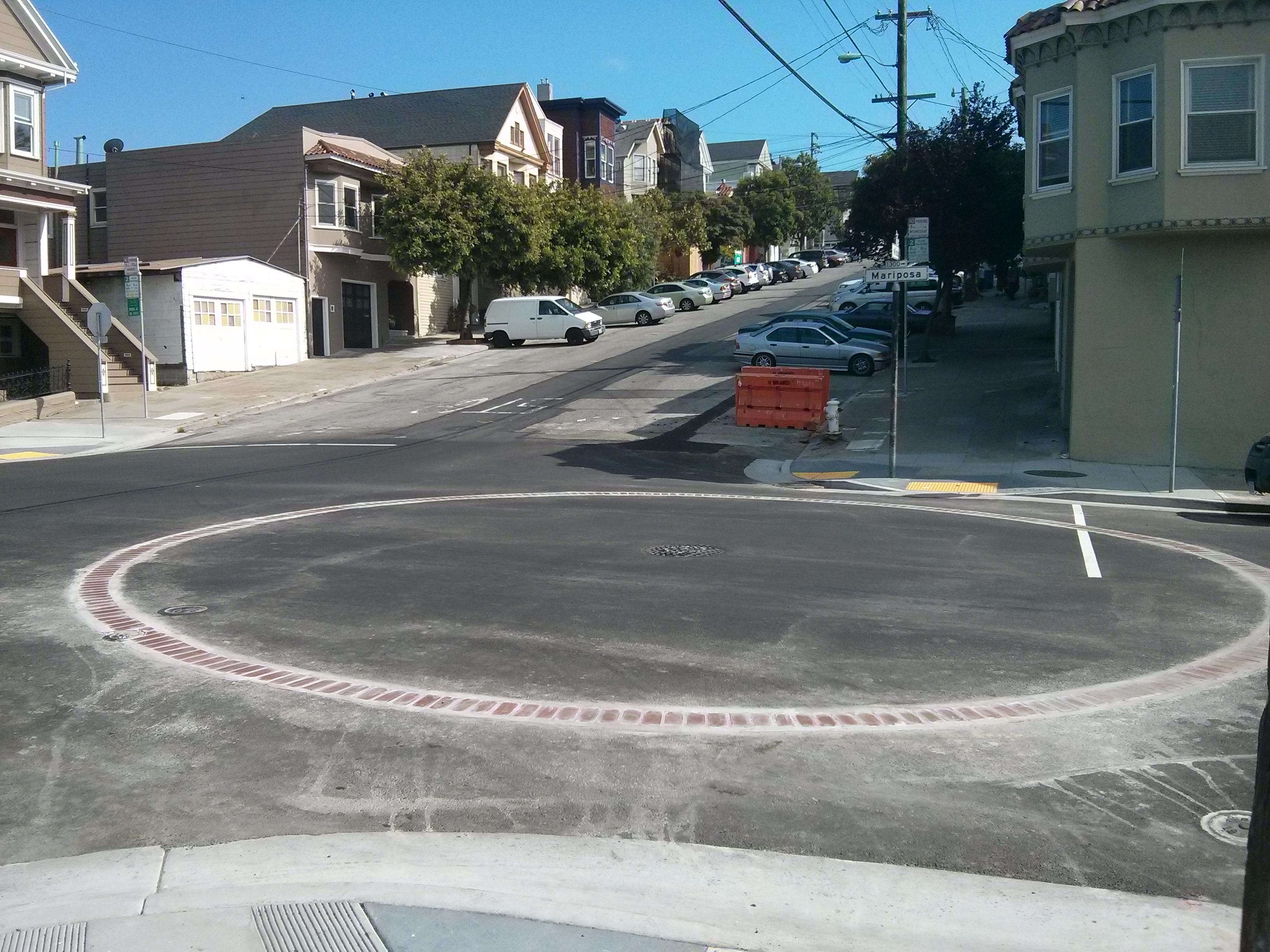
As a final measure to counter a failure of the AWSS piping, the city maintains a network of 177 independent underground water cisterns. Sizes vary from 75000 to with a total storage capacity of over 11 e6U.S.gal of water. These cisterns are easily spotted at street level with manholes labeled CISTERN S.F.F.D surrounded by red brick circles or rectangles.
References
References
- "San Francisco Fire Dept. Auxiliary Water Supply System". Museum of the City of San Francisco.
- (2010-04-13). "S.F. firefighters' water marvel seeks repairs". SFGate.
- "Water Supply Systems". City and County of San Francisco.
- "San Francisco Fire Dept. Auxiliary Water Supply System". Museum of the City of San Francisco.
- "In Case of Fire, Look to Twin Peaks". sfcityguides.org.
- "Archived copy".
- "Fire Department".
- "Archived copy".

This article was imported from Wikipedia and is available under the Creative Commons Attribution-ShareAlike 4.0 License. Content has been adapted to SurfDoc format. Original contributors can be found on the article history page.
Ask Mako anything about San Francisco Fire Department Auxiliary Water Supply System — get instant answers, deeper analysis, and related topics.
Research with MakoFree with your Surf account
Create a free account to save articles, ask Mako questions, and organize your research.
Sign up freeThis content may have been generated or modified by AI. CloudSurf Software LLC is not responsible for the accuracy, completeness, or reliability of AI-generated content. Always verify important information from primary sources.
Report