From Surf Wiki (app.surf) — the open knowledge base
Samarskite-(Y)
Rare earth oxide mineral
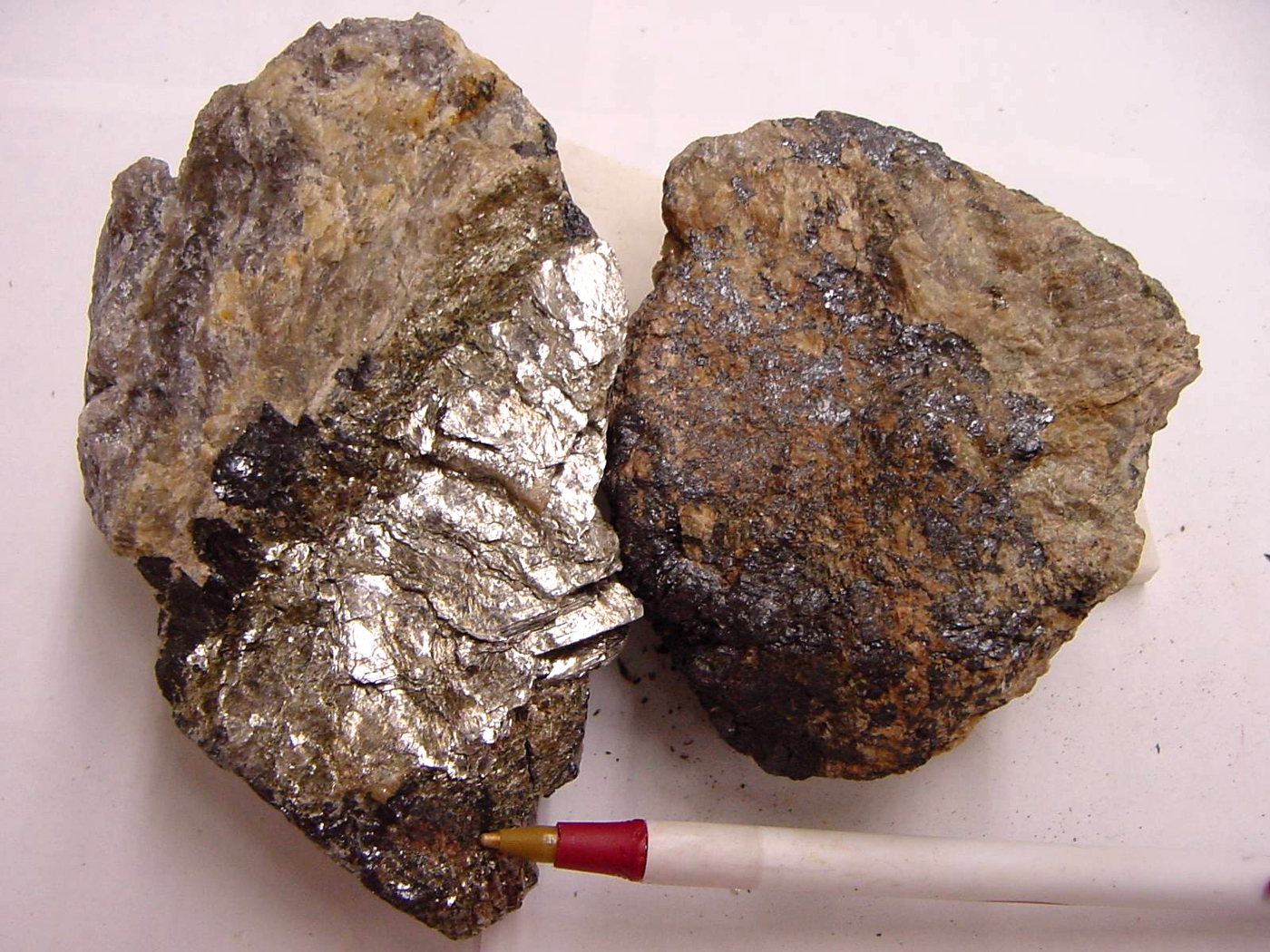
Rare earth oxide mineral
| Field | Value | |
|---|---|---|
| name | **Samarskite-(Y)** | |
| category | Oxide minerals | |
| boxbgcolor | #6a6750 | |
| boxtextcolor | #fff | |
| image | Samarskite-(Y)-351417.jpg | |
| formula | ||
| IMAsymbol | Smk-Y | |
| strunz | 4.DB.25 | |
| system | Orthorhombic | |
| class | Dipyramidal (mmm) | |
| H-M symbol: (2/m 2/m 2/m) | ||
| symmetry | *Pbcn* | |
| unit cell | a = 5.687 Å, b = 4.925 Å | |
| c = 5.21 Å; Z = 2 | ||
| color | Black, may have a brownish tint, brown to yellowish brown due to alteration; light to dark brown in transmitted light | |
| habit | Crystals elongated with pyramidal terminations; commonly granular to massive | |
| cleavage | {010}, indistinct | |
| fracture | Conchoidal fragments | |
| tenacity | Brittle | |
| mohs | 5–6 | |
| luster | Vitreous – resinous | |
| refractive | n = 2.1–2.2 | |
| opticalprop | Appears isotropic | |
| streak | Reddish brown | |
| density | 5.6 – 5.8, Average = 5.69 | |
| diaphaneity | Opaque, transparent in thin fragments | |
| other | [[Image:Radioactive.svg | 25px]] Radioactive (Greater than 70 Bq / gram) |
| alteration | Metamict | |
| references |
H-M symbol: (2/m 2/m 2/m) c = 5.21 Å; Z = 2
Samarskite is a radioactive rare earth mineral series which includes samarskite-(Y), with the chemical formula and samarskite-(Yb), with the chemical formula . The formula for samarskite-(Y) is also given as .
Samarskite crystallizes in the orthorhombic – dipyramidal class as black to yellowish brown stubby prisms although it is typically found as anhedral masses. Specimens with a high uranium content are typically metamict and appear coated with a yellow brown earthy rind.
Samarskite occurs in rare earth bearing granite pegmatites with other rare minerals. It occurs in association with columbite, zircon, monazite, uraninite, aeschynite, magnetite, albite, topaz, beryl, garnet, muscovite and biotite.
Samarskite was first described in 1847 for an occurrence in Miass, Ilmen Mountains, Southern Ural Mountains of Russia. The chemical element samarium was first isolated from a specimen of samarskite in 1879. Samarium was named after samarskite which was named for the Russian mine official, Colonel Vasili Samarsky-Bykhovets (1803–1870).
Samarskite-(Yb) was first described in 2004 for an occurrence in the South Platte Pegmatite District, Jefferson County, Colorado.
References
References
- Warr, L.N.. (2021). "IMA–CNMNC approved mineral symbols". Mineralogical Magazine.
- link. (2019-08-11 Mineralienatlas)
- link. (2011-05-14 Webminerals)
- "Mindat Samarskite-(Y)".
- "Mindat Samarskite-(Yb)".
- "Handbook of Mineralogy".
- "Samarskite-(Yb) on Webmineral".
This article was imported from Wikipedia and is available under the Creative Commons Attribution-ShareAlike 4.0 License. Content has been adapted to SurfDoc format. Original contributors can be found on the article history page.
Ask Mako anything about Samarskite-(Y) — get instant answers, deeper analysis, and related topics.
Research with MakoFree with your Surf account
Create a free account to save articles, ask Mako questions, and organize your research.
Sign up freeThis content may have been generated or modified by AI. CloudSurf Software LLC is not responsible for the accuracy, completeness, or reliability of AI-generated content. Always verify important information from primary sources.
Report