From Surf Wiki (app.surf) — the open knowledge base
Saab Variable Compression engine
Saab engine technology concept

Saab engine technology concept
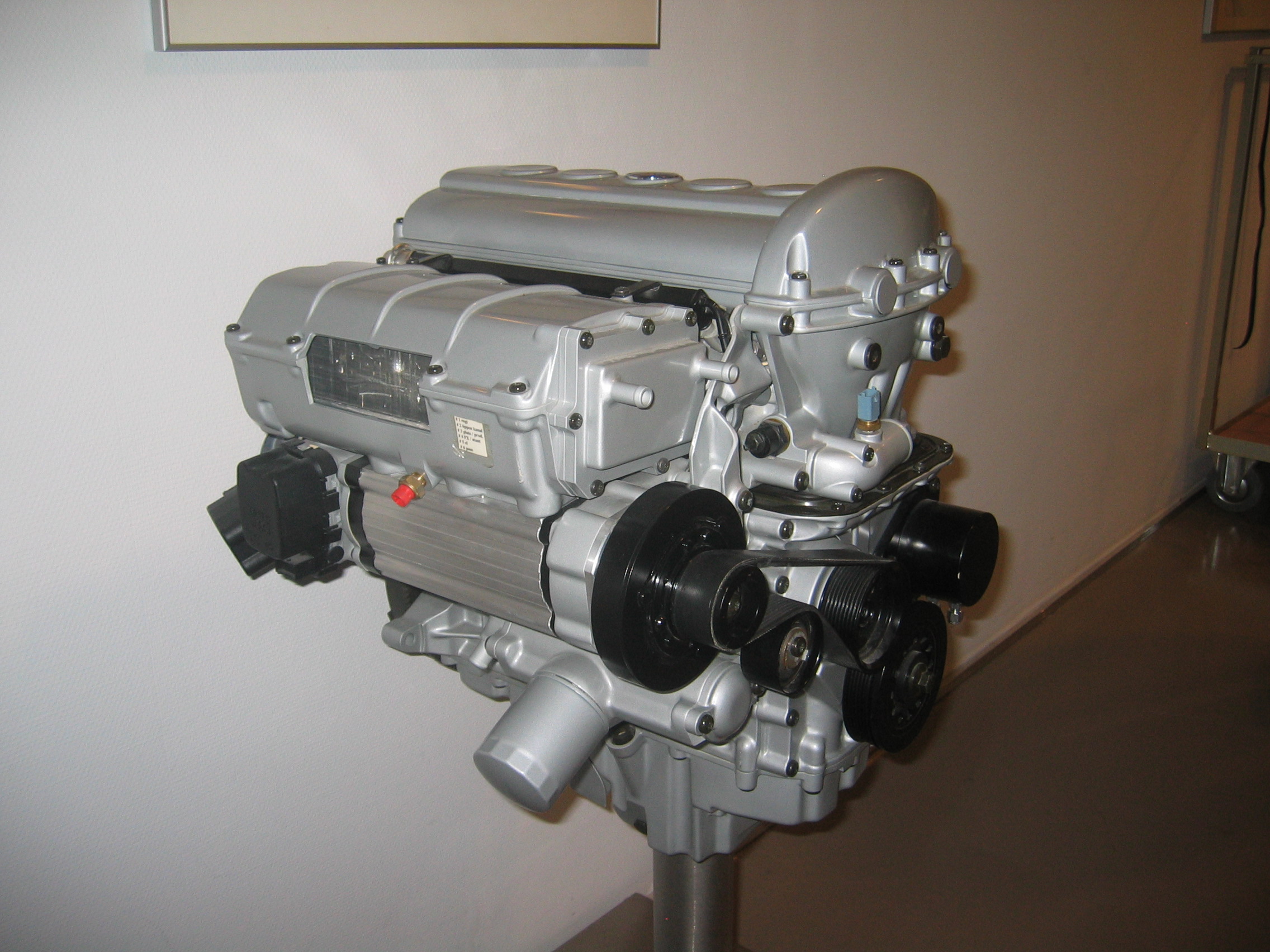
The Saab Variable Compression engine was a development project of Saab Automobile, for which it won an award both in 2000 and 2001.
In a normal internal combustion engine, because cylinder bore diameter, piston stroke length and combustion chamber volume are almost always constant, the compression ratio (CR) for a given engine is almost always constant.
One exception is the experimental Saab Variable Compression (SVC) engine, designed for the Saab 9-5. This engine uses a technique that dynamically alters the volume of the combustion chamber, thus changing the compression ratio.
To alter the combustion chamber volume, the SVC 'lowers' the cylinder head closer to the crankshaft. It does this by replacing the typical one-part engine block with a two-part block, with the crankshaft in the lower block and the cylinders in the upper portion. The two blocks are hinged together at one side. By pivoting the upper block around the hinge point, the volume of the combustion chamber can be modified. In practice, the SVC adjusts the upper block through a small range of motion, using a hydraulic actuator. This design was originally patented by Gregory J. Larsen of Lakeland, FL USA.
References
References
- "Saab Global, Saab 9-5 SportCombi, Awards".
- "Reciprocating piston engine with a varying compression ratio".
This article was imported from Wikipedia and is available under the Creative Commons Attribution-ShareAlike 4.0 License. Content has been adapted to SurfDoc format. Original contributors can be found on the article history page.
Ask Mako anything about Saab Variable Compression engine — get instant answers, deeper analysis, and related topics.
Research with MakoFree with your Surf account
Create a free account to save articles, ask Mako questions, and organize your research.
Sign up freeThis content may have been generated or modified by AI. CloudSurf Software LLC is not responsible for the accuracy, completeness, or reliability of AI-generated content. Always verify important information from primary sources.
Report