From Surf Wiki (app.surf) — the open knowledge base
Ruigoord
Village in North Holland, Netherlands
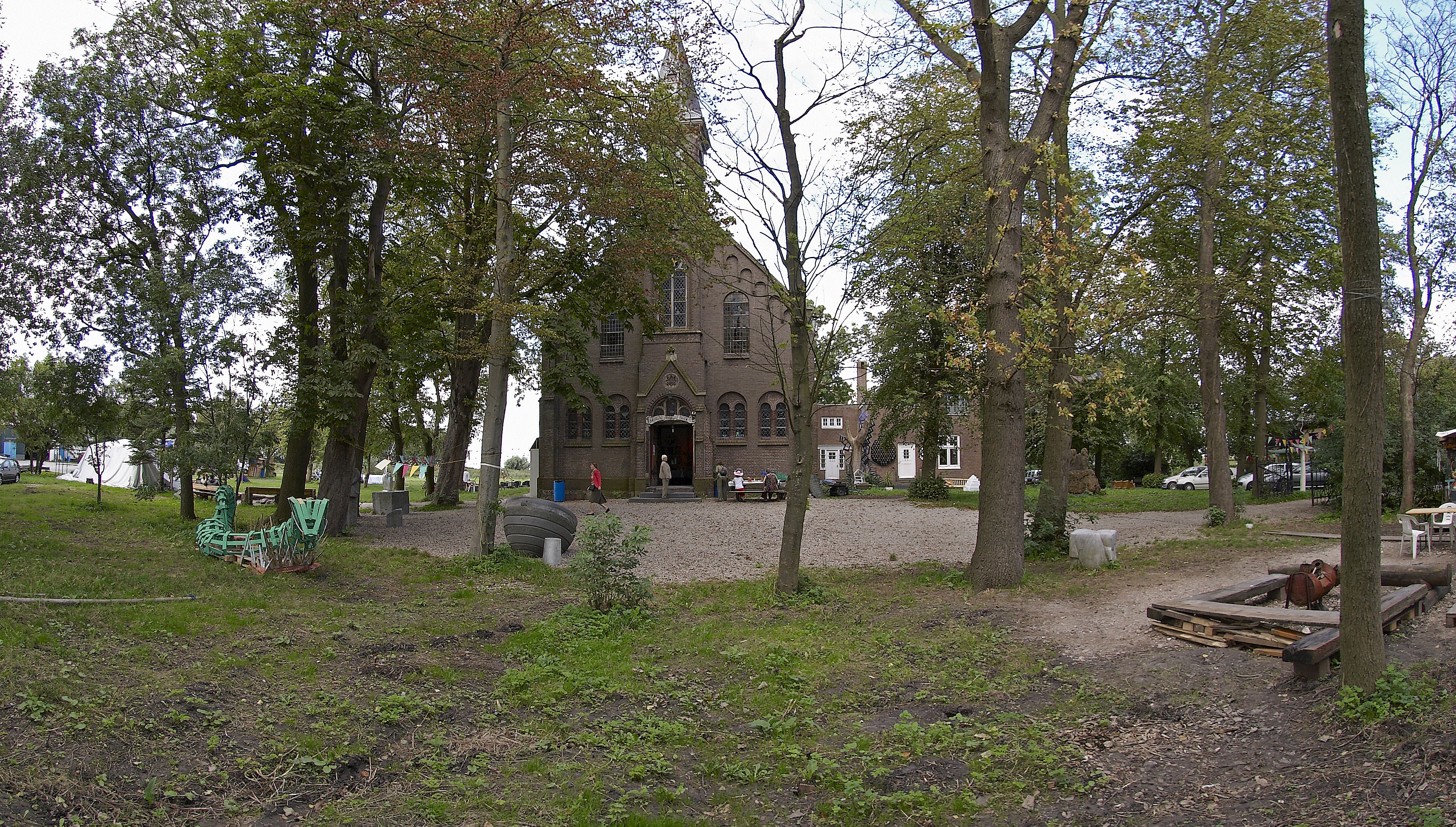
Village in North Holland, Netherlands
| Field | Value |
|---|---|
| image_skyline | Ruigoord1.jpg |
| image_caption | Ruigoord in 2007 |
| image_map | Map NL - Amsterdam - Ruigoord.png |
| map_caption | Ruigoord in the municipality of Amsterdam |
| name | Ruigoord |
| subdivision_type2 | Municipality |
| subdivision_name2 | Amsterdam |
| coordinates | |
| subdivision_type | Country |
| subdivision_name | Netherlands |
| subdivision_type1 | Province |
| subdivision_name1 | North Holland |
Ruigoord () is a village in the Houtrak polder in North Holland, Netherlands, situated within the municipality of Amsterdam. Until the 1880s, it was an island in the IJ bay, which was turned into a polder. In the 1960s, the municipality planned to extend the Port of Amsterdam. From 1972 onwards squatters occupied buildings and started a free zone. After resisting eviction in 1997, the area was legalized in 2000. The village is nowadays partially closed in by the port, and lies about 8 km (5 miles) east of Haarlem.
Harbour project
In 1964, plans were drawn up by the municipality of Amsterdam to build the for the petrochemical industry. The plan included the annexation of 600 ha of land belonging to Haarlemmerliede en Spaarnwoude, including the village of Ruigoord. Amsterdam immediately set out to acquire real estate in and around Ruigoord, and started to prepare the farmland for construction.
In 1972, a group of artists squatted some abandoned houses. In 1973, became mayor of Haarlemmerliede en Spaarnwoude, and wanted to put the annexation to a vote. The same evening, he received a call from , the Queen's Commissioner of North Holland who told him that annexation was a done deal and not open for discussion. A lengthy legal battle between Haarlemmerliede en Spaarnwoude on the one hand, and Amsterdam and the Province of North Holland on the other hand commenced. For strategic reasons, the squatters were encouraged to settle in Ruigoord.
1973 demolition
The village was scheduled to be demolished on 23 July 1973. On Sunday 22 July 1973, the local priest performed his last mass, and handed the keys of the church to the squatters. The next day, the road to the village was barricaded, and the squatters led by Hans Plomp and successfully managed to stop the demolition crew. The 1973 oil crisis further complicated the Africa Harbour project.
Ruigoord became a free zone and started to attract artists like Simon Vinkenoog. It also became known for its drugs. In 1984, Haarlemmerliede en Spaarnwoude tried to change the village into a "green zone" where industry is not allowed, but the plans were blocked by the Province. In November 1995, mayor IJsselmuiden accepted an offer to become mayor of Edam-Volendam. His main reason for resigning was the tiresome 22-year legal battle with Amsterdam.
Annexation

On 1 January 1997, Amsterdam annexed Ruigoord. The squatters decided to continue their fight against the harbour, and started the Groenoord plan to turn the village into an ecological zone. On 7 October 1997, 200 policemen of the , the Dutch riot squad, were sent into Ruigoord to remove the squatters. The entire area, except for the village, was flattened and prepared for construction by the Port of Amsterdam. The legal battle advanced all the way to Court of Justice of the European Union.
In 2000, a compromise was reached. The village of Ruigoord was allowed to exist as an enclave within the harbour. Initially, Amsterdam did not want to allow residency in the village.
Current situation

Ruigoord exists as a squatted zone to this day, but it is now legalized. Full moon parties are regularly organised in the formerly Roman Catholic village church and every year there is the Landjuweel (Land Jewel) festival in August.
Since the early 2000s, the village has staged an annual poetry festival over the Whitsun weekend, Vurige tongen (Fiery Tongues). One of the festival's three days is always devoted to international poets. From 2003 on, a yearly Ruigoord Trophy has been awarded to individuals who have selflessly dedicated themselves to maintaining the village as an important cultural stronghold. The first such trophy was presented to Simon Vinkenoog. Three notable non-Dutch trophy holders are the late American poet and photographer Ira Cohen, the Canada-born writer Jordan Zinovich, and the Amsterdam-based American poet and writer Eddie Woods.
References
References
- ''ANWB Topografische Atlas Nederland'', Topografische Dienst and ANWB, 2005.
- (5 September 2019). "Ruigoord".
- "Bewoners Ruigoord verliezen gevecht".
- (2018). "Free Cultural Spaces: Freedom of Expression in Autonomous Geographies". Seismopolite Journal of Art and Politics.
- "Archived copy".
- Peter van den Berg. (25 November 1995). "Scheidend burgemeester van Haarlemmerliede ruziet al bijna 23 jaar met buurgemeente Amsterdam".
- Renée Karsten. "Overlevingskunstenaars. Ruigoord is er nog steeds na 50 jaar".
- "Ruigoord: een plek voor de 'scharrelmens'".
- (7 October 1997). "Wonderlijk rustige en vreedzame ontruiming van Ruigoord".
- [http://ruigoord.nl/evenementen/landjuweel-2015/ Landjuweel 2015]. Retrieved 8 October 2015
This article was imported from Wikipedia and is available under the Creative Commons Attribution-ShareAlike 4.0 License. Content has been adapted to SurfDoc format. Original contributors can be found on the article history page.
Ask Mako anything about Ruigoord — get instant answers, deeper analysis, and related topics.
Research with MakoFree with your Surf account
Create a free account to save articles, ask Mako questions, and organize your research.
Sign up freeThis content may have been generated or modified by AI. CloudSurf Software LLC is not responsible for the accuracy, completeness, or reliability of AI-generated content. Always verify important information from primary sources.
Report