From Surf Wiki (app.surf) — the open knowledge base
Rubbernecking
People staring tactlessly; gawkers
People staring tactlessly; gawkers
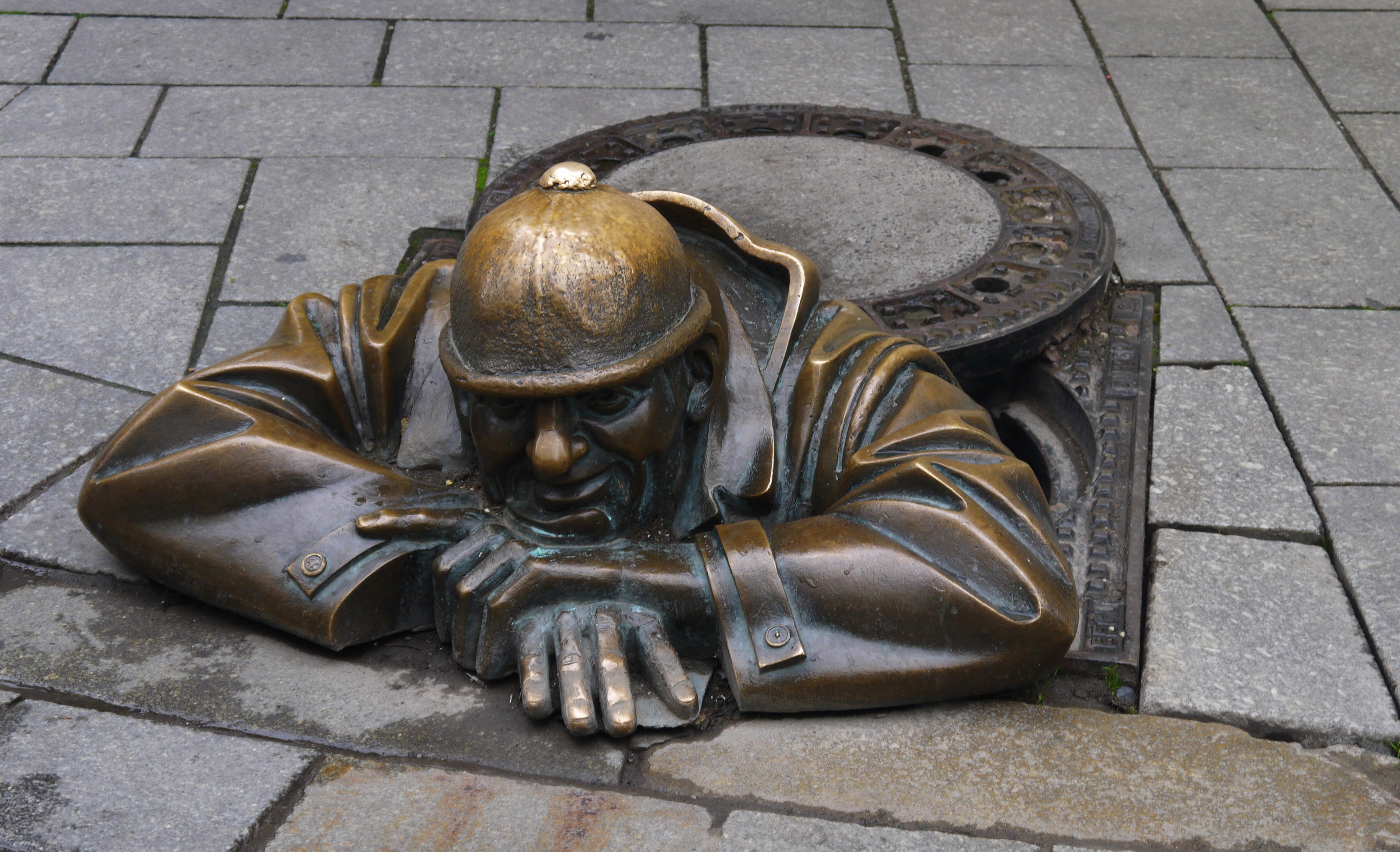
Rubbernecking is a term primarily used to refer to bystanders stopping previous activity to stare at accidents. More generally, it can refer to anyone staring at an object of everyday interest compulsively. The term rubbernecking derives from the neck's appearance while trying to get a better view, that is, craning one's neck.
Rubberneck is associated with morbid curiosity. It is often the cause of traffic jams, sometimes referred to as "gapers' block" or "gapers' delay", as drivers slow down to see what happened in a crash. Rubberneck is considered as of 2007 unconventional English or slang.
Etymology
The term rubbernecking was coined in the United States in the 1890s to refer to tourists. H. L. Mencken said the word rubberneck is "almost a complete treatise on American psychology" and "one of the best words ever coined".
By 1909, rubbernecking was used to describe the wagons, automobiles and buses used in tours around American cities, and through their Chinatowns. The tours included a megaphone-wielding individual offering commentary on the urban landscape. Chinese Rubbernecks was the title of a 1903 film.
One writer described the "out-of-towners" stretching their necks to see New York while having misinformation shouted at them, and artist John Sloan depicted them as geese in a 1917 etching called Seeing New York. Hawkers, touts and steerers were used to market the rubbernecking tours, also known as "gape wagons" or "yap wagons."
When phone lines were shared as "party lines", the term rubbernecking applied to someone who listened in on the conversation of others.
Rubbernecking and the automobile
The term is often used to refer to the activity of motorists slowing down in order to see something on the other side of a road or highway, often the scene of a traffic accident. This is sometimes also called accident gawking. A study on the English M6 motorway found that 29% of accidents and breakdowns caused slowdowns in the uninvolved opposite lanes. According to a 2003 study in the U.S., rubbernecking was the cause of 16% of distraction-related traffic accidents. Rubbernecking appears in the book 100 Most Dangerous Things in Everyday Life and What You Can Do About Them, which advises that the safest course when there are flashing lights and an accident is to keep moving, as "there is nothing to see here". Rubbernecking's impact on traffic has been the subject of studies and is said to be factored into highway design.
Prevention
Incident screens have been designed that can be erected around vehicle accidents. The plastic partitions are designed to shield accidents from passing motorists in order to deter rubbernecking and improve the flow of traffic. Several types of screens have been trialed in the United Kingdom.
References
References
- (1994). "Shorter Slang Dictionary". Routledge.
- Franklin, Daniel P.. (2006). "Politics and Film: The Political Culture of Film in the United States". Rowman & Littlefield Publishers.
- (2007). "The Concise New Partridge Dictionary of Slang and Unconventional English". Routledge.
- Allen, Irving Lewis. (1995). "The City in Slang: New York Life and Popular Speech". Oxford University Press US.
- (2002). "Screening Asian Americans". Rutgers University Press.
- (2002). "Dictionary of American Regional English, Volume IV: P-Sk". Harvard University Press.
- (1 August 2009). "Giant screens at crash sites to end 'rubbernecking' danger". [[The Observer]].
- Lee, Laura. (1 July 2004). "100 Most Dangerous Things in Everyday Life and What You Can Do About Them". Murdoch Books.
- (2004). "An Analysis on the Impact of Rubbernecking on Urban Freeway Traffic, Report No. UVACTS-15-0-62". Center for Transportation Studies, University of Virginia.
- "Anti kijkfile schermen". Wilchem B.V..
- (August 2008). "Incident Screens - Functional Specification". [[Department for Transport]].
- (27 December 2012). "Motorway screens bid to stop rubbernecking by motorists". [[BBC News]].
This article was imported from Wikipedia and is available under the Creative Commons Attribution-ShareAlike 4.0 License. Content has been adapted to SurfDoc format. Original contributors can be found on the article history page.
Ask Mako anything about Rubbernecking — get instant answers, deeper analysis, and related topics.
Research with MakoFree with your Surf account
Create a free account to save articles, ask Mako questions, and organize your research.
Sign up freeThis content may have been generated or modified by AI. CloudSurf Software LLC is not responsible for the accuracy, completeness, or reliability of AI-generated content. Always verify important information from primary sources.
Report