From Surf Wiki (app.surf) — the open knowledge base
Royal Spanish Academy
Official regulator for the Spanish language

Official regulator for the Spanish language
| Field | Value |
|---|---|
| logo | Coat of Arms of the Royal Spanish Academy.svg |
| logo_alt | Arms of the Royal Spanish Academy |
| logo_caption | Arms of the Royal Spanish Academy |
| image | Sede de la Real Academia Española.jpg |
| caption | Headquarters of the Royal Spanish Academy on Felipe IV Street, 4, in the Jerónimos neighborhood of Madrid. |
| map | |
| formation | |
| extinction | |
| type | |
| status | |
| purpose | Linguistic prescription and research |
| headquarters | Madrid, Spain |
| coords | |
| language | Spanish |
| leader_title | Protector |
| leader_name | Felipe VI |
| (as King of Spain) | |
| leader_title2 | Director |
| leader_name2 | Santiago Muñoz Machado |
| main_organ | Governing Board |
| parent_organization | |
| affiliations | Association of Spanish Language Academies |
| native_name | *Real Academia Española* |
| native_name_lang | es |
| size | 160px |
| msize | |
| malt | |
| mcaption | |
| abbreviation | RAE |
| region_served | Hispanophone regions and populations |
| website | |
| founder | The Duke of Escalona |
(as King of Spain) The Royal Spanish Academy (, ; RAE) is Spain's official royal institution with a mission to ensure the stability of the Spanish language. It is based in Madrid, Spain, and is affiliated with national language academies in 22 other Hispanophone nations through the Association of Academies of the Spanish Language.
The RAE dedicates itself to language planning by applying linguistic prescription aimed at promoting linguistic unity within and between various territories, to ensure a common standard. The proposed language guidelines are shown in a number of works.
History

In 1711, Spain, unlike France, Italy and Portugal, did not have a large dictionary with a comprehensive and collegially elaborated lexicographical repertoire. The initial nucleus of the future Academy was formed that same year by the eight novatores who met in the library of the palace of , Duke of Escalona and Marquess of Villena, located in the Plaza de las Descalzas Reales in Madrid.
The Spanish Academy was founded in 3 August 1713 on the initiative of Pacheco, with the purpose of "fixing the voices and words of the Castilian language in their greatest propriety, elegance and purity". The objective was to fix the language in the state of fullness that it had reached during the 16th century and that had been consolidated in the 17th century.
The Italian Accademia della Crusca founded in 1582 and the Académie Française founded in 1635 were taken as models.
The first official session of the new corporation was held at the residence of Pacheco on 6 July 1713, an event that is recorded in the book of minutes, begun on 3 August 1713.
Its creation, with twenty-four elected members was approved on 3 October 1714 by Royal Decree of Philip V, that gave the academy the right to be called the "Royal Spanish Academy". This meant that the academicians enjoyed the preeminences and exemptions granted to the servants of the Royal Household. It had its first seat at number 26 Valverde Street, from where it moved to Alarcón Street, corner of Felipe IV, its definitive seat.
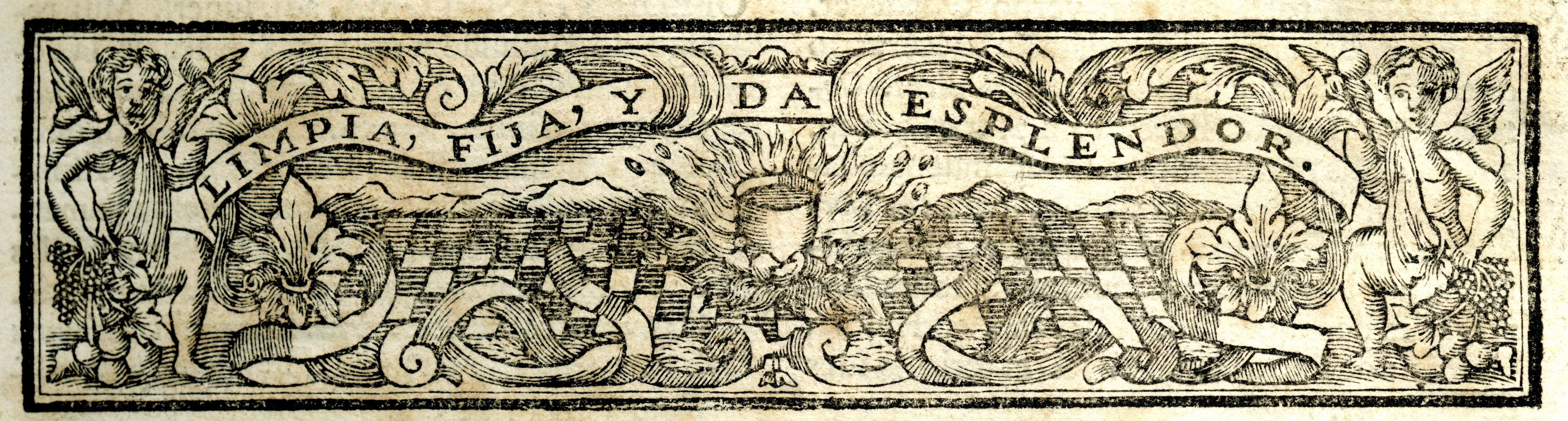
The emblem chosen was a fiery crucible placed on the fire, with the legend Limpia, fija y da esplendor ("cleans, fixes and gives splendor"). Collective utility became the main hallmark of the Spanish Academy, differentiating itself from other academies that had proliferated in the golden centuries and that were conceived as mere occasional literary gatherings.
The RAE began establishing rules for the orthography of Spanish beginning in 1741 with the first edition of the Ortographía (spelled Ortografía from the second edition onwards). The proposals of the Academy became the official norm in Spain by royal decree in 1844, and they were also gradually adopted by the Spanish-speaking countries in the Americas.
Several reforms were introduced in the Nuevas Normas de Prosodia y Ortografía (1959, New Norms of Prosody and Orthography). Since the establishment of the Association of Academies of the Spanish Language in 1951, the Spanish academy works in close consultation with the other Spanish language academies in its various works and projects. The 1999 Orthography was the first to be edited by the twenty two academies together. The current rules and practical recommendations on spelling are presented in the latest edition of the Ortografía (2010).
The headquarters, opened in 1894, is located at Calle Felipe IV, 4, in the ward of Jerónimos, next to the Museo del Prado. The Center for the Studies of the Royal Spanish Academy, opened in 2007, is located at Calle Serrano 187–189.
Fundamentals
According to Salvador Gutiérrez, an academic numerary of the institution, the Academy does not dictate the rules but studies the language, collects information and presents it. The rules of the language are simply the continued use of expressions, some of which are collected by the Academy. Although he also says that it is important to read and write correctly.
Article 1 of the statutes of the Royal Spanish Academy, translated from Spanish, says the following:
To achieve these ends, it shall study and promote the study of the history and present of Spanish, it shall disseminate the writings, literary—especially classics—and non-literary, that it deems important for the knowledge of such matters, and will seek to keep alive the memory of those who, in Spain or in the Americas, have cultivated our language with glory.
As a member of the Association of Academies of the Spanish Language, it shall maintain a special relation with the corresponding and associated academies.|sign=|source=}}
Composition
Main article: List of members of the Real Academia Española

Members of the Academy are known as Académicos de número (), chosen from among prestigious people within the arts and sciences, including several Spanish-language authors, known as The Immortals (Spanish: Los Inmortales), similarly to their French Academy counterparts. The numeraries (Spanish: Números) are elected for life by the other academicians. Each academician holds a seat labeled with a letter from the Spanish alphabet, with upper and lower case letters denoting separate seats. Only eight letters of the alphabet do not have—nor have they had in the past—representation in the seats of the RAE: v, w, x, y, z, Ñ, W, Y.
The Academy has included Latin American members from the time of Rafael María Baralt, although some Spanish-speaking countries have their own academies of the language.
Current members
| Seat | Member | Year |
|---|---|---|
| O | Pere Gimferrer Torrens | 1985 |
| c | Víctor García de la Concha | 1992 |
| l | Emilio Lledó Íñigo | 1994 |
| C | Luis Goytisolo Gay | 1995 |
| u | Antonio Muñoz Molina | 1996 |
| V | Juan Luis Cebrián Echarri | 1997 |
| t | Ignacio Bosque Muñoz | 1997 |
| ñ | 1998 | |
| I | Luis Mateo Díez Rodríguez | 2001 |
| N | Guillermo Rojo Sánchez | 2001 |
| k | José Antonio Pascual Rodríguez | 2002 |
| E | Carmen Iglesias Cano | 2002 |
| T | Arturo Pérez-Reverte Gutiérrez | 2003 |
| G | 2003 | |
| j | Álvaro Pombo García de los Ríos | 2004 |
| h | 2006 | |
| a | 2006 | |
| S | 2008 | |
| D | Darío Villanueva Prieto | 2008 |
| m | José María Merino Sánchez | 2009 |
| g | Soledad Puértolas Villanueva | 2010 |
| P | Inés Fernández-Ordóñez Hernández | 2011 |
| Q | 2011 | |
| e | Juan Gil Fernández | 2011 |
| f | 2012 | |
| r | Santiago Muñoz Machado | 2013 |
| b | Miguel Sáenz Sagaseta de Ilúrdoz | 2013 |
| n | Carme Riera Guilera | 2013 |
| Z | José Luis Gómez García | 2014 |
| B | 2014 | |
| F | Manuel Gutiérrez Aragón | 2016 |
| H | Félix de Azúa Comella | 2016 |
| U | Clara Janés Nadal | 2016 |
| s | María Paz Battaner Arias | 2017 |
| J | 2019 | |
| M | Juan Antonio Mayorga Ruano | 2019 |
| K | José María Bermúdez de Castro Risueño | 2022 |
| i | Paloma Díaz-Mas | 2022 |
| d | 2023 | |
| q | Asunción Gómez Pérez | 2023 |
| X | Clara Sánchez | 2023 |
| A | 2024 | |
| R | Javier Cercas | 2024 |
| p | Cristina Sánchez López | |
| o | ||
| L |
Notable past academicians
- Niceto Alcalá-Zamora
- Vicente Aleixandre
- Dámaso Alonso
- José "Azorín" Martínez Ruiz
- Vicente Bacallar y Sanna
- Pío Baroja
- Jacinto Benavente
- Carlos Bousoño
- Manuel Bretón de los Herreros
- Camilo José Cela
- Miguel Delibes
- José Echegaray
- Fernando Fernán Gómez
- Wenceslao Fernández Flórez
- Gaspar Melchor de Jovellanos
- Alicia Jurado
- Antonio Machado
- Salvador de Madariaga
- Julián Marías
- Francisco Martínez de la Rosa
- Ramón Menéndez Pidal
- Armando Palacio Valdés
- José María de Pereda
- Benito Pérez Galdós
- Manuel José Quintana
- Gonzalo Torrente Ballester
- Leonardo Torres Quevedo
- Juan Valera
- José Zorrilla
Publications

Joint publications of the RAE and the Association of Academies of the Spanish Language
- Boletín de la Real Academia Española. The official journal of the academy. First published in 1914.
- Diccionario de la lengua española (Spanish Language Dictionary). The 1st edition was published in 1780, and the 23rd edition in 2014. It can be consulted for free online as of October 2017 and was published in Spain and other Spanish-speaking countries to mark the tricentennial of the founding of the RAE.
- The Diccionario esencial de la lengua española (Essential Dictionary of the Spanish Language) was published in 2006 as a compendium of the 22nd edition of the Dictionary of the Spanish Language.
- Ortografía de la lengua española (Spanish Language Orthography). The 1st edition was published in 1741 and the latest edition in 2010. The edition of 1999 was the first spelling book to cover the whole Hispanic world, replacing the Nuevas normas de prosodia y ortografía (New Rules for Prosody and Spelling) of 1959.
- Nueva gramática de la lengua española (New Spanish Language Grammar, 1st edition: 1771, latest edition: 2009). The latest edition is the first grammar to cover the whole Hispanic world, replacing the prior Gramática de la lengua española (Grammar of the Spanish Language, 1931) and the Esbozo de una Nueva gramática de la lengua española (Outline of a New Grammar of the Spanish Language, 1973). The Nueva gramática de la lengua española is available in 3 different versions: The Edición completa (Complete Edition) includes 3,800 pages in two volumes to describe morphology and syntax (published 4 December 2009) plus a third volume of phonetics and phonology and a DVD (early 2010).
- The Manual edition is a single 750-page volume, which was presented at the 5th Conference of the Spanish Language, which convened virtually in Valparaíso, Chile, due to the 2010 Chile earthquake, and was released on 23 April 2010.{{Cite news|title= El diccionario de americanismos incluye setenta mil entradas|date=27 February 2010 |newspaper= Diario ABC |url=http://www.abc.es/20100227/cultura-/diccionario-americanismos-incluye-setenta-201002271302.html |access-date=2010-04-04 |archive-date=2016-03-04 |archive-url=https://web.archive.org/web/20160304053124/http://www.abc.es/20100227/cultura-/diccionario-americanismos-incluye-setenta-201002271302.html|url-status=live
- The Gramática básica (Basic Grammar) is a 305-page volume directed to people who received secondary education, and which can be adaptable for school use; it was first published in 2011.
- The RAE has also published two other works by individual editors: Gramática de la lengua española (Grammar of the Spanish Language, by Emilio Alarcos Llorach, 1994) and Gramática descriptiva de la lengua española (Descriptive Grammar of the Spanish Language, 3 volumes, directed by Ignacio Bosque and Violeta Demonte, 1999).
- Diccionario panhispánico de dudas (Pan-Hispanic Dictionary of Doubts, 1st edition: 2005). Resolves doubts related to the use of the Spanish language. Can be consulted online since 2006.
- Diccionario del estudiante (Student's Dictionary, 1st edition: 2005). Directed to students in secondary education between 12 and 18 years-old.
- Diccionario práctico del estudiante (Student's Practical Dictionary, 1st edition: 2007) is an adapted version for Latin America of the Student's Dictionary.
- Diccionario de americanismos (Dictionary of Americanisms) is a listing of Spanish language terms of the Americas and their meaning. First edition published in 2010.
- Diccionario panhispánico del español jurídico, 2017
Notes
References
Bibliography
References
- "ASOCIACIÓN DE ACADEMIAS DE LA LENGUA ESPAÑOLA".
- (10 June 2014). "La Real Academia Española. Vida e historia". Grupo Planeta Spain.
- "Ortografía de la lengua española". Real Academia Española.
- (12 June 2023). "The Real Academia Española in the Age of Social Networks". ILCEA.
- (10 June 2014). "La Real Academia Española. Vida e historia". Grupo Planeta Spain.
- (10 June 2014). "La Real Academia Española. Vida e historia". Grupo Planeta Spain.
- (1960). "The Founding Date of the Real Academia Española". Romance Notes.
- (2011). "Las calles de Madrid.". Ediciones La librería.
- (2013). "A Political History of Spanish: The Making of a Language". Cambridge University Press.
- (3 October 2017). "The feat of the Real Academia Española". Cambridge University Libraries.
- Real Academia Española. (1999). "Ortografía de la Lengua Española". Espasa.
- Plaza, J. M.. (12 December 2013). "Dequeístas, leístas y compañía... hay una salida".
- (2014). "ESTATUTOS Y REGLAMENTO DE LA REAL ACADEMIA ESPAÑOLA".
- "Académicos".
- "Ediciones del diccionario académico".
- "Diccionario de la lengua española".
- (2006). "Diccionario esencial de la lengua española". Real Academia Española.
- "Prólogo". Real Academia Española.
- (2009). "Nueva gramática de la lengua española". Real Academia Española.
- "La Real Academia Española y la Asociación de Academias de la Lengua Española presentan la Nueva gramática de la lengua española.".
- "Nueva gramática básica".
- "Diccionario panhispánico de dudas".
- "Diccionario del estudiante".
- "Diccionario práctico del estudiante".
- "Diccionario de americanismos".
This article was imported from Wikipedia and is available under the Creative Commons Attribution-ShareAlike 4.0 License. Content has been adapted to SurfDoc format. Original contributors can be found on the article history page.
Ask Mako anything about Royal Spanish Academy — get instant answers, deeper analysis, and related topics.
Research with MakoFree with your Surf account
Create a free account to save articles, ask Mako questions, and organize your research.
Sign up freeThis content may have been generated or modified by AI. CloudSurf Software LLC is not responsible for the accuracy, completeness, or reliability of AI-generated content. Always verify important information from primary sources.
Report