From Surf Wiki (app.surf) — the open knowledge base
Roach (smoking)
Stub of a smoked cigar/cigarette
Stub of a smoked cigar/cigarette
Small metal clips to facilitate the smoking of a "roach" are called roach clips. Roach clips cover a wide variety of paraphernalia including alligator clips, forceps, hemostats, needle nose pliers, ceramic pieces with holes through them, and tweezers.
In Europe, the United Kingdom and most Commonwealth nations, "roach" can also refer to a bit of rolled thin cardboard in one end to serve as a mouthpiece - called a "Roach Tip", "Smoking Tip", "crutch" or "filter" in North America. When this is employed, a joint can still be held securely after it has burnt down to a short length; thus, the entire length of the joint may be smoked without the aid of a roach clip.[[File:Roach joint comparison.jpg|thumb|Several burnt roaches and a joint]]
Etymology
In Spanish, tabaco de cucaracha ("roach tobacco") refers to powdery, low-quality tobacco.
La Cucaracha
| La cucaracha, la cucaracha | The cockroach, the cockroach |
|---|
Mexican immigration into the United States
Callier argues that the term 'roach' entered into American Cannabis culture through a wave of Mexican immigration after the Mexican Revolution in 1910. The Mexican Revolution of 1910 led to a wave of Mexican immigration into the United States in particular through the American Southwest bringing with them cannabis. Schlosser suggests that "the prejudices and fears that greeted these peasant immigrants also extended to their traditional means of intoxication; smoking marijuana".
Due to the relatively inexpensive cost of cannabis it became popular with impoverished and marginalised groups throughout North America. However due to perceived social harms it became the subject of an intense campaign by the newly formed Federal Bureau of Investigation. In places such as New Orleans newspapers linked cannabis with marginalised groups such as “African-Americans, jazz musicians, prostitutes, and underworld whites”. Police officers in Texas claimed that marijuana incited violent crimes, aroused a "lust for blood", and gave its users "superhuman strength".
Jazz origins
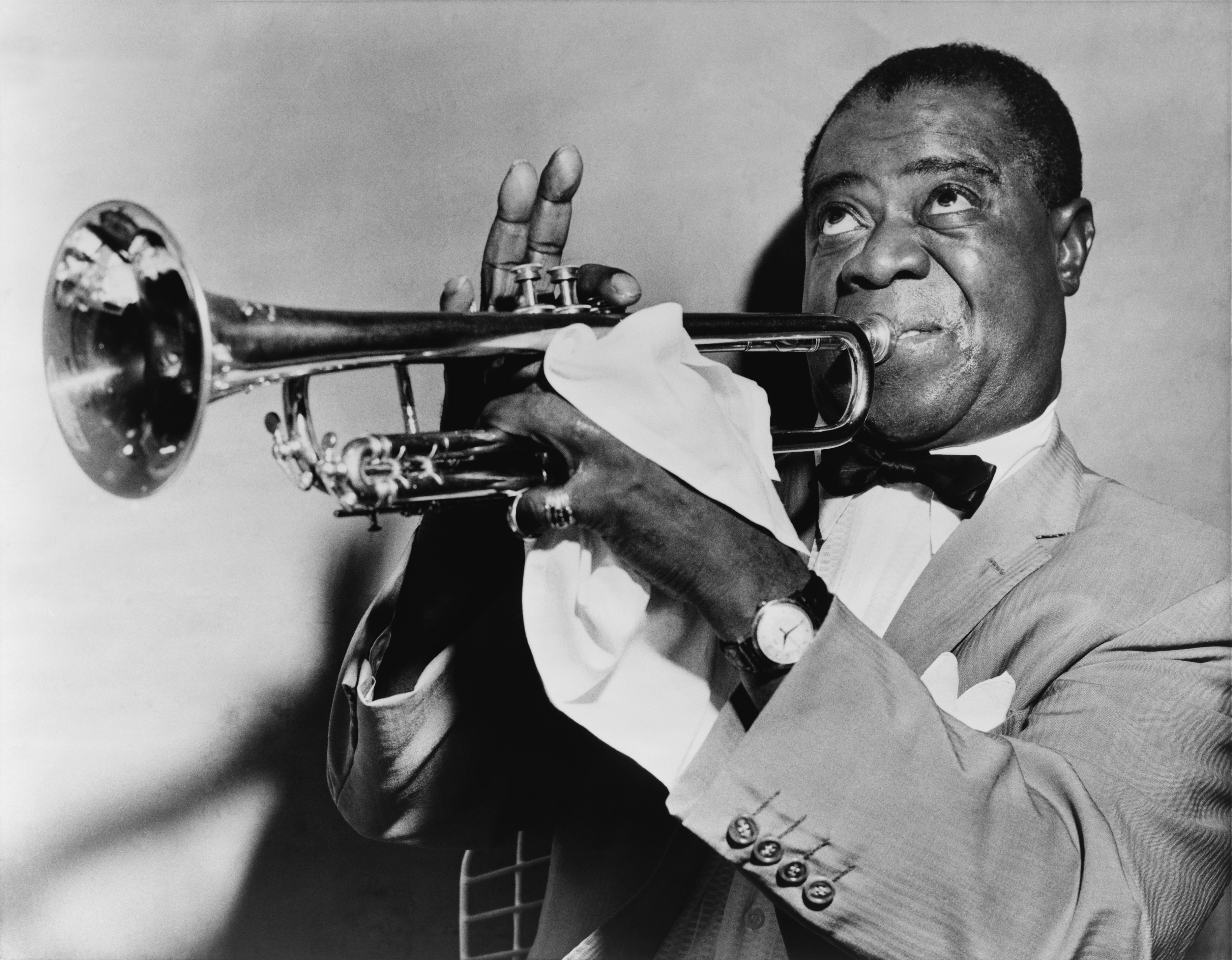
One of the first documented mainstream appearances of the term “roach” in the Western media is found in a The New Yorker feature article in 1938 writing about marijuana or "viper" culture in Harlem during the 1930s. The article "Tea for a Viper" was written by investigative journalist Meyer Berger as he encounters a series of African American jazz musicians smoking cannabis. In the article Berger describes a roach as "a pinched off smoke, or stub is a roach".
During the Jazz Age marijuana culture flourished in North America and is largely credited with forming the "stoner" culture. Terminology such as munchies, cotton mouth and greening out is referenced in the works of African American Jazz musicians such as Louis Armstrong, Stuff Smith and Lucille Bogan. A "viper" was known as someone who consumes marijuana.
In 1943, Time published its first article on the 'weed'. The article describes the 'roach' as the remains of a smoked down joint, suggesting that it was a desirable meant to be reused. The article recalls that "the viper [drug user] may then quietly "blast the weed" (smoke). Two or three long puffs usually suffice after a while to produce a light jag. The smoker is then said to be "high" or "floating". When he has smoked a reefer [cannabis] down to a half-inch butt, he carefully conserves it in an empty match box. In this condition it is known, in Mexican, as a chicharra, or in English, as a "roach".
The term roach is mentioned by Armstrong when recounting an arrest for drug possession in a biography by Max Jones and John Chilton, The Louis Armstrong Story: 1900-1971 shortly:
"The trumpeter was playing at the Cotton Club in Culver City, CA, near Hollywood, in a band that featured his favourite drummer, Vic Berton. The two were sharing a joint outside in the parking lot between sets. Unbeknownst to them, a rival club owner had summoned two detectives who saddled up to the pair and said, "We'll take the roach, boys.""
Tobacco related illnesses
In many European countries it is common to add tobacco into a joint, as a means of preserving cannabis. There are several risks associated with this practice due to the increased exposure to toxic carcinogenic materials versus alternative methods of cannabis consumption such as edibles and vaporizing. It is estimated that a single joint could cause as much damage as 2.5–5 cigarettes. The consumption of combusted properties of a substance will often form toxic and carcinogenic compounds. Researchers have noted that for cannabis “this include brain changes that are thought to impair cognitive functioning, particularly in adolescents”.
Europe
In the most recent Global Drug survey it was found that in Europe 90% of users smoke cannabis with tobacco. Researchers have suggested that smoking a roach with cannabis and tobacco can lead to a more “than eightfold increase in the odds of later initiation of tobacco use”.
For many Europeans, cannabis is considered a gateway drug to tobacco. For many Europeans the first exposure to tobacco occurs when they smoke their first Joint (cannabis). This occurrence is referred to as the reverse gateway effect. The reverse gateway suggests that a heightened risk of nicotine dependence is the “most important health consequence of early frequent cannabis use”
United States
According to the Global Drug Survey only 8% of Americans use tobacco with cannabis while smoking joints.
In popular culture
Songs
The term roach appears in Buck Washington 1944 song "Save the Roach for Me". Washington sings about a man seeking to get high by smoking the 'roach':

"Folks say that I'm lonesome/ Say I'm blue as I can be/ But if you're smoking that jive when I pass by/ Then save the roach for me.”
In 2021, the rapper Kodak Black mentions in his song "Killing the Rats"; "I'm smoking the roach and killing the rats"
References
References
- "The Free Dictionary".
- Rasmussens, Kathy. (2021-08-11). "Evolution of The Roach Clip".
- Arooka. "James Bong's Ultimate SpyGuide to Marijuana". Free World Press Ltd..
- [http://lema.rae.es/drae/srv/search?id=yq0uMwyZT2x5wBn3psh. Real Academia Española. Diccionario Usual.]
- (2016). "The Version of 'La Cucaracha' Referencing Marijuana".
- (1994). "Reefer Madness". The Atlantic.
- Carney, Courtney. (2003-01-01). "Jazz and the cultural transformation of America in the 1920s". LSU Doctoral Dissertations.
- "Here's What People Called Pot in the 1940s".
- Jones, M. (1971). "The Louis Armstrong Story". Little Brown.
- (2007-12-01). "Effects of cannabis on pulmonary structure, function and symptoms". Thorax.
- (24 May 2017). "Cannabis isn't the health problem – the tobacco people mix with it is".
- (October 2005). "Reverse gateways? Frequent cannabis use as a predictor of tobacco initiation and nicotine dependence". Addiction.
- "Cannabis Resin Uses: The Complete Guide".
- (15 May 2019). "GDS Key Finding 2019".
- (24 April 2011). "Buck Washington - Save The Roach For Me (1944) - YouTube".
This article was imported from Wikipedia and is available under the Creative Commons Attribution-ShareAlike 4.0 License. Content has been adapted to SurfDoc format. Original contributors can be found on the article history page.
Ask Mako anything about Roach (smoking) — get instant answers, deeper analysis, and related topics.
Research with MakoFree with your Surf account
Create a free account to save articles, ask Mako questions, and organize your research.
Sign up freeThis content may have been generated or modified by AI. CloudSurf Software LLC is not responsible for the accuracy, completeness, or reliability of AI-generated content. Always verify important information from primary sources.
Report