From Surf Wiki (app.surf) — the open knowledge base
Richard Phelps (bellfounder)
English bellfounder (c. 1670 – 1738)

English bellfounder (c. 1670 – 1738)
Richard Phelps (c.1670 – 1738) was born in Avebury, Wiltshire, England. Phelps was a bellfounder, or a maker of bells, primarily for churches. He was master of the Whitechapel Bell Foundry in London from 1701 to 1738, and is best known for his large bell, Great Tom, in the steeple of St Paul's Cathedral in London, England. The foundry, in operation since at least 1570, was listed by the Guinness Book of Records as the oldest manufacturing company in Great Britain.
Whitechapel foundry owner
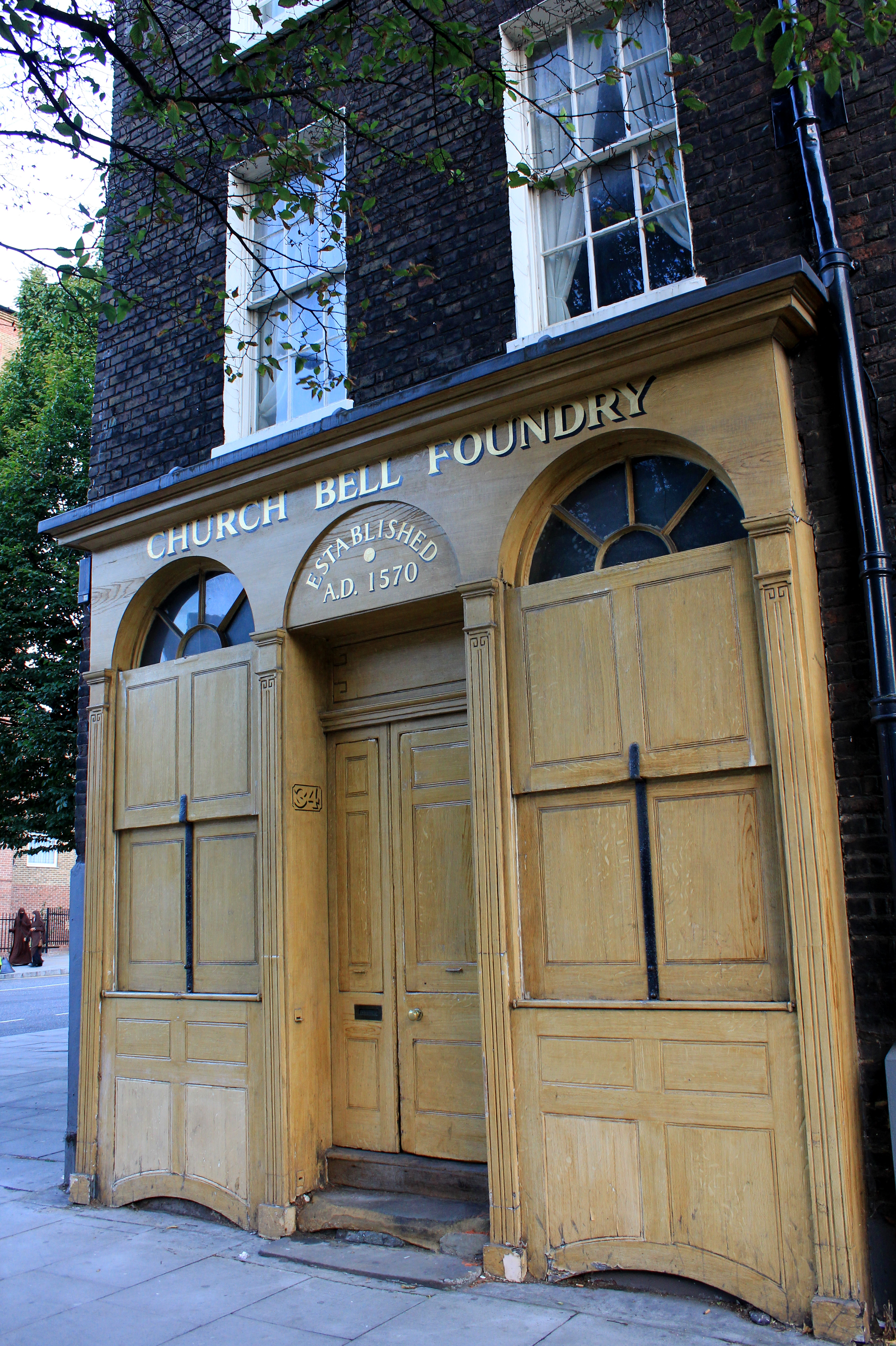
Little is known of Phelps before he became owner of Whitechapel. He took over the foundry on the death of the former foundry owner James Bartlett in January, 1701. Phelps remained as the head of the foundry for thirty-seven years, during which time the business grew to be the most successful in the kingdom. The bells that the foundry made were installed in many locations across England. Among his most well-known bells used to be hung in the steeples of St Michael-upon-Cornhill; St Magnus the Martyr; All Hallows, Lombard Street; St Andrew, Holborn; and Cambridge (Great St Mary's), and there is still a bell at St Paul's Cathedral. It was customary for bellfounders to add an inscription to their bells. Phelps’ inscriptions were typically much longer than his predecessors. For example, the following inscription used to appear on the tenth bell of St Michael-upon-Cornhill until it was recast in 2011:
The Whitechapel foundry was very prosperous under the ownership of Richard Phelps. Lukis cites the inscription on the tenor bell at Avebury, Wilts, Richard Phelps, London, Nat. par. hujus 1719 as indicating Phelps was born there.
Bells for St Paul's Cathedral==
Phelps’ most famous bell is Great Tom at St Paul's Cathedral in London, England. The history of this bell began long before Phelps’ involvement with it. In 1698, King William III gave the bells from St Stephen's Chapel to the newly rebuilt St Paul’s. The largest of these bells was originally called Edward I or Edward of Westminster, and was later known as Great Tom of Westminster. The name "Great Tom" is thought to be a corruption of grand ton, referencing its deep, sonorous tone. It then weighed 82 long cwt.
In 1699, while the bell was being moved to St Paul’s, it fell off its carriage and was cracked. Bell Yard at Temple Bar received its name from this event. The bell remained in a shed in the yard of St Paul's Cathedral until 1708 when it was recast by Philip Wightman at a weight of approximately 73 long cwt and hung in the south west tower. The recasting was a failure.
In 1709, Richard Phelps cast a new bell, which was delivered to the Cathedral before the old one was taken away, but the new bell also failed. Nine years later Phelps was given the job of recasting it once again. The present bell is described by Phelps’ successors Charles and George Mears as being 6 ft in diameter, 6 ft , and with thickness at sound bow 5.25 in, and weighing 76 long cwt. The larger part of the metal of which it is made came from Great Tom of Westminster. It bears the inscription:
The bell, which hangs in the South West Tower of the cathedral is “only used for tolling the hour, and for tolling at the death and funeral of a member of the royal family, the Bishop of London, the Dean of the Cathedral, or the Lord Mayor”. In 1717, Richard Phelps cast two more bells that were added as quarter jacks. Still in use today, the first weighs 13 long cwt, is 41 in in diameter and is tuned to A flat; the second weighs 35 long cwt and is 58 in in diameter and is tuned to E flat.
Other churches
He cast a large number of bells for London churches, including the tenor bell at St Margaret's Church in West Hoathly, West Sussex, which is inscribed:
On 5 September 1726, Richard Phelps and church wardens James Smith and Charles Ball of St Dionis Backchurch reached an agreement for a set of eight new bells and frames. Included in the deal was the exchange of the old bells. The agreement was later amended to include two more bells and frames.
The bells at St Magnus the Martyr, London Bridge were formed a ring of ten with a tenor of 21 long cwt. Succeeding a ring of five, the back eight were cast in 1714 by Richard Phelps, ten years after the spire was built, and the trebles very soon after. These bells were scrapped in 1976.
Last bell cast
The last bell bearing Phelps’ name was the priests’ bell at St George's Cathedral, Southwark in Southwark, inscribed:
Phelps died in 1738, and the order for this bell was completed by his foreman Thomas Lester, to whom he bequeathed his business and the lease of the foundry.
References
References
- Raven, John James. (1907). "The Bells of England". Methuen.
- [http://www.tower-bridge.org.uk/bells.htm John Rennie - ''Bells that tolled across the world''] accessed 21 May 2007
- "Foundry History".
- (1911). "''Industries: Bell-founders'', A History of the County of Middlesex: Volume 2: General; Ashford, East Bedfont with Hatton, Feltham, Hampton with Hampton Wick, Hanworth, Laleham, Littleton".
- Love, Dickon R. [http://london.lovesguide.com/michael_cornhill.htm “Church Bells of the City of London: St Michael-upon-Cornhill”] {{webarchive. link. (31 December 2008 Retrieved 18 Sept 2012)
- Lukis, William Collings. (1857). "An Account of Church Bells: With Some Notices of Wiltshire Bells and Bell Founders". J. H. Parker.
- Timbs, John. (1868). "Curiosities of London: Exhibiting the Most Rare and Remarkable Objects of Interest in the Metropolis; with Nearly Sixty Years' Personal Recollections". Longmans, Green, Reader, and Dyer.
- Ridley, Christopher J.. (December 2003). "Great Tom of Westminster".
- "Victorian London — Buildings, Monuments and Museums — St. Paul's Cathedral".
- Love, Dickon R. "St. Paul's Cathedral: North-west Tower". Church Bells of the City of London.
- Dunton, Larkin. (1896). "The World and Its People". Silver, Burdett.
- Hannah, Ian C.. (1935). "West Hoathly Church". [[Sussex Archaeological Society]]/[[Oxford University Press]].
- (1877). "Notes and Queries". Oxford University Press.
- Love, Dickon R. "St. Dionis, Backchurch, Lime Street". Church Bells of the City of London.
- Love, Dickon R. "Churchbells of the City of London, St. Magnus-the-Martyr".
This article was imported from Wikipedia and is available under the Creative Commons Attribution-ShareAlike 4.0 License. Content has been adapted to SurfDoc format. Original contributors can be found on the article history page.
Ask Mako anything about Richard Phelps (bellfounder) — get instant answers, deeper analysis, and related topics.
Research with MakoFree with your Surf account
Create a free account to save articles, ask Mako questions, and organize your research.
Sign up freeThis content may have been generated or modified by AI. CloudSurf Software LLC is not responsible for the accuracy, completeness, or reliability of AI-generated content. Always verify important information from primary sources.
Report